Last week, we asked our readers what photos made them realize their new gear was worth it. Here is what they showed us.
European-Z8
Buying a new camera is an exciting feeling, but so is seeing the great photos you take with it. For last week’s community question, we asked readers to share a favorite photo or story from their new gear. From majestic animals to intense bokeh scenes, and from antique cameras to modern mobile phones, the responses covered a wide range of interesting categories.
As always, there was also a mix of useful tips you’ll want to read about.
Here are some of the photos and stories they shared. Click their names to see more within the forum conversation.
“Two experiences. The first was the first dance concert I shot with the Olympus 40-150mm F2.8 PRO. I was more than happy to do this with ‘smaller’ (relatively speaking) gear than full-frame gear. Second was the first time I did portrait shots for posters, of dancers, in full costume, with two flash units, umbrella reflectors, etc. Those first-time experiences are always sweet, no matter how many times I do it afterward.” – Satyaa
“Last Christmas, I managed a photo which I had waited literally years to take. It’s usually impossible to take a photo of the center of the Octagon at Ely Cathedral from below because there’s normally a modern oak altar in the way. I had gone to the cathedral to try out my new Hasselblad X2D II with a 20-35mm lens. Lo and behold, a team of workmen was preparing the central area for some school carol concerts. The altar had been removed. One nod of approval later and I was in!” – ClaireJRedHat
Nikon Z8 | Nikkor Z 100-400mm F4.5-5.6 VR S | 210mm | F5 | 1/750s | ISO 12800PhillipKukelhan
“Since moving to Cleveland 5 years ago, I’ve spent a lot of time riding my bicycle along the old Ohio & Erie Canal, where I see a lot of wildlife, mostly deer, snakes, bird life, and turtles.” – PhillipKukelhan
“Two years ago, I decided to upgrade a Canon 40D 12mp with the used X-T4. After having the camera a couple of months, I had a vacation to Japan scheduled. My intention was to buy an array of lenses while I was there. I put one of them to use the very night I purchased it. Because of the low-light conditions and fast-moving moments, I realized from those photos what a great purchase my X-T4 and Sigma 10-18mm F2.8 were. Personally, there isn’t a better feeling than successfully capturing these moments.” – ronphoto
“As a second-generation photographer, I grew up using Canon, and most of my gear was handed down from my father. Around 2014/2015, I was tired of using cast-offs and older generation equipment, so I set out to purchase my own gear and explore other systems. I had already picked up an A6000 (or A6300) as a secondary camera to my 1D Mark II, but when Sony released the A7RII, I decided to rent it for a big annual job.” – reflux83
Fujifilm X-S20 | Fujinon XF 56mm F1.2 R WR | 56mm | F1.2 | 1/170 sec | ISO 6400Minolta TC-1
“I decided to get the XF 56mm F1.2 WR because the image quality is so good that it compensates for the fact that it’s just really rather big on my X-E5. Well, when I started using it at the next concert, this is the kind of thing that really convinced me it was money well spent. It was even a bit emotional – taking me back 20+ years to when I finally bit the bullet, bought that Zuiko 90mm F2 and got my first photos back. Just one example says enough.” – Minolta TC-1
“Having introduced Eye Control AF (ECAF) with the second camera in the RF series, Canon made it an upgrade I couldn’t pass up. I always believed ECAF had the potential to significantly improve my photography, and I wasn’t wrong. The feature is particularly valuable with lenses such as the Canon RF 28–70mm F2 L USM, whose large and heavy glass elements require more time to focus. By allowing you to direct the AF system immediately to the intended subject, Eye Control AF reduces unnecessary focus hunting and helps the lens lock focus more efficiently, without wasted tries.” – PhotoKhan
“It wasn’t one image so much as hundreds that assured me my stabilized AF telephoto macro lens was a great investment for the online store.” – Jefenator
Canon EOS R5 Mark II | Canon RF 24-70mm F2.8 L IS USM | 37mm | F3.5 | 1/80 sec | ISO 4000Invisible Man Potography
“I realized I made a great decision in upgrading from a Canon R6 Mark II to a Canon R5 Mark II when I reviewed my files from the June 26, 2026, 20th Anniversary of fashion designer Diego Cerón’s ‘Couture a Table’ in Mérida, México. Standing outside the room, I photographed Pablo Mercader Duch – performing as ElHada Frozen and embodying Marie Antoinette – through the crowd. In that moment, I made the artistic decision to allow the people to form a natural frame around Pablo.” – Invisible Man Photography
So many other stories we couldn’t fit in this article are shared in the forums. Thanks to everyone who took the time to submit a favorite photo from their first new camera purchase.
Feel free to participate in the series at any time. New questions are posted here on the homepage and in the forums every other week We can’t wait to read your stories and see your photography!
About the Author: Mathew Anderson is a proud Community Manager for the technology industry and a past visitor to DPReview.com for all his camera needs. He is currently the lead of DPReview’s community and primary communication link between the community and DPReview’s team.
Want to stay up to date on the latest product news and releases? Add DPReview as a preferred source to ensure our independent journalism makes it to the top of your Google search results.
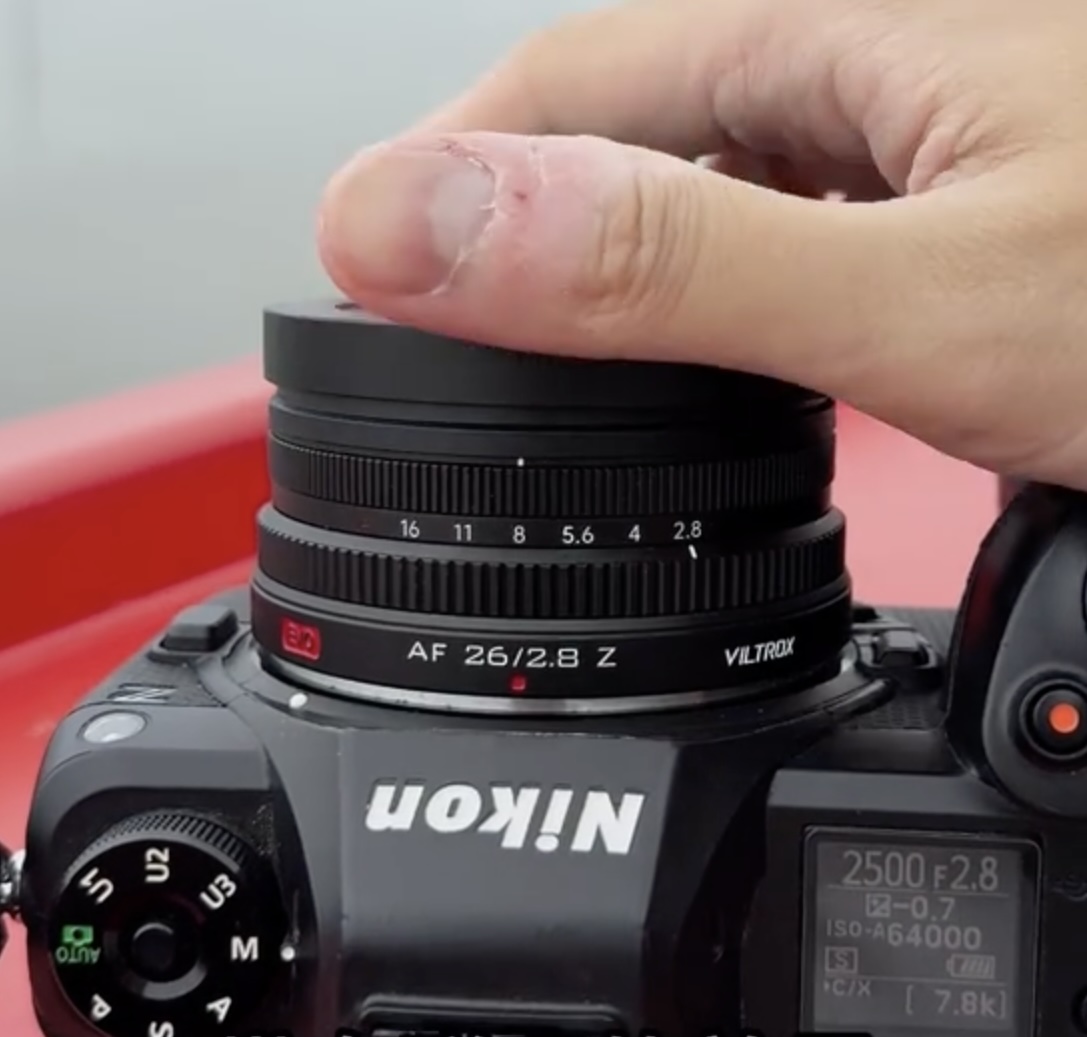
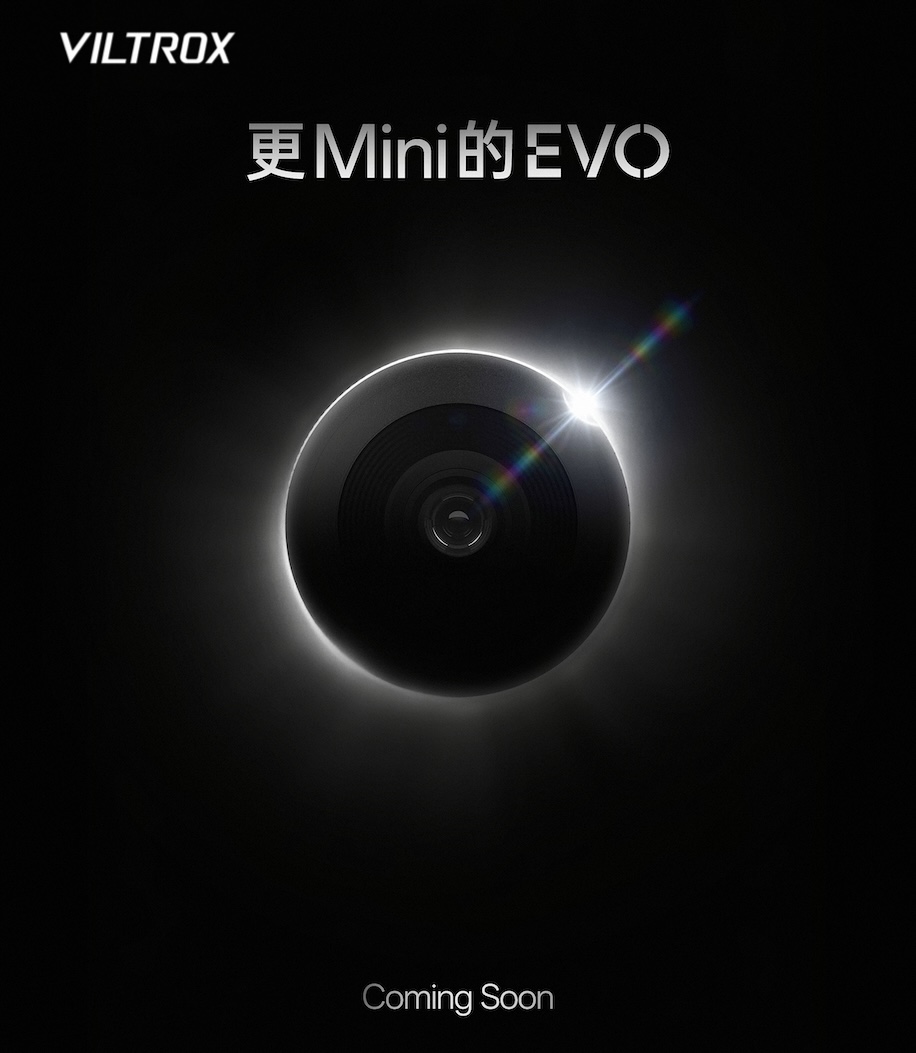
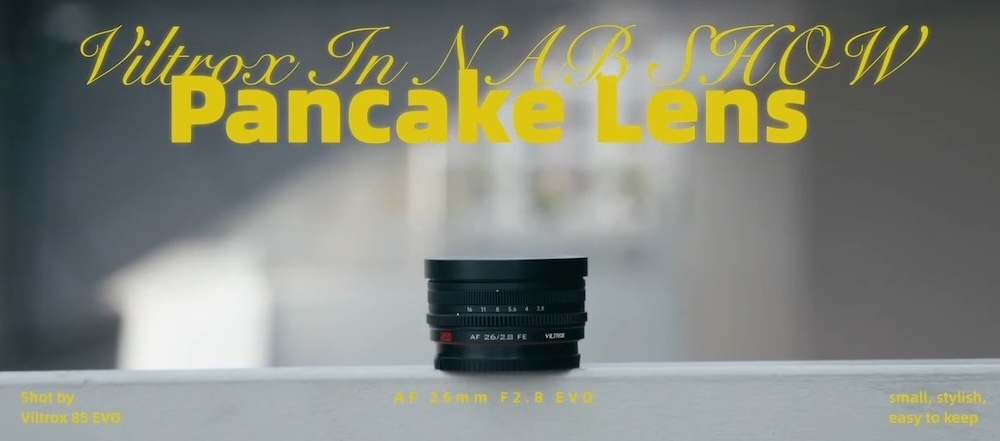
The Viltrox AF 26mm F2.8 Evo is the smallest offering in the Evo lineup yet.
Viltrox
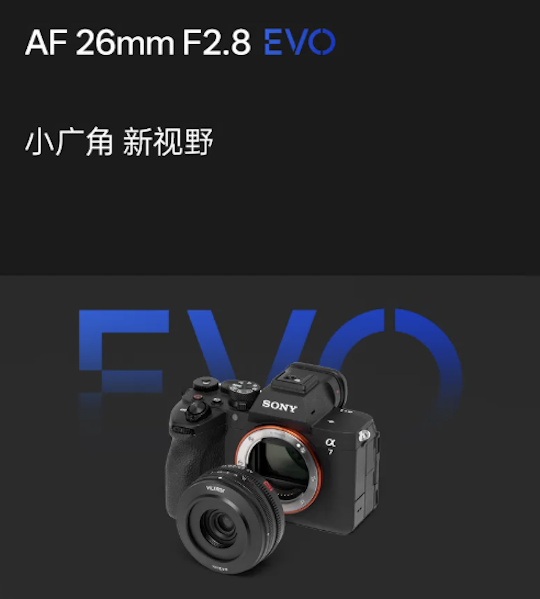
Viltrox has expanded its mid-tier lineup with the AF 26mm F2.8 Evo, a new pancake prime. As the smallest Evo offering yet, it continues the series’ focus on durable build quality and external controls, positioning itself as an everyday carry option for street and travel photographers.
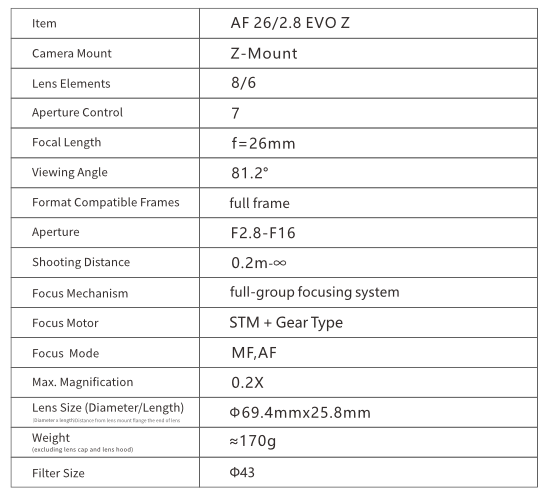
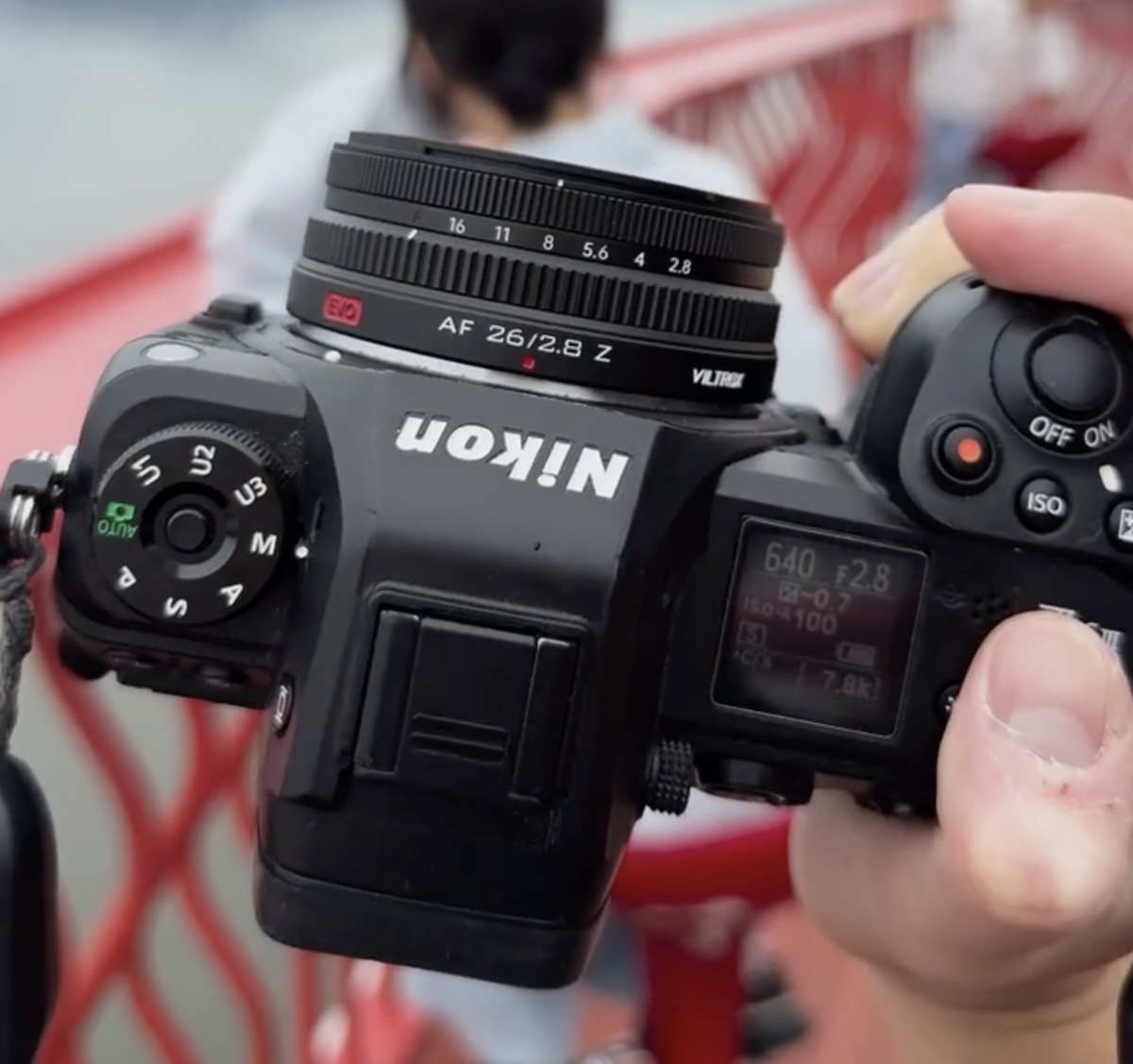
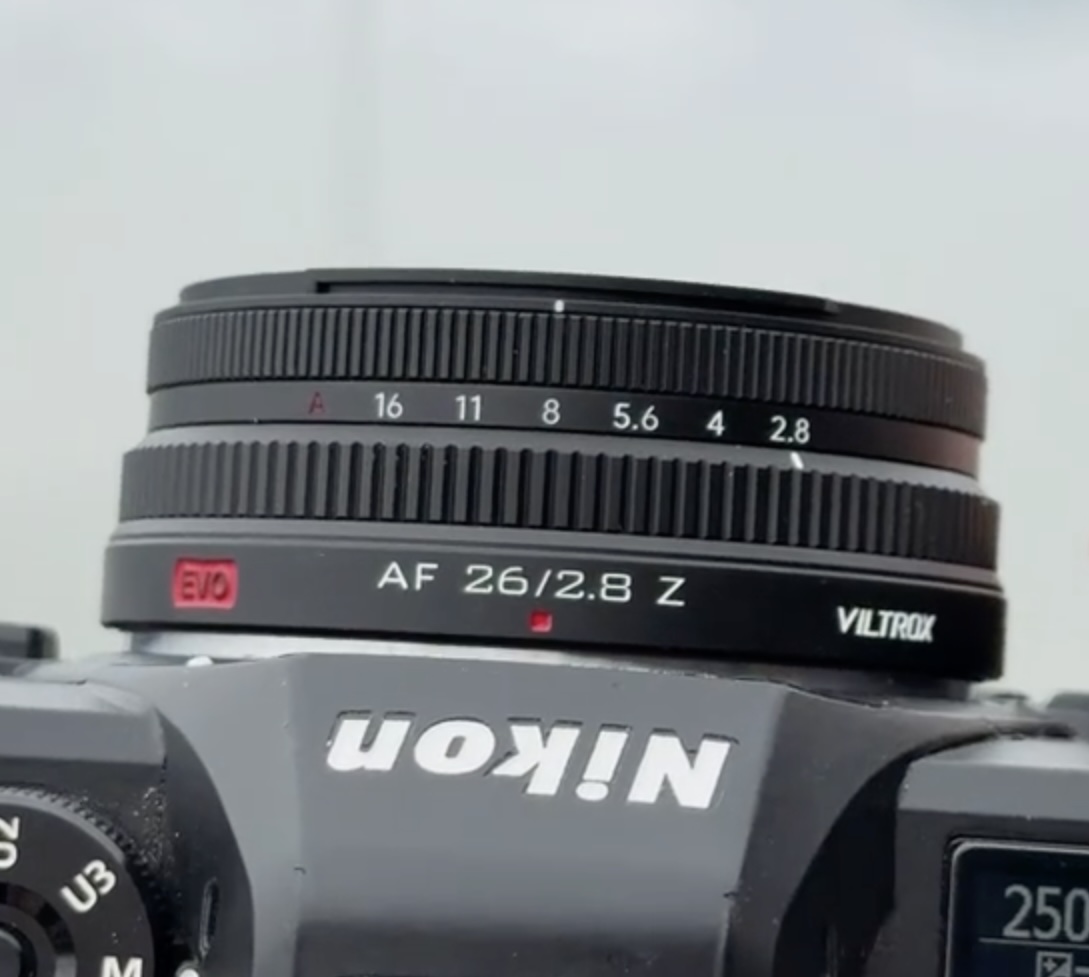
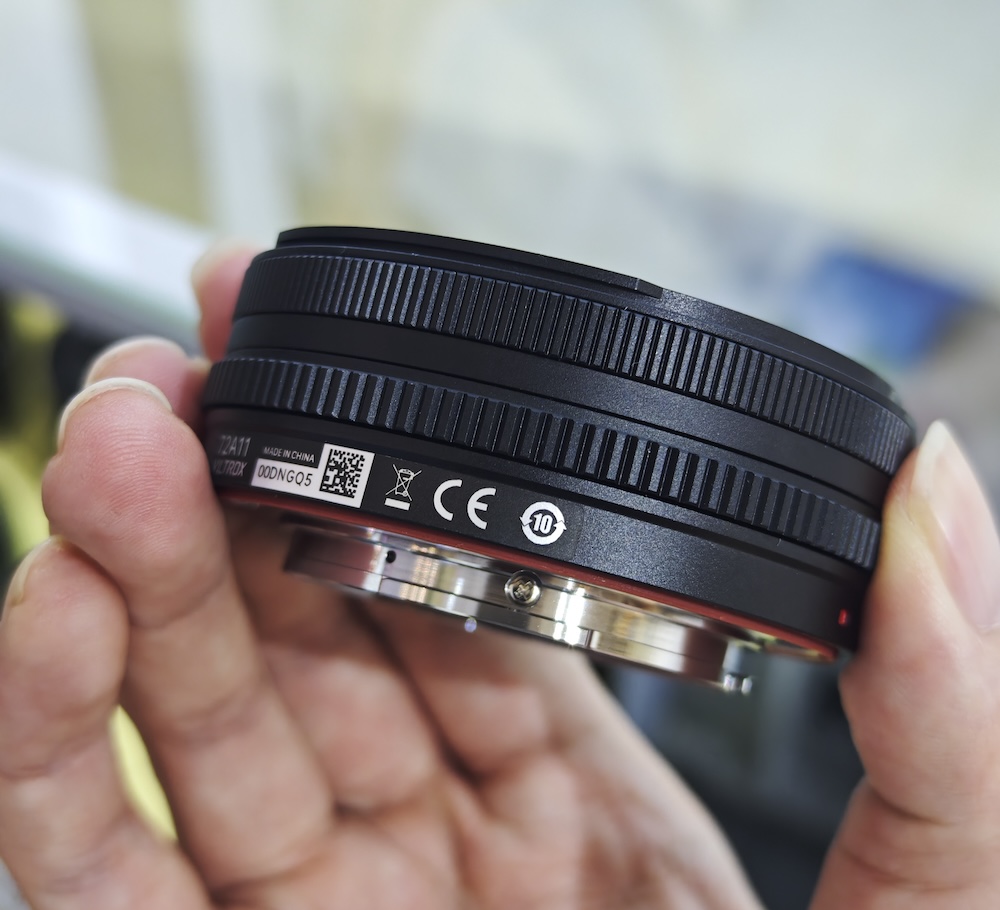
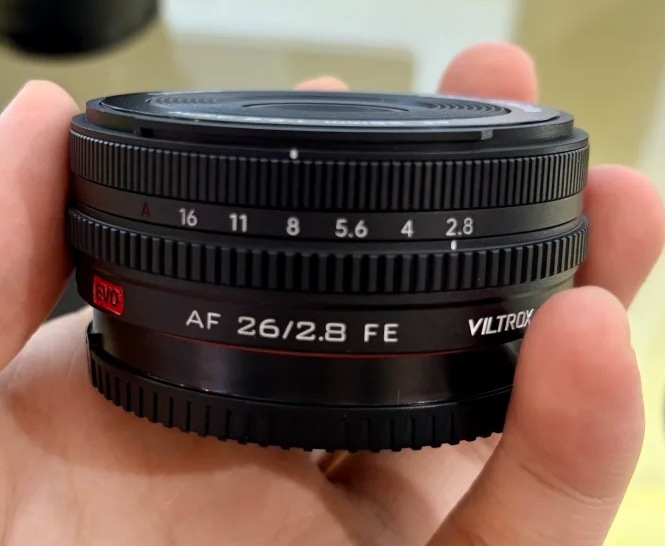
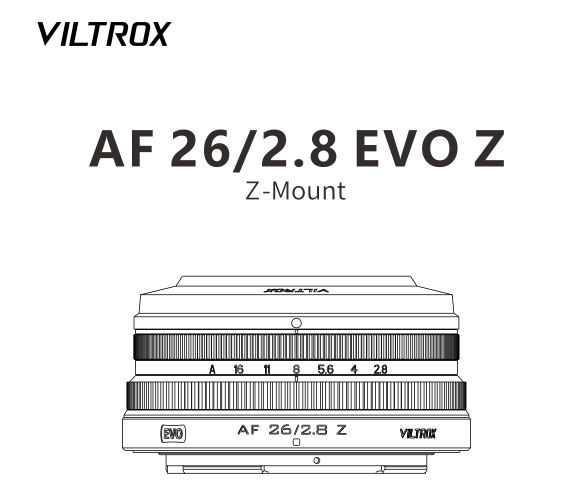
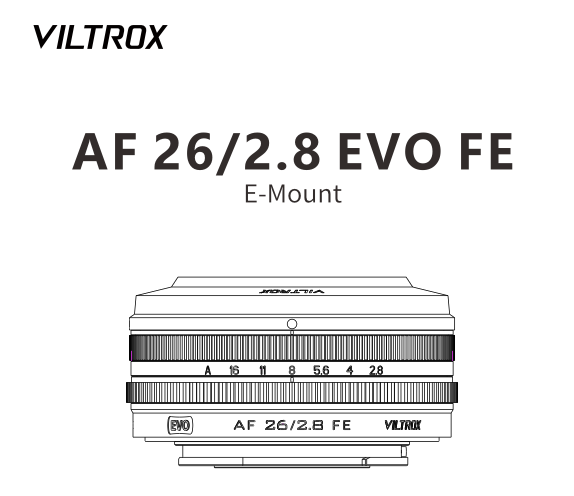
The AF 26mm F2.8 Evo is made for full-frame E and Z mount cameras. As a pancake lens, it’s highly compact and lightweight, measuring just 24mm (0.9″) thick and weighing only 130 g (4.6 oz). Despite its diminutive size, it still offers useful controls. That includes a clicking aperture ring, though there is no toggle to de-click it. There’s also a separate focus ring for manual focus.
The lens features two narrow control rings: one for aperture and one for focus. Viltrox
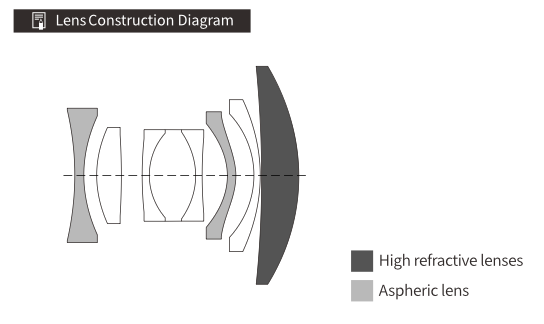
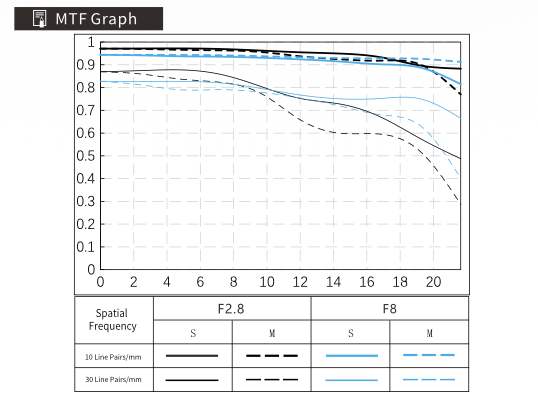
The lens uses an optical design of eight elements in six groups, including two aspherical elements and one high-refractive index (HR) element. Viltrox promises good sharpness even with the aperture wide open, and says that in-camera corrections minimize distortion. It uses a seven-blade aperture diaphragm.
The new lens uses an STM autofocus motor. It can focus as close as 0.2m (7.8″), enabling close-up shots in addition to broad views. A machined metal barrel offers greater durability, and it is dust- and splash-resistant around the lens mount. The lens is compatible with 43mm filters, as long as you use the included lens hood, and it uses a magnetic front lens cap. A USB-C port enables firmware updates.
The Viltrox AF 26mm F2.8 Evo is available today for E and Z mounts for $299.
Viltrox Launches Ultra-Compact AF 26mm F2.8 EVO Pancake Lens
Durable, Full-Frame E/Z Mount Lens with Dual Control Rings Designed for the Portability Needs of Everyday Photography
Shenzhen, China, July 15, 2026 — Viltrox today announced the launch of its AF 26mm F2.8 EVO, a compact full-frame autofocus pancake lens designed for everyday carry and photography. Well suited to street photography, architecture, environmental portraits, travel, and visual storytelling, the AF 26mm F2.8 EVO is an ideal companion for creators who value great portability, dependable image quality, and intuitive handling in a lightweight full-frame system.
Durable, Ultra-Compact, With Intuitive Control
The AF 26mm F2.8 EVO is an ultra-compact lens that pairs naturally with today’s lightweight full-frame mirrorless cameras. Available for Sony E and Nikon Z mounts, this pancake lens features both a dedicated aperture ring and a separate focus ring, providing tactile manual control that is rarely found in this category.
Its precision-machined metal construction provides durability and a premium feel, while dust and splash resistance around the lens mount enhances reliability during everyday use, matching its portability to make it an ideal companion for travel and spontaneous photography.
An Excellent Perspective at Any Distance
A gear-type STM autofocus motor delivers precise and reliable autofocus performance. With a minimum focusing distance of just 0.2m, the AF 26mm F2.8 EVO allows photographers to transition seamlessly from expansive landscapes to expressive close-up compositions. With an 81.2° angle of view, the 26mm focal length sits naturally between traditional wide-angle perspectives, delivering an immersive yet natural field of view that adapts effortlessly to a broad range of subjects and shooting scenarios.
Carefully Crafted for Impressive Image Quality
Compact in size yet impressive in performance, the AF 26mm F2.8 EVO features an optical design of 8 elements in 6 groups, including 2 aspherical elements and 1 high-refractive (HR) element. The lens delivers excellent sharpness even at its maximum aperture of F2.8, allowing confident wide-open shooting. In-camera correction further helps produce natural rendering with minimal visible distortion for balanced, high-quality results.
Convenient Functionality
A magnetic front lens cap enables conveniently quick attachment and removal. A standard 43mm filter thread, a built-in USB-C port for firmware updates, and compatibility with the Viltrox Lens App further enhance the user experience, combining everyday convenience with long-term usability.
Pricing and Availability
The Viltrox AF 26mm F2.8 EVO is available for 299USD / 319EUR / 279GBP
About the Author: Abby Ferguson holds an MFA in photography and blends a fine-art background with extensive editorial and commercial experience. She built and led an in-house imaging program for a large vacation rental company and has served as an associate editor at Popular Photography. She also teaches at a local community college and serves on its Photographic Technology Program Advisory Board, sharing her knowledge and enthusiasm for the medium.
Want to stay up to date on the latest product news and releases? Add DPReview as a preferred source to ensure our independent journalism makes it to the top of your Google search results.
Firmware v1.1 for medium format cinema camera arrives today, with further updates over the coming year
Fujifilm / Timur Civan
Fujifilm has released updated firmware for its GFX Eterna 55 medium format cinema camera, and set out a roadmap of additional updates that will follow over the next year.
Firmware v1.1 promises improved stability and usability but future updates include support for desqueezed previews of additional anamorphic lens ratios, improved SDI and HMDI latency, with LANC control and variable electronic ND arriving later.
Press release:
Fujifilm Announces Firmware Roadmap for FUJIFILM GFX ETERNA 55 Filmmaking Camera
Enhanced usability and operability that expands the possibilities of creative work
TOKYO – July 15, 2026 – FUJIFILM Corporation today announces a firmware roadmap designed to further expand the applications of the “FUJIFILM GFX ETERNA 55” (GFX ETERNA 55), Fujifilm’s first dedicated filmmaking camera. The latest update expands the possibilities for creative work and further enhances expressive capabilities.
Ver.1.101 – Available July 15, 2026
The camera’s overall operational stability and usability have been updated to provide a refined shooting experience.
Ver.1.20 or later – Availability later in 2026
Features to include:
Support for in-camera playback of MXF (Material eXchange Format).
Back-up and restore of camera settings via a dedicated App.
Further improvements to the enhancements made by firmware version 1.04 to SDI and HDMI video latency.
Additional anamorphic “desqueeze” options will be made available, which will include Open Gate 4K 4:3.
Ver.1.30 or later – Availability January 2027 or later
Features to include:
Additional preset options for coarse adjustments with the “Electronic Variable ND Filter.”
Automatic, in-camera adjustment of ND filter density, while maintaining constant values for iris, shutter angle, and ISO sensitivity.
LANC (Local Application Control Bus System) support for enhanced operation.
Remote control of “Duvo Series” lenses through the Multi-function dial located on both the camera body and the “handle”.
About the Author: Richard graduated as a scientist but had a lot more fun writing and shooting for his university magazine. A number of years spent variously as a reporter, writer and editor on science and engineering titles combined his knowledge of science with his interest in images and words. But it was spotting the connections between emission spectra, white balance and all the nonsense he’d taught himself playing around in Photoshop that helped kindle an interest in digital photography. Searching for a camera led to him discovering DPReview and Richard was recruited by Phil Askey in 2007. He’s been combining his love of photography, communication and attention to detail (pedantry?) ever since.
He has unusually strong opinions about lenses for the APS-C format.
Want to stay up to date on the latest product news and releases? Add DPReview as a preferred source to ensure our independent journalism makes it to the top of your Google search results.
The Tamron 12-20mm F2.8 is the first to adopt a new design language, along with simpler naming.
Mitchell Clark
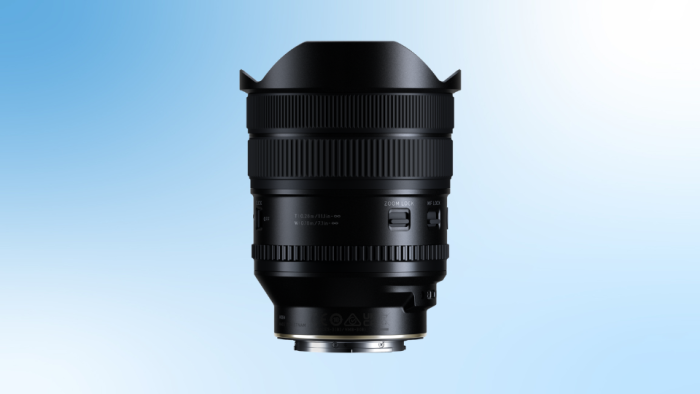
Tamron is introducing a fast, ultra-wide zoom lens for full-frame cameras: the 12-20mm F2.8. It’s being released for Nikon Z-mount and Sony E-mount, and is also ushering in a new look for the company’s lenses.
The 12-20mm F2.8 uses an optical formula with 17 elements in 12 groups, with one expanded glass molded aspherical element, three glass molded aspherical lenses, one extra low dispersion element, and three low dispersion elements. The company says it’s designed to be sharp to the corners, and to minimize and correct for aberrations like color fringing and sagittal coma flare. The latter is especially important for astrophotographers, who may be interested in this lens thanks to its wide focal range.
At 12mm, it can focus on subjects as close as 0.18m (7″), and at 20mm, its minimum focusing distance is 0.28m (11″). It has a 12-blade aperture. Because of its bulbous front element, it can’t accept front filters, but it has a rear filter holder in addition to its integrated lens hood.
Focusing is handled by a linear motor and is internal. While zooming doesn’t make the lens any longer, the front element does physically move back into the body. The lens has both an MF/AF switch and a manual focus lock switch; the latter is again something that will be appreciated by astrophotographers.
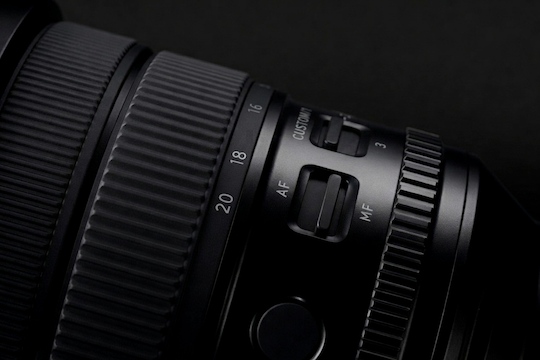
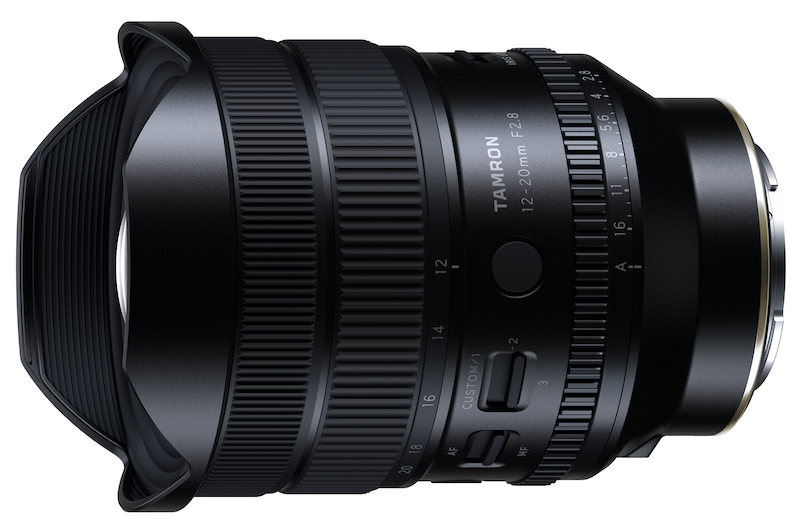
Beyond those switches, the lens is covered in controls. There’s a customizable function button in both portrait and landscape orientations, a zoom lock switch that can be used to keep the lens at either 12mm or 20mm, a lock for the aperture ring (or control ring on Nikon), a switch to click or declick that ring and a custom setting switch, which you can use Tamron’s Link software to configure to switch between focus position, change your rings’ rotation direction, limit focus, etc. There’s also a USB-C port you can use to update the lens’s firmware, or to connect it to your phone via a cable or wireless adapter to use Tamron Link.
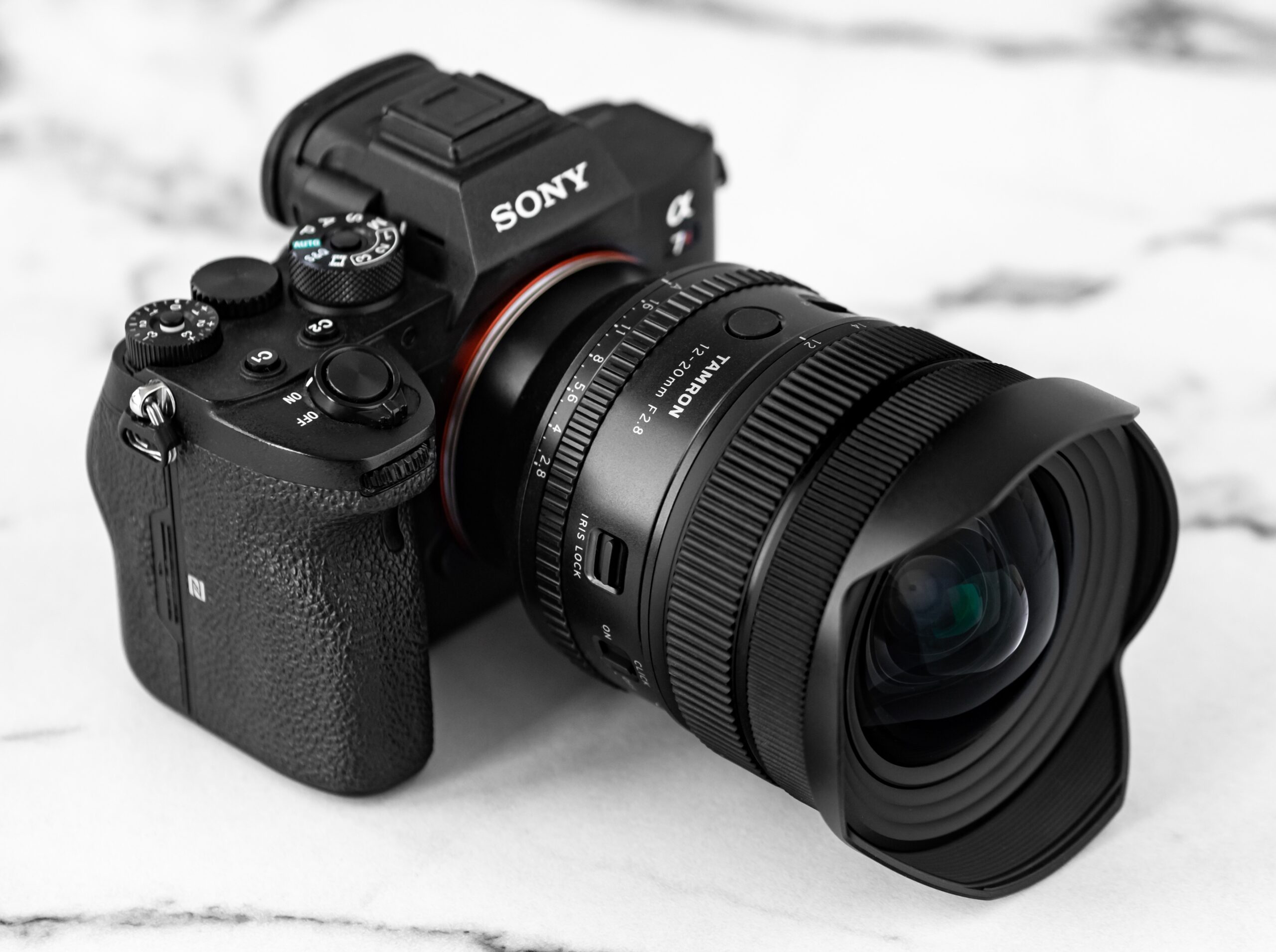
In its briefing, Tamron took a lot of pride in the lens’s size and weight, saying it was comparable to slower lenses, or ones with less range, and substantially lighter than other options. The E-mount version of the lens weighs 570g (20.1oz), with the one for Nikon weighing 15g more. The Sony version is 119mm (4.7″) long, with the Z-mount version adding 2mm.
This isn’t just a new lens for Tamron, though. The company is also introducing its new branding alongside it. Those familiar with the company’s naming conventions may have noticed what’s not there, first: there’s no “Di III” or “VXD” at the end of the name, denoting it as a mirrorless lens that uses a linear motor. Like Sigma , the company has decided that it doesn’t need to distinguish its DSLR lenses from its mirrorless ones directly in the name, and likewise, most of its lenses going forward are likely to use linear motors.
The updated industrial design language that Tamron is launching with the lens is called “Toned Profile Next,” which the company says is made to match how modern cameras are designed, while feeling better in the hand and more recognizably Tamron. Compared to its older lenses, the 12-20mm F2.8 has chunkier rings for zooming, aperture control and focusing, updated textures for its touchpoints, and new placement and print color for its branding. It also narrowed the champagne-colored “brand ring” that borders the lens mount.
I personally quite like the new look, especially since it comes with a clicking aperture ring on E-mount, something Tamron hasn’t been including on its recent lenses. I also appreciate that it’s now quite easy to grip the control rings and to distinguish which one your finger is on just by feel. The switches and buttons are all satisfying to use, and the lens feels solidly built, even if I don’t prefer the finish’s smooth texture.
The Tamron 12-20mm F2.8 will cost $1699 for the E-mount version and $1799 for the Z-mount version; the company says the difference comes down to volume, behind-the-scenes differences in manufacturing, and the competition on the different mounts. The Sony version will be available starting July 30th, while Nikon owners will have to wait until August 27.
Please do not reproduce any of these images on a website or any newsletter/magazine without prior permission (see our copyright page
). We make the originals available for private users to download to their own machines for personal examination or printing; we do so in good faith, so please don’t abuse it.
Loading gallery…
Thanks to Nikon for the loan of a Z8 to shoot this gallery. All images were processed using our standard lens workflow in Capture One, with the manufacturer’s distortion correction applied but no correction of vignetting. The profile corrects a minor amount of distortion – barrel at the wide end and pincushion at the long end – but we wouldn’t consider it an essential part of the lens design.
Press release:
TAMRON 12-20mm F2.8 (Model A084) 12mm Ultra Wide-Angle Zoom, Unbelievably Compact Form for Sony E-mount and Nikon Z mount Full-Frame Mirrorless
July 15, 2026, Commack, NY
– TAMRON announces the launch of the 12-20mm F2.8 (Model A084), a fast-aperture ultra wide-angle zoom lens, compatible with Sony E-mount and Nikon Z mount full-frame mirrorless cameras. The lens will be on sale for Sony E-mount on July 30 at $1699 USD / $2,299 CAD and for Nikon Z mount on August 27 at $1,799 USD / $2,399 CAD.
The defining feature of the 12-20mm F2.8 (Model A084) is its ultra-wide focal range, from 12mm to 20mm. The overwhelming breadth of the 12mm perspective enables dynamic expression that seems to “capture the entire expanse of a scene.” With a bright F2.8 aperture maintained throughout the entire zoom range, this lens is poised to become the “new protagonist” for astrophotography and interior shooting.
The optical system incorporates an XGM (eXpanded Glass Molded Aspherical) lens element, three GM (Glass Molded Aspherical) lens elements, and multiple special lens elements. This design effectively suppresses peripheral blurring and color fringing while correcting sagittal coma flare — a common challenge in astrophotography — ensuring high sharpness from the center to the extreme edges of the frame.
Despite its exceptional imaging performance, the lens achieves a sophisticated balance of size and weight, measuring just 4.7” (119.3mm) in length and weighing only 20.2oz. (570g)1. While compact, it remains a professional-grade tool equipped with various switches and rings for superior operability.
For autofocus, the lens features the VXD (Voice-coil eXtreme-torque Drive), a high-speed, high-precision linear motor focus mechanism. Furthermore, with an MOD (Minimum Object Distance) of 7.1” (0.18m) at the 12mm wide end, the lens offers outstanding close-up performance for creative versatility.
Product Features
Beyond the scope of vision — the overwhelming perspective only 12mm can capture
Stunning corner-to-corner resolution for astrophotography and nightscapes
Enhanced mobility for landscapes — a compact and lightweight design
Comprehensive control features to meet professional demands
High-speed, high-precision, and quiet performance — equipped with VXD linear motor focus mechanism
Stunning close-up performance — unleashing the dynamism of ultra wide-angles
Compatible with TAMRON Lens UtilityTM — seamless support for video and stills
Mastery of light — the artistry of a 12-blade circular diaphragm
Evolution of form — introducing the “Toned Profile Next” lens design
Integrated flower-shaped lens hood and locking front lens cap
Integrated rear filter holder
Included soft wrapping cloth for scratch resistance
Protective features (moisture-resistant construction and fluorine coating)
1. Length and weight are for Sony E-mount.
Tamron 12-20mm F2.8 specifications:
Quick Specs
AF motor type
Linear motor
Aperture actuation
Electronic
Aperture ring
Yes
Autofocus
Yes
Diameter
90 mm
Distance scale
No
DoF scale
No
Filter notes
Rear filter holder
Maximum Focal length (T)
20 mm
Minimum Focal length (W)
12 mm
Focus method
Internal
Max format size
35mm FF
Full time manual
Yes
Hood supplied
Yes
Hood product code
Integrated
About the Author: Mitchell started taking pictures at 10 and hasn’t stopped since. It’s been a wide-ranging adventure, spanning a wide variety of genres and locales, and occasionally dipping into fascinations with video and filmmaking. They honed their technical knowledge doing documentation, programing and QA, writing for The Verge, and just generally messing around on the computer to see what breaks.
Want to stay up to date on the latest product news and releases? Add DPReview as a preferred source to ensure our independent journalism makes it to the top of your Google search results.
Customizable Lens Hood & ID Labels
Engineered to stop the frustration of mixing up identical-looking lens hoods on busy sets. This system allows shooters to easily differentiate similar hoods while adding their custom studio or business name directly to lens bodies and camera setups for durable, clean ownership tracking.
Customizable ID Labels for Pelican Cases
Heavy-duty, weatherproof labels designed to replace messy gaffer tape on rugged hard cases. These IDs allow creators to identify exactly what gear is inside each case at a glance, giving the entire production kit a sleek, cohesive, and professional look during client sessions.
Adventure photographer and filmmaker Jimmy Chin recently sat down for a Q&A with Canon, sharing tips for finding your creative voice.
Canon
Jimmy Chin is an Academy Award-winning filmmaker, National Geographic photographer, author and elite mountain athlete. Known for telling epic adventure stories from remote corners of the world, Chin is also a Canon Explorer of Light. He recently sat down for a Q&A session on Canon’s YouTube channel, sharing his insight on his gear considerations and general approach to photography.
One thing I found particularly interesting was that he’s reduced the amount of gear he brings on shoots. Instead of hauling a huge kit, he’ll only take a couple of lenses, or sometimes just a single lens. “I’ve found that when you are working within certain constraints, it actually pushes you creatively,” he says. “It makes you find creative solutions to the different problems and challenges that you face on a shoot.” Of course, for the type of photography and videography he does, having less gear is also helpful logistically and physically, but I appreciate his mindset of using less to grow creatively.
Adaptability is also a key trait according to Chin, both in terms of gear and overall mindset. “Adaptability is a huge part of being a great photographer and being able to roll with the punches on shoots,” he says. “Sometimes you get really focused on the single shot that you really want, and you’re missing all kinds of other shots. So you have to keep your eyes open and your mind open.”
Chin also recommends looking at a lot of photography and, specifically, paying attention to many genres, even beyond what you’re personally interested in. “Look at all the greats. Understand kind of the approach that all these different artists have come to their craft,” he says. “I think that understanding and the thought processes of creating images is a really good place to make photography fun for you, because all of a sudden you are looking at the world in these different ways and then you kind of find your own language and your own ideas for how you think about photograph, and that’s what makes your photography special.”
The video has plenty of other great advice, too. It’s well worth a watch, especially for newer photographers trying to figure out how to move forward.
About the Author: Abby Ferguson holds an MFA in photography and blends a fine-art background with extensive editorial and commercial experience. She built and led an in-house imaging program for a large vacation rental company and has served as an associate editor at Popular Photography. She also teaches at a local community college and serves on its Photographic Technology Program Advisory Board, sharing her knowledge and enthusiasm for the medium.
Want to stay up to date on the latest product news and releases? Add DPReview as a preferred source to ensure our independent journalism makes it to the top of your Google search results.
WANDRD introduced new magnetic camera straps: magnetic camera straps with patent-pending features built for speed, security, and a better way to carry your camera (started today and already raised $18,680).
The U.S. Federal Communications Commission has fined multiple companies over alleged imports of DJI technology into the United States.
Xtra
Xtra is one of the eight companies facing potential penalties.
The U.S. Federal Communications Commission (FCC) is proposing $25,000 fines against eight companies after they allegedly failed to respond to questions about DJI‑related products sold in the United States. The agency is examining whether these firms played a role in bringing cameras, drones and other wireless devices based on DJI technology into the country under different brand names.
The companies named in the action are Cogito Tech, Fixaxo Technology, Lyno Dynamics, Skyhigh Tech, Spatial Hover, SZ Knowact, WaveGo Tech and Xtra Technology. According to the FCC, the proposed penalties stem from the companies’ refusal to answer formal letters of inquiry, rather than from a final determination that specific products violated U.S. equipment rules. Each firm has until July 20 to respond before the Commission decides whether to proceed with the fines or take further enforcement steps.
This latest action builds on a series of moves that have steadily tightened U.S. scrutiny of DJI. In late 2025, the FCC added DJI to its “Covered List,” a designation that prevents new DJI radio‑based products from receiving equipment authorization, effectively blocking future models from entering the U.S. market. Existing, previously approved drones can, however, continue to be sold and flown. As DPReview reported at the time, that shift marked a turning point in the long‑running debate over a possible “DJI ban” and pushed creators toward stockpiling current models or looking at alternative brands.
Xtra’s products have drawn comparison to DJI’s Osmo Action and Osmo Pocket lineups.Xtra
Xtra’s inclusion in the new enforcement action is particularly notable for photographers and filmmakers. The brand has been selling cameras and gimbal systems in the U.S. that closely resemble DJI’s Osmo Pocket and Osmo Action lines, effectively providing a path for DJI‑style hardware to reach U.S. buyers despite the Covered List restricting new DJI‑branded products.
What this could mean for DJI’s U.S. prospects
In the short term, the FCC’s move does not mean that existing DJI or Xtra products are suddenly banned or pulled from shelves. Equipment that already holds valid FCC authorizations remains legal to own and operate. However, if enforcement pressure causes these lesser‑known brands to scale back or exit the U.S. market, the supply of DJI‑adjacent “clone” or rebadged devices could become more limited.
Longer term, the enforcement push could complicate DJI’s efforts to return to the U.S. under its own name rather than help it. By formally targeting companies suspected of funneling DJI‑linked technology into the country, the FCC is reinforcing the idea that this hardware poses enough concern to warrant ongoing scrutiny. That may strengthen the case for strict controls and keep political and regulatory pressure on DJI high, even as the company continues to challenge its inclusion on the Covered List and push for a path to get new products approved again.
We’ll have to wait and see what the outcome will be, but the direction from regulators is clear: companies tied to DJI‑linked technology are expected to fully cooperate with FCC investigations, and a lack of cooperation could result in additional enforcement action beyond the currently proposed fines.
About the Author: Abby Ferguson holds an MFA in photography and blends a fine-art background with extensive editorial and commercial experience. She built and led an in-house imaging program for a large vacation rental company and has served as an associate editor at Popular Photography. She also teaches at a local community college and serves on its Photographic Technology Program Advisory Board, sharing her knowledge and enthusiasm for the medium.
Want to stay up to date on the latest product news and releases? Add DPReview as a preferred source to ensure our independent journalism makes it to the top of your Google search results.
The Godox iT32 flash and wireless controller make off-board flash more accessible than ever.
Mitchell Clark
The Godox iT32 is a pocketable, $80 flash. And it essentially sweeps away all the hurdles that stood in the way of me using flash.
I suspect I’m not alone in having found the cost of flash systems off-putting, when I first started photography. I’d scrabbled together enough money for a camera body with a nice kit zoom and immediately turned my attention to additional lenses. Flash was always the next thing on my list. And, two decades later, it still is.
You learn early on that flashes are most effective, creatively when they’re positioned away from the camera, but this invokes all the costs of remote triggers and off-board flashes, or being limited by the length of cables, because I’d bought an entry-level DSLR that couldn’t act as a flash commander, and I didn’t feel confident enough to start with manual, rather than TTL-controlled flash.
Mitchell Clark
The iT32 solves that off-camera problem because it connects to your camera via a small, hotshoe-mounted radio-frequency controller. The cost of this controller? between $20 and $34, depending on which brand of camera you use.
The X5 controller slots into your camera’s hotshoe and the iT32 attaches magnetically to the controller. Or you can disconnect the flash and fire it remotely. The flash itself communicates using Godox’s own communication protocol and can pair with any X5 controller, providing TTL compatibility whatever brand camera you own. It also means that you can buy a single iT32 and make it work even if you have cameras from more than one brand.
Additional X5 controllers are available for most popular systems, meaning it’ll cost around $20 to add compatibility to any system you happen to use.Richard Butler
Godox Transmitter
MSRP
Canon
X5 C*
$20
Fujifilm
X5 F
$20
Leica (limited models)
X5 L
$34
Nikon
X5 N
$20
Olympus /Panasonic
X5 O
$20
Sony
X5 S
$25
*Godox says Canon cameras with multi-interface hotshoes should use an adapter to mount the X5 C. It makes a “X5 Cm” version for these newer cameras but has limited its sales to China.
The X5 can only control flashes operating in a single group, so you can’t use it as the basis of a complex multi-group setup, but the iT32 itself can operate in different groups, so will still be usable, if you decide to expand your setup, later.
So far, I’ve just been using the X5 and iT32 combination and have found it to be a really low-risk place to start experimenting with flash. It’s a genuinely small unit, that makes it easy to keep with me. It has a guide number of 18m, so it’s not especially powerful, but it’s enough of a step up from any camera’s built-in flash that, especially combined with the ability to use off-camera, is enough to make it worth carrying around.
In-use
The iT32 comes with a diffuser, two warming gels that attach magnetically and a small stand (which has a tripod thread on its base), to which it can attach magnetically or via the hotshoe mount of an X5.Mitchel Clark
For such a small unit, the iT32 has a surprising number of control points. There’s a power/flash test button, a Set button and a Menu button, along with a dial on the side, used for quick control. But the iT32’s small rear screen is also touch-sensitive, so it’s really quick to operate, rather than requiring odd combinations of button pressing and dial turns.
To turn the unit on you hold the power/test button for two seconds then scroll the control dial upwards to confirm that it’s not just pressed against something in your bag.
You can access the menu by pressing the Menu button or swiping down on the screen. In the menu you’ll find options for controlling the modelling lamp on the front of the flash, a control for switching between TTL, Manual and multi-flash (strobe) modes, as well as deciding whether the flash is in on-camera mode, sender or receiver.
The rear screen of the iT32. It’s (very) touch sensitive, to the point that I found it easier to lock the screen (swipe down and tap the lock button), then control everything from the X5Mitchel Clark
The iT32 automatically switches to receiver mode when you detach it from the on-camera X5, so you don’t need to give most of this much thought.
In use you can set exposure compensation by turning the dial on the side of the flash, by swiping left or right on the touchscreen or, when the iT32 is working remotely away from the base, by pressing the small + and – buttons on the back of the X5 controller.
If you have a pair of iT32s you can your their controls to set them to different manual flash values (or flash exposure comp values if in TTL mode). You can still use the X5 to increase and decrease these values remotely, but any increase or decrease will be applied to both flashes, so you can’t remotely adjust them independently, as you would in a proper system of grouped flashes.
The iT32 has a built-in battery that can be recharged over its USB-C socket.Mitchel Clark
When working handheld, I found the touchscreen to be very sensitive and the control dial very easy to jog, so tended to make use of the ‘Lock’ function in the menu, to stop myself accidentally changing the flash settings. Once lock is engaged, you need to hold ‘Set’ for two seconds to re-activate the controls.
The iT32 has its own, built-in battery, so you don’t need to hunt around for a fresh set of AAs all the time. It recharges over its USB-C socket, which is also used for updating firmware for both the flash and the X5. The X5 unit has its own battery, which charges up when connected to the iT32. You can check the battery level on the menu of the flash, when it’s connected, or long-press the – button, where it will communicate its charge level with between zero and four flashes of its tiny red LED.
A little bit of flash, fired from off the left of the shot, helps to balance the daylight streaming in from the right.
Generally, getting started with the iT32 is simplicity itself. The two units pair with one another when physically connected, switching the flash to the correct camera brand’s protocol, and then auto switches between on- and off-camera operation. It’s only two swipes on the touchscreen to manually engage receiver mode, if you power the flash on again later and don’t want to have to physically re-connect them each time.
This simple, sub-$100 set overcame pretty much all of my previous concerns about cost, compatibility or batteries
As you use the setup more, it’s worth scanning through the manual, as there are some differences between camera brands about how to access modes such as high-speed sync and rear curtain flash sync, but there’s nothing that a complete novice should find off-putting at all.
Overall, though, I found the X5 / iT32 pairing to be a remarkably cost-effective way to access the world of flash photography. And, significantly, the realm of off-board flash. This simple, sub-$100 set overcame pretty much all of my previous concerns about cost, about compatibility and around batteries, leaving me with no excuse.
About the Author: Richard graduated as a scientist but had a lot more fun writing and shooting for his university magazine. A number of years spent variously as a reporter, writer and editor on science and engineering titles combined his knowledge of science with his interest in images and words. But it was spotting the connections between emission spectra, white balance and all the nonsense he’d taught himself playing around in Photoshop that helped kindle an interest in digital photography. Searching for a camera led to him discovering DPReview and Richard was recruited by Phil Askey in 2007. He’s been combining his love of photography, communication and attention to detail (pedantry?) ever since.
He has unusually strong opinions about lenses for the APS-C format.
Want to stay up to date on the latest product news and releases? Add DPReview as a preferred source to ensure our independent journalism makes it to the top of your Google search results.
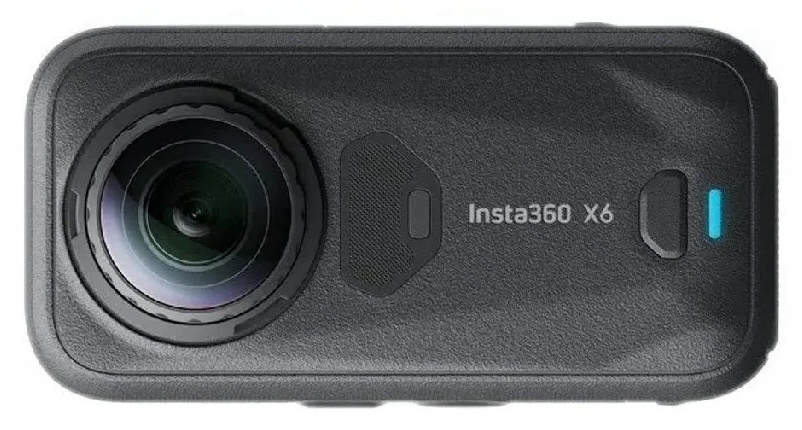
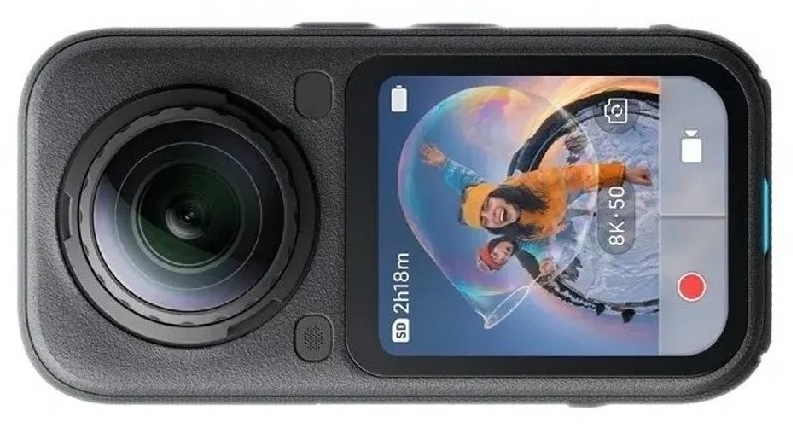
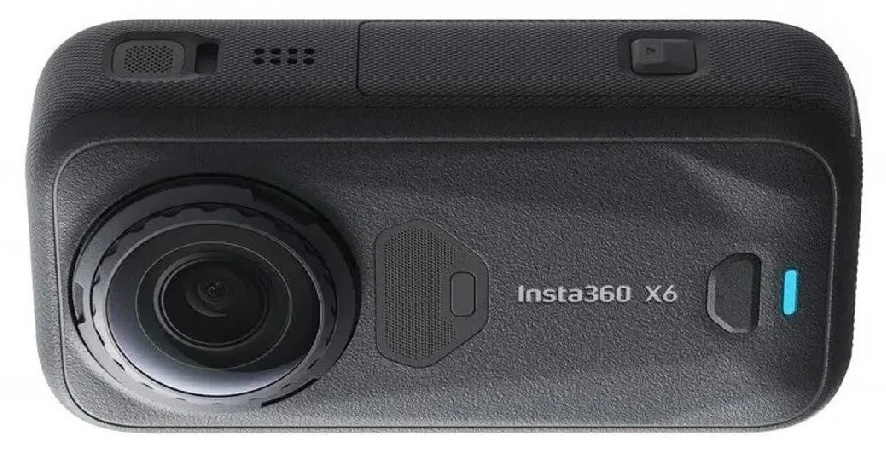
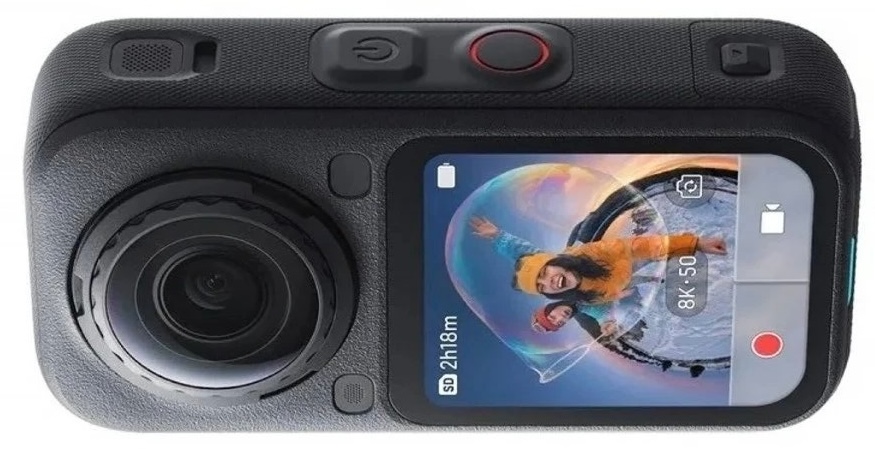
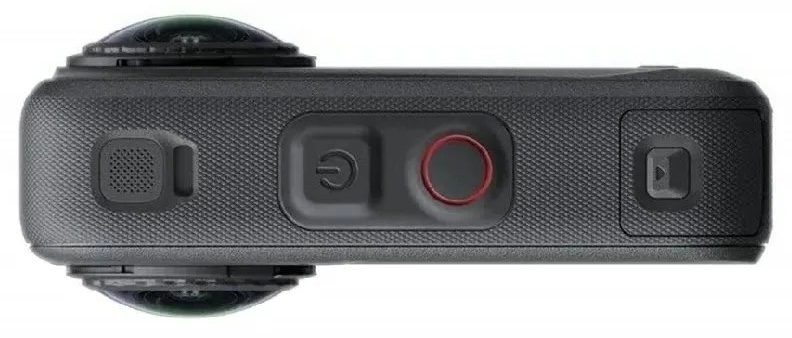
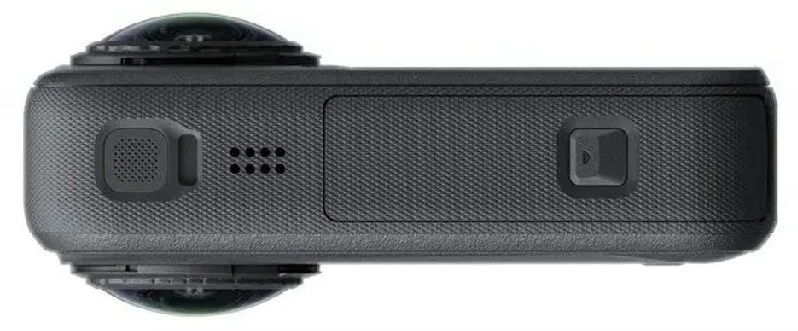
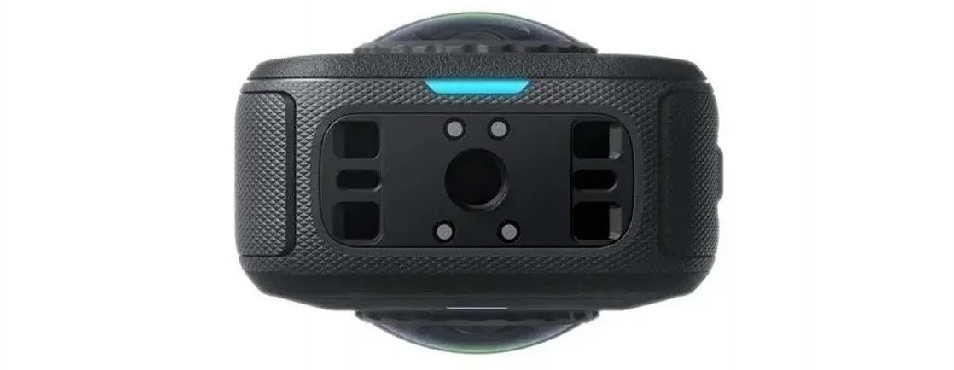
More compact and shorter than the X5, with dual front/back fisheye lenses for 360° capture, a small side touchscreen (redesigned rounded corners), physical shutter/power buttons, multi-directional microphones, a tripod mount, a recording LED, and new cooling vents.
Up to 8K at 50 fps video (a major upgrade from X5’s 8K at 30 fps).
Single-lens mode improvements.
Sensors: larger sensors rumored (1-inch or improved ~1/1.28″ dual sensors).
Photo: 100MP+ stills with enhanced stitching (up from X5’s ~72–100MP).
Color & processing: rumored 10-bit color depth and improved HDR.
Expected 2,600–3,000mAh battery range (improved over X5).
Build & features: retains rugged/waterproof design; enhanced AI for tracking, reframing, and editing; next-gen app integration.
Rumored pricing: €689 ($750 equivalent) for the base model, essentials bundle expected at ~€789, US prices expected $549-$599.
The expected release date is August-September 2026.
We spoke with Capture One CEO Rafael Orta about what it means to build software for professional photographers.
Capture One
Capture One CEO, Rafael Orta.
Capture One has built its reputation as the professional standard for commercial and beauty photographers thanks to its precise color management and tethering tools. But the company is also in the midst of an expansion, adding tools for new types of photographers, from photojournalists to those working with film.
We sat down with CEO Rafael Orta to talk about what that growth looks like, how the company approaches AI, and how it differentiates itself from other editing platforms.
Who it’s for
Capture One recently added support for Raw files from three Hasselblad cameras, expanding to even more professional photographers. Capture One
While some editing platforms aim to serve everyone, Capture One is intentionally more narrow in its scope. Orta is clear about who the company builds for: photographers who have made photography their career choice, whether as a primary income source or a serious secondary one.
The professional lens shapes everything from feature priorities to how the company talks about its product. Capture One is often considered the commercial standard for beauty and product photography, but Orta says it has deliberately expanded into professional portrait, wedding and family photography in recent years as well. It’s also seen lots of growth in its enterprise segment, with the Associated Press coming on as its first photojournalism client last year.
The key is that all of these are genres where client relationships and deadlines can define the work. “We have a really good understanding of how photographers work with clients, work under deadlines and how clients are the ultimate judge of your work,” Orta says. “It’s a tool that has been built with professional standards in mind.”
AI on its terms
There’s no getting around the fact that AI is everywhere these days, and it’s reshaping many aspects of the photography software market. But Orta is careful about how Capture One positions itself within that shift, and it comes down to trust in the company’s identity. “We are not confused about who we are,” he says. “We are a photography company first, not a software company that happens to serve photographers.”
“We are a photography company first, not a software company that happens to serve photographers.”
Rafael Orta
That identity, according to Orta, is what allows the company to incorporate AI responsibly. He tells me that Capture One owns more cameras than it has employees and that many of the photos on its website and in its marketing are taken by Capture One team members, who are photographers. “We are incredibly protective of usage rights; even in internal presentations, you need to credit the photographer,” he explains. The company also runs a monthly internal photography competition with winning images adorning the walls of their offices.
Orta explains all of this to make it clear that AI tools in Capture One are built by people who take photography seriously; they aren’t added simply to keep pace with competitors. “It’s why we’ve been able to bring AI into Capture One without the backlash others have faced,” he says. “We built it as a participant in the industry, not an operator standing outside it looking in,” he says.
A pulse on the community
Earlier this year, Capture One released a negative film conversion feature. While this could seem like an odd move for an editing platform dedicated to commercial work, Orta sees it as the perfect example of how in-tune with the industry the company is.
“It’s the perfect example of our connectivity in the industry,” Orta says. “We saw early on that there was a resurgence of film photography, and it quickly began to enter the commercial space.” He explains that they want to offer a better way for commercial photographers to integrate all their work into a single platform. Doing so enables photographers to maintain a more consistent workflow and create a more coherent look across both film and digital.
Because we’re precious about quality, some of these things may take a bit of time.
Rafael Orta, CEO of Capture One
Orta is also clear about how intentional the company is with new features and the work involved in creating those. “We are soaking in the industry, and we listen and respond to the requests,” he says. “But because we’re precious about quality, some of these things may take a bit of time. We spent the best part of two years on negative conversion to make sure the results would be good.”
As an example of how dedicated the team is to its new features, Orta tells me that a few weeks ago, the company held its annual gathering and handed out disposable film cameras to everyone there. Now, the employees are using the negative conversion tool to scan in their own negatives. It’s another example of the team getting real-world experience with the features they develop.
Pricing adjustments
Capture One
Capture One has never been the cheapest option for photographers, and recent pricing increases have made that especially true. The editing platform has raised its prices twice in recent years, and another 6% increase took effect this month. The new price is more than double the cost of Adobe’s Lightroom, a gap that is certainly hard to ignore.
Orta doesn’t shy away from the pricing question, though. “What we have committed to is yearly pricing increases, and we will do them in a modest way,” he says. As for the why, Orta simply cites inflation and foreign exchange as factors in the decision.
Naturally, he points to what subscribers get in return. Orta says that Capture One has been pushing more than one update per month to at least one of its platforms, bringing a constant stream of improvements. He explains that these include server-side updates to things like its collaboration tools (Live, Live for Studio) and admin platform, not just desktop and mobile app updates. Some of these updates are visible to a user, while others aren’t. He adds that the company has simplified its product lineup in recent years to make pricing tiers clearer. Overall, Orta frames the increases less as a burden and more as a reflection of ongoing investment in the product.
A clear vision for the future
For Orta, all of Capture One’s recent changes, including the newly added Hasselblad support, point in the same direction: a company that’s clear on who it is and who it’s building for. “We try to serve specific genres and build products and services that are perfectly adapted to the needs of each one,” he says. For a company with its roots in commercial studios, that’s a wider net than it used to be, but it doesn’t mean that the focus is any less intentional.
About the Author: Abby Ferguson holds an MFA in photography and blends a fine-art background with extensive editorial and commercial experience. She built and led an in-house imaging program for a large vacation rental company and has served as an associate editor at Popular Photography. She also teaches at a local community college and serves on its Photographic Technology Program Advisory Board, sharing her knowledge and enthusiasm for the medium.
Want to stay up to date on the latest product news and releases? Add DPReview as a preferred source to ensure our independent journalism makes it to the top of your Google search results.
A trip to San Francisco gave a fresh perspective and the chance to experiment with the RX10 V’s ridiculous range
Richard Butler
The Sony RX10 V arrived just before a trip I had planned to San Francisco, giving me some more interesting / less familiar shooting opportunities, the chance to play with an extremely long lens, and a lesson in how hard it is to re-create Todd Walker’s famous 1964 photo of California Street.
I made sure to grab some low-light photos as well as some trams, sunshine and marine-layer gloom.
Loading gallery…
About the Author: Richard graduated as a scientist but had a lot more fun writing and shooting for his university magazine. A number of years spent variously as a reporter, writer and editor on science and engineering titles combined his knowledge of science with his interest in images and words. But it was spotting the connections between emission spectra, white balance and all the nonsense he’d taught himself playing around in Photoshop that helped kindle an interest in digital photography. Searching for a camera led to him discovering DPReview and Richard was recruited by Phil Askey in 2007. He’s been combining his love of photography, communication and attention to detail (pedantry?) ever since.
He has unusually strong opinions about lenses for the APS-C format.
Want to stay up to date on the latest product news and releases? Add DPReview as a preferred source to ensure our independent journalism makes it to the top of your Google search results.
Insta360 and Bambu Lab have launched a contest built around official Luna Ultra design files on MakerWorld, inviting creators to submit 3D‑printable accessories and related content.
Insta360
Insta360 is teaming up with 3D printer company Bambu Lab to encourage custom accessories for the new Luna Ultra gimbal camera. To that end, the pair has launched a co-branded Luna Ultra Design Challenge and made official design files available for creatives.
The challenge is hosted through Bambu Lab’s MakerWorld platform, a community where creators can share and 3D‑print custom designs. To make things easier for those interested in creating accessories, Insta360 has published official 3MF and STL design files for the Luna Ultra. Insta360 is the first camera brand with an official presence on MakerWorld, and it’s certainly not typical to see a company sanctioning third-party 3D-printed, precision-fit accessories for its cameras. That hasn’t stopped people from making their own accessories, but having an easier means to do so will likely be appreciated by many users.
The contest has two entry tracks: Track A is about designing and uploading actual 3D-printable parts for Luna Ultra, while Track B is about showcasing or pitching those ideas through content across major social platforms.
We see a shift where creativity doesn’t stop at capturing images—it extends into building and shaping the tools themselves.
Max Richter / Co-founder & Vice President of Marketing, Insta360
Track A is geared toward 3D designers and engineers and is meant for fully realized models. It consists of two categories: The Practical Add-ons category includes things like stability mounts, filming rigs and advanced creator tools, while the Creative Mods category focuses on aesthetic covers, playful themes and stylistic upgrades. Those submitting to Track A should use #PrintForLuna within MakerWorld.
Track B can include finished 3D-printed products, but it’s also open to hand-drawn design concepts and creative accessory ideas, so even those without a 3D printer can still take part. Those interested in submitting projects in Track B should tag their posts with #PrintForLuna, #BambuLab and #Insta360LunaUltra on Instagram, TikTok, YouTube, Facebook or Reddit (r/Insta360).
Insta360
The challenge has prizes up for grabs. Insta360 says there are a total of 40 joint awards, with selected winners receiving the Insta360 Luna Ultra camera and either the Bambu Lab X2D Combo or A2L Combo 3D printers. There will also be other hardware prizes, along with gift cards and coupons. Additionally, the company says the best ideas may be selected for further development and possibly turned into an official product. Creators of those designs will have access to “exclusive collaboration opportunities and additional rewards, with full details confirmed with the winners directly.”
The Luna Ultra Design Challenge runs from now through August 9, with winners announced on August 20. You can download the 3MF and STL design files from MakerWorld, and learn more about submission requirements on the challenge page.
Press release:
“Let’s Make It”: Bambu Lab and Insta360 Launch Luna Ultra Design Challenge on MakerWorld
Opening up camera hardware customization for the first time, this collaboration gives the maker community official Luna Ultra design files to let their imaginations run wild and compete for the latest products from both brands.
July 10, 2026 — Bambu Lab and Insta360 today announced an official co-marketing collaboration, launching the Insta360 Luna Ultra Design Challenge on MakerWorld. Running from July 10 to August 9, 2026, this joint initiative democratizes accessory customization by releasing public 3MF and STL files for creators to build precision-fit camera gear. With the launch of its official brand page, Insta360 also becomes the first camera brand to establish an official presence on MakerWorld.
Expanding Camera Customization Through 3D Printing Think Bold. Print Bold. That’s the ethos driving this first-of-its-kind collaboration between Insta360 and Bambu Lab. This collaboration gives creators the freedom to think outside the box, shifting the experience from simply operating a camera to personalizing its look with custom-made camera gear. By moving past the limits of off-the-shelf parts, creators can now build custom, user-driven gear perfectly tailored to their unique taste or shooting environments.
The official 3MF and STL design files for the Luna Ultra are now available for public download on MakerWorld, empowering anyone to immediately begin building and printing custom hardware around the camera body.
“We see a shift where creativity doesn’t stop at capturing images—it extends into building and shaping the tools themselves. This collaboration between Insta360 and Bambu Lab brings together imaging and the maker community for the first time in this way, bringing creators the freedom to push the boundaries of what’s possible. ” — Max Richter / Co-founder & Vice President of Marketing, Insta360
How the Challenge Works To celebrate this collaboration, Insta360 and Bambu Lab are launching a dual-track competition designed to engage with designers, engineers, and creative minds. Participants can enter either—or both—of the following tracks:
Track A: Model Design Challenge Built for 3D designers and engineers to create and upload their custom creations using the hashtag #PrintForLuna. Download the official Luna Ultra 3MF or STL design files on MakerWorld to build and upload precision-fit physical camera gear. Submissions focus on two core categories: Practical Add-ons (stability mounts, filming rigs, advanced creator tools) and Creative Mods (aesthetic covers, playful holiday themes, stylistic upgrades). With MakerWorld’s 1-click printing via the Bambu Handy App, these community-designed assets can be instantly brought to life by users worldwide. Full contest details, rules, and model submission guidelines are available at https://makerworld.com/zh/contests/153?name=Let%27s+Make+It%EF%BC%9AMaker World+%C3%97+Insta360+Luna+Ultra+Design+Challenge#tab-Detail.
Track B: Social Content Challenge Built for creators, filmmakers, and imaging enthusiasts. Share your original Luna Ultra gear, DIY modifications, hand-drawn design concepts, or creative accessory ideas on Instagram, TikTok, YouTube, Facebook, or Reddit (r/Insta360). Submissions can be photos, videos, or written ideas, and can be captured using any filming equipment. To enter, tag your post with the hashtags #PrintForLuna , #BambuLab , and #Insta360LunaUltra. Follow our official brand social media accounts to find full details and updates for this challenge.
Prizes & Timeline A total of 40 joint awards are up for grabs across both competition tracks, featuring an extensive lineup of hardware prizes, gift cards, and coupons valued at a total of US$11,160. Top creators will walk away with the ultimate setup featuring the newly released products from both companies: the Insta360 Luna Ultra camera paired with the Bambu Lab X2D Combo or the Bambu Lab A2L Combo 3D printers. Submissions will be open for one month (July 10–August 9), and there will be regular prize announcements throughout the challenge, culminating in the final winners’ announcement on August 20, 2026.
You Dream It. We Help Build It. The best ideas from either track may be selected by Insta360 and Bambu Lab for further development, with the incredible possibility of being turned into an official product. Selected creators will unlock exclusive collaboration opportunities and additional rewards, with full details confirmed with the winners directly.
About the Author: Abby Ferguson holds an MFA in photography and blends a fine-art background with extensive editorial and commercial experience. She built and led an in-house imaging program for a large vacation rental company and has served as an associate editor at Popular Photography. She also teaches at a local community college and serves on its Photographic Technology Program Advisory Board, sharing her knowledge and enthusiasm for the medium.
Want to stay up to date on the latest product news and releases? Add DPReview as a preferred source to ensure our independent journalism makes it to the top of your Google search results.
Three years after acquiring DPReview from Amazon, Gear Patrol’s founder reflects on the unglamorous, expensive work of rebuilding the site from the ground up.
Photographers and creators, the new DPReview is live in beta.
Or, in DPReview terms, let’s call it slightly pre-release firmware.
Holy smokes, this thing was not easy to pull off. We still have a lot to do, but this feels like the right moment to pause, crack my knuckles, and walk through how we got here.
The acquisition came to us under circumstances we did not expect, but it fit something I believed and still believe deeply: enthusiast communities matter. Product journalism still matters. And there is still a bright future for brands built around expertise, trust, and obsession, especially where a product sits at the heart of a passion.
That is what cameras are for: photographers and creators.
Teaching my youngest son, Everett, how to use my new camera, the Sony RX1R III. It’s so confounding but I love it. Aren’t the quirks what make camera gear so great?Hannah Yang
But it was also a real risk.
Dedicated cameras may no longer be the default for everyday photography. For many people, the iPhone is enough.
But I actually see a world where photography is building an exciting future. There is incredible innovation in both the products and creatives. Engineers and designers are still building tools that allow people to capture images and video in ways they could not before. Even film, monitors and printers are exciting. And yes, some bad-ass and occasionally questionable new product ideas are still making it to market.
I take that as a good sign. It means there is still some appetite for risk out there, and that the entire industry is not just trying to make the most pin-sharp 24-70mm f/2.8 lens in the world.
Acquiring DPReview was not easy for us. Working with Amazon put me in rooms with people above my pay grade. But we made a bet that we could be good stewards of one of the most important archives of photography knowledge on the web, one of the most deeply invested communities online, and a deeply respected editorial team.
I am still thankful Amazon agreed, because they certainly did not need to pick us.
Product journalism still matters.
But we also inherited a rabbit hole of aging infrastructure.
It’s staggering to even say this out loud, but until this week, DPReview was still operating without a responsive site for mobile users.
The job has been hard. We knew it would be. We have been working toward this launch for three years, with a couple of false starts along the way. We have been hammering on code, design, migration, UX, ad tech, editorial workflow, product decisions, and budgeting, so much budgeting, in earnest for well over a year.
It has taken a lot of resources, meaning cash, to get here. And as an independent media company, every dollar had to be earned and stretched.
I have questioned my own judgment more than once. I have worn out Ben Bowers, my partner in this whole endeavor, with an onslaught of meme GIFs; Sanford and Son was particularly poignant when I was bereft of productive words. I bought a monitor that I put into portrait-orientation so I could help debug CSS and stare into the abyss that was (and still is) the bug tracker.
There are times when no one knows how to say it better than Fred G. Sanford.
Thankfully, we are now at a place where we can go live, knowing full well that we still have so much work to do.
We first rebuilt the forums last year, migrating them to XenForo. And now we’ve moved the publishing side to WordPress VIP. We also modernized the tech stack. We rebuilt signature tools like the Image Comparison Tool and product comparisons. We made the site responsive. And we paid off huge chunks of technical debt that had accumulated over many years.
There have been moments where the project has felt bigger than I thought we were ready for.
But thankfully, I work with real pros. Many of them have lived and breathed DPReview for the majority of their careers. That is why being honest about how difficult this has been feels important. We are proud of the step forward, but we are not pretending the work is done. Those career-DPR staffers would never let me.
The new DPReview is live, but it is far from finished.
We launched in beta, and beta means what beta has always meant: bugs, fixes, feedback, and iteration.
This beta reminds me a little of the industry’s shift from DSLRs to mirrorless. The first bodies were not perfect. Autofocus had to improve. Lens ecosystems had to catch up. Firmware updates did real work. But the foundation was right, and the direction was clear. You had to start somewhere.
But DPReview is alive. It is moving forward. And it now has a new foundation we can build on.
That foundation matters. The legacy site was running on aging, increasingly expensive infrastructure that was getting harder to maintain and harder for modern internet users to find, understand, and share. Audience traffic and engagement are the lifeblood that keep DPReview free and alive.
Subscriptions can help, but we’ve done the math and are clear-eyed that they cannot carry the entire site on their own. People already have enough subscriptions in their lives, and we want DPReview to remain open and accessible.
So this is not just a redesign. It is the start of making DPReview sustainable for its next chapter. We will keep tuning, fixing, and improving it in public. Feedback is welcome. Patience is appreciated.
This beta reminds me a little of the industry’s shift from DSLRs to mirrorless. The first bodies were not perfect. Autofocus had to improve. Lens ecosystems had to catch up. Firmware updates did real work. But the foundation was right, and the direction was clear.
I am grateful to the team that carried this work through the unglamorous middle, where most of the real difficulty lives.
I am also grateful to the DPReview community for caring enough to keep pushing, questioning, and showing up. I know you still have real feelings about threaded views. We’re working on light mode. Maybe the new logo too. I get it. I have been reading this site and lurking in the forums for more than two decades as well.
Most of all, though, I am proud that we made this bet.
Joe Tornatzky (Creative Director) and I working side by side in the Culver City studio on designs with Scott Everett (GM, Product and Technology) and Caitlyn Shaw (Director, Growth Strategy & Development). I’m sure Richard Laws (Sr. Software Development Engineer) is in one of those windows too. There’s still much to do and we’re excited to get that rolled out in the future.Eric Yang
The future of media is not just algorithms. It is trust. It is inspiration. It is expertise. An example of that future we’re hoping to be a part of is supporting a community of people who care deeply about specific, ultra-niche things that only fellow enthusiasts fully understand, and can debate endlessly online and over beers. That is a special, very real thing.
That is why people trust DPReview’s little corner of the internet.
And today is a big step toward making sure it remains one.
Thanks for letting us take care of DPReview. We do not take the job lightly.
Eric Yang Founder, Gear Patrol
Huge shout-out to the launch team: Mathew Anderson, Dale Baskin, Mike Bailey, Ben Bowers, Richard Butler, Mitchell Clark, Mykim Dang, Scott Everett, Abby Ferguson, Richard Laws, Caitlyn Shaw, Joe Tornatzky, Anthony Wybornyand our talented counterparts at Fueled.
Want to stay up to date on the latest product news and releases? Add DPReview as a preferred source to ensure our independent journalism makes it to the top of your Google search results.
A promotional video for Olivia Wilde’s “The Invite” offers an unpolished look inside Kodak’s film processing lab.
Kodak / A24
A new video from Kodak and movie studio A24 follows actress Olivia Wilde as she tours Kodak’s Film Lab in New York City. The tour is technically a promotional stop for “The Invite,” a recently released dark comedy Wilde both directed and stars in, though it doesn’t come across that way. Instead, the four-minute video offers a short glimpse into what goes on behind the scenes when movies are shot on film.
In the video, Wilde walks through various parts of the lab with technicians who briefly explain what they do, from loading the film in the darkroom to running it through the development steps and splicing it all together. What struck me is how very low-budget the space looks. Aside from the required specialized equipment (I especially love the fancy machine used to dry the negatives), it looks like any gritty big-city studio/lab space. Piles of miscellaneous items are piled everywhere, there are old radiators with paint rubbed off, and the people working there don’t seem fussed by any of the attention. It’s far from a glamorous space.
The video is a short watch, so it absolutely doesn’t get into the nitty-gritty details of the process. But it’s a nice overview of how the lab turns exposed negatives into usable images, and it’s always neat to see behind-the-scenes looks like this.
Want to stay up to date on the latest product news and releases? Add DPReview as a preferred source to ensure our independent journalism makes it to the top of your Google search results.

 Connexion