40mm equiv. variant of snapshooting classic should arrive this year.
Ricoh
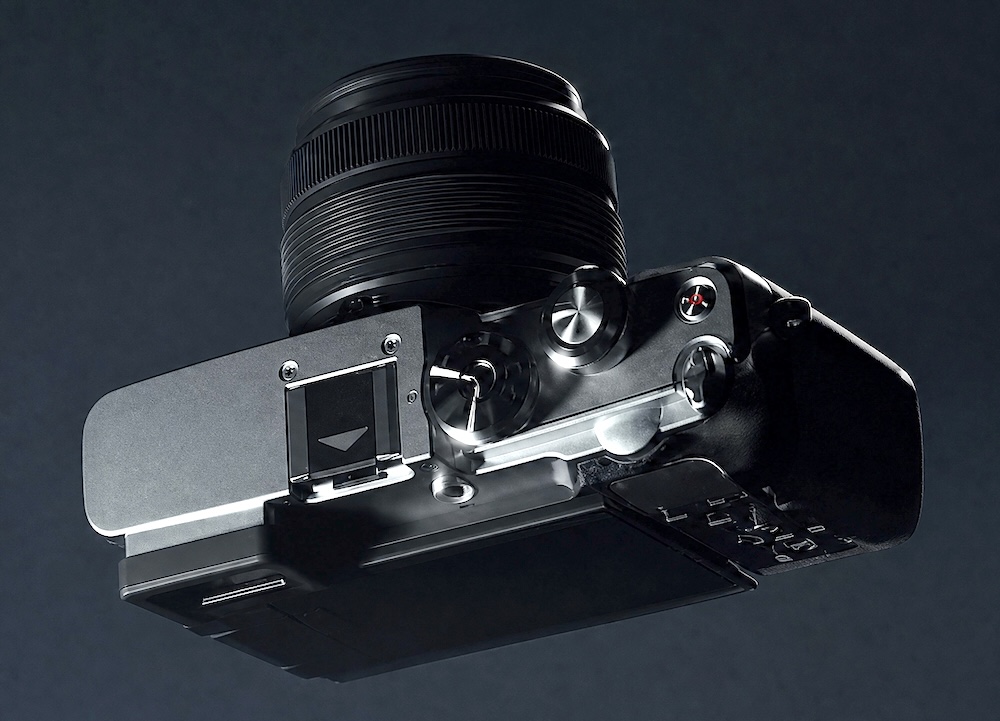
Ricoh has confirmed it is developing an “x” variant of its GR IV enthusiast compact. The GR IVx will be built around an all-new 40mm equivalent F2.8 prime lens.
The new model will use the same 26MP BSI CMOS APS-C sensor as the recent GR IV, rather than the 24MP FSI chip used in the GR IIIx.
Ricoh
The company has released the full planned spec of the camera, suggesting development is already well advanced. Details include a lens with 8 elements in 6 groups, including 3 aspheric elements, which is a more complex design than the previous model.
As with the 28mm-equiv GR IV, the specs say we’ll can expect improved startup times, a move to 5-axis image stabilization and the adoption of the larger DB-120 battery. It will also see the adoption of faster WiFi 5 standard.
Ricoh says the GR IVx will be launched in “Winter 2026 or later,” with no details of price yet given. For reference, the GR IV hit the shelves three months after its development was announced.
About the Author: Richard graduated as a scientist but had a lot more fun writing and shooting for his university magazine. A number of years spent variously as a reporter, writer and editor on science and engineering titles combined his knowledge of science with his interest in images and words. But it was spotting the connections between emission spectra, white balance and all the nonsense he’d taught himself playing around in Photoshop that helped kindle an interest in digital photography. Searching for a camera led to him discovering DPReview and Richard was recruited by Phil Askey in 2007. He’s been combining his love of photography, communication and attention to detail (pedantry?) ever since.
He has unusually strong opinions about lenses for the APS-C format.
Want to stay up to date on the latest product news and releases? Add DPReview as a preferred source to ensure our independent journalism makes it to the top of your Google search results.
Apple has announced a special event on September 9 at 10am PT (1pm ET / 6pm BST). While the company is characteristically coy about what’ll be announced – basically the only information that it’s shared is the title of the event, which is “surprise and shine” – its early September events are traditionally reserved for new iPhones.
There was a time when it was relatively easy to predict what would be announced at these events: two sizes of iPhone Pro and one or two sizes of the standard iPhone. But Apple’s roster of annually updated models has expanded, and is rumored to do so further. There’s now a budget model (currently the iPhone 17e) and an ultra-thin phone called the “Air.” If rumors are to be believed, this year’s event will also see the introduction of what would be Apple’s first folding phone, too.
Based on how Apple’s release schedule has worked in previous years, we wouldn’t expect to see a new “e” model at this event, though there are murmurs that Apple may even defer the launch of the new base model iPhone to a later event. In other words, we’d get what’ll presumably be called the iPhone 18 Pro, but not the standard iPhone 18.
At the moment, though, that’s all still speculation. Only Apple knows for sure what it has in store, and we’ll find out in around two weeks.
About the Author: Mitchell started taking pictures at 10 and hasn’t stopped since. It’s been a wide-ranging adventure, spanning a wide variety of genres and locales, and occasionally dipping into fascinations with video and filmmaking. They honed their technical knowledge doing documentation, programing and QA, writing for The Verge, and just generally messing around on the computer to see what breaks.
Want to stay up to date on the latest product news and releases? Add DPReview as a preferred source to ensure our independent journalism makes it to the top of your Google search results.
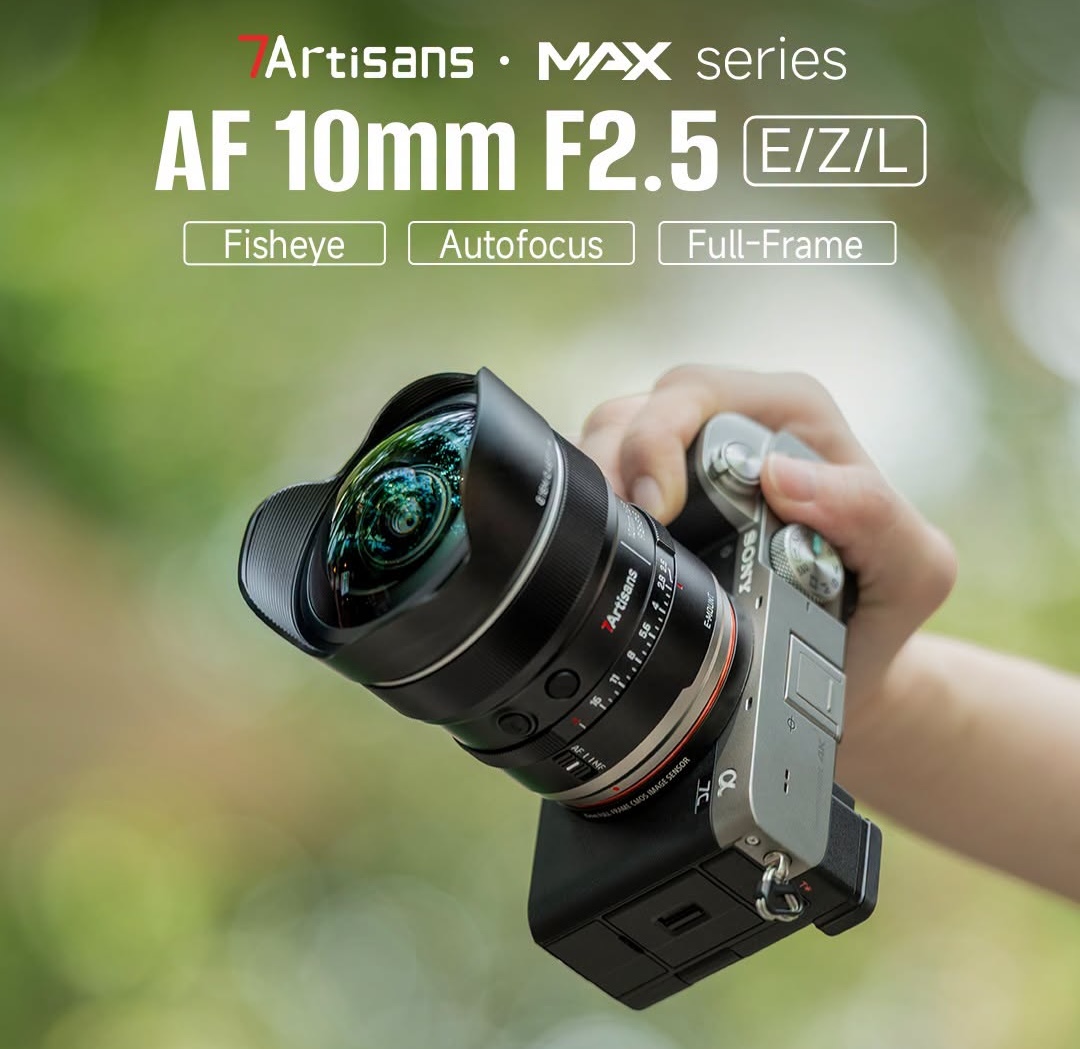
The 7Artisans AF 10mm F2.5 Max FF targets three full-frame mounts with a combination of AF and a 185° field of view that has rarely existed at this price.
7Artisans
When you use DPReview links to buy products, the site may earn a commission.
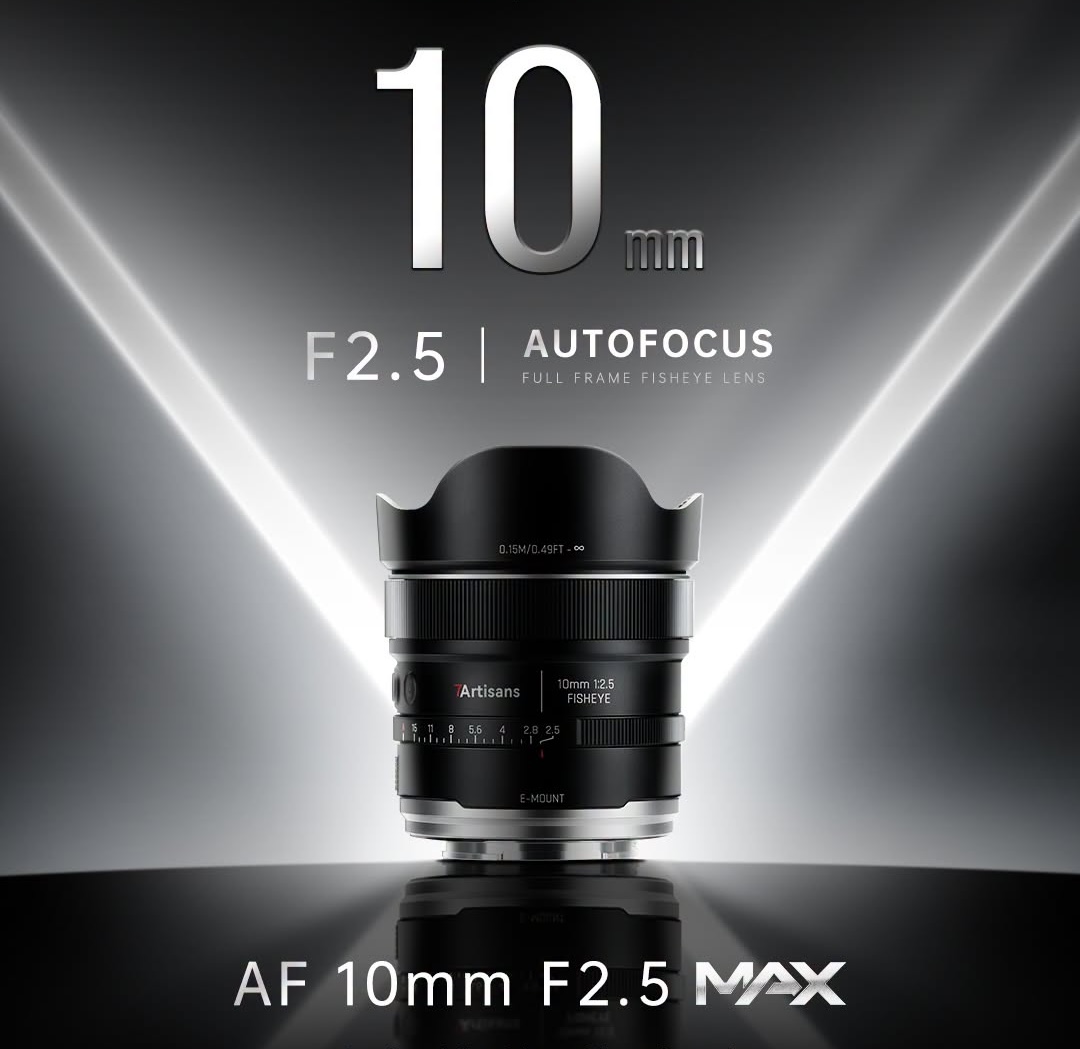
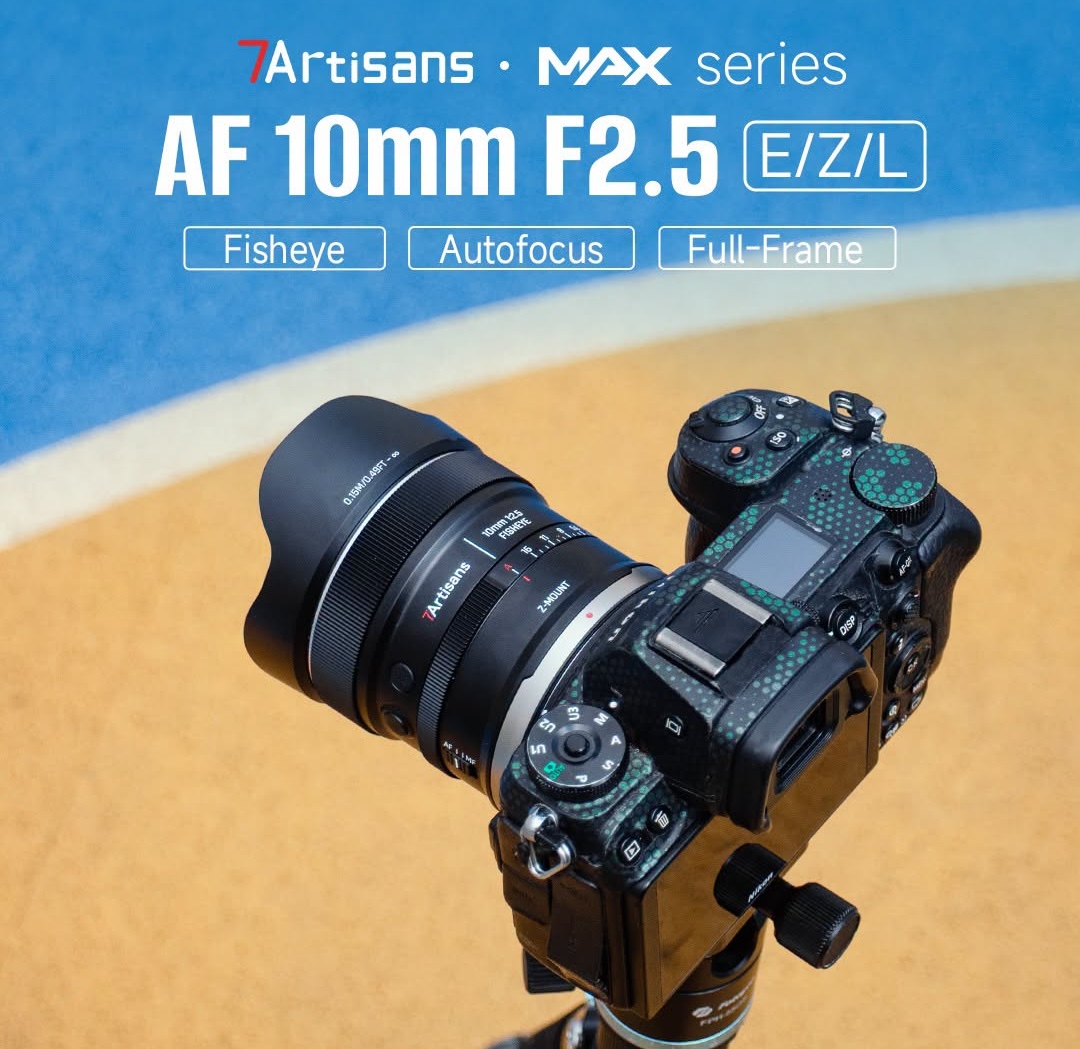
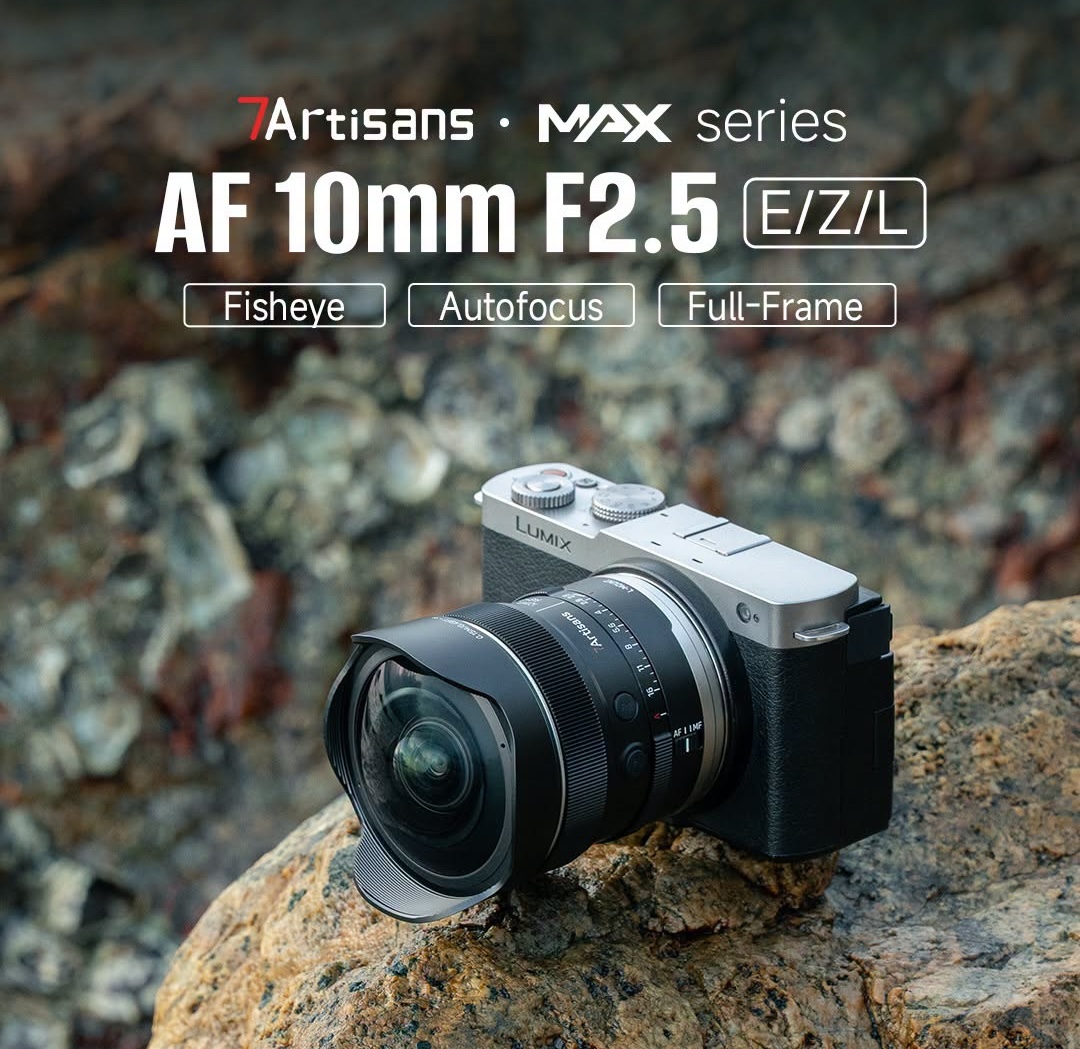
7Artisans has announced the AF 10mm F2.5 Max FF, a full-frame fisheye lens that offers autofocus with a 185-degree field of view. The lens is available for Sony E, Nikon Z and L-mounts and fills a gap for ultrawide photographers, as autofocus fisheye options for full-frame mirrorless cameras are particularly thin.
At 510g (1.1 lbs), the AF 10mm is still relatively compact for a full-frame fisheye, particularly given its autofocus mechanism, F2.5 maximum aperture and metal construction. It is 60g (2.1 oz) less than 7Artisans’ manual focus 10mm F2.8 fisheye, though just slightly heavier than Canon’s RF 7-14mm F2.8-3.5 L Fisheye STM (476g (1.3 lbs)). Thankfully, it substantially undercuts Sigma’s bulky 1.36 kg (3.0 lbs) 15mm F1.4 fisheye.
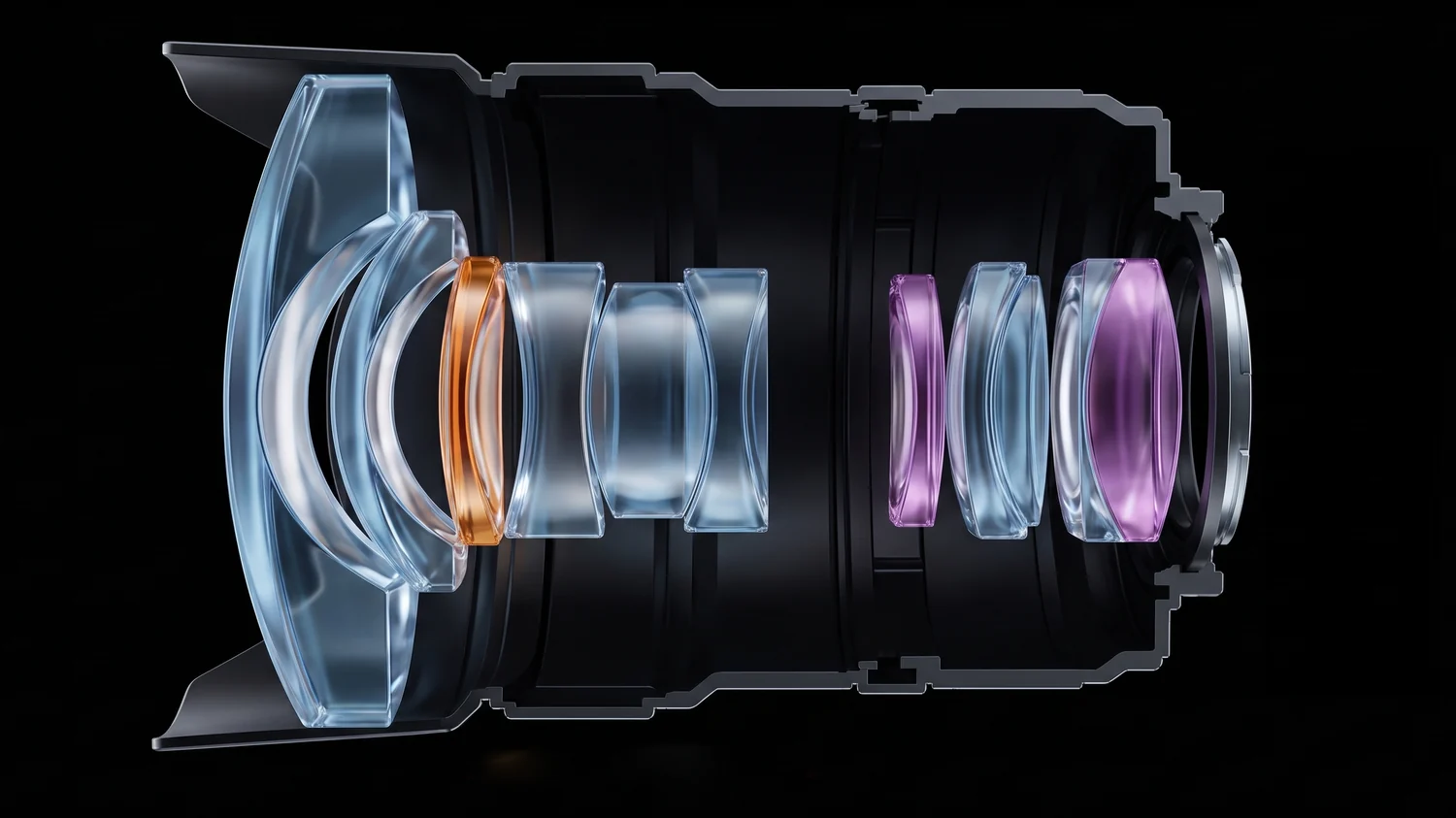
7Artisans didn’t specify the type of autofocus motor, but says it is smooth and reliable enough for dynamic genres like street photography. It can focus as close as 0.15 m (5.9″). The optical design comprises 11 elements in 8 groups, including 1 aspheric and 2 extra-low-dispersion elements. It also features a nine-blade aperture diaphragm.
7Artisans
Despite the budget price and compact build, 7Artisans included some useful on-lens controls, which the company says are designed for video use as well as still photography. There are two customizable control buttons, an AF/MF switch and a clicked aperture ring. 7Artisans also says the lens supports A-B Focus, a video-oriented feature that automates focus transitions between two saved distances.
The 10mm F2.5 is the second lens to carry 7Artisans’ Max designation, following the AF 135mm F1.8 Max. While the company has not yet fully defined the sub-brand, its first two entries suggest it is being used for higher-spec full-frame autofocus primes with more ambitious optical designs, metal construction and expanded on-lens controls.
The 7Artisans AF 10mm F2.5 Max FF lens is available for purchase as of today for $449.
About the Author: Abby Ferguson holds an MFA in photography and blends a fine-art background with extensive editorial and commercial experience. She built and led an in-house imaging program for a large vacation rental company and has served as an associate editor at Popular Photography. She also teaches at a local community college and serves on its Photographic Technology Program Advisory Board, sharing her knowledge and enthusiasm for the medium.
Want to stay up to date on the latest product news and releases? Add DPReview as a preferred source to ensure our independent journalism makes it to the top of your Google search results.
For this Question of the week, we ask the community what interesting, and perhaps even unexpected, wildlife they’ve encountered on their photography journey.
swimmy
For several years, I lived in the western part of Austin, TX. A beautiful area covered with forested rolling hills and a couple of big lakes. It’s close enough to the edge of town that local wildlife sometimes walks right up to your front door.
A beautiful wildlife encounter happened to me a few years ago during a once-in-a-century snowfall across the area. Intending to shovel the walkway to the road, I opened the front door, and right there was an adult doe (a female deer) and two of her fawns, sheltering from the weather. Unfortunately, they bolted as soon as they saw me, so I never had a chance to take a photo.
Yesterday, we published an article about the National History Museum’s Wildlife Photographer of the Year sneak peek of the 100 winning images of this year’s contest. To celebrate the amazing talent in the wildlife photography community, as expressed in places like the history museum mentioned above, we want to see your unique and artistic captures of local fauna.
So, with that said…
What interesting, and perhaps even unexpected, wildlife have you encountered?
Special thanks to community member swimmy for allowing us to use one of his Yellowstone National Park photos as the lead article image. It’s a majestic depiction of a bison, one of the park’s flagship wildlife encounters.
Drop a reply in the comments section below, and if you’ve got a photo to include from your mentioned forum sections, it may be selected for next week’s showcase article on this topic!
About the Author: Mathew Anderson is a proud Community Manager for the technology industry and a past visitor to DPReview.com for all his camera needs. He is currently the lead of DPReview’s community and primary communication link between the community and DPReview’s team.
Want to stay up to date on the latest product news and releases? Add DPReview as a preferred source to ensure our independent journalism makes it to the top of your Google search results.
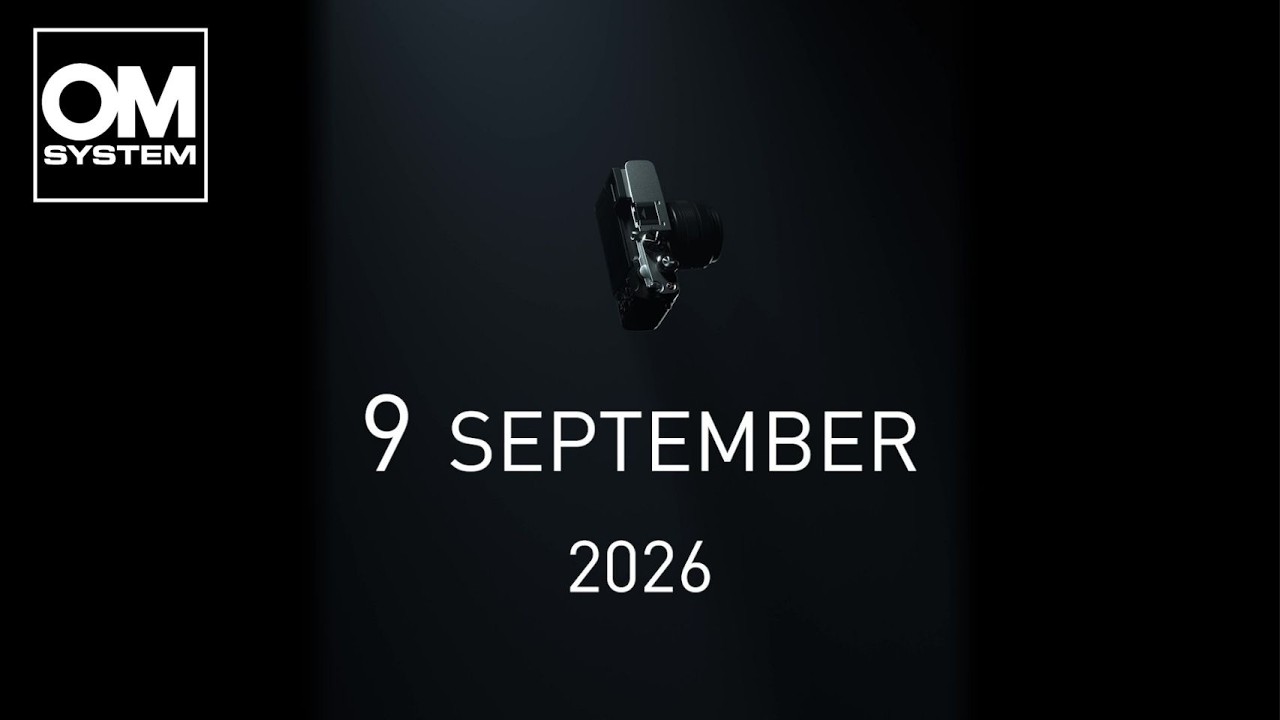
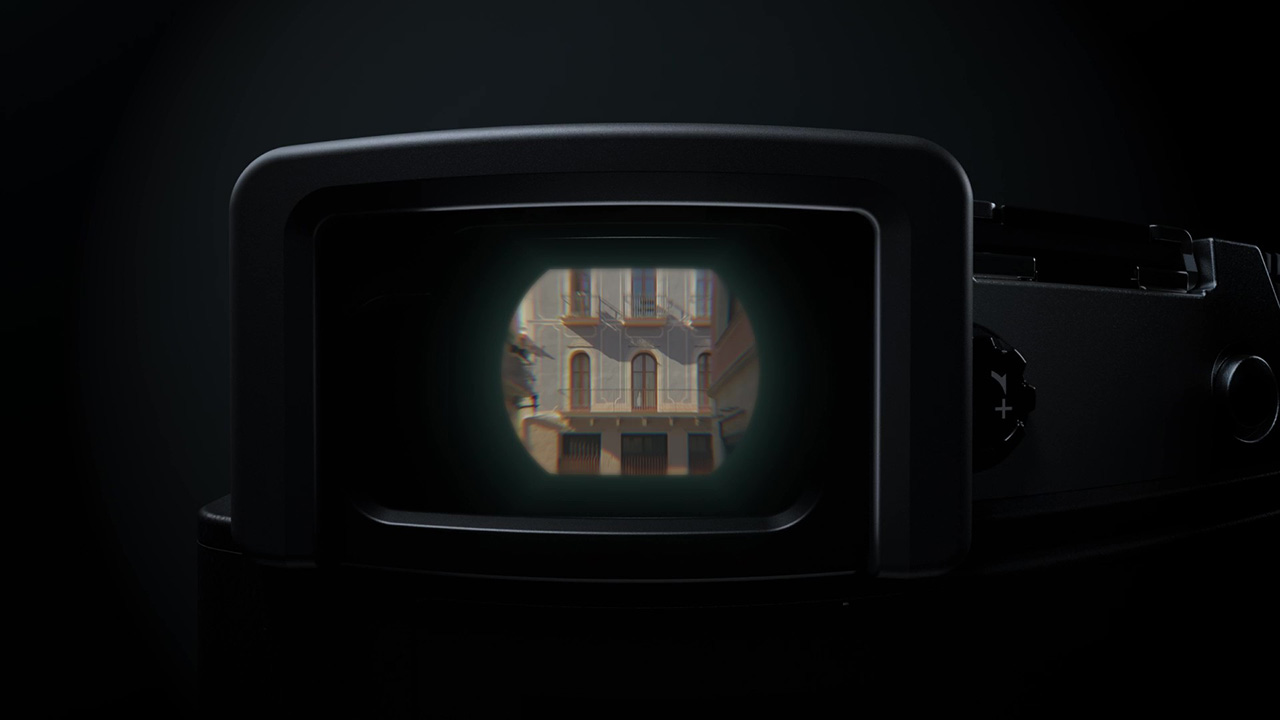
OM System is teasing “something new” coming September 9. Whatever it is, the company wants you to know it’ll have an EVF: the video it posted to its social media channels prominently focuses on that particular feature, while showing way more than we’ve come to expect for this kind of pre-announcement teaser.
Usually, companies will post a silhouette of a camera draped in deep shadows, with just a few parts sticking through to suggest its shape. And at first, that’s what OM System’s video seems like, opening with a shot looking through an EVF before presumably showing several sample photos depicting city life. But then, it closes with a shot of a camera floating up through the air with a surprising amount of the top and back plate visible. Sure, there are still plenty of shadows, but we can still see that the camera is using OM System’s familiar design language, and that it’ll have a fair number of controls.
Of course, there’s still plenty the teaser doesn’t reveal; there’s no hint at specs, price or branding. For those, we’ll have to wait until September 9.
About the Author: Mitchell started taking pictures at 10 and hasn’t stopped since. It’s been a wide-ranging adventure, spanning a wide variety of genres and locales, and occasionally dipping into fascinations with video and filmmaking. They honed their technical knowledge doing documentation, programing and QA, writing for The Verge, and just generally messing around on the computer to see what breaks.
Want to stay up to date on the latest product news and releases? Add DPReview as a preferred source to ensure our independent journalism makes it to the top of your Google search results.
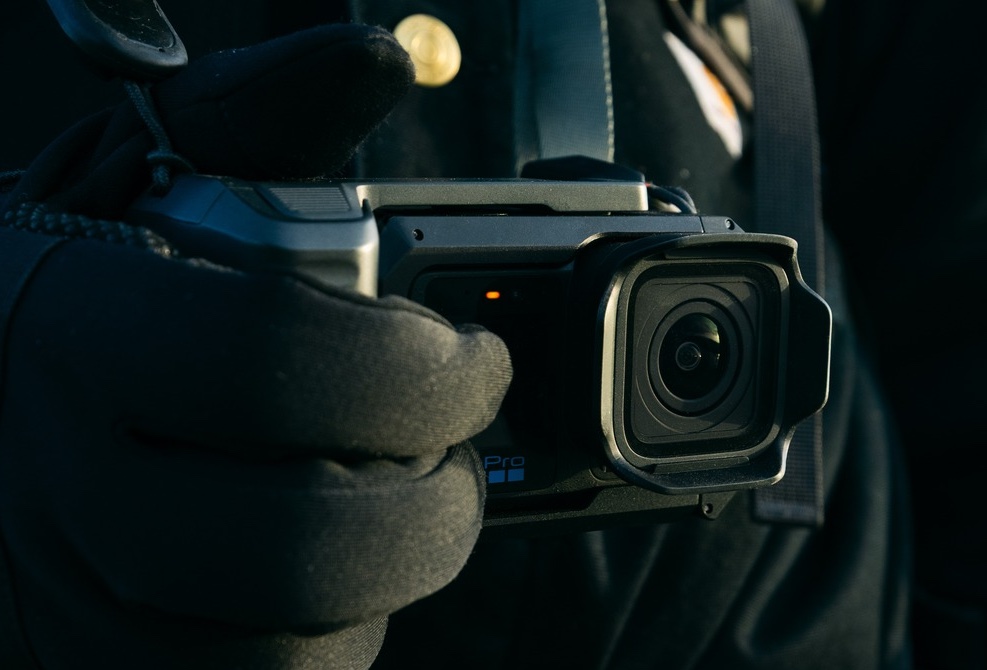
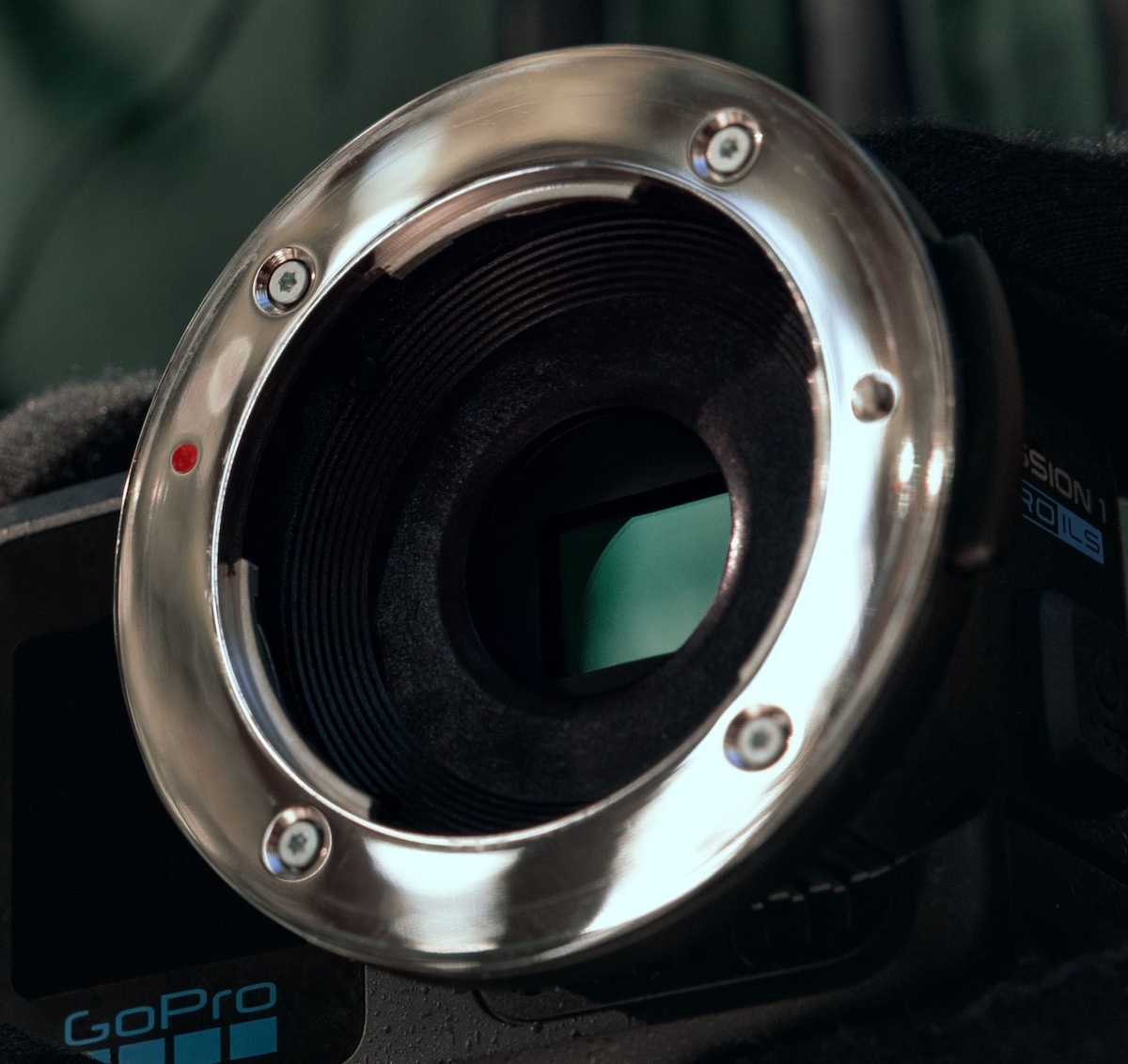
The Mission 1 Pro ILS has a Micro Four Thirds mount, opening GoPro’s ecosystem to a world of lenses that action cams haven’t offered.
Mitchell Clark
When you use DPReview links to buy products, the site may earn a commission.
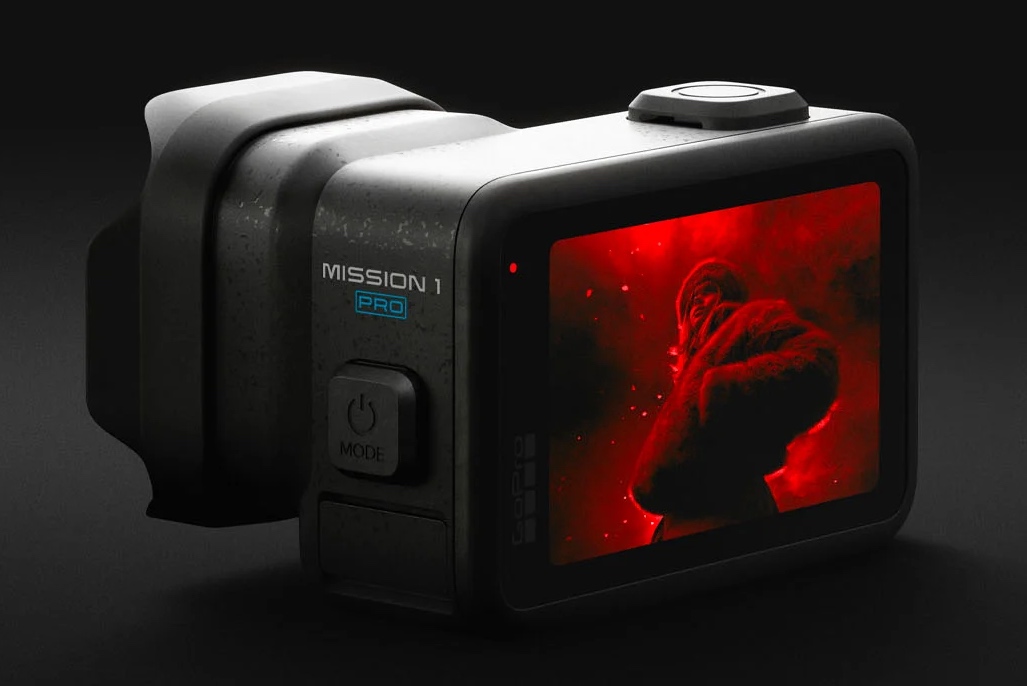
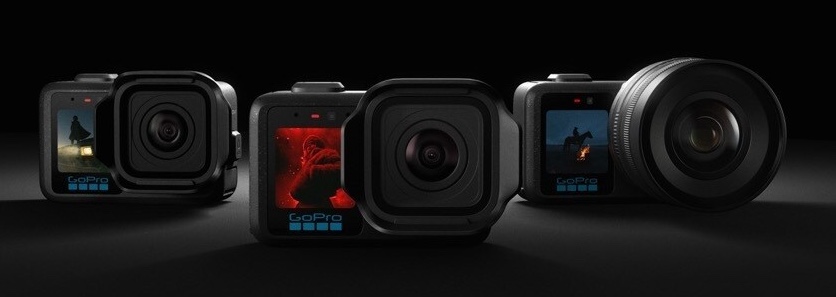
GoPro is finally releasing the Mission 1 Pro ILS, the tiny video camera with a Micro Four Thirds mount the company announced back in April. The standard Mission 1 Pro, which comes with a fixed lens and a Type 1 (128mm²) sensor, has been available for a while now and represented a big step up from the company’s traditional action cameras, but the version with an interchangeable lens is an even bigger change.
Like the standard Mission 1 Pro, the ILS’s Type 1 sensor has very fast readout speeds, allowing it to capture 4:3 open gate footage at 8K up to 30p, and at 4K up to 120p. Switch to 16:9 recording, and it can do 60p and 240p, respectively. It can also record using an HLG curve for HDR footage straight out of camera, or in GoPro’s GP-Log2 for more flexibility in post, and supports 32-bit float for audio, to virtually eliminate the risk of your sound clipping.
GoPro is launching a new app called Mission Monitor
While it’s tempting to see the Mission 1 Pro ILS as an enthusiast camera, there are clear indications that it’s aimed more towards video professionals, and the time we’ve spent with the camera so far supports this. Its Micro Four Thirds mount has no electronic contacts, so it can’t do autofocus, nor does it support the focus-by-wire or electronic aperture actuation required by most of the photo-focused Micro Four Thirds lenses on the market (as in, almost everything from Panasonic or OM System). That also means you’ll need to manually pull focus, and while the camera has assistance tools like focus peaking and magnification, that’s still no easy task if you’re using the 2.59″ rear display.
Thankfully, alongside the ILS, GoPro is launching a new app for iPhone and iPad called Mission Monitor. It not only lets you use a phone or tablet to preview your image and control the camera on a much larger screen, but also supports tools like focus peaking, LUT view assist and frameline overlays.
That app mainly operates over USB, rather than Wi-Fi, like the consumer-focused Quik app (though that can be used with this camera, too). This again reinforces that the camera is aimed towards a very different audience than the company’s traditional action cameras. Rather than being a self-contained option that you can set and forget, it’s something you or a dedicated camera operator actively have to manage, likely with the assistance of a rig with tools like a monitor and follow-focus rig. It’s also worth noting that, unsurprisingly, given its lens mount, this is a GoPro that’s only weatherproof, rather than waterproof.
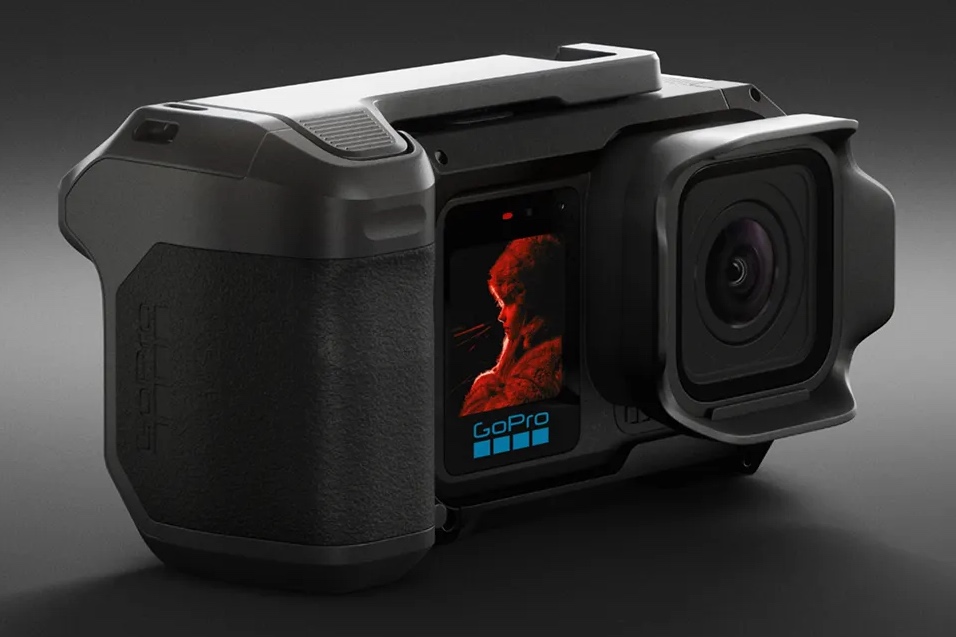
We plan on doing some more testing with the Mission 1 Pro ILS soon to see how it works for a variety of use cases, including as a tool for photographers, as it also has the ability to take 50MP stills, and an accessory grip that makes it feel more like a traditional compact (albeit one with even less manual control than usual and no autofocus). If you have any questions about it, let us know in the comments below.
The GoPro Mission 1 Pro ILS is available to pre-order for $700 from the company’s website, which is the same price as the standard Mission 1 Pro (though it’s already on sale at a $100 discount and has a built-in lens). The company says it’ll be available at traditional retailers in September.
About the Author: Mitchell started taking pictures at 10 and hasn’t stopped since. It’s been a wide-ranging adventure, spanning a wide variety of genres and locales, and occasionally dipping into fascinations with video and filmmaking. They honed their technical knowledge doing documentation, programing and QA, writing for The Verge, and just generally messing around on the computer to see what breaks.
Want to stay up to date on the latest product news and releases? Add DPReview as a preferred source to ensure our independent journalism makes it to the top of your Google search results.
Apple’s latest desktop excel at running the tech that have made them so expensive.
Apple
When you use DPReview links to buy products, the site may earn a commission.
Apple has updated its popular desktop computers, the Mac Mini and the more powerful Mac Studio. Alongside the new models come new chips: Apple is introducing an “Ultra” model into its M5 lineup, as well as its next generation of processor, the M6. But while the new models are exciting, their prices aren’t; the impacts of AI on RAM and storage pricing are extremely evident here.
The Mac Mini and M6
Apple
Lets start with the Mac Mini, as it’s Apple’s mainline desktop computer, which will be more than powerful enough for most photographers. The biggest change is internal, as the base level Mac Mini ships with the M6, a new chip in Apple’s lineup. It has a 12-core CPU, made up of two “Super” high-performance cores, 4 “performance” cores for mid-level tasks and 6 “efficiency” cores. The M4 found in the previous generation had 4 “performance” cores – though at the time those were Apple’s fastest cores, closer to what it’d call “super” cores now – and 6 efficiency cores. The chip can now access its memory slightly faster, with 170GB/s of bandwidth, up from 120GB/s. Likewise, the GPU has two additional cores for a total of 12.
Apple says the M6 “is built using cutting-edge 2 nm process” (though, as is typical, that doesn’t necessarily mean all, or even any, of its features actually measure 2nm), and that it includes a “Dual 16-core Neural Engine” that can provide double the performance in on-device AI tasks compared to the M5. The company also claims the M6 has 1.2 times faster single-core performance than the previous-gen (not that you could buy the Mac Mini with that chip in it).
You can also now get the Mac Mini with the same M5 Pro chip found in the company’s MacBook Pros. While it’s built on an older process, it offers more cores – starting with 15 CPU cores and 16 GPU cores, and going up to an 18-core CPU and 20-core GPU – and higher memory and SSD capacity. The M6 Mac Mini can handle up to 32GB of RAM and a 2TB SSD; with the M5 Pro version, that expands to 64GB and 8TB, respectively. And while the M6 Mac Mini’s Thunderbolt ports are still the fourth-gen versions that can run up to 40Gbps, the M5 Pro’s are Thunderbolt 5, which can reach up to 80Gbps (or 120Gbps in an asynchronous mode).
Apple
Outside of the updated processors, not much has changed about the Mini’s capabilities. It still has three ThunderBolt Ports, two USB-C ports and an HDMI port, and can drive up to three external displays. Apple updated its Bluetooth and Wi-Fi to versions 6 and 7 respectively (the latter being a very welcome addition). Likewise, the Ethernet port has been updated, too; it’s now a 2.5Gb model, rather than a 1Gb one, which will be a big upgrade for anyone who often finds themselves transferring large files over the network. Of course, you can still upgrade to a 10Gb ethernet port for $100 at time of purchase.
These upgrades don’t come cheap, though. When the M4 Mac Mini launched in late 2024, you could get a model with 16GB of RAM and a 256GB SSD for $599. However, following the skyrocketing prices of DRAM chips, Apple recently got rid of that model, and the base level became the $799 version with 16GB of RAM and a 512GB SSD. The M6 version comes in at $899, but drops the SSD back down to 256GB. You still get 16GB of memory. While the starting price has “only” jumped $100 compared to yesterday, you’re getting less for more money than you would’ve previously, and much less compared to what you would’ve been able to buy a year ago.
These upgrades don’t come cheap
The story is slightly less painful with the M5 Pro model. The previous version with an M4 Pro launched for $1,399 with 24GB of RAM and a 512GB SSD, while the new model is $1699 for those same specs.
From ISO invariance to computational photography, Rishi’s insistence on understanding a camera from the inside out influenced how DPReview – and much of the industry – thought about image quality.
Carey Rose
It is with great sadness that we have to announce that DPReview’s former Science Editor, Rishi Sanyal, has passed away. Rishi, whose full name was Saurarshi Sanyal, died on June 26, 2026, at his home in California. He was 46.
During his years with DPReview, Rishi was a driving force behind the site’s scientific approach to camera testing, setting the standard for how we investigated cameras and lenses and, just as importantly, how we interpreted the results.
Rishi Sanyal processes images at his desk in the DPReview office.
Rishi’s enthusiasm and intellect were evident from his very first interview with DPReview, and came to define his time with the site. Rishi wasn’t interested in data for data’s sake. He wanted to know what was happening inside a camera, why it was happening, and how a photographer could use that information to improve their work. A test result became interesting when it explained something a photographer might see in an image or, ideally, use to their creative advantage. Rishi might have been a journalist for a consumer website, but he was also a highly accomplished photographer and filmmaker, and as a scientist he was more than capable of meeting engineers on equal terms.
With his rare combination of deep technical understanding and an artist’s eye for color, light and composition, Rishi made a genuine and lasting impact on our industry. He changed the way many of us think about image-making, and exemplified DPReview at its best, as a site that could not only inform but also inspire. Among his many contributions, he was instrumental in our collective understanding of what is now known as “ISO invariance” (a term he helped coin), and his early fascination with the potential of computational photography led him to take on a camera performance engineering role at Apple.
Rishi sorts camera gear as former DPReview Studio Manager Sam Spencer observes from the neighboring cubicle.
Rishi’s scientific range had always been unusually broad. At Princeton, where he studied molecular biology, his thesis work included the design of a DNA nanomachine; he later earned a Ph.D. in biophysics. The subjects changed, but the instinct was recognizably the same: understand the system deeply enough to see what others might miss.
As far back as ten years ago, long before the distinction between “camera” and “software” became as blurred as it is today, Rishi was digging into how advanced processing algorithms could overcome traditional hardware limitations and change what photographers could expect from small sensors. Work that attracted the attention of some of the foremost imaging scientists working today, including Marc Levoy.
Levoy, then at Google and now Professor Emeritus of Computer Science at Stanford and Vice President and Fellow at Adobe, recalls interacting with Rishi many times during his tenure at Google. One example came around the Pixel 4, when Rishi independently estimated the improvement in signal-to-noise ratio achieved by capturing, aligning and merging bursts of Raw frames.
“That is not a calculation one expects a journalist to do,” Levoy wrote, “and speaks to Rishi’s deep understanding of photographic technology.”
Of course, like many perfectionists, Rishi could be exasperating. Not only to his coworkers and managers (his genuine bafflement in the face of deadlines was legendary) but also to the camera and lens manufacturers with whom he corresponded, both publicly in articles on DPReview and privately in lengthy, densely argued emails. To his editors, often the biggest challenge was persuading him that merely excellent was good enough, that it was time to hit publish, and perfect might have to wait.
Rishi and former editor Barney Britton review camera footage during a video shoot in the DPReview studio.
His editors were not the first people who had tried to convince Rishi that a problem had been solved well enough to move on. His father, Gautam, remembers giving him essentially the same advice from childhood: there comes a point when the work is already excellent and you have to let it go. Rishi was rarely inclined to believe that point had arrived if he thought there was still something left to understand.
That drive was visible early. In seventh grade, Rishi built a working magnetic-levitation demonstration for a regional science fair, earning a gold medal and an invitation to attend the International Science and Engineering Fair as an observer.
At age 15, Rishi earned a US Department of Energy prize at an international science fair for analyzing the best materials for designing magnetic-levitation trains.
The same instinct could also be remarkably generous. Scott Everett, who worked closely with Rishi and later managed him at DPReview, remembers showing him a photograph he had taken at White Sands National Park that he wanted to print. Rishi liked the image, and almost immediately became invested in making sure the finished print lived up to what he knew was there in the file. What followed was characteristically thorough: Rishi took over the processing and sent long text threads about monitors, color, printing technology and how to prepare the file properly. It was far more information than Scott needed, but that was partly the point. Rishi knew what was possible, and because the photograph mattered to his friend, he wanted the finished print to live up to the memory behind it.
More than anything else, the same instinct ran through all of it. Rishi wanted to understand things deeply and make them better, whether that meant a science project, a photograph, studio analysis or hardware design.
Above: Rishi excelled at science projects and science fairs.
Those of us who worked closely with Rishi remember the good times we shared with our friend. Long days in the studio, figuring out some esoteric aspect of a camera’s behavior. Press events. Tradeshows. Video shoots in locations all over the US (he may have been the world’s worst camper, but he played a mean campfire guitar). And jet-lagged interviews with executives in Japan, whose obvious respect for his abilities spoke for itself. More than anything, we remember Rishi’s beaming warmth, and the ease with which he could strike up a conversation with almost anyone. The same curiosity he brought to imaging science extended to everyone he met. We’ll miss him.
Not long ago, former editor Barney Britton was looking through a book of photographs of the Grand Canyon, taken by a renowned National Geographic photographer. The daytime images were strong, but the nighttime landscapes and starscapes were technically disappointing. Before Barney was even conscious of making the comparison, one thought occurred to him:
“They should have given Rishi the job.”
Rishi celebrates with other members of the DPReview team at PIX2015, a photography expo organized by DPReview in Seattle in 2015.
Long before DPReview, Rishi was already bringing the same instincts to science and photography. As a teenager, he became fascinated by sonoluminescence, a phenomenon in which sound waves moving through liquid can produce tiny flashes of light. He spent night after night in his family’s basement building an apparatus to reproduce it. Eventually, he succeeded and, naturally, photographed the result.
His parents still have the glass vessel Rishi used for that experiment, the same one in which he finally managed to turn sound into visible light.
Tributes from colleagues and readers
To honor Rishi’s legacy, we invited current and former DPReview colleagues to share memories of Rishi that have stayed with them. Their recollections are below, in their own words.
We know that many members of the DPReview community will have their own memories of Rishi. We hope you’ll add them in the comments below and in the forums.
At some point around 2014, I mentioned to Rishi that my iMac was struggling. He was almost offended that I was doing photo and video work on a machine without maxing out its RAM and SSD. On that generation of iMac, upgrading meant pulling the display off and disassembling a good portion of the machine to get inside, which Rishi treated as a minor implementation detail. Before long, Rishi, our colleague Eugene, and I were crowded around the desk with the machine in pieces, while Rishi talked us through everything in great detail.
Eugene took this photo that afternoon. I wouldn’t have thought much of it at the time. I’m grateful to have it now.Eugene Hsu
Buried deep in my phone’s text history is a sort of archive of Rishi’s mind as I often experienced it: long threads about display calibration, HDR tone mapping, and the exact way an image should render on a screen. A simple question routinely became an exhaustive technical breakdown, because he simply wasn’t capable of leaving an interesting problem halfway explored.
And those conversations weren’t only about technology. Rishi and I often bonded over film and music. He especially admired Christopher Nolan films and Hans Zimmer scores, and cared deeply about experiencing them as well as the equipment would allow. All that calibration ultimately had a purpose.
One of these nights I’ll dig up those threads, calibrate my setup exactly as he would have insisted, put on Interstellar, turn the volume up, and watch it the way Rishi believed it deserved to be seen
Working with Rishi was like having access to a personal masterclass. He didn’t just want you to understand how cameras worked; he wanted that understanding to change the way you took pictures. I’m a better photographer today because of the things Rishi taught me.
Rishi loved whiteboards. I recall many an afternoon in the DPReview office, standing at one with him as he walked me through an important concept or technology. By the time we were done, the board would be covered with graphs, equations and illustrations. He was passionate about sharing his knowledge, not just with other DPReview staff but with everybody.
I saw him explain new camera technology to famous photographers with multiple National Geographic covers to their credit. When the two of us interviewed Academy Award-winning cinematographer Emmanuel Lubezki, Rishi went off on a tangent and started geeking out about the dynamic range of the Nikon D810. I’m pretty sure Lubezki came away from that conversation having learned something from Rishi, and not the other way around.
The first time I met him was when he interviewed me for a job at DPReview. He asked tough, technical questions that required me to synthesize a lot of information. When I told him I wasn’t sure about something, he stood up and walked to – what else? – the whiteboard, and talked me through the answer. He might be the only person I’ve ever seen turn a job interview into a teaching opportunity.
If there’s one thing I can be certain of, it’s that he’s already cornered an angel or two in front of a whiteboard, explaining dynamic range.
Rishi possessed a remarkable intellect, a patient teaching demeanor, an almost painful obsession with perfection, and a talent for photography. He understood that abstract lab measurements were meaningless unless they could be translated into tangible benefits when capturing real-world images. By combining his unique blend of scientific expertise and artistic vision, Rishi revolutionized the way we evaluate camera technology. He brought scientific rigor to our testing processes and earned the respect of the entire industry.
Rishi was also, for the last 10 years or so, someone I was lucky to call a friend – albeit a friend that would regularly drag me into drawn-out conversations about the latest developments in sensor technology or the failings of smart home technology. Not that I ever complained; Rishi’s infectious enthusiasm for his work was contagious, and I always gained something valuable from our interactions. Above all though, Rishi was the sweetest, kindest, and most genuinely humble person I’ve ever known, and his passing is a profound loss for everyone whose lives he touched.
I didn’t expect to ever have to write this, and I don’t know quite how to begin. So I’ll start with a gripe, which I know my friend Rishi would relate to. Among the most common lines of criticism of any technical analysis of a piece of photographic equipment is: “fine, but what relevance does this have to ordinary photographers?” I’ve always found this irritating. The idea that scientific testing is somehow “un-creative” is understandable: how many photographers (ordinary or otherwise) spend their time shooting test charts? But the best reviewers don’t test cameras and lenses because they enjoy plotting charts. They do it because they want to know how to use those data to take better photos, and to share that knowledge with others.
Rishi exemplified this goal. His ability to communicate the creative potential of technology that even camera manufacturers sometimes seemed not to fully understand was rare, if not unique. He knew what data mattered to photographers and, equally as important, he knew what didn’t. He was a scientist, yes, and a highly accomplished one, but he was also an artist, in the truest sense. A highly, highly unusual combination, even among imaging professionals.
My main memory of Rishi is just how immensely likable he was. I first met him more than ten years ago when he approached us about a position at DPReview. We interviewed him over lunch, and I recall Rishi actually struggling to eat in his excitement, almost choking at one point, so enthusiastic about what we did and what he might do with us, overflowing with ideas that seemed to come tumbling after one another, faster than he could verbalize them. He brought the same endearing enthusiasm to everything he did at DPReview. Outside of work hours, he was an avid cinophile, a borderline-obsessive audiophile, an accomplished musician and a loyal friend.
Even now, years after we last worked at DPReview, Rishi’s name still comes up in conversations I have with photo industry figures. Not just because of his intelligence and professional accomplishments (although they earned deserved respect) but because of his character. His warmth, his genuine interest in people, his unflagging creative passion and his total lack of cynicism (again—rare) impressed everyone he came into contact with. He was an extraordinary person, and he will be greatly missed.
When I had my first conversation with Rishi, I was still a photographer at the local power company. I had just applied to a rare opening at a website I visited almost every day, DPReview. I knew that Rishi was the Science Editor there, and I knew he was very smart, and I also knew that this conversation I was about to have was going to be a bit of a test.
When I picked up the phone around the end of the workday, I worked out my nervous energy by pacing endlessly around a corporate courtyard, phone pressed hard enough to my ear and face to leave a mark afterward. Introductions were made, and we promptly dove in.
Though I don’t remember exactly how we ended up on it, Rishi and I soon found ourselves animatedly extolling the virtues of Nikon’s 3D-Tracking autofocus to each other, and lamenting that so many photographers we knew never used it. (I later discovered that many a conversation with Rishi, if gone on long enough, would land on Autofocus eventually.)
Fast forward to my in-person interview, and Rishi comes in with a Sony a7R II. Now, I had never even seen a mirrorless camera in person before, much less used one, and perhaps sensing my naïveté, Rishi proceeded to absolutely blow my mind with the camera’s Eye Autofocus feature. Not only was this system fundamentally more accurate than what I had experienced with my DSLR’s, but it could track someone’s eye almost to the very edge of the frame.
For someone used to a middling clump of central AF points in an optical viewfinder, it was a revelation for me. And that really sums up what I remember and admire most about Rishi. When you got him on a topic he was into, and there were a wide variety of those, his enthusiasm would fill the room. He found so much joy in all of the details, and he couldn’t help but share that joy (and all those details) with everyone around him.
I’m so grateful to have gotten to know and work alongside Rishi for six years at DPReview. We spent a lot of time in the studio together, a lot of time shooting videos together, and a lot of time on press trips together. We had the privilege of working two of the best jobs on this earth, and I will treasure those memories for the rest of my life. Farewell, Rishi. I’ll miss you.
Rishi’s influence expanded the way I approach photography, both from a technical and a compositional standpoint, almost certainly more than any other colleague I’ve worked with over the past 20 years. His brilliance and creativity behind a camera, and unmatched knowledge of imaging science, were a rare and potent combination that made Rishi an infectious person to be around and especially to talk shop with. But it wasn’t just Rishi’s technical chops that made him a delight; it was also his big open heart.
Rishi wasn’t afraid to open up about deep, personal topics. He was also a fantastic and reliable listener, and someone I felt safe sharing my own inner musings, both good and bad, with. Our working relationship started rocky – what do you expect when you put two guys from Jersey in the same room? – but blossomed into something really special. Rishi, I miss you profoundly, but am so glad our paths intertwined as they did. A true friend and celebrated colleague, I’ll think of you every time I expose to the right in-camera and pull my shadows in post.
I’ve never worked with anyone else quite like Rishi. We butted heads often, usually around deadlines and such, but we could always laugh about something in the middle of it. I’ll remember those moments with him most of all. Making Rishi laugh always felt really good, and he laughed easily, even when we were annoyed with each other about something. He was truly one of a kind.
Rishi was a dear friend who changed the course of my professional career a decade ago.
We had become friendly while attending press trips, with him representing DPReview and Chris Niccolls and I still working for The Camera Store’s YouTube channel. While I felt I had adequate technical skill to review cameras, Rishi’s astounding depth of knowledge was somewhat intimidating, but more importantly inspiring. I began messaging him directly for clarification or information on sensors and autofocus systems whenever I got a wall.
Eventually, Chris, Rishi and I were on an extended press trip in Thailand, having one of our regular conversations that careened from the incredibly nerdy to surprisingly personal when he said “You guys should come work for DPreview with me.” The opportunity to work side-by-side with Rishi and learn just a fraction of his incredible scientific knowledge was too good to pass up.
While I wasn’t able to see Rishi in person as I may have hoped, our near-daily text exchanges were a source of inspiration, levity and occasional temple rubbing frustration as I attempting to understand topics that seemed obvious to my co-worker. My time at DPReview was an incredible education, and Rishi was a massive reason for that.
We both went our separate ways in a few years, with Rishi leaving to work with Apple, and Chris and I taking our YouTube show to PetaPixel. While those text exchanges were no longer daily, I’d still regularly hear from Rishi, especially when an exciting new camera or lens was announced. Thankfully though, reviewing the latest iPhone every year gave me the opportunity to grab a bite and catch up with Rishi when I was in Cupertino. While it only happened annually, we always picked up like no time at all had passed.
There is a lot to love about my job making videos, from using the latest technology to traveling to beautiful places, but the best part is the opportunity to get to know many amazing people I’d otherwise never have the chance to interact with. Rishi Sanyal was one of those.
Before category winners are announced on October 13, the Natural History Museum is giving the public its first look at the competition’s scope through 15 highly commended photographs drawn from a record-breaking submission pool.
Vegard Byrkjeland Aasen / Wildlife Photographer of the Year
The Natural History Museum’s Wildlife Photographer of the Year is sharing a sneak peek of the 100 winning images of this year’s contest. This year marks the 62nd edition of the competition, which saw a record 65,403 entries across 121 countries and territories.
The competition recognizes photographs across numerous subjects and approaches, including animal behavior, portraits, underwater scenes, urban wildlife, photojournalism and ecosystem-focused work. It also presents awards for photo stories and portfolios, a Rising Star prize for photographers ages 18–26, and separate age-group awards for young photographers.
While celebrating outstanding nature photography, the contest also aims to deepen public understanding of the natural world and the need to protect it. As Natural History Museum Director Dr. Doug Gurr said, “At a time when nature is under more pressure than ever before, these photographs remind us of both what is at stake and what is worth protecting.”
An international panel of experts in wildlife photography, filmmaking, science and conservation judged the anonymous entries on creativity, originality, technical excellence and storytelling. Category winners and the Grand Title awards will be announced on October 13 at a Natural History Museum ceremony hosted by wildlife presenters and conservationists Chris Packham and Megan McCubbin; the winning images will go on display at the museum in London beginning October 16.
Wildlife Photographer of the Year is developed and produced by the Natural History Museum, London. The full gallery of category winners and the Grand Title recipients will be published on the Natural History Museum’s Wildlife Photographer of the Year pages following the October 13 ceremony.
Wildlife Photographer of the Year 62 — highly commended preview
The 15 images below are drawn from across the competition’s categories. Descriptions are reproduced as supplied by the Natural History Museum.
Biting Back
Andrea and Maceo Grammatico / Wildlife Photographer of the Year
Photographer: Andrea and Maceo Grammatico
Award: Highly Commended, Animal Portraits
Image title: Biting Back
Image location: Sierpe, South Puntarenas, Costa Rica
Description: Andrea and Maceo Grammatico (France) get a snake’s-eye view of a mosquito drinking a venomous viper’s blood.
Twins Andrea and Maceo describe this image as “one of the most demanding focus stacks we’ve ever created.” It required immense concentration and care. It wasn’t until they reviewed their photographs that they noticed the mosquito on the snake’s head.
The fer-de-lance is a highly venomous viper, responsible for the greatest number of fatal snake bites in Central America. The snake’s effective camouflage and adaptability in plantation habitats occasionally surprises unsuspecting workers.
Technical details: OM System OM-D E-M1 Mark III | OM System M.Zuiko Digital ED 90mm F3.5 Macro IS PRO | F8 | 1/50 sec | ISO 200 | Godox V860III flash + Cygnustech diffuser | Focus stack of 37 images
Wings of Darkness
Andrew Parkinson / Wildlife Photographer of the Year
Photographer: Andrew Parkinson
Award: Highly Commended, Animal Portraits
Image title: Wings of Darkness
Image location: Meeting of the Waters State Park, Northern Pantanal, Brazil
Description: Andrew Parkinson (UK) spies a black vulture over the carcass of a yacaré caiman in Brazil’s Pantanal wetlands.
When Andrew spotted this vulture, it was too good an opportunity to miss. He kept his boat back and used a long telephoto lens to frame what he saw as ‘the menacing nature’ of the vulture. Out of frame, a jaguar was waiting to retrieve the caiman from the water.
After the vulture flew away, the jaguar claimed its prize. It was then that Andrew noticed ‘a suspiciously clean, straight wound’ on the back of the caiman’s head, possibly caused by a blow from a speeding boat.
Technical details: Nikon Z9 | Nikon Nikkor Z 800mm F6.3 VR S | F10 | 1/1600 sec | ISO 800
Flock of Gold
Bence Máté / Wildlife Photographer of the Year
Photographer: Bence Máté
Award: Highly Commended, Behavior: Birds
Image title: Flock of Gold
Image location: Ashnil Aruba Lodge, Tsavo East National Park, Kenya
Description: Bence Máté (Hungary) observes a flock of birds descend to quench their thirst at a small pond.
For Bence, watching in the golden light of a late afternoon, the sight of this swirling mass was breathtaking: “You could feel the rush of air from tens of thousands of wings beating in unison, even from 30 meters (98 feet) away.”
Red-billed queleas are found in almost every part of central, eastern and southern Africa apart from in tropical forests. They gather in groups as large as two million, and the global adult breeding population is estimated to number 1.5 billion, making them the most abundant wild bird on Earth.
Technical details: Sony a9 III | Sony FE 600mm F4 GM OSS + 1.4x teleconverter | F8 | 1/4000 sec | ISO 5000
Mutual Friends
Ernest Porter / Wildlife Photographer of the Year
Photographer: Ernest Porter
Award: Highly Commended, Behavior: Birds
Image title: Mutual Friends
Image location: Manyeleti Game Reserve, Mpumalanga, South Africa
Description: Ernest Porter (South Africa) is delighted by an oxpecker cleaning its bill against a rhino’s skin in the soft afternoon light.
While searching for wildlife in the reserve, Ernest witnessed a group of white rhinos with red-billed oxpeckers feeding on the insects that infest their skin. He noticed one rhino with a subtle blue ring in his eye, which immediately became his unique muse.
In Swahili, the red-billed oxpecker is called askari wa kifaru, a name that translates to “the rhino’s guard.” Oxpeckers act as sentinels, calling out to alert their hosts to the approach of other dangerous animals.
Technical details: Canon EOS R7 | Canon RF 400mm F2.8 L IS USM | F2.8 | 1/5000 sec | ISO 800
Lifted to the Surface
Vegard Byrkjeland Aasen / Wildlife Photographer of the Year
Photographer: Vegard Byrkjeland Aasen
Award: Highly Commended, Behavior: Mammals
Image title: Lifted to the Surface
Image location: Kvænangen, Troms County, Norway
Description: Vegard Byrkjeland Aasen (Norway) watches an adult orca supporting the body of a calf in the freezing waters of a Norwegian fjord.
Vegard had just launched a drone to document sightings for the Norwegian Orca Survey when something caught his attention — an adult orca carrying a deceased calf, occasionally dropping it and then retrieving it as it sank. Although difficult to witness, Vegard felt it was “important to document the moment.”
Cetacean mothers have been known to use their heads to lift newborns to the surface to breathe, raising the possibility that Vegard was witnessing efforts to revive the calf. Some researchers interpret this behavior as a reflection of the deep bond between mothers and calves.
Allegra Hutton / Wildlife Photographer of the Year
Photographer: Allegra Hutton
Award: Highly Commended, Behavior: Mammals
Image title: Up a Tree without a Squirrel
Image location: Okavango Delta, Botswana
Description: Allegra Hutton (USA) watches a young leopard chase a squirrel up a tree in Botswana’s Okavango Delta.
Allegra had already watched the leopard try — and fail — to stalk a rabbit. The squirrel also avoided the leopard’s clumsy maneuvers, eventually ascending too high for the leopard to follow. By then, the cat could barely hang on. An awkward backward retreat ensued.
The world is a dangerous place for young leopards. Less than half of cubs survive to independence. Many are killed by male leopards or fall prey to lions and other predators.
Technical details: Sony a7R V | Sony FE 200-600mm F5.6-6.3 G OSS at 467mm | F11 | 1/640 sec | ISO 4000
Split-Second Escape
Jens Cullmann / Wildlife Photographer of the Year
Photographer: Jens Cullmann
Award: Highly Commended, Behavior: Amphibians and Reptiles
Image title: Split-Second Escape
Image location: Central Kalahari Game Reserve, Botswana
Description: Jens Cullmann (Germany) gets eye-level with an African bullfrog as it lunges for an African babul butterfly — and misses.
Jens noticed tadpoles on a previous visit after heavy rains and returned the following month to find ponds and puddles full of young bullfrogs. He spent more than two weeks watching the young frogs “eat everything that moved.”
As adults, African bullfrogs grow up to 12 centimeters (5 inches) in length, turn a drab green and spend 10 months of the year in a dormant state underground, only emerging after the rains to breed and eat voraciously.
Technical details: Canon EOS R3 | Canon RF 100-300mm F2.8 L IS USM | Canon Extender RF 2x | F9 | 1/4000 sec | ISO 2500
Description: Gil Wizen (Israel/Canada) shares the beauty of this lichen dragon katydid.
At only 15 millimeters (3/5 of an inch) long, this little lichen dragon katydid was not easy to find. Luckily, Gil was able to spot it when it moved slightly, though distinguishing between the katydid and the lichen in the camera’s viewfinder made it challenging to photograph.
Found only in the Andes Mountains in Ecuador, Lichenodraculus matti, or “Matt’s little lichen dragon,” takes part of its scientific name from its discoverer. “Dragon” alludes to the spiny armor that protects it against eagle-eyed predators that see through its disguise.
Technical details: Canon EOS 7D Mark II | Canon EF 100mm F2.8L Macro IS USM | F11 | 1/100 sec | ISO 400 | Canon Speedlite Macro Twin Lite flash + customized diffuser
Calm Amid the Storm
Shane Gross / Wildlife Photographer of the Year
Photographer: Shane Gross
Award: Highly Commended, Oceans: The Bigger Picture
Image title: Calm Amid the Storm
Image location: D’Arros Island, Seychelles
Description: Shane Gross (Canada) slowly approaches a school of bigeye trevally as the morning light breaks and a storm approaches.
Shane noticed this school of fish swimming near the shore every morning at sunrise. Aiming for a split shot, he flipped the camera upside down to aid buoyancy distribution and adjusted his position, slowly approaching the curious school.
Bigeye trevally are fished in many parts of the world, but here they are relatively safe. In 2023, the waters surrounding D’Arros Island were made a Marine Protected Area and designated as no-take zones as part of the worldwide initiative for governments to protect 30% of Earth’s land and ocean by 2030.
Description: Loren Elliott (USA) observes a black bear stopping for a dip in a southern California pool.
Loren spent many hours watching through the kitchen window of a local resident’s home to photograph bears that frequently pass through this yard. “I most like how it shows the very common overlap of wildlife and residential living in Los Angeles County,” he says.
Where housing developments have spread into the bear’s habitat, human–bear coexistence is increasingly challenging. The owner recognizes that he is living in “bear country” and endeavors to be a responsible resident, ensuring no food is left out and doors and windows are kept shut.
Technical details: Sony a9 II | Sony FE 24-70mm F2.8 GM II at 24mm | F4 | 1/1000 sec | ISO 320
Ocean Protector
Ralph Pace / Wildlife Photographer of the Year
Photographer: Ralph Pace
Award: Highly Commended, Wetlands: The Bigger Picture
Image title: Ocean Protector
Image location: Monterey Bay, California, USA
Description: Ralph Pace (USA) glimpses a sea hare gliding through an eelgrass meadow in Monterey Bay.
In the shallows of Monterey Bay on the Pacific coast of the USA, the evening light traces the silhouette that earned this sea slug its name — sea hare. Ralph wanted to depict an unexpected, hopeful scene of “a gentle giant safeguarding the last green meadows of the sea.”
Sea hares play an important role in the restoration of eelgrass meadows by grazing on the red algae that block sunlight to the meadow. Eelgrass is vital for coastal ecosystems and is an important carbon sink.
Description: Pietro Rojas (Guatemala) documents a brown bear riding a small motorcycle, muzzled and secured to the apparatus as it circles a circus ring in Doha.
Noticing that a circus with animal acts was in town, Pietro decided to document it. What he found most compelling about this image was “the contrast between the wild nature of the animal and the human environment imposed upon it.”
Many countries have banned the use of wild animals in circuses. Where brown bears are used, they often are trained to perform in unnatural postures like standing upright for long periods of time, contributing to health and behavioral problems.
Award: Highly Commended, Animals in Their Environment
Image title: Eye of the Storm
Image location: Namib Desert, near Swakopmund, Namibia
Description: Dewald Tromp (South Africa) witnesses a chameleon battling a sandstorm in the Namib Desert.
The wind picked up as Dewald was photographing this Namaqua chameleon weathering the sudden storm. Soon, it became difficult to breathe and “in a matter of seconds, you could hardly see the person next to you,” Dewald recalls.
Namaqua chameleons are insectivorous desert specialists, harvesting moisture from the air directly. Droplets that collect on their skin as dew are channeled to their mouths via microscopic surface grooves. They also use their tongue to collect fog water condensed on vegetation, sand and rocks.
Description: Sora Miyazawa (Japan) focuses on an Eastern Japanese toad as it wanders through the street after a rainfall.
Sora chanced upon this toad in the heart of one of the world’s largest cities, Tokyo. With a slow shutter speed, he composed the image before the toad hopped back into the bushes from where it had emerged.
Exactly how this species thrives in a city of 14 million people is unclear. Toads are more successful than other amphibians at dispersing and surviving in new habitats, including in urban environments like this one.
Technical details: Nikon Z6 III | Nikon Nikkor Z 24-120mm F4 S at 24mm | F4 | 1/10 sec | ISO 200
The Art of Flying
Jack Crockford / Wildlife Photographer of the Year
Photographer: Jack Crockford
Award: Highly Commended, 15–17 Years
Image title: The Art of Flying
Image location: London, England, UK
Description: Jack Crockford (UK) watches as a low-flying swift passes by, its shape echoed by an incoming plane to Heathrow Airport.
Jack observed swifts flying overhead, completing their yearly migration back to London and filling the air with their piercing, high-pitched calls. Most were flying too high to photograph, but occasional low-flyers allowed Jack to get the composition he’d been hoping for.
Swifts’ physical characteristics allow them to migrate from equatorial and southern Africa to breeding grounds in northern Europe. Their long, scythe-shaped wings enable exceptional speed and maneuverability. Living almost their entire lives in the air, they usually only land when they’re ready to breed.
Technical details: Nikon D500 | Nikon AF-S Nikkor 200-500mm F5.6E ED VR at 350mm (525mm equiv.) | F8 | 1/5000 sec | ISO 1600
About the Author: Abby Ferguson holds an MFA in photography and blends a fine-art background with extensive editorial and commercial experience. She built and led an in-house imaging program for a large vacation rental company and has served as an associate editor at Popular Photography. She also teaches at a local community college and serves on its Photographic Technology Program Advisory Board, sharing her knowledge and enthusiasm for the medium.
Want to stay up to date on the latest product news and releases? Add DPReview as a preferred source to ensure our independent journalism makes it to the top of your Google search results.
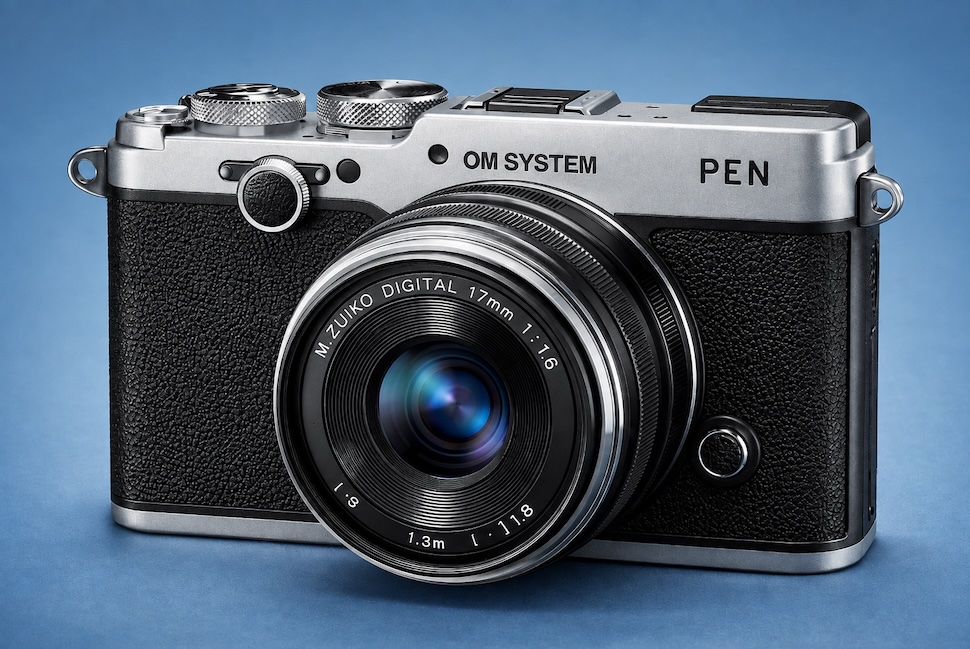
Yesterday, 43addict reported that a new OM System PEN camera is rumored to be announced around September 9th. A new PEN model has been rumored for a while:
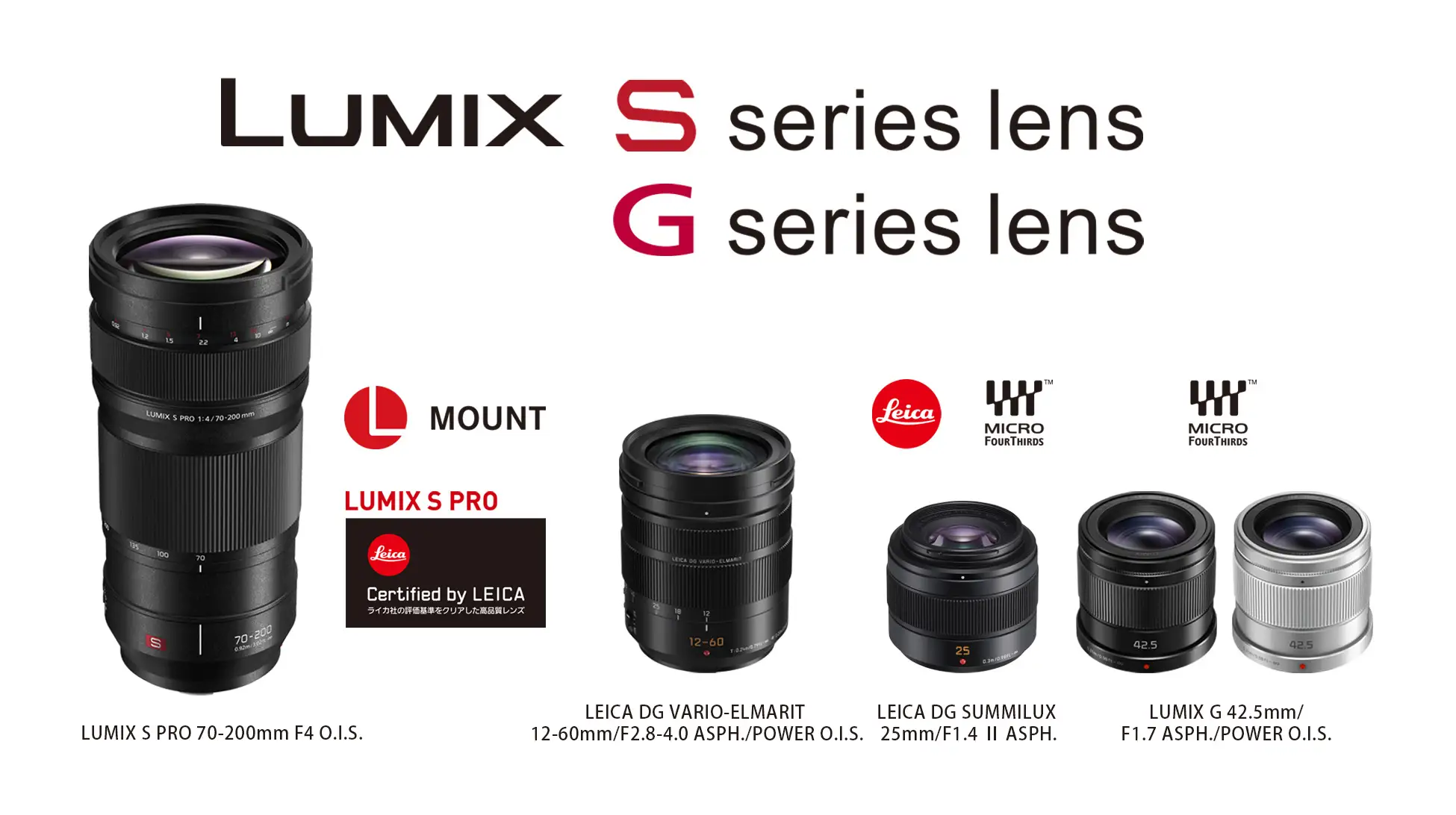
Panasonic releases four new Lumix S-series and G-series lenses in Japan, featuring a new fluorine coating and anti-reflective design (check for pre-orders):
Lumix S PRO 70-200mm f/4 OIS (S-R70200A)
Leica DG Vario-Elmarit 12-60mm f/2.8-4 ASPH POWER OIS (H-ES12060A)
Leica DG Summilux 25mm f/1.4 II ASPH (H-XA025A)
Lumix G 42.5mm f/1.7 ASPH./POWER OIS (H-HS043A)
Additional information on the new lenses is available here.
The NEEWER PS099U combines compact V-mount power, fast recharging, flexible wired and wireless outputs, smart monitoring and safety features in a travel-friendly design.
For filmmakers, a reliable V-mount battery can simplify power management across a shooting kit, especially outside the studio or between locations. Instead of juggling separate chargers and small batteries for every device, a compact hub like the NEEWER PS099U can keep cameras, monitors, lights, laptops and phones running from one source. With 99Wh capacity, fast USB-C charging, wireless charging, multiple outputs, real-time monitoring and built-in safety protections, the PS099U supports modern creator workflows without adding unnecessary bulk.
The power you need, consolidated
NEEWER
The NEEWER PS099U delivers a capacity of 14.5V 6800mAh / 99Wh, giving cameras, camcorders, monitors, LED lights, laptops, tablets and phones longer runtime from a single compact power source. Its 99Wh rating keeps it below the common 100Wh air-travel threshold, making it practical for location shoots and mobile production kits. Despite packing so much power, the PS099U remains easy to pack and rig, measuring just 4.2 x 2.9 x 2.4 in (10.7 x 7.4 x 6.1 cm) and weighing only 1.45 lb (0.66 kg). This balance of performance and portability makes it ideally suited to outdoor filming, documentaries, creator setups and backup power needs.
Fast charging for any situation
NEEWER
The NEEWER PS099U’s dual USB-C design supports bidirectional 100W PD 3.1 fast charging for greater flexibility. With a 100W or higher charger, the battery can be recharged in about 2 hours, helping creators get back to work quickly between shoots, during travel days or on small-crew sets where downtime needs to stay minimal.
In addition to BP and D-Tap connections, the PS099U includes DC12V, DC8V, dual USB-C, USB-A and wireless charging outputs, giving filmmakers several ways to power a camera rig, monitor, video light, laptop and smartphone from one compact unit. Wireless charging support includes up to 15W MagSafe-compatible charging and up to 10W Qi charging, which is especially useful for phones and small accessories. By combining fast recharging with a variety of wired and wireless outputs, the PS099U helps reduce cable clutter and simplifies workflows for both shooting and editing.
Easy, practical power management
NEEWER
Using the free NEEWER app and built-in OLED display, users can monitor input, output, remaining battery level and individual port status in real time. This is especially helpful when several devices are connected at once, making it easier to match power delivery to cameras, monitors, lights, mobile devices or accessories without guesswork. The PS099U also includes built-in BMS protection to help guard against short circuit, overheating, overcurrent, overvoltage, overcharge and overdischarge, adding confidence during long shooting days or travel-heavy productions.
For added practicality, the integrated LED light offers High, Low and SOS modes, turning the battery into a useful backup light for low-light setup checks, emergency situations, quick behind-the-scenes clips or locating equipment in a dark bag or workspace. Together, the PS099U’s monitoring, protection, adjustment and lighting features make it more than just a compact V-mount battery; they make it a versatile support tool for modern creator workflows.
Overall, the NEEWER PS099U combines compact V-mount power, fast recharging, flexible wired and wireless outputs, smart monitoring and safety features in a travel-friendly design. For filmmakers and creators who need dependable power without extra bulk, it offers a practical all-in-one solution for shooting, editing and staying powered on the move.
NEEWER
NEEWER V Mount Battery PS099U 6800mAh 99Wh Smart APP Control
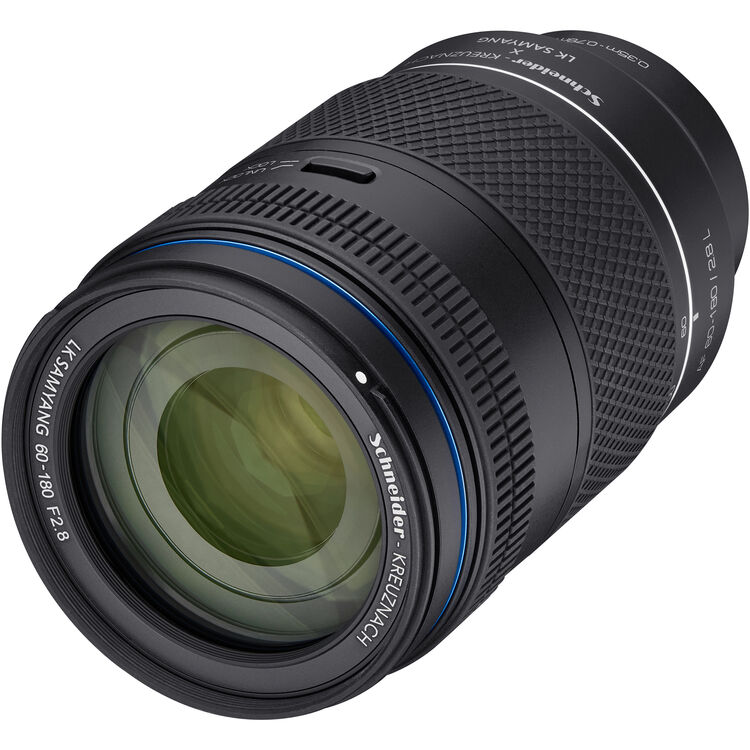
Fast, affordable telephoto zooms for L-mount have been rather scarce. LK Samyang’s AF 60-180mm F2.8 changes that, arriving lighter and cheaper than the established Lumix and Sigma alternatives.
LK Samyang
When you use DPReview links to buy products, the site may earn a commission.
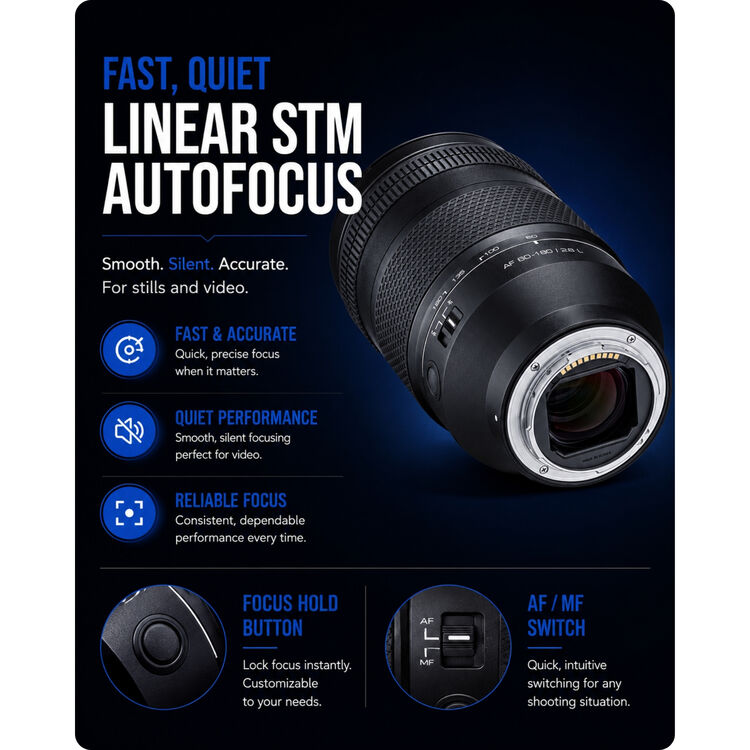
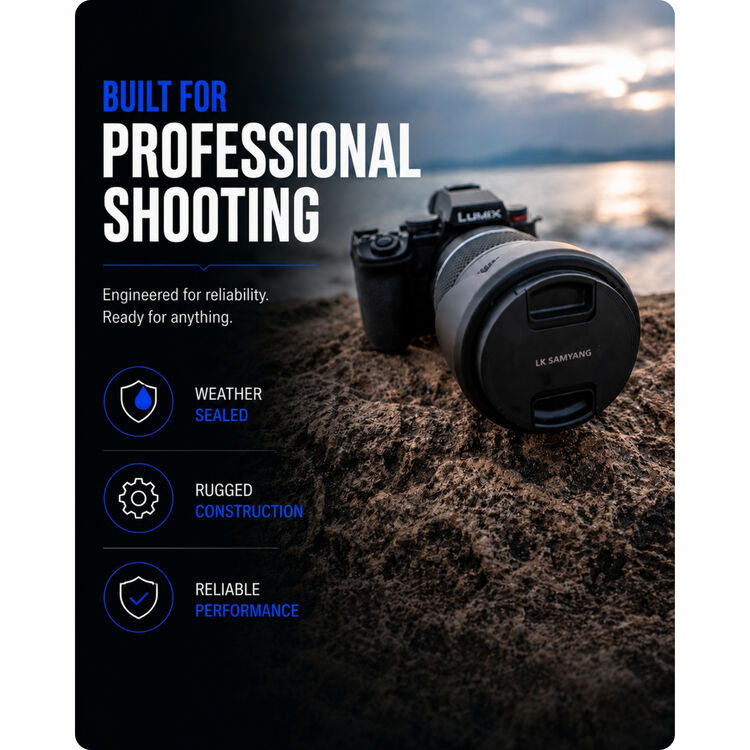
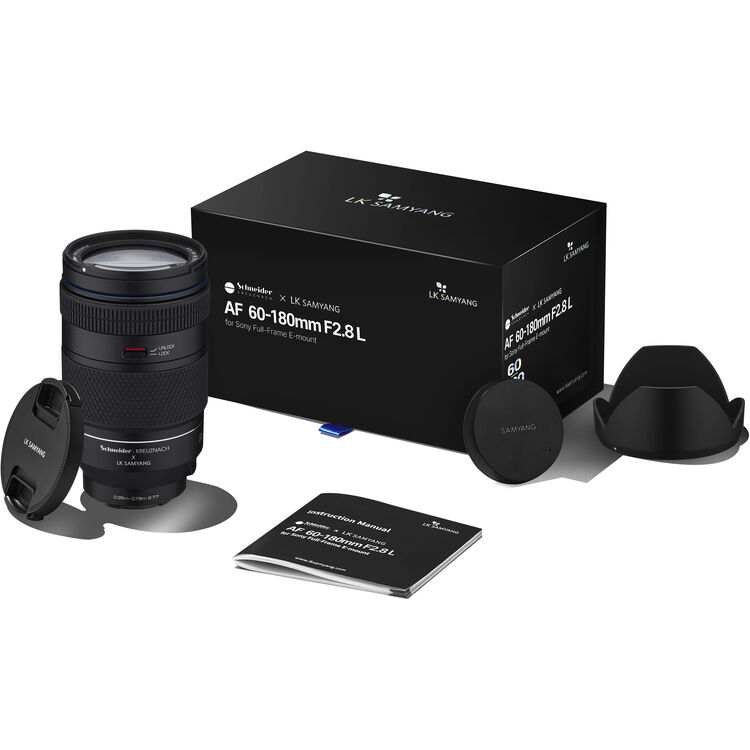
LK Samyang’s AF 60-180mm F2.8 is now available for L-mount, following its initial release for Sony E-mount in June. Developed in collaboration with Schneider-Kreuznach, the lens brings a lightweight, affordable telephoto zoom option to L-mount photographers.
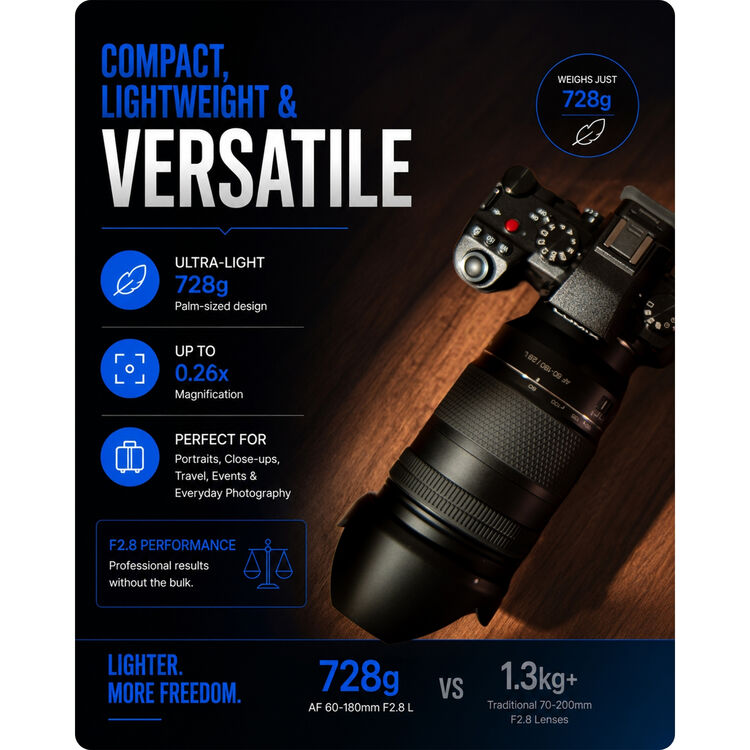
The AF 60-180mm F2.8 weighs just 730 g (1.6 lbs), which is substantially lighter than the comparable F2.8 telephoto zooms for L-mount. While offering slightly more reach, optical stabilization and internal zoom, the Sigma 70–200mm F2.8 DG DN OS Sports is one of the closest alternatives, and it weighs 1345 g (2.9 lbs). The Panasonic Lumix S Pro 70–200mm F2.8 OIS comes in at 1570 g (3.5 lbs), though it’s worth noting that it’s one of the heaviest options on the market, coming in at 400-500g more than comparable options from Sony, Canon and Nikon.
Mitchell Clark
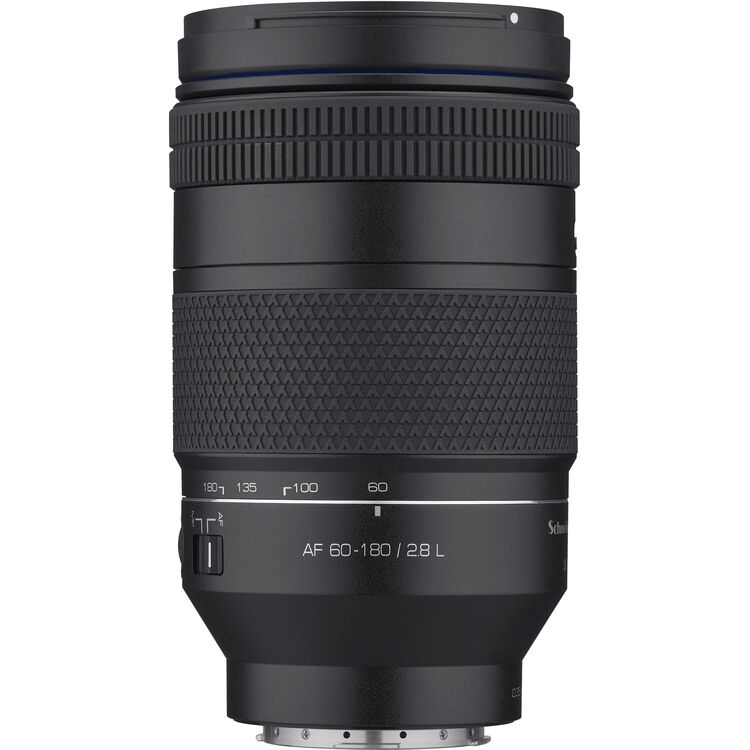
Both the Sigma and Panasonic options are internally zooming, whereas the LK Samyang lens uses an extending zoom design. The length of the LK Samyang 60-180mm F2.8 increases from 149mm (5.9″) at the wide end to 174mm (6.9″) when zoomed in, which is still shorter than the Sigma, Leica and Panasonic 70–200mm F2.8 lenses.
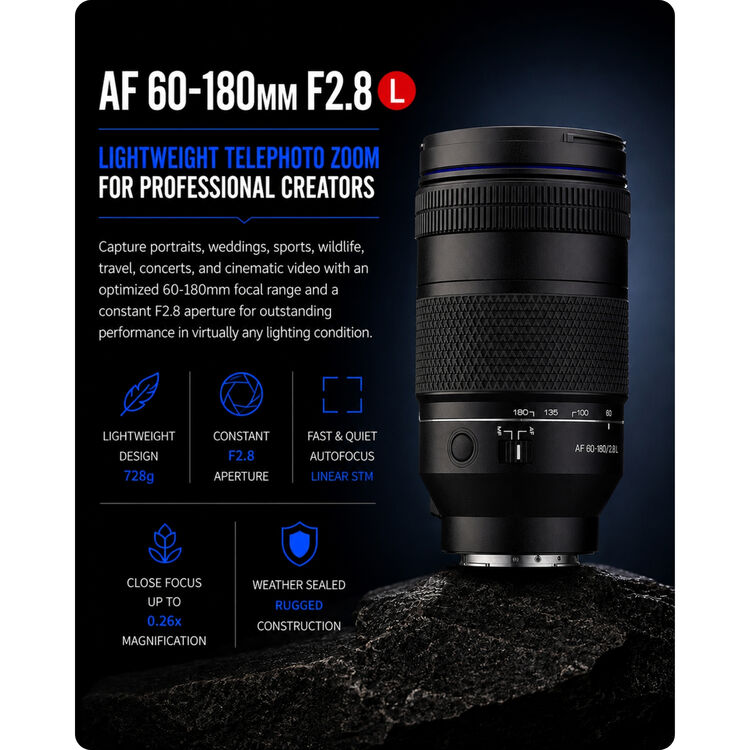
The L-mount model shares the E-mount version’s core optical and physical specifications. It consists of 17 elements in 14 groups, which include one high-refractive, seven extra-low dispersion and two aspherical elements. A linear stepping motor drives the autofocus, and it features a floating focus system that promises to maintain image quality across the focus range. The lens can focus as close as 0.35m (1.2′) when zoomed out, with a maximum magnification of 0.26x.
While more limited in on-lens controls than more expensive offerings, it does feature an AF/MF switch, a customizable control button and a zoom lock to keep the zoom constant even when moving. It accepts 77mm filters, offers a USB-C port for firmware updates and features weather sealing. It does not include optical image stabilization.
The lens completes a trio of F2.8 zooms covering 14-24mm, 24-60mm and 60-180mm, though L-mount shooters still can’t get the 24-60mm middle piece.LK Samyang
The AF 60-180mm F2.8 is part of a trio of lightweight zoom lenses with a constant F2.8 maximum aperture, which also includes a 14-24mm and a 24-60mm. Thus far, however, LK Samyang has only made the AF 14-24mm F2.8 and now AF 60-180mm F2.8 available to L-mount. The standard zoom still remains an E-mount-only lens.
DPReview’s Mitchell Clark recently tested the E-mount version and found it capable for its price, despite a stiff and inconsistent zoom ring and comparatively basic-feeling plastics and controls. For L-mount photographers who value a smaller, lighter F2.8 telephoto zoom at a more budget-friendly price over 200mm reach, top-end image quality, optical stabilization and an internal-zoom design, it is a compelling alternative.
There is a slight downside for L-mount users: the 60-180mm costs $1199, which is $100 more than the E-mount model. Still, that price is substantially lower than the alternatives for the mount.
About the Author: Abby Ferguson holds an MFA in photography and blends a fine-art background with extensive editorial and commercial experience. She built and led an in-house imaging program for a large vacation rental company and has served as an associate editor at Popular Photography. She also teaches at a local community college and serves on its Photographic Technology Program Advisory Board, sharing her knowledge and enthusiasm for the medium.
Want to stay up to date on the latest product news and releases? Add DPReview as a preferred source to ensure our independent journalism makes it to the top of your Google search results.

 Connexion
 Ricoh
Ricoh Ricoh
Ricoh Ricoh
Ricoh