When you use DPReview links to buy products, the site may earn a commission.
Our sample galleries serve two main purposes: to let you see how a camera or lens performs, but also to show that we've actually put in the hours with the product.
The recent Sigma 35mm F1.4 DG II Art was released during a particularly gray Seattle February, but Richard had a UK trip lined up, and apparently doesn't know the difference between work and vacation.
A friend was kind enough to shoot a short video as he fleshed out the gallery with some portraits from London, so join us for a quick stroll around London's Soho, to see one of the ways we collect sample images.
The Sigma 35mm F1.4 DG II Art made a pleasantly compact travel companion.
Photo: Richard Butler
You can see our full gallery below and, as always, download the original Raws, to form your own conclusions.
Sigma 35mm F1.4 DG II Art sample gallery
Please do not reproduce any of these images on a website or any newsletter/magazine without prior permission (see our copyright page). We make the originals available for private users to download to their own machines for personal examination or printing; we do so in good faith, so please don't abuse it.
Sample gallery
This widget is not optimized for RSS feed readers. Click here to open it in a new browser window / tab.
Thank you to Panasonic for the loan of a Lumix DC-S1RII to capture this gallery. All images were processed using our standard lens workflow in Capture One, with the manufacturer's distortion correction applied but no correction of vignetting. There is extremely minor pincushion distortion before the correction is applied: we do not consider it to be an essential part of the lens design, if you prefer not to use it or your preferred software does not support lens corrections.
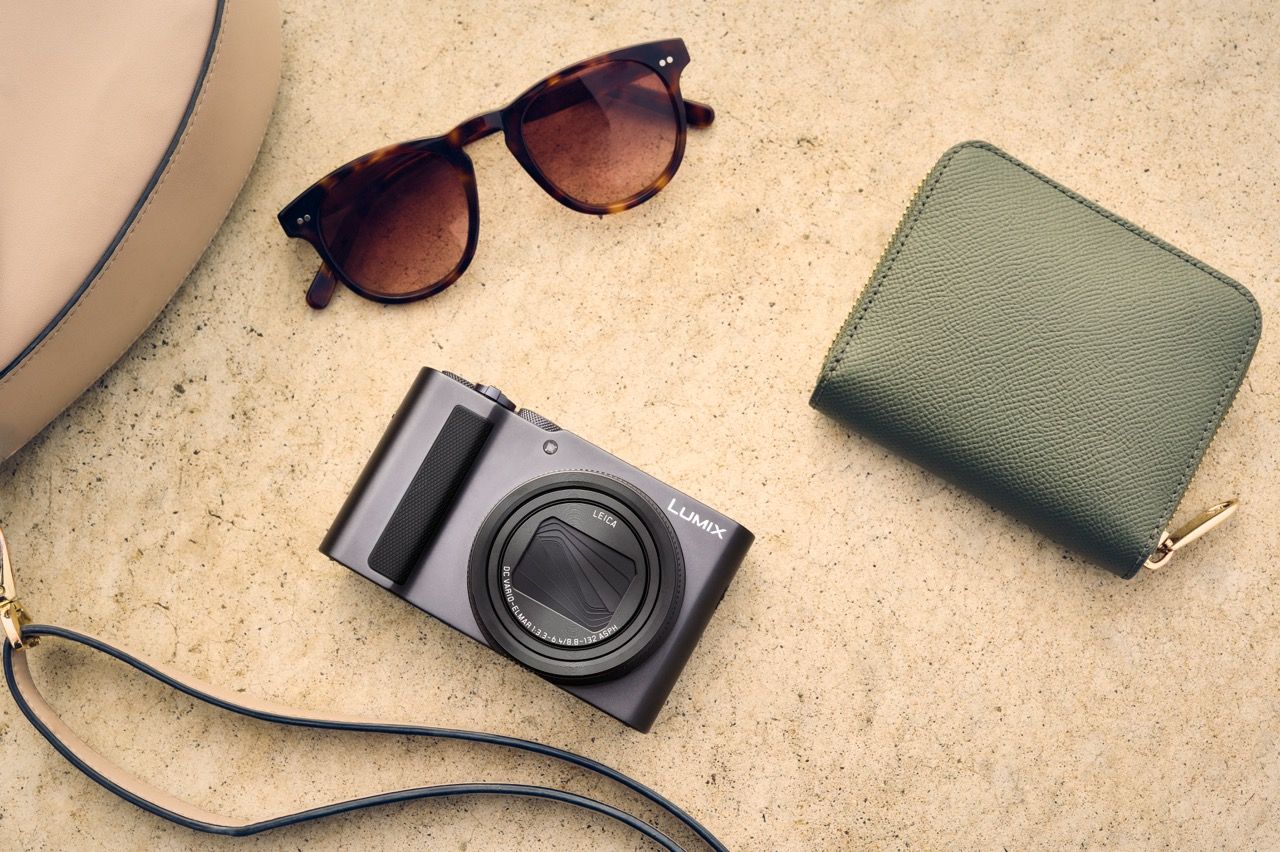
Newark, N.J. (Mar. 24, 2026) – Panasonic is pleased to introduce the new LUMIX ZS300, a pocket-sized *1 digital compact camera designed for travelers and everyday creators who want exceptional image quality in a portable form. Whether you’re photographing distant landmarks on a vacation, capturing vibrant night views in a busy city, or recording spontaneous moments with friends, this versatile camera adapts to any situation.
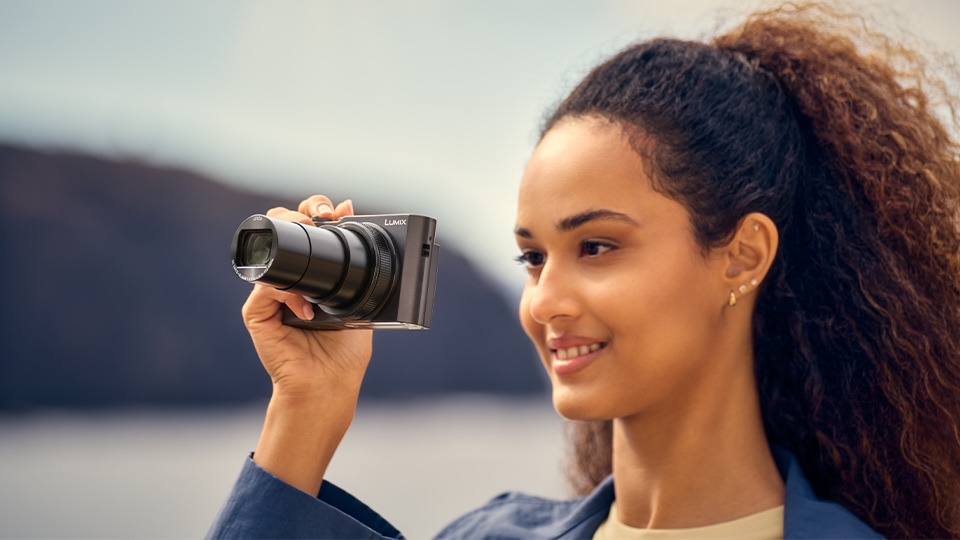
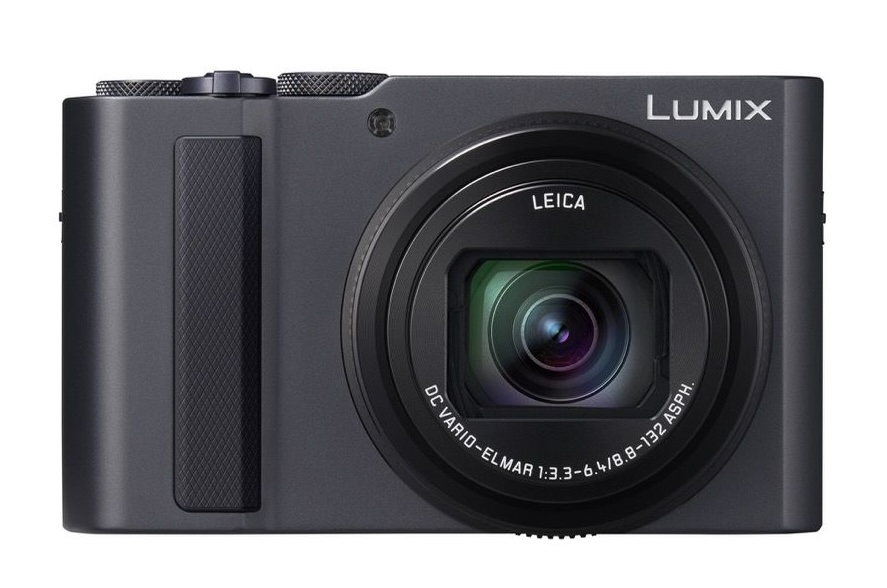
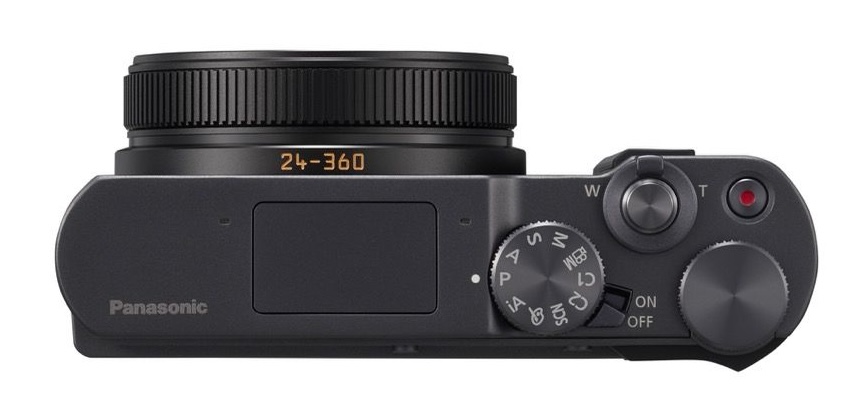
The LUMIX ZS300 combines a powerful 15x optical zoom with a 1.0type BSI CMOS sensor to deliver clear, detailed images even in challenging lighting. Its LEICA certified lens covers a 24–360mm *2 focal range, enabling everything from sweeping landscapes to faraway subjects to be captured with crisp precision. The high sensitivity sensor minimizes noise in nighttime scenes, preserving natural brightness and fine detail at approximately 20.1 megapixels.
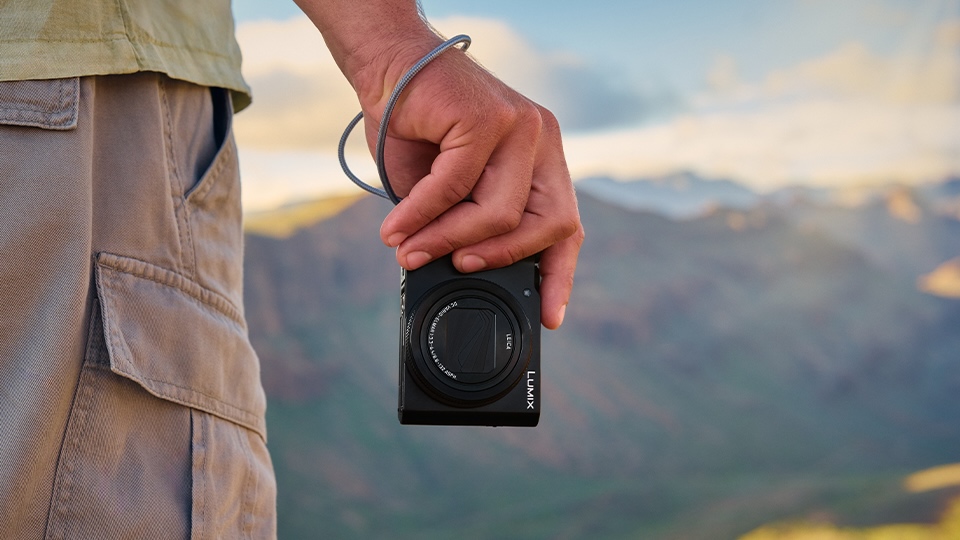
For creative close-up shooting, the ZS300 features AF Macro, allowing users to focus as close as 3cm. Small objects—from delicate flowers to everyday accessories—can be captured with sharp clarity. Despite its advanced capabilities, the compact camera body fits easily into a pocket or bag, making it ideal for daily carry and travel.
For video shooting, the ZS300 offers 4K recording at 3840 × 2160, providing lifelike detail for travel scenes and fast-moving action. Highspeed FHD 120fps recording offers smooth slow-motion expression, while 4K PHOTO captures moments at 30 frames per second, letting you extract the perfect shot.
To ensure stable and blurfree shooting, POWER O.I.S. effectively compensates for handshake at telephoto or in low-light environments. When filming while walking, 5axis HYBRID O.I.S.+ provides smooth, stable video.
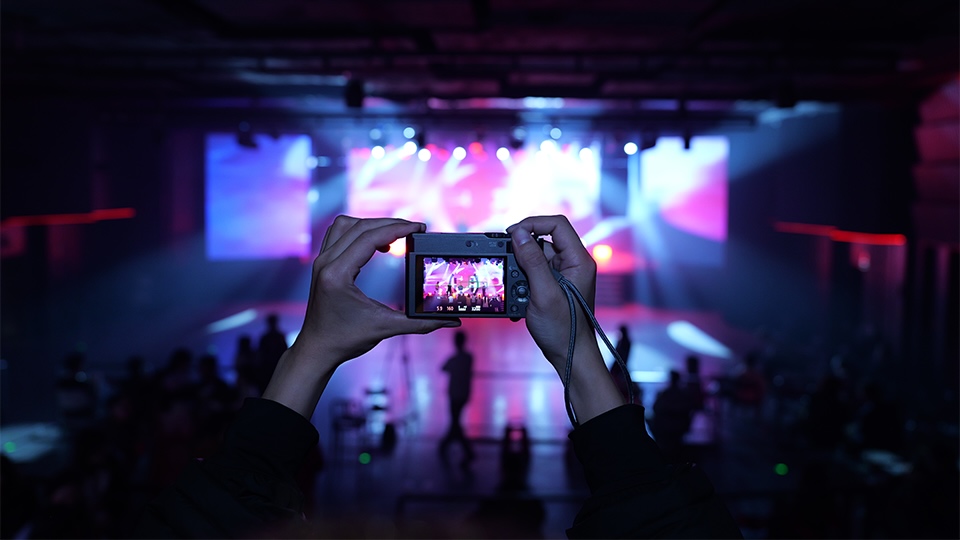
A variety of 22 creative filter effects allow users to tailor the look of their photos to match their personal style. A builtin flash ensures bright, clear results even in dark settings such as indoor parties or nighttime portraits.
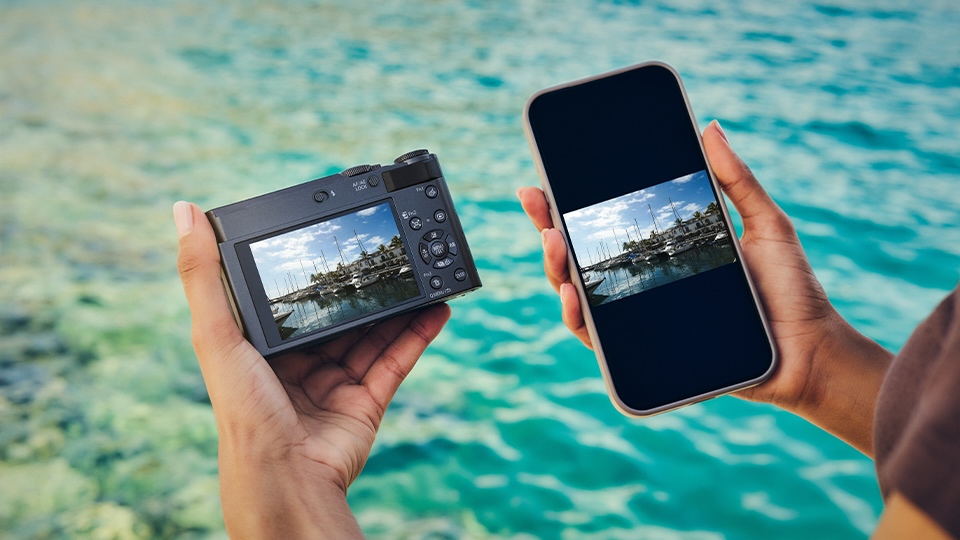
With Bluetooth® connectivity and WiFi® image transfer via the Panasonic Image App, sharing photos and videos from the ZS300 is fast and convenient. USB TypeC® charging *3 provides added flexibility, allowing users to power the camera on the go using AC adapters, PCs, or portable power banks.
Main Features
1. High Image Quality
1.0-type 20.1MP BSI CMOS sensor captures bright, detailed images with minimal noise, even in low-light scenes
LEICA certified 24–360mm *2 15x optical zoom lens delivers clear results from wide landscapes to distant subjects
AF Macro enables close-up shooting from 3cm, ideal for small objects and everyday use discoveries
2. Powerful Photo & Video Performance
4K video (3840×2160) records travel scenes with lifelike detail
High-speed FHD 120fps for smooth slow-motion footage
4K PHOTO captures 30 fps burst images, allowing you to select and save the perfect moment
22 creative filters offer a wide range of in-camera effects to match your preferred shooting style
3. Reliable Image Stabilization
POWER O.I.S. minimizes blur when shooting handheld, especially at telephoto or in low light
5-axis HYBRID O.I.S.+ ensures smooth and stable video while walking
4. Smart Connectivity & Convenience
Connect to a smartphone via Bluetooth®, and transfer images through WiFi® using the Panasonic Image App
USB TypeC® charging *3 from AC adapters, PCs, or power banks for easy power on the go
Compact, pocket-sized *1 design makes it ideal for travel and daily carry
*1 Approx. 111.2 (W) x 66.4 (H) x 45.2 (D) mm. Dimensions exclude protrusions. *2 35mm camera equivalent: 24-360mm *3 Power supply is not available.
When you use DPReview links to buy products, the site may earn a commission.
Image: Panasonic
Panasonic has announced the Lumix DC-ZS300, which will be known as the TZ300 outside North America. It's a pocketable compact with a 15x, 24-360mm equiv zoom lens in front of a Type 1 (13.2 x 8.8mm) BSI CMOS sensor. But, unlike its predecessor, there's no viewfinder if your travel takes you to sunnier climes.
For those who have memorized Panasonic's compact lineup, the specs set out in the company's press release will be very reminiscent of its ZS200 / TZ200, announced in February 2018. Other than the absent viewfinder, the other significant change is the adoption of the newer USB-C socket. The actual interface is likely to be the same as before as, like the previous model, the ZS300 can be charged, but not powered, over USB.
The ZS300 has a zoom covering an impressive 24-360mm equivalent range. Its maximum aperture drops from F3.3 at the wide end to F6.4 by its full reach. The Type 1 sensor means there's a 2.72x crop factor at play.
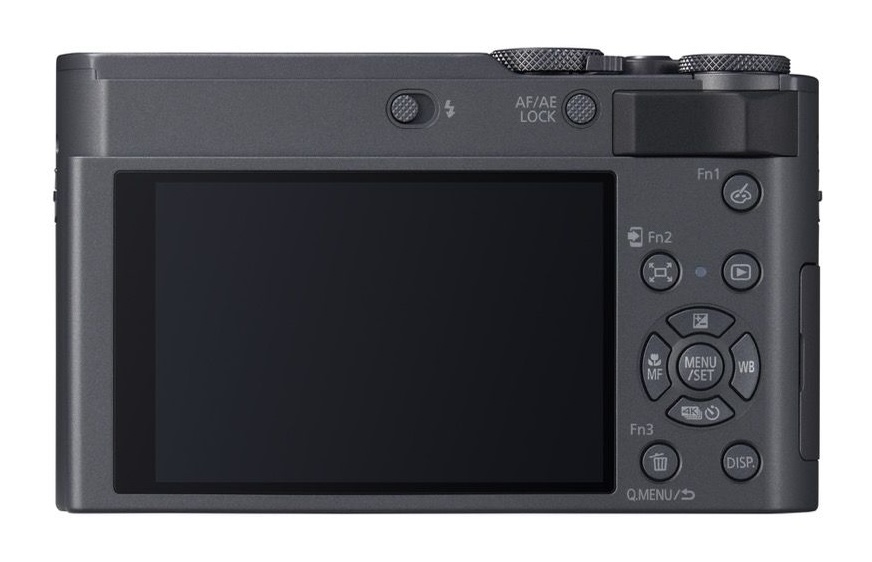
The ZS300's Macro mode can focus down as close as 3cm (1.2") at its widest focal length, but this increases to 100cm (39.4") at the long end of the lens. Based on what we've been shown and told, it's likely to retain the fixed 1840K dot (960 x 640 px) fixed rear screen from the mid-life ZS200D update, along with a small pop-up flash.
We wonder whether Panasonic has found it difficult to source the field-sequential viewfinder panels used in older models, but still think a travel zoom will be limited by the absence of any sort of viewfinder.
Image: Panasonic
Focusing on the positives, though: the announcement of the ZS300 as a new model suggests you might actually be able to buy one. The deletion of the viewfinder means that, unlike the more EU-compliance updated G97 model, its price has only gone up by a relatively modest $100 in the eight years since the Micro-B USB version was launched.
We're still awaiting full specs and availability information, but we're told the ZS300 will be available in silver or black variants for $899, ex tax. It will be £869.00 in the UK.
Newark, N.J. (Mar. 24, 2026) – Panasonic is pleased to introduce the new LUMIX ZS300, a pocket-sized *1 digital compact camera designed for travelers and everyday creators who want exceptional image quality in a portable form. Whether you’re photographing distant landmarks on a vacation, capturing vibrant night views in a busy city, or recording spontaneous moments with friends, this versatile camera adapts to any situation.
The LUMIX ZS300 combines a powerful 15x optical zoom with a 1.0type BSI CMOS sensor to deliver clear, detailed images even in challenging lighting. Its LEICA certified lens covers a 24–360mm *2 focal range, enabling everything from sweeping landscapes to faraway subjects to be captured with crisp precision. The high sensitivity sensor minimizes noise in nighttime scenes, preserving natural brightness and fine detail at approximately 20.1 megapixels.
For creative close-up shooting, the ZS300 features AF Macro, allowing users to focus as close as 3cm. Small objects—from delicate flowers to everyday accessories—can be captured with sharp clarity. Despite its advanced capabilities, the compact camera body fits easily into a pocket or bag, making it ideal for daily carry and travel.
For video shooting, the ZS300 offers 4K recording at 3840 × 2160, providing lifelike detail for travel scenes and fast-moving action. Highspeed FHD 120fps recording offers smooth slow-motion expression, while 4K PHOTO captures moments at 30 frames per second, letting you extract the perfect shot.
To ensure stable and blurfree shooting, POWER O.I.S. effectively compensates for handshake at telephoto or in low-light environments. When filming while walking, 5axis HYBRID O.I.S.+ provides smooth, stable video.
A variety of 22 creative filter effects allow users to tailor the look of their photos to match their personal style. A builtin flash ensures bright, clear results even in dark settings such as indoor parties or nighttime portraits.
With Bluetooth® connectivity and WiFi® image transfer via the Panasonic Image App, sharing photos and videos from the ZS300 is fast and convenient. USB TypeC® charging *3 provides added flexibility, allowing users to power the camera on the go using AC adapters, PCs, or portable power banks.
Main Features
1. High Image Quality
1.0-type 20.1MP BSI CMOS sensor captures bright, detailed images with minimal noise, even in low-light scenes
LEICA certified 24–360mm *2 15x optical zoom lens delivers clear results from wide landscapes to distant subjects
AF Macro enables close-up shooting from 3cm, ideal for small objects and everyday discoveries
2. Powerful Photo & Video Performance
4K video (3840×2160) records travel scenes with lifelike detail
High-speed FHD 120fps for smooth slow-motion footage
4K PHOTO captures 30 fps burst images, allowing you to select and save the perfect moment
22 creative filters offer a wide range of in-camera effects to match your preferred shooting style
3. Reliable Image Stabilization
POWER O.I.S. minimizes blur when shooting handheld, especially at telephoto or in low light
5-axis HYBRID O.I.S.+ ensures smooth and stable video while walking
4. Smart Connectivity & Convenience
Connect to a smartphone via Bluetooth®, and transfer images through WiFi® using the Panasonic Image App
USB TypeC® charging *3 from AC adapters, PCs, or power banks for easy power on the go
Compact, pocket-sized *1 design makes it ideal for travel and daily carry
*1 Approx. 111.2 (W) x 66.4 (H) x 45.2 (D) mm. Dimensions exclude protrusions. *2 35mm camera equivalent: 24-360mm *3 Power supply is not available.
Panasonic Lumix DC-ZS300 specifications
Price
MSRP
$899
Body type
Body type
Large sensor compact
Body material
Metal
Sensor
Max resolution
5472 x 3648
Image ratio w:h
1:1, 4:3, 3:2, 16:9
Effective pixels
20 megapixels
Sensor photo detectors
21 megapixels
Sensor size
1″ (13.2 x 8.8 mm)
Sensor type
CMOS
Processor
Venus Engine
Color space
sRGB
Color filter array
Primary color filter
Image
ISO
Auto, 125-12800 (expands to 80-25600)
Boosted ISO (minimum)
80
Boosted ISO (maximum)
25600
White balance presets
5
Custom white balance
Yes (4 slots)
Image stabilization
Optical
Image stabilization notes
Hybrid 5-axis available in movie mode
Uncompressed format
RAW
JPEG quality levels
Fine, standard
File format
JPEG (Exif v2.31)
Raw (Panasonic RW2 format)
Optics & Focus
Focal length (equiv.)
24–360 mm
Optical zoom
15×
Maximum aperture
F3.3–6.4
Autofocus
Contrast Detect (sensor)
Multi-area
Center
Selective single-point
Tracking
Single
Continuous
Touch
Face Detection
Live View
Autofocus assist lamp
Yes
Digital zoom
Yes (2X)
Manual focus
Yes
Normal focus range
50 cm (19.69″)
Macro focus range
3 cm (1.18″)
Number of focus points
49
Screen / viewfinder
Articulated LCD
Fixed
Screen size
3″
Screen dots
1,840,000
Touch screen
Yes
Screen type
TFT LCD
Live view
Yes
Viewfinder type
None
Photography features
Minimum shutter speed
60 sec
Maximum shutter speed
1/2000 sec
Maximum shutter speed (electronic)
1/16000 sec
Exposure modes
Program
Aperture Priority
Shutter Priority
Manual
Scene modes
Clear Portrait
Silky Skin
Backlit Softness
Clear in Backlight
Relaxing Tone
Sweet Child's Face
Distinct Scenery
Bright Blue Sky
Romantic Sunset Glow
Vivid Sunset Glow
Glistening Water*
Clear Nightscape
Cool Night Sky
Warm Glowing Nightscape
Artistic Nightscape
Glittering Illuminations
Handheld Night Shot
Clear Night Portrait
Soft Image of a Flower
Appetizing Food
Cute Dessert
Freeze Animal Motion
Clear Sports Shot
Monochrome
Built-in flash
Yes
Flash range
6.80 m (at Auto ISO)
External flash
No
Flash modes
Auto, Auto/Red-eye Reduction, Forced On, Forced On/Red-eye Reduction, Slow Sync., Slow Sync./Red-eye Reduction, Forced Off
Lens: Leica DC Vario-Elmar, 24–360 mm equivalent focal length
Optical Zoom: 15x
Video Recording: 4K video at 30p + 4K PHOTO mode
Image Stabilisation: 5-axis Hybrid O.I.S.+
Display: Touchscreen LCD
Viewfinder: Built-in electronic viewfinder
Storage: SD / SDHC / SDXC memory card
Connectivity: Wi-Fi and Bluetooth
Ports: USB-C (charging + data transfer)
Power: Rechargeable battery (included)
Build: Compact travel-zoom design, available in dark silver finish
The Panasonic Lumix DC-TZ300 in dark silver combines powerful technology with an elegant, modern design, making it the ideal companion for demanding travel and everyday life. Thanks to its compact design and high-quality construction, it can be easily taken anywhere without compromising image quality or functionality. The Panasonic Lumix DC-TZ300 impresses with its versatility – from spontaneous snapshots to detailed landscape and telephoto shots.
High-quality sensor and flexible LEICA zoom lens
Equipped with a 20.1-megapixel 1-inch BSI CMOS sensor, the Panasonic Lumix DC-TZ300 delivers clear and detailed results even in challenging lighting conditions. The integrated LEICA DC VARIO-ELMAR lens with a focal length range of 24–360 mm enables both impressive wide-angle shots and powerful telephoto photography. The 15x optical zoom ensures that distant subjects can be captured precisely without any loss of quality.
4K video, stabilization and modern equipment
The Panasonic Lumix DC-TZ300 offers extensive video capabilities, including 4K recording with high detail. Features like 4K PHOTO and slow-motion recording significantly expand creative possibilities. The integrated 5-axis HYBRID OIS+ image stabilization ensures smooth footage even at longer focal lengths. Additionally, the camera boasts Wi-Fi and Bluetooth connectivity, an integrated viewfinder, a touchscreen display, and convenient USB-C charging for maximum flexibility on the go.
Left: Mitsuhiro Suzaki, Deputy General Manager of the Lens Technology and System business unit. Right: Yasufumi Machitani, General Manager of Sony's Camera Business Department
Photo: Dale Baskin
"In terms of imaging quality, needless to say, the image sensor is one of the most important factors," says Yasufumi Machitani, General Manager of Sony's Camera Business Department, addressing where he thinks the next noticeable improvements to stills will come from.
"Sony Group has the Sony Semiconductor Solutions Group, which develops and produces image sensors," he says. "So the image sensor development group and the camera and lens group closely communicate. That means we can discuss future products: What kind of image sensor there should be, or what kind of signal processing we can do on the camera side. We can align the image sensor technology and the camera development together, which we think is a great advantage for us."
Advancements in image quality were just one of the topics we discussed with Sony executives during our interview with them at CP+ 2026, but it, and the company's desire for innovation, is something that came up a lot during our discussion.
"There is still solid demand"
Sony says vlogging cameras like the ZV-E10 II have been received well by the younger generations. Photo: Richard Butler
Discussing the state of the camera market, Machitani says he thinks the market will continue to grow. "If you look at the CIPA numbers, there was growth this year. I think there's still solid demand from customers, in terms of our core business of camera bodies and lenses." According to him, the growth comes from several places, citing conventional uses and also newer use cases, such as live streaming and 3D photogrammetry. "We think that creators are diverse and their demands are varied. But in general, [stills/video] hybrid usage is popular," he says.
While there have been concerns that the growth may be temporary, spurred by people switching from DSLR systems to mirrorless, Sony also talked a lot about the next generation of photographers: younger people who may be buying their first camera.
"In general, hybrid usage is popular"
"We see generational differences in how people shoot," he says. "Especially younger customers stepping up from smartphones, they often shoot both photos and video. They are a different type of customer from traditional enthusiasts. They start recording their life with smartphones, but they want more creative control, which is hard to get. So they switch to compact cameras or to the Alpha system for photography. And then they try to shoot video too."
Another interesting generational divide Sony sees has to do with colors and editing. Atsushi Ueda, General Manager of the Imaging Marketing Division's Marketing Communication Department, says more experienced photographers will value specs like a claimed 16 stops of dynamic range. "Advanced photographers tend to shoot Raw, while many younger photographers enjoy the real-time creativity using Creative Look for different color and tones. So, with our Alpha lineup, we can cover different types of customers," he says, referring to the customizable color modes that apply to your JPEGs and HEIFs.
The compact question
The last entry in Sony's RX100 series, the VII, came out in 2019. Photo: Dan Bracaglia
Machitani says that Sony has seen the compact camera market growing, and specifically cites the ZV series of vlogging cameras (which are a mix of interchangeable and fixed lens designs) as being particularly well-received by younger generations. "I think there are two aspects," he says. "Everyone is now getting used to taking photos with their smartphone. They start to become eager for better devices or tools to capture great image quality or express their feelings. So that's why a dedicated camera is necessary. And the second point is, at the same time, interchangeable mirrorless cameras are also getting bigger. Photo enthusiasts, or even professionals, need a more compact one to carry around every day, or for holidays and family time."
"Users of our competitors' mirrorless cameras also love this RX1 series"
In the case of Sony's latest compact, the RX1R III, he says the audience for it isn't just people who already own another Sony camera. "The people who buy an RX1R Mark III also tend to have a mirrorless camera. Not only a Sony camera, but users of our competitors' mirrorless cameras also love this RX1 series."
An RX1R III, cut in half at Sony's CP+ booth. Photo: Dale Baskin
While the RX1R III and the ZV-series cameras fill their own niches, Machitani says Sony hears customers who are asking for a new entry in the more all-rounder' RX100 series. "We understand the necessity and requests for the RX100 series," he says. When asked if Sony views its vlogging compacts as a good solution for photographers looking for a fixed lens camera, he adds: "I think ZV-series and RX series are different concepts, so they meet different needs." In other words, it seems the vlogging cameras aren't intended to be a replacement.
"This is a basic model, but we try to raise the standard"
Machitani cites the a7 V's "4-axis multi-angle monitor" as a feature requested by creators and hybrid shooters that also benefits purely stills photographers. Photo: Mitchell Clark
Despite the references to hybrid shooters and younger generations interested in video and color profiles, Sony made it clear that the innovations that benefit those users aren't wasted on people purely interested in photography.
"If you look at the a7 Mark V, which we recently just launched, this camera is also very good for traditional photographers," Machitani says. "We think creators and their demands are very diverse, and sometimes there are conflicts. But we try to understand their needs, and try to meet them in our future products or services, and deliver several solutions to meet their diverse demands."
When we asked if there were any specific features from the a7 V that were good for hybrid users and photographers, he gave us a few examples. "We renewed the image sensor and BIONZ XR2 processing unit. Although we say this is a 'basic model,' we try to raise the standard for the camera industry so that everyone can easily capture the decisive moment or the important scenes in their lives. So the BIONZ XR2 processor is now combined with AI processing unit functions from the latest Alpha-series cameras. So this is a basic camera, but the basic is great." He also cites blackout-free shooting and the combination tilting/swivel screen as features, and says the latter was requested by lots of creators.
Finding the balance
The idea of balancing the needs of different audiences came up again in our discussion of lenses with Mitsuhiro Suzaki, Deputy General Manager of the Lens Technology and System business unit. "We continue to expand the E-mount lens lineup in order to meet our diverse creators' needs," he says, citing the Sony FE 50-150mm F2 GM as an example of a new offering that's popular with both photographers and videographers.
"If we tried to make a 50-200mm F2, the size and weight would increase significantly"
As for how they decide what kind of lenses to make, Suzaki says they start by thinking about how they can create something that gives people new options. For the 50-150mm, they started with the concept of a fast zoom lens that was still compact, and experimented with a few different focal lengths, trying to find the right balance of weight, optical performance and balance. "Some people said 'we wish Sony made the 50-150 compatible with teleconvertors' or that they'd prefer a 50-200 F2. But if we tried to make a 50-200mm F2, the size and weight would increase significantly, and it would become a much more specialized lens," he says. "We believe this specification is the most reasonable and versatile choice for many creators."
When it comes to actually bringing a lens like that to market, Suzaki says it requires a lot of different disciplines. "We combine optical design, lens element technology, actuator technology, and mechanical engineering. Together, these technologies enable lenses with this level of performance." He also says it's not just a matter of selecting the right material to create lens elements, but also turning it into a precision surface that can be mass-produced. "This kind of development requires a long period of time and a great deal of trial and error."
On affordability, value and innovation
The a7 V has more all-around capability than its predecessor, but is also launching at $400 more than the a7 IV (which itself was $500 more than the a7 III). Photo: Mitchell Clark
As prices for enthusiast-tier cameras creep higher, especially in the US, we thought it would be interesting to ask how affordability factors into their product planning. Machitani mostly demurs, saying that the company will "determine product specifications by comprehensively considering overall product value and balance," but Ueda points out the company's strategy of keeping older generations of its products on sale at different prices, such as in the case of the a7 V ($2899), IV ($2199), and III ($1699).
"We need to do something unique, something different for our customers."
Ueda adds that people look to Sony for something else: "Basically, from the customer's point of view, their request to Sony is innovation. So we need to do something unique, something different for our customers. That's our purpose." It's an interesting response, as "innovative" and "affordable" are labels rarely shared by the same products.
This article is based on an interview by Dale Baskin and Mitchell Clark at CP+ 2026. It has been edited for clarity and flow.
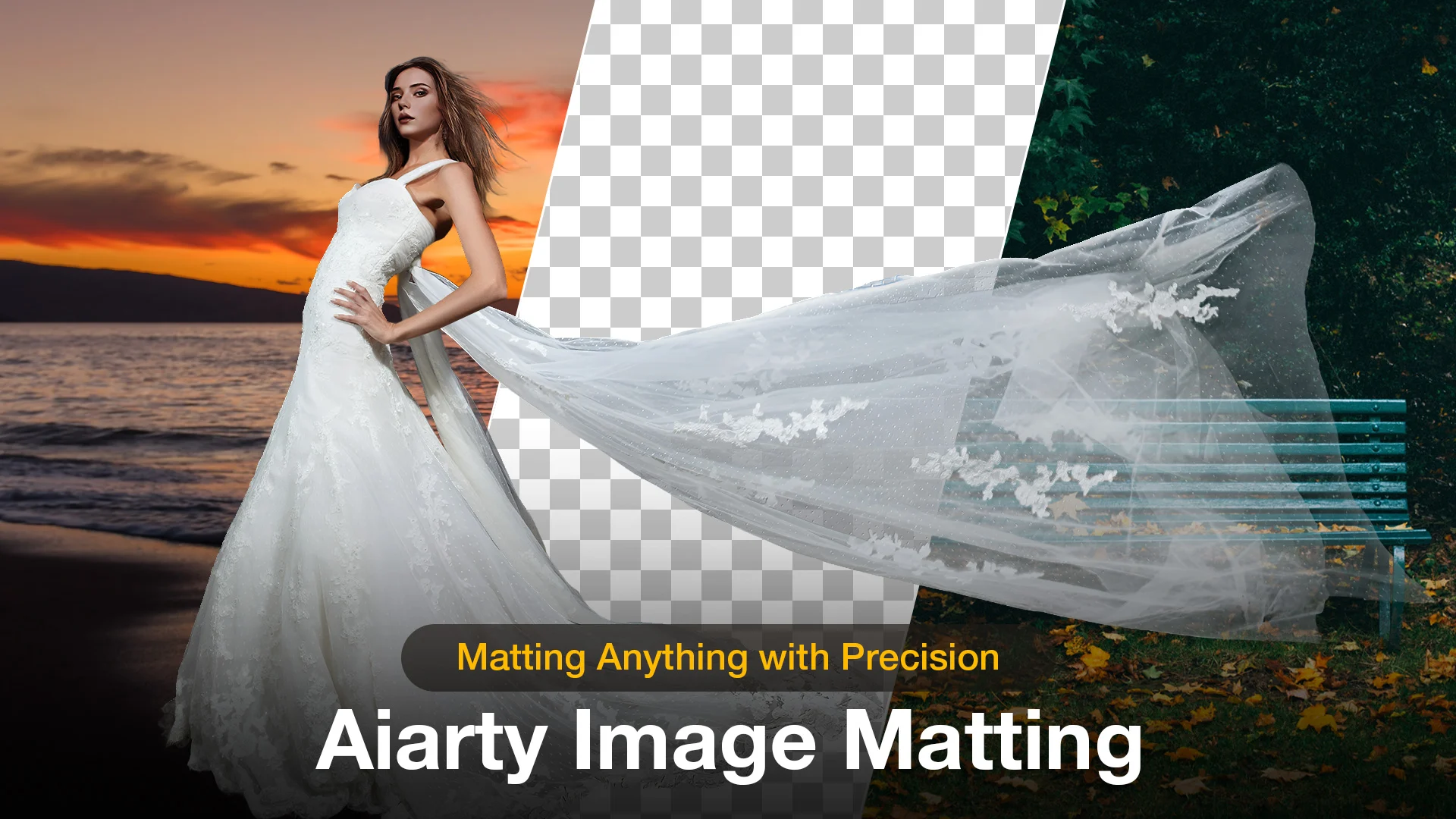
Beyond the Pen Tool: A Faster Way to Handle Complex Masking with Aiarty Image Matting (guest post)
We’ve all been there: the shoot was perfect, but now you’re zoomed in at 400%, wrestling with a stray strand of hair that just won’t stay in the selection. It’s the least creative part of photography, yet it’s often where the professional polish happens.
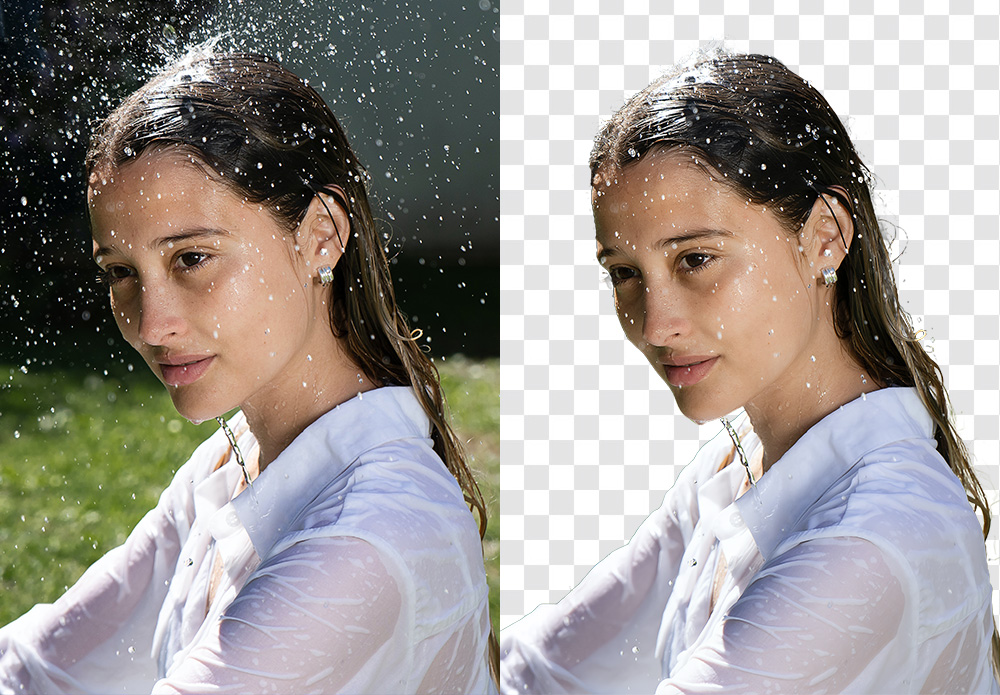
The irony of the current AI boom is that while it’s easier than ever to remove background from photo files with a single click, the results rarely hold up on a high-res monitor. Even when you remove background in Photoshop using the latest Select Subject features, the AI tends to treat edges as a binary choice. It works for a clean product shot, but it falls apart on a bride’s translucent veil or a portrait against a leafy backdrop, leaving that jagged, “cut-out” look.
This is when the distinction between a simple “remover” and true Image Matting becomes critical. What I was really looking for was something that understands the physics of light and transparency – the sub-pixel details that make a subject feel natural in its environment. In testing different tools, I came across Aiarty Image Matting, which stood out in how it handles these “impossible” edges with a level of nuance I haven’t seen in most standard plugins.
It’s worth a look for photographers who frequently deal with complex selections and high-resolution workflow. Now PhotoRumors readers can access an exclusive offer to get Aiarty Image Matting Lifetime License at up to 43% OFF, with benefits including:
Use on 1 Windows + 1 Mac, 3 Windows or Mac computers
Unlimited access to all features
Permanent free upgrades and technical support
No subscription, no recurring cost
Why Aiarty Image Matting is the Secret to Professional Composites
The term “background removal” is a bit of a misnomer in professional circles. Most tools – from the built-in best background removal app on your phone to standard web filters – simply use a mask to hide pixels. This often results in a “cookie-cutter” effect where the edges look harsh and artificial.
Aiarty Image Matting operates on a different level. It uses dedicated AI models to calculate an “alpha matte,” which essentially determines the exact transparency of every single pixel on the boundary. Instead of a binary “in or out” choice, it understands that a stray hair or a glass edge is partially transparent. If you’ve ever wondered which ai tool is best for background removal for high-end work, the answer lies in how it handles these “soft” edges. Aiarty doesn’t just cut the subject out; it extracts it.
This extraction process achieves a level of sub-pixel precision that identifies details thinner than a single pixel – think individual eyelashes or the fuzz on a woolen sweater. It also solves one of the biggest headaches when you remove background from photo: color decontamination. We’ve all dealt with that annoying color spill, like a green tint on a model’s skin from a forest backdrop. Aiarty’s AI is trained to “clean” these edges, ensuring the subject looks natural when placed in a completely different lighting environment.
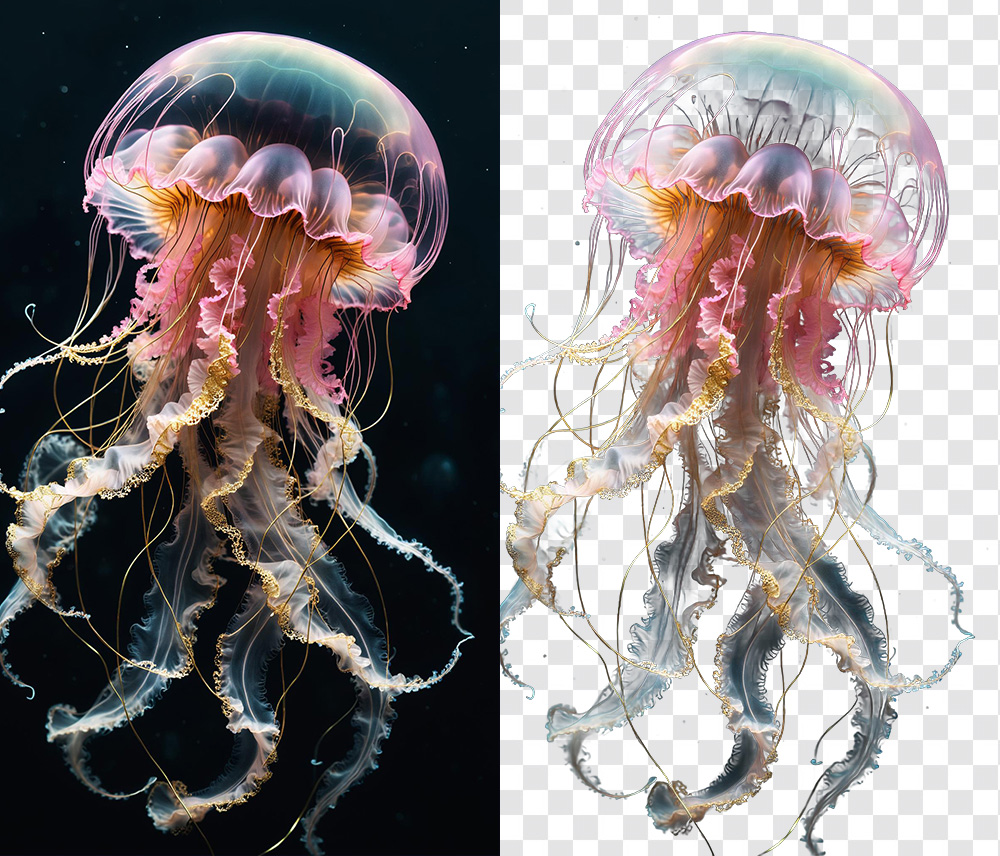
For things like steam, smoke, or a translucent bridal veil, the software preserves the true, semi-transparent nature of the material. This is a game-changer for anyone trying to make background transparent without losing the ethereal, airy quality of the original shot. By moving away from simple “erasing” and toward “intelligent extraction,” it finally bridges the gap between a quick social media edit and a gallery-ready composite.
Key Features: How Aiarty Streamlines Complex Masking
When you’re looking for the best background removal software, you’re really looking for consistency. You want a tool that doesn’t require you to go back in with a layer mask to fix 20% of the edges. Most standard matting tools rely on simple edge detection that often fails the moment things get slightly out of focus or highly detailed. Aiarty Image Matting differs by using deep-learning models that actually understand the “semantic” structure of a photo – it knows the difference between a strand of hair and a stray digital artifact. Instead of just tracing a line, it reconstructs the edge data based on real-world light and texture.
In my time testing the software, four specific capabilities stood out as legitimate game-changers for a professional workflow:
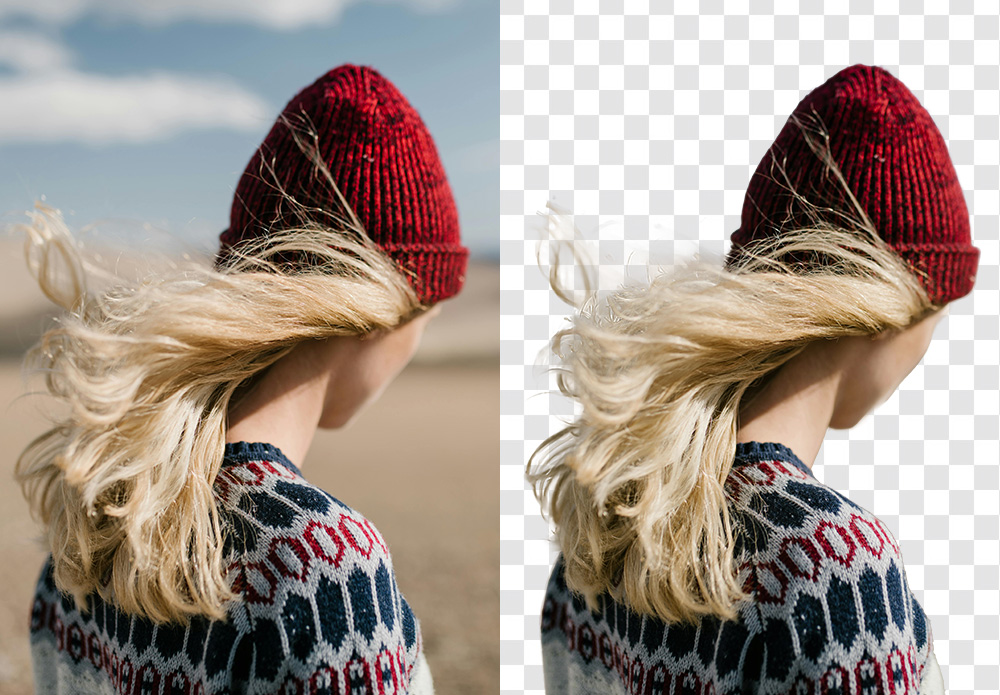
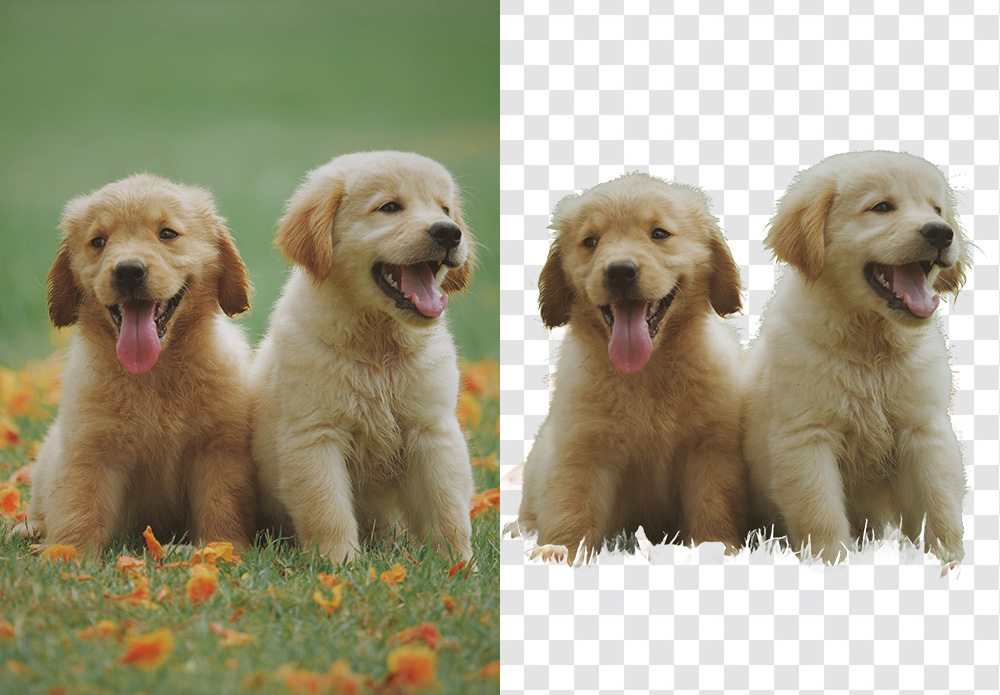
Hair-Level Fidelity: This is the ultimate stress test. Whether it’s a high-fashion portrait with flyaway hair or a wildlife shot of a wolf’s fur, Aiarty’s AI models are trained on millions of real-world edge scenarios. It identifies individual strands that traditional “Select Subject” algorithms usually blur or chop off. If you’ve ever wondered how to remove white background from image files with fine texture, this level of detail is a massive relief.
Complex Transparency Awareness: Most “one-click” apps treat glass, smoke, or veils as solid objects or just erase them. Aiarty actually understands the transparency levels. This means if you have a shot of a bride in a lace veil, the software preserves the semi-transparent layers, allowing the new background to show through naturally. It’s easily the best ai tool to remove background from delicate, translucent subjects.
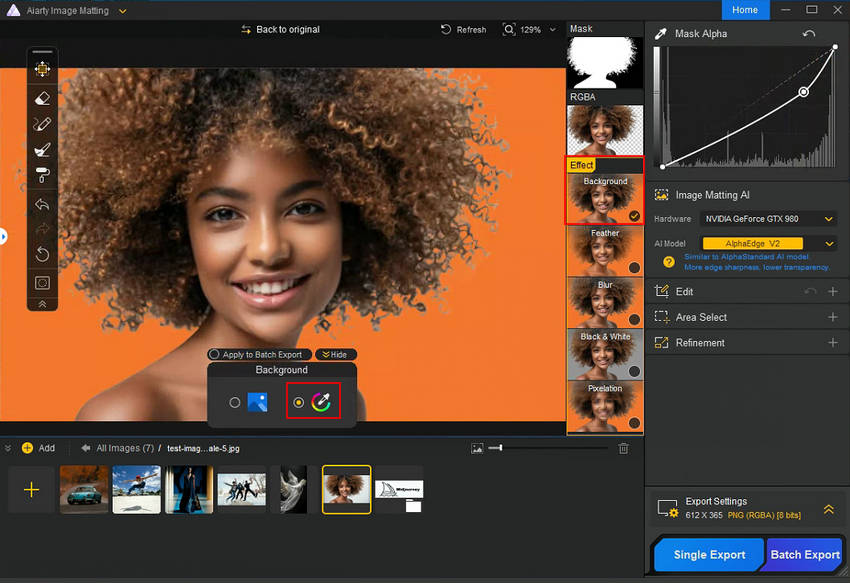
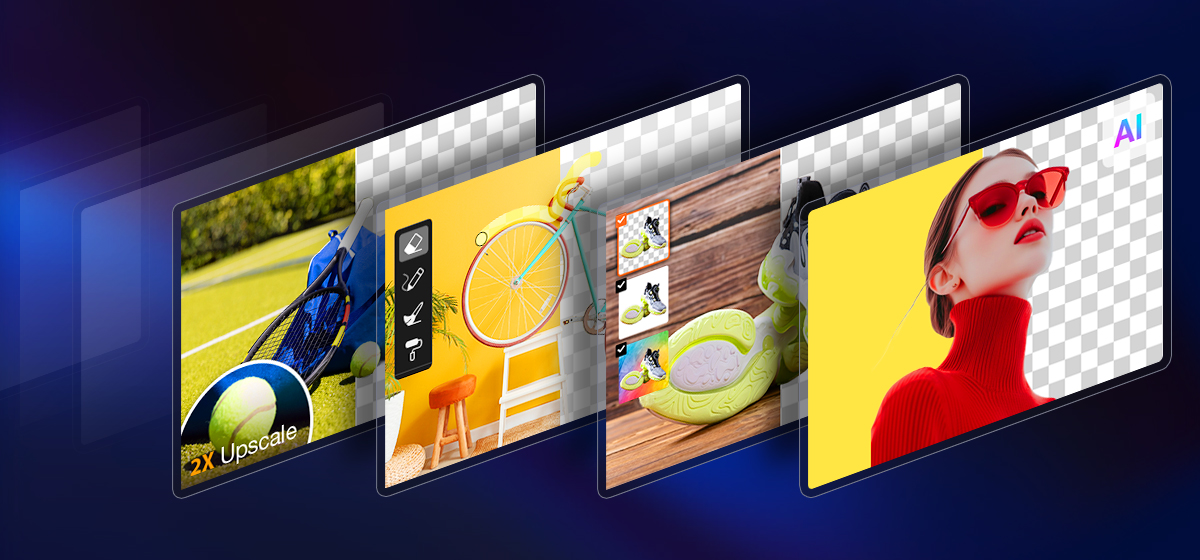
Seamless Background Replacement: Beyond just cutting things out, the tool makes it remarkably easy to change background of photo assets for creative composites. It handles the edge blending so well that you don’t get that “pasted-on” look. You can drop in a solid color for a clean e-commerce shot or a complex landscape for a fine-art piece, and the lighting and transparency on the edges remain believable.
Privacy and Speed via Local Processing: This is a big one for me. Many “best free ai background remover” tools are browser-based, meaning you have to upload your high-res (often sensitive) client work to a cloud server. Aiarty runs entirely on your local GPU. It’s faster, more secure, and allows you to automatically remove background elements from an entire folder of RAW files in a single batch, without hogging your bandwidth.
Instead of just being another best background removal app for casual use, it feels like a specialized instrument designed to handle the 10% of “impossible” masking jobs that usually take up 90% of our editing time.
Aiarty Image Matting Real-World Scenarios
In practice, a tool like this isn’t just about saving a few minutes; it’s about enabling shots that would otherwise be a nightmare to edit. I’ve been testing Aiarty across a few common scenarios where most “best background removal app” contenders usually fail:
Portrait & Fashion Photography: We’ve all struggled with how to remove background from a subject with flyaway hair or fur. Standard AI usually “muds” the edges. Aiarty preserves individual strands, making the transition to a new background look organic. It’s a lifesaver for high-end beauty retouches where the halo effect is a deal-breaker.
Commercial & Still Life: If you’ve ever tried to make background transparent for a glass bottle, a liquid splash, or a watch face, you know the refraction usually gets ruined. This tool actually maintains the transparency of the material, allowing the new environment to show through naturally. It’s much faster than manually painting alpha channels for product composites.
High-Volume E-commerce: For those of us who need to remove background elements across a hundred RAW files locally, the batch processing feature is a massive win. You aren’t tethered to a slow cloud upload, and the consistency across the set – keeping the same edge softness – is much higher than manual masking.
By handling the heavy lifting of the selection process, it lets you get back to the creative part: the color grading, the composition, and the storytelling.
Final Thoughts
In an industry that’s increasingly shifting toward subscription-based tools, having a reliable one-time purchase option still feels refreshing—especially for something as time-consuming as precise masking.
For photographers who regularly deal with fine details like hair, transparency, or complex backgrounds, tools like Aiarty Image Matting can make a noticeable difference in both speed and final image quality.
It’s not just about saving time—it’s about getting results that hold up under close inspection.
At the time of writing, PhotoRumors readers can access an exclusive 43% discount on the lifetime license, making it a relatively accessible addition to a professional editing workflow.

 Connexion