
Vue normale

An inside look at how NASA turns astronauts into photographers

People sit in a NASA control room as Moon images fill large screens.

NASA astronaut and Artemis II commander, Reid Wiseman (foreground), and CSA (Canadian Space Agency) astronaut and Artemis II mission specialist, practice lunar photography at NASA's Johnson Space Center in Houston.

Photo: NASA / Kelsey Young

The Artemis II mission came to a successful end a few weeks ago, but excitement over the historic journey remains high, thanks in part to the remarkable photographs the four-person crew captured aboard Orion. It turns out those images were successful because the astronauts were doing more than pointing a camera out the window and hoping for the best. Before launch, they received dedicated photography training to help them document the Moon, Earth and the spacecraft’s journey between them.

View this post on Instagram

A post shared by Reuters (@reuters)

In an Instagram video from Reuters, NASA flight operations imagery instructor Paul Reichert explains the photography training process for astronauts. He says that when individuals are first brought on as astronauts or astronaut candidates, they receive about four to six hours of training from him and his fellow instructor, Katrina Willoughby. The goal at that point is to bring them to a basic level.

Before astronauts are assigned to a specific mission, Reichert says they may take some classes and have the opportunity to check out gear to get familiar with it. Then, once an astronaut is assigned to a mission, they have about 10 classes, which he says amounts to about 20 hours of training.

A large Moon model hangs near an Orion capsule in a NASA Artemis facility

The crew practiced for the mission using an Orion mock-up and a large, inflatable moon.

Photo: NASA / James Blair

According to the Rochester Institute of Technology (RIT), Willoughby and Reichert, who are both alumni of the RIT photographic sciences program, worked with the Artemis II crew for two years to ensure they were fully prepared. Mission pilot Victor Glover said their training included on-the-ground drills that involved taking pictures inside a mock-up of the Orion capsule, according to Reuters.

"Most people can use a camera and get a photo that is good enough, but good enough isn't what we're after scientifically. We’re really teaching the astronauts how to go beyond the basics," Willoughby says in the RIT article. "Being able to understand how to use the equipment, and what the options are, gives us a lot more capability."

astronauts work in dim light around equipment inside a spacecraft

Artemis II Pilot Victor Glover and Mission Specialist Christina Koch gather images and observations of the lunar surface to share with the world during the lunar flyby on the sixth day of the mission. The crew spent approximately seven hours taking turns at the windows of the Orion spacecraft as they flew around the far side of the Moon.

Photo: NASA

Images taken on such missions play an important role in research, but their importance goes beyond that, too. "There are pictures we want to get, and then there are pictures that the team is depending on. The imagery is their data," says Willoughby. "If something breaks, for example, we need a picture or video to show us on the ground what's going on. Sometimes, the imagery is what is needed to move forward, so it is important that the crew can get it right the first time."

A Reuters article also details the camera gear chosen for the mission and why those particular devices were selected. We've seen lots of questions here at DPReview about why NASA opted for the Nikon D5, a decade-old camera. The answer appears to come down to what was tried and tested. "We had a lot of flight experience with it," Reichert told Reuters. "We knew it could handle radiation, at least several years of radiation dosage on the ISS, and it didn't have any problems with it."

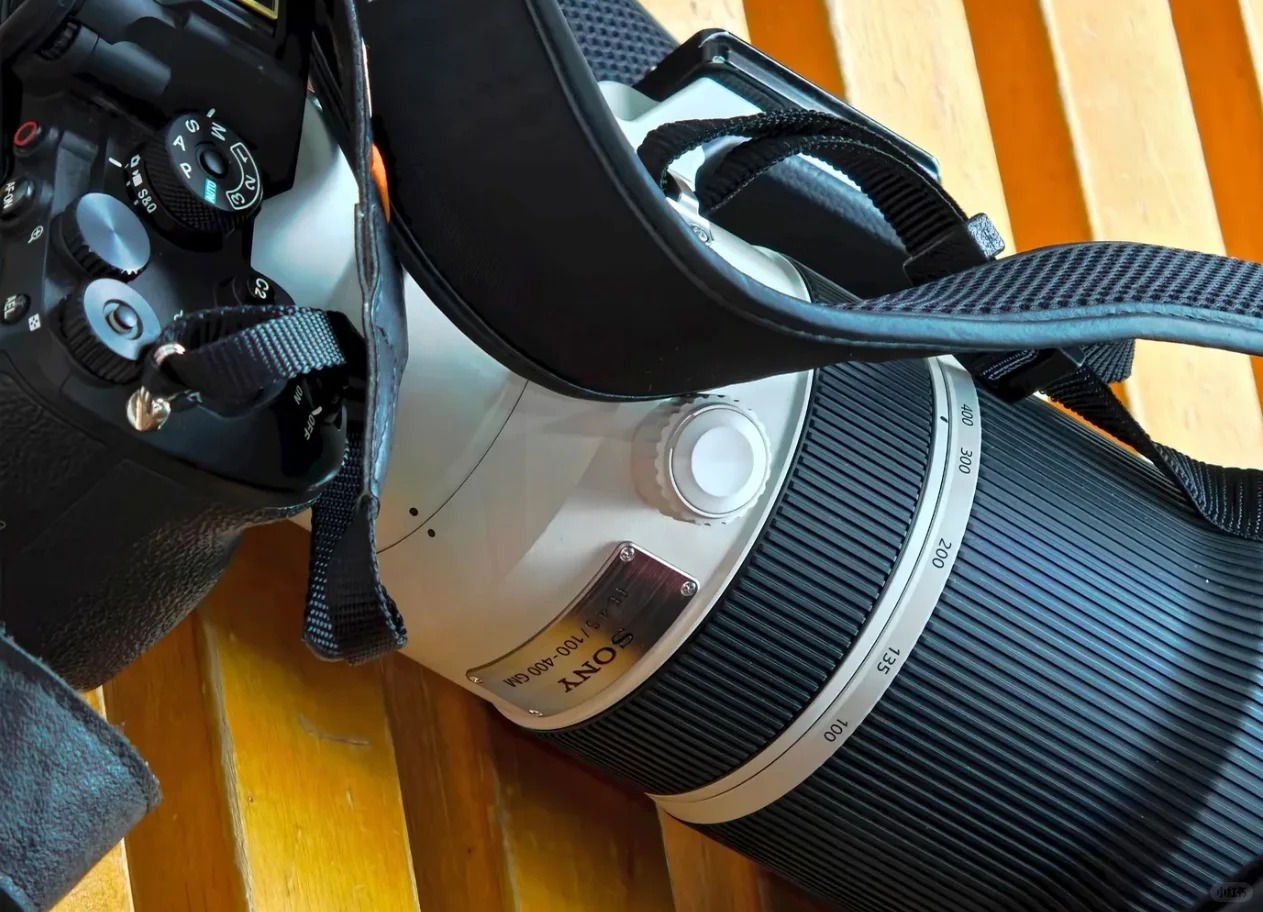
Why a newcomer is challenging one of Sony's most interesting lenses

When you use DPReview links to buy products, the site may earn a commission.
thypoch 24-50mm f2p8 in hand

The Thypoch's first autofocus lens is an F2.8 for full-frame.

Photo: Mitchell Clark

Over the past few weeks, lens maker Thypoch has been teasing the release of its first autofocus lens. But rather than entering the world of autofocus with a prime, as many of its peers have done, it's introducing the first China-designed and developed zoom for full-frame. And it's an F2.8 zoom, at that.

How has the company gone from making M-mount manual-focus primes to an F2.8 zoom for full-frame? Quickly, says the company's Go-to-Market manager, Xavier Luo.
"The project began at the end of 2024," he tells me: "and it's taken almost a whole year to make the lens ready for large-scale manufacturing."

"In China, this would be considered quite a long time," he says, when I express surprise at the short timescale.

I ask him to expand on why the company decided to jump straight to zoom lenses, and why this particular specification. "We are very good at making zoom lenses," he tells me: "we have a cinema lens background and already make dozens of [manual focus] zooms. Two times, three times, even ten times zooms for full-frame, APS-C and Micro Four Thirds, so we have a lot of experience."

"It's taken almost a whole year to make the lens ready for large-scale manufacturing"

And, there's a degree of pride at stake, too, he suggests: “There’s strong anticipation across Asian markets, with Chinese users in particular eager to gain a wider choice of lenses, because the Chinese brands’ prime lenses have become more and more competitive both in terms of price and optic performance. These people are hoping to get a some kind of zoom product in the market so that maybe people can buy a zoom lens with a prime lens price."

Why 24-50mm?

The company settled on a 24-50mm as its first product for a number of reasons, Luo tells us:

"We know it has a lot of controversial points." he says: "The core value of the zoom lens is zoom, right? So people are arguing [about] that in the Sony 24-50mm comments. But we noticed that people are getting more and more focused on a lightweight lifestyle in recent years. People are trying to get more lightweight cameras, lightweight bags and lightweight everything. A 24-50mm can cover the daily use, or for your travel."

Thypoch Xavier Luo portrait

Thypoch's, Go-To-Market Manager, Xavier Luo

Photo: Thypoch

The other critical factor was that they believed this range would let them make a better lens. "[we didn't want to be] too ambitious, and make a 24-70, that kind of zoom lens," Luo tells us.

"When making zoom lenses, the biggest difficulties is to have a well-controlled distortion and at the same time have a really good sharpness," he says: "We think making a 24-50 means we can control it really well both in terms of sharpness and other [factors, such as] spherical aberration and distortion."

Some of this comes from it taking a different approach: "If you shoot with the Sony 24-50mm original lens with in Raw you may notice that it has in-body distortion correction," he says: "Third-party zoom lenses can be limited by the body communication protocol."

"We think [Sony] has a more open attitude towards third parties"

"In-body distortion correction means you have a perfect JPEG file but you don't have that in the Raw file. So for optical designers, it gives convenience: they don't have to worry too much about distortion, and that's a big deal, because they have only focus on the sharpness side. But for us, it's totally different: our designers have to look at both factors."

Dzofilm 12-25mm t2p8 pictor cine zoom lens

Shenzhen Dongzheng Optical Technology has already made a range of manual focus cinema zooms under its DZOFilm brand name.

Image: DZOFilm

"We asked Sony, but we didn't get any official confirmation," he tells us: "we actually want to pay the protocol license fee, but we couldn't get any official reply. We think they have a more open attitude towards third parties."

Challenges

We asked what the biggest challenge was of developing an autofocus zoom for the first time: the optical design or the mechanical design. "It's the physical design," Luo tells us: " more specifically, it's the software and electronic parts because in the autofocus lens domain, the level of the electronic and software decides the maximum optic performance in the lens."

"It's totally reversed, compared with manual lenses," he says: "with manual lenses, the optic performance leads the mechanical design. But, you know, [for autofocus] it's totally different: it depends on how much weight the lens motor can drive and the precision it can deliver."

The company developed its own STM motors for the task. "I think still 90% of lenses use STM focus motor," he says. The company spent a lot of time working on making sure focus speed was competitive, and that focus is precise and doesn't hunt in video. "we tested the autofocus precision in a lot of scenarios and to make sure [it performed well] whether people are using it for photography or video."

Internal zoom

thypoch 24-50mm f2p8 front element

Unlike the Sony 24-50mm F2.8, Thypoch's design features internal zoom and does not requre any software distortion correction.

Photo: Mitchell Clark

As well as a design with no software distortion correction, there's another obvious difference between Sony's 24-50mm F2.8 and Thypoch's lens, despite the similar dimensions and weight: the Voyager 24-50mm is an internal zoom design.

This has a benefit beyond just retaining the lenses' compact dimensions, says Luo: "it's better for people who are trying to make vlogs or short video, when they are using the lens on gimbals or even if they are [working] handheld."

The logic of E-mount

For now, the company is focused on the E mount for two reasons, we're told: "We think Sony E-mount has the biggest user group, and [we think] this lens fits the Sony Alpha users' interests. But we are still waiting to see what's happening in this industry, but our focus is just on E-mount right now."

"Our focus is just on E-mount right now"

But also, given the recent history of other manufacturers taking non-licensees to court, "Sony has a more open mind for third-party lenses."

Thypoch hasn't revealed all the details of the 24-50mm F2.8 yet. It's already publicly teased that the lens is coming, and shown it at the NAB trade show in Las Vegas. We're hoping this means we don't have to wait too long for the rest of the details, including the price, to be made public.

"I think when we reveal the price, people will be surprised by the high quality performance ratio of this product."


Thypoch Voyager 24-50mm F2.8 Sample gallery

We've been shooting with the Thypoch 24-50mm F2.8 and have produced this gallery of sample images. As always, you can download the Raw files, to see how it performs.

Please do not reproduce any of these images on a website or any newsletter/magazine without prior permission (see our copyright page). We make the originals available for private users to download to their own machines for personal examination or printing; we do so in good faith, so please don't abuse it.

Sample gallery
This widget is not optimized for RSS feed readers. Click here to open it in a new browser window / tab.

❌