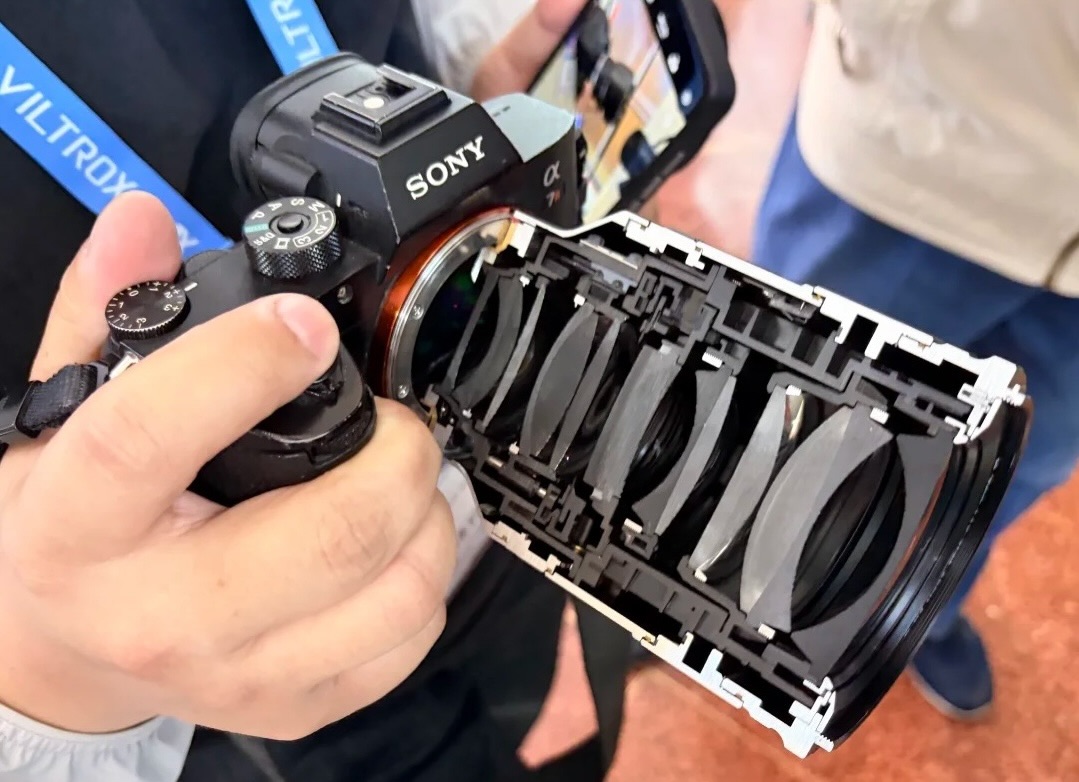
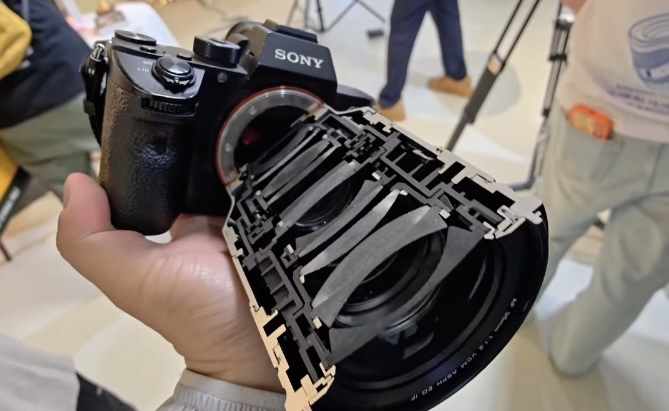
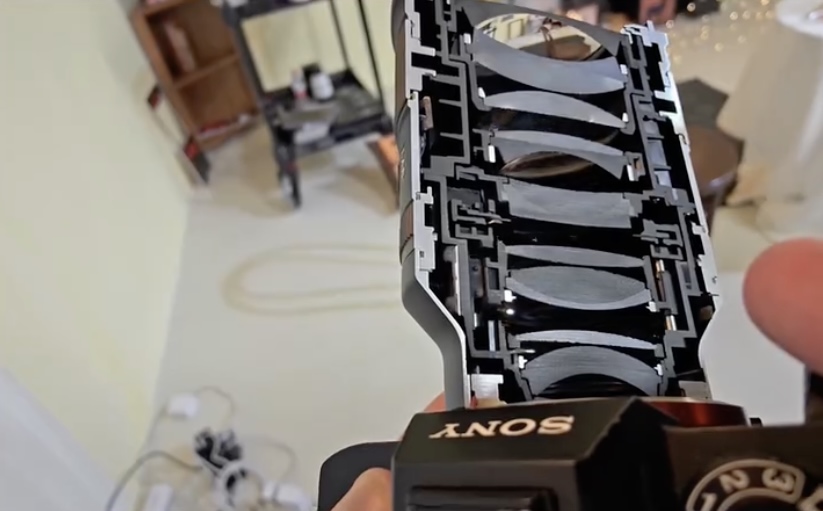
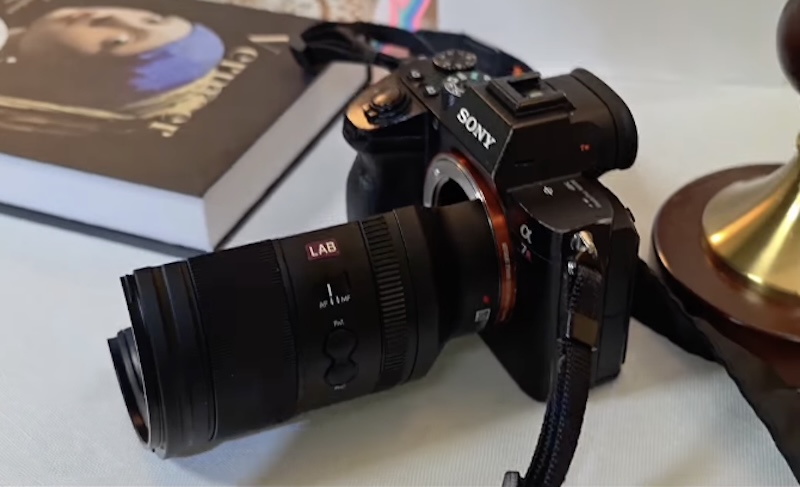
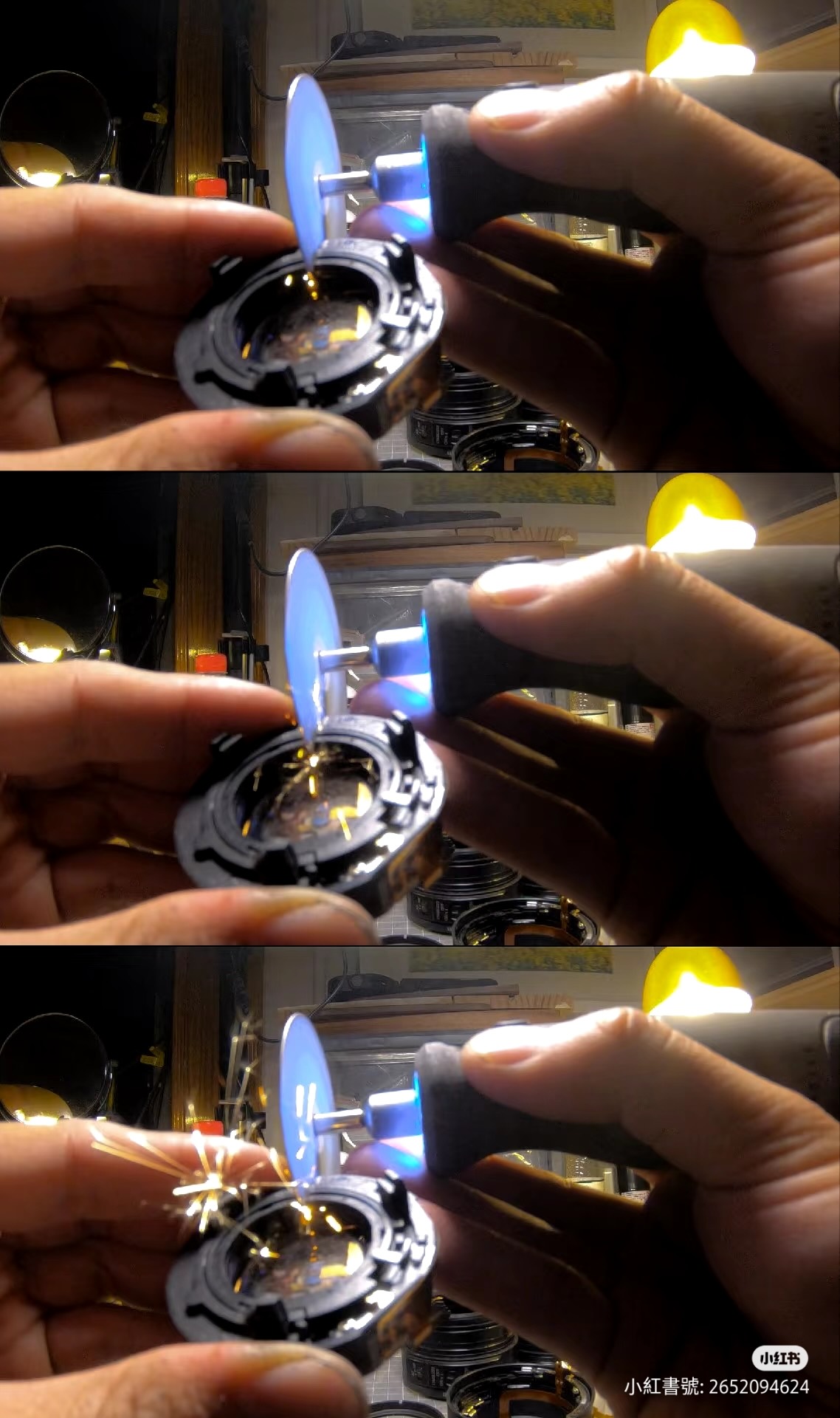
At the P&E show in China, Viltrox cut an AF 35mm F1.2 LAB FE N lens in half and took pictures with it. Unlike other cut lenses we have seen in the past from various brands, the Viltrox lens was actually functional, and the company published the pictures:
TJ Walton, Xiaomi's Senior Product Marketing Manager and Global Spokesperson (center) and Pablo Acevedo Noda, Head of Development and Engineering for Leica's mobile division (right), answer questions from the press.
Photo: Abby Ferguson
The best camera, as the saying goes, is the one that's always with you. For most of us, that's a smartphone, and it's been that way for years now. Smartphones haven't just made photography more accessible, but have fundamentally changed the way we communicate.
And, of course, we all want our smartphone cameras to get better – many of us fantasize about the day our phone will rival our dedicated camera – and the smartphone manufacturers know it. That's why every one of them dedicates an outsized portion of each product launch to camera upgrades.
Smartphone cameras have been getting better, but as any camera enthusiast knows, what you can eke out of these cameras is, to some degree, gated by physics. In recent years, the conventional wisdom has been that most improvements to smartphone cameras will come from software, including improved computational techniques, machine learning and AI.
In recent years, smartphone manufacturers have largely depended on computational photography and AI technologies to improve image quality. The diagram above illustrates how Google Pixel's Night Sight feature combines data from multiple images to create a single, higher-quality image.
Image: Google
This week, a senior Leica engineer offered a counterpoint to that conventional wisdom: that lenses in smartphone cameras still have room to meaningfully improve.
At a joint Xiaomi/Leica launch event for the new Xiaomi 17T and 17T Pro smartphones, Pablo Acevedo Noda, Head of Development and Engineering for Leica's mobile division, told DPReview:
"There's still a lot of room for improvement in smartphone optics. Of course, the miniaturization is always a challenge, not only in optics, but also in the rest of the components, like the sensor, the focusing motor, stuff like that. Leica will do its best to keep improving where we have the expertise, which is the design of lens elements, to produce the best image possible."
"There's still a lot of room for improvement in smartphone optics."
That's notable because one thing we don't often hear smartphone manufacturers talk about is optics or lenses. They love to talk about computational techniques like multi-frame stacking, scene detection and night modes, and they love to talk about sensors, including the fact that they're making them bigger, faster, and, most importantly (at least from a marketing perspective), at ridiculously high resolutions.
In fact, in most cases, the only thing we hear about lenses has to do with increasing zoom ranges, and those headline zoom numbers are often digitally derived rather than optical. (Smartphone manufacturers might also reliably predict that consumers' eyes will glaze over the moment someone starts talking about optical formulas in the middle of a keynote.)
Hearing Leica's head of engineering for mobile say optics is still a bottleneck cuts against that grain.
We spoke with Pablo Acevedo Noda (right), Head of Development and Engineering for Leica's mobile division, at a joint Xiaomi/Leica event in Vienna, Austria.
Photo: Abby Ferguson
What makes the comment noteworthy is its source. Acevedo Noda isn't a marketer – he's the lead engineer for Leica's mobile business, the optical side of the Xiaomi/Leica partnership. And he's stating that there's "still a lot of room for improvement in smartphone optics" at a co-branded launch event focused on camera features.
Leica and Xiaomi began co-engineering smartphone cameras in 2022, with Xiaomi's flagship phones featuring Leica-branded cameras. So when Acevedo Noda suggests there's still room for improvement, he's talking about hardware his own team has been working on for four years.
To be clear, Acevedo Noda isn't claiming optics are the biggest limitation on smartphone image quality – he even highlighted the importance of computational photography in smartphones – but he's calling out that the optics still have meaningful room to improve. Of course, Leica is an optics company, so you might expect it to say that, but if any company has earned the right to say it cares about optical quality over the years, it's Leica.
"If any company has earned the right to say it cares about optical quality over the years, it's Leica."
But it's also true that smartphone lenses have to cope with some pretty brutal design constraints. Lenses can only be as deep as a phone's design allows, and we all know manufacturers love making thin devices (I'm looking at you, Apple). That's a real engineering problem: working within a few millimeters of space, engineers turn to things like aspheric elements and exotic coatings to squeeze more out of a lens formula.
One thing we took away from the Xiaomi/Leica event is that Leica definitely has an opinion on what photos should look like, and Acevedo Noda wasn't the only Leica executive to weigh in on the company's image quality philosophy. Marius Eschweiler, Vice President of Leica's mobile business unit, explained that the company had to have "a very tough conversation" with Xiaomi about the look of photos from its co-branded phones.
Although that comment was made in the context of the aggressive processing and tone curves typically applied to smartphone photos, it suggests that Leica isn't just stamping its logo on a phone as a marketing exercise, but has a real interest in making sure images hold up to its own vision of what a camera should produce, optically and aesthetically.
If Leica can leverage its century-plus of optical design experience to develop lenses or lens technologies that advance smartphone image quality, that's a win, not just for its own customers, but for customers of other brands that are trying to keep up with the Joneses. Or, in this case, the Leitzes.
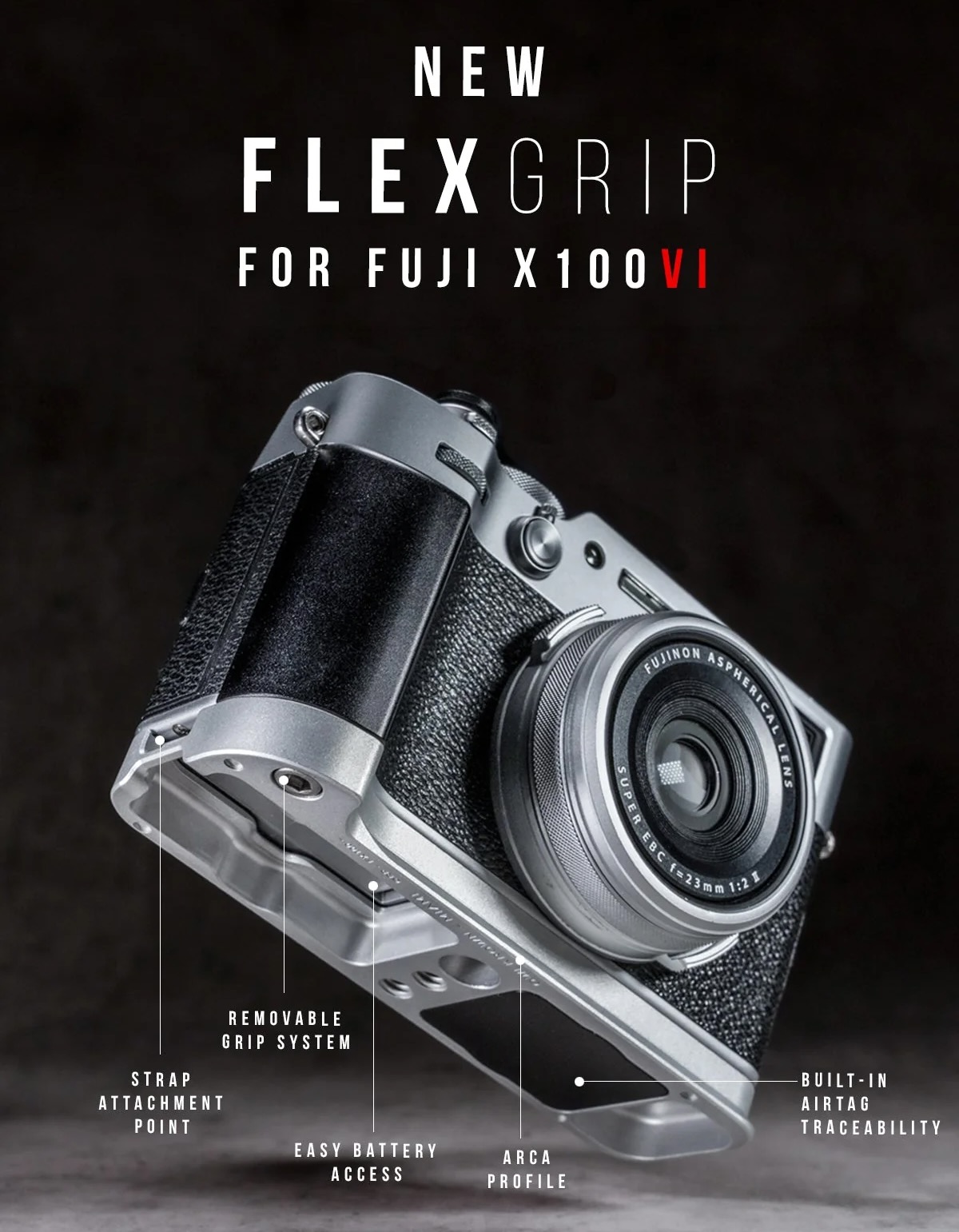
The Owlkrown FlexGrip for the Fujifilm X100VI was designed to integrate naturally with the camera body, extending the original form of the X100VI into a grip that feels unified, balanced, and complete in the hand. The design follows the geometry of the camera closely, preserving the compact nature of the system while significantly improving handling and stability during everyday shooting.
Machined from solid aircraft grade aluminum, the FlexGrip maintains an extremely lightweight construction while delivering the rigidity and precision expected from a professionally machined component. Every surface, radius, and transition was engineered to feel seamless against the body of the camera.
An integrated AirTag compartment adds discreet traceability without altering the external profile of the grip. Hidden within the structure, it allows photographers to keep track of their camera system without relying on external accessories or cases.
The built in Arca-Swiss compatible profile allows direct tripod mounting without requiring additional plates or adapters. Two integrated 1/4”-20 threaded mounts provide additional flexibility for tripod positioning and accessory mounting depending on shooting style or setup.
Inside the grip, a silicone padded interface protects the camera body while creating a secure, vibration resistant fit. The side integrated lug allows attachment of wrist straps or alternative carrying configurations including portrait carry setups.

 Connexion