The Rialto 65 sensor block will mount on Sony's Venice 2 camera, which currently offers modules based around 50MP and 24MP full-frame fully-stacked sensors.
Image: Sony
Sony has announced the Rialto 65: a large format sensor module for its Venice 2 cinema camera. The "Rialto" will be built around a 53.75 x 35.83mm sensor, making it comparable in size to the 53.4 x 40mm (essentially 645) sensors its semiconductor division makes for the likes of the Phase One IQ4.
More to the point, it's very close in size to the dimensions of the Arri Alexa 65, a rental-only cinema camera used in very high-end Hollywood productions. That has a 54.12 x 25.58mm sensor. The Rialto sensor uses a taller 3:2 aspect ratio than the Arri camera.
Sony UK says the module will be able to shoot 9.6K open-gate footage, which would imply a resolution of around 61MP, which isn't an obvious multiple of any common output formats, perhaps suggesting it could be used for applications other than just video. There's no word on technology, but it's probably safe to say it won't be the relatively slow readout designs used by Phase One and Fujifilm's smaller-sensor GFX Eterna cameras.
Sony says the sensor "block" will be available in the first half of 2027, with it being on show at the Cine Gear Expo show in Los Angeles later this week.
At present, the Venice 2 is available with stacked 35 x 24mm sensors that closely match the spec of the a1 II and a9 II photo cameras.
What is 65mm?
The Arri 65 uses a ∼54 x 26mm sensor which, like the Rialto 65, mimics the size of a vertically-fed strip of "65mm" film.
Image: Arri
As if we weren't having enough fun judging digital cameras by the dimensions of film formats over on the stills side of things, Sony is careful to point out that "65mm" refers to "a class of imaging area derived from the 65mm film format," rather than actually being a dimension of the sensor size (a footnote the camera industry might consider applying to its inch-type sensor size nomenclature).
As with "35mm" film, 65mm can be used in a variety of ways. Both Arri and Sony are mimicking the 5-perf vertical usage when they refer to 65mm.
As with "35mm" film, the 65mm format is named after the full width of the film, including the sprockets. And, as with 35mm, which can be used vertically, using four perf(erations) to give the "Super 35" movie format, that's roughly the same size as APS-C, or horizontally, using eight sprocket holes per frame to give the 36 x 24mm format we call full-frame, 65mm can be used in a number of ways.
The most common are 5-perf vertical, giving a roughly 52.6 x 23mm widescreen frame, or the vast 15-perf horizontal IMAX format that Christopher Nolan seems determined to maintain, single-handedly. This is a vast 70.4 x 52.6mm. If you know anything at all about the exponential costs of making larger sensors, you'll understand why Sony is mimicking the former.
Why Rialto?
While, for Brits at least, the world 'Rialto' may evoke crumbling former cinemas in faded seaside towns, the name actually derives from Venice's historical theatre district. And this sensor block fits into the Venice 2 camera. Clever, eh?
Sony hasn't given details of price but we'd assume it's as close to the cost of one of Venice's islands as the price of your current camera.
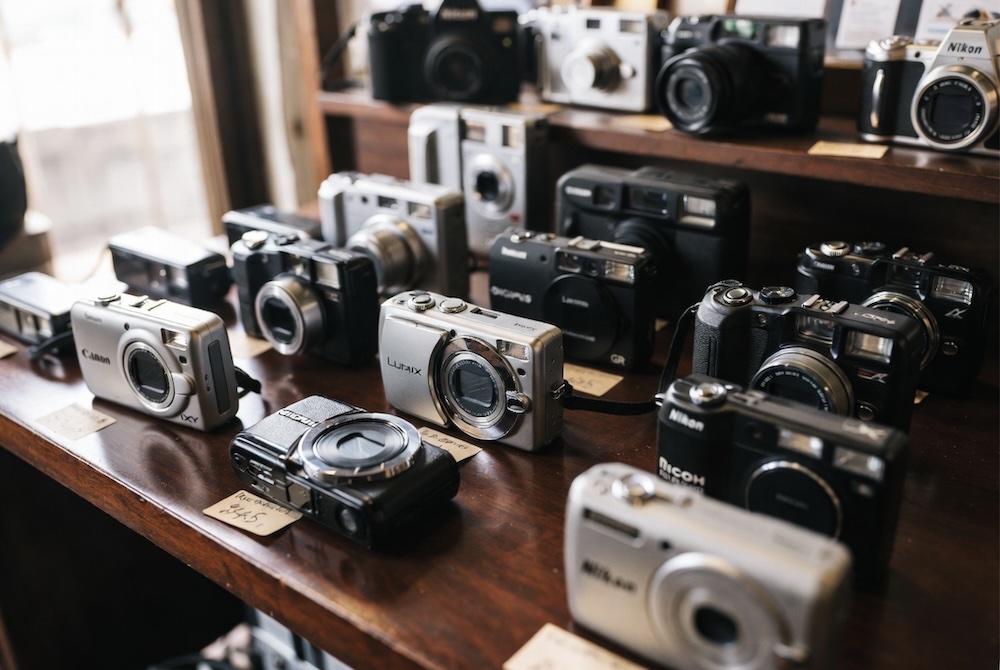
A recent report from Pinzuba News highlights how the resurgence of compact digital cameras in Japan is driving a massive price increase in the used market for vintage models from the 2000s and early 2010s. According to the article, demand for older compact digital cameras has exploded, leading to prices roughly quadrupling in the second-hand market.
Key Data from KOMEHYO (Major Used Goods Retailer)
Sales volume of “old compact digital cameras” has increased approximately 5 times compared to 5-6 years ago.
The average selling price has risen to about 3.5 times higher
Models that sold for 5,000-10,000 yen five or six years ago are now fetching 20,000–40,000 yen.
Quote from KOMEHYO Expert
Yasuhiro Hara, Camera Sales Floor Manager at KOMEHYO’s Nagoya main store, commented on the surge:
“Demand for old compact cameras has grown significantly compared to 5 or 6 years ago. At our store, sales volume has increased about 5 times, and the average price range has surged to about 3.5 times.”
He went on to explain the unique appeal these older models hold:
“Many compact cameras sold in the 2000s were equipped with CCD sensors. These provide warmer colors than the CMOS sensors in current cameras and smartphones, especially producing a film-like quality in still photos. These ‘old compact cameras’ have qualities that current cameras don’t have.”
Why the Comeback? CCD Sensors and Nostalgic Appeal
The boom is driven by a growing appreciation for the distinctive characteristics of CCD-equipped compact cameras. Unlike modern CMOS sensors (dominant in today’s smartphones and new cameras, which prioritize video performance and efficiency), older CCD sensors deliver warmer color rendition and a nostalgic, film-emulating look in still photography.
While new compact camera (lens-integrated) shipments in Japan are projected to increase about 30% year-over-year to roughly 2.4 million units in 2025, this remains a small fraction of the 2008 peak of 11 million units (and up from the 2023 low of 1.7 million). Limited new supply plus the irreplaceable charm of vintage CCD models has created strong demand in the used market.
This latest development continues the trend I reported on in November 2024, when prices for many old compact digital cameras had already jumped dramatically (up to 20 times in some cases):
What are your favorite weather conditions for photography?
Photo: Collage of entries for this week's Question of the week article
Last week, we asked you what your favorite weather events are for taking photographs. From stormy seas to picturesque forest hillsides, a wide range was depicted. Initially, when we said "weather events", all we thought we might get were tornadoes, floods and other disaster scenes. You surprised us with a truly wide palette to appreciate.
View the above slideshow to check out the 15 selected memorable photographs. Many more could not be included, so check them out in the forums. We'd love to see you contribute your own weather experiences, too.
"I live in the Swiss mountains, and for me, changeable cloud cover, revealing hidden mountain features, with occasional isolated bursts of sunlight, is the best."
"It doesn't happen often here where I live, but at that special night the moonlight was beautiful. And in long exposures, clouds sometimes blur very subtly."
"Several have mentioned a dislike for cloudless, blue skies. I agree - for the most part. However, a cloudless sky can help emphasize the scene being photographed."
"I really like very early mornings, regardless of the season, sometimes right after a storm, when the light is at its most gentle. Blue Hour at Meadowlark Gardens."
"Generally speaking, I like dramatic skies, either the colors or cloud shapes, to have some interest in the skies. As many in this thread, I love dramatic mountain landscapes enriched by clouds. Mountains and sunsets are a great combo, too."
The original Camp Snap camera was a surprise hit, a minimalist camera that succeeded largely because of what it lacked. Originally marketed as a low-cost, screen-free camera for kids to take to summer camp, where devices with screens are sometimes banned, it found a second audience among adults drawn to its no-frills, toy camera simplicity.
The Camp Snap 2 is built around the same basic hardware, but has a slimmer design that takes cues from classic rangefinder aesthetics, and includes several small but meaningful improvements. It's a likable little camera, though with a sensor much smaller than a typical point-and-shoot, image quality isn't the reason to buy one.
Key features
8MP, Type 1/3.2 image sensor (15.7mm²)
26mm (equivalent) F2 lens
Dual-tone LED flash (6500K cool / 3000K warm)
6 present 'Filters' for different photo looks, changeable in-camera
Screw-lockable door to access memory card and date/time settings
30.5mm filter thread
Tripod socket
4GB microSD card included
USB-C port
The Camp Snap 2 is available in nine colors, including translucent options, and costs $70. It can be ordered directly from Camp Snap.
Before diving into the camera, it's worth some context, particularly for those outside North America. Summer camp is a big tradition in the US and Canada, with kids spending anywhere from a few days to a few weeks at outdoor camps. For many kids, it's the highlight of the summer.
I have some personal perspective here: not only did I attend summer camp as a child, but I ran one for several years. Back then, if kids brought cameras, they used film and waited until they got home to see the results.
The Camp Snap 2 camera is designed for kids to take to summer camps with a screen-free policy, but it has found a second audience as a fun toy camera.
Camp Snap 2 camera | F2 | 1/1700 sec | ISO 100 Photo: Dale Baskin
Today, many camps prohibit devices with screens, including smartphones and most digital cameras. They want to keep kids engaged with each other and the outdoors rather than staring at screens or messaging friends at home. That's the scenario the Camp Snap was designed for.
What's new
If you're familiar with the original Camp Snap, here's what's changed.
The most important addition is a dedicated on/off switch. On the original, the shutter button doubled as the power switch, which was awkward and potentially confusing. The Camp Snap 2 also gains an automatic sleep mode, so a forgotten power-off won't drain the battery.
The back of the Camp Snap 2 camera is as simple as it gets. An on/off/flash switch (upper left), a tunnel-style viewfinder, a tiny LCD frame counter, and a button to change the filter style of the images (center right). There's also a speaker that emits shutter sounds when the shutter button is pressed.
Photo: Dale Baskin
Filter presets (color modes) can now be changed in-camera. The original required a computer connection to change modes, and if you wanted to change it, you had to reconnect to the computer. The Camp Snap 2 offers six: Standard, Vintage 1, Vintage 2, Vintage 3, Analog, and Black & White, cycled through using a button to the right of the frame counter. Holding it for 10 seconds locks it, useful if you'd rather your kids not fiddle with the settings.
Like the original, the Camp Snap 2 has a small screw securing the card slot door, and the new model adds a conventional slide-lock so you can remove the screw if you prefer.
Sample gallery
This widget is not optimized for RSS feed readers. Click here to open it in a new browser window / tab.
A comparison of the Camp Snap 2's six color modes.
Also new: a 30.5mm filter thread and a tripod socket. I don't anticipate many people will use this camera with screw-on filters, but Camp Snap has strongly hinted that it plans to release some. The tripod socket is of limited utility without a self-timer or a way to remotely trigger the shutter.
In use
The Camp Snap 2 is exceptionally easy to use because there's so little to control. It's the closest thing to a 'plastic fantastic' disposable camera you'll find in the digital world. The only controls are the shutter button, the power switch (which also activates the flash), and the filter button. A tiny LCD on the back displays the shot count and the active filter.
"It's the closest thing to a 'plastic fantastic' disposable camera you'll find in the digital world."
Since there's no LCD screen for composing shots, you frame photos through a simple tunnel-style viewfinder. It's not fancy, but it works, which is all it needs to do.
The camera includes a 4GB microSD card, which Camp Snap says should hold around 2,000 photos. That's plenty for a week at camp, and you can always use a larger card if needed.
The bottom of the Camp Snap 2 houses the USB-C port, tripod socket, and a screw-locked door covering the memory card slot and date/time controls. The screw discourages kids from opening it, but can be removed if you'd prefer
Photo: Dale Baskin
The card lives behind a panel that screws shut, and that's very much by design. From personal experience running a summer camp, I can tell you that kids are remarkably good at losing things. Placing a screw on that door is a meaningful deterrent between a curious kid and the only copy of their photos.
Of course, there's no guarantee they won't lose the entire camera (because: kids), but if they do, it was only $70 to start with.
Camp Snap 2 camera | F2 | 1/2500sec | ISO 100 Photo: Dale Baskin
The flash is an LED type, similar to a smartphone flash, which can produce that same washed-out look. Auto flash mode is gone this time around, which is a minor loss. That said, given the limitations of the LED unit, leaving it off unless it's absolutely needed is probably the right approach anyway.
The camera runs on an internal battery charged via USB-C, which is one less thing for kids to lose. Camp Snap rates it at around 500 shots, which seems reasonable in my experience.
Image quality
It's important to set appropriate expectations for image quality. It's an inexpensive camera that's designed mostly for kids to capture memories, with the idea that it's potentially disposable should disaster happen.
Don't expect the same level of image quality that you would get from a modern smartphone or even a retro point-and-shoot camera, though. The camera's imaging sensor is tiny. In fact, it's smaller than the ones used in most smartphone cameras, and it doesn't benefit from any of the computational photography techniques those devices use to improve image quality.
It's worth illustrating this with some real-world examples. In the table below, you can compare the Camp Snap 2's sensor and lens to other cameras that have lenses with similar focal length, including the Kodak C1, the Olympus Tough TG-5, a rugged camera introduced in 2017, and the iPhone 13, a several-year-old smartphone.
Camp Snap 2
Kodak C1
Olympus Tough TG-5
iPhone 13 (main camera)
Price
$70
$120
$450
$799
Sensor type
8MP
13MP (BSI)
12MP (BSI)
12MP (BSI)
Sensor area
15.7mm²
15.9mm²
28.1mm²
35.2mm²
Lens*
26mm F2
26mm F2
25-100mm F2-4.9
26mm F1.6
Light captured**
1x
~1x
1.8x
3.5x
*Focal lengths are 35mm equivalent. **Relative to Camp Snap 2, based on sensor area, aperture, and sensor type (BSI sensors capture more light than conventional sensors of the same size).
In general, the more light a camera gets, the better the image quality, and the numbers on the last line tell a clear story: the Camp Snap 2's sensor captures roughly half the light of the TG-5 and less than a third of what the iPhone 13 captures – and that's before the iPhone's computational wizardry kicks in. The Kodak C1's BSI sensor gives it a slight edge over the Camp Snap 2 despite their similar size, along with a flip-up LCD screen, for just $50 more.
Of course, what none of those cameras can provide is the simplicity and screen-free experience of the Camp Snap 2, and if a screen-free camera is what you need, or simply the experience you're after, it stands out.
The Camp Snap 2 is prone to clipping bright highlights, like clouds.
Camp Snap 2 camera | F2 | 1/1150sec | ISO 100 Photo: Dale Baskin
In most cases, the Camp Snap 2 does a good job of getting exposure correct, but it struggles with strongly back-lit scenes, and while the white balance is generally on target, photos can occasionally exhibit a slight color cast.
The most visible artifacts you're likely to encounter are clipped highlights on bright objects or JPEG compression artifacts, which are obvious if you pixel peep images at magnification.
Verdict
The Camp Snap 2 is a good camera to send to camp with your kids, particularly if there's a no-screens rule. It's incredibly easy to use and lets kids capture memories that last a lifetime. Older kids, or those with some photography experience under their belt, might find it too simplistic and would be better served by something with a bit more control.
However, it has a fun factor, and if you're buying it for your child to take to summer camp – or even for yourself to have some fun – it's up to the task. When I look back at photos I took at summer camp as a kid with a film camera, the image quality leaves a lot to be desired. But adult me doesn't care one bit about that. The purpose of those photos was never to be fine art. It was to capture memories of something that mattered, and they do exactly that. The Camp Snap 2 can do the same.

 Connexion