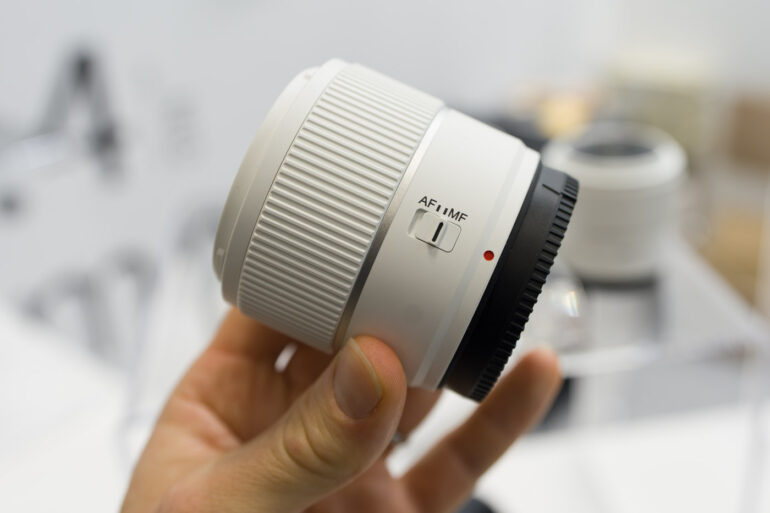
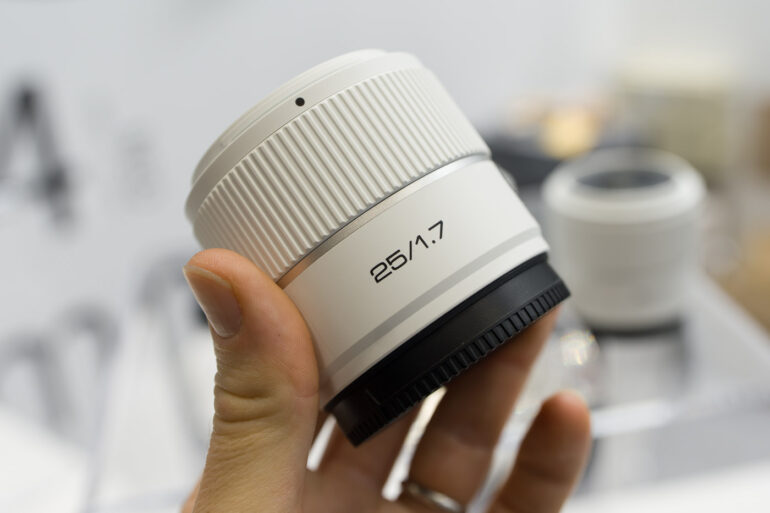
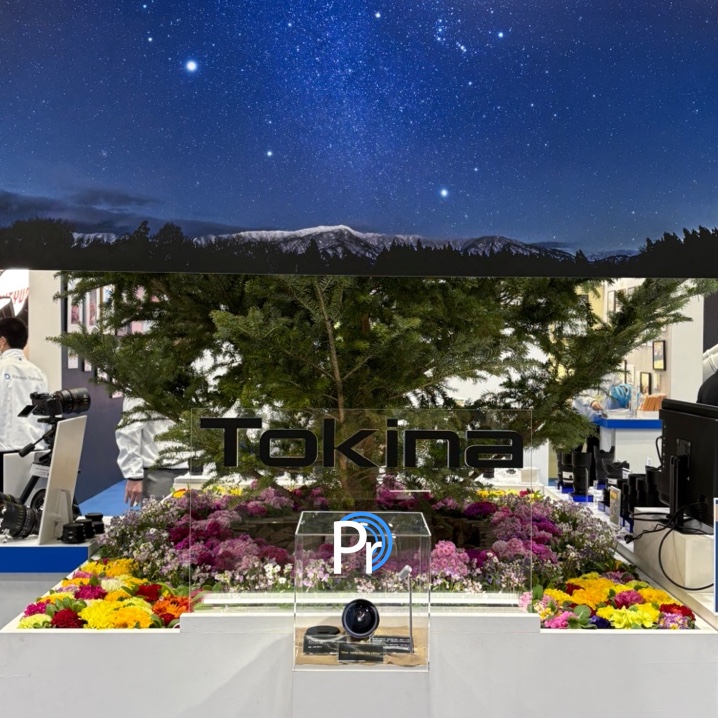
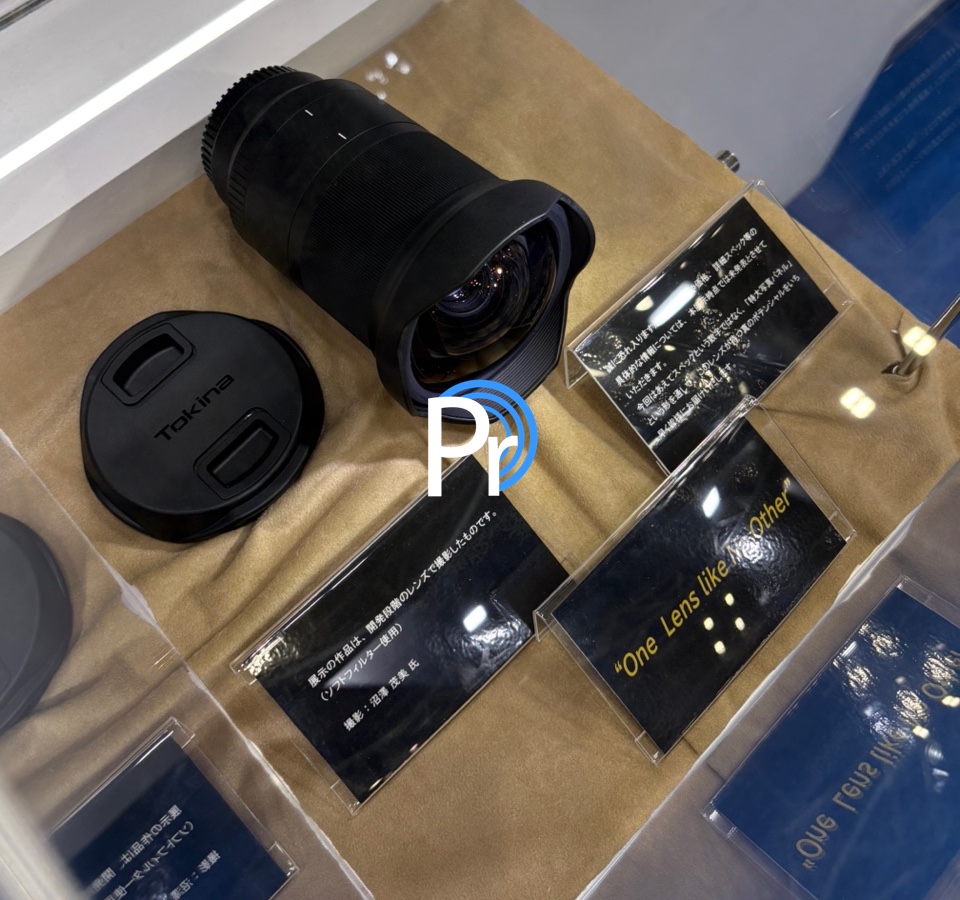
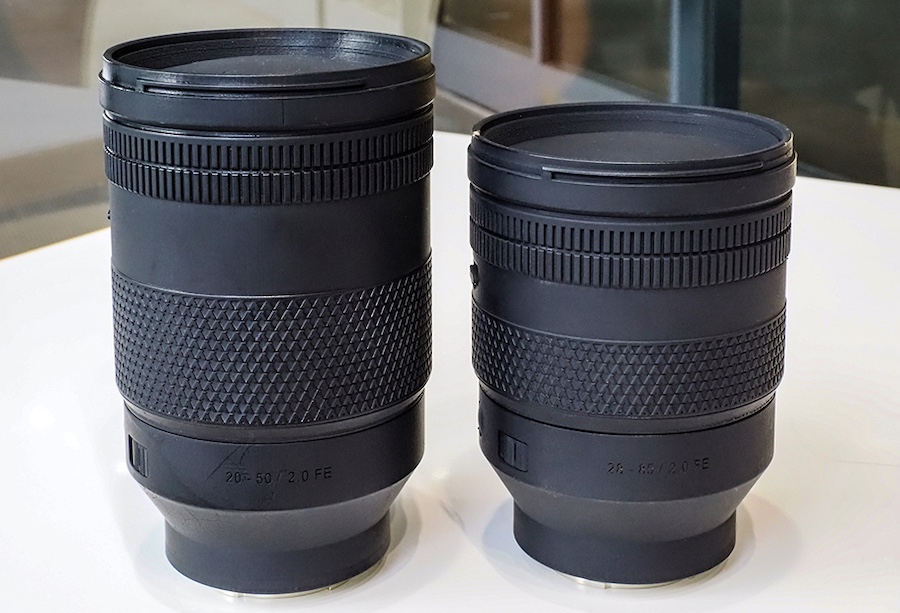
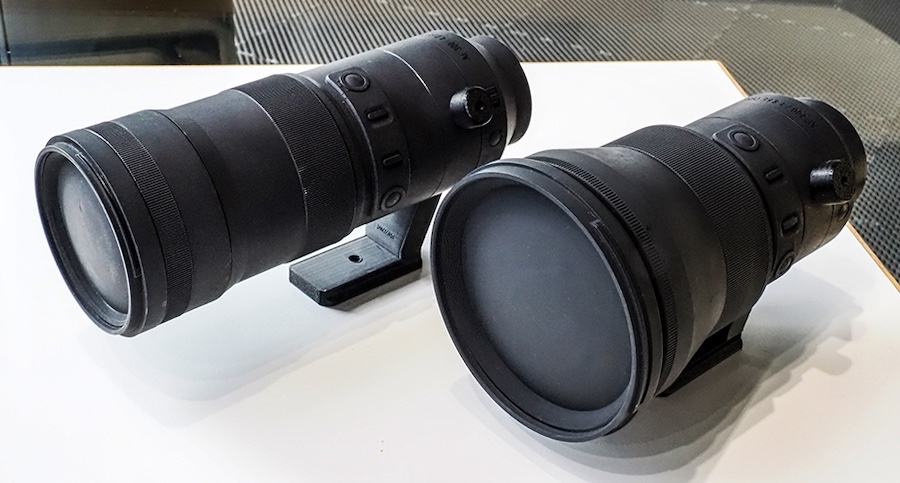
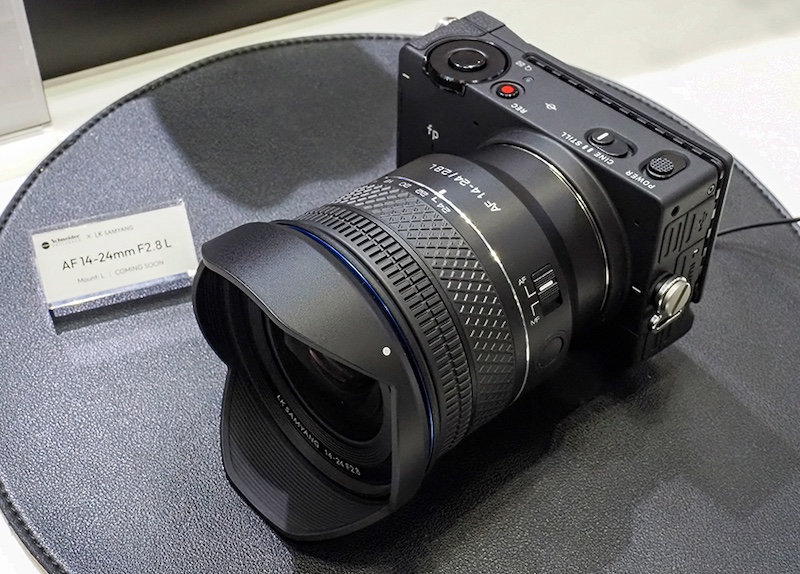
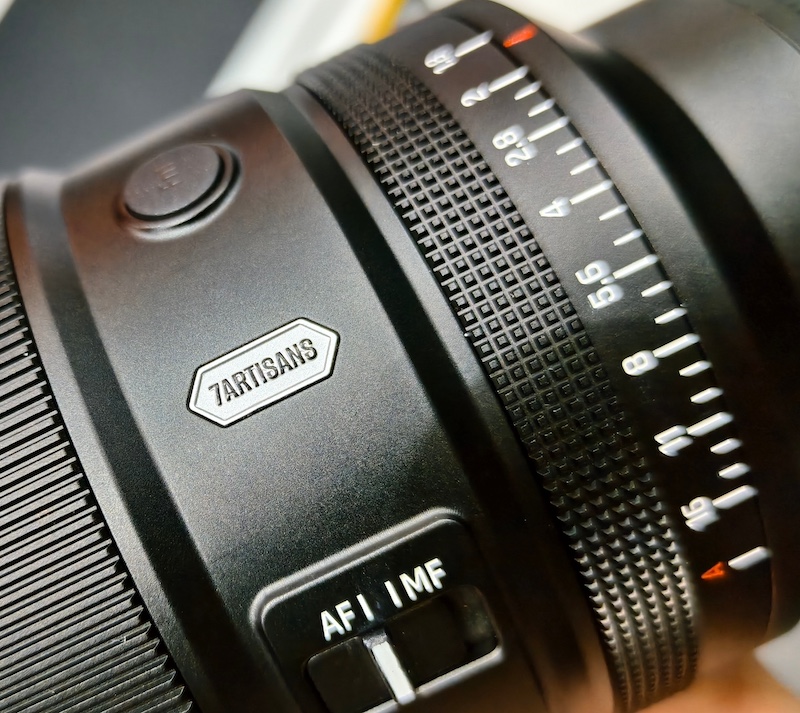
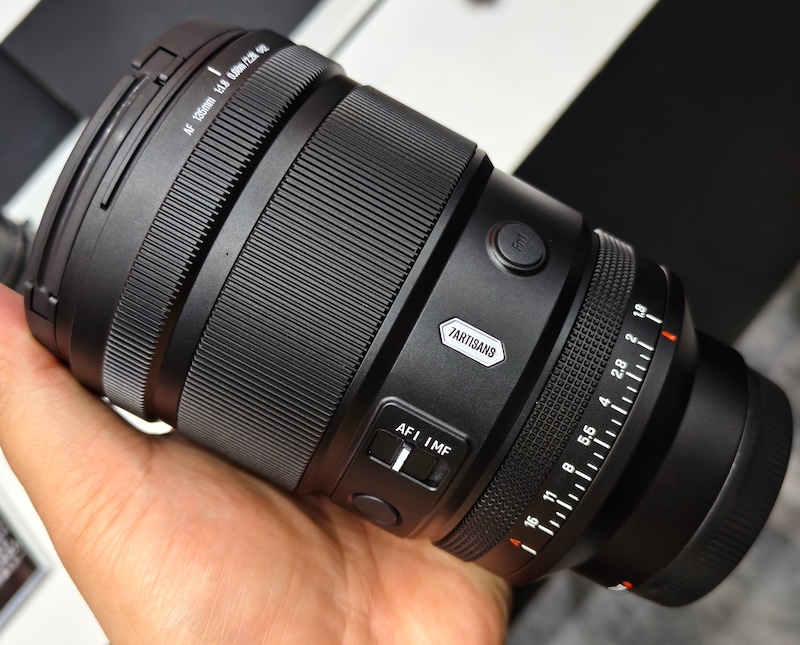
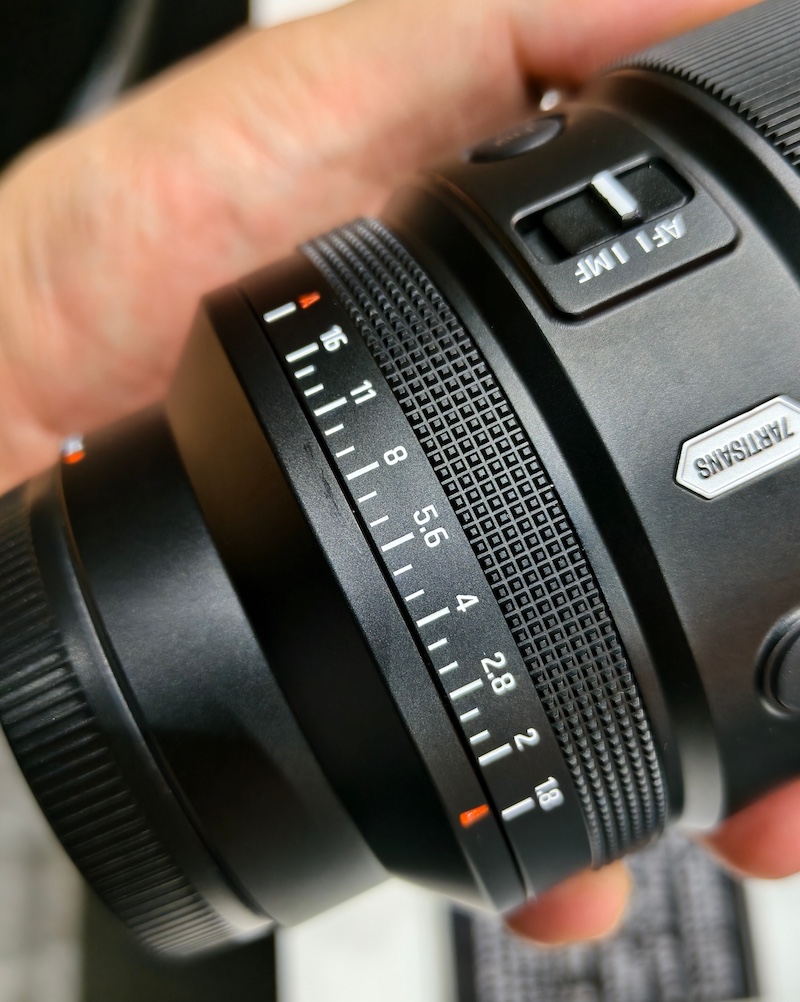
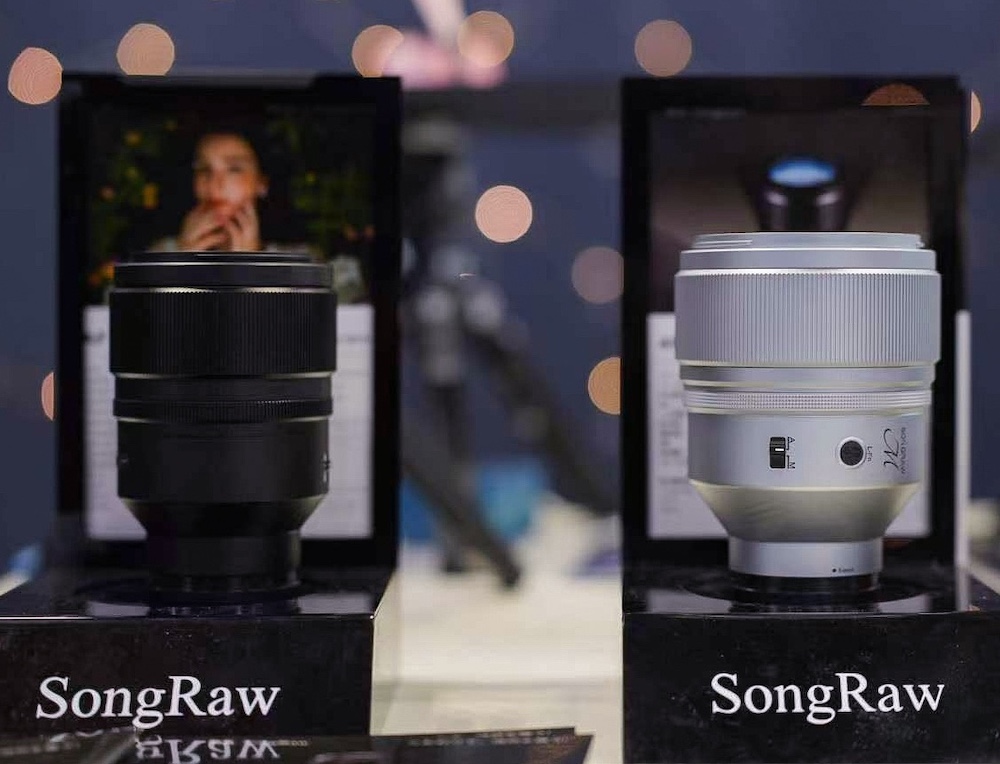
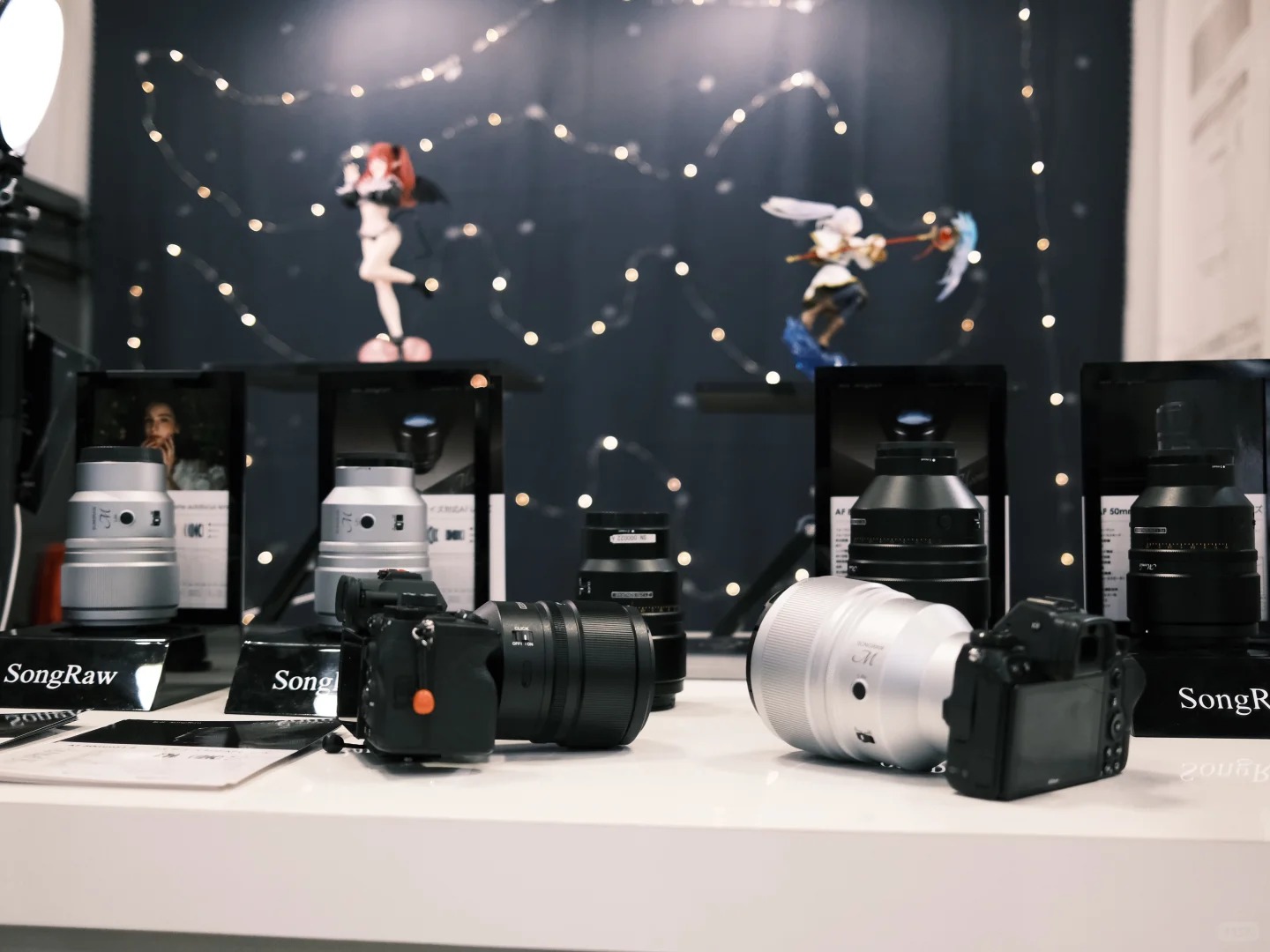
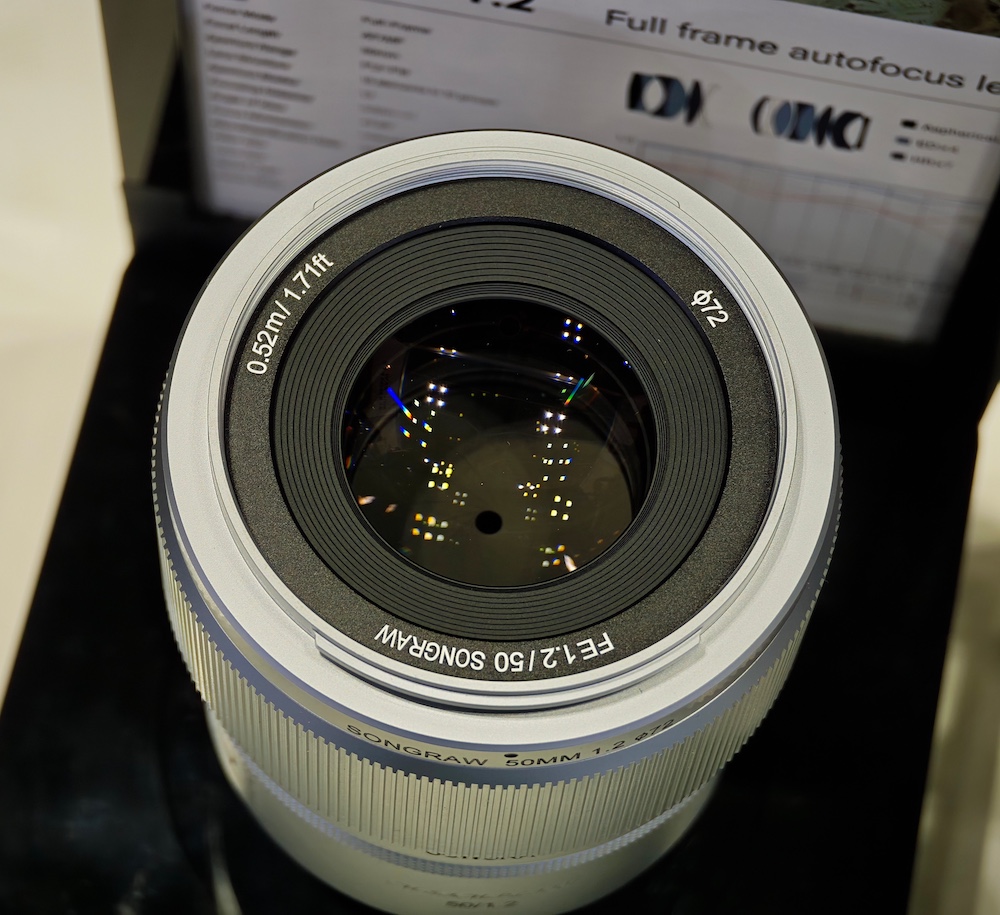
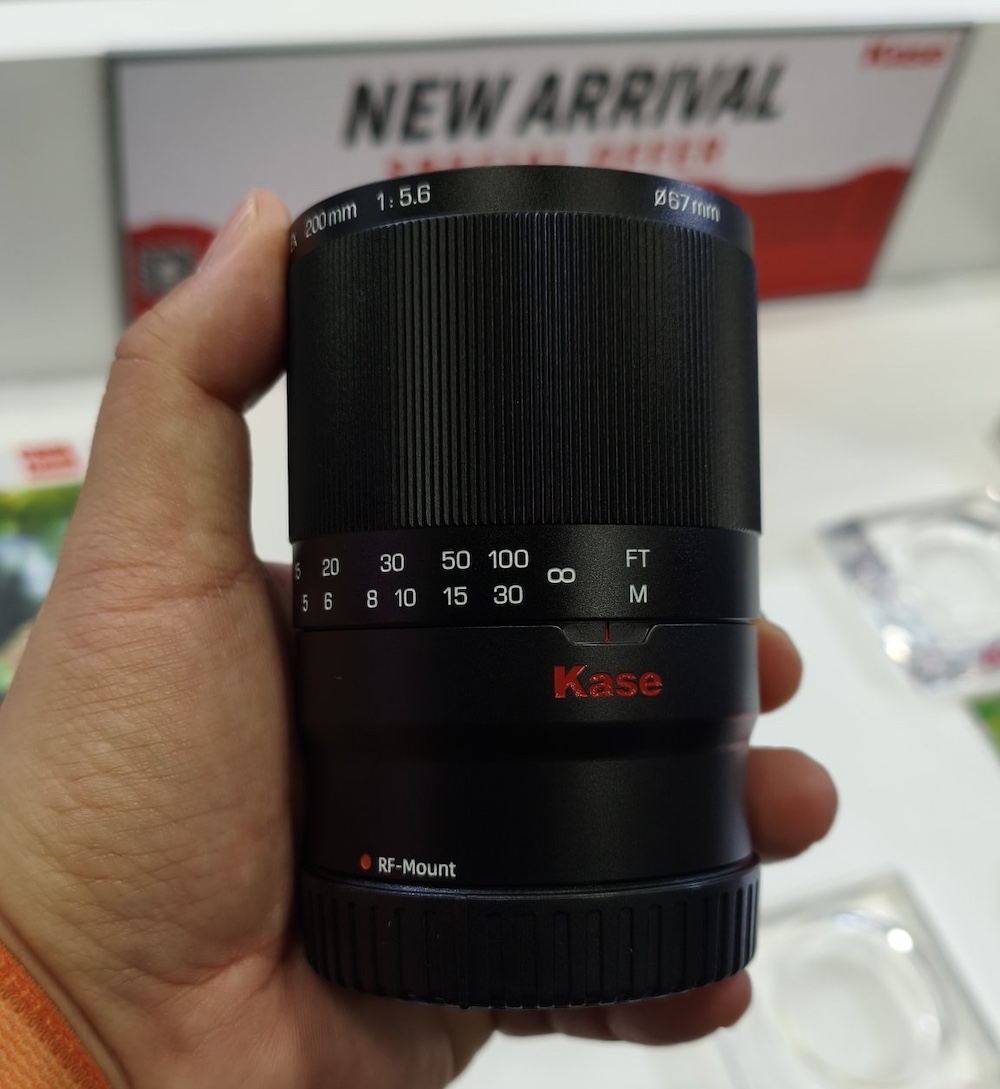
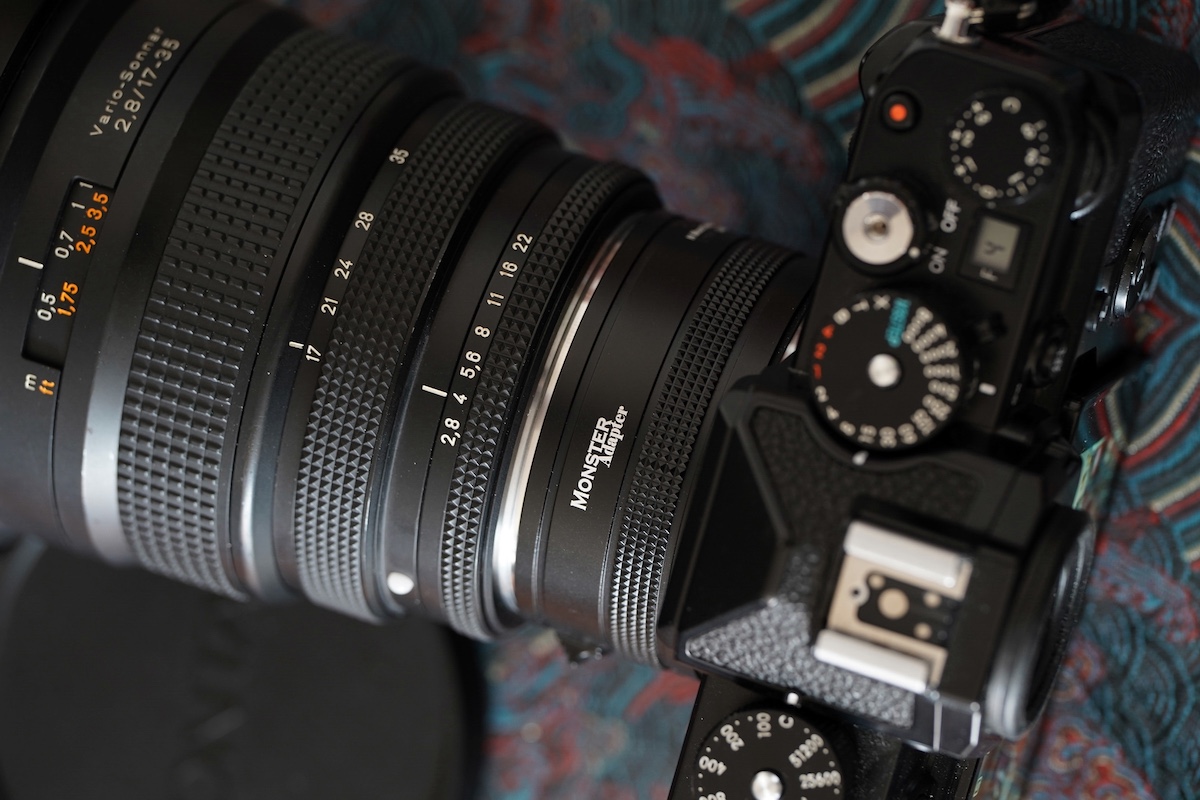
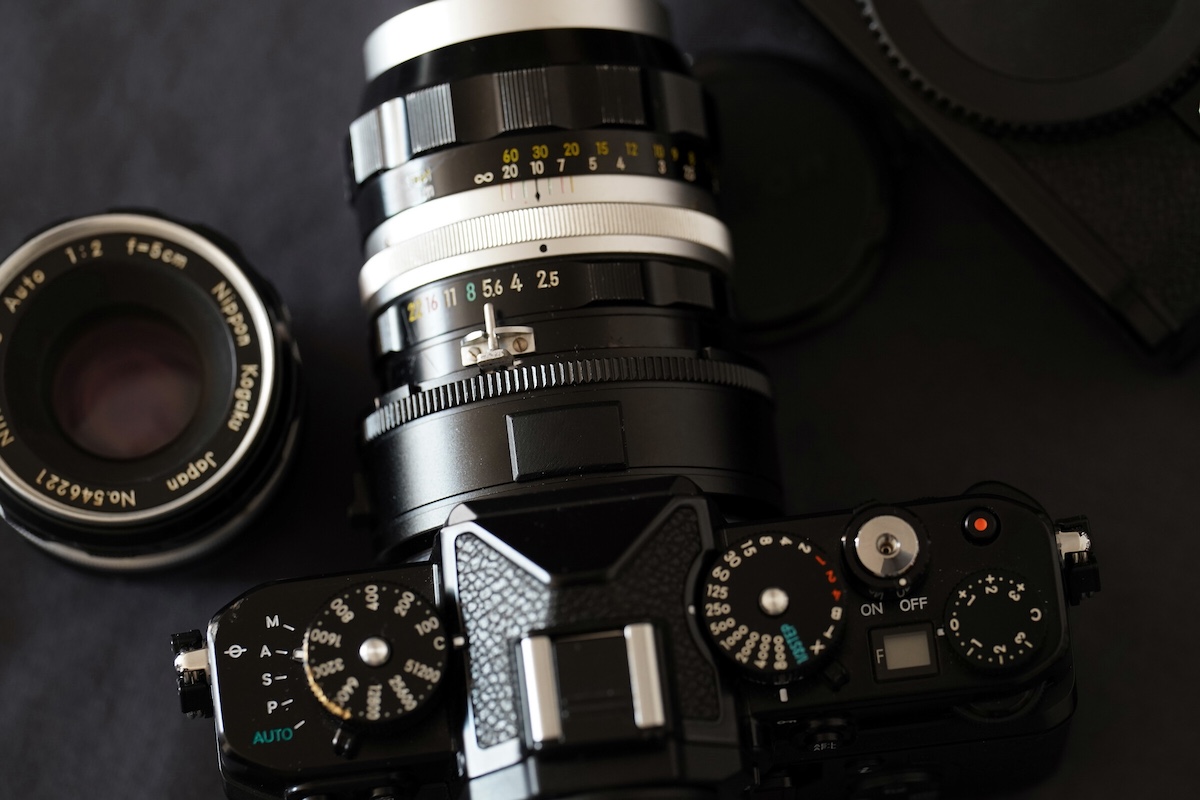
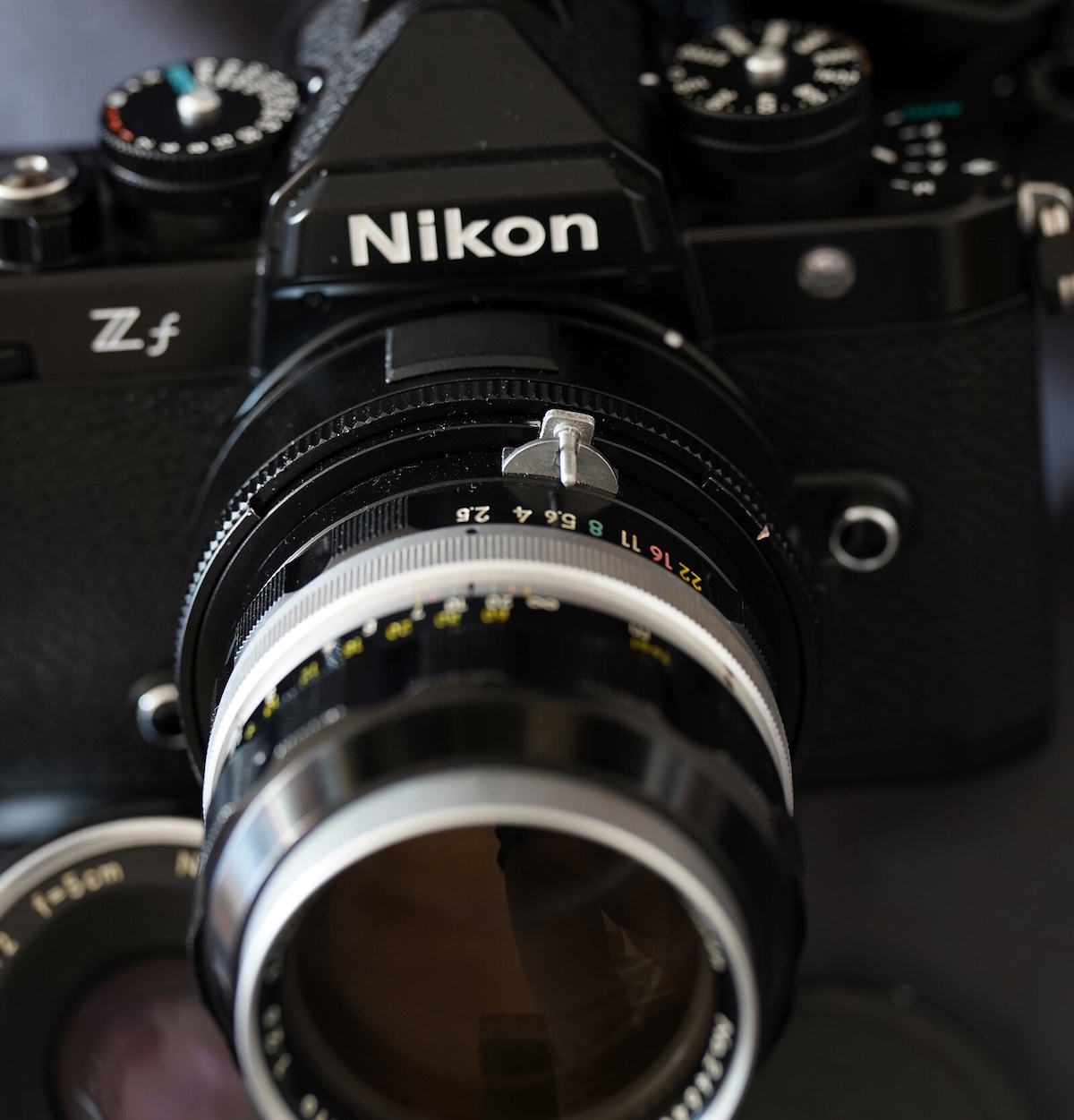
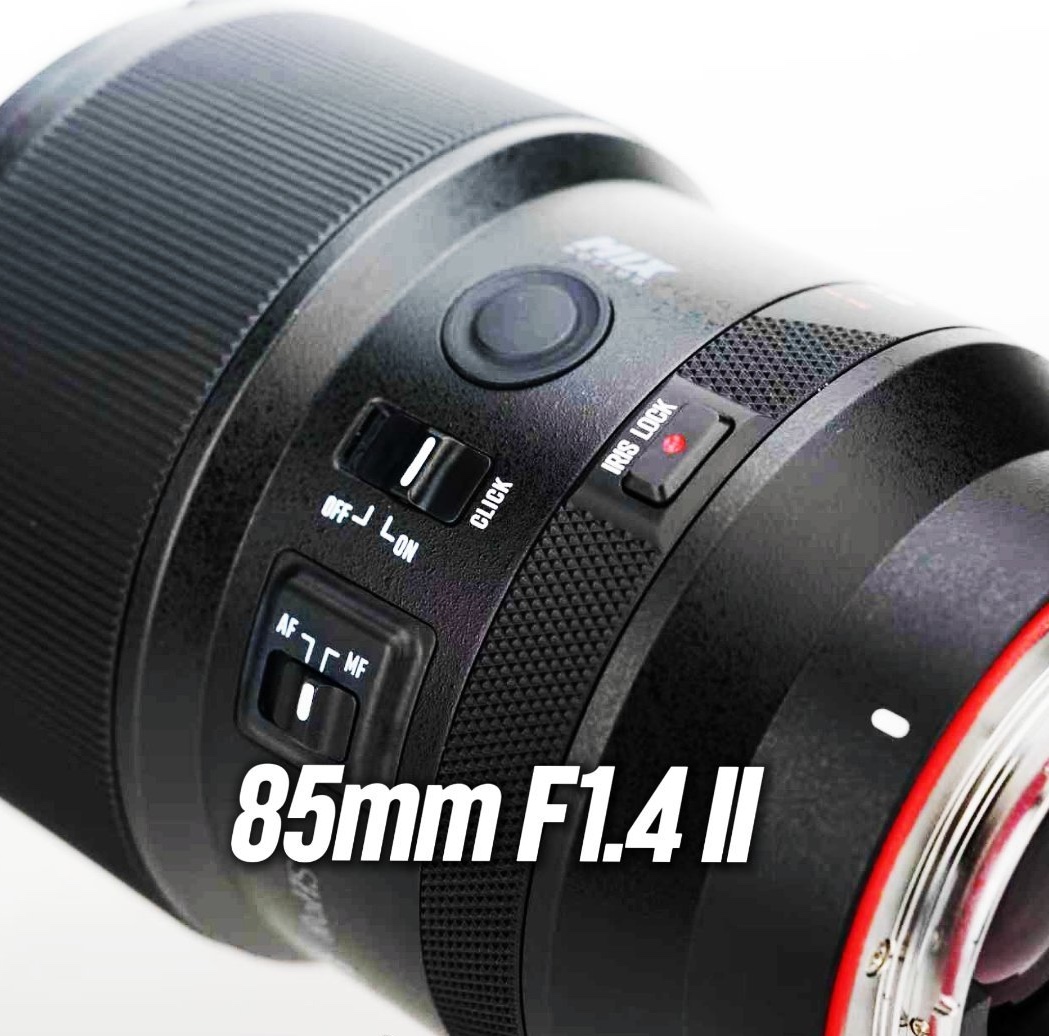
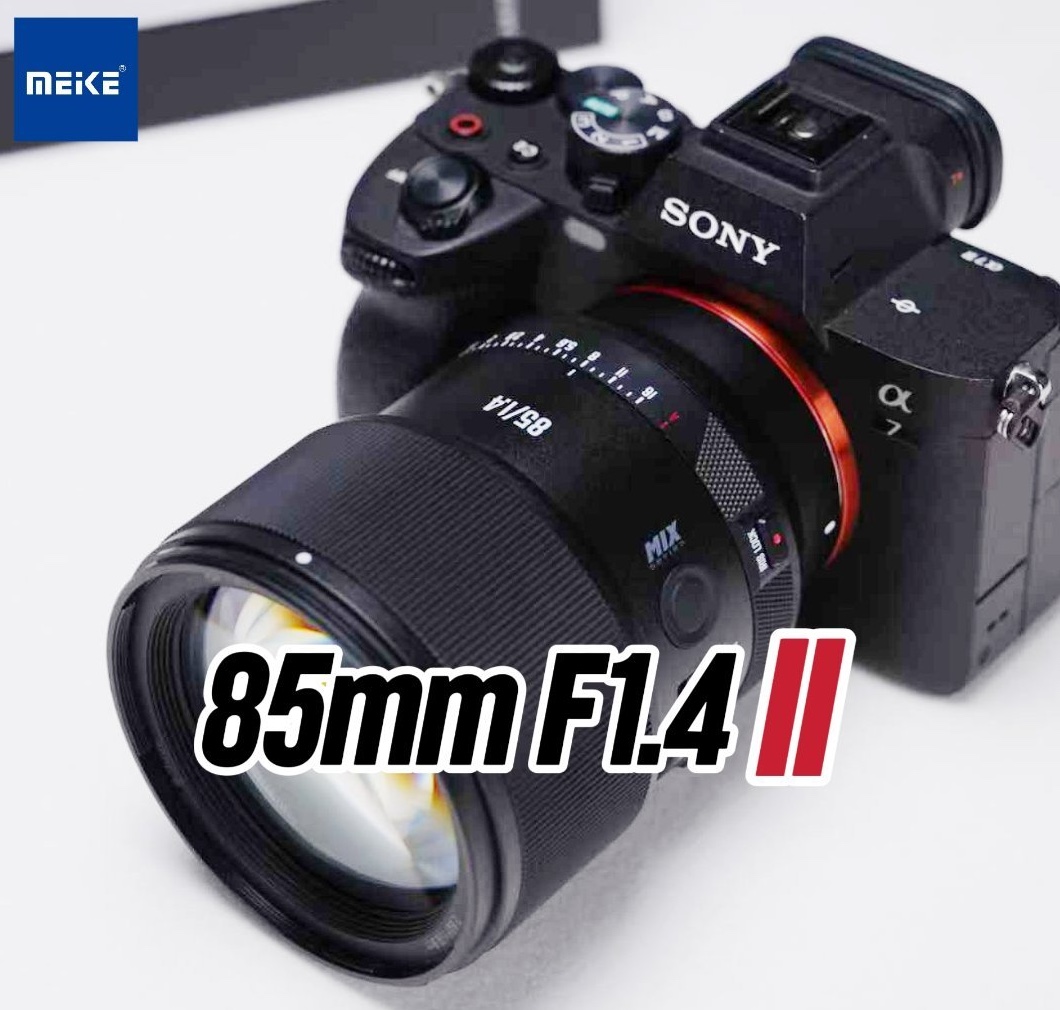
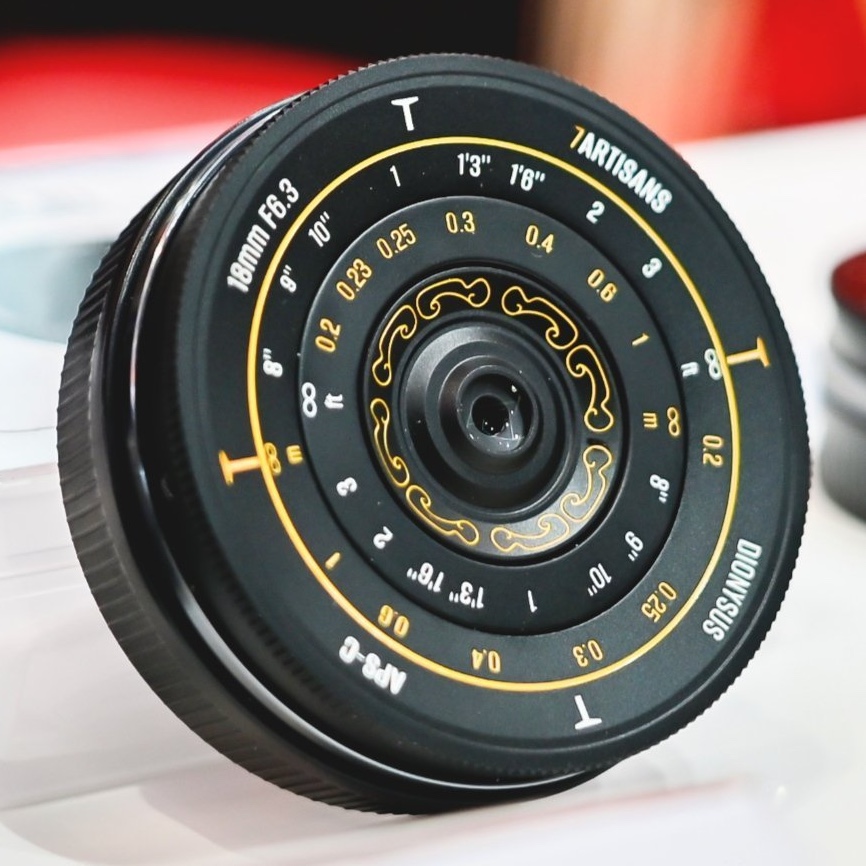
At the 2026 CP+ show in Japan Meike had on display their upcoming Meike AF Air 25mm/35mm/56mm f/1.7 compact APS-C lenses for Sony E, Fujifilm X, Nikon Z (previously reported here). Here are the new details:
Meike Air Series new ultra-light APS-C prime lenses
Mounts: Sony E, Fujifilm X, Nikon Z
Aperture: f/1.7 (all models)
Autofocus: STM motor (quiet and fast for photo/video)
Apple announced the Studio Display XDR, a new pro-level entry in its display lineup aimed at photographers and video editors, thanks to its HDR and wider color gamut support. In addition to the new display, the tech giant unveiled an updated version of its standard Studio Display.
The Studio Display XDR effectively replaces Apple’s 32‑inch 6K Pro Display XDR in the lineup. It uses a 27-inch 5K Retina XDR display, with added mini-LED backlighting. It features 2304 local dimming zones and an impressive 1000 nits of SDR brightness and 2000 nits of peak HDR brightness, making it well‑suited for HDR workflows. It also offers a 1,000,000:1 contrast ratio.
The Studio Display XDR is meant for creative professionals. Image: Apple
The monitor supports P3 and Adobe RGB color gamuts with over 80 percent coverage of Rec. 2020, making it ideal for those who need highly accurate colors. Additionally, it offers a 120Hz refresh rate and a continuously variable refresh rate between 47Hz to 120Hz, making it smoother for video playback than the outgoing Pro Display XDR.
In terms of connectivity, the Studio Display XDR can function as a Thunderbolt hub, offering one port with 140W of charging power, enough to charge a 16-inch MacBook Pro. It also includes a second port for connecting high-speed accessories or daisy-chaining other displays and two additional USB-C ports. The display features a 12MP Center Stage camera with Apple's Desk View support, a three‑mic array and a six‑speaker system.
Apple also updated its standard Studio Display, though it's more of an iterative update rather than a redesign. Like the previous generation, it is a 27-inch 5K Retina display with 600 nits of brightness and support for P3 wide color. However, it now offers Thunderbolt 5 connectivity, allowing users to connect high-speed accessories or daisy-chain displays. It maxes out at up to 96W charging, which is enough to fast‑charge a 14‑inch MacBook Pro.
The Studio Display XDR is still pricey, but at least it comes with a tilt- and height-adjustable stand this time. Image: Apple
All of the advanced features on the Studio Display XDR come at a steep price; the monitor starts at $3299, or $3599 with anti-reflective nano-texture glass. The good news is that it now includes a tilt- and height-adjustable stand, unlike the Pro Display XDR. The Studio Display keeps the same $1599 price as the previous generation. Preorders for both the Studio Display XDR and Studio Display begin tomorrow, March 4.
Press release:
Apple unveils new Studio Display and all-new Studio Display XDR
Studio Display XDR is the world’s best pro display, featuring a 27-inch 5K Retina XDR display with a mini-LED backlight, 2000 nits of peak HDR brightness, and a 120Hz refresh rate
CUPERTINO, CALIFORNIA Apple today announced a new family of displays engineered to pair beautifully with Mac and meet the needs of everyone, from everyday users to the world’s top pros. The new Studio Display features a 12MP Center Stage camera, now with improved image quality and support for Desk View; a studio-quality three-microphone array; and an immersive six-speaker sound system with Spatial Audio. It also now includes powerful Thunderbolt 5 connectivity, providing more downstream connectivity for high-speed accessories or daisy-chaining displays. The all-new Studio Display XDR takes the pro display experience to the next level. Its 27-inch 5K Retina XDR display features an advanced mini-LED backlight with over 2,000 local dimming zones, up to 1000 nits of SDR brightness, and 2000 nits of peak HDR brightness, in addition to a wider color gamut, so content jumps off the screen with breathtaking contrast, vibrancy, and accuracy. With its 120Hz refresh rate, Studio Display XDR is even more responsive to content in motion, and Adaptive Sync dynamically adjusts frame rates for content like video playback or graphically intense games. Studio Display XDR offers the same advanced camera and audio system as Studio Display, as well as Thunderbolt 5 connectivity to simplify pro workflow setups. The new Studio Display with a tilt-adjustable stand starts at $1,599, and Studio Display XDR with a tilt- and height-adjustable stand starts at $3,299. Both are available in standard or nano-texture glass options, and can be pre-ordered starting tomorrow, March 4, with availability beginning Wednesday, March 11.
“Apple has led the industry in delivering the world’s most advanced displays for pros to do their life’s best work, and today we do that once again with the introduction of the new Studio Display family,” said John Ternus, Apple’s senior vice president of Hardware Engineering. “Studio Display gets even better with a new 12MP Center Stage camera and powerful Thunderbolt 5 connectivity. And the Studio Display XDR is a huge leap forward for XDR technology, with a mini-LED backlight, 2000 nits of peak HDR brightness, advanced color accuracy, and a 120Hz refresh rate, transforming workflows like filmmaking, design and print, and 3D animation. It’s by far the world’s best pro display.”
Studio Display — the Perfect Companion to Mac
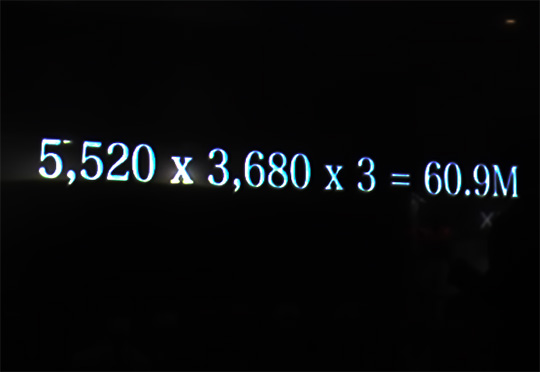
The new Studio Display pairs excellent visual quality with compelling features that deliver a great experience when connected to a Mac across a range of professional workflows — from photo and video editing to coding, music production, and everyday tasks. The stunning 27-inch 5K Retina display boasts over 14 million pixels, 600 nits of brightness, and P3 wide color for rich, true-to-life imagery. Studio Display includes a 12MP Center Stage camera, now with Desk View; a studio-quality three-microphone array; and an incredible six-speaker sound system with four force-cancelling woofers that deliver 30 percent deeper bass than the previous generation, plus two high-performance tweeters for immersive audio. Studio Display also brings Thunderbolt 5 connectivity with two ports, so users can daisy-chain up to four Studio Display models for a combined nearly 60 million pixels, or connect high-speed accessories.1 In addition, two USB-C ports can be used for peripherals and charging. With the included Thunderbolt 5 Pro cable, users get a convenient all-in-one connection that offers up to 96W of charging power — enough to fast-charge a 14-inch MacBook Pro.2 Studio Display is available with standard glass or optional nano-texture glass for challenging lighting conditions. It comes with a tilt-adjustable stand, or can be configured with a tilt- and height-adjustable stand or a VESA mount adapter for custom desk setups.
Studio Display XDR — the World’s Best Pro Display
The all-new Studio Display XDR delivers the most advanced display technology and a robust set of features for pro users who need the ultimate front-of-screen performance. With 2000 nits of peak HDR brightness, a 1,000,000:1 contrast ratio, P3 and Adobe RGB wide color gamuts, a 120Hz refresh rate, Adaptive Sync, new DICOM medical imaging presets, a powerful combination of camera and audio, and Thunderbolt 5 connectivity, Studio Display XDR is designed for workflows like HDR video editing, 3D rendering, and diagnostic radiology.2
Advanced XDR Display Technology
Studio Display XDR features a stunning 27-inch 5K Retina XDR display with 5120-by-2880 resolution, offering exceptional detail and clarity. The mini-LED backlight utilizes 2,304 local dimming zones that enable extreme contrast. Studio Display XDR also delivers up to an outstanding 1000 nits of SDR brightness, 2000 nits of peak HDR brightness, and a 1,000,000:1 contrast ratio. This wide dynamic range — from the brightest brights to the deepest blacks — makes HDR content pop off the screen while virtually eliminating distracting halo and blooming effects.
Enhanced Color Accuracy
Ideal for print and design professionals, Studio Display XDR adds Adobe RGB color gamut support, in addition to P3 wide color, making it an even better reference display. This results in more than 80 percent Rec. 2020 coverage for HDR video editing and color grading. Both P3 and Adobe RGB are accessible from the same default preset, streamlining pro workflows that frequently switch between color spaces.
Smooth 120Hz Refresh Rate and Adaptive Sync
Studio Display XDR features a 120Hz refresh rate, enabling smooth, ultra-responsive motion. Adaptive Sync supports a continuously variable refresh rate between 47Hz to 120Hz, making gaming more fluid with faster frame delivery and lower display latency.
Innovative DICOM Medical Imaging
Today, Apple introduces new DICOM medical imaging presets and the Medical Imaging Calibrator to enable use in diagnostic radiology, allowing radiologists to view diagnostic images directly on Studio Display XDR.2 Many medical professionals already use Mac for their office or home setups, and Studio Display XDR offers a versatile alternative to single-purpose medical imaging displays, with seamless display mode switching. The Medical Imaging Calibrator on macOS is pending FDA clearance and is expected to be available soon in the U.S. For decades, healthcare professionals and developers have taken advantage of Apple’s innovative products and frameworks to help achieve better patient outcomes, broaden research opportunities, and improve efficiency across healthcare systems. Apple continues to innovate and collaborate with the healthcare community on solutions to ultimately improve care for their patients.
Powerful Combination of Camera, Audio, and Thunderbolt 5 Connectivity
Studio Display XDR features a 12MP Center Stage camera that keeps users centered in the frame as they move. Video calls become more engaging with Desk View, which simultaneously displays the user and a top-down view of their desk — great for demonstrating a creative project. It also includes a studio-quality three-microphone array with directional beamforming and an immersive six-speaker sound system with support for Spatial Audio.
Studio Display XDR also features Thunderbolt 5 connectivity, with a second port for connecting downstream high-speed accessories or daisy-chaining other displays. And with two additional USB-C ports for even more connectivity, it can act as a Thunderbolt hub, keeping a workspace free of clutter while offering up to 140W of charging power through the included Thunderbolt 5 Pro cable — enough to fast-charge a 16-inch MacBook Pro.3
Versatile Stand and Accessories
Studio Display XDR includes a tilt- and height-adjustable stand to meet the needs of a variety of workspaces. With a height range of 105mm, the stand features a sophisticated counterbalancing arm that makes the display feel weightless, and as users adjust it, the display stays precisely in place. An optional VESA mount adapter is available for those who prefer to use VESA-compatible stands, mounts, and arms for a customized desk setup. Studio Display Family and the Environment
Studio Display and Studio Display XDR were built with the environment in mind, and bring Apple even closer to reaching its ambitious plan to be carbon neutral across its entire footprint by 2030. Both are made with recycled content, including 100 percent recycled aluminum in the stand and 80 percent recycled glass in the standard glass option. Studio Display and Studio Display XDR are designed to be durable, repairable, and also offer industry-leading software support, while meeting Apple’s high standards for energy efficiency and safe chemistry. The paper packaging is 100 percent fiber-based and was designed to collapse so it can be easily recycled.4
Pricing and Availability
Customers can pre-order the new Studio Display and Studio Display XDR starting tomorrow, March 4, at apple.com/store and in the Apple Store app in 35 countries and regions, including the U.S. They will begin arriving to customers, and will be in select Apple Store locations and Apple Authorized Resellers, starting Wednesday, March 11.
Studio Display starts at $1,599 (U.S.) and $1,499 (U.S.) for education. Studio Display XDR replaces Pro Display XDR and starts at $3,299 (U.S.) and $3,199 (U.S.) for education.
Additional technical specifications, including nano-texture glass and a choice of stand options, are available at apple.com/store.
Magic Keyboard with Touch ID and Numeric Keypad ($199 U.S.), Magic Trackpad ($149 U.S.), and Magic Mouse (starting at $79 U.S.) in black or white color options are available at apple.com/store.
1 Users can daisy-chain up to four Studio Display models with a MacBook Pro with M5 Max.
2 The Medical Imaging Calibrator is pending FDA review and is expected to be available soon. The medical imaging presets should not be used for diagnostic purposes unless the display has been calibrated using the Medical Imaging Calibrator on macOS and paired with a compatible DICOM viewer. The presets are available on Studio Display XDR and are intended for use by medical professionals. Not intended for use in mammography.
3 Charge time varies with settings and environmental factors; actual results will vary.
4 Breakdown of U.S. retail packaging by weight. Adhesives, inks, and coatings are excluded from calculations.
Today, GoPro unveiled its new GP3 custom imaging processor. This is a 5nm System-on-a-Chip (SoC) with a dedicated AI Neural Processing Unit (NPU). Key upgrades vs. the GP2:
More than 2x pixel processing power.
Superior AI-driven image quality and low-light performance.
Real-time scene recognition, subject detection, and automatic setting adjustments.
Better power efficiency and thermal management for longer runtimes in tough conditions.
Supports higher resolutions, frame rates, and overall pro-level performance in small form-factor cameras.
It debuts in new GoPro cameras launching in Q2 2026. The processor isn’t limited to action cams — GoPro explicitly confirmed it’s heading to:
Action cameras
360 cameras
Vlogging cameras
Ultra-premium compact cinema-grade cameras
Sample images from the next-gen GP3-powered system already show big leaps in low-light and overall quality. GoPro’s CEO has called 2026 “the year of GP3” with new flagships, heavy AI focus, and a major comeback push:
No Hero 14 in 2025 — the first time in a decade GoPro skipped an annual flagship Hero Black update. The Hero 13 Black stays the top model for now.
GoPro’s SVP of Global Marketing confirmed: “The Hero Black story isn’t over.” They’re taking extra time for meaningful upgrades instead of iterative ones.
Expected 2026 arrival (likely Q1/Q2, tied to GP3) with a possible 1-inch sensor for huge low-light gains, redesigned body, and bigger resolution/framerate jumps – but nothing confirmed beyond the GP3 integration.
Honor and Arri have announced a "strategic technical collaboration" to bring Arri's image science and workflow features to Honor phones. The two companies unveiled the partnership at the Mobile World Congress (MWC) 2026, promising that the results will be showcased in the smartphone maker's upcoming Robot Phone.
The collaboration between the smartphone maker and high-end cinema camera manufacturer aims to bring pro-level video features to smartphones. The companies explained that they will combine Honor's mobile imaging capabilities with Arri's cinematic image quality, making high-end video creation more accessible.
Image: Honor
They didn't provide many details about the upcoming phone or how Arri-specific features will be integrated into it, beyond saying it will use Arri's "image science foundation." In theory, it may be similar to how Leica and Hasselblad have collaborated with phone companies to enable their color profiles on phones, though there could be other workflow features as well.
"The challenge is not to replicate cinema hardware, but to translate the underlying principles into compact, real-time mobile architectures," says Dr. Benedikt von Lindeiner, Vice President at Arri and responsible for the technical collaboration with Honor. "Our goal is to bring a true cinematic aesthetic to smartphone imaging – natural color, gentle highlight roll-off and a sense of depth that feels authentic to how stories are meant to be seen."
Honor first showed off the Robot Phone in October of last year with a CGI teaser. The video showed a concept smartphone with a gimbal-mounted camera that extends above the phone, resembling a DJI Osmo Pocket 3 with a phone in place of the handgrip. At the time, the company said it would share more at MWC. This collaboration announcement mentions the Robot Phone again, but doesn't include any new details. Honor did say, however, that the phone will be coming later this year, so it may be closer to reality than we originally thought.
Press release:
HONOR and ARRI announce strategic technical collaboration to bring ARRI Image Science into next-generation consumer devices
ARRI and HONOR extend cinematic image science and production workflows into consumer devices
A bridge from the world of high‑end filmmaking to the next generation of creators
ARRI technology will debut in HONOR’s upcoming ROBOT PHONE
[Barcelona, Spain – March 01, 2026] Leading AI device ecosystem company HONOR has entered into a strategic technical collaboration with ARRI, the world-renowned designer and manufacturer of professional camera technology for cinematic storytelling. This landmark partnership marks a significant step in extending established cinematic standards into the rapidly evolving world of mobile imaging.
By uniting HONOR’s advanced mobile imaging capabilities with ARRI’s centurylong heritage in defining cinematic image quality, the collaboration reflects a shared ambition to unlock new creative possibilities and extend cinematic standards for visual expression from the world of high-end filmmaking to the next generation of content creators.
"HONOR is pioneering a new era of mobile imaging, where technology exists to inspire creativity and storytelling," says James Li, CEO of HONOR. "ARRI has defined the visual language of cinema for generations. Through this collaboration, we are bringing those cinematic standards and professional workflows into mobile imaging, enabling creators to craft stories with greater authenticity and emotional depth."
A Century of Cinematic Excellence as Foundation for Mobile Content Creators
For more than a century, ARRI has helped shape how cinematic stories are told — from the early days of film to today’s most advanced digital camera systems. A commitment that’s been recognized with 20 Scientific and Technical Awards from the Academy of Motion Picture Arts and Sciences.
"Today, consumer smartphones have already become a serious tool in professional filmmaking, being used on blockbusters across the globe. That’s why we believe it is time to bring these worlds even closer together. For the first time ever, core elements of ARRI Image Science are being integrated directly into a consumer device," says David Bermbach, Managing Director at ARRI.
Translating ARRI Image Science into Mobile Technology
In cinema, image science is not a filter or an effect — it is the foundation of how an image is created. It determines how colors feel natural, how highlights and shadows are rendered, and how images consistently behave from capture to final screen. Drawing on ARRI’s Image Science foundation, the collaboration applies core cinematic imaging principles to HONOR’s mobile imaging architecture.
"Smartphones operate under fundamentally different constraints: smaller sensors, highly integrated SoCs, different optical stacks, and different bandwidth limits. The challenge is not to replicate cinema hardware, but to translate the underlying principles into compact, real-time mobile architectures," says Dr. Benedikt von Lindeiner, Vice President at ARRI and responsible for the technical collaboration with HONOR. "Our goal is to bring a true cinematic aesthetic to smartphone imaging — natural color, gentle highlight roll-off, and a sense of depth that feels authentic to how stories are meant to be seen. Creators should be able to move seamlessly from mobile capture into professional post-production workflows."
The first results of this collaboration will debut in the upcoming HONOR ROBOT PHONE later this year.
Reviewing the a7 V reminded me of the challenges, and the importance, of including subjective assessment in reviews.
Photo: Mitchell Clark
Reviews are, by most definitions, subjective: ultimately they always have some degree of opinion. An informed opinion, subject to careful consideration of any inherent biases and critically assessed by other editors, we'd like to think, but still, ultimately, subjective.
This is especially true of camera reviews. A camera isn't a simple device that can be summarized by conducting objective performance tests in an analytical report. For a start, the comfort and usability of a camera are important factors, that can't be objectively assessed. All the more so because a camera is a device that can be used for self-expression. Enjoyment is absolutely critical.
All of this was at the front of my mind as I wrapped up our recent review of the Sony a7 V, and as I, as lead reviewer on this camera, start to build my case for arguing its position in our various Buying Guides. It's a really difficult task, because the a7 V is an extremely capable camera, but one that competes against some of the most all-round capable cameras we've ever seen, battling it out in arguably the most competitive part of the market. There are a few differences in objective spec and performance, but they won't be significant enough for most people to help them make a choice.
The Sony a7 V: so good. And yet...
The a7 V was a particularly challenging camera to review in that regard. It's supremely capable and is an obvious choice for existing Sony users. It'll be a huge step up for anyone using an a7, a7 II, a7 III or a7C, and will be a better camera for some a7 IV users, especially if they shoot video. But for someone without a brand commitment, it's more difficult.
The first thing you have to do is check your own biases.
The easiest thing to do would be to look at how many lenses are available for the Sony E-mount, stop the count and brush any awkward concerns about usability or ergonomics under the carpet. But I feel that would be both simplistic and dishonest. Because, by the end of my review, I found myself thinking that I enjoyed using the Canon EOS R6 III more.
I have an annoying habit of admonishing my colleagues for using the term 'intuitive.' Almost no aspect of camera operation is intuitive: it's learned. And if you're thinking that it's intuitive, it might just be that it's something you learned so long ago that you've forgotten doing so. And that's where familiarity bias can creep in.
Photo: Richard Butler
This puts me in perhaps the most uncomfortable position that you encounter, in reviewing: having to work out how much or how little your personal experiences and opinion count, and how much weight to give them. I spent a lot of time asking myself why I was impressed with the camera more than I was enjoying it. Could I point to why I found the interface of the camera rather more awkward than its rivals'?
How objective can you be?
The first thing you have to do is check your own biases. Do I dislike this interface because I haven't taken the time to learn it? Do I prefer a different way of working purely based on familiarity? I don't believe so: I've used Sony cameras just as much as any other brand, and have no more connection to, say, Canon's cameras than to Sony's.
I kept asking myself those questions, the whole time I was using the camera, to make sure I was being fair. And I kept looking to see if I could put my finger on why I found the interface so distancing.
The color-coded sections in Nikon's setup menu makes it easy to learn and navigate, but plenty of the rest of the menu structure is struggling under the weight of the feature set and level of customization.
Composite image: Richard Butler
In the end, I'm not sure I found it. I can point to plenty of details I don't like: the strangely phrased and oddly truncated menu names (are Sony's menus still subject to the same character limits as MS DOS?), the superfluous control panel built awkwardly into the new menus, the clumsy handling of features with interacting settings. But I can't be sure that it's the sum total of these annoyances that left me feeling disconnected from what the camera was doing.
But, all the while I'm quizzing myself on this, I'm also very aware that lots of people don't find this a problem. Or simply don't mind. As I've written in just about every Sony review I've ever written: with a bit of customization, you rarely have to use the main menus. Equally, there'll be plenty of people whose primary experience of digital photography may be with Sony cameras: they won't find any of this a problem, because that's just how cameras work, from their perspective. And it's a completely valid perspective.
The interactive settings panel, shoehorned into Sony's latest menu system manages to be both too easy to inadvertently navigate away from, while simultaneously always feeling like it's in the way. I'm not sure a prompt to contemplate the nature of paradox is what I'm looking for in a user interface, but I have to assume it's possible that someone finds it useful.
Composite image: Mitchell Clark / Richard Butler
Beyond the user interface, I also found the grip somewhat uncomfortable. Much of the time you tend to support a camera's weight by cradling the lens in your left hand, but I found that myself having to release the camera, relax and stretch my fingers, at regular intervals. Again, this risks being specific to my hand size or shape, or the way I try to grip the camera, but my colleague Mitchell seems to have had the same experience.
Conversely, I don't remember having the experience I've seen some people report, where the proximity of the mount to the hand grip means your knuckles can grate against some of the more stout E-mount lenses. Did I only avoid this through lens choice? Or, again, is this just another personal factor that didn't particularly make apply to me?
How do you proceed?
Is the Canon EOS R6 III's grip objectively better (for everyone) than the Sony a7 V's? It's impossible for me to know. But would it help anyone if I pretended there was no difference in my experience with each?
Photo: Mitchell Clark
So what's the correct way to report these issues? I've seen some Sony users insist that they shouldn't be mentioned at all, because they may be personal, rather than universal. But it would be dishonest to omit a factor that might put me off buying a camera, if there's a chance someone might go and spend their money, based on what I wrote (or didn't write).
Instead I did what this job requires: I reported my concerns but was careful to present them proportionately and in context. I made clear which concerns and criticisms I felt would apply to everyone and which wouldn't. And I endeavored to stress that part of the reason the menus have become so overwhelmed, and potentially overwhelming, is that the camera does so many things and offers such a high degree of customization.
Subjective factors like usability aren't trivial complaints, they're fundamental
These are the questions we'll be wrestling with this, as a team, as we look to update our Buying Guides. Because, even on reviews with only my name at the top, we try to represent more than just a single perspective or opinion, in our coverage. But our decision will still factor-in the subjective, because cameras aren't simple devices where you can test a couple of metrics and report which one is objectively "best." And we'd be failing you if we treated them as such.
I saw the subjective concerns about the a7 V dismissed as "all they've got to complain about." And this is a position I don't need to be so introspective about: it's utterly wrongheaded. It's true that the a7 V is a really good camera (hence the Gold award) but at a time where some of the most significant things setting dedicated cameras apart from phones are the experience of controlling the photo and the enjoyment of photography, subjective factors like usability aren't trivial complaints, they're fundamental.
DxO launched PureRAW 6 with DeepPRIME XD3, now extended to Bayer sensors (previously exclusive to X-Trans sensors), as well as next-generation High-Fidelity DNG compression, delivering significantly smaller files while preserving full RAW integrity and flexibility.
You can get 10% off DxO products with code RUMORS.
Additional information:
DeepPRIME XD3: The new benchmark in RAW processing
DeepPRIME XD3, previously exclusively for X-Trans sensors, marks a major leap forward in RAW image quality by now extending its groundbreaking technology to Bayer sensor cameras. An extension of DxO’s renowned DeepPRIME technology, DeepPRIME XD3 is designed specifically for the most demanding files captured under challenging conditions. It produces cleaner, sharper images than ever before, extracting phenomenal detail while maintaining natural textures and colors. It brings professional-grade clarity to every file, from high-ISO night scenes to finely detailed landscapes, establishing a new benchmark for what’s possible in RAW conversion.
Next-level DNG compression: RAW power, smaller files
DxO PureRAW 6 redefines efficiency with new High-Fidelity Compression, delivering RAW-quality output in DNG files up to four times smaller than standard uncompressed versions. This breakthrough means that photographers no longer need to compromise between quality and storage. DxO’s intelligent compression technology maintains the full dynamic range and flexibility of a RAW workflow while dramatically reducing disk usage. Large-scale processing and archiving become faster, lighter, and more efficient than ever.
AI sensor dust removal: Automated perfection
DxO PureRAW 6 brings effortless image cleanliness with the introduction of AI Sensor Dust Removal — the most advanced and accurate automatic dust-spot correction available. By harnessing the power of AI, PureRAW 6 intelligently identifies and removes sensor dust marks across entire batches of images. Users can fine-tune the cleaning threshold for total control, while automation eliminates the need for tedious manual retouching. The result is a spotless workflow that saves time and preserves image integrity, even when processing thousands of photos at once.
Faster processing: Batch Parallelization
DxO PureRAW 6 accelerates high-volume processing with new batch parallelization, intelligently preparing the next image before the previous one is finished. The result is dramatically faster throughput and smoother handling of large sets of files — a powerful boost for demanding workflows.
When combined, the Travel Backpack 2-in-1 provides 42L of storage.
Photo: Peak Design
Peak Design has announced the launch of a new travel bag collection designed to meet the needs of various types of travelers. The lineup consists of a modular, two-in-one backpack, a duffel bag, a 20L backpack and a small crossbody bag.
The largest and most interesting of the new offerings is the Travel Backpack 2-in-1. This bag aims to solve the dilemma of deciding which backpack to bring on trips if you need extra space for packing but want a small bag at your destination. It consists of a 35L main pack and a 15L daypack that zip together (with the daypack on the front), providing 42L of storage when combined. It also comes with the company's detachable Travel Hip Belt. Both are made from a weatherproof 330D nylon canvas shell and offer hidden AirTag pockets, mesh water bottle pockets on both sides and luggage pass-throughs.
The Travel Backpack 2-in-1 includes a daypack (on the left) and a main pack (on the right) that can be zipped together.
Photo: Peak Design
The main pack portion features a stowable sternum strap and removable hip belt, and the backpack's straps can be unclipped and put away if you need to check the bag. There are also magnets on the shoulder straps to keep them flat against the back panel when you don't want to unclip them. It is compatible with Peak Design's Camera Cubes, up to the large size, and offers padded laptop and tablet sleeves. The 15L daypack is slim and lightweight, making it easier to get around once you arrive at your destination. It also offers a padded laptop sleeve, but it's important to note that it isn't meant for the Camera Cubes, and most sizes won't fit inside the daypack.
The Travel Weekender 25L
Photo: Peak Design
The Travel Weekender 25L is an ideal size for short trips, providing upright access, an extra-wide clamshell opening for easier packing and a vertical luggage pass-through. The bag features an organization pocket on the outside for essentials. On the inside are two zippered pockets and seven stretch panel pockets to keep things organized. It also uses a folding bottom design that allows it to collapse flat for easy storage or to compress when shoved under an airplane seat. The duffel bag fits up to one Large PD Packing Cube, two Smedium Packing Cubes or one Smedium Camera Cube, along with a 16-inch MacBook Pro. Like the Travel Backpack, it is weatherproof and will keep your stuff dry.
The Travel Backpack 20L
Photo: Peak Design
The Travel Backpack 20L is designed for everyday use or travel. It's international carry-on approved, so you won't have to worry about needing to check it if you're hopping airlines around the world. Like the other bags, it features a vertical luggage pass-through and a padded laptop sleeve. It also offers an expandable main compartment for when you need a bit more space, a soft-lined top pocket for quick-grab essentials, a zipper-hidden water bottle pocket and magnetic shoulder strap keepers. There are also external straps to attach a tripod to the bottom of the bag. It fits up to a Smedium Camera Cube, two Smedium Packing Cubes or one Large Packing Cube when the bag isn't expanded.
The Travel Crossbody 3L
Photo: Peak Design
Lastly, the smallest of the bunch is the Travel Crossbody 3L, which is meant for carrying essentials and small items. Peak Design says it builds on its Tech Pouch and features the company's origami-style interior pockets, an extra-wide clamshell opening, a hidden stash pocket with a magnetic closure and a discreet pocket for an AirTag. It can fit devices up to an iPhone 16 Pro Max or Samsung S, along with smaller tablets like the iPad Mini and Kindle. The XXS Ultralight Packing Cube also fits inside, and, like the other bags, it's weatherproof to protect your stuff.
As with many other Peak Design launches, the Travel Backpack 2-in-1, Travel Weekender 25L, Travel Backpack 20L, and Travel Crossbody 3L will first be sold through Kickstarter, beginning today. The bags will retail for $400, $200, $2000 and $100, respectively, but Kickstarter backers will get a $21 discount on the crossbody, $41 on the backpack and weekender, and $81 on the 2-in-1. The full launch is coming sometime at the end of May, though Peak Design hasn't provided a specific date.
Disclaimer: Remember to do your research with any crowdfunding project. DPReview does its best to share only the projects that look legitimate and come from reliable creators, but as with any crowdfunded campaign, there’s always the risk of the product or service never coming to fruition.
The iPhone 17e now has MagSafe, double the base storage and tougher glass. But its single camera and slow display remain unchanged. Image: Apple
Apple has announced the iPhone 17e, updating the lowest-end new model in its lineup. While it has several key updates, including a newer chip and double the base storage, Apple hasn't made any updates to the cameras, which were one of the original 16e's biggest weaknesses.
Like its predecessor, the 17e has a single 48MP Type 1/2.55 (23.5mm²) rear camera with a 26mm equiv. F1.6 lens, which also has a "2x" mode that crops in on the center quarter of the sensor. Apple has, however, updated its branding, now referring to it as a "Fusion camera system" rather than a "2-in-1 camera system."
The iPhone 17e's camera has no higher aspirations than to be "good enough." Image: Apple
The 12MP selfie camera has also been untouched; the 17e doesn't get the larger 18MP square model found on the standard iPhone 17, which lets you take horizontal and vertical crops no matter which orientation you're holding the phone at. The 17 also includes a 48MP, Type 1/2.55 (23.5mm²) ultra-wide camera, which offers the ever-popular "0.5x" mode, and its main camera uses a larger Type 1/1.56 (48mm²) sensor.
Also unchanged is the display. While the iPhone 17 prompted many "finally!"s by switching to a 120Hz model, the 17e's 6.1" OLED screen is still stuck at a 60Hz refresh rate (and still has a large notch taken out of the top to house the FaceID camera and sensors). It is, however, now protected by Apple's second-gen "Ceramic Shield" glass, which testing has shown to be quite a bit more scratch-resistant than the first-gen one found on the 16e. It can reach 1200 nits, which, while not as impressive as the brightness that some flagship phones are capable of, is still typically plenty for all but the harshest sunlight.
As for what else Apple has changed, the 17e's processor and cellular modem are a generation newer than its predecessor's, though Apple isn't making any strong claims about the A19's performance or efficiency compared to the A18; both "e" models are rated for up to 26 hours of video playback. However, the company does say the Apple-designed C1X modem is "up to 2x faster" than the C1 used by the 16e.
Lots of people complained when the 16e launched without MagSafe, and for good reason: it's wonderfully convenient, and there are a lot of accessories available for it now that it's been around for a few years. Image: Apple
Perhaps most importantly, though, is that Apple has upgraded the 16e's standard Qi wireless charging. The 17e now has the company's "MagSafe" tech. While some will appreciate that the guaranteed alignment means it can charge twice as fast (up to 15W vs. 7.5), most are likely to be more excited about gaining access to the wide accessory ecosystem surrounding it, making it easy to attach the phone to tripods, stands, and basically anything else. The 17e also has double the base storage as its predecessor, with the standard model coming with 256GB. It does, however, still max out at 512GB.
When the 16e launched last year, replacing the almost decade-old "SE" line, it was an open question as to whether we could expect Apple to update it every year, as it does with its main phones. With the SE, that wasn't the case; the company only made three models between 2016 and 2022. With this news, it appears we have an answer: yes, Apple will continue to add its latest chips and some new features to its more budget-oriented lineup.
Other budget competitors don't make you give up a high refresh-rate display or secondary camera
While the changes it's made to the 17e are important quality-of-life upgrades, I think the phone still sits in a somewhat uncomfortable place. The standard iPhone 17 has been lauded as one of the best all-around options available, and for many people, it'll be worth paying the $200 more to get its faster, larger screen and better camera system. Likewise, many other budget competitors like the Pixel 10a don't make you give up a high refresh-rate display or secondary camera option. However, if you really don't care about any of that and prefer your phones to be Apple-flavored, it's nice that you have the option to save some money and that you'll be getting a phone with fewer compromises than you would've before.
The phone has the same $599 starting MSRP as its predecessor, and is available in black, white and, now, "soft pink." It will be available for pre-order on March 4th and is set to launch on March 11th.
With Apple's latest iPhone 17 series, the company's lineup has more options than before, from the iPhone Air to the iPhone 17 Pro Max (and we can't forget the budget iPhone 17e). While there are many things that set these phones apart, we're going to look at how the phones are for photography, and how they compare to each other.
How do Apple's new iPhones compare?
There are more subtle differences that we'll cover, but the biggest differences between cameras for the Air (left), iPhone 17 (middle) and iPhone 17 Pro (right) are obvious just from looking at them. Image: Apple
Comparing the cameras on the iPhone 17, iPhone Air, iPhone 17 Pro, and iPhone 17 Pro Max is relatively simple; for most people, the main differences will be in the number of cameras each phone has. The Air has a single wide-angle camera, and the same model is found on the iPhone 17, though paired with an ultra-wide camera. The 17 Pro adds an additional telephoto camera, providing the most range and flexibility.
There are several shared components between the phones. The 17 and Air's main cameras, for example, are the same, as are the wide-angle camera on the 17 and 17 Pro. And for photography, they have the same set of features, including the Camera Control button, customizable Photographic Styles that give you more control over how your photos look and a portrait mode with adjustable computer-generated bokeh.
The iPhone 17 Pro's main camera is much larger than the one on the standard 17 and Air
Despite the commonalities, there are still benefits to going Pro. Besides the addition of a 100mm equiv. telephoto camera, the main camera also uses a much larger Type 1/1.28 (71.5mm²) sensor, compared to the Type 1/1.56 (48mm²) sensor used on the standard 17 and Air.
The additional area means it will gather more light, so it won't have to dip into the long exposure low-light mode as often, and can provide better image quality and more real bokeh in ideal lighting conditions. The Pros' main cameras also have a slightly wider focal length at 24mm, rather than 26mm.
iPhone Air
iPhone 17
iPhone 17 Pro
Main (wide)
Sensor resolution / size
48MP Type 1/1.56 (48mm²)
48MP Type 1/1.28 (71.5mm²)
Focal length (equiv.)
26mm
24mm
Aperture
F1.6
F1.78
Ultra-wide
Sensor resolution / size
—
48MP Type 1/2.55 (23.5mm²)
Focal length (equiv.)
13mm
Aperture
F2.2
Telephoto
Sensor resolution / size
—
48MP Type 1/2.55 (23.5mm²)
Focal length (equiv.)
100mm
Aperture
F2.8
Finally, there's the Air, which only has a single 26mm wide-angle camera. Apple includes a "2x" mode that crops in on the 12MP in the center of the sensor to provide a bit of additional reach, but if you like to shoot subjects that are far away, or like the look that ultra-wide images provide, you may want to consider other options. However, if you only use the main camera, you're not giving anything up versus the standard 17.
What about the selfie camera?
Image: Apple
For this generation, Apple introduced a brand new selfie camera which, thankfully, is included on all of its new phones. The new design is larger (though it's not clear by how much), higher-resolution and square. While it doesn't seem like the phone uses the whole sensor at once, it allows you to switch between portrait and landscape selfies without having to physically rotate your phone.
Is the Pro Max better than the Pro?
For photography, no; the iPhone 17 Pro and Pro Max have the same camera setup. This hasn't always been the case; the iPhone 15 Pro Max's telephoto camera had further reach than the one on the smaller model. However, this time around, you don't have to give up any photography features to get the more pocketable phone (unless you truly feel you need the 2TB storage option that's only available on the Max).
If you're interested in the Pro line, be sure to check out our deep-dive article that covers all the changes to its cameras and video features compared to the previous generation.
iPhone 17 versus iPhone 17e
The iPhone 17 (left) has more than just an extra camera compared to the 17e (right). Image: Apple
If you look at Apple's spec sheet, it'd be easy to think that the budget-oriented iPhone 17e's single camera is the same one used by the standard iPhone 17; the company calls them both "48MP Fusion Main" cameras, after all. However, the one on the 17e is substantially smaller, coming in at 23.5mm² (which you might recognize as the same size used by the more expensive phones' secondary and tertiary cameras).
The smaller sensor again means that the phone will have to work harder to capture clear photos in low light, and that images from it taken in ideal lighting conditions won't be as good as ones from the newer phones. That's especially true given that it's only optically stabilized, rather than having additional sensor stabilization like the mainline iPhones.
A few other limitations compared to the 17s and Air: the 17e doesn't have the next-generation portrait mode that lets you adjust what the main focus of the image is and what's blurred out, nor does it have the more customizable Photographic Styles. It also lacks the Camera Control button and uses the old selfie camera, meaning you'll have to turn your phone to get landscape portraits.
What about the iPhone 16?
Last year's iPhone 16 has the same main camera as the new iPhone 17, but ultra-wide shooters beware... Image: Tucker Bowe
As usual, Apple has stopped selling the previous-generation Pro phones, but is still selling the standard iPhone 16 for around $100 less than its launch price. Its main camera will be the same as the standard 17's, but its ultra-wide camera is a smaller (23.5mm²) 12MP model versus the 48MP one used by the current-gen. Like the 16e, it uses the older selfie camera.
What else should I consider?
There's a lot of things to consider when you're buying a phone beyond its photographic capabilities. For example, the iPhone 17 Pro Max has a massive battery and a giant screen, both of which could be handy on days when you're taking a ton of photos. The Pro phones also have a litany of video features, such as the ability to record ProRes Raw and Log footage.
Meanwhile, the iPhone Air is substantially thinner than the other options, which could be nice if you prefer a phone that doesn't take up a ton of pocket space. And, of course, there are countless Android options with their own sets of strengths and weaknesses. But you should now at least understand how the cameras on Apple's current-generation phones stack up to one another.
For the past several days, our team has been reporting live from CP+ 2026, the camera industry's premier trade show and consumer expo in Yokohama, Japan.
Now that the event has wrapped up, we wanted to share what it's like to experience the show floor in person. From the latest camera gear to the colorful kitsch, this video takes you on a whirlwind tour of CP+ 2026 in just a little over two minutes.
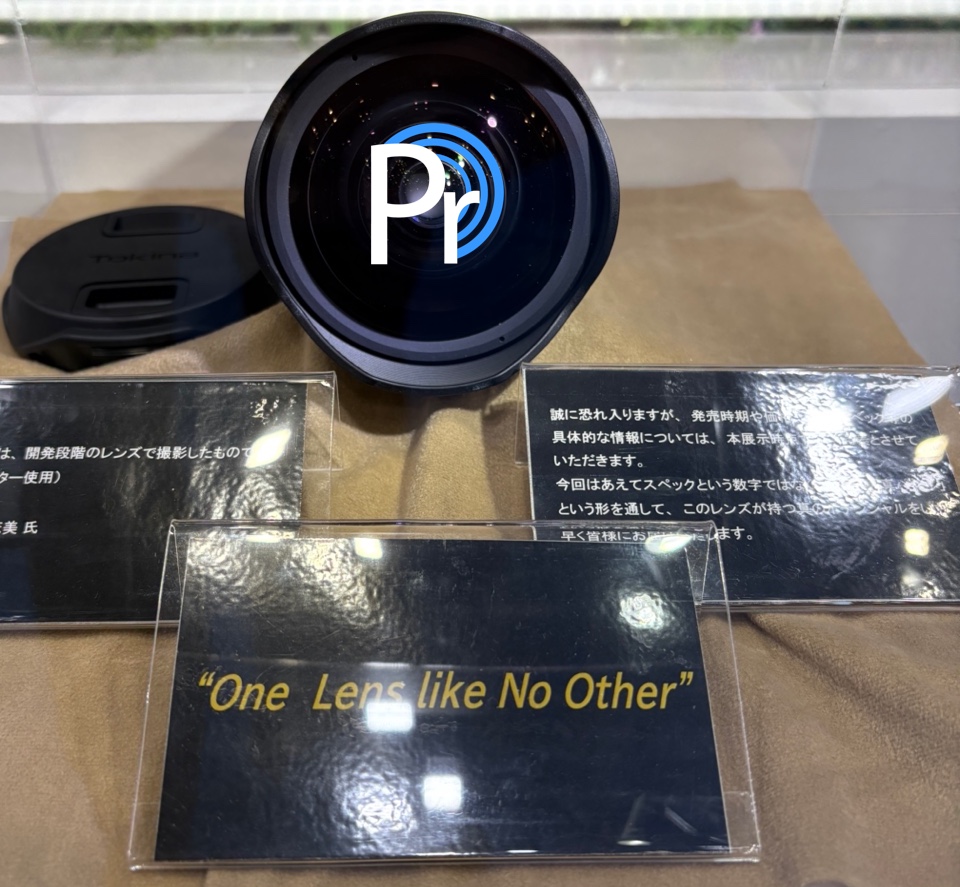
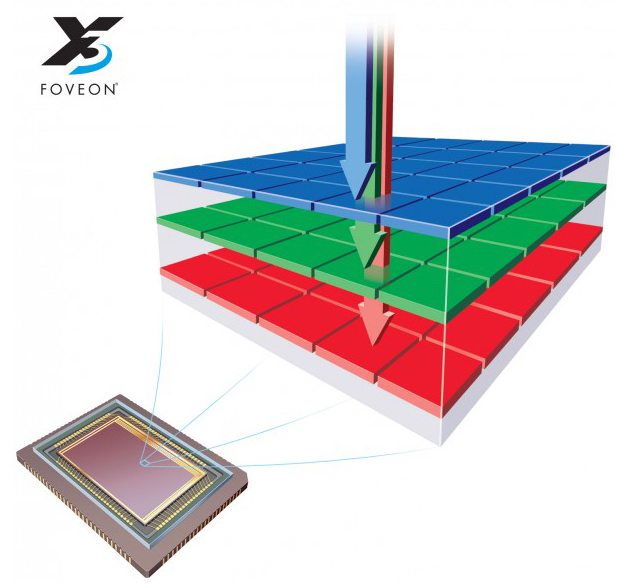
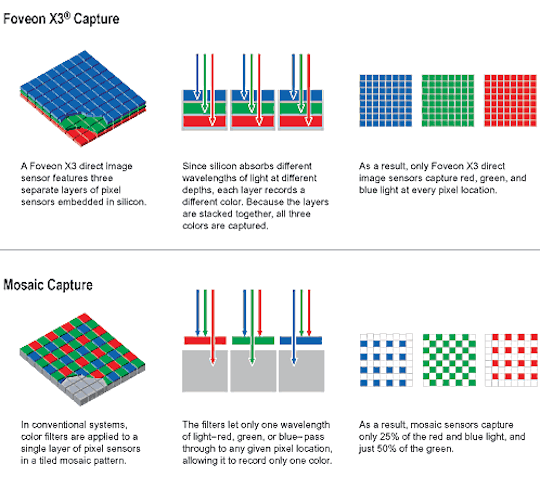
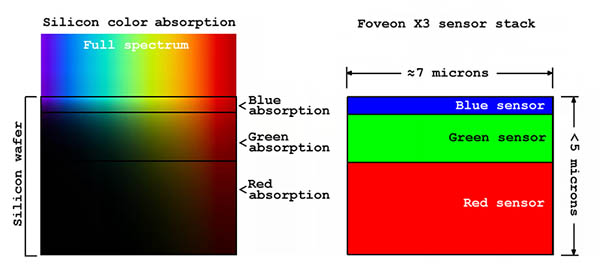
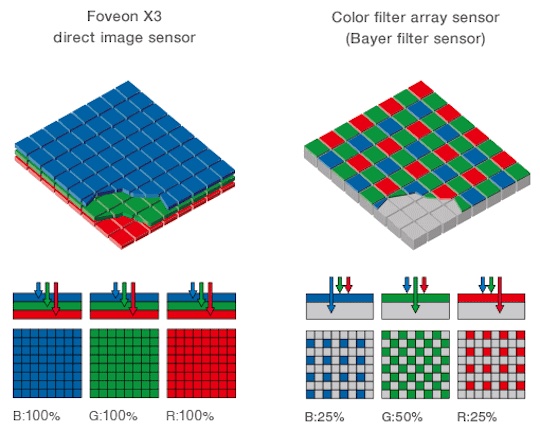
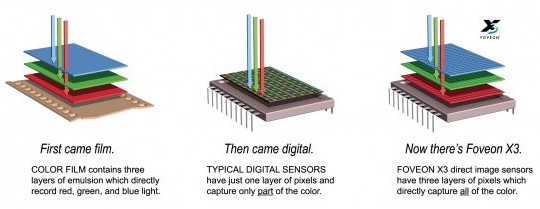
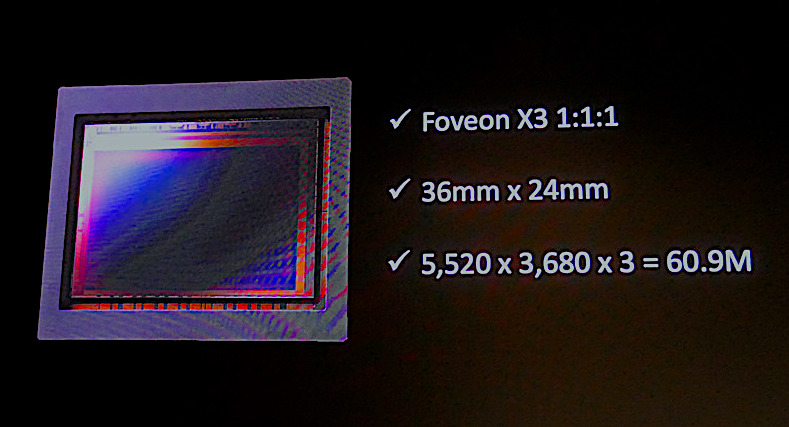
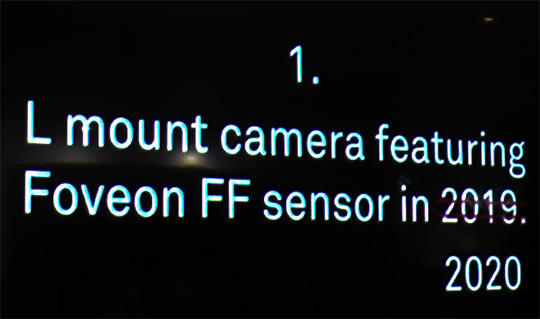
At the 2026 CP+ show in Japan, Sigma’s CEO, Kazuto Yamaki, confirmed that development of the Foveon full-frame sensor is still ongoing but did not provide a release timeframe. He reported steady advancement, “issues have been narrowed”, and the team might reach the next stage – actual full-size sensor manufacturing within 2026. However, he tempered expectations: “I can’t make bold, good reports about productization soon”. Wafer production is infrequent due to reliance on partner lines, requiring repeated cycles of analysis, fixes, and remakes. He reiterated his desire to eventually release a full-frame Foveon camera. The project remains in R&D, with market acceptance still to be evaluated.
Not every great photograph needs to be serious or technically flawless. Sometimes the best images are the ones that make you laugh or cry. For this latest showcase, we turned our attention to “Canine Capers”, a celebration of dogs being their wonderfully chaotic selves. We asked you to share the moments that happen between the posed shots: the flying ears mid-sprint, the guilty looks after a toppled trash can, the unapologetic couch takeovers. What came back is a gallery full of personality, motion and mischief.
As always, we received many more great photos than we can feature here. Our favorites, showcasing a diverse range of vision and talent, are presented in random order.
Photographer's statement: This photo shows how much impact the weather has on birds. There were tons of Robins wandering around, searching for food until the snow would completely cover the ground. But there was one particular Robin that not only caught my attention, but also my dog's. The Robin was fearless (or blind); sometimes it even sat on one of my dogs. I was impressed by this sight (and so were the dogs). So I tried my luck and got this capture among others. I know it is not perfect since it happened very fast, and I only had time to focus on the dog's nose. But still, it is a very interesting sight.
Photographer's statement: Nothing makes my dalmatian girl, Pika, more excited than a chance to charge straight into the Adriatic sea and fetch one of her toys. Over time, I've started going into the water myself, setting up with my camera and just trying to catch that perfect moment when everything is just right. Wife handles the toy throwing, I handle the camera, and Pika handles the fun. It's a win-win-win!
It's far from a simple task. A Dalmatian's spotted coat frequently confuses the autofocus, and all the droplets flying everywhere don't help either. Add to that the incredible speed and agility these dogs have and it's no wonder sometimes I'll take a thousand average photos for just one keeper. This was taken on a late summer afternoon on the Croatian coast, only moments after sunset. It turned out to be one of my favorite photos of Pika, so I naturally had to share it with the DPReview audience!
Equipment: Canon EOS R5 Mark II + Canon RF 100-300mm F2.8L IS USM
Photographer's statement: Walking the dog in the first snow of the winter, my Z8 (Z7 back then) with the 200/2.0 is the go-to combo as long as I can carry it. Close to the ground, things got easier since the sheltie lady got older and calmer.
Equipment: Nikon Z7 + Nikon AF-S Nikkor 200mm F/2G ED VR II
Photographer's statement: There's a beach in the Algarve called Olhos d'Agua that is famous for its sweet water springs and natural lagoons that are only visible during low tide. It's one of my favorite places for photography; the lagoons make for great mirrors, creating awesome compositions. On this day, especially with the clouds, an incredible element of drama and color was added.
Equipment: Canon EOS R6 + Canon EF 24-105mm F/4L IS USM
Photographer's statement: We decided to take some photos of our dog, Skye, trying to catch a treat. This was the first time we tried such a setup: Our dog, a background, two speedlights, my wife throwing the treats, me behind the camera, and a lot of patience. Skye loved it. She always enjoys doing tasks, and she was generously rewarded, as it took multiple shots (and more treats for Skye) to get this result.
Equipment: Nikon Z8 + Nikon Nikkor Z 24-120mm F4 S
Photographer's statement: Gigi was a boon traveling companion, but she was also stubborn. She’d walk for miles. When she grew tired and was put in the backpack, she’d demand to be set down again, take three steps, then look up at you and demand to be put back in the pack. When shod in boots for snowshoeing trips she’d shed the boots... at first. The same was true for her doggles in the Badlands of South Dakota.
Photographer's statement: My dog is 15 now, but when he was a puppy, he fit in this teacup-shaped planter. My wife kept his attention while I took several photos. This was my favorite!
Equipment: Nikon D800 + Nikon AF Nikkor 85mm F1.8D
Photographer's statement: Walking in the city, I found this little one wandering. When I called him, he stopped and looked at us, then ran in the other direction at full speed. Snapshot.
Equipment: Olympus OM-D E-M1 Mark II + Olympus M.Zuiko Digital ED 12-100mm F4.0 IS Pro
Photographer's statement: Our four-foot fence was no match for our Great Dane, who, just as she matured out of puppyhood, was eager to show she could fill anyone's dance card.
Equipment: Canon EOS 7D Mark II + Canon EF 70-200mm F2.8L IS II USM
Photographer's statement: While having an early morning walk with my beloved Maltipoo Girl Lotte, I had the luck of witnessing the sun rising just between the horizon and a heavy bank of of clouds. Lotte sat there so patiently in the cold that I could not resist to portrait her in front of the great sunrise light.
Photographer's statement: Jess, a Belgian-born barista working at Milano's Espresso Lounge in Vancouver's Gastown neighbourhood, gets a very loving welcome from Bruce, a new puppy in the neighbourhood.
Equipment: Pentax K-3 + Tamron SP AF 70-200mm F2.8 Di LD (IF) Macro
Photographer's statement: This photo captures a rare moment between my Chihuahua, Maja, and a herd of deer in our park. While many dogs would chase them or feel afraid, Maja stood calm and steady, gently approaching them and slowly walking towards them with quiet confidence. For a brief second, everything felt perfectly balanced. The deer watched her without fear, and she watched them without tension. It was a silent exchange between wild and domestic, and the only time I managed to frame it.
Photographer's statement: Here’s a portrait of Loar, my White Swiss Shepherd and my best friend. He helped me find my smile again and gave me the strength to learn photography, despite my visual impairment. I have albinism, so together we are a white-haired duo.
Equipment: Sony a7 III + Sony FE 55mm F1.8 ZA Carl Zeiss Sonnar T*
Photographer's statement: Olive is sitting in a bed of wildflowers at one of her favorite places at Grandma and Grandpa’s house. While she loves living in Michigan's cold, the humans do not. So every year we take a long road trip to my parents’ place in Texas. They have quite a large property, so Olive gets to escape the city and be the free-roaming farm dog she always wished she could be.
Photographer's statement: We have a new friend at home: Mina, an Australian shepherd. Our little four-legged friend looked at the strange colored ball, thinking: You're too beautiful, you'll be mine!
Equipment: Canon EOS R6 + Canon RF 24-105mm F4L IS USM
Photographer's statement: Sara and Amy grew up together in a tourist lodge in the heart of the Mala Fatra National Park in Slovakia. Here they look after sheep, goats and chickens. They provide pleasant company to hungry tourists who bring their fragrant dinner from the kitchen to the terrace to check if they have eaten everything. It was a pleasure to work here for almost five years. These furry ladies are now my great friends.
Photographer's statement: Lucie loved walking in the forest and could enjoy the whole day outdoors. She was walking towards me when I noticed this little path would make a good background with the bokeh.
Equipment: Fujifilm X-T4 + Fujifilm XF 50mm F2 R WR
Photographer's statement: Riley is a Mini Goldendoodle who was about 18 months old when this shot was taken on an overcast fall afternoon in Columbus, Ohio. Riley slept well that night, and her human sister, visible in the background, had a sore arm the next day.
Equipment: Sony a7 III + Sony FE 70-200mm F4 G OSS
Photographer's statement: Our Maltipoo "Knopfchen" (German for "little button") loves to hang out. I've never caught him in a cooler position, though. I am happy I had my phone right at hand.
Photographer's statement: I asked Winston (the Weimaraner) to pose for me to try out the new portrait lens I had just purchased. He obligingly sat still for a few seconds so I could snap a shot, and then he promptly ran off chasing something.
Photographer's statement: This dog, a Tibetan something named Woser, was nicknamed Bulldozer. Regularly escaped through the fence to have day-long adventures in the neighbourhood. Also enjoyed walks on the beach and an occasional dip. Sadly passed away at age 13. Remembered fondly.
CP+ has wrapped up for the year, with over 23,000 attendees visiting the show in the first two days. We've been hard at work covering it, so some of the members sat down to discuss the event, the news that was released during it, and some of the things we learned from our discussions with camera manufacturers.
As an added bonus, here are some stats provided by CP+, which help speak to some of the trends we discuss in the show:
45 of the show's 149 exhibiters were there for the first time
The first two days saw over 1100 more attendees than the first two days of the show in 2025
An Olympus M-1 and its proud new owner.
Another fun fact: while Abby didn't end up buying an OM-1 after the discussion, she did buy an Olympus M-1, the predecessor to the OM-1.
When you use DPReview links to buy products, the site may earn a commission.
Updated February 25, 2026
Travel can expose you to once-in-a-lifetime sights and experiences, and a good camera can be the perfect way to preserve those memories. We've looked at a range of models that offer great image quality, good autofocus and excellent video, so you'll be prepared to capture whatever you run into.
We've also tried to select relatively small cameras so they don't interfere with your trip, though it's worth touching briefly on lens size. If you choose a system with a Four Thirds or APS-C sensor, you'll be able to use lenses that are lighter and more compact than their full-frame counterparts. Full-frame sensors, however, offer the potential for even better image quality, so it's worth considering whether portability or image quality matters more to you and doing some research on what types of lenses you'd like to use and how big the full-frame versions are.
The Sony a7CR is a relatively compact full-frame camera with an image-stabilized 61MP CMOS sensor. You sacrifice the convenience of an AF joystick and get a pretty small and basic viewfinder to keep the camera's size down, but there's little else that delivers this much image quality in such a compact package.
You'll need to pick your lenses carefully to keep the camera portable but the a7CR's autofocus means it can respond rapidly to just about anything you encounter on your travels.
The a7CR is impressively small for a full-frame camera. The addition of a front control dial improves handling significantly. Notably, there’s no joystick for positioning the AF point, and the viewfinder is small and very low resolution for a camera costing this much.
Autofocus performance on the a7CR is very good and is helped by a dedicated processor for crunching complex machine learning-trained algorithms. Subject recognition is quick, and the AF system tracks subjects tenaciously around the frame in either stills or video. 8 fps burst shooting with continuous AF results in a dependably high hit rate.
"If you're looking for maximum resolution in a travel-sized body, the a7RC is tough to beat."
The a7CR captures 4K video at up to 60 fps. The most detailed, oversampled footage results from a 1.2x crop of the sensor, which makes it challenging to maintain wider focal lengths. Auto Framing mode uses AI algorithms to mimic the way a camera operator might punch in on subjects, keeping them framed and in focus.
The a7CR's 61MP sensor can capture a lot of detail, putting it ahead of most full-frame rivals; though it is a little noisier in low light. JPEG colors are pleasing, and excellent sharpening makes the most out of the 61MP sensor. Raw files provide plenty of latitude to pull up shadows at base ISO.
The a7CR delivers impressive results for its size. It essentially provides the same level of image quality, and most of the same features, as Sony's a7R V, but in a smaller package. In exchange for the small size, you make a few compromises, like no AF joystick, but if you're looking for maximum resolution in a travel-sized body, the a7CR is tough to beat.
The Sony a6700 is built around a 26MP APS-C-sized sensor. Its excellent autofocus performance means it excels at both stills and video capture. There's a good choice of relatively compact lenses available, too. We'd suggest avoiding the really small 16-50mm F3.5-5.6 though: it's not the lens to get the most out of this camera.
The a6700 has a thumb-and-forefinger dial interface missing from Sony's less expensive models. It’s just slightly larger than previous models in the line, but in exchange, you also get a fully articulating display. However, it lacks the AF joystick found on many cameras in its class.
Fast, dependable autofocus with a selection of subject recognition modes means the a6700 will help maximize your chances of capturing the unexpected moments on a trip.
"Excellent photo and video quality with best-in-class AF in stills and video make it an excellent choice for enthusiasts."
The camera produces very detailed 4K video up to 60p with 10-bit color, with good rolling shutter performance. There’s also a 4K/120p mode, albeit with a 1.58x crop. Autofocus performance is top-notch, with a well-designed touch interface. It's a strong option both for videographers and vloggers.
Excellent photo and video quality, best-in-class AF in stills and video, and a deep set of features to support both make it an excellent choice for enthusiasts. Sony's E-mount also includes a good range of available lenses.
The Fujifilm X-T50 is a 40MP, APS-C image-stabilized mirrorless camera aimed at beginners.
The X-T50 can be purchased with Fujifilm's excellent 16-50mm F2.8-4.8 kit lens, which provides a versatile focal length for travel and should be able to keep up in darker environments. Fujifilm also sells a wide variety of relatively fast, compact primes.
The X-T50 has dials for important exposure settings, and a small but useful grip. Its rear screen can tilt up or down. Its joystick and some buttons can be awkward to use, but the film simulation dial encourages the use of one of the camera's key features.
Its autofocus can recognize and accurately track several subject types, but its general tracking isn't the most reliable. Its 8fps mode isn't particularly fast.
The X-T50's controls and auto mode make it great for beginners, who can expect it to keep up with them as they grow. More experienced shooters will appreciate Fujifilm's robust lens selection.
This widget is not optimized for RSS feed readers. Please open this article's permalink in a browser to view this content.
The other APS-C options
If you're looking for an APS-C camera that's even smaller than the X-T50, the Fujifilm X-M5 may be worth considering. It's substantially cheaper, though it's easy to see where the company has saved money: it uses a lower-resolution 26MP sensor, which isn't stabilized, and there's no EVF. It does have the same film simulation dial and autofocus subject recognition modes, though, so those tradeoffs may be worth it if size or price are your top priority.
The Nikon Z50II is also a strong all-around contender, but its lens selection isn't as strong as Sony or Fujifilm's, nor does it have a stabilized sensor. However, it does have solid autofocus performance, a viewfinder, and a sub-$1000 price point.
The OM System OM-3 is a 20MP Micro Four Thirds camera with a Stacked sensor capable of shooting up to 50fps with continuous autofocus.
The OM-3 is well-suited to traveling, as the Micro Four Thirds system lets you use especially compact lenses, and its Stacked sensor gives it fast autofocus, incredible burst rates for shooting even the fastest subjects, and the ability to use computational modes to adapt to a wide variety of situations. It also sports an IP53 rating for dust and water resistance, so you won't have to worry if it starts raining.
It has plenty of customizable buttons, though no AF joystick or grip. Its color dial and computational photography button put key features front-and-center.
The subject recognition and tracking autofocus modes work well, though it can struggle to predict a subject's movement. It supports pre-capture, has very little rolling shutter, and can shoot up to 50fps with continuous autofocus when paired with specific lenses.
The OM-3 is a great little camera that packs a lot of technology and features into a classic-looking body.
It can shoot full-width 4K footage at 60fps, though its 8-bit modes have less detail than the 10-bit Log or HLG modes. It has very little rolling shutter, and microphone and headphone jacks.
The OM-3 is a stylish camera that can go anywhere, and is fast enough to shoot almost any subject. Its autofocus is reliable, though not class-leading, and its viewfinder is on the small side, but its compact design and lenses make it appealing for travel.
This widget is not optimized for RSS feed readers. Please open this article's permalink in a browser to view this content.
The other Micro Four Thirds options
OM System's OM-5 is substantially cheaper than the OM-3, though you give up the speed, USB-C port and advanced subject recognition autofocus, as well as a few of the computational modes. It is, however, slightly more compact if space is at a premium in your pack.
The Panasonic Lumix G9 II has similar capabilities as the OM-3, but in a significantly larger body. That bulk does come with dual card slots and more video features, but the weather sealing likely won't be as good as OM System's.
The Nikon Zf is a classically styled full-frame camera built around a 24MP full-frame sensor that's used by many of its peers. The angular 80s-style body isn't the most comfortable to hold in your hand for extended periods, but the lack of stick-out grip makes it smaller than many of its rivals, making it a tempting travel companion. However, like with the a7CR, many of the full-frame lenses available for it will greatly increase its size and weight.
At least in its all-black form, there's a chance of it being mistaken for a film camera, which may help avoid the wrong kind of attention when you're out and about in an unfamiliar setting.
The Zf gives the choice of using the dedicated control dials or customizable command dials. In most respects it copies its well-polished control system from other recent Nikons. Not everyone will enjoy the angular early 80's handling but it handles just as well as the cameras it resembles.
The Zf's autofocus is impressive, with both subject recognition and AF tracking both working well. It's perhaps not quite as confidence-inspiring as the latest Sony cameras, but it's not far off. It'd be nice to have an AF joystick but the rear control pad does a decent job.
"The Zf's looks may date from 1981, but its performance is completely contemporary"
The Zf has a very solid video feature set. Oversampled 4K/30 and cropped 4K/60 is standard for this sensor, but the Zf also adds a waveform display that's especially useful for exposing its 10-bit Log footage.
The Zf uses a very familiar 24MP BSI sensor that has underpinned numerous cameras in recent years, and the results are predictably good. There's plenty of dynamic range and enough detail capture for all but the most demanding applications.
The Nikon Zf's performance lives up to its looks. It's not as comfortable to hold for long periods as more modern designs, but it's also distinctive and engaging in a way they're arguably not. We're still completing our testing, but it hasn't disappointed yet.
The Ricoh GR IV is the latest entry in the company's series of classic compact cameras with large APS-C sensors and a 28mm equivalent lens. It's not the most flexible camera, but it has engaging controls and is one of the most pocketable models with a large sensor, which is probably why the GR series has built up a dedicated following of photographers who find it a joy to shoot with.
The GR IV has well-considered controls, letting you easily change the most important settings with one hand. It's also very customizable.
It's at its best in its single-focus modes, which are generally responsive in most situations, and its Snap Focus modes for zone focusing. Continuous and tracking autofocus aren't up to par with most modern cameras, which isn't helped by the relatively slow unit focus.
The user interface, both hardware and software, is pitch-perfect for the type of shooting you're likely to do with the GR IV.
The GR IV packs a lot into a camera that you can fit in a pocket and carry around with you. It's not perfect, but it nails the basics and is the only camera left that offers this level of image quality and portability.
Our one concern with using the GR IV for travel is that some users of the previous generation model reported dust getting into the lens. Ricoh has said it's made a few changes that should help prevent that, but still doesn't make any claims of weather sealing, so it may be worth keeping it in protective bag and putting it away in particularly unpleasant weather.
There's also the GR IIIx, which has the previous generation sensor and processor, but with a longer, 40mm equivalent lens. This may be a little tight for documenting your travels, but it's historically a popular focal length. Ricoh also sells a GR IV Monochrome, though a camera that only shoots black and white probably wouldn't be our first pick for travel photograph.
This widget is not optimized for RSS feed readers. Please open this article's permalink in a browser to view this content.
Other compacts
Canon has recently announced that it plans to increase its production of compact cameras, citing an increasing number of orders for the PowerShot G7 X III, which has a 24 – 100mm (equiv.) zoom lens, providing a solid range for travel photography. Its autofocus isn't
The Leica D-Lux 8 features a larger sensor than the G7 X III – it uses up to up to 83% of the area of a Four Thirds (17.3 x 13 mm) sensor, while the G7 X III has a Type-1 (13.2 x 8.8 mm) sensor – and has a photo-focued interface that we particularly like. However, its slow zoom, only decent image quality and substantial price tag make it hard to recommend to all but the most Leica-faithful.
Like the Fujifilm X100V before it, the Fujifilm X100VI is a classically styled fixed lens camera with a 35mm equivalent F2 lens. Updated with in-body image stabilization rated at up to 6EV of correction and a 40MP BSI CMOS APS-C X-Trans sensor, the X100VI is a significant upgrade over its predecessor despite looking virtually identical. And those improvements in part explain the X100VI's $200 increase in list price to $1,600.
It's not smallest or most inconspicuous camera, but its fixed focal length means you develop an 'eye' for the photos it'll take, essentially making it a better quality, more engaging alternative to snapping away with your phone.
The addition of subject-detection autofocus has given the X100VI the ability to recognize animals, birds, automobiles, motorcycles and bikes, airplanes, and trains though human (face/eye) detection is a separate mode. However, the lens the X100VI shares with the X100V is not the fastest to autofocus, prioritizing sharpness over speed.
The X100VI brings a level of polish you would expect from a sixth iteration of a camera. Fujifilm has done a great job keeping the X100-series up to date without messing with the formula that's made it so popular. No surprise, this is the best X100 yet.
Unfortunately, despite ramped-up production, demand for the X100VI seems to have outstripped supply with the camera already on backorder at virtually all dealers.
DJI’s Osmo Pocket 3 is a stabilized handheld vlogging camera, designed for on-the-move vlogging. It’s built around a type 1 (13.2 x 8.8mm) sensor mounted on a tiny gimbal, meaning it can deliver stabilized footage with smoother motion than any conventional camera or phone.
When you're traveling in an unfamiliar place, there are a million things to focus on; the Pocket 3 lets you capture it all, without requiring much effort on your part. It can also natively film in horizontal or vertical, which can be useful if you're looking to share footage from your travels on social media.
Its small sensor means the Pocket 3 works better in well-lit situations, though a reasonably bright F2.0 lens means it’s usable indoors, too.
It can shoot 4K 16:9 video or, by rotating the screen into the upright position, 3K vertical 9:16 footage. A small joystick lets you control the camera’s movement, and tapping the joystick button flips between the camera pointing toward you or away from you.
Its reliance on contrast-detection autofocus means its focus can be prone to hunting, though its face-detection mode works well enough that this is rarely a problem when talking to the camera.
The video quality isn’t always the highest, and the autofocus can occasionally lead to frustration, but overall the quality and convenience of the Pocket 3 as a package is really hard to beat.
This buying guide is based on cameras used and tested by DPReview's editorial team. We don't select a camera until we've used it enough to be confident in recommending it, usually after our extensive review process. The selections are purely a reflection of which cameras we believe to be best: there are no financial incentives for us to select one model or brand over another.
Which design do you prefer? Photos: Mitchell Clark
Last year, Fujifilm released the X half – a quirky camera that leans heavily on retro styling, and that emulates a more analog shooting process, especially in its film camera mode. It'd be a stretch to say that it's the type of thing we expect from the company, but it didn't completely shock us like it would've had it come from another company with less of a history in mimicking film cameras.
Perhaps we should start getting used to the idea.
Canon is showing off a concept at its booth at CP+ that takes the metaphor even further. Design-wise, it looks like an old camera with a waist-level viewfinder, but rather than using film, it has a Type 1 (117mm²) sensor. According to a diagram displayed alongside it, light from the lens (a manual focus-only 50mm equiv. F1.8) bounces off a mirror, and up into the viewfinder. But flip a lever on the side, and another mirror directs it to the sensor.
The prototype attendees got to handle was much less polished than the ones under glass.
To be clear, we're a long way from this – or even anything similar – being an actual product, if that ever happens at all. The one I got to play with seemed like it was at least partially 3D printed, and had a display that didn't do anything; the live view was shown on a TV, with a signal passed along a cable plugged into the side of its body. I'm not sure it could even actually take a picture, and the buttons on the back didn't seem to do much beyond making the camera switch into modes that didn't actually work.
However, it's interesting to see Canon even displaying it, and asking attendees to vote on which of two potential designs they like best. The mock-ups on display are more refined, seeming to feature actual shutter buttons and a large knob on the side, though its purpose is unclear. The survey also asks questions about what you'd look for in this kind of camera and how much you'd be willing to pay for one, were it to actually make it to market in some form. To me, that indicates that it's not just a fun toy the company's engineers cooked up solely to give people something to play with at its booth.
The booth drew a lot of attention; we'd be surprised if Canon didn't take notice of how many people wanted to play with it.
Canon has said before that it sees itself as a company that's always looking forward, despite a somewhat traditional approach to product designs. Some have used that perception to dismiss the idea it would ever release a throwback camera like the Nikon Zf or Pentax 17. But this camera shows a more playful side of the company, and even if we never see this particular model again, it makes us wonder if the X half was just the start of something, rather than an odd one-off.
Sample gallery
This widget is not optimized for RSS feed readers. Click here to open it in a new browser window / tab.

 Connexion