DxO released new versions of PhotoLab 9.6. DxO PhotoLab is an advanced RAW photo editor covering the full workflow – from demosaicing and noise reduction to local adjustment, optical corrections, color management, and print soft proofing.
Get 15% off DxO products with code RUMORS by purchasing from this link
New DxO PhotoLab 9.6 delivers remarkable image quality with DeepPRIME XD3, expanded control over AI Masks, and unprecedented DNG compression
The latest update extends DeepPRIME XD3 — now for both Bayer and X-Trans sensors — adds diffusion to its acclaimed AI Masks, and introduces High-Fidelity Compression to create DNG files up to four times smaller.
Paris (France): DxO, the imaging science pioneer and developer of the world’s most advanced RAW photo editing software, today announces the release of DxO PhotoLab 9.6, a major update focused on pushing image quality and workflow efficiency even further. Version 9.6 brings three headline innovations: the arrival of DeepPRIME XD3 for Bayer sensors, enhanced creative control with diffusion for AI Masks, and High-Fidelity Compression for DNG export — dramatically reducing file sizes without compromising RAW
quality.
“PhotoLab 9.6 is all about removing limits,” said Jean-Marc Alexia, VP of Product Strategy at DxO. “Whether it’s extracting more detail from the most demanding RAW files, refining selections with greater subtlety, or dramatically reducing storage requirements, this update gives photographers new levels of freedom — without sacrificing image quality.”
DeepPRIME XD3 for all sensors
Previously exclusive to X-Trans cameras, DeepPRIME XD3 now extends its groundbreaking denoising and demosaicing technology to Bayer sensor cameras, marking a major leap forward in RAW image quality.
An evolution of DxO’s renowned DeepPRIME technology, DeepPRIME XD3 is designed specifically for the most demanding files captured under challenging conditions. It produces cleaner, sharper images than ever before, extracting phenomenal detail while maintaining natural textures and accurate color reproduction. From high-ISO night scenes to finely detailed landscapes, DeepPRIME XD3 establishes a new benchmark for what’s possible in RAW conversion.
Paired with DxO’s exclusive DxO Modules, which deliver the most precise camera and lens corrections on the market, DeepPRIME XD3 offers the ultimate image quality pipeline. For photographers shooting at exceptionally high ISO values, it represents the current market leader in noise reduction, detail extraction, and color fidelity.
AI Masks gain diffusion for smoother, more natural selections
DxO PhotoLab’s acclaimed AI Masks — already celebrated for their speed, accuracy, and flexibility — become even more powerful in version 9.6 with the addition of diffusion controls. This new option allows photographers to soften mask edges and smoothly feather selections, making transitions more natural and adjustments more refined. Whether working on portraits, landscapes, or complex scenes with subtle tonal changes, diffusion provides greater creative control while preserving the intuitive workflow that has made AI Masks a standout feature of DxO PhotoLab.
High-Fidelity Compression: RAW-quality DNGs up to four times smaller
DxO PhotoLab 9.6 also introduces High-Fidelity Compression for DNG export, delivering RAW-quality files that can be up to four times smaller than standard uncompressed DNGs. This breakthrough technology means photographers no longer have to choose between image quality and storage efficiency. DxO outputs Linear DNG files, meaning images are fully demosaiced while retaining full dynamic range and editing flexibility. Intelligent compression now dramatically reduces file sizes without affecting image quality. Large-scale processing, archiving, and long-term storage become faster, lighter, and more efficient — without compromising a professional RAW workflow.
Price and availability
DxO PhotoLab 9.6 is available today from the DxO website for macOS and Windows machines:
New license $239.99 / 239.99 € / £219.99
Upgrade from DxO PhotoLab 7 or 8 $119.99 / 119.99 € / £109.99
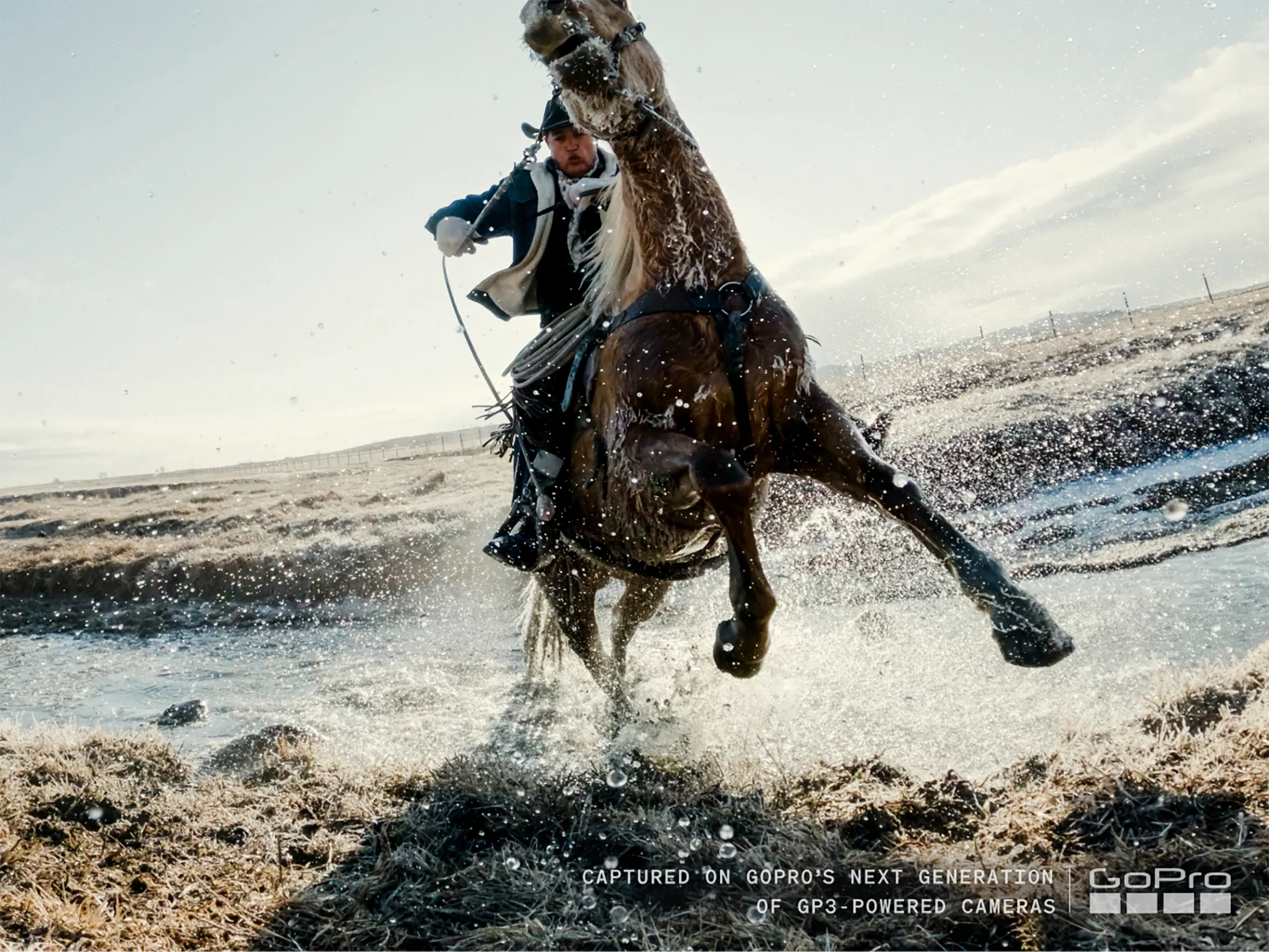
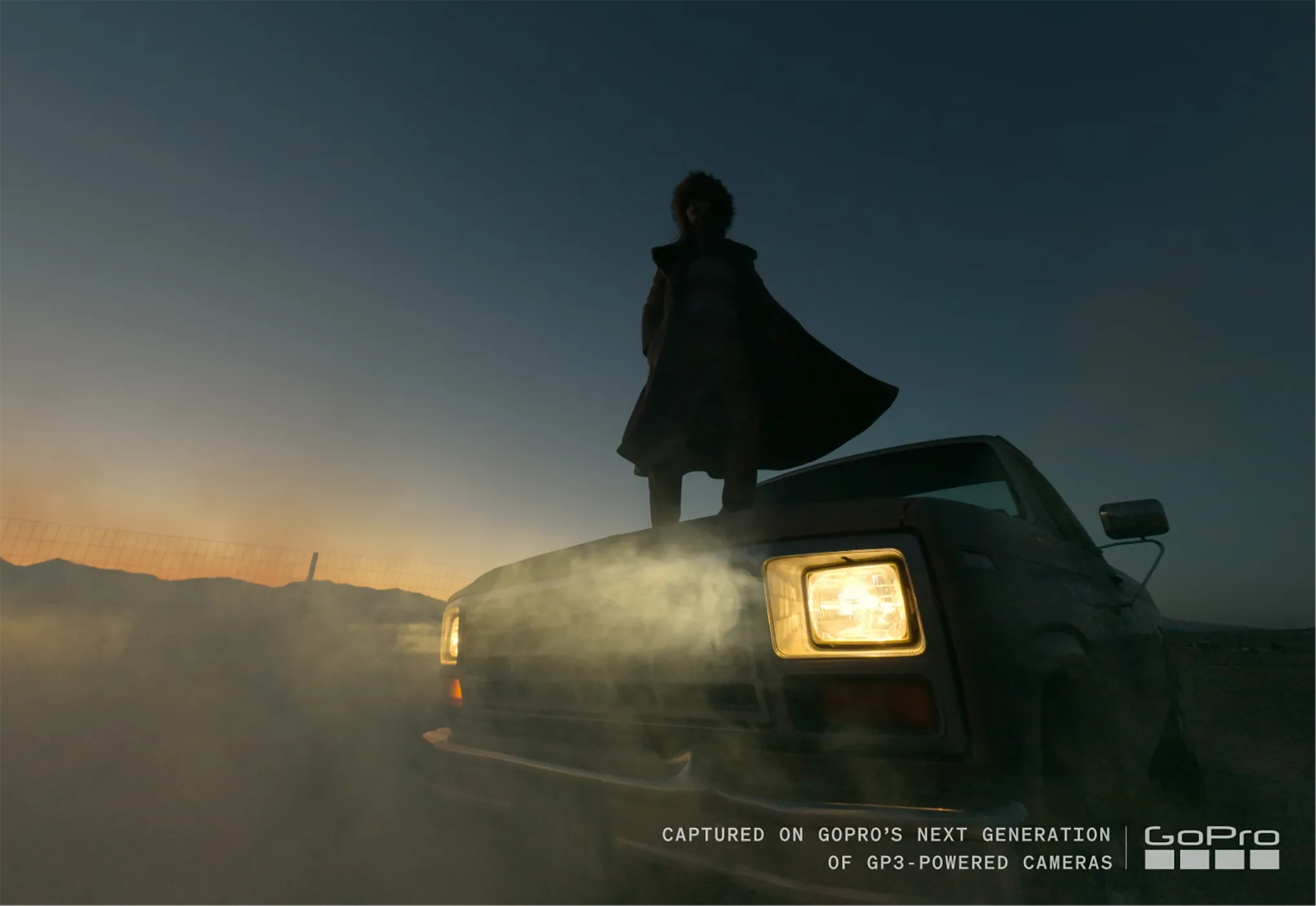
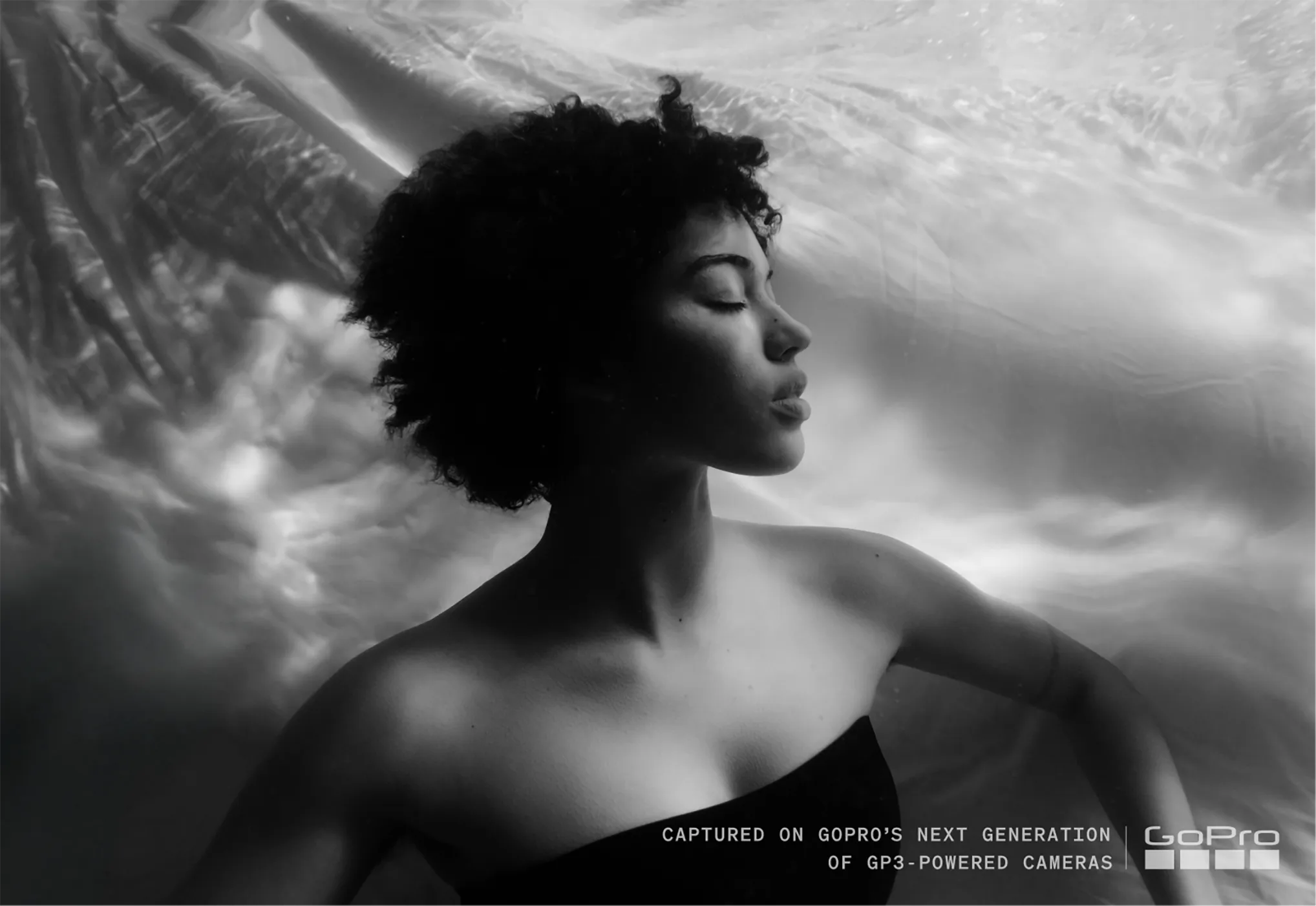
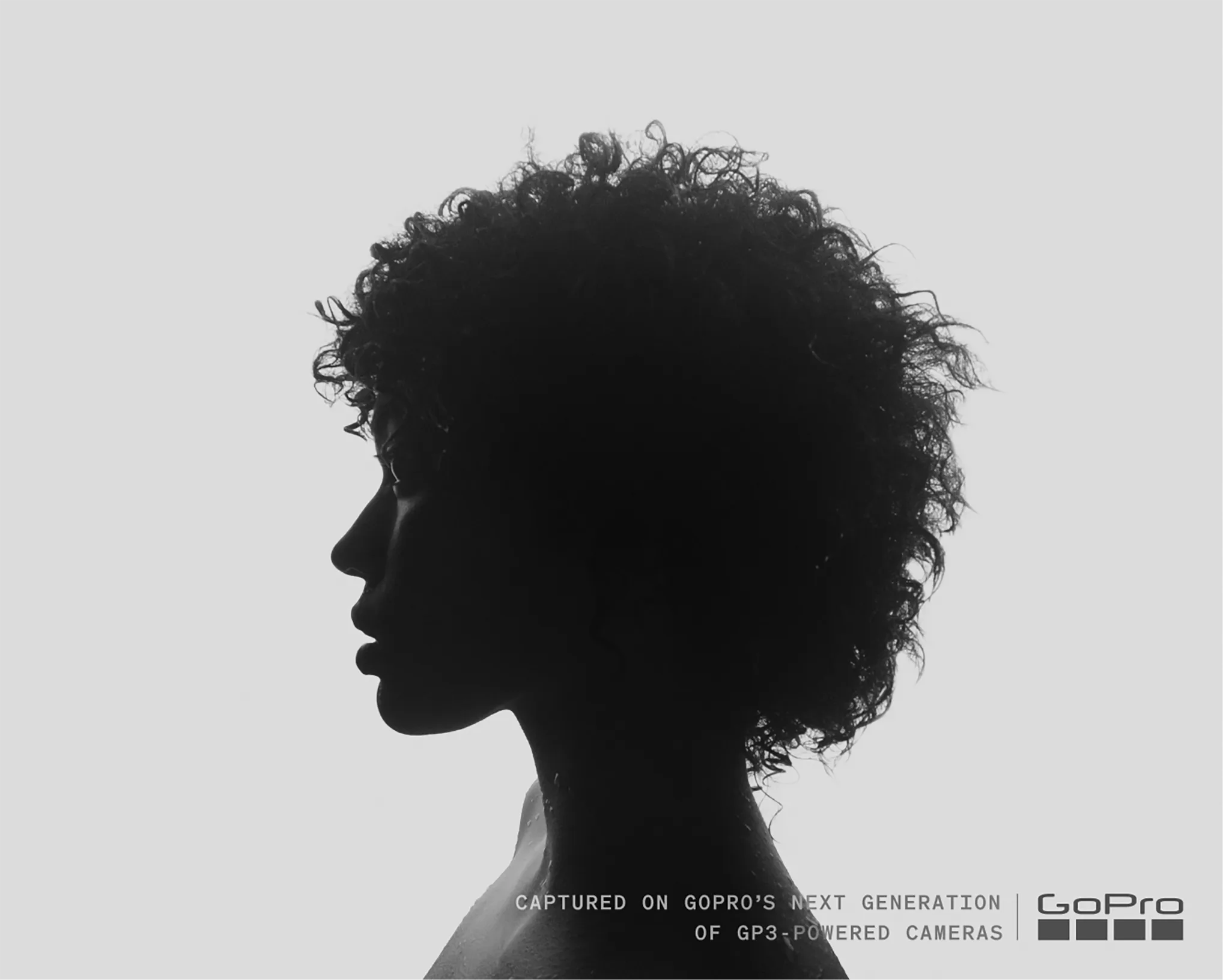
After GoPro recently unveiled a new GP3 custom imaging processor for their next-gen models, the company has also released new photos and video teasers demonstrating the capabilities of their upcoming camera:
GoPro reported significant financial losses for 2025, with full-year revenue dropping to $652 million (down about 19% from the prior year) and a GAAP net loss of $93 million (or $0.59 per share)—a big improvement over the previous year’s $432 million loss thanks to cost cuts. In Q4, revenue was roughly $202 million (flat year-over-year but missing expectations), with a GAAP net loss of $9.1 million and non-GAAP loss of $3 million. The company is optimistic about recovery through a new AI-enabled GP3 processor in upcoming cameras starting Q2 2026, while subscription revenue held steady at $106 million for the year.
Additional information on the GP3:
GoPro Unveils GP3: Next-Gen AI Imaging Processor Delivering 2X Power and Breakthrough Low-Light Performance
Today we announced the upcoming launch of GP3, our most powerful custom imaging processor to date. Exclusive to GoPro, GP3 is a 5-nanometer System-on-a-Chip (SoC) that delivers more than 2X the pixel processing power and superior AI-driven image quality and low-light performance over its predecessor, GP2. GP3’s power efficiency and thermal performance are expected to significantly outperform the competition, resulting in industry-leading runtimes in the most demanding environmental conditions. These advancements position GP3 to usher in a new era of professional-level image quality, low-light performance, resolution and frame rates for small form-factor camera markets, including action cameras, 360 cameras, vlogging cameras, and ultra-premium, compact cinema-grade cameras.
Accompanying images captured on GoPro’s next‑generation camera system powered by GP3 showcase the breakthrough image quality and low-light performance enabled by this new technology.
At the heart of GoPro’s innovative GP3 processor is a specialized AI Neural Processor Unit (NPU) that enables next-generation video pixel processing and market-leading low-light image performance. GP3 also features dedicated cores for scene recognition and subject detection, allowing GoPro cameras to understand their environment in real-time and adjust camera settings automatically. And with its 5-nanometer architecture and exceedingly efficient power-profile, GP3 is expected to enable market-leading resolutions and frame rates with runtimes and thermal performance that significantly outperform the competition.
“We expect our new, exclusive GP3 processor to lead in every performance area—image quality, resolution, frame rates, low-light performance and power and thermal efficiency,” said Pablo Lema, GoPro’s Senior Vice President of Product Management. “Launching in our new products in Q2, GP3 provides a scalable, proprietary foundation we can leverage to power GoPro cameras across existing and future product categories. Our markets demand the very best performance, and we believe this sets the stage for GP3 to serve as a growth catalyst for GoPro.”
“GP3’s bleeding-edge, cinema-grade performance will enable GoPro to enter the ultra-premium end of the imaging market this year, serving the needs of a new, higher-end market segment that can grow GoPro’s business and brand,” said Nicholas Woodman, GoPro’s founder and CEO. “We’re excited for GP3 to empower GoPro as both an innovator and disrupter as we look to grow our business through market-leading technology and performance.”
Rewindpix non-disposable digital “Film” camera (a retro screen-free digital camera with a large viewfinder, a winder, and infinite customizable filters): $272,325 pledged of $15,000 goal by 2,053 backers with 55 days to go.
Some of the Camera Intelligence team, all holding Cairas. Left: Vik Kumar, COO. Middle: Vishal Kumar, CEO. Right: Liam Donovan, CTO. Photo: Mitchell Clark
"I think a lot of people mistake our product as a gadget," says Vishal Kumar, CEO of Camera Intelligence, the company behind the Caira, a Micro Four Thirds camera that attaches to the back of an iPhone. "That's the wrong way to think about it," he says. "We're building the full technology stack, we believe, for the future of cameras."
While the company is currently wrapping up its Kickstarter campaign for the Caira, it has much bigger ambitions than selling an accessory that makes your phone a better camera, or even than selling dedicated cameras. Ultimately, it says, it's trying to change how cameras are made, and trying to convince the established camera companies that its tech is the way to photography's next step forward.
What is Caira?
The Caira has a Micro Four Thirds mount and an 11MP sensor. It doesn't work standalone – it requires an iPhone and has a corresponding app. Product photos: Mitchell Clark
While Camera Intelligence's ambitions clearly go beyond its first product, it's worth looking at where they're taking root. If you didn't catch the announcement in October, the Caira mounts to the back of an iPhone using MagSafe and connects to it via Wi-Fi. From there, you get your image preview and can control it using an on-screen interface or via voice.
Its big trick, though, is that it's not just a lens mount and an 11MP Four Thirds quad-Bayer sensor from Sony Semiconductor (think Panasonic GH5S). It also has a Snapdragon processor, which it uses to power its AI autofocus and to make decisions about white balance and exposure. It also handles the processing for the camera's computational multi-shot modes.
"At the moment, it's mainly designed for denoising," says Liam Donovan, Camera Intelligence's CTO. "It's optimized for reducing noise in low light and giving you more dynamic range." He explains that the algorithm, which the company is still working on but is shipping on production cameras, takes up to 17 shots: eight before you press the shutter, one when you press the shutter, and eight after. "There's an algorithm that runs on all of those shots to align them all. It moves the frames about so that they match the central frame, and then blends them together. And one of the hardest bits of the algorithm is making sure that there are no artifacts."
This Photo from the Caira was created by stacking eight frames together. Click here to see the original in HDR.
Caira | OM System 20mm F1.4 | F2.8 | 1/710s | ISO 951
While the multi-shot capabilities are currently implemented as a separate low-light mode, the company is working on expanding what it can do with them. "We're working very hard on making it do super resolution, where you can actually increase the resolution of the images that it produces quite significantly," Donovan says. "Low-light mode is kind of a stepping stone on the way to that, because super resolution is much more difficult than denoising on its own."
The intensity of those algorithms is part of why the camera needs its own processor, despite being attached to a very powerful phone. "It takes quite a lot of time to transfer Raw photos off the camera, and it has to be the full Raws that go into the stacking algorithm," says Donovan. "So that all happens on the camera, and it's enabled by the fact that we have a very powerful smartphone-style processor from Qualcomm in the camera itself, which is pretty novel." He says it's much more powerful than the processors you'd typically find in more traditional cameras.
Influencing
While Camera Intelligence has obviously put a lot of work into the Caira and its predecessor, the Alice Camera, it has its eyes on a bigger prize: convincing other camera companies that this architecture is the way forward. "We're not just in Yokohama for CP+," says Kumar, who spoke to us at the Camera Intelligence booth, where the company is showing off Caira to attendees at the show.
"We're having deeper conversations with some of the camera brands to see if that resonates"
"We have more than a couple of meetings. We believe that the way in which we have gone about building our camera is more akin to how cameras in the future should be built. Because we use the image sensors from traditional mirrorless cameras, but we're using the processor from a smartphone. And that smartphone processor unlocks a whole bunch of things," he says. "So we're having deeper conversations with some of the camera brands to see if that resonates."
It's not just the features like AI-powered voice control, focusing, or exposure, he suggests. The company also wants to be able to implement other AI features, such as large language or image generation models; the current Caira app lets you edit images using Google's Nano Banana model, but it currently has to run in the cloud, rather than locally, and requires a subscription.
It's not all AI, though. "I think it's the full stack," Kumar says. "It's everything from the decisions we made on the electronics, the operating system layer that we've built, which is called Camera Intelligence OS, the image signal processing pipeline that we've built, which is entirely software-based, and can be updated over the air. And then it's also the user interface with the app and the large language model. It's that entire stack that we think is interesting."
In that respect, the Caira is almost a means to an end. "That's the product that we sell at the moment to prove that architecture and infrastructure can actually be robust. And we need to ship these units because it allows us to stress-test the architecture and the units. And it allows us to do those software and hardware improvements. But it's more to it than just a camera that attaches to your phone."
In that vein, Kumar tells us that the Caira is on schedule to start shipping to the 611 people who backed it on Kickstarter last year by the end of March. He also says they triple-tested a batch of 25 from the production line in their office in London to make sure they were ready to go. We have our hands on a pre-production model and have been doing some testing with it, so keep your eyes peeled for further coverage.
Tied to Apple
To start, Kumar says the Caira's target audience is smartphone shooters who want better image quality. "Smartphones, for better or for worse, have automated large parts of the three A's and everything else for almost a decade. And we always tell our users, 'You need to learn basic photographic theory because it will help you take better photos, take better videos, et cetera.' But we're approaching it from the point of view of: 'OK, how can we automate a lot of this complexity so that the UX matches up with the UX that our target customer base is familiar with?' Not something that's like a minefield for them to navigate."
The app lets you get at a level of manual control, letting you manually set aperture, shutter speed, and ISO (though there's currently no affordance for exposure compensation). "We're starting from a point of view of: 'let's automate as much as possible and then give you control,' rather than 'let's give you full control and then automate after.' Because our customers don't really want that."
There's also a hardware benefit; instead of having to build everything themselves at great expense, Camera Intelligence gets to benefit from the phone's display and connectivity. "I think the main reason was just a lack of resources," says Kumar. "So we were building the electronics. We're building the OS layer. We're building the Image Signal Processor. We're also building the actual physical body. So we thought, okay, why don't we just use the iPhone as the interface, as the screen?"
Donovon also points out that the displays on iPhones, which are up to 6.9" and can reach up to 3000 nits of brightness, far outclass those found on traditional camera models. That brightness, along with readily available software libraries, allowed them to easily add gain-map HDR to the camera, with results you can see as soon as you've taken the picture. The feature is similar to what we've seen with the Hasselblad X2D II; while the Sigma BF also pulls a similar trick with its files, you can't actually appreciate the effect with the screen built into the camera.
Kumar notes that Apple has put a lot of resources into ecosystem features like the App Store, APIs and AirDrop. "So it made sense for us to attach to the phone for our V1 and V2."
For us, our entire product relies on the UX being good.
Of course, that implies that there's a chance the company will try to produce a fully-featured standalone camera in the future, but Kumar says it'd take more than just money to make it happen. "I think we can only promise bringing a product like that to fruition when we have more resources. Not just in terms of money in the bank, but team and the right skill sets. Because if you get that wrong... We've seen a few camera brands release Android-based cameras with standalone screens in the last five years. And they didn't quite execute the concept as well as it could have been done, but those camera companies can absorb that because for them it's just experimenting. For us, our entire product relies on the UX being good."
When you use DPReview links to buy products, the site may earn a commission.
Photo: Mitchell Clark
Nikon says it's discovered a "manufacturing issue" affecting a number of Z5II, Z6III and ZR models. It says the issue may cause the cameras to become inoperable.
A longer version of its statement blames the issue on the use of "parts that do not meet our quality standards."
The company says it's identified the serial number ranges subject to the issue and asked users to check whether their camera is affected. It says it will repair these cameras free of charge, including shipping costs.
The company has not disclosed the specifics of the potential fault, nor the number of cameras affected.
Interestingly, the statements in some regions exclude certain models, with no Z6III built for the European market being affected and only ZR models intended for Canada being impacted. This, and the many posts on this article and in the forums by users saying their cameras aren't in the affected range, suggests a relatively small production period used the faulty parts.
Nikon USA Technical Service Advisory:
We have confirmed a manufacturing issue with certain Z6III, Z5II and ZR cameras which may cause the camera to become inoperable. We have identified a range of serial numbers for the affected products, and Nikon will provide repairs free of charge regardless of the warranty period, including shipping.
We apologize for any inconvenience to our customers. For more information or to check to see if you have an affected product, please visit this link: nikonusa.com/service-advisories/z-tsa-3-2026
Fujifilm has announced the latest entry in its Instax lineup, the Instax Mini 13. The new model brings only subtle changes to the table: a redesigned body and the addition of a timer. Fujifilm also announced an update to its Instax Up smartphone app, and a new space-inspired instant film.
As we saw with the last few iterations, the Instax Mini 13 underwent a slight redesign. It still looks similar to the Instax Mini 12, though with some added vertical ridges for a more balloon-like look. Fujifilm also opted for a metallic silver logo on the front of the camera. There's also now a circular timer on the front of the camera, with the option to choose between 2 or 10 seconds. There's also now an indicator light around the front shutter button, presumably to let you know when the timer is about to run out.
Photo: Fujifilm
Functionally, the only change is the addition of dual timers. The camera still offers a close-up mode, auto exposure, automatic flash control and a selfie mirror. It also carries over the Parallax Correction feature introduced on the Mini 12, which aligns the viewfinder with the lens in close-up mode for easier framing. As with previous models, twisting the lens turns the camera on and off and changes to close-up mode.
In addition to the camera, Fujifilm updated its Instax Up app, which is a free smartphone app that allows users to scan and organize their Instax photos. The company says that the new version uses AI to improve scans. It promises better recognition of the image versus the background or any other nonessential content, producing more precise scans.
Lastly, there's also a new Instax Mini film on the block, dubbed Pastel Galaxy. As the name suggests, the film's frame features a pastel-colored galaxy design with scattered stars.
Fujifilm is sticking with pastel colors for its latest Instax Mini. The official color names for the are Dreamy Purple, Lagoon Green, Candy Pink, Frost Blue and Clay White. Photo: Fujifilm
The Instax Mini 13 will be available in late June 2026 for $94. It comes in pastel purple, blue, pink, green and white. The Pastel Galaxy film will also be available in late June 2026 for $18 per pack.
Joy and Creativity in the Palm of Your Hand: Fujifilm Introduces instax mini 13™ Instant Camera
Company also unveils updates to instax UP!™ smartphone app and introduces a new instax™ mini instant film variety
VALHALLA, N.Y., March 16, 2026 – FUJIFILM North America Corporation, Imaging Division, announced today the introduction of its instax mini 13™ instant camera (mini 13). Following in the footsteps of the popular instax mini 12™ instant camera launched in 2023, mini 13 brings a fun, playful new look and feel with its soft, sculpted shape and a metallic silver logo that accents the front of the camera.
New for mini 13 is the introduction of dual timers, with options for 2 or 10 seconds, giving the photographer the opportunity to be in the shot themselves with their subjects, or for easy hands-free selfies (with the help of the included wedge-shaped angle adjustment accessory). Mini 13’s main features also include Close-Up Mode, Selfie Mirror, and Auto Exposure adjustment capabilities, as well as the Parallax Correction feature, in which the camera’s viewfinder aligns with the lens when using Close-Up Mode, minimizing object shifts to produce a centered photo. Mini 13 also features automatic flash control, which optimizes image quality in bright or low light situations. The lens structure is designed to provide intuitive steps both for powering the camera on/off and for accessing the popular Close-Up Mode with a simple twist of the lens
"Our instax™ mini line of mini instant cameras, smartphone printers, and film represents not only an incredible value for our users, but in many cases, it’s a user’s first foray into analog photography," said Bing Liem, president, Imaging Division, FUJIFILM North America Corporation. "Mini 13 is a perfect fit because experimenting with instant photography – trying out new lighting, poses, or scenes (especially by using the new self-timer feature), are all fantastic ways to express oneself artistically and be a part of your art. We’re looking forward to seeing what our community creates with Mini 13!"
instax UP!™ Smartphone App Update Announced
Along with the introduction of mini 13, the free, downloadable instax™ UP! Smartphone app is debuting new and enhanced features. This app is designed for instax™ users to digitally scan, import, organize, and store their photos in one place, regardless of which instax™ instant film, camera or printer product they use. The updated version brings increased image scanning precision by integrating the use of AI. The overall learning capability of the app has been greatly enhanced so that it can recognize images versus backgrounds or other extraneous content, resulting in cleaner, more precise scans.
New Film Variety Introduced
Pastel Galaxy, the new instax™ mini instant film, will be introduced along with mini 13, featuring a fun cosmic theme complete with sparkly, glossy embellishments, and soothing colors to add a cool vibe to a user’s instax™ photos.
Colors, Pricing, and Availability
Fujifilm’s instax mini 13™ instant camera will be available in Dreamy Purple, Frost Blue, Candy Pink, Lagoon Green, and Clay White. It is expected to be available in or around late June 2026 at a Manufacturer’s Suggested Retail Price of $93.95 USD and $109.99 CAD. The instax™ mini Pastel Galaxy film will be available late June 2026 at a Manufacturer’s Suggested Retail Price of $17.99 USD and $14.99 CAD.
Yikes! Image: @gupigupigupigupigupigupigupi on Instagram
Sometimes, Instagram can be a source for creative ideas to put your own spin on. Other times, it can give you examples of what not to do. One of the videos that crossed our feed today was the latter: captioned "every photographer's worst nightmare happened to me," it shows a lighting stand with a flash attached crashing to the ground, ruining the photographer's laptop.
Despite the apparent misfortune, the clip actually shows someone getting extremely lucky, as the heavy rig could've easily come down on the photographer or the model they were shooting, which could've resulted in a serious injury or worse. So how do you avoid making the same mistake?
If you look in the comments (and at the photographer's post itself), you'll see a ton of people suggesting the same thing: sandbags or something similar to weigh the stand down. And indeed, that's an excellent place to start. With an overhead lighting setup, I'd probably look to use at least two: one on the leg that's in line with the load and another on a second leg. If the load were super heavy or very far away from the center of the stand, I'd even consider using three, though I'd check my stand's weight limit first.
It also appears that the wheels may not have been locked, given how the stand kicked out when it started falling. If that's the case, they definitely should've been, especially with an overhanging load.
If the weight is sticking out from the stand without a leg under it, it can tip much more easily
There are a few things the photographer in the clip did right, even if they ultimately weren't enough to save the laptop. Ironically, there is, in fact, a sandbag in the video: it's hanging as a counter-balance on the end of the rod. The photographer also appears to have roughly aligned one of the legs and the arm, which is an important step. If the weight is sticking out from the stand without a leg directly under it, it can tip much more easily. Of course, none of that matters if you don't first secure the base of the stand with, say it with me, everyone: sandbags.
Some more sandbag pro tips: if the bag is touching the ground, it's going to be less effective, since some of its weight won't be transferring down through the stand's legs. And if you're using a stand with unequally sized legs, like a C-stand, the biggest, sturdiest and tallest one should be the one sandbagged first, and the one facing the load.
That also generally makes it the one facing the most important thing on the set: the people. That way, if it falls, it falls away from them In the case with the video, though, the photographer should've consulted the stands' manual to see where the manufacturer recommended hanging sandbags from. If there isn't a safe place to do so, they should've used a different stand for an overhead setup.
Have any light stand horror stories (or tips on how to avoid them) of your own? Feel free to share them in the comments or over on our forums. Stay safe out there.
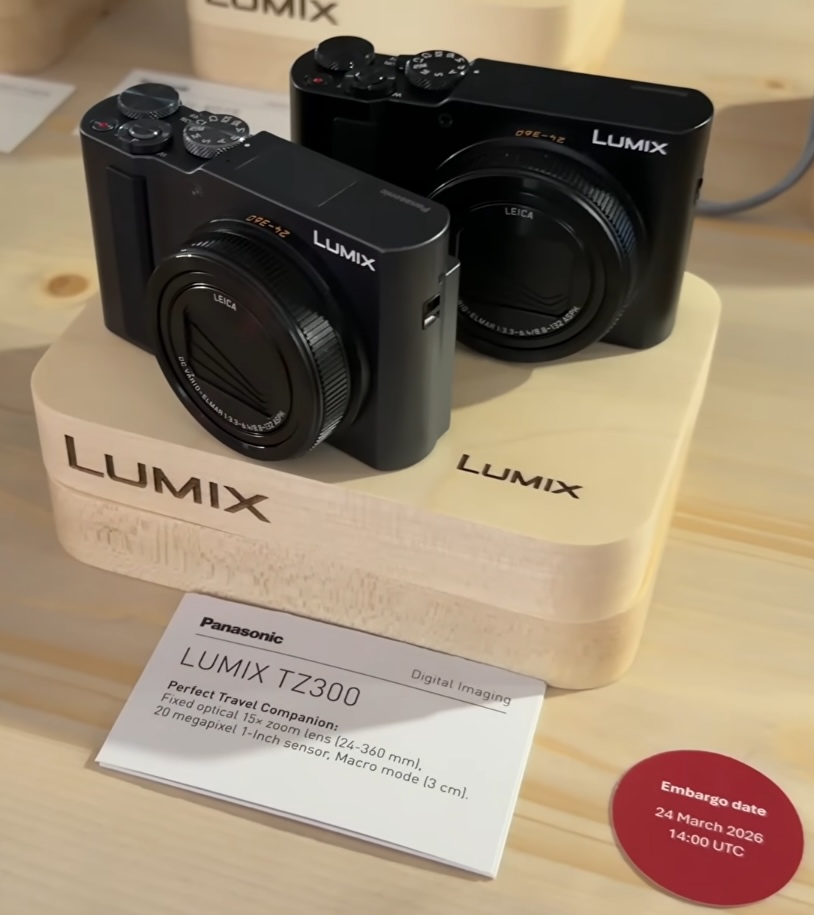
Panasonic will announce a new Lumix TZ300 compact camera on March 24th (see leaked picture above). Here are the details:
20 MP 1″ sensor
Leica DC Vario-Elmar 24-360mm equivalent f/3.3-6.4 lens (15x optical zoom)
Macro mode (3cm)
Improved video recording geared toward vloggers, potentially including better stabilization, 4K support, and user-friendly features like a flip-out screen
When you use DPReview links to buy products, the site may earn a commission.
Lake Kuttara is a lake in the caldera of a volcano in Shikotsu-Tōya National Park on the island of Hokkaido in Japan.
Photo: Dale Baskin
Sometimes, you have to go to Hell and back to get the story, and I did just that with the Sigma 15mm F1.4 DC Contemporary lens. Specifically, I went to Noboribetsu Jigokudani (Hell Valley) in Shikotsu-Tōya National Park on the island of Hokkaido, Japan, a geothermally active volcanic area where sulfur-scented steam clouds seep from the ground.
The Sigma 15mm F1.4 DC Contemporary is a fast, wide lens designed specifically for APS-C cameras. Since we had the RF mount version, I shot it on the Canon EOS R7, resulting in a 24mm full-frame equivalent field of view on Canon's APS-C format.
In addition to taking the lens to Hokkaido, I also shot it around Tokyo and Yokohama, sometimes in very rainy conditions. It's worth noting that I had this lens (and the R7) around my neck in the rain for a couple of hours straight at one point, almost dripping with water, and neither missed a beat, suggesting the weather sealing on both is pretty effective.
"Sometimes, you have to go to Hell and back to get the story"
While the X-mount and E-mount versions of this lens include an aperture ring, the RF-mount version has a control ring. It's clicked, but I've never found a generic control ring to be a great substitute for a clicked aperture ring, particularly since it's very easy to rotate inadvertently. It also offers the flexibility to assign different settings to the ring. From that perspective, it's neither a pro nor a con, but something to be aware of if you're considering the Canon version.
Please do not reproduce any of these images on a website or any newsletter/magazine without prior permission (see our copyright page). We make the originals available for private users to download to their own machines for personal examination or printing; we do so in good faith, so please don't abuse it.
Sample gallery
This widget is not optimized for RSS feed readers. Click here to open it in a new browser window / tab.
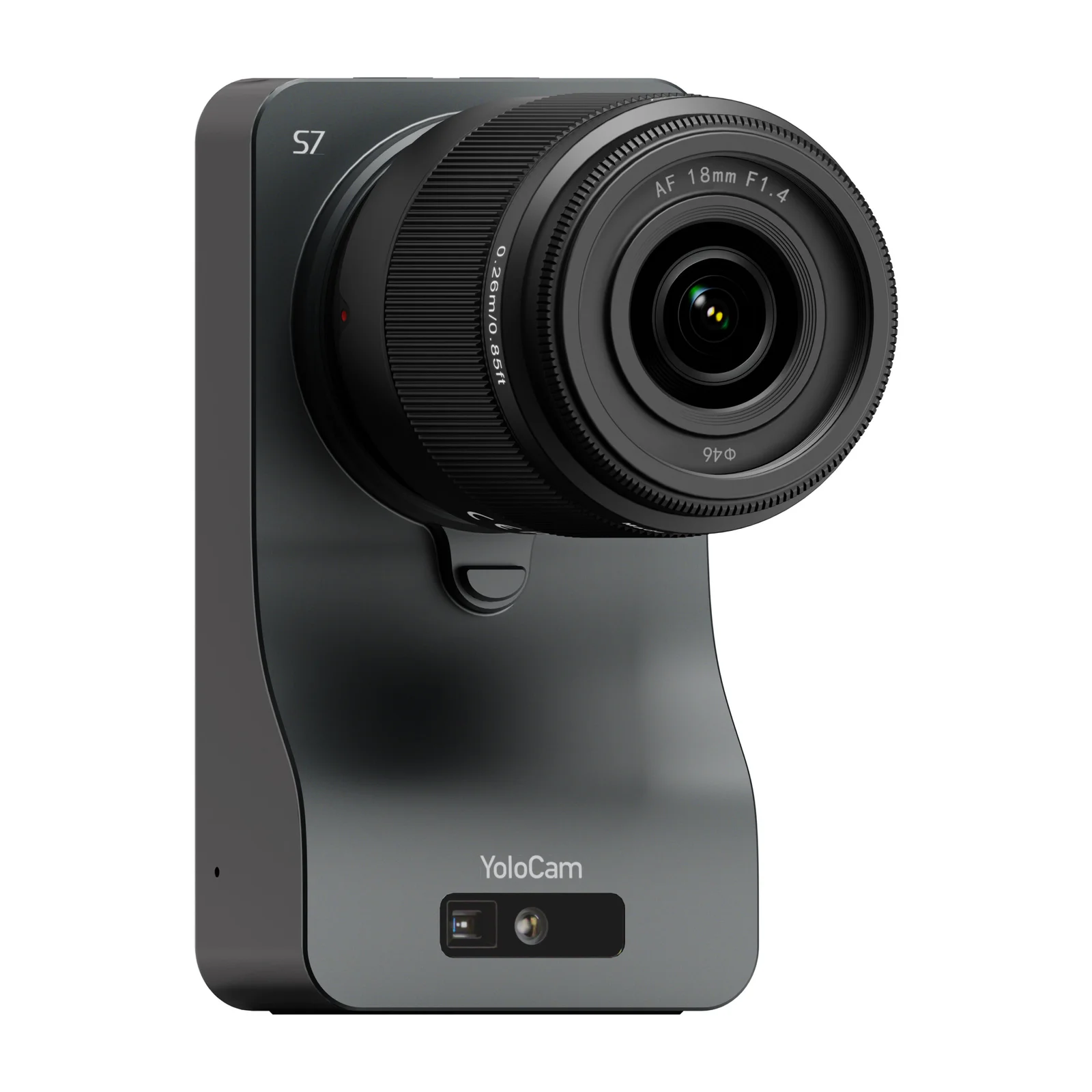
After the S7 camera, the Chinese manufacturer YoloLiv announced a new YoloLiv 18mm f/1.4 lens for Micro Four Thirds cameras. Here are the details on the new lens:
Price: $299 (approximately €259 in Europe)
Release date: expected to ship in late March or early April 2026
Stepper motor autofocus system with full-time manual focus override, optimized for smooth and accurate video focusing
Nano multi-layer coating to reduce flare, ghosting, and improve overall image quality
Metal lens mount with gold-plated contacts for EXIF data transmission to the camera
Compact and lightweight design
Specifications:
Specification
Details
Focal Length
18mm (36mm equivalent on full-frame)
Maximum Aperture
f/1.4
Minimum Aperture
f/22
Optical Construction
7 elements in 7 groups (including 4 aspherical and 3 low-dispersion elements)
Aperture Blades
7
Minimum Focus Distance
0.19m (7.5 inches)
Maximum Magnification
0.1x
Filter Thread
46mm (P=0.75)
Dimensions
Approximately 63mm diameter × 73.7mm length
Mount
Micro Four Thirds (MFT)
Compatibility
Primarily YoloCam S7; may work with other MFT bodies (untested)
Operating Temperature
-10°C to +50°C
In the Box
YoloLiv 18mm f/1.4 Lens (no additional accessories specified)
I found this ceremonial gate and pavilion of lanterns in Chinatown in Yokohama, Japan. It's one of my favorite places to shoot at night in Yokohama, thanks to all the illuminated signs and decorations. It's particularly fun in the rain when the lights reflect off the wet pavement.
This month, we want to see your most brilliant photos of artificial lights that light up the night. There's a myriad of possibilities, ranging from city lights and fireworks to carnivals and neon signs. The creative possibilities are endless. Our favorites will be featured in an article on the DPReview homepage.
Photos can be submitted between Sunday, March 15, and Saturday, March 21 (GMT). The challenge is open to photos captured at any time.
Important: Images MUST include a title and a caption of at least 25 words to be eligible. We need to be able to share the story behind your photo. We will consider both photos and captions when selecting our winners, so make sure to tell us that story!
Visit the challenge page to read the full rules and to submit your photos for consideration as soon as the challenge opens.
Sigma 35mm F1.4 DG II Art | F5.6 | 1/400 sec | IS0 80 Photo: Richard Butler
As the numerals suggest, the Sigma 35mm F1.4 DG II is the company's second-generation 35mm F1.4 for mirrorless cameras. It's also a successor to the 35mm F1.4 DG HSM Art: the lens that launched the 'Art' series as part of Sigma's Global Vision rebrand, all the way back in 2012.
At a time when a lot of manufacturers have been focusing on attention-grabbing, often neck-aching and typically wallet-worrying F1.2 lenses, it's refreshing to see an updated 35mm F1.4.
2025 saw Sigma significantly rework its 35mm F1.2, shaving 30% off the weight and a similar amount off its volume, making it a much more practical lens. Now it's done something similar to its (slightly) more modest 35mm F1.4.
The new 35mm F1.4 is 18% lighter than its predecessor (530g / 18.7oz in L-mount form) and both shorter and narrower, helping to reduce the volume by around 20%, too. This size and weight reduction leaves it 30% smaller and 30% lighter than the F1.2, and costing around 30% less. The 1/3EV difference between the two lenses should mean around a 20% reduction in peak light gathering capability.
F1.2 lenses can be excellent: I thoroughly enjoyed using Nikon's 35mm F1.2 when it was launched last year, and I really like the idea that Sigma's version is smaller and lighter, but I've been traveling this last week and have to say that I really appreciate the further size and weight reduction that comes with the move back to F1.4.
It's easy to look at the numbers in isolation and think "225g grams difference, that's something like the weight of four chocolate bars, how could that matter?," but if you have to fit it in your luggage and have it compete for space in a bag you're constantly carrying, the difference makes itself apparent.
The coatings appear to do a good job of maintaining contrast and limiting ghosting
I tried to shoot a selection of images so that you can judge properties such as sharpness, fall-off and bokeh for yourself. To my eye the bokeh looks very, very slightly bright-edged, resulting in a slightly busy appearance in some circumstances, but with a somewhat swirly character that I suspect some people will really like.
I also found the lens to be somewhat prone to flare if used without its (supplied) hood. This just seems to be the result of the large front element catching the light: the coatings appear to do a good job of maintaining contrast and limiting ghosting, even when flare creeps in.
Overall, I rather like the F1.4. 35mm is probably the focal length where, personally, I'd be most tempted to spend the extra to get an F1.2, but carrying the F1.4 around this week has made me appreciate having the option of getting most of the light in something a fair bit lighter.
Sigma 35mm F1.4 DG II Art sample gallery
Please do not reproduce any of these images on a website or any newsletter/magazine without prior permission (see our copyright page). We make the originals available for private users to download to their own machines for personal examination or printing; we do so in good faith, so please don't abuse it.
Sample gallery
This widget is not optimized for RSS feed readers. Click here to open it in a new browser window / tab.
Thank you to Panasonic for the loan of a Panasonic Lumix S1RII to capture this gallery. All images were processed using our standard lens workflow in Capture One, with the manufacturer's distortion correction applied but no correction of vignetting. There is extremely minor pincushion distortion before the correction is applied: we do not consider it to be an essential part of the lens design, if you prefer not to use it or your preferred software does not support lens corrections.
When you use DPReview links to buy products, the site may earn a commission.
Photo: SetWillFree
Most of us have a few ideas of what we'd do with the gear of our dreams if we ever get our hands on it; a bucket list of shots we'd try to get, or locations we'd take it to. For Will Freeark, who posts to YouTube on the channel SetWillFree, the vision was simple: he can see mountains from his backyard, but could he see his backyard from the mountains with the right lens?
Once he found a rental house that stocked the Canon RF 1200mm F8 L IS USM (and after putting a $20,000 hold on his credit card), he was ready to find out, a process he documented in a recent video.
While it's entertaining to watch him and his friends search for his house, battling atmospheric haze along the way, it's also interesting to see what else he does with the lens, a list that includes shooting a music video and commercial, as well as a spot of astrophotography.
The video is well worth a watch (though if you're at work be warned that there's a fair amount of swearing), as it's fun to see how different people use some of the gear that most us will never get to. It also gives me an idea for my next trip up to Mt. Spokane, I just need this lens, a teleconverter and an APS-C camera for unbelievable amounts of reach.
This time I'd like to tell you about a trip I've been planning for over five years, and only managed to realize early this year. Every time I had planned to go, something went wrong, to the point that I was sure the universe was trying to prevent me from going, and this time was no exception. But this time, I didn't let anything stop me. I traveled to Sichuan and Yunnan provinces in the beautiful land of China.
This was my first visit to China, and I was overcome by the beauty of the land, its landscapes and wildlife. Apart from a terrible jet lag that I just couldn't shake throughout the trip, the visit went really well, and most importantly, the wildlife was even better than I expected. I'd like to take this opportunity to show you some of the images I captured during my two-week visit and share my experience.
The first stop on my visit was Yunnan province, where I spent four nights in a beautiful, tiny mountain town, nestled on a river between huge forest-covered peaks. A fitting setting for the highest-dwelling primate on Earth: the Yunnan snub-nosed monkey.
A family of Yunnan snub-nosed monkeys in the forest.
Canon EOS R5 Mark II | Canon RF 100-500mm F4.5-7.1 L IS USM + EXTENDER RF1.4x | ISO 3200 | 1/640 sec | F10
A young Yunnan snub-nosed monkey.
Canon EOS R5 Mark II | Canon RF 100-500mm F4.5-7.1 L IS USM | ISO 800 | 1/1250 sec | F7.1
Photos: Erez Marom
The black-and-white snub-nosed monkey, also known as the Yunnan snub-nosed monkey, is a large black and white primate that lives only in the southern Chinese province of Yunnan. Coniferous and deciduous forests in the mountainous regions of Yunnan are the ideal terrain for these primates. It is threatened by habitat loss and is an endangered species, rarer than even the giant panda. It was almost completely unknown until the 1990's(!), and remains relatively mysterious and enigmatic even today.
A baby in its mother's arms, in the safety of a tall tree. I used the leaves of a bush to enhance the interest by adding colorful elements and framing the subjects.
Canon EOS R5 Mark II | Canon RF 100-500mm F4.5-7.1 L IS USM | ISO 800 | 1/1600 sec | F6.3
The huge trees that make this monkey's habitat also offer some fantastic settings and backgrounds, and show the size and beauty of its natural habitat.
Canon EOS R5 Mark II | Canon RF 100-500mm F4.5-7.1 L IS USM | ISO 400 | 1/320 sec | F8
Pretend-fighting among toddlers prepares them for the real deal later in life, when they will have to fend for themselves and fight for their feeding and mating rights.
Canon EOS R5 Mark II | Canon RF 100-500mm F4.5-7.1 L IS USM + EXTENDER RF1.4x | ISO 3200 | 1/640 sec | F10
There is never-ending action with the snub-nosed monkeys – there is always some interaction going on. In this photo, I liked the expression on both the worried-looking youngling on top and the threatening adult on the right.
Canon EOS R5 Mark II | Canon RF 100-500mm F4.5-7.1 L IS USM | ISO 800 | 1/2500 sec | F5.6
Photos: Erez Marom
With their unique adaptations to their environment, these monkeys thrive at extreme altitudes despite the below-freezing temperatures and thin air. They live at the highest altitude of any known non-human primate, up to 4700m (15,400ft) above sea level. Surviving in such extreme conditions is only possible because of a mutation in the primate's genomic DNA that confers increased resistance to oxygen deprivation (hypoxia).
What an incredible creature. The winter coat is longer, which can be seen on the scruffy tail. The behavioral aspect of this shot is also quite nice – I loved how it shows its teeth while manipulating the cut-off branch. How do you like the back-lighting and the composition?
Canon EOS R5 Mark II | Canon RF 100-500mm F4.5-7.1 L IS USM | ISO 800 | 1/2500 sec | F6.3
A back-lit subadult finds shelter in the large coniferous trees.
Canon EOS R5 Mark II | Canon RF 100-500mm F4.5-7.1 L IS USM | ISO 200 | 1/400 sec | F7.1
Photos: Erez Marom
This primate's diet is mainly made up of large amounts of lichens available in its region. Lichens are toxic to most animals, but the black-and-white snub-nosed monkey has specialized digestive enzymes similar to those of a cow that remove the harmful bacteria.
As part of the conservation program, park rangers collect the lichen from trees in the area and feed the monkeys. The rangers change the feeding locations often to preserve the forest habitat while supporting the monkey population and encouraging its growth and health. This means the monkeys congregate close to the feeding areas, making it possible to photograph them. Adult males and females, subadults, and babies swarm the trees and descend to the ground. Beautiful back-light, direct light and diffused light, I saw interesting and amusing behaviors without end.
An interesting pose I captured while the monkey was reaching out to the lichen. It always fascinates me when monkeys stand up like humans.
Canon EOS R5 Mark II | Canon RF 100-500mm F4.5-7.1 L IS USM | ISO 800 | 1/1000 sec | F7.1
The monkeys eat mostly, but not only, lichen. Wild berries also enrich their nutrition.
Canon EOS R5 Mark II | Canon RF 100-500mm F4.5-7.1 L IS USM + EXTENDER RF1.4x | ISO 800 | 1/640 sec | F10
Photos: Erez Marom
Many factors make this monkey an incredible photographic subject. Take the fur – one of the densest among all monkey species (to help it withstand freezing temperatures at high altitudes). Another distinctive feature, shared by both adults and babies, is their hairless and vibrant pink lips (some call them "botox-lips").
These primates get the "snub-nosed" part of their name, their most distinctive feature, from the absence of nasal bones. I particularly loved their mohawk hairstyle, a feature that completed their incredibly unique physical appearance. I usually try not to shoot close portraits of animals, but the look of these monkeys was so unique that I think such portraits are justified.
The snub nose, thick fur, red botox-lips and mohawk hairstyle make the Yunnan snub-nosed monkey an absolutely amazing photographic subject. This image feels to me like a Renaissance painting.
Canon EOS R5 Mark II | Canon RF 100-500mm F4.5-7.1 L IS USM | ISO 3200 | 1/500 sec | F7.1
Delicate and tender, with dreamy eyes set to the distance. In this image, I chose a wider framing to show the animal's full body in its forest habitat. Again, I used foreground leaves for extra interest and color diversity, and to better frame the subject.
Canon EOS R5 Mark II | Canon RF 100-500mm F4.5-7.1 L IS USM | ISO 800 | 1/1250 sec | F7.1
A young individual has yet to display the adult fur coloration, but it does show a budding mohawk hairstyle!
Canon EOS R5 Mark II | Canon RF 100-500mm F4.5-7.1 L IS USM | ISO 3200 | 1/320 sec | F7.1
Photos: Erez Marom
I spent 4 days in the Yunnan Snub-Nosed Monkey National Park, and had an absolute blast. Yunnan is a gorgeous area in general, home to marvellous nature and the beautiful town of Shangri-La, which is worth a visit on its own. If you ever get to visit Yunnan, the snub-nosed monkey national park is not to be missed.
Erez Marom is a professional nature photographer, guide and traveller. You can follow Erez's work on Instagram and Facebook, and subscribe to his mailing list for updates.
If you'd like to experience and shoot some of the world's most fascinating landscapes and wildlife with Erez as your guide, take a look at his unique photography workshops in Zambia, China, Colombia, Vietnam, Madagascar and more.
Erez has recently published his first e-book, Solving the Puzzle, thoroughly explaining his views about composition in landscape photography and beyond.
Canon is ramping up its compact camera efforts amid rising demand, with shipments reaching about 2.4 million units in 2025. Vice President Tsuyoshi Tokura recently noted the appeal to younger users for a unique shooting experience and predicted a return to premium compacts selling well. To meet this, Canon plans a 50% increase in production in 2026, outsourcing components while handling assembly in-house.
Rumors point to new Canon compact cameras, such as a PowerShot G7 X Mark IV with an upgraded sensor, 4K/60p video, and stabilization. Other expected releases include PowerShot V3 for stills, SX80 HS superzoom, and V-Series expansions (for video). Canon has registered three new cameras that are expected to be released in the coming months. Here’s a quick rundown of the most talked-about upcoming compacts based on rumors:
Model
Expected Release
Key Rumored Features
Target Audience
PowerShot G7 X Mark IV
2026
Upgraded sensor, better video (4K/60p), enhanced stabilization, creator tools
Vloggers, travel photographers
PowerShot V3
2026
Photography-focused with improved stills capabilities, larger sensor option

 Connexion