Vue normale

The hidden levels of Mong Kok: Inside one of Hong Kong's labyrinthine camera malls

Hong Kong Camera Store Mall 019

The first shop you encounter at the entrance of the camera shop mall. From the street entrance, you might assume this was it, until you turned around and saw the escalator up to another floor.

iPhone 17 Pro Max | F1.8 | 1/129 sec | ISO 64
Photo: Mathew Anderson

Cameras and our photography give us a way to share a timeless window into someone else's world.

This is why I take every opportunity I can get to travel around the world, bring my camera(s) with me, and find someone or something that deserves that timeless capture. In that spirit, this week I visited family in China and brought my new iPhone 17 Pro Max and a very capable OM-1 Mark II with a versatile 12-100mm lens. I have been to China several times over the years, and I would like to share with you some of those experiences through my photography.

As DPReview is all about digital photography, it made sense to hunt down some actual camera stores. I arrived in Hong Kong, the perfect place to find one, and began my search in a dense and bustling central shopping district called Mong Kok.

Hong Kong Kowloon business street

Just outside the camera store mall, as you look toward the first visible intersection.

iPhone 17 Pro Max | F1.8 | 1/1812 sec | ISO 100
Photo: Mathew Anderson

Hong Kong central market

Another general view of the area outside the camera store mall. The mall entrance is kitty corner across the street.

iPhone 17 Pro Max | F1.8 | 1/1812 sec | ISO 100
Photo: Mathew Anderson

The closest analogy we have in the United States is in select parts of downtown New York and, to a lesser extent, in Chicago, complete with labyrinthine subway networks (though they're much cleaner and more modern in most Asian cities, from my experience). Take a stroll around SoHo in New York, increase the density further by 2-3x or so in storefronts, rearrange it a bit haphazardly with crowded alleyways of street vendors and random staircases leading to unknown places, and you have what I am about to show you today.

"Hidden among the storefronts shown above is one of the largest camera 'malls' in all of China."

This arrangement is at its peak in Hong Kong's central business districts. Hidden among the storefronts shown above is one of the largest camera 'malls' in all of China. I was actually fooled by the first store I came across on the main level. I walked up, and admit, I was a bit disappointed, saying to myself, "This is it? My community is not going to be very impressed." I then heard a baby cry behind me. I turned my head, and there was a non-assuming escalator up to what felt like some sort of attic storage space.

It was no attic storage space.

Hong Kong Camera Store Mall 02

An escalator leading up to the second floor of the camera store mall. You can see some of the shops to the right.

iPhone 17 Pro Max | F1.8 | 1/100 sec | ISO 250
Photo: Mathew Anderson

What's interesting about China (and many eastern Asian cities) is that stores aren't spread out and megalithic like your typical United States suburban Walmart or Target. Parking spaces are at a premium, if they exist at all, and storefronts are often obscured by other storefronts. You may even need to go through someone else's store to get to an entirely separate small shop in the back. It's not at all clear where you entered from, and more often than not, it's an obscure exit somewhere else that you leave from.

Since space is at a premium, shops must compete for attention and ease of access on every single level. What you see in the photos below was replicated across multiple interconnected coordinators on five different levels (possibly more, as I didn't have time to explore it all, and of course, the path up to the next level is somewhere else entirely).

Hong Kong Camera Store Mall 017

The camera store mall had a labyrinthine, hall-like nature. Here is one such hallway with a shop sign indicating an entrance to the left.

iPhone 17 Pro Max | F1.8 | 1/555 sec | ISO 100
Photo: Mathew Anderson

Hong Kong Camera Store Mall 06

One of the more interesting hallway displays to promote the associated camera store.

iPhone 17 Pro Max | F1.8 | 1/100 sec | ISO 64
Photo: Mathew Anderson

Nearly every modern camera brand, and then some, were present, with the notable exception of OM System in the shops I had time to visit. I walked into the next shop and asked the clerk if they had any OM-1's around. He looked up, his eyes widening for a brief moment as he realized I wasn't his typical customer, and asked me in quite fluent English, "Would you care for a Leica or Kodak?", as he had no OMs. I got him to eventually point me down a corridor that led to more shops (and more corridors), but still no OM cameras in sight. Even so, I unfortunately didn’t have time to explore everything, as the mall was vaste.

"Especially in places like this camera mall, they will bargain down to the bottom of the barrel if it means your business."

Business competition is fierce in China. There are many boba tea shops, hair stylists, and taxi drivers (I paid just $0.53 USD for a 10-minute trip across town in a mainland city a few days after this trip to Hong Kong). They don't want to send you to the next shop that sells nearly the same equipment as their own. Especially in places like this camera mall, they will bargain down to the bottom of the barrel if it means your business.

Hong Kong Camera Store Mall 09

A camera store in the mall.

iPhone 17 Pro Max | F1.8 | 1/235 sec | ISO 80
Photo: Mathew Anderson

Hong Kong Camera Store Mall 014

A camera store in the mall.

iPhone 17 Pro Max | F1.8 | 1/100 sec | ISO 125
Photo: Mathew Anderson

Hong Kong Camera Store Mall 08

A camera store in the mall.

iPhone 17 Pro Max | F1.8 | 1/121 sec | ISO 64
Photo: Mathew Anderson

I nearly ended up buying a Fujifilm X100VI, which was surprisingly at several shops. Not only is it a compact camera, perfect for my immediate needs, but it's simply gorgeous. (The OM-1 Mark II and 12-100mm lens is an amazing camera, but it's somewhat bulky for my fast-and-furious travels). I love how Fujifilm has built a sleek, metallic retro design and would love to own one just for the sake of it. I'm in the area for the next few days, so I suppose there's still time to change my mind...

I hope you enjoyed this brief glimpse into the Chinese camera store scene, and would love to know what you think of the experience in the comments below.

Sample gallery
This widget is not optimized for RSS feed readers. Click here to open it in a new browser window / tab.

DPReview Discussions: Experiencing the photo culture of Japan

CP+ 2026 is in the rearview, but there are still aspects of the crew's experience there to talk about. Mitchell and Abby discuss their first time getting to experience some aspects of the photo culture at the show and in Japan, and go deeper on what it was like to shop at one of the biggest camera stores out there. Plus, Abby reveals whether she eventually went back and got the other film camera she had her eye on. (Spoiler: not exactly, but... well, you'll see.)

We're still hard at work on writing up the interviews we carried out with manufacturers at the show, so keep an eye out for those over the coming weeks. If you want to catch up on the rest of our show coverage, check out our show page.

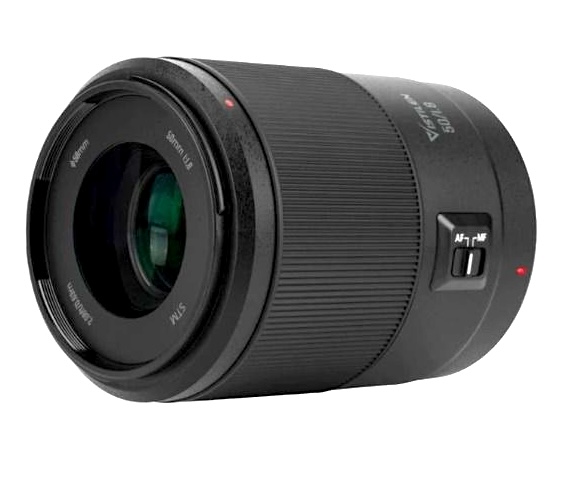
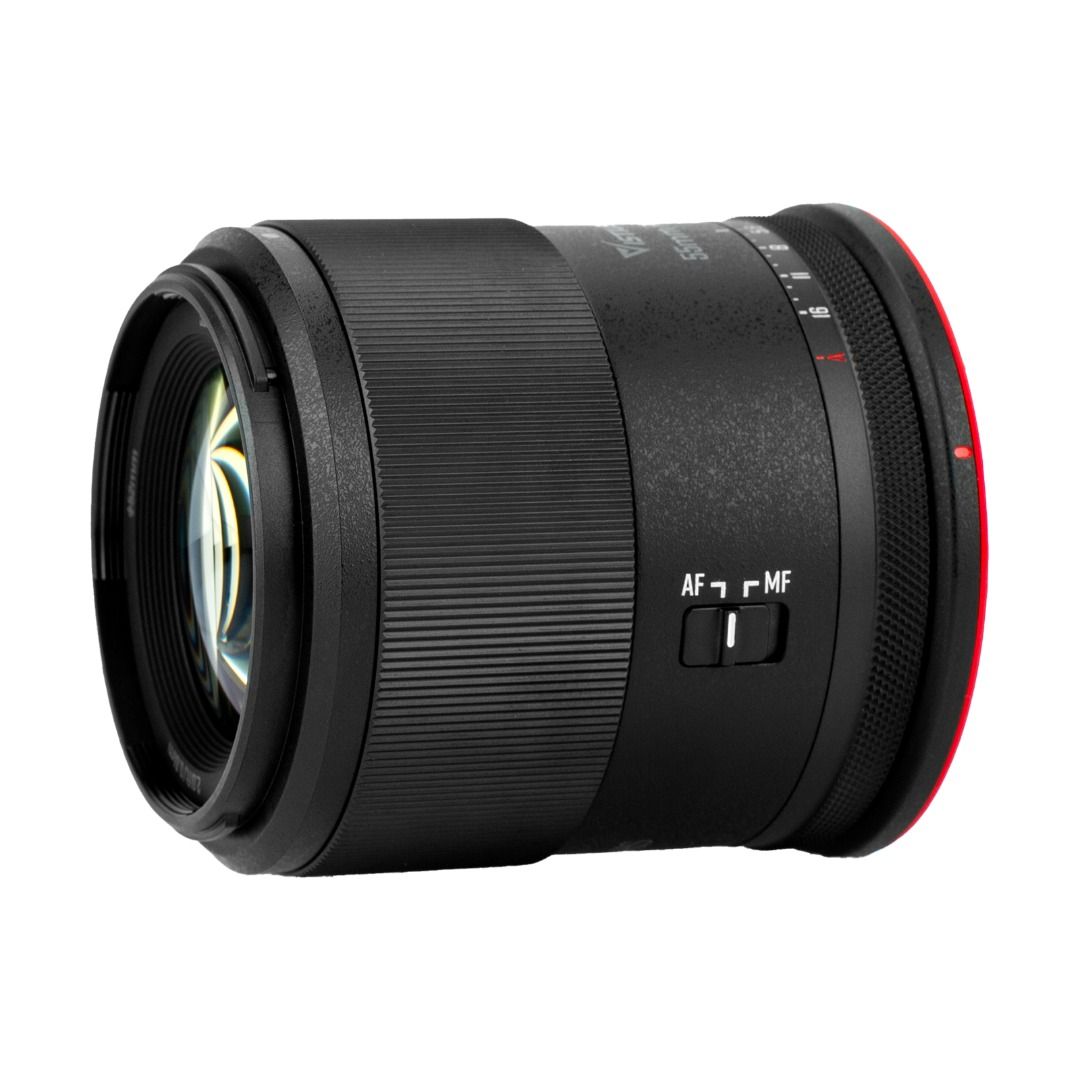
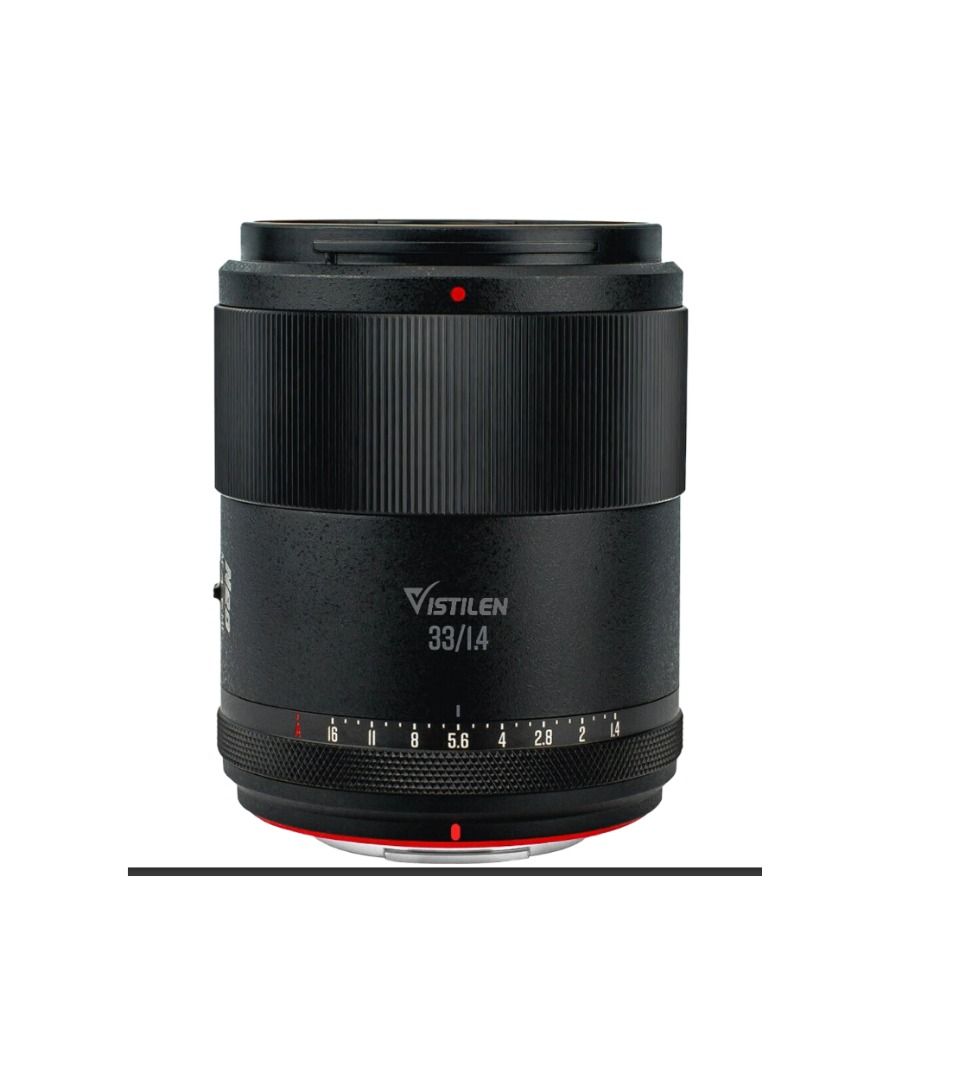
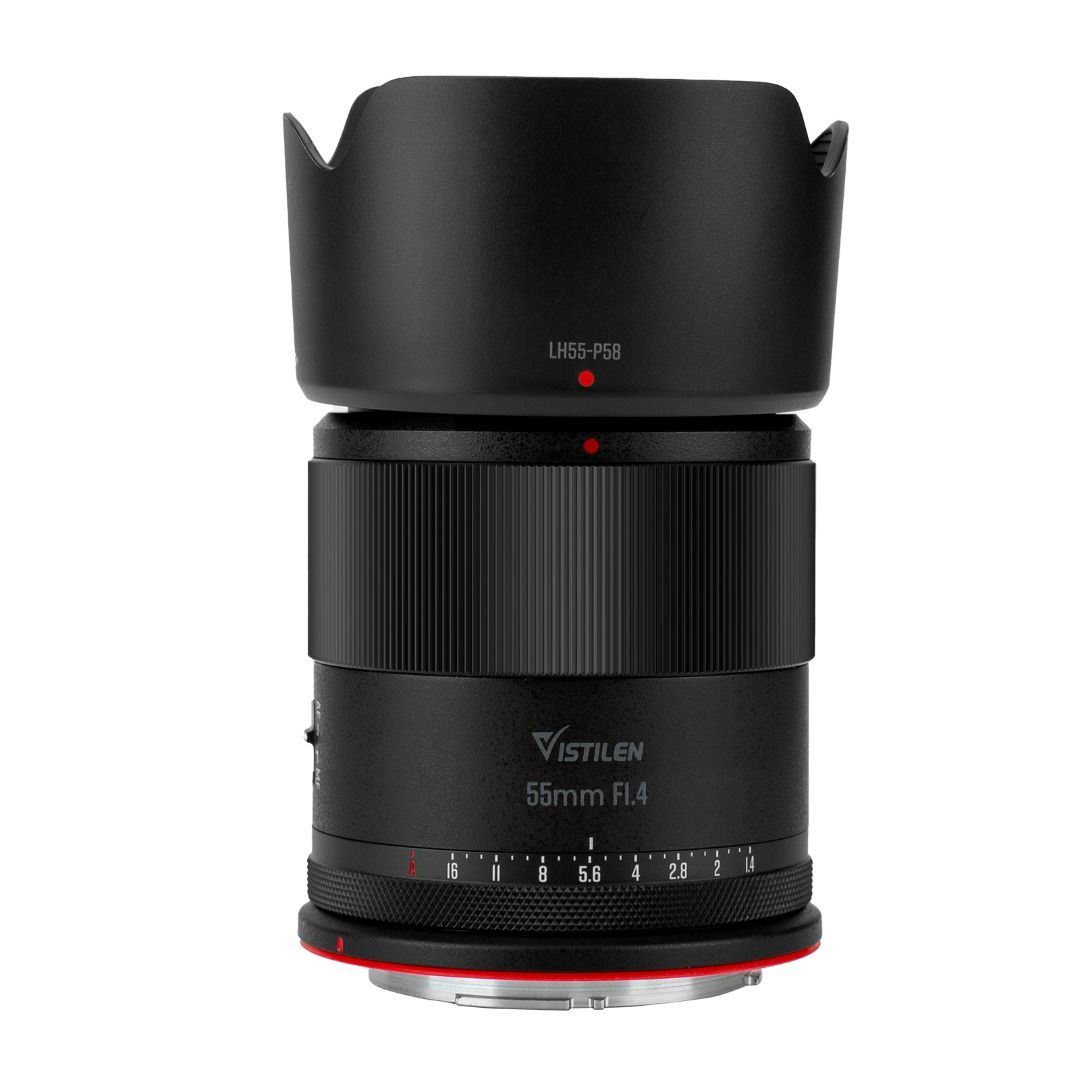
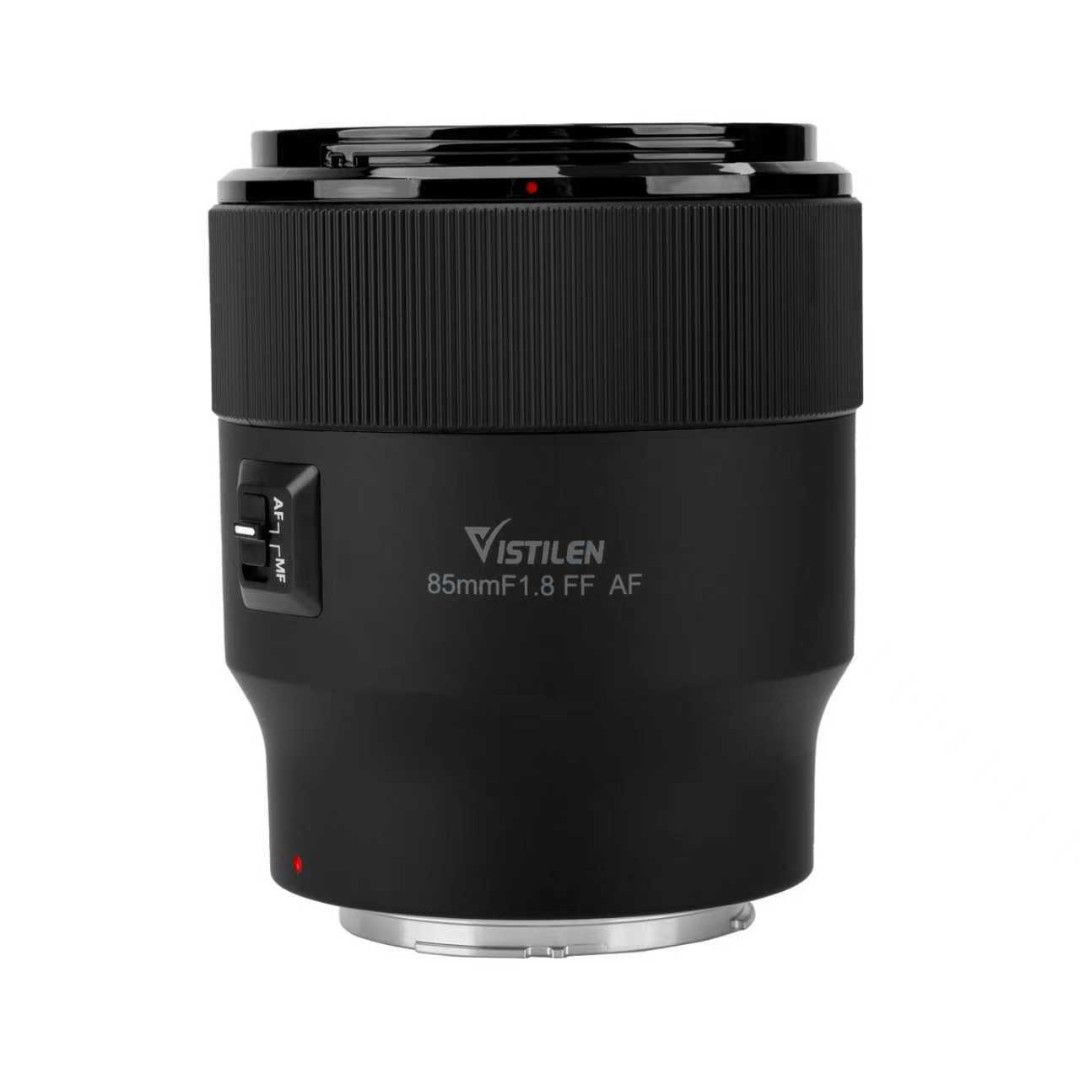
New Chinese brand Vistilen is planning to release new AF lenses for Canon RF mount

Par : PR admin
20 mars 2026 à 14:49

The new Chinese brand Vistilen is planning to release several new AF lenses for Canon RF mount:

  • Vistilen 33mm f/1.4 APS-C
  • Vistilen 55mm f/1.4 APS-C
  • Vistilen 35mm f/2 full-frame
  • Vistilen 50mm f/1.8 full-frame
  • Vistilen 55mm f/1.8 full-frame
  • Vistilen 85mm f/1.8 full-frame
  • Vistilen 85mm f/1.4 full-frame

The post New Chinese brand Vistilen is planning to release new AF lenses for Canon RF mount appeared first on Photo Rumors.

Settings to change on your new Sony camera

Sony a7CR 3qtr

Modern cameras are complex and they all benefit from some degree of setup and customization. We've already taken a look at some of the basic things you might want to do immediately, but here we're going to dig a little deeper and describe the settings we always change when we use Sony cameras.

Sony changed the menu system on most of its cameras starting with the a7S III in 2020. All our screengrabs represent the newer menu layout but we've also described where the comparable options live in the old menu structure if you're using a camera with the tabs arranged along the top of the menu screen, rather than down the left-hand side.

Engaging AF-C

focus mode

Sony cameras are set to AF-A mode, when you first start them up. This is a mode that automatically switches between single AF acquisition and continuous attempts to refocus, if it detects subject motion. Which sounds clever but prevents you from using one of your camera's best features: its autofocus tracking.

Focus Mode is found at the beginning of the AF/MF section of the menu and often in the Fn Menu. Once you've selected AF-C, you'll find that, at the bottom of the list of AF area types and shapes, you now have one with an arrow pointing to a button, at the lower right of the icon. This is a subject tracking version of the AF area represented, and you'll find that you have a tracking version of each of the camera's AF areas. Now, when you half-press the shutter or press AF-On to initiate focus, the camera will continue to follow and focus on the subject under the AF target, even if it moves or you move the camera.

AF-C generally works very well on Sony cameras, so it'll be rare that you have to switch to AF-S. The tracking is useful both for following moving subject and for letting you choose a subject to focus on before recomposing your shot.

Limiting the number of AF areas

focus area limit

Sony's approach to tracking is to add a separate, 'tracking' version of each of the camera's AF area modes, meaning your choice of AF areas typically jumps from 12 to 24, as soon as you engage AF-C: tracking and non-tracking versions of each.

Sony cameras with the newer menu system have an option to let you limit which AF areas you can access, so that you don't have to scroll through lots, each time you want to switch. We'd suggest using the camera for a bit, getting a feel for which AF area sizes and shapes work for you and your shooting, then limiting the camera to only show the ones you use, it makes everything cleaner and quicker to use.

You can find this in the AF/MF tab, in an option called "Focus Area Limit."

Electronic first curtain shutter

e-front curtain shutter

By default, most Sony cameras use an electronic first curtain shutter, turning the sensor on one row at a time, to initiate the exposure, then using a mechanical shutter to end it. Some models, such as the a7C series, don't have a set of mechanical shutter blades for starting exposures, so always use this mode.

This is generally a sensible approach, and helps make the camera a little more responsive. However, if you shoot very short exposures when using a lens set to a very wide aperture, it can cause the out-of-focus highlights to become chopped off. If you find yourself shooting wide-aperture photos outdoors, it's worth knowing how to engage the mechanical first curtain, if you camera has one. This can be found in the Shutter/Silent section of the camera menu on newer models or the Camera Settings 2 tab on older ones.

Setting the Auto ISO Minimum Shutter speed

auto ISO min ss screen

Auto ISO can be a very useful way of shooting, but key to getting the most out of it, particularly in P or A exposure modes, is telling the camera what the slowest shutter speed you can tolerate is, so that it doesn't bump up the ISO sooner than it needs to.

ISO AUTO Min. SS can be found either in the Exposure tab on newer cameras or the Camera Settings 1 section of older ones. If you frequently use auto ISO, we recommend assigning the setting to a button or putting it in the FN menu for easy access.

You have two options: you can either select a specific shutter speed, which can be useful if you're trying to maintain a fast enough shutter speed to prevent your subject's movement being blurred. Or you can set an 'Auto' value, which sets a shutter speed limit based on your focal length. This is the best choice if your primary concern is camera shake, but remember to reset it afterwards to avoid unnecessarily limiting your camera's exposure speed.

The 'Std' setting will increase the ISO to maintain a shutter speed of 1/equivalent focal length (ie: 1/50 seconds if you're using a 50mm equiv lens). For steady shooters, there are Slow and Slower options, which will reduce the shutter speed by one or two stops compared to the standard setting. The Fast and Faster options will raise ISO to maintain a shutter speed that's one or two stops faster than standard, which we typically wouldn't recommend, as the camera may end up choosing exposures that are too fast with telephoto lenses, or too slow with wide ones.

Turning on Raw shooting

raw plus jpeg

We'd generally recommend shooting Raw, because it gives you more editing flexibility later, if you want it. Sony is the only major brand that doesn't let you process its Raw files in the camera, so we'd suggest shooting Raw + JPEG. This can be set using the File Format setting: in the Camera tab on new cameras and Camera Settings 1 on older models.

Once this is set, there's a separate menu setting [RAW File Type] directly below File Format to choose what type of Raw file your camera shoots.

On older models, you'll typically have the following choices:

  • Uncompressed
  • Compressed

The Compressed option is much smaller, but uses a lossy compression system. The limitations of this system only become apparent at high-contrast edges if you make quite significant tonal adjustments. For most types of shooting, this won't particularly matter, but it's worth being aware of: if your photography involves really exploiting the camera's full dynamic range, you may wish to consider using the Uncompressed mode for shots you expect to have to process heavily.

raw file type

Newer models have a Lossless compression option, which we'd recommend. These files aren't quite as small as the Compressed ones, but you won't encounter any nasty surprises, even if you push your files extensively. The only benefit to the Compressed mode is that your camera may be able to shoot faster bursts in this mode.

The very newest models have a different set of options:

  • Lossless
  • Compressed HQ
  • Compressed

We've not had time to test the new compression modes yet. As before, the Compressed option lets you shoot longer bursts, while the HQ version maintains greater quality. These two new compression options aren't widely supported by Raw conversion software yet, so we'd recommend using Lossless compression for now.

It's also worth noting that, while you can shoot Raw files alongside the newer HEIF format, if you want something with 10-bit color and more efficient than JPEG, you can't capture high dynamic range HEIFs and Raws simultaneously. The much more widespread support for JPEG means we'd stick with this.

Selecting which settings carry over from stills to video

different settings for stills movies

Newer Sony cameras let you specify which settings carry over from stills to video shooting and which are configured independently. If you're using your camera to shoot both stills and video in the same sessions, we'd strongly consider adjusting these to make sure you don't accidentally shoot a load of stills at 1/50 sec shutter speeds or find yourself trying to color-correct clips in which Auto White Balance was constantly adjusting.

The option "Different Set for Still/Mv" can be found in the Setup / Operation Customize section of cameras with the newer, left-tabbed menus.

Customizing the camera to your needs

custom key rear 1

Sony is good at allowing lots of buttons to be customized and typically allows most of its menu options to be assigned to most buttons, rather than giving you a restricted option.

Older cameras let you customize the buttons using a menu option called "Custom Key" in the Camera Settings 2 section of the menu. You can set different settings for stills shooting, movie shooting and playback modes. In the new menu system, there are separate "Custom Key/Dial Set." menu items for stills, movie and playback modes. These live in the Setup / Operation Customize section.

fn menu settings
The latest Sony cameras let you define different Fn menu layouts for stills and video shooting.

The Fn menu of the camera can be completely customized, with your choice of 12 functions that you use most often.

On older models this option [Function Menu Set.] can be found towards the end of the Camera Settings 2 section.

Newer cameras with the left-tabbed menus place it in Setup / Operation Customize. On these models it's called Fn Menu Settings and has the stills and movie icons next to it. On these cameras you can select define different Fn menus for stills and video shooting.

Viltrox announced a new retro compact folding Z2 flash for $37 (N/C/S/F)

Par : PR admin
20 mars 2026 à 13:22


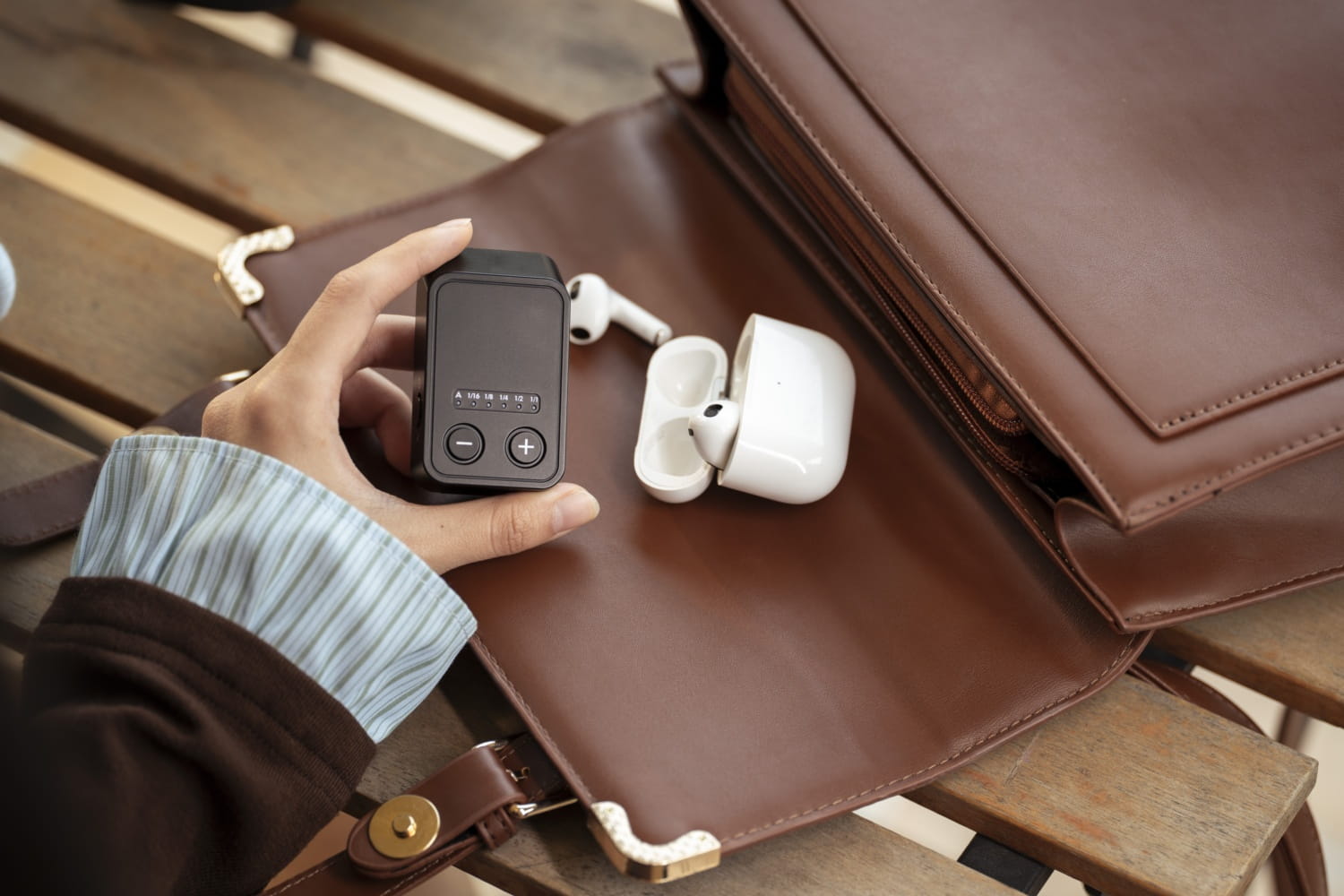
Viltrox announced a new retro compact folding Z2 flash for Nikon, Sony, Canon, and Fujifilm cameras, priced at $37:

Additional information:

  • Foldable Design for Higher Flash Position and Portability
  • TTL Mode for Sony, Nikon, Fujifilm, and Canon
  • 5-Step Manual Power Control from 1/1 to 1/16
  • Up to 700 Flashes per Charge
  • Quick-Mount Hot Shoe
  • Compact Shoe-Mounted On-Camera Flash
  • 2 Second Recycling Time
  • Guide Number: 6′
  • Manual and Auto Mode
  • Local Buttons & Indicator on Trigger
  • Built-In 420mAh Rechargeable Battery
  • USB-C Charging Interface
  • Includes Diffuser
  • Additional pictures:

Press release:

Viltrox Vintage Z2 TTL: Radical On-Camera Flash Redefines Portable Lighting

A flash so compact that it is barely there, but still effortlessly creates boldly lit scenes

Shenzhen, China, March 18th, 2026 – Viltrox, the leading innovator in high-performance photographic equipment, has launched the Vintage Z2 TTL, an ultra-compact on-camera flash designed to bridge the gap between minimalist portable aesthetics and professional lighting performance. With the slogan, ‘Barely There. Boldly Lit’, the Viltrox Vintage Z2 TTL is engineered for photographers who demand high-quality illumination without the inconvenient bulk and weight of traditional flash units.

Radical portability: Unbelievably compact

The Vintage Z2 TTL challenges the conventions of external camera lighting by being significantly smaller than traditional flashes. Weighing merely 52g, it is pocket-sized, minimizing load on the camera body and hot shoe.

This lightweight flash can remain in position without user fatigue, making it an ideal companion for minimal mirrorless setups and fast-paced creativity. The flash folds down, while still attached, for streamlined mobility and storage. Whether folded or extended, the Z2 maintains smooth visual continuity with the camera, appearing as a natural extension of the camera body.

Intuitive TTL performance or manual precision

Despite its diminutive size and weight, the Vintage Z2 is a functional powerhouse. Instant response TTL Mode uses real-time metering to automatically adjust flash output for naturally balanced exposures. For creators needing more deliberate control, Manual mode provides five levels of precise power adjustment from 1/1 to 1/16, enabling consistent results in controlled environments.

A dedicated one-touch switch switches between these modes, allowing photographers to transition from the speed of automation to the precision of manual control instantly. A clear button layout and intuitive mode indicator lights ensure confident operation, even in low-light conditions.

Professional capability in a compact frame

The Vintage Z2 TTL keeps pace with fast-moving assignments, delivering up to 700 full-power flashes on a single charge of its 420mAh battery. Two second recycle time ensures the flash is ready for rapid consecutive shots. Elevated light placement creates natural, dimensional lighting – avoiding the flat imaging of low-mounted flashes.

Technical specifications are impressive, with a color temperature of 6500±200K and a guide number of GN: 6. Flash duration ranges from 1/16500s to 1/50000s, fast enough to freeze motion effectively.

Seamless compatibility and power management

Dedicated hot shoe versions of the Vintage Z2 for Sony, Nikon, Fujifilm, and Canon systems, ensure optimized TTL flash performance across all major platforms. For other cameras with a standard hot shoe, the Z2 remains fully functional in Manual mode. The integrated rechargeable battery is charged via USB Type-C, reaching full charge in about 70 minutes. To preserve power, the Z2’s intelligent Sleep Mode activates after 15 minutes of inactivity, requiring only a simple restart to resume operation.

Availability and design

The Viltrox Vintage Z2 TTL On-Camera Flash is available for two mounting systems. The Sony version measures 66.7×38.5×33.4 mm, while the Canon, Nikon, and Fujifilm versions measure 64.6×38.5×33.4 mm.

The quick-mount hot shoe allows instant attachment and firm locking, making it the most efficient lighting tool for the modern, mobile photographer who will not compromise performance for portability.

Expanding Viltrox’s flash lineup

By combining radical lightweight engineering with clean, contemporary design, the Vintage Z2 TTL strengthens Viltrox’s growing flash portfolio. Following Viltrox’s Vintage Z1 – celebrated for its retro-inspired aesthetics and compact everyday usability – and the Spark Z3, with its old cyberpunk-inspired design and integrated TTL functionality, the Z2 represents the next step in this evolution. It pushes portability and minimalist aesthetics even further, while retaining intelligent TTL performance.

The post Viltrox announced a new retro compact folding Z2 flash for $37 (N/C/S/F) appeared first on Photo Rumors.

Tamron 35-100mm F2.8 Di III VXD sample gallery and impressions

When you use DPReview links to buy products, the site may earn a commission.
DSC08490.acr
Sony a7R V | Tamron 35-100m F2.8 | 35mm | F8 | 1/100 sec | ISO 100
Photo: Mitchell Clark

Last month, Tamron announced the 35-100mm F2.8 Di III VXD, a full-frame zoom lens that focused on offering a fair amount of reach and a fast aperture while still being compact and lightweight. We've had the chance to shoot with it a bit to get a feel for what it's like to use and how it performs.

The first thing that stands out about this lens is the weight. If you're used to shooting with a 24-70mm F2.8, this lens is noticeably smaller and lighter than most full-frame options. That's not to say that the focal length ranges are particularly comparable – they're not, especially on the wide end – but it's a good frame of reference.

tamron 35-100 in hand
The lens is quite small and light, which would make it a good pairing for some of the more compact full-frame bodies. It also includes a customizable mode switch and function button.

Despite the light weight, the lens feels solidly built. To my hands, the materials and design of the zoom and focus rings actually feel a touch nicer than other recent Tamron lenses that I've tried. While most wouldn't consider a $900 to be cheap by any stretch, it feels more premium than its price tag might suggest.

Paired with an a7R V, the autofocus was very snappy, and it never felt like the lens was holding back the camera.

tamron 35-100 extended
The lens extends a bit when zooming in, but not enough to throw off the balance or meaningfully change the center of gravity.

While this isn't a full review of its optical quality, I was pleased with how sharp the samples I got with this lens were, even when I was shooting wide-open. As we've seen with many recent F2.8 zooms, especially ones that focus on size, it has a fair amount of vignetting at F2.8 and even still some at F4, but it largely clears up by F5.6. I also find the out-of-focus rendering to be perfectly fine; it's not distracting, and the falloff is pleasant enough, though if you inspect the specular highlights in the bokeh, there is some cats-eye effect.

DSC08503.acr
Toward the edges of the frame, you'll start to see some cat's-eye bokeh. (Note that the lights on the left edge of the frame aren't being distorted by the glass cups.)
Sony a7R V | Tamron 35-100mm F2.8 | 100mm | F2.8 | 1/100 sec | ISO 500

In the past few years, we've seen companies playing focal length ranges, such as Sony's 20-70mm F4 and 24-50mm F2.8, so it's interesting to see someone experimenting in the other direction. However, we suspect many people who learned photography after the era of the 35-70mm might feel restricted by a lens that only barely dips its toe into the wide-angle range, especially if they were trying to use it as an all-around standard zoom.

However, I found I really enjoyed working with this zoom range, especially given the size and weight of the lens. I could easily see being happy with just it and a wide (or maybe even ultrawide) prime, though your mileage may definitely vary, especially if you're someone who often finds themselves wishing they could go wider than 24mm, rather than someone like me who often wishes they could reach past 70mm. In that respect, I prefer this to Tamron's own 28-75mm F2.8, as it feels like I get more for giving up something on the wide end (though obviously it's a greater sacrifice).

For most people, though, this lens might make more sense as a complement to, rather than a replacement for, a standard zoom, especially if their standard zoom is a variable-aperture kit option. It offers F2.8 and some of the most popular portrait focal lengths with more flexibility than a prime, and without the need to carry around a giant piece of glass like a 70-200mm.

Sample gallery

Please do not reproduce any of these images on a website or any newsletter/magazine without prior permission (see our copyright page). We make the originals available for private users to download to their own machines for personal examination or printing; we do so in good faith, so please don't abuse it.

Sample gallery
This widget is not optimized for RSS feed readers. Click here to open it in a new browser window / tab.

Thank you to LensRentals for loaning us a Sony a7R V to shoot this lens gallery, and to Tamron for loaning us the lens. All images were processed using our standard lens workflow in Capture One, with the manufacturer's distortion correction applied but no vignetting correction. Before correction, the images have some minor pincushion distortion, but we wouldn't consider the profile to be an essential part of the lens design if you prefer not to use it, or your preferred software does not support lens corrections.

The wild side of nature with DPReview reader, Jagdeep Rajput

 MG 1911 - J Rajput
A Playfight with two Asian Elephants

Canon EOS 400D w/ EF70-200mm f/2.8L USM @ 200mm | F2.8 | 1/400 sec | ISO 400
Photo: Jagdeep Rajput

DPReview community member Jagdeep Rajput, known as J Rajput in the wider community, is our latest spotlight in this series about what's in your camera bag. This series explores the gear our community members bring along on their photography journeys and shares the stories behind how that equipment helps them capture memorable moments.

Culminating from more than three decades of wildlife photography, below is Jagdeep's amazing story and photos, along with the gear used to capture them.

Submit your photos and story to be featured in 'What's in your bag?'

Meet Jagdeep Rajput (J Rajput)

DSCF9464wFreqSep NeuralFilterwoCanon - J Rajput

Fujifilm X-T4 w/ XF100-400mmF4.5-5.6 R LM OIS WR @ 100mm | F8 | 1/340 sec | ISO 320
Photo: Jagdeep Rajput

Home base: Delhi, India

Favorite camera and lens: Canon EOS R5 II paired with the EF 500mm F4 IS II – a powerful combination Jagdeep relies on for capturing distant wildlife and dramatic animal behavior in the field.

Typical photo scenes: Wildlife photography, especially large mammals and wetland birds in national parks and open natural habitats.

"I started photographing in the early 1980s, and over the years it has grown into a lifelong passion for observing and documenting wildlife."

Jagdeep is a wildlife photographer who enjoys working with small groups of like-minded friends. Most of his photography takes place in India’s national parks, where he spends a lot of time sitting still, patiently watching and waiting for the right behavior or interaction with animals to unfold.

 M0A6325 - J Rajput
Fight during courtship season

Canon EOS R5 w/ EF500mm f/4L IS II USM + 1.4x III | 700mm | F5.6 | 1/1250 sec | ISO 1250
Photo: Jagdeep Rajput

What's in Jagdeep's bag

  • Primary cameras: Two Canon EOS R5 II bodies
  • Lenses: RF 24–105mm F4 for versatility, RF 70–200mm F2.8 VCM for action and medium telephoto work, and a 100–400mm F5.6 for additional reach. For distant wildlife, Jagdeep relies on the EF 500mm F4 IS II, often paired with 1.4x and 2x teleconverters.
  • Support and accessories: A beanbag is an essential part of his kit, especially when shooting from vehicles in wildlife reserves. He also carries a close-focusing tube to allow tighter framing when subjects approach closer than expected.
  • Camera bags: Jagdeep prefers backpack-style camera bags, typically from Lowepro, Tamrac or Think Tank. For bird sanctuaries and longer walks, he uses a larger Tamrac backpack along with a tripod and gimbal head to support long lenses. When photographing from a vehicle, he relies on a beanbag for stability.
  • Other Essentials: A sun hat is always packed for field protection, and gloves come along during the cooler winter months.
Jagdeep-Rajput-bag-table
Photo: Jagdeep Rajput

What other gear makes a difference?

"I like to keep my setup fairly simple in the field, but a few accessories are always important. A beanbag is something I rely on often, especially when photographing wildlife from a vehicle, as it provides quick and stable support for long lenses. I also carry a close-focusing tube, which allows me to get tighter shots when an animal or bird comes closer than expected.

Other than that, I usually pack a sun hat to deal with the intense sunlight during long hours, and gloves during the winter months when mornings in the field can be quite cold."

 J9A3389 - J Rajput
Mock Charge of an Asian Elephant

Canon EOS 5D Mark IV w/EF100-400mm f/4.5-5.6L IS II USM @ 117mm | F5 | 1/400 sec | ISO 500
Photo: Jagdeep Rajput

What has been one of your most amazing moments out in the field?

While India remains his primary shooting ground, Jagdeep also travels to Africa, photographing wildlife in places like the Masai Mara, Amboseli and Tsavo. One of his most memorable moments occurred at Keoladeo National Park in Bharatpur.

"Once, I went to Keoladeo National Park, Bharatpur, India, to photograph a nesting Sarus Crane. A Bluebull happened to venture close to Sarus's nest, the crane opened its huge wings and attacked the bull from behind. Since I liked to shoot animal behaviour, I pressed my continuous shutter, and the image I captured was unbelievable; it was 'Pegasus'."

 L7A0649 copy - J Rajput
A Territorial Call of Indian Sarus Crane

Canon EOS 5D Mark III w/ EF500mm f/4L IS USM| 500mm | F5.6 | 1/640 sec | ISO 160
Photo: Jagdeep Rajput

Jagdeep's advice for other photographers

"Good subjects are hard to find. If you come across one, don't give up easily. Go for a couple of exceptional frames rather than hundreds of good frames."

Discuss with Jagdeep his photography and gear in the forums.

If you’d like to share your photography setup, tell us about your main camera, lens choices, key settings and strategies. Your photos and story could be featured in the next article!


Editor's note: This article continues a series, 'What's in your bag?', highlighting DPReview community members, their photography and the gear they depend on. Would you like to be featured in a future installment? Tell us a bit about yourself and your photography by filling out this form. If you're selected for a feature, we'll be in touch with next steps.

Submit your photos and story to be featured in 'What's in your bag?'

Panasonic sees the compact camera renaissance as an opportunity for Lumix

a man in a suit and tie stands in front of a brown wall holding up a black camera with one hand
Toshiyuki Tsumura, Executive Vice President and Director of Panasonic Imaging Solution Business Division.
Photo: Abby Ferguson

Consumers' priorities have changed significantly in recent years, a Panasonic executive told us at this year’s CP+ show in Yokohama, Japan. Meeting those new priorities is part of the challenge, and Panasonic sees new energy not exclusively in full-frame flagships, but also in the small, portable cameras that smartphones never fully replaced.

At CP+ in Yokohama, Japan, we sat down with Toshiyuki Tsumura, Executive Vice President and Director of Panasonic's Imaging Solution Business Division, Takayuki Takabayashi from the Imaging Solution Business Division and Takashi Yamahara, head of the Global Marketing Division and Master of Project Design at Panasonic. In a wide‑ranging conversation, the team shared their candid thoughts on where the camera market is headed, how Lumix plans to serve a new generation of creatives and the role of AI in imaging.

The changing camera market and why compact cameras are booming again

Panasonic LX100 II-in-hand1
Panasonic's LX100 II was a well‑liked enthusiast compact, but it dates back to 2018.
Photo: Jeff Keller

"In general, the camera market is growing," says Tsumura. "For several years after COVID, the camera market shrank, but since then, it has been growing gradually every year. Last year it was up seven percent compared to the previous year." That's certainly good news for photographers, as a healthy camera industry means more support moving forward.

However, Tsumura is quick to point out that it's not the same market that peaked a decade ago, and consumers now have different priorities. "Previously, the driving force was high-end full-frame cameras. But recently, the value-zone cameras are driving the market, such as entry-level mirrorless cameras or compact cameras," Tsumura explains.

"The trend is shifting toward compact cameras," Tsumura goes on to say. "The reason is that a lot of people enjoy making and sharing photos and videos, and they want better image quality as much as possible. Many people feel that smartphones cannot fully satisfy their desire for good image quality."

"The trend is shifting toward compact cameras."

In Tsumura's view, compact cameras offer three distinct advantages over phones: better low-light performance, longer (and higher-quality) zoom, and options like genuine waterproofing. He points out that younger generations see images and videos constantly, and their analysis of those users found that they can distinguish the quality difference between smartphone images and those made with dedicated cameras.

For Panasonic, that shift could create a new kind of opportunity. Whether that means we should expect a new Lumix compact camera remains to be seen, but it is clear that Panasonic recognizes the shift in priorities and isn't ignoring it.

The future of Micro Four Thirds

the panasonic gh7 is on a gray background
The GH7 was Panasonic's last truly new Micro Four Thirds camera, though it was closer in size to full-frame hybrid cameras, rather than leaning into the compactness of the format.
Photo Dale Baskin

Given the interest in smaller camera systems, we also asked the Panasonic team about Micro Four Thirds cameras. "Every year, we strengthen the Micro Four Thirds lineup, and we would like to continue this kind of development," Tsumura says.

The reason comes back to the same shift that's reshaping the broader market. Micro Four Thirds' core strengths are still compactness and low weight, and when you factor in lenses, the overall package can be significantly smaller than an equivalent full‑frame kit. That matters for the entry‑level and step‑up users Panasonic is increasingly targeting. "That's what entry users are requiring right now – portability and compactness so they can bring the camera everywhere," Tsumura explains. "So we are studying what kind of value we can propose to those users now and in the future with Micro Four Thirds."

"In the past, the 'battlefield' of cameras was resolution and sensor size. Now it's a little bit different"

At the same time, the company's expectations for the system have evolved. "In the past, the 'battlefield' of cameras was resolution and sensor size. Now it's a little bit different," Tsumura says. Panasonic now sees new customers who are more focused on the experience of using a camera and how it fits a specific purpose.

There's still room for more pro‑oriented full‑frame body

the panasonic s1h floats above a black background
The S1H is the only S-series camera that hasn't seen an update.
Photo: Dan Bracaglia

On the other end of the spectrum, the S1II is one of the most capable hybrid mirrorless cameras for video, but Panasonic thinks there's room to take it even further. While the original S1H remains the only first‑generation S‑series body without a direct successor, Tsumura avoids promising an exact S1H II. Instead, he frames the project more broadly: "Video production for the 'prosumers' is getting more and more important," Tsumura explains. "We are now investigating what kind of professional features we need to incorporate into new professional-type video cameras."

For what's next, the team is studying real applications, usage patterns and system requirements for higher‑end production, rather than just stacking on specs. As Tsumura puts it, they are looking beyond the current S1 II, "which already incorporates a lot of good video features, we are studying what we need to improve and what we need to add. That's what we're working on now," he says.

AI and computational imaging as core pillars

Computational photography has been a focus for Panasonic for some time, and AI is now an additional area of consideration. Inside Panasonic, AI isn't treated as a side project but as a central pillar of future camera development. "We put a high priority on computational imaging," Tsumura says. "This is very important for us. In order to evolve this area, we utilize AI technology."

"We can't say which companies, but we are talking with many partners and getting advanced technologies from them."

Panasonic isn't tackling AI integration alone, though. "To incorporate concrete AI technologies, we are now contacting lots of AI technology partner companies," Tsumura tells us. "We can't say which companies, but we are talking with many partners and getting advanced technologies from them. We then select and incorporate these technologies into specific features."

Twenty‑five years of Lumix

Finally, this year marks the 25th anniversary of Lumix, though internally, it seems Panasonic frames the milestone less as a victory lap and more as an obligation. "We were almost the last player to enter this camera market, so we feel we have a duty to continue this journey because of the customers who have supported us," says Yamahara. "The 25th anniversary is a kind of milestone, but we also need to continue beyond it."

In a nod to the anniversary, we ask Tsumura which single product he sees as the most important in Lumix history. Without any hesitation, he responds: "the G1, one of the first mirrorless cameras. That product created the mirrorless market and changed camera culture."


This article is based on an interview by Dale Baskin and Abby Ferguson at CP+ 2026. It has been edited for clarity and flow.

"I think a lot of people mistake our product as a gadget": Camera Intelligence at CP+

camera_intelligence_team_three_men_holding_cameras_standing_side_by_side
Some of the Camera Intelligence team, all holding Cairas. Left: Vik Kumar, COO. Middle: Vishal Kumar, CEO. Right: Liam Donovan, CTO.
Photo: Mitchell Clark

"I think a lot of people mistake our product as a gadget," says Vishal Kumar, CEO of Camera Intelligence, the company behind the Caira, a Micro Four Thirds camera that attaches to the back of an iPhone. "That's the wrong way to think about it," he says. "We're building the full technology stack, we believe, for the future of cameras."

While the company is currently wrapping up its Kickstarter campaign for the Caira, it has much bigger ambitions than selling an accessory that makes your phone a better camera, or even than selling dedicated cameras. Ultimately, it says, it's trying to change how cameras are made, and trying to convince the established camera companies that its tech is the way to photography's next step forward.

What is Caira?

caira sensor
The Caira has a Micro Four Thirds mount and an 11MP sensor. It doesn't work standalone – it requires an iPhone and has a corresponding app.
Product photos: Mitchell Clark

While Camera Intelligence's ambitions clearly go beyond its first product, it's worth looking at where they're taking root. If you didn't catch the announcement in October, the Caira mounts to the back of an iPhone using MagSafe and connects to it via Wi-Fi. From there, you get your image preview and can control it using an on-screen interface or via voice.

Its big trick, though, is that it's not just a lens mount and an 11MP Four Thirds quad-Bayer sensor from Sony Semiconductor (think Panasonic GH5S). It also has a Snapdragon processor, which it uses to power its AI autofocus and to make decisions about white balance and exposure. It also handles the processing for the camera's computational multi-shot modes.

"At the moment, it's mainly designed for denoising," says Liam Donovan, Camera Intelligence's CTO. "It's optimized for reducing noise in low light and giving you more dynamic range." He explains that the algorithm, which the company is still working on but is shipping on production cameras, takes up to 17 shots: eight before you press the shutter, one when you press the shutter, and eight after. "There's an algorithm that runs on all of those shots to align them all. It moves the frames about so that they match the central frame, and then blends them together. And one of the hardest bits of the algorithm is making sure that there are no artifacts."

IMG 2217

This Photo from the Caira was created by stacking eight frames together. Click here to see the original in HDR.

Caira | OM System 20mm F1.4 | F2.8 | 1/710s | ISO 951

While the multi-shot capabilities are currently implemented as a separate low-light mode, the company is working on expanding what it can do with them. "We're working very hard on making it do super resolution, where you can actually increase the resolution of the images that it produces quite significantly," Donovan says. "Low-light mode is kind of a stepping stone on the way to that, because super resolution is much more difficult than denoising on its own."

The intensity of those algorithms is part of why the camera needs its own processor, despite being attached to a very powerful phone. "It takes quite a lot of time to transfer Raw photos off the camera, and it has to be the full Raws that go into the stacking algorithm," says Donovan. "So that all happens on the camera, and it's enabled by the fact that we have a very powerful smartphone-style processor from Qualcomm in the camera itself, which is pretty novel." He says it's much more powerful than the processors you'd typically find in more traditional cameras.

Influencing

While Camera Intelligence has obviously put a lot of work into the Caira and its predecessor, the Alice Camera, it has its eyes on a bigger prize: convincing other camera companies that this architecture is the way forward. "We're not just in Yokohama for CP+," says Kumar, who spoke to us at the Camera Intelligence booth, where the company is showing off Caira to attendees at the show.

"We're having deeper conversations with some of the camera brands to see if that resonates"

"We have more than a couple of meetings. We believe that the way in which we have gone about building our camera is more akin to how cameras in the future should be built. Because we use the image sensors from traditional mirrorless cameras, but we're using the processor from a smartphone. And that smartphone processor unlocks a whole bunch of things," he says. "So we're having deeper conversations with some of the camera brands to see if that resonates."

It's not just the features like AI-powered voice control, focusing, or exposure, he suggests. The company also wants to be able to implement other AI features, such as large language or image generation models; the current Caira app lets you edit images using Google's Nano Banana model, but it currently has to run in the cloud, rather than locally, and requires a subscription.

It's not all AI, though. "I think it's the full stack," Kumar says. "It's everything from the decisions we made on the electronics, the operating system layer that we've built, which is called Camera Intelligence OS, the image signal processing pipeline that we've built, which is entirely software-based, and can be updated over the air. And then it's also the user interface with the app and the large language model. It's that entire stack that we think is interesting."

Caira front with iphone

In that respect, the Caira is almost a means to an end. "That's the product that we sell at the moment to prove that architecture and infrastructure can actually be robust. And we need to ship these units because it allows us to stress-test the architecture and the units. And it allows us to do those software and hardware improvements. But it's more to it than just a camera that attaches to your phone."

In that vein, Kumar tells us that the Caira is on schedule to start shipping to the 611 people who backed it on Kickstarter last year by the end of March. He also says they triple-tested a batch of 25 from the production line in their office in London to make sure they were ready to go. We have our hands on a pre-production model and have been doing some testing with it, so keep your eyes peeled for further coverage.

Tied to Apple

To start, Kumar says the Caira's target audience is smartphone shooters who want better image quality. "Smartphones, for better or for worse, have automated large parts of the three A's and everything else for almost a decade. And we always tell our users, 'You need to learn basic photographic theory because it will help you take better photos, take better videos, et cetera.' But we're approaching it from the point of view of: 'OK, how can we automate a lot of this complexity so that the UX matches up with the UX that our target customer base is familiar with?' Not something that's like a minefield for them to navigate."

Caira ui screenshot

The app lets you get at a level of manual control, letting you manually set aperture, shutter speed, and ISO (though there's currently no affordance for exposure compensation). "We're starting from a point of view of: 'let's automate as much as possible and then give you control,' rather than 'let's give you full control and then automate after.' Because our customers don't really want that."

There's also a hardware benefit; instead of having to build everything themselves at great expense, Camera Intelligence gets to benefit from the phone's display and connectivity. "I think the main reason was just a lack of resources," says Kumar. "So we were building the electronics. We're building the OS layer. We're building the Image Signal Processor. We're also building the actual physical body. So we thought, okay, why don't we just use the iPhone as the interface, as the screen?"

caira back with iphone

Donovon also points out that the displays on iPhones, which are up to 6.9" and can reach up to 3000 nits of brightness, far outclass those found on traditional camera models. That brightness, along with readily available software libraries, allowed them to easily add gain-map HDR to the camera, with results you can see as soon as you've taken the picture. The feature is similar to what we've seen with the Hasselblad X2D II; while the Sigma BF also pulls a similar trick with its files, you can't actually appreciate the effect with the screen built into the camera.

Kumar notes that Apple has put a lot of resources into ecosystem features like the App Store, APIs and AirDrop. "So it made sense for us to attach to the phone for our V1 and V2."

For us, our entire product relies on the UX being good.

Of course, that implies that there's a chance the company will try to produce a fully-featured standalone camera in the future, but Kumar says it'd take more than just money to make it happen. "I think we can only promise bringing a product like that to fruition when we have more resources. Not just in terms of money in the bank, but team and the right skill sets. Because if you get that wrong... We've seen a few camera brands release Android-based cameras with standalone screens in the last five years. And they didn't quite execute the concept as well as it could have been done, but those camera companies can absorb that because for them it's just experimenting. For us, our entire product relies on the UX being good."

This article is based on an interview by Mitchell Clark at CP+ 2026. It has been edited for clarity and flow.

Panasonic sees the compact camera renaissance as an opportunity for Lumix

a man in a suit and tie stands in front of a brown wall holding up a black camera with one hand
Toshiyuki Tsumura, Executive Vice President and Director of Panasonic Imaging Solution Business Division.
Photo: Abby Ferguson

Consumers' priorities have changed significantly in recent years, a Panasonic executive told us at this year’s CP+ show in Yokohama, Japan. Meeting those new priorities is part of the challenge, and Panasonic sees new energy not exclusively in full-frame flagships, but also in the small, portable cameras that smartphones never fully replaced.

At CP+ in Yokohama, Japan, we sat down with Toshiyuki Tsumura, Executive Vice President and Director of Panasonic's Imaging Solution Business Division, Takayuki Takabayashi from the Imaging Solution Business Division and Takashi Yamahara, head of the Global Marketing Division and Master of Project Design at Panasonic. In a wide‑ranging conversation, the team shared their candid thoughts on where the camera market is headed, how Lumix plans to serve a new generation of creatives and the role of AI in imaging.

The changing camera market and why compact cameras are booming again

Panasonic LX100 II-in-hand1
Panasonic's LX100 II was a well‑liked enthusiast compact, but it dates back to 2018.
Photo: Jeff Keller

"In general, the camera market is growing," says Tsumura. "For several years after COVID, the camera market shrank, but since then, it has been growing gradually every year. Last year it was up seven percent compared to the previous year." That's certainly good news for photographers, as a healthy camera industry means more support moving forward.

However, Tsumura is quick to point out that it's not the same market that peaked a decade ago, and consumers now have different priorities. "Previously, the driving force was high-end full-frame cameras. But recently, the value-zone cameras are driving the market, such as entry-level mirrorless cameras or compact cameras," Tsumura explains.

"The trend is shifting toward compact cameras," Tsumura goes on to say. "The reason is that a lot of people enjoy making and sharing photos and videos, and they want better image quality as much as possible. Many people feel that smartphones cannot fully satisfy their desire for good image quality."

"The trend is shifting toward compact cameras."

In Tsumura's view, compact cameras offer three distinct advantages over phones: better low-light performance, longer (and higher-quality) zoom, and options like genuine waterproofing. He points out that younger generations see images and videos constantly, and their analysis of those users found that they can distinguish the quality difference between smartphone images and those made with dedicated cameras.

For Panasonic, that shift could create a new kind of opportunity. Whether that means we should expect a new Lumix compact camera remains to be seen, but it is clear that Panasonic recognizes the shift in priorities and isn't ignoring it.

The future of Micro Four Thirds

the panasonic gh7 is on a gray background
The GH7 was Panasonic's last truly new Micro Four Thirds camera, though it was closer in size to full-frame hybrid cameras, rather than leaning into the compactness of the format.
Photo Dale Baskin

Given the interest in smaller camera systems, we also asked the Panasonic team about Micro Four Thirds cameras. "Every year, we strengthen the Micro Four Thirds lineup, and we would like to continue this kind of development," Tsumura says.

The reason comes back to the same shift that's reshaping the broader market. Micro Four Thirds' core strengths are still compactness and low weight, and when you factor in lenses, the overall package can be significantly smaller than an equivalent full‑frame kit. That matters for the entry‑level and step‑up users Panasonic is increasingly targeting. "That's what entry users are requiring right now – portability and compactness so they can bring the camera everywhere," Tsumura explains. "So we are studying what kind of value we can propose to those users now and in the future with Micro Four Thirds."

"In the past, the 'battlefield' of cameras was resolution and sensor size. Now it's a little bit different"

At the same time, the company's expectations for the system have evolved. "In the past, the 'battlefield' of cameras was resolution and sensor size. Now it's a little bit different," Tsumura says. Panasonic now sees new customers who are more focused on the experience of using a camera and how it fits a specific purpose.

There's still room for more pro‑oriented full‑frame body

the panasonic s1h floats above a black background
The S1H is the only S-series camera that hasn't seen an update.
Photo: Dan Bracaglia

On the other end of the spectrum, the S1II is one of the most capable hybrid mirrorless cameras for video, but Panasonic thinks there's room to take it even further. While the original S1H remains the only first‑generation S‑series body without a direct successor, Tsumura avoids promising an exact S1H II. Instead, he frames the project more broadly: "Video production for the 'prosumers' is getting more and more important," Tsumura explains. "We are now investigating what kind of professional features we need to incorporate into new professional-type video cameras."

For what's next, the team is studying real applications, usage patterns and system requirements for higher‑end production, rather than just stacking on specs. As Tsumura puts it, they are looking beyond the current S1 II, "which already incorporates a lot of good video features, we are studying what we need to improve and what we need to add. That's what we're working on now," he says.

AI and computational imaging as core pillars

Computational photography has been a focus for Panasonic for some time, and AI is now an additional area of consideration. Inside Panasonic, AI isn't treated as a side project but as a central pillar of future camera development. "We put a high priority on computational imaging," Tsumura says. "This is very important for us. In order to evolve this area, we utilize AI technology."

"We can't say which companies, but we are talking with many partners and getting advanced technologies from them."

Panasonic isn't tackling AI integration alone, though. "To incorporate concrete AI technologies, we are now contacting lots of AI technology partner companies," Tsumura tells us. "We can't say which companies, but we are talking with many partners and getting advanced technologies from them. We then select and incorporate these technologies into specific features."

Twenty‑five years of Lumix

Finally, this year marks the 25th anniversary of Lumix, though internally, it seems Panasonic frames the milestone less as a victory lap and more as an obligation. "We were almost the last player to enter this camera market, so we feel we have a duty to continue this journey because of the customers who have supported us," says Yamahara. "The 25th anniversary is a kind of milestone, but we also need to continue beyond it."

In a nod to the anniversary, we ask Tsumura which single product he sees as the most important in Lumix history. Without any hesitation, he responds: "the G1, one of the first mirrorless cameras. That product created the mirrorless market and changed camera culture."

Sharpness, soul, or specs? Our readers define "image quality"

Saint 112 Parc de la tete dor centaurs

Parc de la tete d'or centaurs – The Centauress and a Faun (Lyon, France).

Sony Cyber-shot DSC-RX10M3 @ 40mm (equiv) | F7.1 | 1/320 sec | ISO 100
Photo: Saint 112

For last week's Question of the week, we asked DPReview readers what 'image quality' meant to them. We knew that talking about the subject was going to lead to a wide range of results, but we were still impressed by how image quality is both emotionally perceived and scientifically analyzed in the same breadth. In describing their own meanings of image quality, we also got an important glimpse into why photographers do what they do.

Early on in our conversation, LakeSuperior 1 summarized it in a great way:

"I think there are two types of image quality. The technical type (sharpness, contrast, noise, etc.), and then there is the story within the photo. Some of the most famous photos ever taken didn't have good technical quality, but the image and story told made the whole photo great. I'm happy with either depending on the shot."

And Leonp put it nicely when talking about the point of a photo at the end of the day:

"For me, the summary of what image quality means is that the viewer sees what the photographer wanted to show."

Many of our readers felt there are two aspects to image quality. Keep reading to see which camp was chosen most, and why.

The Technicals

Howard V - small town with church in distance

Nikon Z50
Photo: Howard V

jhwalker: I like my photographs to be an exact capture of what I see; i.e., accurate colors, clean and crisp details, balanced shadows and highlights, etc. The biggest concern I have is accurate colors. I'm so sick of hypersaturated greens and blown-out or too orange reds.

Impulses: Color rendition is the only thing on camera bodies that seems up for debate. As much as some swear you can't reproduce certain manufacturer combinations, with enough work (and a RAW file), I think you can. Don't quote me on it, though.

Klaus dk: I'm more in the camp for IQ, meaning measurables like resolution, sharpness, color, dynamic range, noise, bokeh, (lack of) geometric distortion, etc. This is different from the qualities that impact us and make us say, "This is a good photograph" when we see what the photographer wants us to see. Sometimes we can also recognize how they used the tools at their disposal, and learn from it. My personal opinion is that if genius should suddenly strike when I'm shooting, I'd hate to have gear fail me on what would have been the shot of a lifetime, but instead it was ruined with mediocre or even bad IQ.

The Feeling

Martinhb Sundown
Photo: Martinhb

AJF1934: For me, image quality means an image that I want to do something with. Perhaps that's by sharing it, printing it for display or putting it in an album. It has little to do with technical attributes and much more to do with the context, content and composition.

Satyaa: When it comes to color photos, the color accuracy, within a reasonable margin, fits the bill. I don't need to measure colors with charts. A white lily should look white, and a crow should look black. If the colors of a tiger (not a white one), a lion, a golden retriever, etc., look reasonably life-like, I am happy. I believe small differences are due to white balance algorithms (or the color filters used) by brand or model. They can simply be adjusted in post-processing.

Krummj: The longer I photograph, the more I'm interested in the story, composition and general impact of the photo, and the less I care about what we call "image quality". I also care about the memory. When I go through old files, I'm way more concerned about why the photo is interesting and what is in it than I am about its actual image quality.

Gloomy1: For me, a quality image is one where the image conveys what I was feeling at the time of capturing it. It is all about emotional impact. The technical aspects only come in if they are so poor that they get in the way of “enjoying” the image.

The Mix

Bruce Trail Hiker fire dancer
Photo: Bruce Trailer Hiker

Schrammel: Generally, I’m more than satisfied with what modern cameras and lenses can deliver in terms of image quality. Sometimes, though, I take photos simply to capture spontaneous moments. In those situations, I’m often not really happy with the image quality – not because it’s too poor, but because it’s too good. Photos often don’t quite work because they feel too perfect: too neutral, clean and sharp. This includes too little noise and colors that are too accurate.

As much as I appreciate the technical image quality of modern cameras, I sometimes feel that something has been lost along the way – something you might call character, or maybe even soul.

gpwitteveen: Like so much else in life, the answer depends on your frame of reference. Image quality can have quantifiable gradations for the purpose of reviews or benchmarking, but for client work, it could be something else entirely, perhaps based on satisfying that audience of one.

Like so much else in life, the answer depends on your frame of reference.

For example, something crisp versus something with a "lo-fi" look, say. For color, there is the degree of immersiveness produced in a combination of viewing size, viewing (ambient) lighting, and the image elements themselves to lead the viewer in the frame and into the frozen moment. Meanwhile, for black-and-white, there is an inherent abstraction that separates a viewer from the source. Once the viewer acclimates to monochrome emotional responses, then some immersiveness is possible as well; but always different to the color.

Things like resolution and light values similar to unaided human vision can be a good standard of comparison for any image. But to express something beyond human vision, there is more than lines per millimeter or dynamic range to consider.

Gloomy1 black and white tree in open rock plains

Photo: Gloomy1

There were many other great responses shared in the forums. Thanks to everyone who took the time to explain what image quality means to you.

Keep watch for the next Question of the week every other Wednesday to participate in this series. New questions are posted here on the homepage and in the forums. We can't wait to read and share your stories!

Share what 'image quality' means to you!

Could this be Panasonic's next compact camera?

lumix tz300
Image via u/Radeon26

UPDATE MARCH 24: Panasonic has now officially released the TZ300. For more information, you can read our coverage here.

It seems like Panasonic may be working on a new compact camera: the TZ300. Reddit user Radeon26 posted a photo that appears to show the upcoming camera, alongside a specs card that says it has a 20MP Type-1 sensor, a 24-360mm equiv. F3.3-6.4 lens and a macro mode for taking pictures of subjects as close as 3cm (1.2") away.

The image came from a now-private video from a Polish creator, which we were able to watch before it was pulled. It appeared to show an official Panasonic event where the rest of the company's Lumix lineup, as well as other electronics, were being shown off.

While we weren't able to get more information from the video than what's visible in the screenshot, we can probably do some informed speculation, given that the camera's name and design imply that it's a follow-up to the Lumix DC-ZS200/TZ200 from 2018. That camera has the same sensor and lens specs, though is equipped with a microUSB port. It could be that, as with the Lumix DC-ZS99 from last year, the company is releasing a mild update of the camera to add USB-C.

One thing we wouldn't like to see repeated from the DC-ZS99 refresh is the loss of an EVF, though the video being taken down makes it hard to scrub through frame by frame for any hint of one on the TZ300. But, given the sticker next to the camera that says "Embargo Date 24 March 2026," it seems like we won't have to wait that long before there's an official announcement.

Panasonic Europe reports record Lumix full-frame market share for 2025

Par : PR admin
18 mars 2026 à 13:19


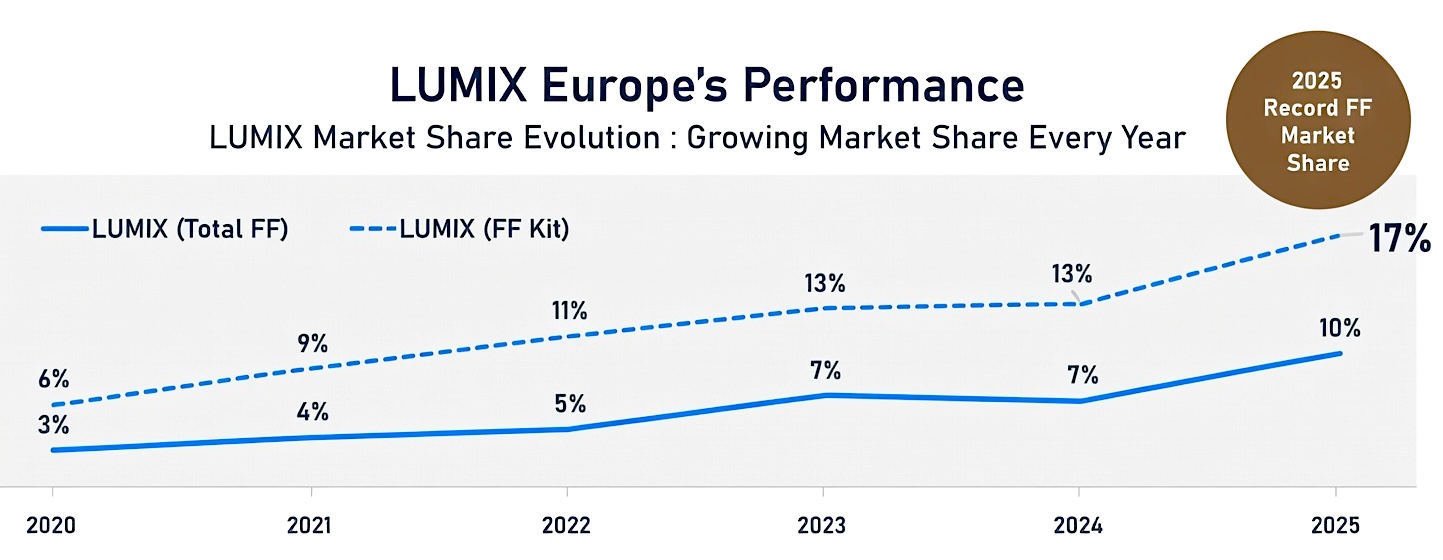
Panasonic Europe reports record Lumix full-frame market share for 2025:

  • Panasonic Europe Lumix total FF market share for 2025: 10%
  • Panasonic Europe Lumix total FF kit market share for 2025: 17%

Panasonic Lumix has achieved a record 10% market share in Europe’s full-frame camera market as of early 2026, according to data the company presented at a recent European event. This marks a significant rise from just 3% in 2020, highlighting strong growth in the segment driven by its video-focused hybrid cameras and the L-mount alliance. Notably, Panasonic’s share climbs to 17% when considering only full-frame cameras sold as kits (with lenses), up from 7% in 2020. Global or other regional figures remain limited in public reports, with overall camera market shares for Panasonic (including Micro Four Thirds) hovering around 3-4% in some 2024-2025 shipment data.

The post Panasonic Europe reports record Lumix full-frame market share for 2025 appeared first on Photo Rumors.

❌