Sony temporarily suspended memory card sales due to the global shortage of semiconductors:
Due to the global shortage of semiconductors (memory) and other factors, it is anticipated that supply will not be able to meet demand for CFexpress memory cards and SD memory cards for the foreseeable future. Therefore, we have decided to temporarily suspend the acceptance of orders from our authorized dealers and from customers at the Sony Store from March 27, 2026 onwards (source)
We asked you to share your best photos featuring artificial light sources, and you lit up the board with brilliant entries. In addition to great photos, we were impressed by the variety of geographic locations represented in this month's submissions, featuring locations from around the world.
As always, we received many more great photos than we can feature here. Our favorites, showcasing a diverse range of vision and talent, are presented in random order.
Photographer's statement: The Breskens Lighthouse was built in 1867 to guide ships safely through the mouth of the Western Scheldt. The tower was designed by Dutch engineer Quirinus Harder, who was responsible for several lighthouses in the Netherlands. It stands about 28 meters tall and is constructed from cast-iron plates, a modern building technique in the 19th century. The light helped vessels heading to the important port of Antwerp.
During World War II, the lighthouse was damaged by wartime actions but ultimately survived. After the war, it was restored and returned to service for maritime navigation. In the second half of the 20th century, the lighting system was modernized and later fully automated, eliminating the need for lighthouse keepers. Today, the lighthouse is no longer active as a navigational aid but remains an iconic symbol of Breskens. It is a national monument and commemorates the region's maritime history. Many visitors still come to admire the view over the Western Scheldt.
Equipment: Sony a7 III + Sigma 14-24mm F2.8 DG DN Art
Photographer's statement: Walking past the pond fountain in our community around midnight, I saw the Blue Heron standing calmly there with a lot of Canadian Geese. I said, "Don't move, I've got to get my camera." I came back, and the Herron was still there, but I didn't want the geese in the photo. I've learned shooting wildlife, Herrons don't scare off easily, but the geese do. I walked closer and said, "Hello, Geese", and they all flew away, but the Herron stayed put. I couldn't resist the night light fountain glow, silhouetting the Blue Herron. Peaceful.
Photographer's statement: This photo shows the last days of the cinema Eden Palast in Aachen in its former glory, with its beautiful entrance area and neon signs from the 50s, before they did a renovation. Now the original neon signs are unfortunately gone, but the new sign mimics the old ones, and they built a nice lounge-style waiting area. But, of course, I miss the old look, which I particularly loved on rainy nights.
Equipment: Olympus OM-D E-M5 II + Olympus M.Zuiko Digital ED 12-50mm 1:3.5-6.3 EZ
Photographer's statement: I spotted this alleyway off Guangzhou's Baohua Road. The bright red lights of the signs created vivid reflections on the wet streets. The red glow of the signs was complemented by the red taillight of the scooter, and even the tiny red spot of the glowing cigarette in the hand of the guy edging into the photograph.
Photographer's statement: In December, I decided to try out my new Fujifilm X-E5 camera by capturing some photos of a newly opened ice rink. The rink, illuminated by thousands of lights, is located on the riverbank and is about 1.7 km long. On that day, it was also the first snowfall of the winter, so the flakes of snow added a festive atmosphere to the scene.
Equipment: Fujifilm X-E5 + Fujifilm XF 27mm F2.8 R WR
Photographer's statement: I always look for nighttime shots in Tokyo. I found this recommendation. This is an office building with a small center courtyard – very hard to include all – I shot it with my fisheye lens from the 2nd floor.
Equipment: Olympus OM-D E-M1 Mark II + Olympus M.Zuiko Digital ED 8mm F1.8 Fisheye PRO
Photographer's statement: Jersey City, NJ, USA. Taken while walking late at night in my neighborhood in March. It had almost finished raining, but there was still fog in the air, and the steam exhaust from the parking lot next to the lamp looked interesting.
Photographer's statement: Visiting Niagara Falls in winter has become more and more popular these days. As a photographer, you will enjoy the less crowded season. The light-painted wintery falls are just so magnificent.
Equipment: OM System OM-5 + OM System M.Zuiko Digital 14-150mm f4-5.6 II
Photographer's statement: Streamers of lights from different modes of transport illuminate the streets of Poznan, Poland. Trams, cars and bikes contribute to this ever-changing scene. Taken from my hotel window using Live-Composite mode on my camera.
Equipment: OM System OM-1 + OM System 40-150mm F4.0 PRO
Photographer's statement: The Basel Carnival or Fasnacht is a major cultural event in the Swiss city of Basel. After being paraded in a procession in the early morning hours of day 1 of the 3-day festival, the lanterns are then exhibited on the central square in front of Basel Minster for everybody to see. So I went there with my camera ready, and as every year, people came flocking in to take a closer look.
Equipment: Nikon Z6III + Nikon Nikkor Z 24-120mm F4 S
Photographer's statement: During winter, you can see glass eel fishing boats from a bridge in Tokushima, Japan. They hunt for valuable baby eels using strong light. The price of glass eel was recorded at more than 2.5 million JPY (~$15,000) per kg in the 2024 season.
Equipment: Sony a7R III + Tamron 28-75mm F2.8 Di III RXD
Photographer's statement: During a 2022 road trip across the United States in our motorhome, we captured thousands of images along the way. This one quickly became a favorite, taken on the vibrant Fremont Street in old Vegas under its dazzling night lights. And judging by the glance from the man on the right, she was definitely turning heads.
Photographer's statement: I took this photo of Main Street in Turkey, Texas, after an evening photographing the Milky Way at Caprock Canyons State Park nearby. I was in the middle of the street for about 30 minutes and never saw another auto, not even the sheriff.
Photographer's statement: Couple's dream winter wedding photoshoot in Ginzan Onsen, Yamagata, Japan. There are winter destinations in Japan, and then there's Ginzan Onsen, where fresh snow settles on wooden ryokan rooftops, gas lamps glow at dusk, and the entire riverside street feels like a scene from another era.
Photographer's statement: Guy de Maupassant preferred eating in the Eiffel Tower as it was the only place where he couldn't see the darned thing. I only had a short bit of free time when I was in Paris, so I decided not to visit the tower but to find a place where I could see it.
Equipment: Olympus OM-D E-M1 + Olympus M.Zuiko Digital ED 40-150mm F4-5.6 R
Photographer's statement: Taken in Universal Studios Orlando on a Halloween Horror Night, down the path from the Terminator 2 3D attraction outside of the faux 50s diner. This vacation goes down as the final one before my parents separated!
Equipment: Sony a7R II + Sony FE 35mm F2.8 ZA Carl Zeiss Sonnar T*
Photographer's statement: At the end of a dirty, muddy road, the neon lights of a hotel beckon to weary travelers in the Mustang Valley in the Himalayan Mountains of Nepal. A portion of the road was washed out by rain just after we drove through on our way back down the mountains. Hotel Karnali in the town of Kagbeni.
Equipment: Fujifilm X-T4 + Fujifilm XF 16-55mm F2.8 R LM WR II
Photographer's statement: Sedona's iconic Devil's Bridge seen far from its usual social-media moment. Instead of the daytime line of photographers waiting their turn, I captured this image during a night hike with my daughter, when the desert finally grows quiet. Using light painting, I briefly illuminated the massive natural arch against the darkness.
Equipment: Canon EOS R5 + Canon RF 15-35mm F2.8L IS USM
Photographer's statement: When it's dark all day long for several months, even a single small light brings undeniable comfort to those around it. In this white winter landscape of the Lofoten Islands (Norway), lights are everywhere in the windows, providing warmth.
Photographer's statement: Every year, our family goes to the Royal Show in Perth, Western Australia. The children's favorite is the side show alley with all the stalls and outrageous rides. The rotating machinery provides an excellent photographic challenge.
The Saturnix is a soon-to-be open source DIY camera project that has a lot of style. Photo: Yutani
While it seems like camera companies are willing to experiment again, it’s been a while since I’ve come across a camera with a design that really stopped me in my tracks. That changed when a friend forwarded me a Reddit post from a person named Yutani, who custom-designed what he describes as a “retro-futuristic digital camera” called the Saturnix. Friends, take a look at this gorgeous piece of camera hardware.
I reached out to Yutani, who says the camera started as a passion project purely for personal use. That changed when some friends insisted he share it, and Yutani isn’t stopping at just posting pictures of it and from it online: he also plans on posting all the information you’d need to build it yourself, along with the operating system and custom-built UI to run it for anyone to use.
And the award for most enticing buttons on a camera goes to... Photo: Yutani
Obviously, the most attention-grabbing part of the Saturnix is the case. Yutani says it’s inspired by sci-fi movies and old computers in general, and by the terminals in the video game Alien: Isolation, specifically. Adding to that effect is the fact that the buttons on the camera are mechanical keyboard switches and keycaps, giving them a robust, chunky look and a satisfying mechanical click. “It honestly doubles as a fidget toy when the camera is off,” Yutani says. “Just clicking the buttons during a trip is kind of a stress reliever.”
Even after the design work, bringing it to life wasn’t just a matter of grabbing a 3D printer and hitting go. Yutani says the process involved a resin printer, ultrasonic cleaning baths, a wash station and curing oven, and a lot of time sanding and airbrushing. Most DIYers won’t be willing to spend an entire month on the exterior of their camera, and Yutani says it was the hardest part of the process, but an essential one. “For me, the design was the whole point. If it doesn't feel like a real camera in your hands, what's the point?”
The internals – the parts that actually make it a working camera – will probably be familiar to anyone who’s kept up with the DIY camera scene. It’s powered by a Raspberry Pi Zero 2W, has a 2” LCD display, and uses an Arducam IMX519 camera, which has a 16MP Type 1/2.53 (23mm²) sensor and a roughly 27mm equiv. autofocusing lens.
Sample gallery
This widget is not optimized for RSS feed readers. Click here to open it in a new browser window / tab.
While the images it produces are about what you’d expect given those specs, anyone hoping to build a Saturnix isn’t tied to that specific module; Yutani says he “plans to add support for all major official Raspberry sensors” to the operating system, which unlocks the possibility of using the much larger Arducam Type 1/1.32 (65mm²) 64MP camera.
With that said, the pictures that Yutani has shared from the Saturnix have that classic point-and-shoot charm that’s all the rage these days. That’s even more true of the ones processed with built-in “film simulation” filters, which aim to replicate classic stocks.
The camera's UI is also custom-built; it's written in Python, running on top of a minimal Raspberry Pi OS install. Keeping it lean is important, since the Raspberry Pi Zero 2W that powers it is a mere four-core ARM chip running at 1GHz, with 512MB of RAM. Photo: Yutani
Those filters are included in the camera's operating system, which has a UI that follows the retro sci-fi aesthetic, and which allows for manual control of parameters like shutter speed, white balance and ISO. It can shoot DNG Raws and JPEGs, has a histogram and exposure meter, and can transfer photos over Wi-Fi. Yutani says the interface still has a ways to go. "The UI has gone through a ton of iterations and I don't think it's anywhere near final. Once the code is public, I'm hoping the community will customize and build on it too — that's the beauty of open-source."
While DIY cameras based on the cheap and modular Raspberry Pi computers are nothing new, Yutani's is definitely noteworthy for having an incredible amount of style. It apparently took around a year to design and fully get working, a process spurred on by the desire for a small, completely personal camera without the size, weight and feature overload of modern devices. Yutani says he started to get the idea that his creation might be worth sharing when people on the street came up to ask him what he was using while he was shooting with the camera.
Yutani's plan is to release everything you'd need to replicate the camera yourself in around two weeks, as there's still some work left to do before it's ready for the general public. "I want to polish a few things first, there are some issues to fix, and I need to write a detailed build guide covering everything from printer settings to assembly. I'm also waiting on a few components to arrive, like a vibration motor – I want to add haptic feedback for a more tactile shooting experience," Yutani says. "I want to make sure that when someone decides to build it, everything just works."
That release will also include a detailed list of all the components you'll need to replicate the camera, which Yutani estimates will cost around $100. At that price, I'm almost tempted to build one myself – with the nicer, slightly more costly sensor, of course – despite my complete lack of fabrication tools or experience. Even if I don't, I'll be excited to see if anyone else does, and what little modifications they do to make it their own.
The camera market has changed and, I suspect, we're going to have to adapt to a new reality for cameras, one in which there is a wide array of cameras available, but they won't necessarily be designed for existing photo enthusiasts. Recognizing that we'll see fewer like-for-like replacements and that some of these future models aren't designed for us will avoid a lot of confusion.
Camera makers are trying new things
I think Canon's take-a-photo of a projected image 'retro' camera mockup exemplifies the kind of vibes-over-IQ camera I suspect we'll see more of.
Photo: Mitchell Clark
You can see this proliferation already happening, with several brands creating vlogging models, to the point that Sony has developed its ZV series that sits completely apart from its Alpha or Cyber-Shot ranges. Similarly, though riding on the coat-tails of the existing X-series branding, Fujifilm released the X half: a camera specifically and explicitly designed for people who don't currently buy cameras. And Canon showing off demos of retro-styled cameras that project an image onto a screen that is then photographed, giving them more in common with the X half or even the early I'm Back modules than with the EOS range.
Don't mistake "not for me" with "that doesn't make sense."
If you're the kind of person who owns several cameras or has owned a series of cameras over the years, some of these models aren't going to make conventional sense, because they're designed to be something different for different people.
But don't mistake "not for me" with "that doesn't make sense." And don't assume that camera makers are going to follow their existing patterns or your existing preconceptions.
Some of which are unconventional
While it shares most of its specs with its predecessor, the new Panasonic Lumix DC-ZS300 isn't a like-for-like replacement, much less an upgrade. But the result is a camera significantly cheaper than its obvious rival, and it's less expensive in real terms than the previous model.
Image: Panasonic
For instance, we've just seen Panasonic launch the ZS300 / TZ300, an updated version of its large sensor travel zoom. It has essentially the same specs as the TZ200 from 2018, but no longer includes a dedicated viewfinder.
Whereas we understand why the Ricoh GR has no viewfinder: it's a camera aimed at enthusiasts and specifically a group of enthusiasts who've loved previous generations of GR and keep telling Ricoh that a small camera is more important than adding a viewfinder. It's not quite the same situation with the ZS300, which is aimed at a broader, perhaps less experienced market. It also replaces a model that did have a finder, making the omission all the more striking.
User keep telling Ricoh that a small camera is more important than adding a viewfinder to the GR
However, it's worth noting that the majority of compacts ever sold had no viewfinder, and most people weren't willing to pay extra for the models that had them. Also, while the devilry of inflation means the price of ZS300 is higher in money terms, if you take inflation into account, it's priced significantly below the $1050 that the ZS200's launch price would equate to today. And, for reference, its most closely comparable rival, Sony's RX100 VII, currently sells for $1689.
So while it doesn't appear to make sense when compared with its predecessor, there might be some logic in what Panasonic has done. We've requested one and hope to see how significant the impact is.
Wishful thinking won't make these cameras into something they're not
The Nikon ZR says "Red" on the back and "Cinema" on its shoulder. It's not trying to be a photo camera, and adding a viewfinder and mechanical shutter to cannibalize Z6III sales is the last thing I'd expect Nikon to do.
Photo: Mitchell Clark
And, as cameras diverge from traditional patterns, it's worth recognizing when that's happened. I've written before about people commenting about the Panasonic S9 and Nikon ZR as if they're small photographers' bodies, or are just one misguided step away from being them. That's misguided.
In the case of S9, I can see why that is: it looks so much like a large Lumix GM that I can see why so many people want to project their unrequited desire for such a camera onto it. But the S9 is a vlogging camera with no mechanical shutter, and it's just not much fun as a photo camera. The distinction should be even clearer in the case of the Nikon ZR, in that it's full of video features such as 32-bit float compatibility and says Red on the back in large, capital letters.
Nikon didn't almost manage to make a rangefinder shaped photographers camera and miss, any more than Panasonic did with the S9
This should make clear than Nikon didn't almost manage to make a rangefinder shaped photographers camera and miss. They didn't forget to add a viewfinder, are unlikely to create an optional viewfinder, given they don't generally sell, and the camera wouldn't suddenly gain a mechanical shutter even if they did so. And if you add a mechanical shutter and viewfinder, you basically create a direct competitor for the Z6III and no longer have a more affordable vlogging model.
There will still be cameras for you
Please don't interpret this as me saying: "there won't be any more cameras for you, and you need to just accept it." Not least because I've always been a big fan of small cameras, I prefer a camera with a viewfinder and I'm much more of a photographer than videographer. It's not just that I understand the desire for some of the hypothetical cameras that aren't being made: I share it. My initial enthusiasm for mirrorless was spurred by the prospect of cameras that was smaller than DSLRs but offered much better IQ than compacts.
We may not have had a new Pen but Fujifilm's X-E5 isn't conceptually a million miles from one. And the X100 series might give a clue to the future of the camera market.
Photo: Richard Butler
And, to an extent, some of those cameras do exist. The Fujifilm X-E5 moved decisively back towards offering a level of control and build quality that enthusiast photographers expect. Better still, it arrives in what's now perhaps the most extensive and complete lineups of lenses for APS-C that's ever existed, meaning you can pair it with small, capable lenses, just as I'd hoped would be the case. That doesn't quite make it a GM substitute, but it's not so far from being a Pen alternative, and it's much closer to those cameras than the S9 and its full-frame lenses could ever be.
There can be only one
There may be a lesson in the continued evolution of the Fujifilm X100 and the Ricoh GR, even when rivals such as the Nikon Coolpix A and Fujifilm X70 crashed and burned. And in Canon's continued production of the G7X Mark III, even as its former competitors have disappeared from the market and take up their place in the records of our database and as increasingly risky eBay purchases.
You won't see every camera maker competing in every niche
From where I'm sitting, I suspect the new reality will see some camera series discontinued or never updated, while an increasing range of unexpected, niche cameras arrive instead. These won't necessarily resemble the things we've seen before and won't be trying to address the same people who previously bought cameras. There will continue to be plenty of interesting cameras for photographers but, especially away from the top-selling, do-everything models, you won't see every camera maker competing for every niche.
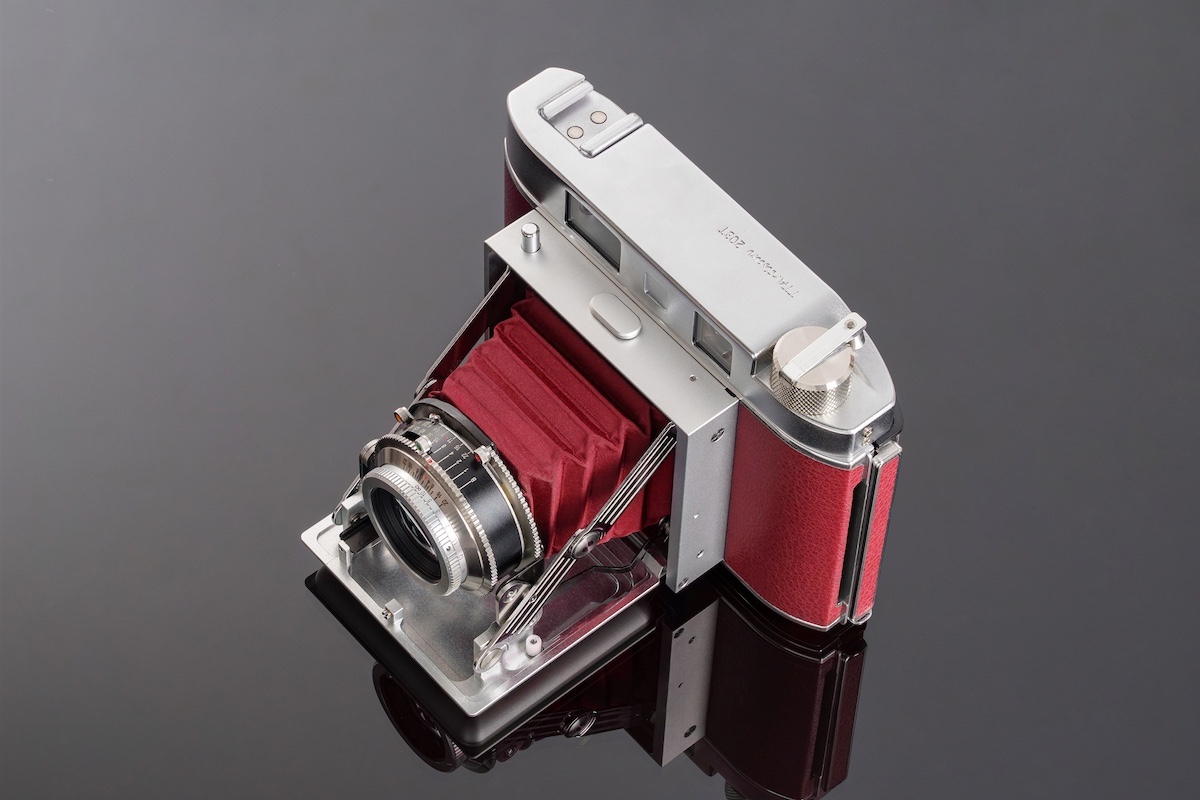
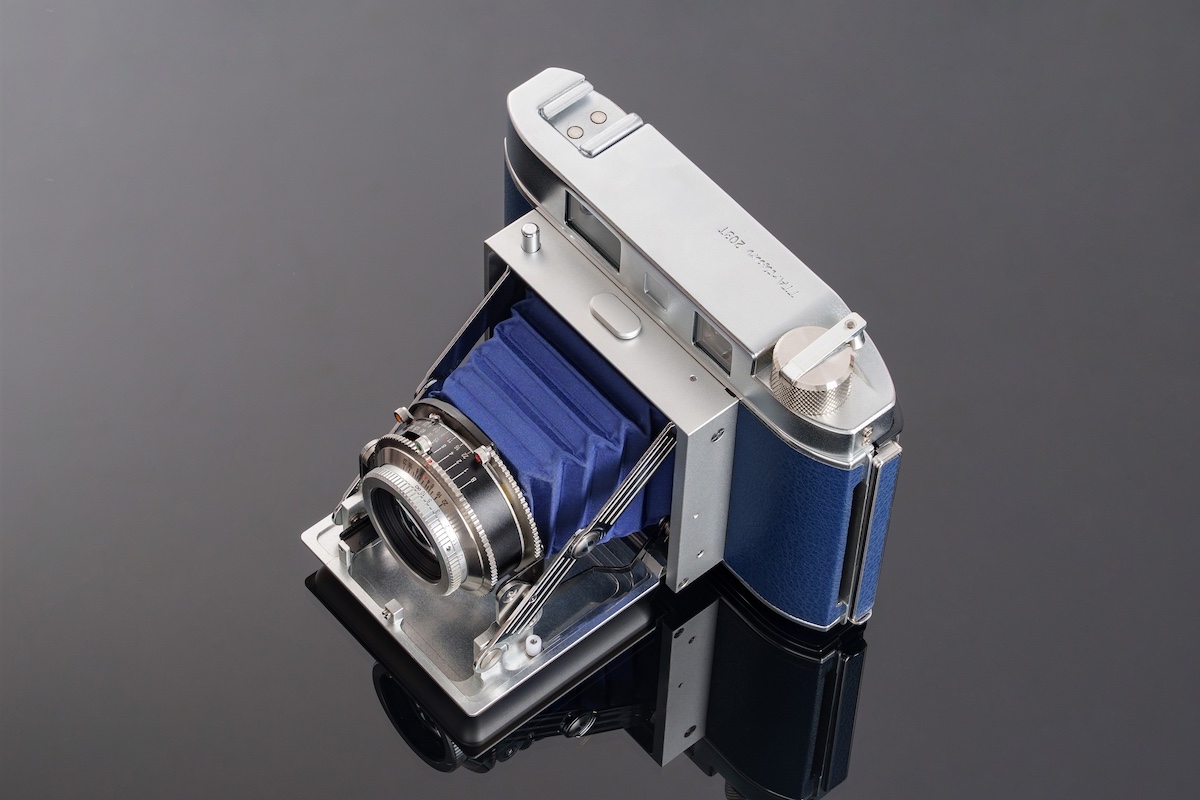
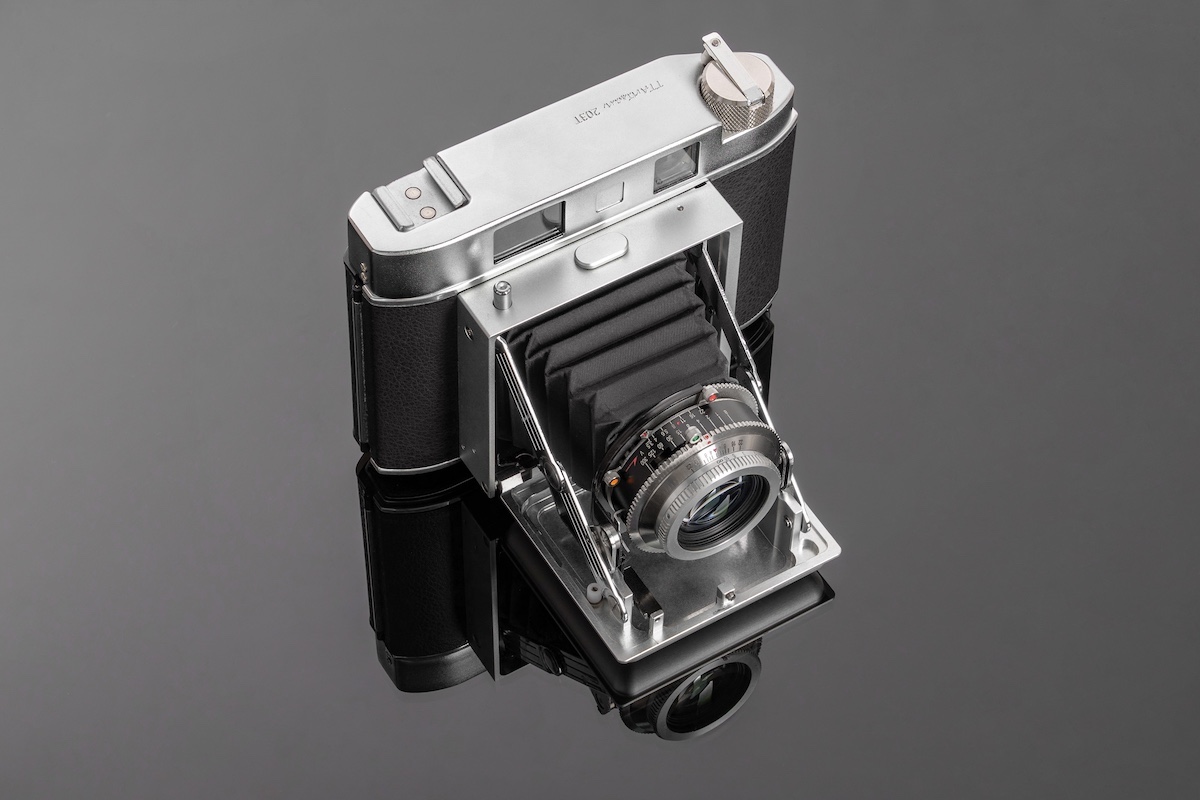
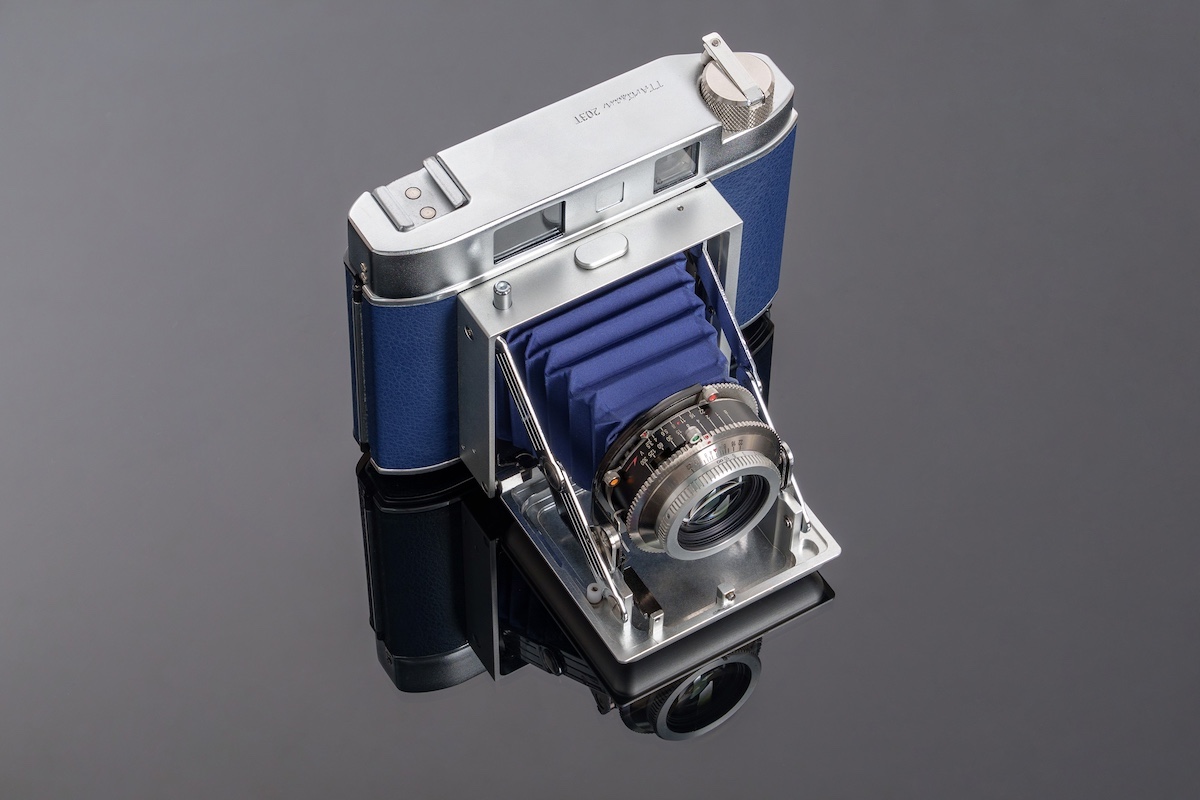
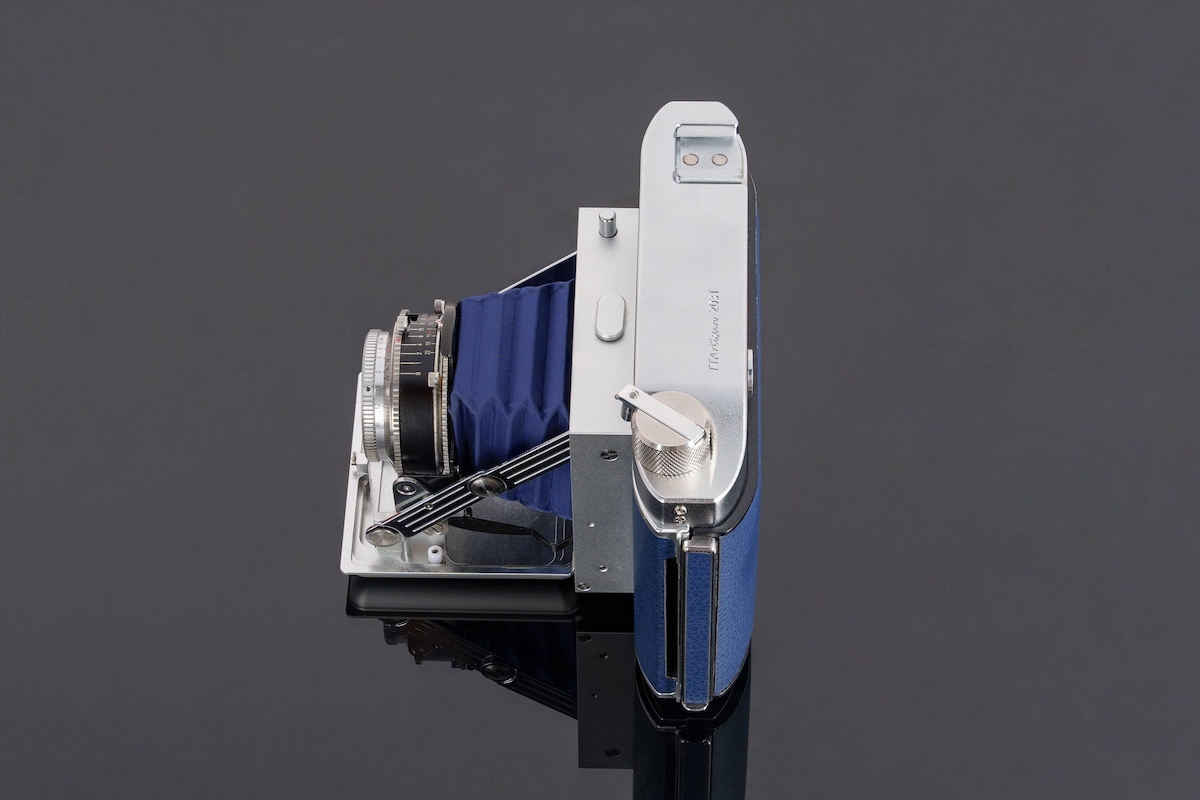
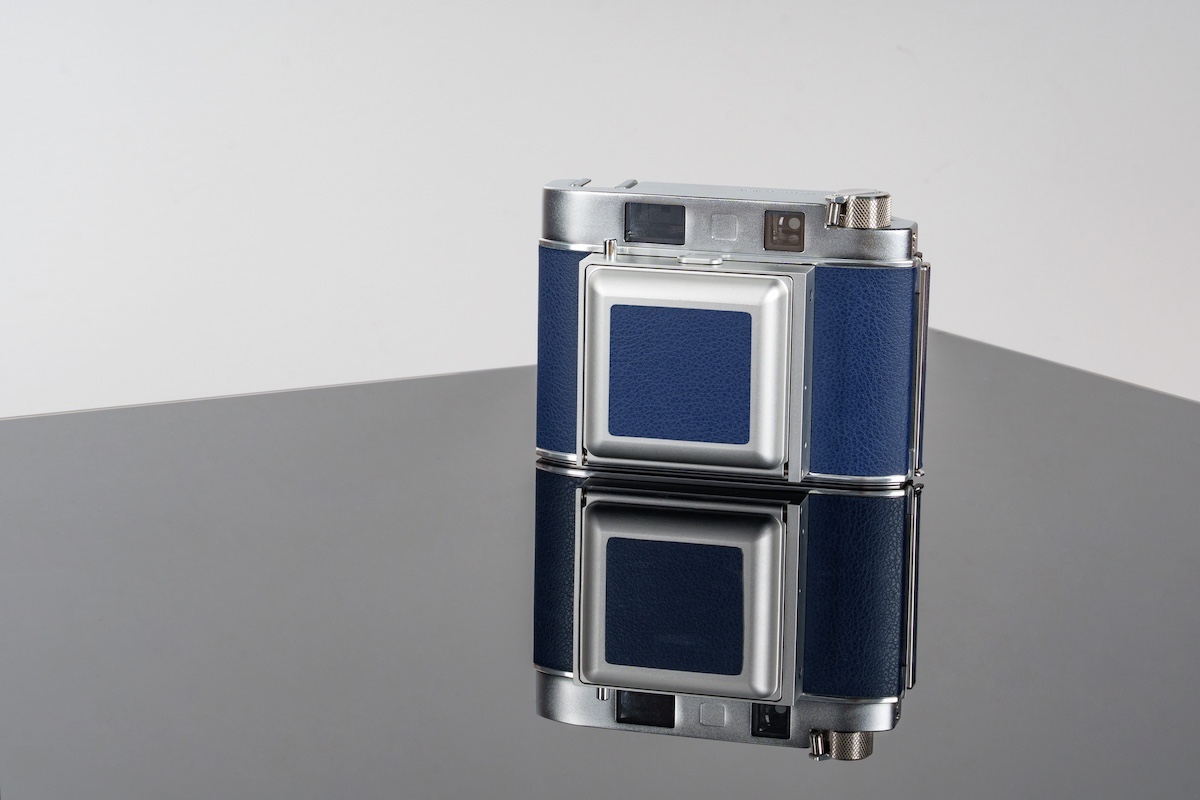
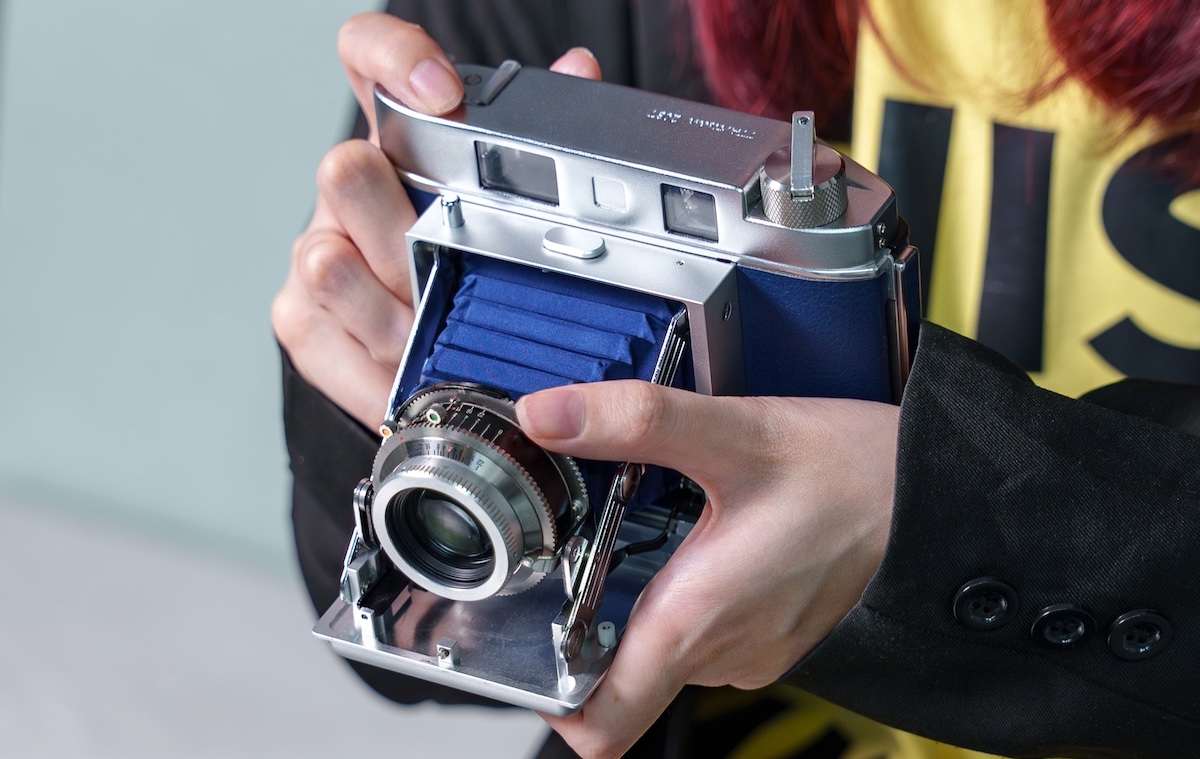
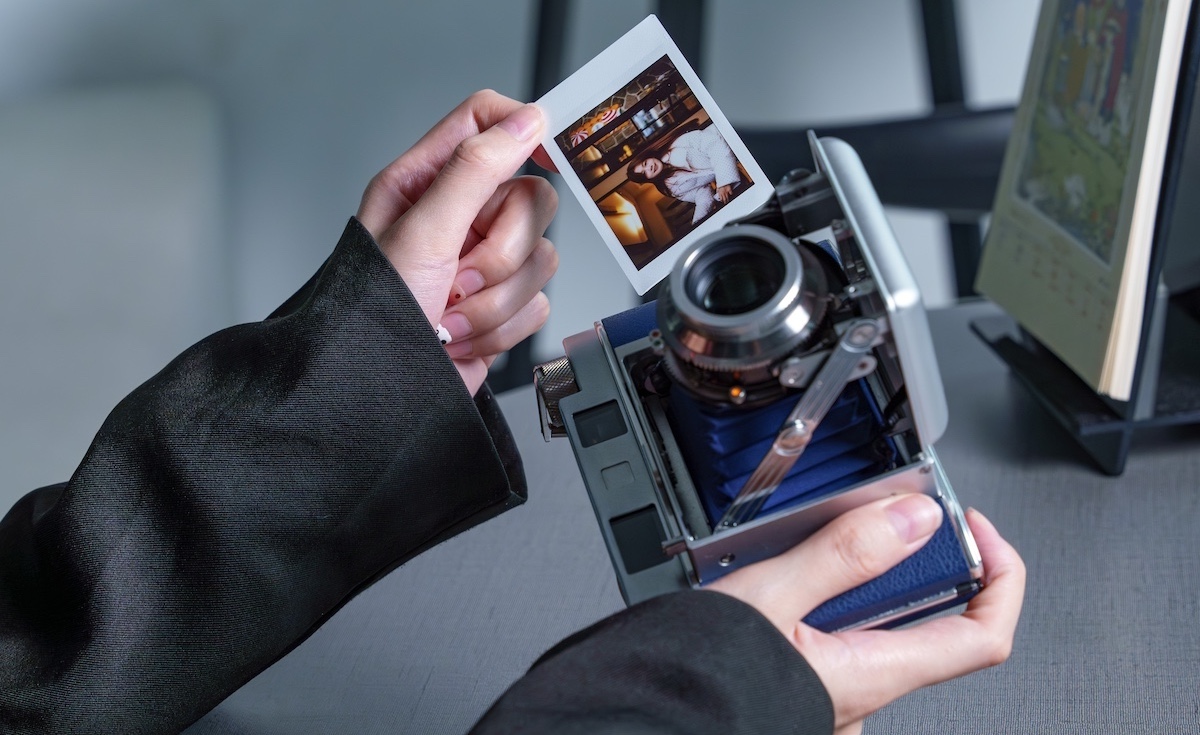
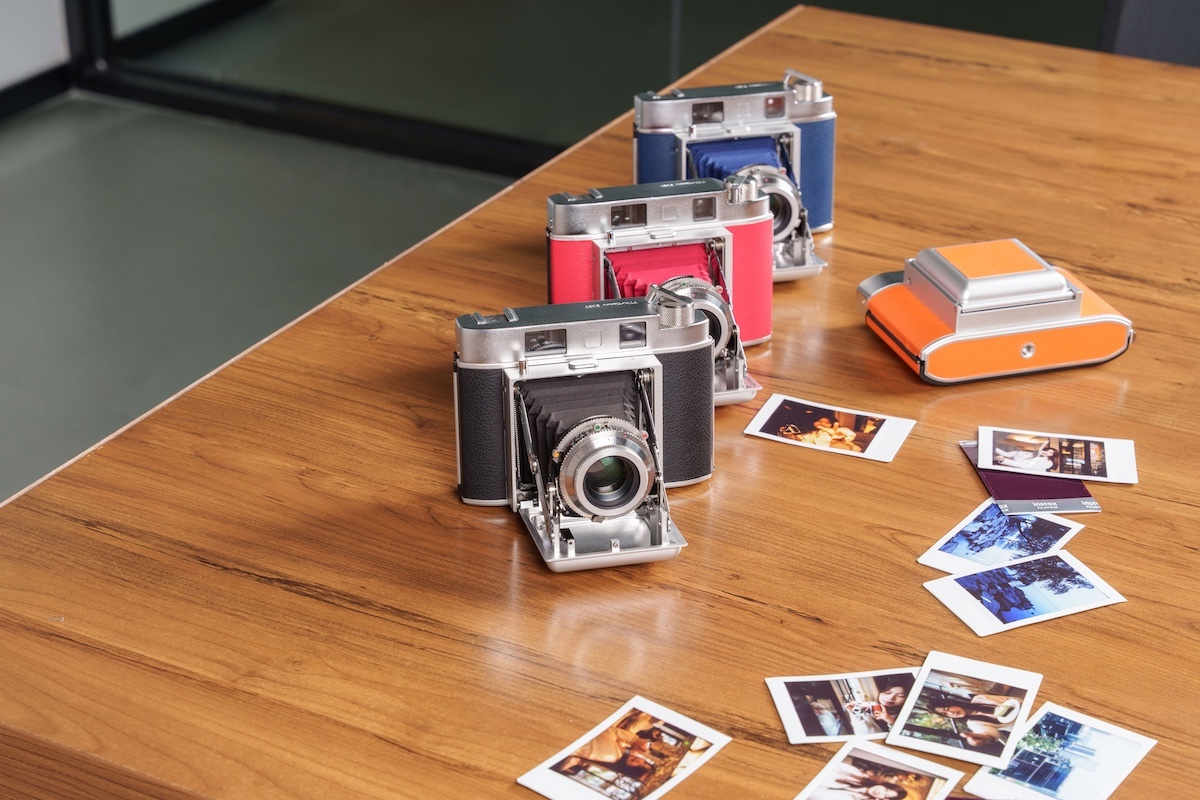
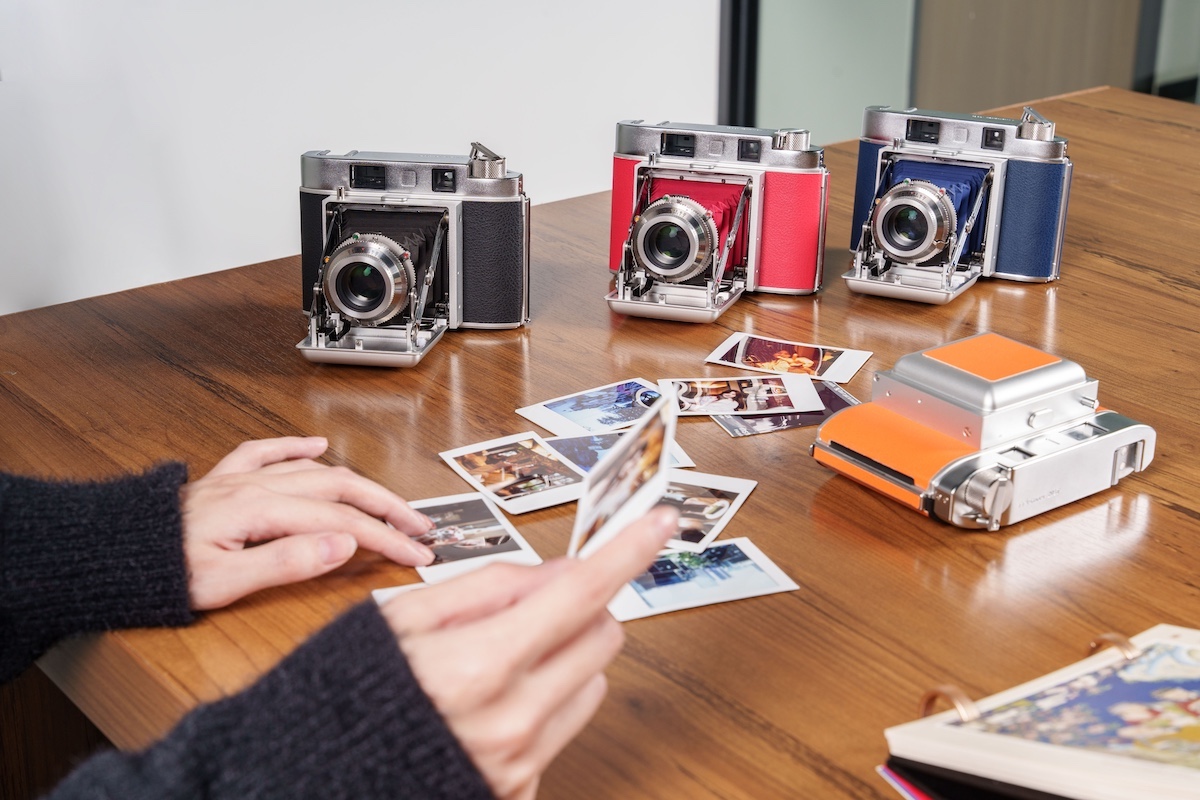
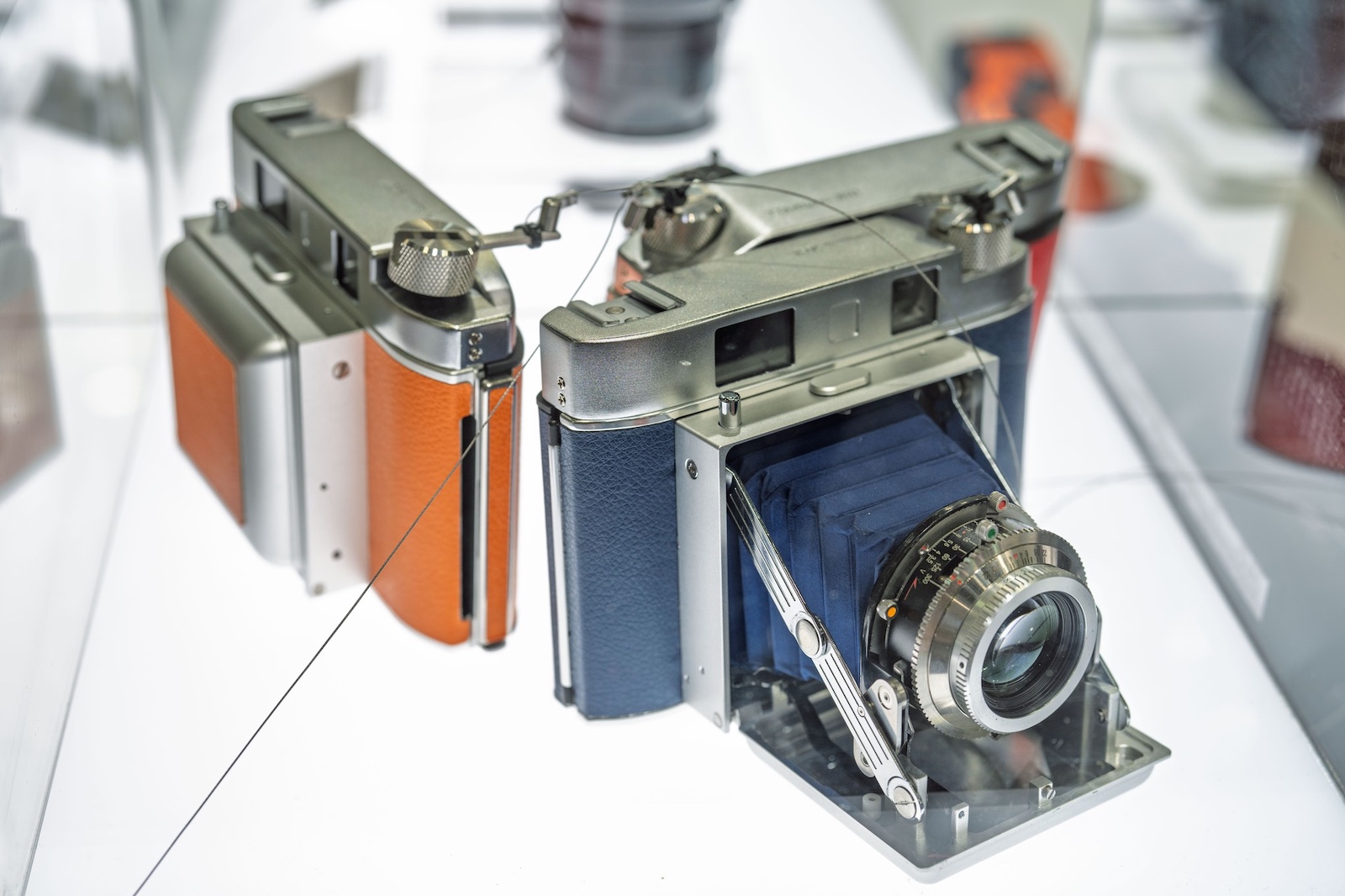
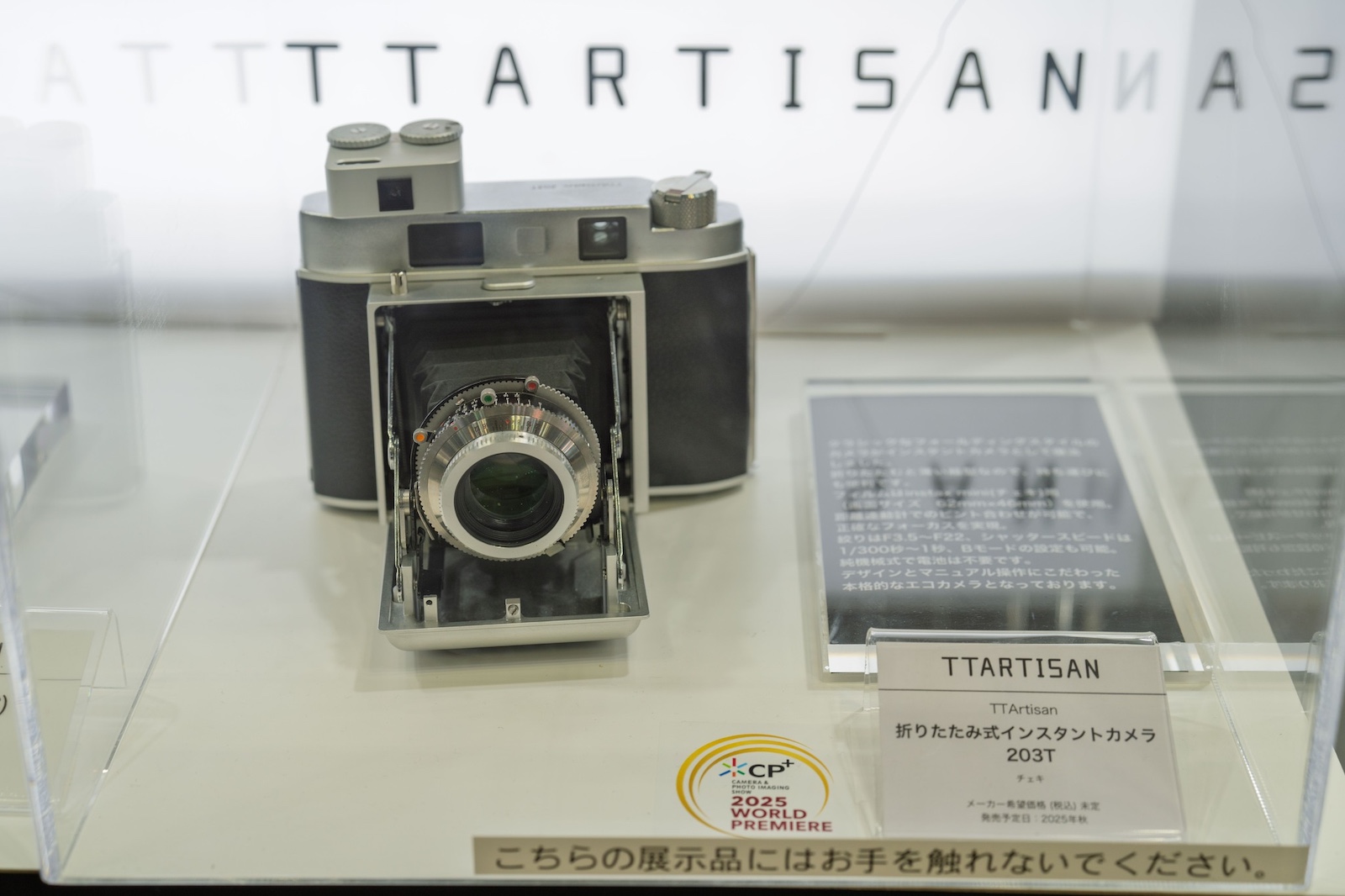
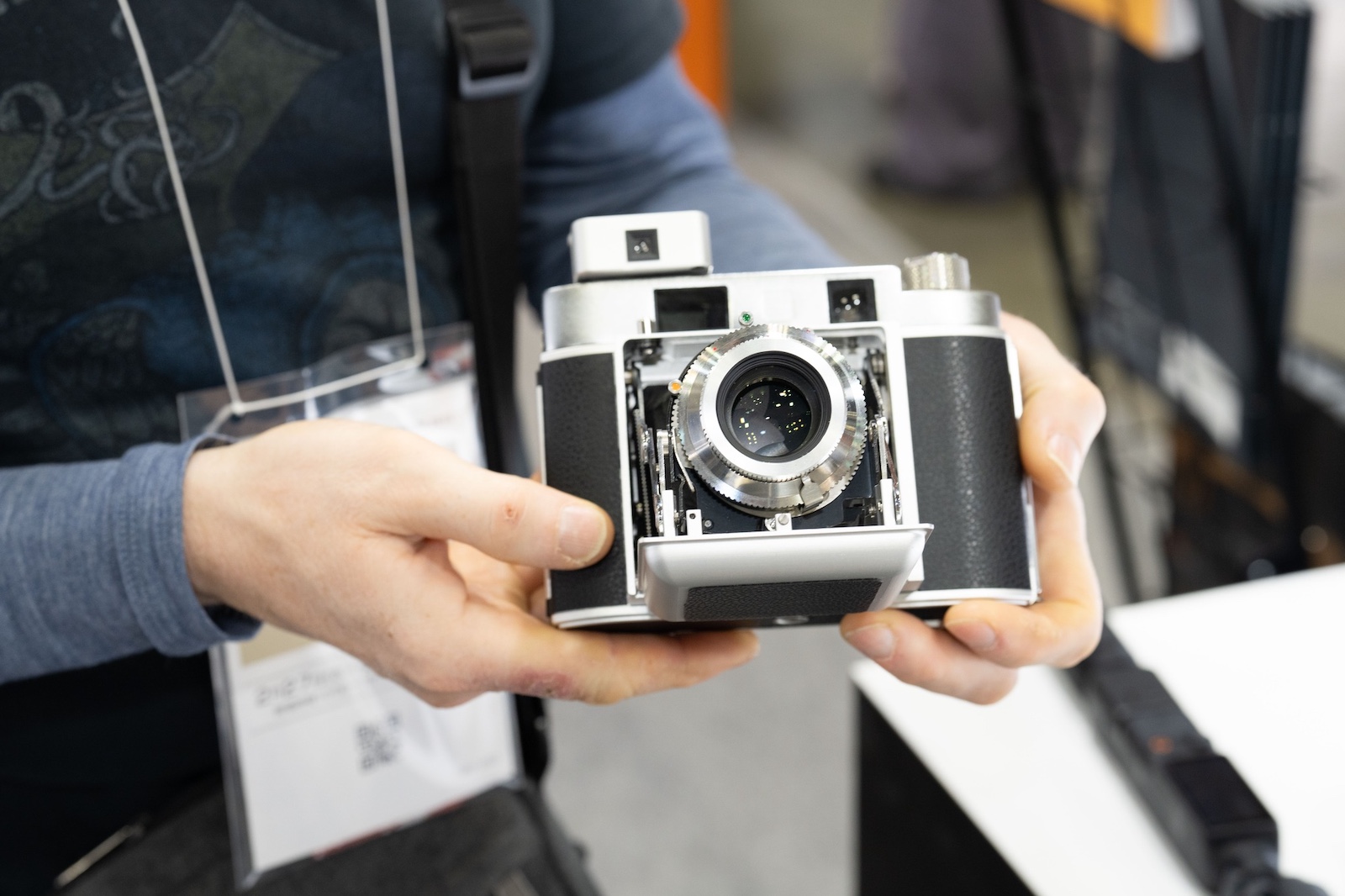
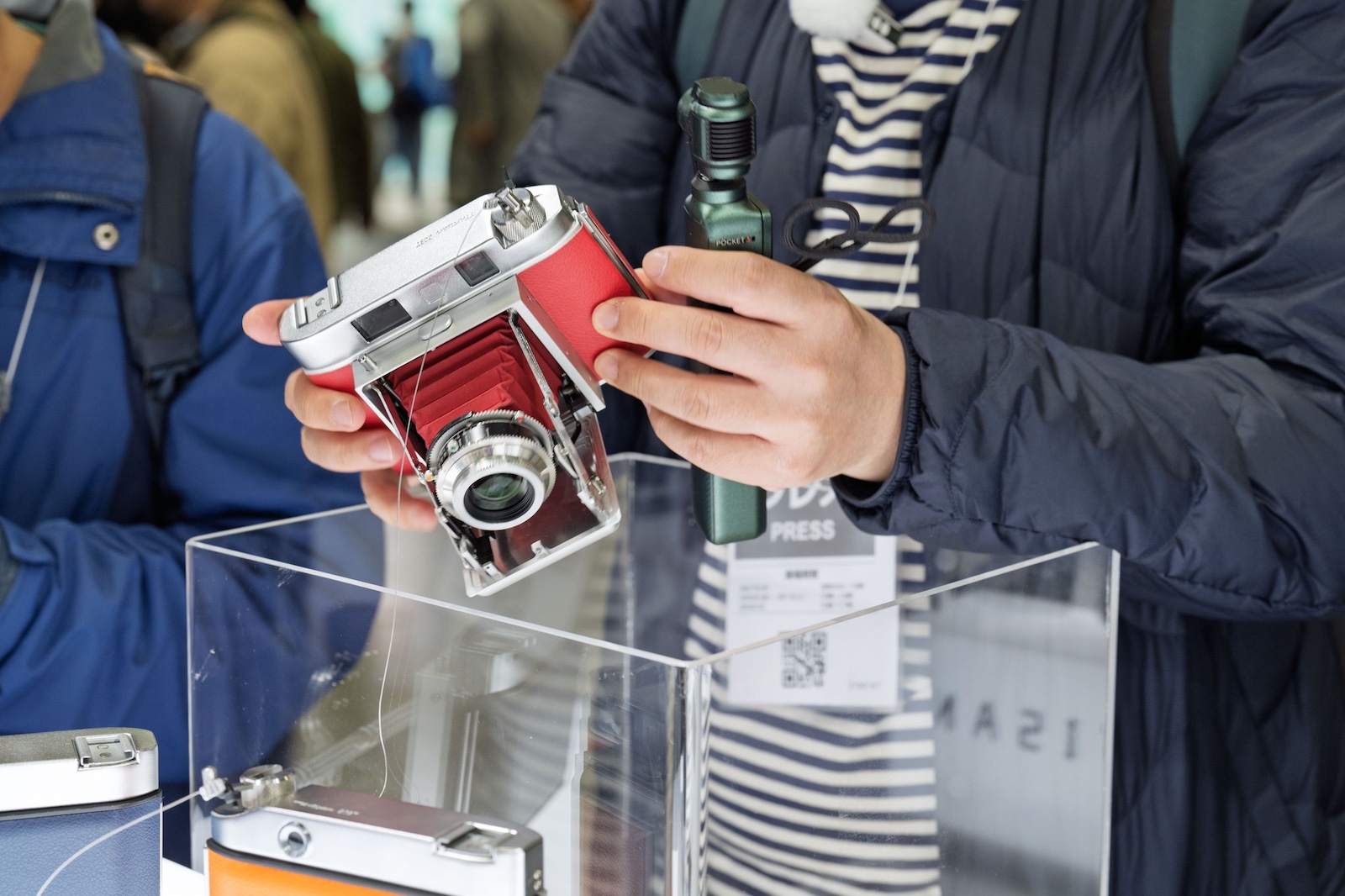
The TTArtisan Instax retro-styled folding instant camera is now available for order in limited quantities for $400 (invite-only purchase, selected applicants will receive a private purchase code).
So long, and thanks for all the FLOPs. Image: Apple
Apple has discontinued the Mac Pro, removing the desktop computer from its website and telling 9to5Mac that there aren't any plans to replace it. This marks an end of an era, as the company is no longer selling a large computer with internal PCI-e slots that could be used to expand its capabilities, after decades of offering that kind of halo-tier product.
This leaves the Mac Studio as the top-end desktop that Apple sells, though anyone paying attention to the Mac lineup knows that it kind of was already. The now-discontinued Mac Pro was announced in 2019, outfitted with an Intel processor. Just under a year later, Apple started transitioning to using its own chips for the Mac lineup, eventually updating the Pro to use its top-end M2 Ultra chip in 2023.
Announced alongside it, though, was the Studio, a much smaller computer with that same chip. And while the Mac Pro's modularity had provided it some distinct advantages in the pre-Apple Silicon era – the ability to add in third-party GPUs for extra horsepower, or to upgrade the RAM or storage with third-party options – those disappeared with the M2.
The M2 Mac Pro looks almost empty; there are PCIe slots, sure, but no massive banks to slot RAM into, nowhere to put hard drives, no big graphics card taking up a few slots. Image: Apple
Essentially, the Studio and the Pro were the same computer, except one was a lot bigger and more expensive, and its PCI-e slots were only useful in very niche situations. People wondered what the point of the Pro was in the era of the studio, and predicted that Apple would give up on the larger desktop eventually. Those fears were essentially confirmed in 2025, when Apple updated the Mac Studio to add its latest chips, leaving the Pro to languish.
Was it complete overkill for any photographer, and most videographers? Almost certainly.
As someone who grew up as a computer enthusiast, it's a little sad to see the world's largest computer company give up on this concept and form factor. Was it the most powerful computer out there? Absolutely not. Was it complete overkill for any photographer, and most videographers? Almost certainly. But it was aspirational; a modular, upgradable computer that showed that Apple still cared about the niche of enthusiasts willing to pay for something they could tinker with.
That is, of course, remembering the Mac Pro of the past, because the M2 Ultra-equipped model didn't fill that role either. This week's discontinuation essentially feels like a formality; Apple is finally admitting that there hasn't really been a reason to buy a Mac Pro in a while.
PS: When the Mac Pro was launched in 2019, it was launched alongside the Pro Display XDR, a monitor that was recently replaced by the Studio Display XDR. The Studio's dethroning of the Pro continues.
After a fascinating 2025, this year has started off really slowly. We're now three months into 2026 and only two cameras have so far appeared: the Ricoh GR IV Monochrome and the Panasonic ZS300.
The Panasonic is a slightly downgraded version of an eight-year-old camera and, while the Ricoh has shown itself to be rather lovely, it's a mono version of an existing model. And it was first announced last year. So we've got nearly a quarter of the way into the year without a major new model announcement.
For reference, the average number of cameras launched in the first quarter of the year over the last half decade has been 5.6 new models.
Admittedly, the mainstream models from all the biggest full-frame makers have all just been updated, but there are plenty of other models that might benefit from an update, and whole segments that feel like there should be enough pent-up demand to be worth refreshing, whether that's compact Micro Four Thirds models as a concept or enthusiast compacts as a segment.
So what should you do, if the replacement for your camera or the camera you think should exist, hasn't arrived yet?
Brace yourself for the possibility that "the next version" of your camera isn't coming
We're hoping OM System or Panasonic might re-introduce a small Micro Four Thirds camera, or that anyone will commit to the idea of an enthusiast photographers' compact but, even if they do, development typically takes a couple of years, so we're not holding our collective breath.
Photo: Carey Rose
The first thing we'd suggest is tempering your expectations. The camera market has shrunk significantly, and most of the major camera makers are exploring what sorts of cameras might appeal to a wider audience, rather than simply modernising their existing lineups.
Whether it's Sony's expansion into the vlogging-focused ZV series, Canon teasing a waist-level camera that takes photos of an image projected on a screen or the increasing interregnum suggesting we may never see a like-for-like replacement of the Nikon Z7, the signs are that camera makers are looking to do things differently. There'll still be plenty of photographer-focused models such as the Nikon Z6III, Panasonic S1II, Canon EOS R6 III and Sony a7 V, but some of the less mainstream models may not be replaced.
As camera makers look to engage with wider audiences we're likely to see more things like Canon's "Analog" concept, in which a small sensor takes a photo of an image projected on a screen. Cameras that are about fun, more than image quality, rather than just like-for-like replacements of existing models.
Photo: Mitchell Clark
So, while within our circles, it may seem obvious that there's demand for an enthusiast compact or replacement for the Panasonic GM5 or Olympus PEN-F, the camera manufacturers may not interpret their tea leaves the same way. Don't hold your breath.
Also, bear in mind that cameras typically take two to three years to develop: camera makers aren't going to be able to react to the latest trends unless they spotted them quite some time ago.
Focus on other things
Another way to pass the time is to stop focusing so much on cameras. In many instances, a new lens for your existing camera will have a more profound impact on your photography than a new body that shoots slightly faster, captures better video or recognizes a few additional subject types.
If you're still using DSLR lenses, you might be surprised by how good the latest designs are. Or how competitive some of the emerging manufacturers from China are becoming.
Photo: Richard Butler
Alternatively, consider signing up for some photography courses, to help improve your technique or provide some inspiration. Though the prevalence of people very confidently and incorrectly explaining concepts such as ISO on photo course videos on Instagram would make us suggest you choose those courses carefully.
Or, of course, you could spend your money on some sort of trip that provides new photo opportunities. This could be an explicitly photo-focused trip to somewhere you've never been or it could just be a trip for travel's sake, with the camera along for the ride. Either way, it might do more for you and your photography than a new camera.
Wait it out
Historically, we've seen that a lot of people skip a generation when it comes to upgrading cameras, and that's generally quite a sensible approach: it's pretty unusual for a camera's replacement to be so dramatically better as to be worth the costs associated with upgrading, but your camera's replacement's replacement will typically be appreciably better. So if you have a recent model, there's probably no harm in waiting.
That said, we know there are a lot of people hanging onto their DSLRs and their DSLR lenses, who may be unaware of how dramatically autofocus has improved in the past few years, in terms of accuracy and consistency, as well as easy-of-use, or how much better many modern lenses are than DSLR optics.
Ultimately, if you have a camera you like already, there's no pressing urge to upgrade, so there's no real downside to just biding your time to see what arrives. The only thing we wouldn't recommend is holding off in the hope that prices will drop. Sadly, the significant inflation of the past few years is likely to mean that the price you paid for your last camera isn't much of a guide to what your next one will cost. If nothing else, the camera drought might let you save up a little longer.
When you use DPReview links to buy products, the site may earn a commission.
Photo: Abby Ferguson
Last month, Viltrox announced its first L-mount lens since joining the L-mount alliance in September 2025. The 16mm F1.8 L wasn't a new design, as it had previously been available for E and Z mounts. Still, since it was the company's first L-mount offering, we took the opportunity to shoot with it a bit to see what it's like.
I happened to have the lens while in Japan for CP+, so I had the opportunity to put it through the paces in Tokyo and Yokohama, along with back home while spending time with family. Some of that time included very rainy conditions, and I wasn't exactly careful about protecting the lens. Thankfully, Viltrox says the lens has some weather sealing, and indeed, I didn't experience any issues even after a full day in the rain. It feels really solid in general, so I wouldn't feel the need to baby it.
"I didn't experience any issues even after a full day in the rain."
What I did have issues with, though, was the aperture ring. The dedicated aperture ring can be clicked or declicked, but I found the clicks to be very subtle. It was very easy to turn the aperture ring unknowingly, which left me frequently confused about why I couldn't change my aperture with the camera's front dial, not realizing the lens's control had been knocked out of 'A' mode. If you prefer to use the aperture ring instead of camera controls, it won't be an issue, but it did take some getting used to and meant I had to pay extra close attention to where I was touching the lens.
The front element is subtly protruding, but it doesn't go beyond the filter thread.
Photo: Abby Ferguson
In addition to the aperture ring, the lens offers an AF/MF switch and two customizable function buttons. It also features a front element that doesn't protrude past the lens housing, unlike some 16mm lenses, which kept me from worrying as much when walking around with the lens sans lens cap. I didn't use any filters during testing, but the less bulbous element also means it's compatible with traditional screw-in filters (77mm), which is helpful.
16mm isn't a focal length everyone needs or loves, but it is a fun tool to play around with, especially when traveling, provided you don't mind the size and limited versatility. It can provide some distinctive and dramatic perspectives, though, which is always nice with the right subjects.
Please do not reproduce any of these images on a website or any newsletter/magazine without prior permission (see our copyright page). We make the originals available for private users to download to their own machines for personal examination or printing; we do so in good faith, so please don't abuse it.
Sample gallery
This widget is not optimized for RSS feed readers. Click here to open it in a new browser window / tab.
All images were processed using our standard lens workflow in Capture One, with the manufacturer's distortion correction applied but no vignetting correction. The profile only corrects a small amount of distortion around the edges, so we wouldn't consider it to be an essential part of the lens design if you prefer not to use it, or your preferred software does not support lens corrections.
LK SAMYANG Expands Prima Series with the New AF 35mm F1.8 P FE: A Compact Everyday Prime Expanding the Prima Series
A compact(71.5mm) and lightweight(216g) 35mm F1.8 prime lens designed for everyday photography and hybrid content creation
Upgraded optical performance with new XHR optical elements, UMC II coating, and Linear STM II autofocus motor
Enhanced usability with weather sealing and a USB-C port for direct firmware updates
March 26, 2026 – Republic of Korea – LK SAMYANG, a global optical solutions company with more than 50 years of expertise in optical technology and innovation, today announces the launch of the AF 35mm F1.8 P FE, a new addition to the Prima Series designed for hybrid creators and everyday photographers.
The new lens expands the Prima Series lineup following the introduction of the AF 35mm F1.4 P FE in 2024, and the AF 16mm F2.8 P FE and AF 85mm F1.8 P FE in 2025. Built on the philosophy of portability, practicality, and usability, the Prima Series offers creators compact and lightweight prime lenses capable of delivering reliable optical performance for both photography and video creation.
The AF 35mm F1.8 P FE continues this vision by providing a versatile everyday lens that balances image quality, portability, and creative flexibility.
A Versatile 35mm Lens for Everyday Creativity. The 35mm focal length has long been regarded as one of the most versatile perspectives in photography. Its natural angle of view allows creators to capture a wide variety of subjects including street scenes, travel moments, portraits, and cinematic storytelling.
The AF 35mm F1.8 P FE is designed as a practical everyday lens that combines a bright aperture with a compact form factor and dependable autofocus performance. While the AF 35mm F1.4 P FE focuses on maximum brightness and high-end optical performance, the AF 35mm F1.8 P FE offers a lighter and more compact alternative optimized for everyday shooting, making it an ideal companion for photographers and content creators who prioritize portability without compromising image quality.
Key Features
· Compact and Lightweight Design : Made for Everyday Carry
The AF 35mm F1.8 P FE continues the Prima Series philosophy of compact and portable lens design.
With a maximum diameter of Φ69.8mm and a standard 62mm filter size, the lens integrates seamlessly into lightweight shooting setups and is easy to carry throughout the day.
Its compact form pairs particularly well with lightweight full-frame cameras such as the Sony α7C series and ZV-E models, making it an ideal everyday lens for travel, street photography, and hybrid content creation.
· Bright F1.8 Aperture with Natural Bokeh : Balanced Performance for Photo and Video
The bright F1.8 aperture provides excellent flexibility across a wide range of lighting conditions, allowing creators to shoot confidently in both bright daylight and low-light environments.
A 9-blade rounded aperture produces smooth and natural background blur, enabling expressive subject separation for portraits, lifestyle photography, and cinematic video production.
This balance of brightness and portability makes the AF 35mm F1.8 P FE a practical lens for everyday creative work.
· Next-Generation Optical Technology : XHR Element for Higher Performance
The AF 35mm F1.8 P FE features an advanced optical construction of 10 elements in 8 groups, including 2 ASP (Aspherical) elements and 2 newly developed XHR elements. The XHR (Extra High Refractive) lens element is manufactured with higher precision compared to conventional high-refractive index elements, allowing for a more compact optical structure while effectively reducing optical aberrations. By incorporating XHR elements, the lens achieves improved optical performance while maintaining a thinner and lighter design, delivering sharp resolution and consistent image quality across the entire frame.
· Next-Generation Coating Technology : UMC II for Improved Image Clarity
The AF 35mm F1.8 P FE incorporates UMC II (Ultra Multi Coating II), the next generation of LK SAMYANG’s coating technology. Compared to the previous coating system, UMC II further suppresses flare and ghosting, ensuring improved contrast and clarity even in challenging lighting environments such as strong backlight or night scenes. This upgraded coating technology helps deliver cleaner and more vibrant images in real-world shooting conditions.
· Fast and Quiet Autofocus : Linear STM II for Hybrid Creators
The AF 35mm F1.8 P FE is equipped with the next-generation Linear STM II autofocus motor. Combined with continuously refined firmware algorithms, the Linear STM II system delivers faster, more accurate, and quieter autofocus performance, ensuring smooth focusing transitions for both still photography and video recording. This improved autofocus system allows creators to capture dynamic scenes with greater precision and stability.
· Enhanced Usability for Real-World Shooting : Weather Sealing and USB-C Connectivity
The AF 35mm F1.8 P FE is designed to perform reliably in real-world shooting environments. The lens features weather sealing, helping protect it from light rain, dust, and outdoor shooting conditions. It also includes a USB-C port, enabling users to easily update firmware and customize lens settings directly without the need for a separate lens station. This convenient connectivity ensures that users can keep their lens up to date while maintaining optimal performance.
LK SAMYANG representative commented:
“The Prima Series was created to offer lenses that creators reach for first. The AF 35mm F1.8 P FE reflects that philosophy by delivering a balanced combination of portability, optical performance, and everyday usability, making it an ideal lens for both photography and video creation.”
Availability
The LK SAMYANG AF 35mm F1.8 P FE will be available for purchase starting late March 2026, with sales gradually launching across global markets through LK SAMYANG’s distribution network and authorized retailers.
DJI Avata 360 Sets New Standards for Immersive 360 FPV Flying
Equipped with DJI’s flagship 1-inch imaging, O4+ video transmission, and omnidirectional obstacle sensing, creators can now film 360 footage in 8K with ease
SHENZHEN, China, March 26, 2026 – DJI, the global leader in civilian drones and creative camera technology, today launches Avata 360. Designed to unlock endless creativity in one take[1], DJI’s new 8K 360° flagship drone delivers 360° imaging with 1-inch-equivalent sensors[1] for filming in 8K/60fps HDR video. Meanwhile, DJI’s powerful O4+ video transmission system and obstacle sensing[1] enable creators to see farther with a more stable, safer, and more immersive flight experience. Paired with DJI goggles and motion controllers, the latest addition to the popular Avata series delivers an immersive 360° flight experience for FPV thrills. Creators can also use DJI remote controllers to capture a full 360° view in a single flight that can be reframed from any perspective, transforming a single take into multiple creative possibilities.
Brilliant Imaging, Boundless Creativity
Avata 360 offers two different lenses that can be seamlessly switched. The 360° lens uses 1-inch-equivalent sensors[1] that can capture 360° images in rich detail for 8K/60fps HDR videos[1] and 120 MP photos. With the large 2.4 μm pixels and high dynamic range, light and shadow are also captured with exquisite clarity. Both video and photos can be exported directly or reframed in post-production. Meanwhile, the Single Lens mode allows creators to use the classic Avata-style filming in 4K/60fps[1].
Powerful Video Transmission, Immersive Flight
Avata 360 leverages DJI’s flagship O4+ video transmission system to deliver stable and clear live feeds for smoother, more immersive flights. Its strong anti-interference capabilities enable high-definition, high-frame-rate transmission at 1080p/60fps and support a range of up to 20 km[1].
Fly With Confidence, Create With Ease
Avata 360 offers up to 23 minutes of flight time[1] and includes several standard safety features, including nightscape omnidirectional obstacle sensing[1] and integrated propeller guards. If damaged, the camera lens can be easily replaced with the DJI Avata 360 replacement lens kit with tools (sold separately). It also brings an exceptional experience to aerial content creation, where a single shot with the drone’s 360° imaging can be transformed into multiple, masterful creations through post production using the DJI Fly and DJI Studio apps, including:
Spotlight Free – Locks onto a moving subject and assists with camera movement, replicating the sophisticated camera language like a pro with Inspire 3. By comparison, Spotlight locks onto your subject’s face to effortlessly capture Circle or Dronie shots without manual adjustments.
ActiveTrack 360°[1] – Automatically selects the optimal tracking mode. For example, Standard mode maintains a steady distance and altitude relative to the subject. Meanwhile, Cycling mode reacts faster to turns and keeps the subject in frame even in complex environments.
FPV mode – Enables even novice pilots to adds a natural roll effect to Spotlight Free, ActiveTrack 360°, and manual flights to create dynamic, high-speed FPV-style footage. This mode can be applied in post-production.
Intelligent Tracking – Powered by advanced algorithms, DJI Fly and DJI Studio apps make it effortless to lock onto and smoothly track people, vehicles, pets, and more, even in 360° footage.
New One-Tap In-App Editing – With GyroFrame, 360° footage can be adjusted to an ideal angle and exported in the DJI Fly app. Both DJI Fly and DJI Studio allow camera movement effects to be added.
Virtual Gimbal[1] – Uses a 360° view to enable infinite rotation and tilt for dynamic camera moves. Even when flying in one direction, horizons can be rotated, and perspectives can be shifted to look back or perform a flip.
Replaceable Front Lens Element – The front element features a replaceable design. Purchase a replacement lens kit with tools[1], and you can easily replace the old lens yourself—no need to send it in for repair.
42GB Internal Storage and High-Speed Transfers – With 42GB of internal storage, 30 minutes of 360° video in 8K without a microSD card. Using Wi-Fi 6 High-Speed Transfer, 1 GB of footage can be transferred to the DJI Fly app in 10 seconds at up to 100 MB/s[1].
FPV Flights and Aerial Filming in One Drone
Avata 360 combines the creative freedom of a 360 camera with the thrill of FPV flying like never before. It can be flown with DJI remote controllers (RC 2, RC-N2, RC-N3) for precise camera movement, allowing creators to unlock new ways to create stunning aerial shots. Meanwhile, DJI goggles and motion controllers offer a more immersive flight experience with 360° imaging at 1080p/60fps. Like the Avata 2, aerial acrobatics like drifting can be performed – even by beginners – with the DJI RC Motion 3.
[1] Only supported by certain camera modes or with specific accessories. All data was measured using a production model of DJI Avata 360 in a controlled environment; actual experience may vary.
SHENZHEN, CN / March 25, 2026 / SG-image Technology Co., Ltd. is proud to announce the official launch of the AF 35mm F2.2, a portable autofocus prime lens designed specifically for full-frame mirrorless systems.
As part of SG-image EZICARI Series, The AF 35mm F2.2 redefines the “everyday carry” experience for modern creators. Weighing a mere 163g and measuring only 36mm in length, it is one of the most portable full-frame lenses in its class. Whether for street photography, travel documentation, or environmental portraiture, this lens empowers photographers to capture high-resolution imagery without the physical burden of traditional professional gear.
Despite its featherweight profile, the AF 35mm F2.2 features a robust, all-metal lens barrel that provides a premium tactile experience and long-term durability. Under the hood, a responsive autofocus system ensures silent and accurate tracking for photo shooting. The F2.2 aperture delivers a soft, natural background fall-off, which, when paired with the classic 35mm “storyteller” focal length, enhances the narrative quality of every frame.
Key Technical Highlights:
Ultra-Compact Profile: At just 36mm long and 163g, it is exceptionally portable for easy carry and all-day shooting.
Natural Bokeh (F2.2): Provides gentle, pleasing subject isolation for portraits and still-life photography.
Classic 35mm Perspective: Offers a natural field of view (approx. 66°) favored by documentary and street photographers.
Precision Metal Construction: A durable, high-quality build that reflects professional standards.
Responsive AF System: Optimized for quick and reliable focus in dynamic environments.
Unbeatable Value: Delivers excellent optical performance at a highly accessible price point.
Pricing and Compatibility The SG-image AF 35mm F2.2 will be available for Sony E, Nikon Z, and L-mount (Panasonic/Sigma/Leica) systems.
AF 35mm F2.2 Standard Edition: $149 USD
AF 35mm F2.2 with Lens Hood Bundle: $159 USD
Official Launch Date: March 25, 2026. Visit www.sg-image.com for additional information.
OM System's Director of Marketing Communications, Nobuaki Tanaka, and SVP of Global Brand & Marketing Strategy, Kazuhiro Togashi, at CP+ 2026.
Photo: Abby Ferguson
The interchangeable-lens camera market may be holding steady, but OM System executives say the ground beneath it is shifting. In a recent interview at CP+, they pointed to smartphones, rising prices and changing expectations surrounding computational photography as forces reshaping where they compete and what they focus on.
At this year’s CP+ show in Yokohama, we sat down with OM System's Kazuhiro Togashi, Senior Vice President of Global Brand & Marketing Strategy and Nobuaki Tanaka, Director of Marketing Communications, to talk through those questions from their perspective. In a wide‑ranging conversation, we discussed everything from compact cameras and the future of Pen to lenses, OM System's outdoor positioning and how far they’re willing to go with AI.
Changed opinions on compact cameras
For now, the Tough series is OM System's most current compact camera, with the TG-7 coming out in 2023.
Image: OM System
Last year at CP+, Togashi made it clear that OM System had no plans to develop a compact camera beyond the TG series. Instead, he told us, "We feel that this is a temporary trend," in terms of enthusiast compacts. He also added that high-end compacts would require too much investment in "research and development [and] also in reestablishing a high-end compact brand image" to allow for a profitable product.
"We are closely monitoring and analyzing this trend"
Now, though, Togashi seems to have changed his mind. "We are closely monitoring and analyzing this trend," he tells us. "The situation is very clear," he says, adding that "the compact camera segment has shown signs of growth over the past two to three years." As Togashi sees it, "some users who originally intended to purchase an ILC but were unable to do so due to higher prices are increasingly considering premium compact cameras as an alternative."
While this apparent change in stance doesn't necessarily mean we should expect an OM System compact this year (or at all, for that matter), it could leave the door open for hope among compact fans looking for a truly new option.
A new Pen is underway
The last Pen came out under the Olympus brand. OM System made it clear that a new model is in the works, though.
Image: Olympus
Togashi also told us last year that it was too soon to expect a new Pen. "We think the camera's design must realize the concept of the product, so we don't start to decide the camera design before deciding the camera's concept," he said at the time, adding that, "we haven't decided on the product concept" for the Pen.
"The new Pen’s concept progress is on schedule"
It appears that process has progressed, though. "The new Pen’s concept progress is on schedule," he says. "We already started creating the design concept. So we already started some kind of Pen camera project. Progress is good." While that was the extent of the detail he is able to share, Togashi adds that the "new Pen will satisfy many, many younger generations in the future." It certainly is an exciting-sounding teaser, at the very least.
"The new Pen will satisfy many, many younger generations in the future."
"The Pen series is very important for us," Togashi says. But he also has a clear understanding that, given how long it's been since the last Pen (2021 for the Pen E-P7), some reeducation will be necessary to help people understand the legacy of that line. "We will explain about the Pen again to the market," he says. "Because you are specialists, right? You know a lot of insight for the camera industry and manufacturing history, but maybe younger generations, they don't know what 'Pen' is."
AI and computational photography
OM System's latest cameras, the OM-3 and OM-5 II, have a new button that lets you directly access their computational photography features.
Photo: Mitchell Clark
While the Pen is centered around nostalgia, OM System is also focused on advancing technology to offer photographers something new in camera bodies. Togashi says this comes in the form of three key points: updated hardware (such as image processing engines, new sensors or AI chips), enhanced computational photography and AI features.
AI, in that framework, is something Togashi describes as having "two faces." On the positive side are things OM shooters already rely on, like subject detection, AF and noise reduction that can squeeze more usable files out of smaller sensors. "AI subject detection AF will continue to be advanced by AI technology advancement, and noise reduction functions can also be improved by AI," Togashi says.
"There is potential to provide generative AI in the camera body,"
There is a concerning side, too, however. "Generative AI can easily make fake images," Togashi acknowledges. "Therefore, we also need to take into consideration this concern." Even so, he isn't closed off to the idea of generative AI in a camera. He tells us that there is "potential to provide generative AI in the camera body," but frames it as an option on the table rather than something inevitable.
Despite seeing potential, Togashi and his colleagues stress that they feel a responsibility to protect "the real shooting experience." Tanaka put it bluntly: "Is it real photography or not? It’s a very important key for us."
"We shouldn't hide from new technologies in our cameras"
Still, Tanaka is remaining open to the idea. "In my personal opinion, we shouldn't hide from new technologies in our cameras," he says. No matter what, the team makes it clear that it is interested in providing options for users, giving them the power to decide whether to use generative AI or not.
The importance of OM System's lenses
OM System has been mostly focused on telephoto lenses in recent years, but Togashi says there are plans for more wide angle and prime lenses in the future.
Photo: OM System
Some users have questioned whether lens development at OM System has stalled because of a thin lens roadmap compared to the past, but Togashi assures us that is far from the case. "For our lens lineup, we'd like to expand more and more," he says. Lately, that expansion has largely been focused on longer telephoto lenses, "but we also have a plan to expand small wide-angle lenses and prime lenses in the future," he adds.
"We also have a plan to expand small wide-angle lenses and prime lenses in the future"
Togashi emphasized that lens size is a focus for the team moving forward. After all, the Micro Four Thirds format allows for more compact lenses compared to APS-C and full-frame. "The other systems are compact – maybe other competitors have smaller camera bodies, but not lenses," explains Togashi. "Our lenses are very small and compact in the right way. This is a clear differentiation from our competitors."
Compact lenses are especially important following the launch of the OM-3. "I think we need appropriately designed brand‑new lenses for OM‑3, as many of the existing lenses are relatively large for this type of camera," Togashi says.
Aiding the promise of OM System's lens lineup is the company's financial situation. Togashi tells us that the company is generating operating profit continuously. "Our fundamental financial situation is very stable and stronger than it was before," he informs us. "We can invest in human resources or new technologies, not only for camera bodies but also for lenses. Therefore, we will develop new lenses in the future."
This article is based on an interview by Dale Baskin and Abby Ferguson at CP+ 2026. It has been edited for clarity and flow.
Western Grebe rushing on a lake in San Jose, California. It is their mating ritual.
Nikon Z9 w/ Nikkor Z 400mm F4.5 S | F5.6 | 1/2500 sec | ISO 800 Photo: Shun Cheung
DPReview community member Shun Cheung, known as shuncheung in the forums, has taken up the challenge of writing about what he carries in his camera bag on photography journeys for our What's in your bag? spotlight series. The series showcases the diverse gear and photography of our community, and shares their stories of how that gear helped them to capture the perfect shot.
Check out Shun’s gear and fascinating nature photography experiences below. His remarkable journey began in the early 1970s and has evolved through the film, DSLR and mirrorless eras, so he has quite a wide range of photography from it all.
Favorite camera and lens: Nikon Z8 paired with the Nikon 600mm F4. Shun favors this combination for wildlife photography because the latest version of the 600mm is significantly lighter than earlier models and includes a built-in 1.4x teleconverter, allowing him to switch between 600mm and 840mm when photographing birds and animals.
Typical photo scenes: Wildlife and nature photography, especially birds and coastal habitats around the San Francisco Bay Area. Shun also photographs landscapes and travels internationally to destinations such as Antarctica, Africa and the Galapagos Islands for wildlife and nature photography.
“I’ve been photographing since the early 1970s, when one of my high school teachers took a group of us hiking and introduced us to photography using a Minolta SRT-101. Several of us bought the same camera so we could share lenses, and I’ve been hooked ever since.”
Sally Light Foot crabs in the Galapagos Islands in Ecuador.
Lenses: Nikon 600mm F4, 400mm F4.5, 100–400mm, 70–200mm F2.8, and 24–120mm F4. The 600mm F4 is a favorite because the new version is much lighter than earlier models and has a built-in 1.4× teleconverter for quick reach between 600mm and 840mm.
Tripod: A sturdy Gitzo tripod, often accompanied by hex wrenches and a Leatherman tool for adjustments in the field.
Filters and accessories: Spare batteries, charger, external microphone for video, and sunscreen. Shun also highly suggests to always carry insect repellent...
Camera bags:MindShift BackLight 26L and 36L, as well as the Gura Gear Kiboko 30L. These carry two or three camera bodies and several lenses, with the Kiboko being especially useful for two long telephoto lenses.
Shun's camera bag
Photo: Shun Cheung
What are your favorite destinations?
Shun describes himself as a nature and wildlife photographer who loves to explore exotic destinations like Antarctica, but also appreciates the appeal in returning to familiar locations to capture the best seasonal activity. Living in the San Francisco Bay Area gives him easy access to parks, wildlife refuges and coastal habitats, where he often photographs a variety of domestic birds.
"My favorite destinations for nature photography are Antarctica, Africa, and South America, especially the Galapagos Islands. I was fortunate to have visited all three, for the first time, in the 1990's. Since then, I have been back to each one several times."
King Penguins in St. Andrews Bay on South Georgia Island
"My most memorable experiences include visiting the king penguin colony on St. Andrew's Bay on South Georgia Island, where thousands of noisy penguins are calling nonstop. Also just as memorable was the wildebeest migration crossing the Mara River in Tanzania. For those international destinations, I tend to travel with a photo group with a dozen or so photographers."
Wildebeest migrating across the Mara River in the Serengeti, Tanzania
Nikon Z9 w/ Nikkor Z 400mm F4.5 S | F5.6 | 1/1250 sec | ISO 400 Photo: Shun Cheung
What's special about local scenes vs international ones?
"While I visit international "exotic" locations once or twice a year, I capture many of my best images locally. I tend to revisit those locations over and over, so I understand them thoroughly and can visit only when the weather and lighting are favorable. I am fortunate to live in San Francisco, with many local parks and seashores."
"For example, the pride of Madeira flowers tends to bloom from late March to mid-April every year along the San Francisco Bay, and the Anna's hummingbirds will have a feeding frenzy on those flowers. During that time of the year, I may visit the flower hot spots two to three mornings a week between 7 a.m. and 9 a.m., capturing several hundred images a morning. Digital photography is, of course, the norm now, but 20 years ago, I told myself I could never have done that with film. Film and processing costs would have been prohibitive to use five rolls of film a day, three times a week."
Anna's hummingbird feeding on Pride of Madeira flowers.
Nikon Z9 w/ Nikkor Z 400mm F4.5 S | F4.5 | 1/2000 sec | ISO 1250 Photo: Shun Cheung
Shun really enjoyed writing the content for this spotlight article, and would be grateful for you to join him in discussion in the forums. Thanks, Shun, for being featured!
If you’d like to share your photography setup, tell us about your main camera, lens choices, key settings and strategies. Your photos and story could be featured in the next article!
Editor's note: This article continues a series, 'What's in your bag?', highlighting DPReview community members, their photography and the gear they depend on. Would you like to be featured in a future installment? Tell us a bit about yourself and your photography by filling out this form. If you're selected for a feature, we'll be in touch with next steps.
DJI has announced the Avata 360, a compact 360-degree drone meant for immersive FPV footage. The new drone, which takes on Insta360's Antigravity A1, promises 8K 360° video and 120MP stills. It also offers a list of features expected in a DJI drone, such as obstacle sensing, compatibility with DJI's accessories, tracking and more.
Like other similar cameras (including the flightless varieties), the Avata 360 uses two lenses to stitch together 360° images and videos. DJI says the "360° lens uses 1-inch-equivalent sensors," however, that language is a bit misleading. Like the Osmo 360, the company's 360 action camera released last year, the Avata 360's two sensors combined result in roughly the same area as a Type 1 sensor; each sensor is not a Type 1 sensor on its own.
Image: DJI
The Avata 360 drone appears to use the same sensor as the action camera; it features 2.4 μm pixels and can capture up to 120MP stills. The drone is capable of recording 8K 60fps for 360° footage or 4K 60fps in single-lens mode. Like other cameras of this type, the 360° videos allow users to reframe footage after the fact.
Beyond 360-specific features and footage, the drone should be very familiar to DJI users. It relies on DJI's flagship "O4+ video transmission system," which promises 1080p 60fps transmission and a range of up to 20km (12.4 miles). It offers an all‑direction obstacle sensing system even in low-light conditions, integrated propeller guards for better safety when flying, and multiple tracking modes. It also sports replaceable lenses, so users can replace them on their own if they get damaged, provided they buy the separate kit to do so.
The drone allows users to replace lenses with a separately purchased kit.
Image: DJI
DJI promises 23 minutes of flight time from the drone. It offers 42GB of internal storage and supports Wi-Fi 6 for fast transferring, even of large files. It's a compact and lightweight drone, coming in at approximately 455g (1 lb) and measuring 246x199x55.5mm (9.7 × 7.8 × 2.2").
As with previous DJI releases, the Avata 360 will not be available in the US through official channels. It is available for immediate purchase in the Chinese market and for pre-sale in all other regions, with shipping dates estimated for April. The standalone drone costs £409.
Press release:
DJI Avata 360 Sets New Standards for Immersive 360 FPV Flying
Equipped with DJI’s flagship 1-inch imaging, O4+ video transmission, and omnidirectional obstacle sensing, creators can now film 360 footage in 8K with ease while flying with confidence
March 26, 2026 - DJI, the global leader in civilian drones and creative camera technology, today launches the Avata 360. Designed to unlock endless creativity in one take1, DJI’s new 8K 360° flagship drone delivers 360° imaging with 1-inch-equivalent sensors1 for filming in 8K/60fps HDR video. Meanwhile, DJI’s powerful O4+ video transmission system and obstacle sensing1 enable creators to see farther with a more stable, safer, and more immersive flight experience. Paired with DJI goggles and motion controllers, the latest addition to the popular Avata series delivers an immersive 360° flight experience for FPV thrills. Creators can also use the DJI remote controllers to capture a full 360° view in a single flight that can be reframed from any perspective, transforming a single take into multiple creative possibilities.
Brilliant Imaging, Boundless Creativity
Avata 360 offers two different lenses that can be seamlessly switched. The 360° lens uses 1-inch-equivalent sensors1 that can capture 360° images in rich detail for 8K/60fps HDR videos1 and 120 MP photos. With the large 2.4 μm pixels and high dynamic range, light and shadow are also captured with exquisite clarity. Both video and photos can be exported directly or reframed in post-production. Meanwhile, the Single Lens mode allows creators to use the classic Avata-style filming in 4K/60fps1.
Powerful Video Transmission, Immersive Flight
Avata 360 leverages DJI’s flagship O4+ video transmission system to deliver stable and clear live feeds for smoother, more immersive flights. Its strong anti-interference capabilities enable high-definition, high-frame-rate transmission at 1080p/60fps and support a range of up to 20 km1.
Fly With Confidence, Create With Ease
Avata 360 offers up to 23 minutes of flight time1 and includes several standard safety features, including nightscape omnidirectional obstacle sensing1 and integrated propeller guards. If damaged, the camera lens can be easily replaced with the DJI Avata 360 replacement lens kit with tools (sold separately). It also brings an exceptional experience to aerial content creation, where a single shot with the drone's 360° imaging can be transformed into multiple, masterful creations through post production using the DJI Fly and DJI Studio apps, including:
Spotlight Free1 - Locks onto a moving subject and assists with camera movement, replicating the sophisticated camera language like a pro with Inspire 3. By comparison, Spotlight locks onto your subject’s face to effortlessly capture Circle or Dronie shots without manual adjustments.
ActiveTrack 360°1 - Automatically selects the optimal tracking mode. For example, Standard mode maintains a steady distance and altitude relative to the subject. Meanwhile, Cycling mode reacts faster to turns and keeps the subject in frame even in complex environments.
FPV mode - Enables even novice pilots to adds a natural roll effect to Spotlight Free, ActiveTrack 360°, and manual flights to create dynamic, high-speed FPV-style footage. This mode can be applied in post-production.
Intelligent Tracking - Powered by advanced algorithms, the DJI Fly and DJI Studio apps make it effortless to lock onto and smoothly track people, vehicles, pets, and more, even in 360° footage.
New One-Tap In-App Editing - With GyroFrame, 360° footage can be adjusted to an ideal angle and exported in the DJI Fly app. Both DJI Fly and DJI Studio allow camera movement effects to be added.
Virtual Gimbal1 - Uses a 360° view to enable infinite rotation and tilt for dynamic camera moves. Even when flying in one direction, horizons can be rotated, and perspectives can be shifted to look back or perform a flip.
Replaceable Front Lens Element - The front element features a replaceable design. Purchase a replacement lens kit with tools1, and you can easily replace the old lens yourself—no need to send it in for repair.
42GB Internal Storage and High-Speed Transfers - With 42GB of internal storage, 30 minutes of 360° video in 8K without a microSD card. Using Wi-Fi 6 High-Speed Transfer, 1 GB of footage can be transferred to the DJI Fly app in 10 seconds at up to 100 MB/s1.
FPV Flights and Aerial Filming in One Drone
Avata 360 combines the creative freedom of a 360 camera with the thrill of FPV flying like never before. It can be flown with the DJI remote controllers (RC 2, RC-N2, RC-N3) for precise camera movement, allowing creators to unlock new ways to create stunning aerial shots. Meanwhile, DJI goggles and motion controllers offer a more immersive flight experience with 360° imaging at 1080p/60fps. Like the Avata 2, aerial acrobatics like drifting can be performed - even by beginners - with the DJI RC Motion 3.
1 Only supported by certain camera modes or with specific accessories. All data was measured using a production model of DJI Avata 360 in a controlled environment; actual experience may vary. For more information, please refer to https://www.dji.com/avata-360.
2 Not officially available in the United States via official websites.
When you use DPReview links to buy products, the site may earn a commission.
Image: LK Samyang
LK Samyang has announced the AF 35mm F1.8 P FE, a new addition to its "Prima" series of lenses, which are designed to be accessible to people starting out in photography or videography.
The full-frame prime weighs 216g (7.6oz) and is around 72mm (2.8") long, making it noticeably lighter and smaller than the company's 35mm F1.4 Prima lens, which comes in at 470g (16.6oz) and 99mm (3.9"), respectively. The company says its larger lens is focused on "maximum brightness and high-end optical performance," while the F1.8 version "offers a lighter and more compact alternative optimized for everyday shooting." Features-wise, the lens is Spartan; its only controls are a focus ring and an AF/MF switch, though there's also a USB-C port on the bottom for firmware updates.
There's not a ton to the lens, but it has the basics, plus a few extras like weather sealing. The knurling on the focus ring also seems quite nice. Photo: LK Samyang
Samyang says the lens also features weather sealing, which should offer some peace of mind if you're out shooting and conditions deteriorate. The lens is threaded for 62mm filters.
The 35mm F1.8 P FE has 10 elements in 8 groups, with two aspherical lenses and two "XHR" (Extra High Refractive) elements. The company also says the lens has a coating to reduce flare and ghosting. It has a nine-bladed aperture.
The lens's autofocus system is powered by an STM motor, which the company says will provide quick, quiet focusing for both stills and video. It has a minimum focusing distance of 0.27m (10.6"), good for 0.19x magification.
While there's no shortage of autofocus 35mm F1.8 lenses for E-mount, it's still nice to see new ones hitting the market, especially since the previous Samyang/Rokinon offering has received relatively mixed reviews for autofocus performance.
The lens will be available for Sony E-mount cameras starting in "late March." While LK Samyang is a member of the L-Mount Alliance, there's no word on whether this lens will come to that mount. The company hasn't announced how much the lens will cost in the US, but its Korean website has it listed for 399,000 won, which is around $265.
Press release:
LK SAMYANG Expands Prima Series with the New AF 35mm F1.8 P FE
A Compact Everyday Prime Expanding the Prima Series
Key Message
A compact and lightweight 35mm F1.8 prime lens designed for everyday photography and hybrid content creation
Upgraded optical performance with new XHR optical elements, UMC II coating, and Linear STM II autofocus motor
Enhanced usability with weather sealing and a USB-C port for direct firmware updates
March 26, 2026 – Republic of Korea – LK SAMYANG, a global optical solutions company with more than 50 years of expertise in optical technology and innovation, today announces the launch of the AF 35mm F1.8 P FE, a new addition to the Prima Series designed for hybrid creators and everyday photographers.
The new lens expands the Prima Series lineup following the introduction of the AF 35mm F1.4 P FE in 2024, and the AF 16mm F2.8 P FE and AF 85mm F1.8 P FE in 2025.
Built on the philosophy of portability, practicality, and usability, the Prima Series offers creators compact and lightweight prime lenses capable of delivering reliable optical performance for both photography and video creation.
The AF 35mm F1.8 P FE continues this vision by providing a versatile everyday lens that balances image quality, portability, and creative flexibility.
A Versatile 35mm Lens for Everyday Creativity
The 35mm focal length has long been regarded as one of the most versatile perspectives in photography. Its natural angle of view allows creators to capture a wide variety of subjects including street scenes, travel moments, portraits, and cinematic storytelling.
The AF 35mm F1.8 P FE is designed as a practical everyday lens that combines a bright aperture with a compact form factor and dependable autofocus performance.
While the AF 35mm F1.4 P FE focuses on maximum brightness and high-end optical performance, the AF 35mm F1.8 P FE offers a lighter and more compact alternative optimized for everyday shooting, making it an ideal companion for photographers and content creators who prioritize portability without compromising image quality.
Key Features
Compact and Lightweight Design : Made for Everyday Carry
The AF 35mm F1.8 P FE continues the Prima Series philosophy of compact and portable lens design.
With a maximum diameter of Φ69.8mm and a standard 62mm filter size, the lens integrates seamlessly into lightweight shooting setups and is easy to carry throughout the day.
Its compact form pairs particularly well with lightweight full-frame cameras such as the Sony α7C series and ZV-E models, making it an ideal everyday lens for travel, street photography, and hybrid content creation.
Bright F1.8 Aperture with Natural Bokeh : Balanced Performance for Photo and Video
The bright F1.8 aperture provides excellent flexibility across a wide range of lighting conditions, allowing creators to shoot confidently in both bright daylight and low-light environments.
A 9-blade rounded aperture produces smooth and natural background blur, enabling expressive subject separation for portraits, lifestyle photography, and cinematic video production.
This balance of brightness and portability makes the AF 35mm F1.8 P FE a practical lens for everyday creative work.
Next-Generation Optical Technology : XHR Element for Higher Performance
The AF 35mm F1.8 P FE features an advanced optical construction of 10 elements in 8 groups, including 2 ASP (Aspherical) elements and 2 newly developed XHR elements.
The XHR (Extra High Refractive) lens element is manufactured with higher precision compared to conventional high-refractive index elements, allowing for a more compact optical structure while effectively reducing optical aberrations.
By incorporating XHR elements, the lens achieves improved optical performance while maintaining a thinner and lighter design, delivering sharp resolution and consistent image quality across the entire frame.
Next-Generation Coating Technology : UMC II for Improved Image Clarity
The AF 35mm F1.8 P FE incorporates UMC II (Ultra Multi Coating II), the next generation of LK SAMYANG’s coating technology.
Compared to the previous coating system, UMC II further suppresses flare and ghosting, ensuring improved contrast and clarity even in challenging lighting environments such as strong backlight or night scenes.
This upgraded coating technology helps deliver cleaner and more vibrant images in real-world shooting conditions.
Fast and Quiet Autofocus : Linear STM II for Hybrid Creators
The AF 35mm F1.8 P FE is equipped with the next-generation Linear STM II autofocus motor.
Combined with continuously refined firmware algorithms, the Linear STM II system delivers faster, more accurate, and quieter autofocus performance, ensuring smooth focusing transitions for both still photography and video recording.
This improved autofocus system allows creators to capture dynamic scenes with greater precision and stability.
Enhanced Usability for Real-World Shooting : Weather Sealing and USB-C Connectivity
The AF 35mm F1.8 P FE is designed to perform reliably in real-world shooting environments.
The lens features weather sealing, helping protect it from light rain, dust, and outdoor shooting conditions.
It also includes a USB-C port, enabling users to easily update firmware and customize lens settings directly without the need for a separate lens station.
This convenient connectivity ensures that users can keep their lens up to date while maintaining optimal performance.
Designed for Modern Creators
An LK SAMYANG representative commented:
“The Prima Series was created to offer lenses that creators reach for first. The AF 35mm F1.8 P FE reflects that philosophy by delivering a balanced combination of portability, optical performance, and everyday usability, making it an ideal lens for both photography and video creation.”
Availability
The LK SAMYANG AF 35mm F1.8 P FE will be available for purchase starting late March 2026, with sales gradually launching across global markets through LK SAMYANG’s distribution network and authorized retailers.
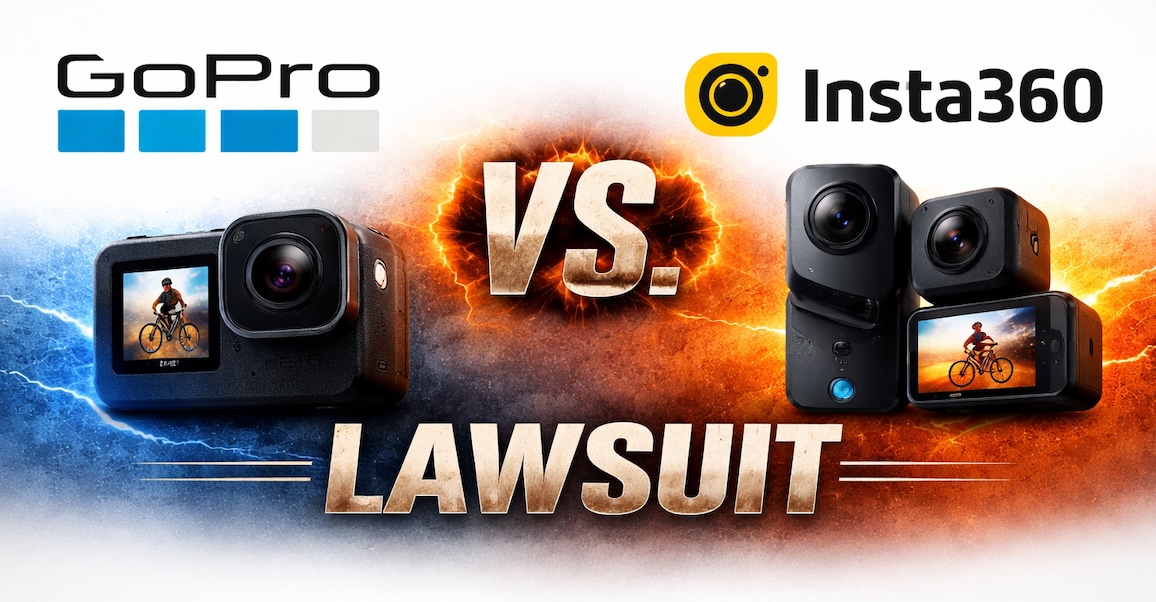
Here is a short recap of the GoPro vs. Insta360 lawsuit results:
Insta360 won decisively on the tech patents: The ITC ruled no violation on all five utility patents (covering stabilization, horizon leveling, distortion correction, etc.).
GoPro won narrowly on design: The ITC found infringement of GoPro’s HERO camera body design patent — but only on certain older/legacy Insta360 Ace models. Newer/current Insta360 cameras (including 2025+ versions) do not infringe.
Practical outcome: Limited Exclusion Order + Cease & Desist Order issued against the specific legacy models only. No impact on Insta360’s current product lineup or U.S. sales/import of new cameras.
Next steps: Orders subject to 60-day Presidential Review (still ongoing). GoPro could appeal the utility-patent losses, but none have been filed yet.
Recap: Both sides claimed victory in their press releases, but the ruling is widely seen as a big win for Insta360 on the core innovation issues. The case is effectively over for current products.

 Connexion