Skylum released a new Luminar Neo version 1.27 that expands its cross-device ecosystem with new AI portrait tools and bokeh AI:
Skylum has released Luminar Neo 1.27, further strengthening its cross-device editing ecosystem across Windows, macOS, iOS, Android, and ChromeOS. The update focuses on expanding AI-powered portrait capabilities while improving creative depth control, helping photographers move seamlessly from capture to final edit on any device.
The new release enhances Luminar’s portrait toolkit with AI-driven tools, including Dark Circles Removal, Blemish Removal, Shine Removal, and Skin Smoothing. These additions allow photographers to achieve natural-looking portrait retouching quickly and without complex workflows. Improvements to masking and feathering also help deliver more realistic results, especially when refining faces and skin.
Luminar Neo 1.27 also introduces an upgraded Bokeh AI tool that goes beyond traditional portrait blur. The new version allows users to apply realistic background blur not only to people, but also to objects and animals, offering greater creative flexibility and more control over depth and focus.
With these updates, Luminar Neo continues to position itself as an accessible AI-powered editor for hobbyist and semi-professional photographers. The combination of fast portrait retouching, creative depth tools, and seamless cross-device editing supports modern workflows—starting edits on mobile and finishing with full control on desktop.
This update introduces new models designed to improve both speed and output quality across animation, generative, and live action content.
Gaia 2 (available to all users): 2x upscaling model built specifically for animation workflows like stop motion and motion graphics.
Starlight Fast 2 Local (Pro Only): Local, speed-focused video upscaling model delivering high quality results up to 5x faster, with improved face detail and motion stability.
Starlight HQ Local (Pro Only): Local video upscaling model built for mid-to-high-quality content with a good balance of detail and sharpness while keeping the intent of the original video source.
Starlight 2.5 (SLP-2.5): Groundbreaking video upscaling model built to enhance realism and reduce plastic, artificial-looking artifacts while upscaling clips from the latest GenAI models to 4K.
Enhances AI-generated content into cleaner, more realistic 4K.
Improves soft or overly processed visuals, especially in face-heavy shots.
Performs well on archival footage from the 2000s onward when the source is relatively clean.
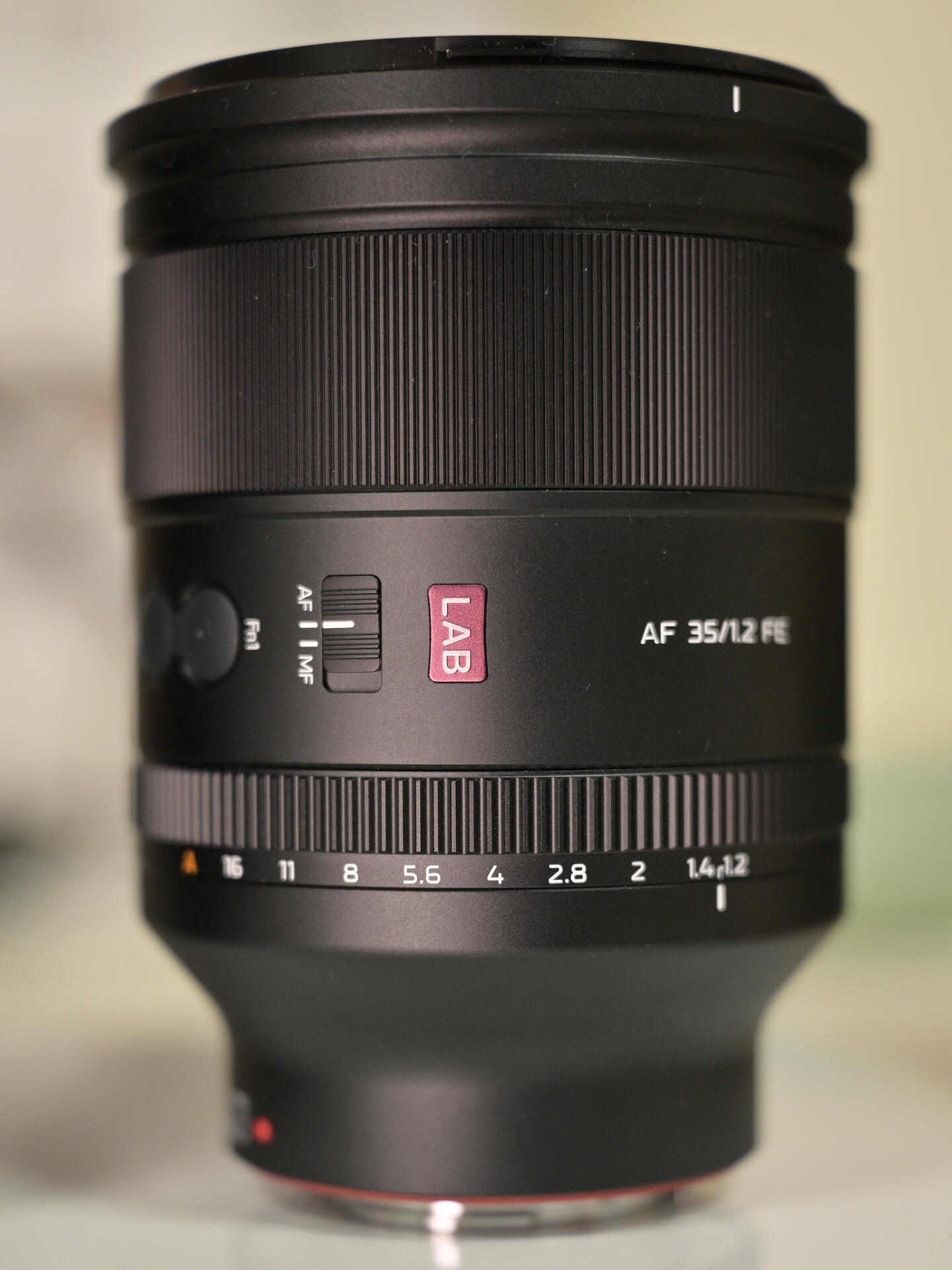
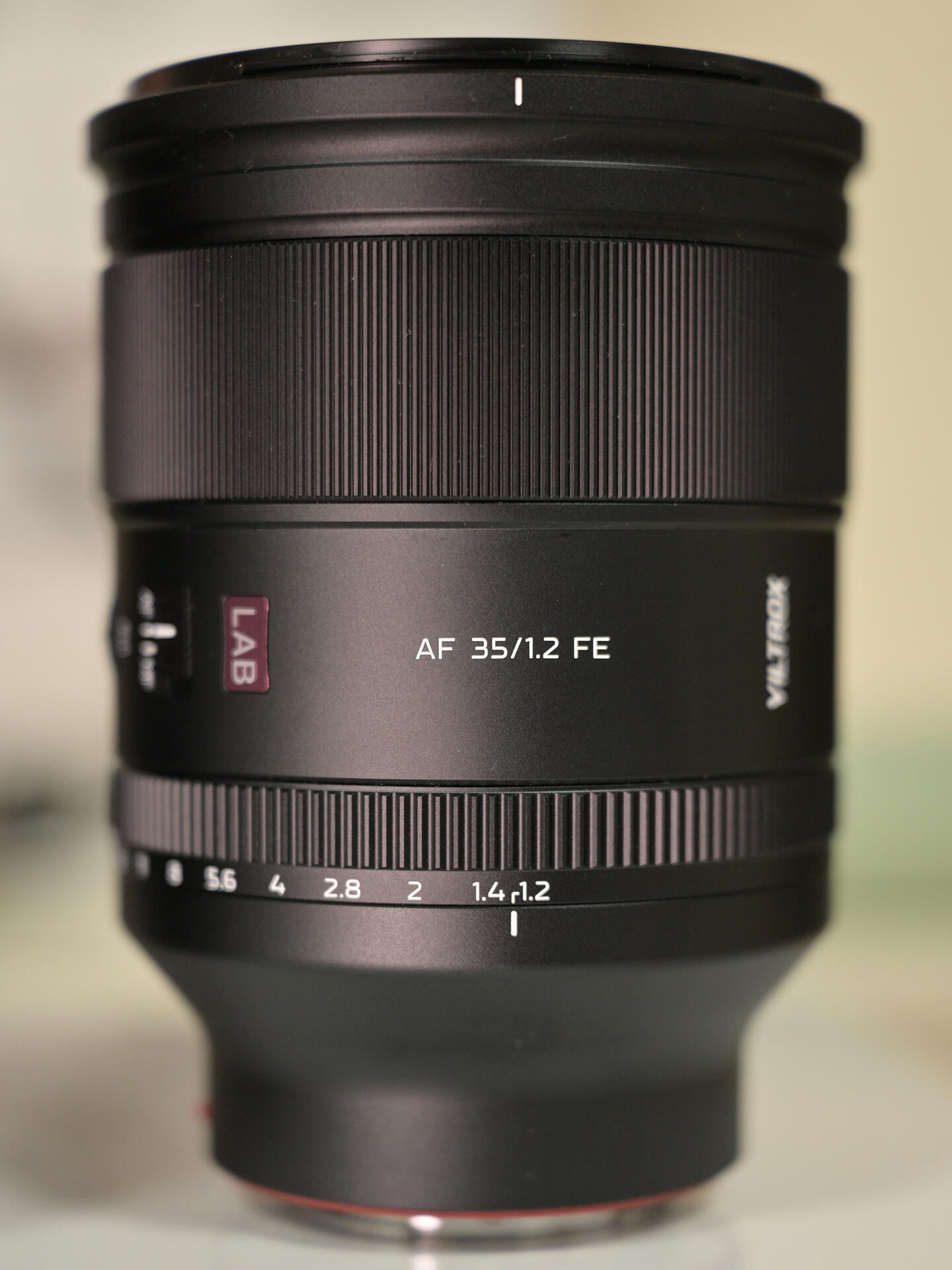
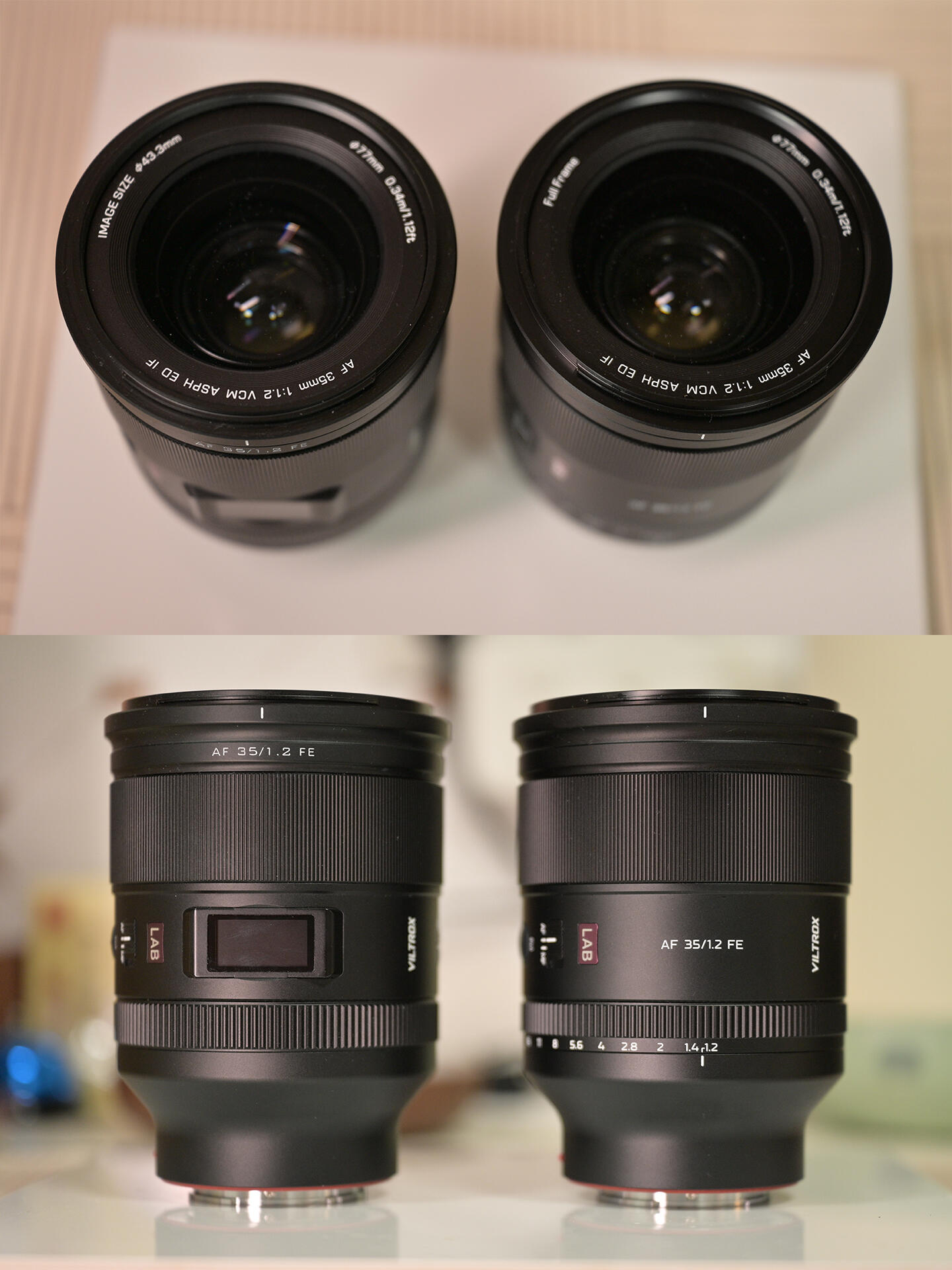
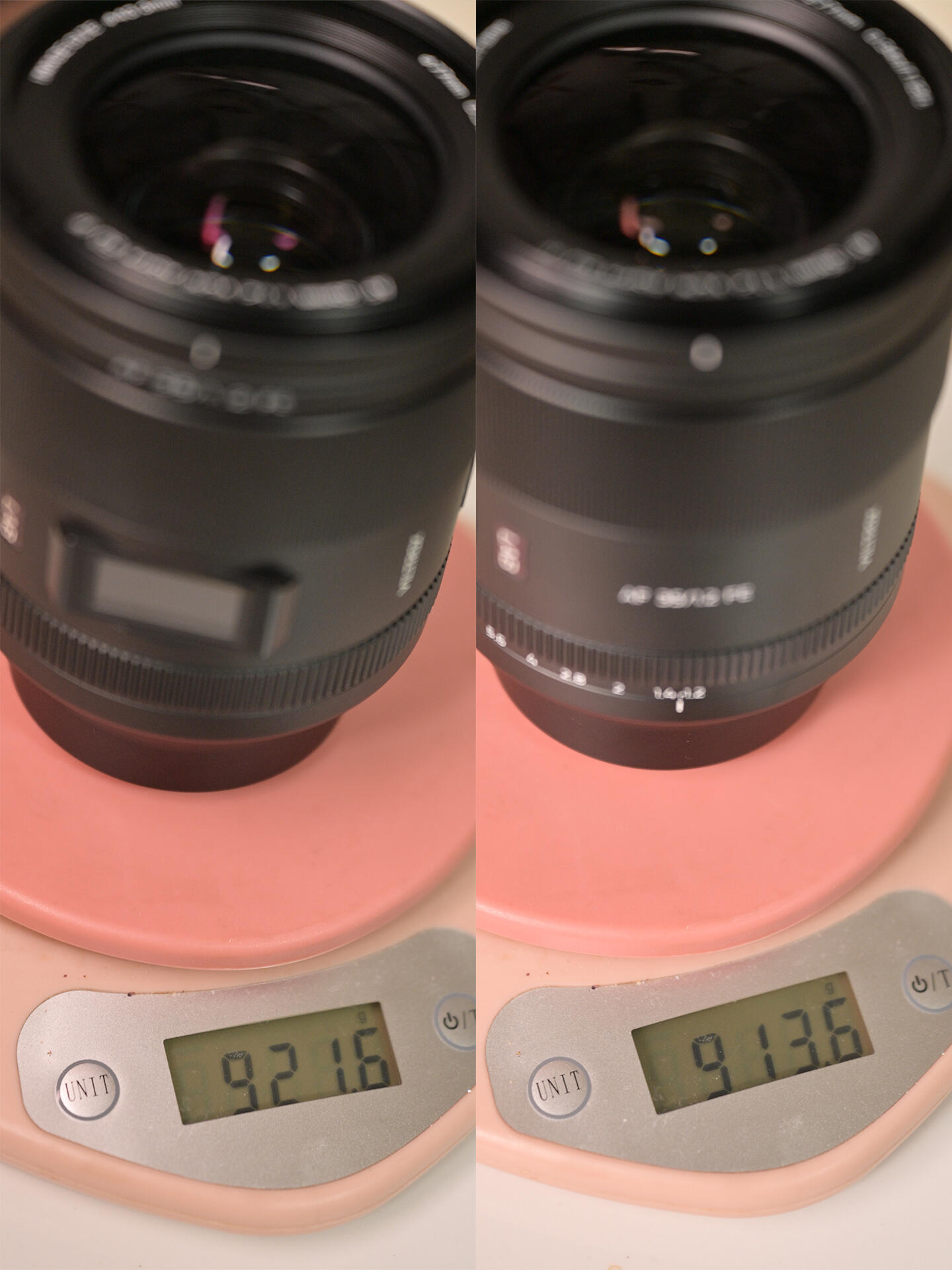
A quick update on my previous post – on April 17th, Viltrox will announce a new LAB 35mm f/1.2 lens without an LCD screen (see the current Viltrox AF 35mm f/1.2 LAB for E/Z mount). Here are the first leaked pictures:
Leica is opening a new retail store and, as we've come to expect, that means it's also releasing a limited edition camera to commemorate the occasion. It's called the Chicago Edition 17 (no points for guessing where the store's located), and it's an M11-P wrapped in a "boysenberry leatherette."
Special-edition Leicas are nothing new, and the company has a long list of limited releases and collaborations, including the city-specific models it released as part of its 100th anniversary celebrations last year. To my eye, though, this one looks especially nice, and the special edition tax is surprisingly low. The Chicago Edition 17 will retail for $10,900, around $500 over the price of a standard M11-P.
Image: Leica
As the name implies, there are 17 of the limited-edition cameras, and they're only being sold at the Chicago store. The company says the store is "soft opening" today, but that it will be holding a grand opening ceremony on the 30th, which will include an exhibition of work by Leica photographer Craig Semetko in the location's gallery space. The company also says the store will feature work from other artists, too, such as Alana Tsui and Dr. Romanelli. That's also when the camera will be available for sale.
Leica Camera Unveils Chicago Flagship: A Destination for Photography and Design
Celebrating 50 years of Leica’s Galleries, Leica Adds a New Cultural Hub to Its Global Network
TEANECK, N.J. [April 14, 2026] Leica Camera, the renowned German camera and optics company, is proud to announce its new store and opening in Chicago on April 30, 2026. Located in the heart of Chicago’s Gold Coast, one of the city’s most storied cultural and architectural districts, the new store draws on Chicago’s creative spirit, offering a dynamic space where visitors can experience rotating gallery exhibitions, participate in workshops through the Leica Akademie, connect with fellow creatives, and discover the latest innovations in imaging technology. Situated on Michigan Avenue, Chicago’s premier commercial corridor, the store further solidifies Leica’s presence among the world’s leading cultural capitals.
This opening coincides with the 20th anniversary of Leica retail, which began with the brand’s first store in Japan. Since that inaugural opening, Leica spaces have created an ecosystem designed not only to showcase precision-engineered tools, but to foster a thriving, connected photographic community. The Chicago flagship is the culmination of this 20-year legacy and adds to a network of around 120 Leica Stores worldwide.
This milestone is further marked by the 50th anniversary of the Leica Galleries, a global program that shares a common vision with its retail spaces: presenting photography as an art form, a historical record, and a social voice that can be experienced by people around the globe. With approximately 150 exhibitions taking place annually, they balance contemporary photography by displaying iconic works from both the present day and the past. This new flagship destination reflects the brand’s continued cultural expansion and demonstrates a deep commitment to visual storytelling.
“Chicago has one of the most dynamic and layered cultural histories in the world, shaped by artists and storytellers who are not afraid to challenge perspectives,” said Karin Rehn-Kaufmann, Art Director & Chief Representative of Leica Galleries International. “Photography is one of the most powerful cultural forces of our time; it influences how we see, how we remember, and how we understand one another. We’re excited to become a part of Chicago’s vibrant, creative community and contribute to its ongoing cultural conversation.”
“For our Leica customers, a camera is not a one-time purchase. It is the beginning of a lifelong journey; and these experiential spaces are essential to cultivating and sustaining that relationship,” added Mike Giannattasio, President of Leica Camera North America. “As we open our doors here, our commitment is not only to present extraordinary innovation and photography, but to foster a creative community that brings people together to create lasting emotional impact.”
Chicago’s architectural heritage forms the foundation of the new Leica Store and Gallery. Its restored Arts & Crafts façade echoes the geometric clarity and meticulous detailing championed by Frank Lloyd Wright, and Louis Sullivan, whose influence helped shape the city’s early modern identity. These attributes come to life through Art Deco inspiration, warm materials, clean lines, and Leica’s design ethos which mirrors the precision of its beloved camera.
Inside, the 5,000-square foot space spread over two floors unfolds like a dialogue between Chicago’s architectural past and the evolving art of photography. The new location serves not only as a destination gallery and communal creative space but also an immersive retail environment where customers can explore and purchase Leica's full range of products, including cameras, watches, home cinema, sport optics, and accessories.
Leica Launches Special Chicago Edition 17 Camera
Named after “The Atelier” Commemoration: 1917, Leica introduces the Chicago Edition 17, a limited-edition black Leica M11-P with boysenberry leatherette created exclusively for Leica Store Chicago. This special edition pays tribute to the year the historic Perkins, Fellows & Hamilton studio building was constructed, the architectural landmark that now houses Leica’s flagship Chicago store and gallery. The camera is an ode to the enduring spirit of creation that continues to shape Leica’s house of craftsmanship and design today. The Chicago Edition 17 will release on April 30 and will be available exclusively at Leica Store Chicago.
Leica Store & Gallery Chicago Programming
To honor Chicago’s vibrant artistic spirit, Leica Store Chicago will open with a series of events celebrating the city. Installations by renowned artists, Alana Tsui and Dr. Romanelli will debut during the grand opening weekend, highlighting custom and bespoke works of art showcased throughout the store.
The grand opening will also culminate in the inaugural gallery exhibition, Life Unposed, by celebrated Leica photographer Craig Semetko, whose work captures the humor, humanity, and spontaneity of the world around us. Craig will join the opening on April 30 followed by a special artist discussion in conversation with Leica’s Chicago Gallerist, Lucas Zenk.
Throughout the season, Leica’s exhibitions will showcase work by local Chicago artists, offering a portrait of the city through the eyes of those who know it best. Leica Akademie will host hands-on classes and workshops, inviting creators of all levels to deepen their craft, explore new techniques, and connect with one another in a space designed for learning and discovery. Together, these programs establish the Chicago flagship not only as a retail destination, but as a vibrant cultural hub where community, creativity, and storytelling converge.
Leica Store & Gallery Chicago
800 N. Michigan Ave
Chicago, IL 60611, USA
Tel: +1 312 705 3670
Email: leicastore.chicago@leica-camera.com
Store & Gallery Hours
Monday–Saturday: 10:00am – 6:00pm
Sunday: 12:00pm – 5:00pm
Exhibition Dates
April 30 – July 5, 2026
Opening Reception
April 30, 6:00pm – 8:00pm
May 1, 2026
Artist talk and book signing for America Unposed with Craig Semetko
Panel with Chicago artists
Beers and Cameras event
Additional community programming throughout the opening weekend
The GoPro Mission 1 Series of cameras are the world’s smallest and lightest 8K and 4K Open Gate cinema cameras. Featuring a new 50MP 1″ sensor and GoPro’s new, ultra-efficient GP3 processor. The new series includes three camera models, and one of them features an interchangeable Micro Four Thirds lens system:
GoPro Mission 1 PRO— Featuring a Cutting-Edge 50MP 1″ Sensor; Incredible Low-Light Performance; 8K60, 4K240, and 1080p960 Ultra-High Frame Rates; 8K30 and 4K120 Open Gate Video Capture; and New GP3 Processor Delivering Category-Leading Image Quality, Battery Runtime, and Thermal Performance for Extreme Use Cases
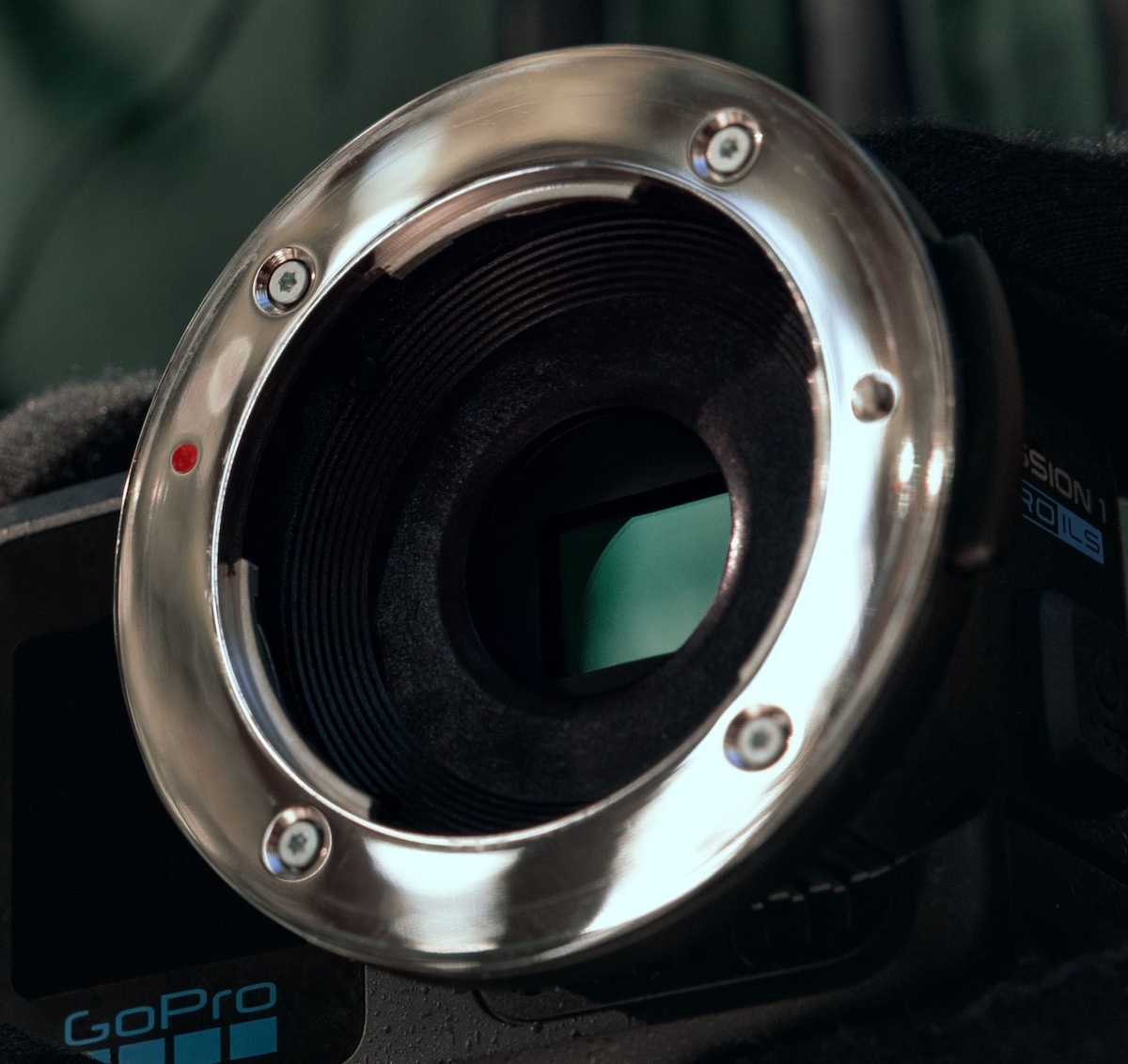
GoPro Mission 1 PRO ILS— A New Class of Ultra-Compact Mirrorless Cinema Camera with the Same GP3 Processor and 1″ Sensor as MISSION 1 PRO, Compatible with Micro Four Thirds (MFT) Lenses for Expanded Cinematic Versatility
GoPro Mission 1— Same as MISSION 1 PRO, but with 8K30 Video Capture; 4K120 Open Gate; 4K120 and 1080p240 Slo-Mo Frame Rates
GoPro Mission 1 Accessory Ecosystem Includes New Wireless Mic System; Point-and-Shoot Grip and Powered Grip; Higher-Capacity Enduro 2 Battery; I/O Expansion Media Mod and More
New 50MP 1″ Sensor features a larger surface area and larger native 1.6µm pixels and massive 3.2µm fused pixels—capturing more light for professional low-light performance, up to 14 stops of dynamic range at the sensor, and professional-grade image quality when paired with GoPro’s new GP3 processor and its image processing capabilities.
New GP3 Processor features an ultra-power-efficient 5nm design, enabling category-leading battery runtimes and thermal performance along with best-in-class resolutions, frame rates and image quality. An AI Neural Processor Unit (NPU) enables next-generation video pixel processing and stunning low-light image performance.
Incredible Low-Light Performance and Dynamic Range is made possible by the combination of the new 50MP 1″ sensor and the new GP3 processor with its advanced image processing. Capable of up to 14 stops of dynamic range at the sensor and giant 3.2µm fused pixels in Quad Bayer mode, the MISSION 1 Series’ imaging pipeline preserves exceptional detail in the darkest of shadows while protecting highlight details, resulting in beautifully balanced, true-to-life images.
Category-Leading 16:9 Video Resolutions, Frame Rates and Slow Motion are possible with MISSION 1 PRO and MISSION 1 PRO ILS, including professional-grade 8K 16:9 video at up to 60 frames per second (2X Slo-Mo), ultra-smooth 4K 16:9 at up to 240 frames per second (8X Slo-Mo), and up to 10-second burst 960 frames per second in 1080p 16:9 for shockingly smooth 32X Slo-Mo. You can also capture non-burst 1080p 16:9 (and 1440p 4:3) at 480 frames per second (16X Slo-Mo). These are the highest frame rates and slowest Slo-Mo rates in category, rivaling the capabilities of cameras costing tens of thousands of dollars. MISSION 1 enables 8K30, 4K120, and 1080p240 16:9 capture along with 4K120 and 1440p240 4:3 video.
Industry-Leading 8K30 and 4K120 Open Gate Video is supported in MISSION 1 PRO and MISSION 1 PRO ILS, enabling full sensor 4:3 captures for added flexibility for reframing, editing, and exporting content in multiple aspect ratios for different viewing platforms. The Series’ base model, MISSION 1, supports 4K120 Open Gate video capture.
Category-Leading Runtimes and Thermal Performance are made possible by the new ultra-power-efficient GP3 processor, advanced hardware optimizations, and the higher-capacity, fast-charging Enduro 2 Battery. The MISSION 1 Series of cameras deliver 5+ hours of recording at 1080p301 and 3+ hours of recording at 4K30 on a single charge. The Enduro 2 battery is also compatible with HERO13 Black cameras and likewise the MISSION 1 Series cameras can work with the older HERO13 Black Enduro battery, albeit with shorter runtimes2. The MISSION 1 Series has been designed from the ground up to deliver reliable, mission-critical performance in the most demanding use cases and environments.
13 Capture Modes Enable Convenient Pro-Capture: Each mode is tuned for specific environments or use-cases, using advanced machine learning and scene detection to deliver optimal image quality across a broad range of environments. From activity-specific underwater color science and tuned-stabilization in Dive Mode to face-aware framing and tone mapping in Vlog Mode, the MISSION 1 Series can simplify image-optimization for many common capture scenarios. Or you can choose to capture video with your own custom settings, bypassing all automated settings for complete control.
Category-Leading Bitrates, Color Depth and Control for Professionals: Dial up the bitrate to a stunning 240Mbps and capture HLG-HDR, 10-Bit Color with GP-Log2, and Timecode Sync for multi-camera shoots, or maximize quality while minimizing file size with GP3’s new advanced encoder.
Category-Leading Pro-Level Audio: 4 microphones deliver improved stereo recording and wind noise reduction while 32-Bit Float audio recording helps prevent clipping. And Bluetooth® 5.3 audio lets you wirelessly connect to compatible devices utilizing the Hands-Free Profile (HFP) v1.9 with Super Wideband (SWB) Speech, for high-fidelity wireless audio.
Category-Leading 50 Megapixel Photo Resolution and Image Quality thanks to the combination of the new 50MP 1″ sensor and new GP3 processor’s combined capabilities. Capture in RAW or leverage advanced scene detection and machine learning for category-leading HDR photos in the convenient SuperPhoto mode. With up to 14 stops of dynamic range at the sensor and GP3’s next-gen image processing—including the ability to burst capture at up to 60 photos per second—the MISSION 1 Series pushes the boundaries of compact camera photo capture in the same manner it does video.
Updated Design Increases Waterproofness to 66ft (20m): MISSION 1 and MISSION 1 PRO are waterproof to 66ft (20m) right out of the box without the need for housing, making them the best imaging solution for divers.
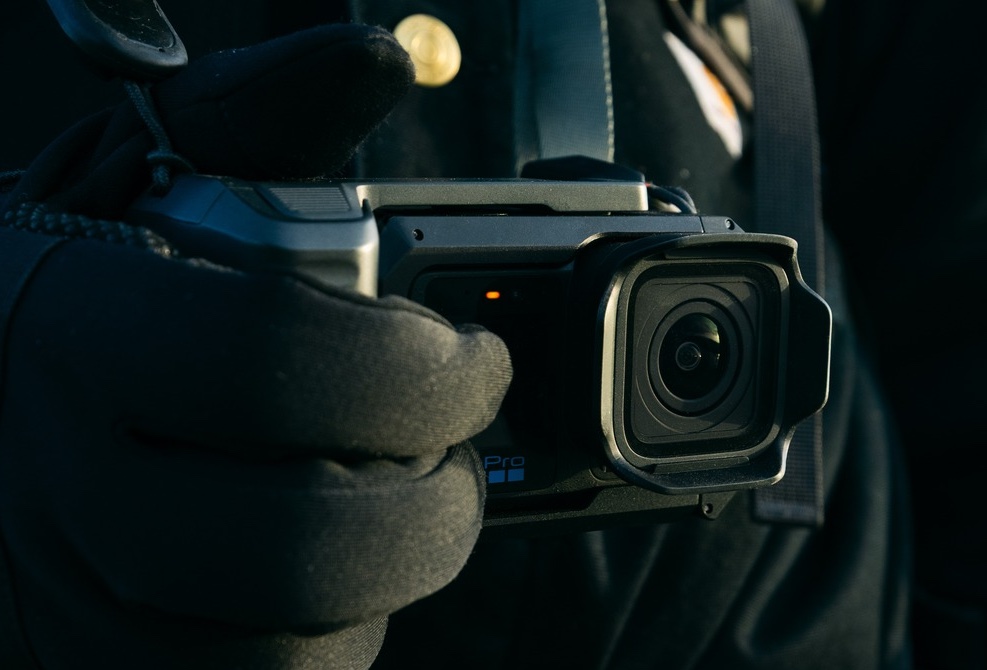
New Lens Design, Bigger Rear Display and Redesigned Buttons make the MISSION 1 Series easier to use in all use cases. Design improvements include an updated lens design with a category-widest 159° native field of view (FOV); a new OLED rear display which is 14% larger than previous flagship GoPro cameras; taller, chunkier raised buttons for easier use with gloves on; and a removable lens hood to reduce glare and lens flare for clearer images.
GoPro Labs Compatibility: Extend the capability of your MISSION 1 Series camera with over 1,000 custom features, settings and controls tailored for advanced users looking for maximum control. Learn more about GoPro Labs at GoPro.com.
MISSION 1 Series Lineup
MISSION 1 PRO: The flagship. Featuring a new, cutting-edge 50MP 1″ sensor, incredible low-light performance, 8K60 / 4K240 / 1080p960 16:9 video capture, 8K30 and 4K120 Open Gate 4:3 video capture, 50MP RAW photo capture, all powered by a new, ultra-power-efficient GP3 processor that enables category-leading image quality, battery life and thermal performance for mission-critical reliability in extreme use cases.
MISSION 1 PRO Grip Edition: The flagship camera bundled with an innovative versatile grip that transforms the camera into an even more rugged, ultra-capable feeling point-and-shoot camera designed for run-and-gun style capture. The grip functions as a 2-in-1 solution—as a lightweight, ergonomic grip for easy, one-handed on-the-move shots, or as a rugged, mountable metal cage for added protection with the option to mount vertically. Added features include cold shoe mounts, 1/4-20, magnetic latch mounting, and mounting fingers. Perfect for street photography, cinematography, travel and everyday convenience.
MISSION 1 PRO Creator Edition: The flagship camera bundled with the new MISSION 1 Series Media Mod for I/O port expansion and built-in microphone, the new Volta 2 Battery Grip for all-day power, and the new Wireless Mic Complete Kit for professional wireless audio. Perfect for vloggers and creators who want an ultra-capable and complete professional camera system that’s ready for any mission.
MISSION 1 PRO Ultimate Creator Edition: For creators looking for the best of everything and maximum flexibility, this is the flagship camera bundled with GoPro’s Fluid Pro AI gimbal for advanced stabilization in even the lowest light conditions as well as AI-driven subject tracking, the new Wireless Mic Complete Kit for a comprehensive professional audio solution, Light Mod 2 for compact, ultra-portable lighting and the new MISSION 1 Series Media Mod for I/O port expansion, enabling the addition of displays, microphones, headphones, lighting, batteries, and more.
MISSION 1 PRO ILS: The same 50MP 1″ Sensor and GP3 processor as MISSION 1 PRO, but in a mirrorless form with an interchangeable lens mount that supports compatibility with the vast universe of Micro Four Thirds (MFT) lenses and adapters that allows a virtually limitless range of lenses to be paired with the camera. MISSION 1 PRO ILS also supports in-camera HyperSmooth video stabilization with any rectilinear, prime focal length lens. This versatility, combined with its video stabilization, weatherproof design and trademark GoPro durability, makes MISSION 1 PRO ILS the world’s smallest, most rugged and versatile high-speed cinema camera at a fraction of the cost (and size) of comparable cameras. With more creative options than ever before—including telephoto, zoom, macro, and more—the possibilities are limitless, whatever your mission.
MISSION 1: The same as the flagship in every way but limited to 4K120 Open Gate video capture and 8K30, 4K120, 1080p240 16:9 video capture. 50MP photo capture is the same as in the flagship model. MISSION 1 is perfect for the creator who doesn’t require the higher Open Gate resolutions and category-leading frame rates of the flagship model but still wants the outstanding low-light and image quality benefits of the new 50MP 1″ sensor and ultra-power-efficient GP3 processor.
The MISSION 1 Series Accessory Ecosystem
Wireless Mic System: Capture crisp, professional sound anywhere with the Wireless Mic System. Designed for easy pairing with the MISSION 1 Series, GoPro HERO Black cameras, 3rd party DSLRs and phones, this compact, professional wireless audio system delivers crystal-clear 24-bit/48kHz audio and Dynamic Noise Reduction, keeping voices front-and-center in any setting. The ultra-small and light 10g transmitters are magnetic and can be clipped to clothes or objects. Adjustable gain and a Safety Track mode (recording a backup track at -6dB) ensure balanced, reliable sound no matter how dynamic your shoot gets. With 6.5 hours of runtime per mic plus a charging case offering two additional full charges, and up to 150 meters of wireless range, you’re ready for any creative mission.
Media Mod for MISSION 1 Series: The new Media Mod for the MISSION 1 Series has been redesigned from the ground up with a built-in multi-pattern mic and expanded I/O capability of your camera for production. Match the width of your stereo audio capture to the FOV of your video with eight different pickup pattern options. Three 3.5mm ports include an external microphone port, a line-in port for timecode sync, and a headset port for live audio level monitoring. A micro-HDMI port enables up to 4K60 video output for use with external monitors, video recorders, or live output for broadcasting. The Media Mod also features its own mounting system, so you can quickly insert or remove the camera when desired.
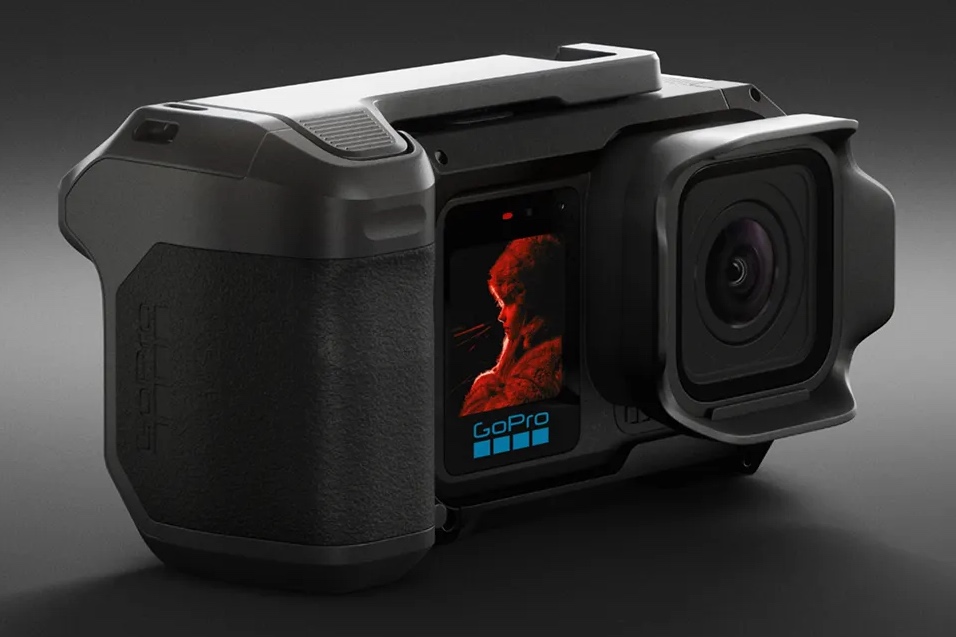
Point-and-Shoot Grip: Transform your GoPro into an ultra-capable point-and-shoot camera with this ergonomic, lightweight grip. Perfect for street, travel, and urban shooting, the grip’s versatile design features cold shoe mounts for lights and mics, a 1/4-20 thread for tripods, vertical mounting and pass-through access to the camera’s integrated fingers and magnetic mounting system. For added flexibility, the grip converts into a rugged metal cage for your camera, providing added durability and vertical mounting versatility.
Enduro 2 Battery: The 2150mAh Enduro 2 Battery delivers longer runtimes, fast-charging and a wider range of thermal performance compared to previous GoPro batteries. It’s also compatible with HERO13 Black. The MISSION 1 Series cameras can also work with the older HERO13 Black Enduro battery (albeit for shorter runtimes).
M-Series ND Filters: The ND Filter 4-pack (ND8, ND16, ND32, ND64) delivers cinematic motion blur and exposure control for MISSION 1 PRO and MISSION 1. The MISSION Series cameras auto-detect which filter you’re using and auto-adjust the shutter speed for the desired blur and exposure effect. You can also manually control motion blur and exposure.
Protective Housing: When your mission calls for it, the protective housing will keep your MISSION 1 or MISSION 1 PRO camera waterproof down to 196ft (60m). The built-in mounting fingers allow you to capture content both horizontally and vertically. MISSION 1 and MISSION 1 PRO are waterproof to 66ft (20m) without a housing, while MISSION 1 PRO ILS is weatherproof.
Volta 2: The premium Volta 2 powered battery grip, tripod, and remote features a built-in 5800mAh battery, integrated camera control, and ¼-20 mounting for up to 9 hours of 4K30 recording time3.
Light Mod 2: Add compact yet powerful LED lighting to your adventure or studio setup with Light Mod 2’s 200 lumen brightness, 33% increased battery capacity, and up to 100% longer runtimes4. Light Mod 2 includes an optimized diffuser design and versatile mounting for cold-shoe integration on Media Mod and Point-and-Shoot Grip or standalone light use.
Dual Battery Charger for Enduro 2: The fastest way to charge your MISSION 1 Series Enduro 2 camera batteries. Charge two batteries at once and easily check battery levels and charging status, even when the charger is unplugged. Comes with a high-performance Enduro 2 battery and is compatible with HERO13 Black Enduro Batteries.
Vertical Mount Adapter: Use this adapter to easily capture social media-friendly footage with three convenient vertical mounting options: built-in mounting fingers, ¼-20 mounting threads, and Magnetic Latch Mount compatibility.
The entire suite of MISSION 1 Series accessories will be available on a rolling basis beginning May 2026 through Q3 2026. GoPro will announce on-shelf availability as each accessory becomes available.
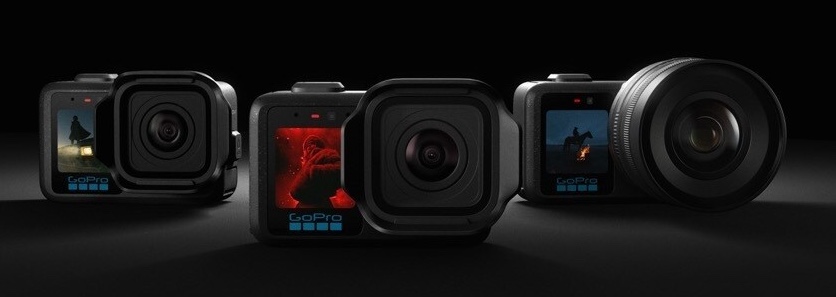
GoPro has announced a new line of cameras, dubbed the Mission 1 series, which includes something entirely new for the action-cam company: an interchangeable lens camera with a Micro Four Thirds mount.
There are three cameras in the series: the Mission 1, Mission 1 Pro, and Mission 1 Pro ILS. The latter has the headline-grabbing mount, while the standard models have an integrated lens that the company says provides a 159° field of view.
Image: GoPro
All three cameras are powered by a 50MP Type-1 (128mm²) sensor with a Quad Bayer design, allowing for 8K 16:9 video capture across all of the models. All three can shoot in open gate mode, using their whole 4:3 sensor, though this is where they start to diverge in capability.
The difference between the base and Pro models largely comes down to framerates, with GoPro saying that the standard Mission 1 is designed for someone who doesn't need high-resolution open gate recording, or super fast frame rates for slow motion. The Pro versions' specs seem to match those of the recently announced Sony IMX06A.
Mission 1
Mission 1 Pro / Pro ILS
8K open gate
—
30p
8K 16:9
30p
60p
4K open gate
120p
120p
4K 16:9
120p
240p
FullHD
240p
960p (10-second burst) 480p (continuous)
While the cameras can be used as standard action cameras, GoPro is also clearly targeting them at more professional users, too. They support HLG-HDR recording, as well as GoPro's GP-Log2 10-bit mode, as well as 32-bit float audio, which can help prevent clipping. The company is also making a version of its Media Mod for it, adding a multi-pickup-pattern, three 3.5mm jacks (one for audio in, one for audio out, and one for timecode) and a microHDMI port, which can output 4K/60.
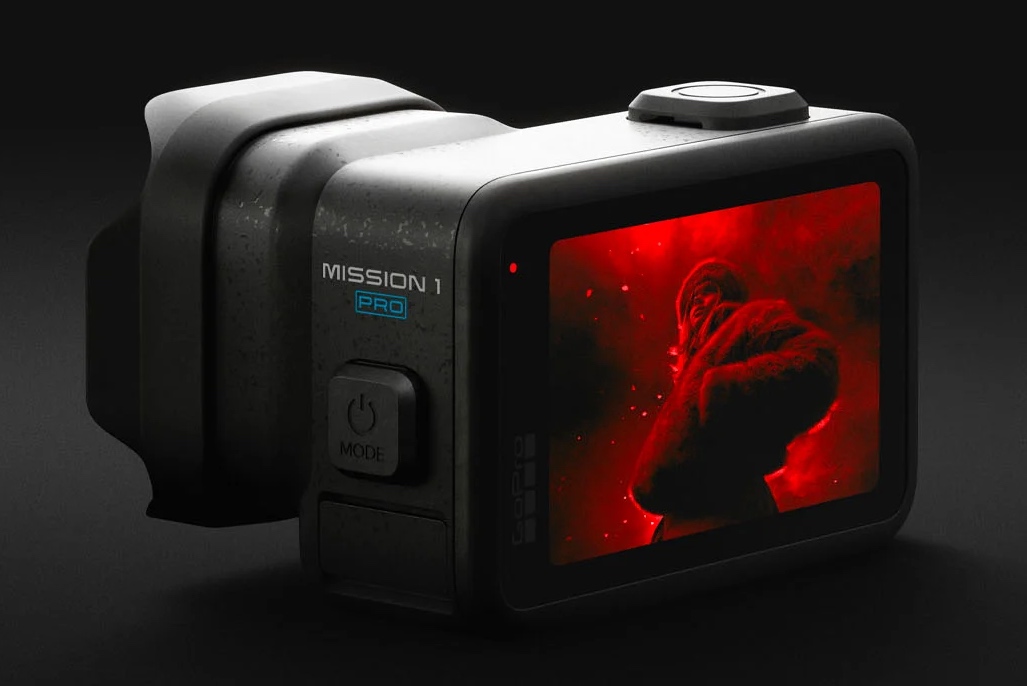
There are some physical changes compared to the Hero lineup of cameras too, with GoPro saying that the OLED display on the back is 14% larger, and the buttons are "chunkier" and more prominent, making them easier to use if you're wearing gloves.
Image: GoPro
The cameras are the first to be powered by the company's GP3 processor, which the company announced earlier this year. GoPro says that, compared to the GP2, its new chip has twice the processing power, which can help with things like noise reduction and scene recognition.
It's easy to get excited about the prospect of a small camera with a Type-1 sensor that can be used with compact Micro Four Thirds lenses, especially when GoPro seems to be leaning into the idea of using the Mission 1 for photography. It can shoot Raw, and the company is selling an add-on "Point-and-Shoot Grip" that it says is designed for "run-and-gun" handheld capture.
GoPro says the Mission 1 Pro ILS can use its "HyperSmooth" stabilization algorithm with "any rectilinear, prime focal length lens." The bigger news, though, may be what the mount doesn't appear to have in the press images: electrical contacts. Image: GoPro
However, there are still some questions about how an ILC GoPro will work, both for stills and videographers. The biggest is focus: GoPro's press release doesn't mention any sort of autofocusing system, and the company's main offerings have usually come with fixed-focus lenses. Having to manually focus on such a small display would likely end up being a dealbreaker for many potential buyers.
The smaller sensor also contributes a further 1.32x crop, relative to a Four Thirds chip, 2.64x relative to full-frame.
In some ways, the company has been building towards an interchangeable lens camera for a while. The company has been shipping accessory lenses like its Anamorphic and Macro "Mods" for a few years, and it harbored ambitions of going after professional users long before introducing those. Still, it's a very unexpected move from the company, not least because it built its brand on making the toughest cameras out there; you can't water- and shock-proof a camera with a lens mount as much as you can one with a fixed lens (though the company does say the Mission 1 ILS is "weatherproof").
Companies like Insta360 and DJI continue to make inroads into the traditional action cam market
But as companies like Insta360 and DJI continue to make inroads into the traditional action cam market, it's easy to see why GoPro is looking to expand its offerings. Just last week, the company announced it was restructuring and laying off almost a quarter of its workforce, so it clearly needs to do something big to win customers back, and it's hard to ignore a swing for the fences like this.
The company says pricing for the cameras will be announced later in the year. The Mission 1 and Mission Pro 1 will be available for preorder starting May 21st, and will hit store shelves a week after. GoPro says the Mission 1 ILS will release later, in Q3 of this year.
GoPro Announces New MISSION 1 Line of Professional 8K and 4K Open Gate, Compact Cinema Cameras for Filmmakers, Creators and Aspiring Enthusiasts
The World’s Smallest, Lightest, Most Rugged Cinema Cameras Designed for Any Mission:
MISSION 1 PRO— Featuring a Cutting-Edge 50MP 1" Sensor; Incredible Low-Light Performance; 8K60, 4K240, and 1080p960 Ultra-High Frame Rates; 8K30 and 4K120 Open Gate Video Capture; and New GP3 Processor Delivering Category-Leading Image Quality, Battery Runtime, and Thermal Performance for Extreme Use Cases
MISSION 1 PRO ILS— A New Class of Ultra-Compact Mirrorless Cinema Camera with the Same Sensor as MISSION 1 PRO, Compatible with Micro Four Thirds (MFT) Lenses for Expanded Cinematic Versatility
MISSION 1— Same as MISSION 1 PRO, but with 8K30 Video Capture; 4K120 Open Gate; 4K120 and 1080p240 Slo-Mo Frame Rates
MISSION 1 Accessory Ecosystem Includes New Wireless Mic System; Point-and-Shoot Grip and Powered Grip; Higher-Capacity Enduro 2 Battery; I/O Expansion Media Mod and More
SAN MATEO, Calif., Apr. 14, 2026 — GoPro, Inc. (NASDAQ: GPRO) today announced its new MISSION 1 Series of cameras— the world’s smallest, lightest, and most rugged 8K and 4K Open Gate cinema cameras. Featuring a new 50MP 1” sensor and GoPro’s new, ultra-efficient GP3 processor, the MISSION 1 Series cameras deliver category-leading resolutions, frame rates, runtimes and thermal performance for mission-critical reliability in even the most demanding environments. The new series is comprised of three camera models—MISSION 1 PRO, MISSION 1 and MISSION 1 PRO ILS which features an interchangeable Micro Four Thirds lens system compatible with an even broader array of lenses via adapters.
Made for the Pursuit—the MISSION 1 Series is designed from the ground up to meet the needs of today’s demanding filmmakers and creators. Whatever your mission, GoPro.
“The MISSION 1 Series is the pinnacle of performance for low-cost, compact cinema cameras,” said Nicholas Woodman, GoPro’s founder and CEO. “Our most demanding, pro-minded customers have asked us for years to make this very line of cameras, and we’ve finally delivered. The MISSION 1 Series is built to withstand the most extreme environments our customers push them into. The footage is going to look amazing.”
“With the launch of the MISSION 1 Series, GoPro is entering the premium end of the digital imaging market in a significant way," said Pablo Lema, GoPro's Senior Vice President of Product. "The combination of our new 50 megapixel 1” sensor and ultra-efficient GP3 processor sets a new performance bar for compact cinema cameras, enabling resolutions, frame rates, low-light performance, runtimes and thermal capabilities never seen before in cameras this small. We expect the MISSION 1 Series to expand the creative potential of filmmakers and creators around the world, similar to the impact GoPro made when it pioneered the category for durable, ultra-capable compact cameras.”
MISSION 1 Series Features
New 50MP 1” Sensor features a larger surface area and larger native 1.6µm pixels and massive 3.2µm fused pixels—capturing more light for professional low-light performance, up to 14 stops of dynamic range at the sensor, and professional-grade image quality when paired with GoPro’s new GP3 processor and its image processing capabilities.
New GP3 Processor features an ultra-power-efficient 5nm design, enabling category-leading battery runtimes and thermal performance along with best-in-class resolutions, frame rates and image quality. An AI Neural Processor Unit (NPU) enables next-generation video pixel processing and stunning low-light image performance.
Incredible Low-Light Performance and Dynamic Range is made possible by the combination of the new 50MP 1” sensor and the new GP3 processor with its advanced image processing. Capable of up to 14 stops of dynamic range at the sensor and giant 3.2µm fused pixels in Quad Bayer mode, the MISSION 1 Series’ imaging pipeline preserves exceptional detail in the darkest of shadows while protecting highlight details, resulting in beautifully balanced, true-to-life images.
Category-Leading 16:9 Video Resolutions, Frame Rates and Slow Motion are possible with MISSION 1 PRO and MISSION 1 PRO ILS, including professional-grade 8K 16:9 video at up to 60 frames per second (2X Slo-Mo), ultra-smooth 4K 16:9 at up to 240 frames per second (8X Slo-Mo), and up to 10-second burst 960 frames per second in 1080p 16:9 for shockingly smooth 32X Slo-Mo. You can also capture non-burst 1080p 16:9 (and 1440p 4:3) at 480 frames per second (16X Slo-Mo). These are the highest frame rates and slowest Slo-Mo rates in category, rivaling the capabilities of cameras costing tens of thousands of dollars. MISSION 1 enables 8K30, 4K120, and 1080p240 16:9 capture along with 4K120 and 1440p240 4:3 video.
Industry-Leading 8K30 and 4K120 Open Gate Video is supported in MISSION 1 PRO and MISSION 1 PRO ILS, enabling full sensor 4:3 captures for added flexibility for reframing, editing, and exporting content in multiple aspect ratios for different viewing platforms. The Series’ base model, MISSION 1, supports 4K120 Open Gate video capture.
Category-Leading Runtimes and Thermal Performance are made possible by the new ultra-power-efficient GP3 processor, advanced hardware optimizations, and the higher-capacity, fast-charging Enduro 2 Battery. The MISSION 1 Series of cameras deliver 5+ hours of recording at 1080p301 and 3+ hours of recording at 4K30 on a single charge. The Enduro 2 battery is also compatible with HERO13 Black cameras and likewise the MISSION 1 Series cameras can work with the older HERO13 Black Enduro battery, albeit with shorter runtimes2. The MISSION 1 Series has been designed from the ground up to deliver reliable, mission-critical performance in the most demanding use cases and environments.
13 Capture Modes Enable Convenient Pro-Capture: Each mode is tuned for specific environments or use-cases, using advanced machine learning and scene detection to deliver optimal image quality across a broad range of environments. From activity-specific underwater color science and tuned-stabilization in Dive Mode to face-aware framing and tone mapping in Vlog Mode, the MISSION 1 Series can simplify image-optimization for many common capture scenarios. Or you can choose to capture video with your own custom settings, bypassing all automated settings for complete control.
Category-Leading Bitrates, Color Depth and Control for Professionals: Dial up the bitrate to a stunning 240Mbps and capture HLG-HDR, 10-Bit Color with GP-Log2, and Timecode Sync for multi-camera shoots, or maximize quality while minimizing file size with GP3’s new advanced encoder.
Category-Leading Pro-Level Audio: 4 microphones deliver improved stereo recording and wind noise reduction while 32-Bit Float audio recording helps prevent clipping. And Bluetooth® 5.3 audio lets you wirelessly connect to compatible devices utilizing the Hands-Free Profile (HFP) v1.9 with Super Wideband (SWB) Speech, for high-fidelity wireless audio.
Category-Leading 50 Megapixel Photo Resolution and Image Quality thanks to the combination of the new 50MP 1” sensor and new GP3 processor’s combined capabilities. Capture in RAW or leverage advanced scene detection and machine learning for category-leading HDR photos in the convenient SuperPhoto mode. With up to 14 stops of dynamic range at the sensor and GP3’s next-gen image processing—including the ability to burst capture at up to 60 photos per second—the MISSION 1 Series pushes the boundaries of compact camera photo capture in the same manner it does video.
Updated Design Increases Waterproofness to 66ft (20m): MISSION 1 and MISSION 1 PRO are waterproof to 66ft (20m) right out of the box without the need for housing, making them the best imaging solution for divers.
New Lens Design, Bigger Rear Display and Redesigned Buttons make the MISSION 1 Series easier to use in all use cases. Design improvements include an updated lens design with a category-widest 159° native field of view (FOV); a new OLED rear display which is 14% larger than previous flagship GoPro cameras; taller, chunkier raised buttons for easier use with gloves on; and a removable lens hood to reduce glare and lens flare for clearer images.
GoPro Labs Compatibility: Extend the capability of your MISSION 1 Series camera with over 1,000 custom features, settings and controls tailored for advanced users looking for maximum control. Learn more about GoPro Labs at GoPro.com.
MISSION 1 Series Lineup
MISSION 1 PRO: The flagship. Featuring a new, cutting-edge 50MP 1” sensor, incredible low-light performance, 8K60 / 4K240 / 1080p960 16:9 video capture, 8K30 and 4K120 Open Gate 4:3 video capture, 50MP RAW photo capture, all powered by a new, ultra-power-efficient GP3 processor that enables category-leading image quality, battery life and thermal performance for mission-critical reliability in extreme use cases.
MISSION 1 PRO Grip Edition: The flagship camera bundled with an innovative versatile grip that transforms the camera into an even more rugged, ultra-capable feeling point-and-shoot camera designed for run-and-gun style capture. The grip functions as a 2-in-1 solution—as a lightweight, ergonomic grip for easy, one-handed on-the-move shots, or as a rugged, mountable metal cage for added protection with the option to mount vertically. Added features include cold shoe mounts, 1/4-20, magnetic latch mounting, and mounting fingers. Perfect for street photography, cinematography, travel and everyday convenience.
MISSION 1 PRO Creator Edition: The flagship camera bundled with the new MISSION 1 Series Media Mod for I/O port expansion and built-in microphone, the new Volta 2 Battery Grip for all-day power, and the new Wireless Mic Complete Kit for professional wireless audio. Perfect for vloggers and creators who want an ultra-capable and complete professional camera system that’s ready for any mission.
MISSION 1 PRO Ultimate Creator Edition: For creators looking for the best of everything and maximum flexibility, this is the flagship camera bundled with GoPro’s Fluid Pro AI gimbal for advanced stabilization in even the lowest light conditions as well as AI-driven subject tracking, the new Wireless Mic Complete Kit for a comprehensive professional audio solution, Light Mod 2 for compact, ultra-portable lighting and the new MISSION 1 Series Media Mod for I/O port expansion, enabling the addition of displays, microphones, headphones, lighting, batteries, and more.
MISSION 1 PRO ILS: The same 50MP 1” Sensor and GP3 processor as MISSION 1 PRO, but in a mirrorless form with an interchangeable lens mount that supports compatibility with the vast universe of Micro Four Thirds (MFT) lenses and adapters that allows a virtually limitless range of lenses to be paired with the camera. MISSION 1 PRO ILS also supports in-camera HyperSmooth video stabilization with any rectilinear, prime focal length lens. This versatility, combined with its video stabilization, weatherproof design and trademark GoPro durability, makes MISSION 1 PRO ILS the world’s smallest, most rugged and versatile high-speed cinema camera at a fraction of the cost (and size) of comparable cameras. With more creative options than ever before—including telephoto, zoom, macro, and more—the possibilities are limitless, whatever your mission.
MISSION 1: The same as the flagship in every way but limited to 4K120 Open Gate video capture and 8K30, 4K120, 1080p240 16:9 video capture. 50MP photo capture is the same as in the flagship model. MISSION 1 is perfect for the creator who doesn’t require the higher Open Gate resolutions and category-leading frame rates of the flagship model but still wants the outstanding low-light and image quality benefits of the new 50MP 1” sensor and ultra-power-efficient GP3 processor.
The MISSION 1 Series Accessory Ecosystem
Wireless Mic System: Capture crisp, professional sound anywhere with the Wireless Mic System. Designed for easy pairing with the MISSION 1 Series, GoPro HERO Black cameras, 3rd party DSLRs and phones, this compact, professional wireless audio system delivers crystal-clear 24-bit/48kHz audio and Dynamic Noise Reduction, keeping voices front-and-center in any setting. The ultra-small and light 10g transmitters are magnetic and can be clipped to clothes or objects. Adjustable gain and a Safety Track mode (recording a backup track at -6dB) ensure balanced, reliable sound no matter how dynamic your shoot gets. With 6.5 hours of runtime per mic plus a charging case offering two additional full charges, and up to 150 meters of wireless range, you’re ready for any creative mission.
Media Mod for MISSION 1 Series: The new Media Mod for the MISSION 1 Series has been redesigned from the ground up with a built-in multi-pattern mic and expanded I/O capability of your camera for production. Match the width of your stereo audio capture to the FOV of your video with eight different pickup pattern options. Three 3.5mm ports include an external microphone port, a line-in port for timecode sync, and a headset port for live audio level monitoring. A micro-HDMI port enables up to 4K60 video output for use with external monitors, video recorders, or live output for broadcasting. The Media Mod also features its own mounting system, so you can quickly insert or remove the camera when desired.
Point-and-Shoot Grip: Transform your GoPro into an ultra-capable point-and-shoot camera with this ergonomic, lightweight grip. Perfect for street, travel, and urban shooting, the grip’s versatile design features cold shoe mounts for lights and mics, a 1/4-20 thread for tripods, vertical mounting and pass-through access to the camera’s integrated fingers and magnetic mounting system. For added flexibility, the grip converts into a rugged metal cage for your camera, providing added durability and vertical mounting versatility.
Enduro 2 Battery: The 2150mAh Enduro 2 Battery delivers longer runtimes, fast-charging and a wider range of thermal performance compared to previous GoPro batteries. It’s also compatible with HERO13 Black. The MISSION 1 Series cameras can also work with the older HERO13 Black Enduro battery (albeit for shorter runtimes).
M-Series ND Filters: The ND Filter 4-pack (ND8, ND16, ND32, ND64) delivers cinematic motion blur and exposure control for MISSION 1 PRO and MISSION 1. The MISSION Series cameras auto-detect which filter you’re using and auto-adjust the shutter speed for the desired blur and exposure effect. You can also manually control motion blur and exposure.
Protective Housing: When your mission calls for it, the protective housing will keep your MISSION 1 or MISSION 1 PRO camera waterproof down to 196ft (60m). The built-in mounting fingers allow you to capture content both horizontally and vertically. MISSION 1 and MISSION 1 PRO are waterproof to 66ft (20m) without a housing, while MISSION 1 PRO ILS is weatherproof.
Volta 2: The premium Volta 2 powered battery grip, tripod, and remote features a built-in 5800mAh battery, integrated camera control, and ¼-20 mounting for up to 9 hours of 4K30 recording time3.
Light Mod 2: Add compact yet powerful LED lighting to your adventure or studio setup with Light Mod 2’s 200 lumen brightness, 33% increased battery capacity, and up to 100% longer runtimes4. Light Mod 2 includes an optimized diffuser design and versatile mounting for cold-shoe integration on Media Mod and Point-and-Shoot Grip or standalone light use.
Dual Battery Charger for Enduro 2: The fastest way to charge your MISSION 1 Series Enduro 2 camera batteries. Charge two batteries at once and easily check battery levels and charging status, even when the charger is unplugged. Comes with a high-performance Enduro 2 battery and is compatible with HERO13 Black Enduro Batteries.
Vertical Mount Adapter: Use this adapter to easily capture social media-friendly footage with three convenient vertical mounting options: built-in mounting fingers, ¼-20 mounting threads, and Magnetic Latch Mount compatibility.
The entire suite of MISSION 1 Series accessories will be available on a rolling basis beginning May 2026 through Q3 2026. GoPro will announce on-shelf availability as each accessory becomes available.
GoPro Quik App & GoPro Subscription
The MISSION 1 Series of cameras is compatible with the Quik app and associated GoPro Subscriber benefits:
Highlight Videos Automatically Sent to Your Phone: Available with or without a subscription, simply plug in your GoPro when connected to your home Wi-Fi. While it’s charging, your footage is automatically uploaded to the cloud and used to make a highlight video complete with beat-synced music and effects. Videos are automatically sent to your phone and ready to share.
Edit Your Shots with the Quik App: Tap into an array of easy-to-use tools that let you edit your footage like a pro. You can tweak the highlight videos created by the app or make your own videos from scratch. You can also zoom in, crop, add filters and data overlays, and more with your footage.
Easy Transferring + Unlimited Cloud Backup: Transferring photos and videos to your phone via the Quik app is a snap with wireless upload. There’s also unlimited cloud storage with hassle-free auto-upload. Just plug in your camera when connected to your home Wi-Fi and your GoPro does the rest.
GoPro customers can unlock the above with the Premium or Premium+ GoPro subscriptions, available in the Quik app or at GoPro.com.
To learn more about the new MISSION 1 Series camera lineup and ecosystem, download the GoPro Quik App or purchase a GoPro Subscription, visit GoPro.com.
MISSION 1 PRO, MISSION 1 PRO Grip Edition, and MISSION 1 will be available for preorder beginning May 21st, with global on-shelf availability starting May 28th. MISSION 1 PRO ILS, MISSION 1 PRO Creator Edition, and MISSION 1 PRO Ultimate Creator Edition will be available beginning Q3 2026. Sign up to be notified of product availability at GoPro.com.
1 In Endurance Mode
2 Though Enduro for HERO13 Black batteries are compatible with MISSION 1 PRO, they will not give you the extended runtimes and fast-charging capabilities of Enduro 2 for MISSION 1 PRO batteries. Only authentic HERO13 Black Enduro batteries are compatible.
3 Total recording time based on recording 4K footage (average of 5.97 hours total) at 30 frames per second with Bluetooth® on and using the combined power of a fully charged MISSION 1 Series camera with an Enduro 2 battery and Volta 2 battery grip at 77°F (25°C). Recording times may vary with HERO13 Black, HERO12 Black, camera settings and environmental conditions.
4 Measured in Level 3 Brightness Mode. Battery life may vary based on usage and other external conditions.
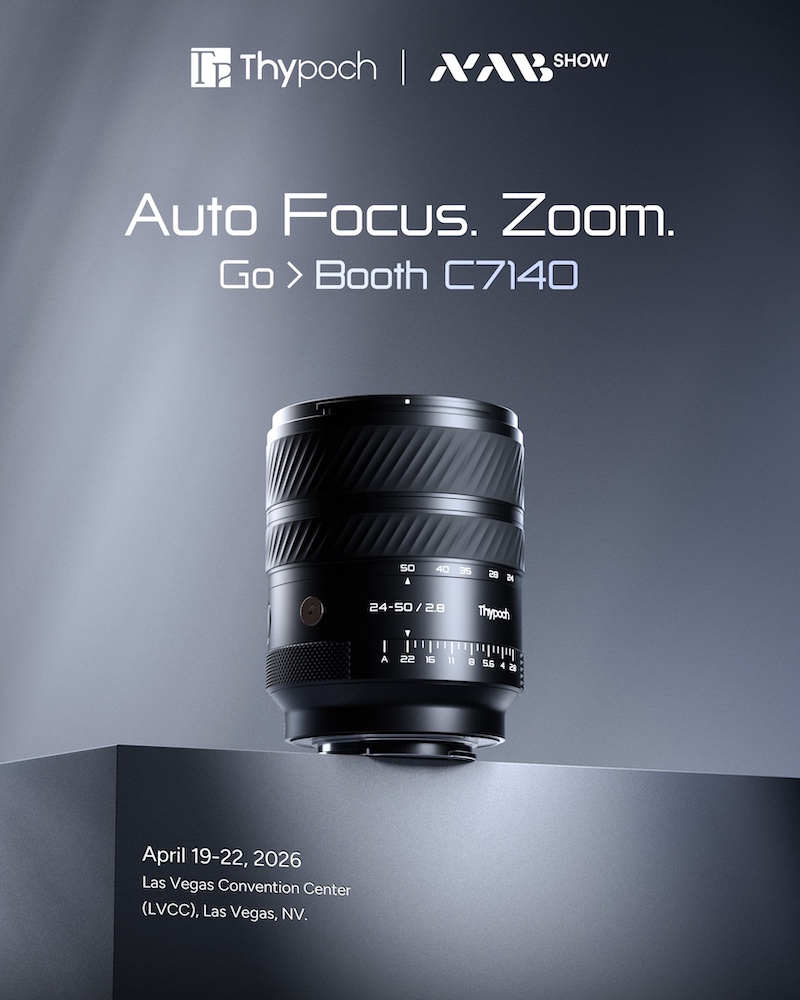
Here are some of the new lenses that will be announced at the 2026 NAB show:
Viltrox is teasing the release of its first large-aperture APO AF lens at the 2026 NAB show (9 pm, April 20). Two new lenses are expected to be announced at the same price as the 85mm f/2 EVO lens ($275). See this post for additional information. Check the official website for updates. Previous coverage of Viltrox lenses can be found here.
Update – a new Viltrox LAB lens will be announced on April 17th (most likely a new 35mm f/1.2 without a LCD screen).
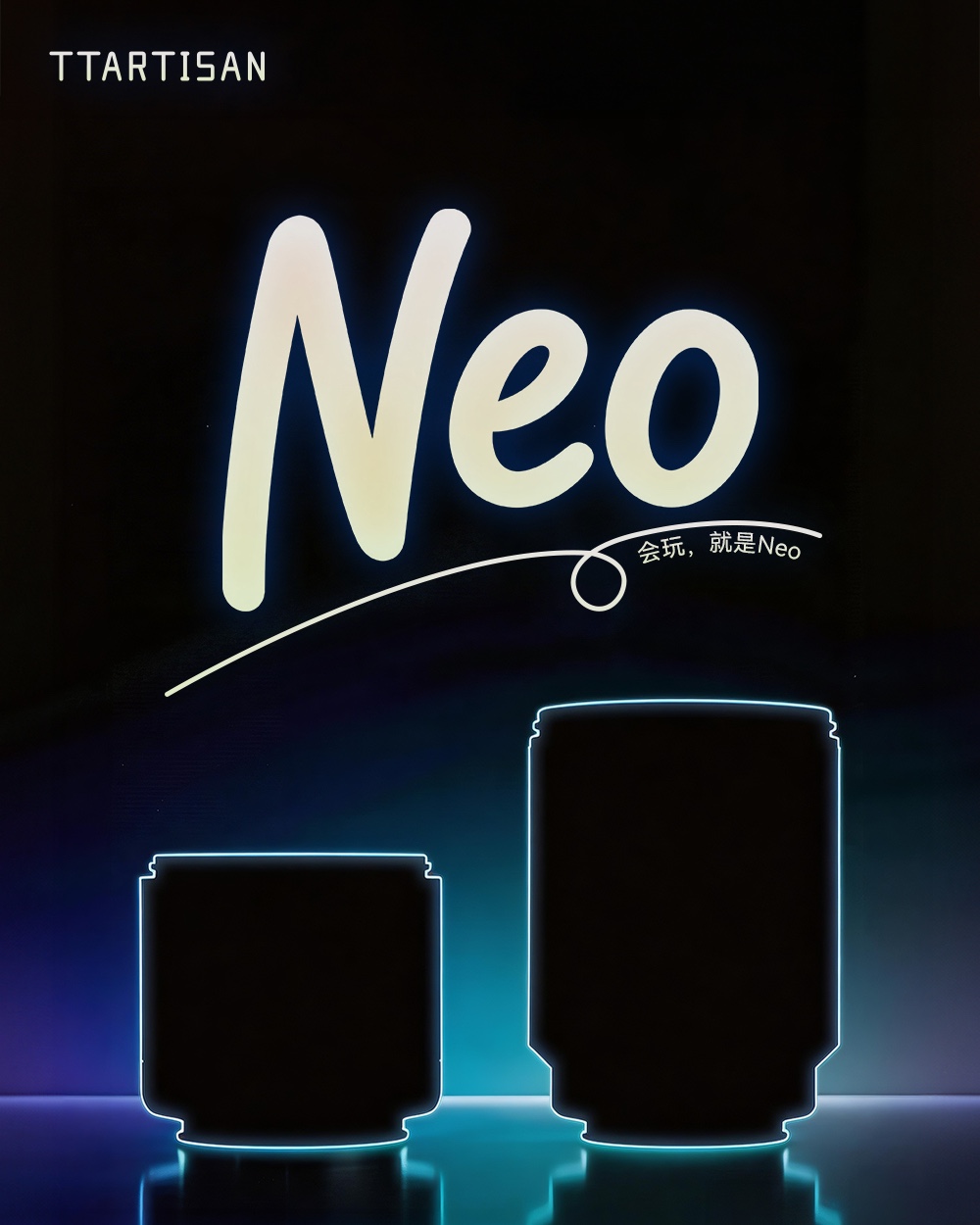
TTartisan is teasing the launch of two new full-frame AF lenses: “Delivering exceptional image quality, premium optical glass construction, crafted with the spirit of a master artisan.” TTArtisan has just launched a new line called Air, and it seems they’re also planning a new lens line called Neo. Check the official website for updates. Previous coverage of TTartisan lenses can be found here.
Adobe Lightroom is getting a new competitor from a surprising place. BlackMagic has added what looks to be a shockingly complete set of photo editing tools to the latest version of its Davinci Resolve software, which has traditionally been designed primarily for video editing, color work, and sound design.
Resolve 21 gains a new "Photo" mode, which lets you organize a collection of stills into albums, apply ratings and labels and even search through all your images with an AI-powered tool that you can use to find photos of certain kinds of subjects. The company says it "worked closely" with camera manufacturers to support Raw stills from Canon, Sony, Nikon, Fujifilm and Apple, but you can also use it to edit JPEGs and HEIC files. There's even a tethering mode for certain Sony and Canon cameras.
Node-based editing will take some getting used to, but can be a powerful tool, depending on how you edit.
The company's main pitch for Resolve as a photo editor centers around its color tools. They're extremely robust, as they're designed for editing movies, but offer a lot of flexibility for stills too. The editor uses what's known as a node-based approach, which lets you add adjustments as independent effects that can either chain together or not affect each other. For example, if you select part of your image using Resolve's "Magic Mask" feature, you can have your base color adjustments apply to the entire image, but have certain edits only applied to the masked area.
While nodes can take a little bit of practice to wrap your head around, they can be a powerful and flexible way to edit. Using them isn't absolutely required, though; the software also has built-in "Film Looks" presets that you can customize, and supports applying Look Up Tables, or LUTs, to your photos. And if you just want to edit basics like lightness, color temperature, saturation, etc., you can use more traditional sliders. Resolve also includes basic crop and rotation tools, too.
Resolve's Raw editing tools will be more familiar than its color editing ones.
BlackMagic also says that edits and adjustments can be accelerated by your computer's GPU, which it claims allows Resolve to process photos "dramatically faster than conventional photo applications."
During a livestream announcing the update, BlackMagic's CEO said that the Photos mode will probably receive a lot of tweaks and improvements over time. But if it provides anything like the capabilities that BlackMagic has promised, it could be a viable competitor to more established programs like Adobe Lightroom and Capture One Studio right off the bat.
That's especially true given the price. Davinici Resolve is available for free, though to get all of its features, you'll have to pay $300 for the "Studio" version*. However, Blackmagic tells us that, currently, there's no differences between the free and Studio versions when it comes to the photos page, though some features of the color editor, and many of the program's AI tools, require a paid license.
Davinici Resolve 21 is being released in beta today, though it's worth taking that label seriously. We weren't able to successfully export a photo while testing to see if there were any obvious limitations, with the software just giving us an error message about not being able to decode it, so it seems like there's still definitely some work to be done.
The company also announced plenty of features for video editors, too, which largely center around AI. The software now has a suite of built-in AI-powered effects, such as voice generation, "CineFocus," which lets you add customizable blur to your video, actor aging/deaging tools, blemish removal and more. Many of those, and the software's other video-focused tools, such as AI-upscaling and noise reduction, can also be used when editing stills.
* - Currently, that's a one-time fee, with Studio owners getting free upgrades to each subsequent version. However, during the livestream, BlackMagic's CEO mentioned that the company may need to start charging for upgrades someday.
Concept: Digital conversion system for analog cameras
Sensor: Sony APS-C (16–21 megapixels)
Storage: 256GB internal SSD
Image Formats: RAW and JPEG
Design Philosophy: All-Inside Design, No external screen, No external cables
Connectivity: Bluetooth synchronization + Wi-Fi image transfer
How it works:
Insert the system into the camera’s film compartment
The sensor sits in the film gate
The roll module occupies the film chamber
Shoot normally using the camera’s mechanical shutter
Images are stored internally and transferred later
How it works:
I’m Back Roll APS-C sits exactly where the film normally goes.
Inside the roll, there is a 26MP APS-C Sony IMX571 sensor.
To capture an image, you first need to advance the camera, moving the film lever and arming the shutter mechanism.
Then, using our remote control, you click, synchronize and trigger the photo, just like in the old days.
This way it preserves the rhythm and experience of shooting film – including missing a shot now and then – while recording everything digitally.
This version works with all 35mm film cameras.
For the first time, it will also be possible to use the system with underwater cameras such as Nikonos and other similar models.
The reason is simple: everything is contained inside the body of the device. There are no external parts required.
In our previous models, I’m Back 35 and I’m Back Film, an external module was necessary. With this new version, the entire system is integrated internally, which makes compatibility much broader.
Another important improvement is the new, larger sensor. This version uses an APS-C sensor, providing better image quality and a larger capture area.
Other photography-related projects currently available on Kickstarter:
Satoshi Maetaki (left) and Yutaka Nakamura (right) holding the Canon RF 14mm F1.4 L VCM and RF 7-14mm F2.8-3.5 L Fisheye STM, respectively. Photo: Mitchell Clark
Last year, we had the opportunity to tour Canon's lens factory in Utsunomiya, to get a look at how the company produces its optics. This year at CP+, we had the chance to talk to some of the people who play a part in designing the lenses made there: Satoshi Maetaki, general manager of the Optics Technology R&D Center and Yutaka Nakamura, assistant manager at the IMG Products Planning Center.
Our conversation largely centered around two of the company's latest releases, the RF 14mm F1.4 L VCM and the RF 7-14mm F2.8-3.5 L Fisheye STM, but we also got to talk about some of the things the engineers consider when designing a lens, some of the tools and tech that helps them with that process and how they decide which lenses to work on.
Considering what lenses to make next
Nakamura says the process for deciding what lens to make next is a holistic one, based on several factors. "We always consider: 'what is the ideal lens lineup?' That’s always in our mind," he says. "It’s not just the market environment or the user’s feedback. We also have to consider the possible future advancement of our core technologies, and how consumers’ shooting styles will change."
"We always consider: 'what is the ideal lens lineup?'"
While many of Canon's recent lenses have been full-frame designs, in our interview with Canon's top executives, Go Tokura, Executive Vice President and Head of Canon's Imaging Group, said the company is still interested in crop systems. "We won't stop exploring the field of APS-C lenses," he says. "Our principle is both full-frame and APS-C. We will continue to explore."
Advanced materials, corrections and simulations
Once they determine what lens to make, the engineers and planners have to figure out how to actually build it. According to Maetaki, the decision on whether to use digital distortion correction is made at the very beginning of the process, as was the case for the 14mm F1.4 L VCM. "We developed this lens under the precondition that distortion correction is to be done on the camera side," he says. "Because some of the correction can be done by the body, the lens can be smaller."
"We developed this lens under the precondition that distortion correction is to be done on the camera side"
As with many other lens makers we've talked to, Maetaki said special elements like Canon's BR and fluorite lenses are especially important when it comes to making a high-performance lens that's still relatively compact.
He also says that Canon is taking advantage of recent advancements in simulation tech for lens designs. "At the time of development, we have a better idea of how it’s going to be post-correction. Thanks to the development of the simulation technology, we can select the optimal design." As the company designs the lens, it can run simulations in tandem with the physical design work it's doing.
AF motors
For modern mirrorless lenses, choosing which kind of actuator to use for the autofocus is also an essential part of the process. According to Maetaki, the decision is made on a case-by-case basis; sometimes the company will choose an autofocus technology based on the optical design, other times the type of autofocus actuator may influence the lens' construction.
"Simply put, we select the motor depending on the concept of each lens," says Nakamura. "Is it for professionals, for high-end amateurs, entry-level? Or is it specialized for still images, or a hybrid between stills and video? Also, price range is important for us to consider. And focal length, the maximum aperture… Based on all these elements, we’ll decide which motor or actuator is most suitable."
In the case of the 14mm F1.4 L VCM, the company went with the namesake voice coil motors because of their ability to move the lens's relatively large and heavy elements. And even though the RF 7-14mm F2.8-3.5 L Fisheye STM is a modern version of the DSLR-era EF 8-15mm F4L Fisheye USM, Canon decided not to go with the ring-type USM motor again. According to Nakamura, this was a lesson it applied from a previous lens, the RF 10-20mm F4 L IS STM, from 2023.
"That was an ultra-wide lens that had the STM as well," he says. "That let it be compact with quiet, speedy, smooth autofocus. We took that lesson and applied it to this model."
Making a line of lenses the same size
The lenses in Canon's VCM lineup have very similar dimensions to make it easier to swap between them if you're using a gimbal or other video setup. Image: Canon
One notable aspect of Canon's F1.4 VCM lineup is how all the lenses are all very similarly-sized, from 14mm to 85mm. Nakamura says this is so video shooters can use all the same accessories, such as ND filters, follow focus units and rigs, even when switching between lenses. "That’s why we stick with the same barrel size or diameter, so those accessory changes don’t become a burden. So this is one of the determining factors when we’re deciding to add a lens to the lineup. We have to consider all this, including the shooting styles of our users."
According to Maetaki, achieving this isn't actually as difficult an engineering challenge as it might seem. "With current focal lengths, it’s not much of a problem," he says. "If the focal length becomes even longer, the difficulty level goes way up. Because when that happens, the diameter of the glass becomes larger, so it’s harder to fit." He says that from 14mm to 85mm it's fine, but perhaps that means we shouldn't hold our breath for something like a 100mm entry in the F1.4 VCM lineup.
This article is based on an interview by Mitchell Clark at CP+ 2026. It has been edited for clarity and flow. You can read our interview covering Canon's camera business by clicking the link below.
GoPro will unveil a new generation of cameras at the 2026 NAB Show this month (April 18–22). Here is the first leaked picture of one of the upcoming models – you can clearly see the larger lens, indicating a bigger sensor:
Here is what to expect from the new GoPro camera:
GP3 Processor (core upgrade): GoPro’s first new chip in 5 years – a custom 5nm SoC with >2× the pixel processing power of the old GP2, plus a dedicated AI Neural Processing Unit (NPU) for real-time scene recognition, subject detection, and smarter image processing.
Larger sensors: Expected across the lineup (teasers show cinematic macro, natural bokeh, and shallow depth-of-field shots that go far beyond typical action-cam footage).
Massive low-light & image quality jump: improved low-light performance, better dynamic range, reduced noise, and more cinematic rendering.
Higher resolution & frame rates: Strong speculation of 8K video (or at least much higher than Hero 13), plus improved high-frame-rate options (e.g., 4K at 240 fps) thanks to the extra processing headroom.
Better battery life & thermals: Significantly longer runtimes and “bulletproof” reliability in high-heat conditions – no more early overheating shutdowns.
AI & pro features: Enhanced stabilization, smarter auto-settings, improved audio, and overall professional-level image quality in a compact, rugged body.
Here are some speculations on what Panasonic could announce for the 25th anniversary of LUMIX in 2026:
LUMIX S1H II: a long-overdue true successor to the S1H with 6K/8K internal recording, ProRes RAW, advanced cooling, pro connectivity (IP control, etc.), and cinema-grade tools in a compact mirrorless body. This would directly address community requests and position LUMIX strongly in the pro video market.
LUMIX S9 II: A compact full-frame camera with hot shoe/EVF improvements.
LUMIX S5 III or S5R: a new flagship model equipped with a new generation of AI AF system.
LUMIX LX100 III: a successor to the popular premium compact. Expected updates to sensor/processor, EVF, touchscreen, and modern video features. Ties directly to LUMIX’s compact-camera origins and the current “compact renaissance.”
Micro Four Thirds revival (e.g., GM5 successor or GX9 III): Panasonic has not announced a MFT camera since 2024 (Panasonic LUMIX GH7 and Panasonic LUMIX G97).
Special anniversary edition camera: a limited-edition camera with special badging – Panasonic has done similar things for past milestones.
Perhaps the "Eject" button on the Nikon D5 was aptly named... Image: NASA (via r/ArtemisProgram)
It's an experience most photographers will be familiar with: you go to insert or eject your camera's card, fumble slightly, and the spring or ejection mechanism sends the card shooting out. If you're lucky, you catch it in time; otherwise, it tumbles to the ground.
It turns out that even astronauts aren't immune from this kind of gaff... but when it happens to them, the lack of gravity makes it all the more exciting. This week, a clip taken from NASA's livestream of the Artemis II mission around the moon has gone viral, showing what appears to be astronaut Christina Koch chasing after a card that shot out of her camera.
The moment is at 3 hours and 25 minutes.
Unfortunately, you can only scroll so far back in NASA's official livestream (as it's still being broadcast), but the moment has been captured in several GIFs. You can also see it with the surrounding context on CBS News' archive, though it's only in a small part of the frame. Unfortunately, none of the clips currently available have audio of the moment.
Anyone who's been following the mission and looking at the photos taken during it will know that the crew is mostly using Nikon D5s, so the card is likely a CFexpress, XQD or CompactFlash model. (I'd guess the former, based on clips I found of another astronaut handling theirs relatively close up.) While I typically wouldn't expect this kind of slot to eject a card with much force at all, how things work on Earth isn't always a great indication of how they'll work in space without any gravity.
Thankfully, the Orion capsule is relatively small, so she was able to keep track of it and grab it within a few seconds and continue taking pictures. But it's a funny reminder of how things that are easy, or, at worst, little inconveniences on earth, can be much more difficult in a zero-gravity environment. Thankfully, Koch and her crewmates have been willing to put up with the camera-related difficulties they've encountered, because the photos produced by the mission have been incredible.
Fans crowd around a rookie baseball player who, an hour earlier, had broken the tie in overtime, winning the game. Kids offer him hats and baseballs to sign.
This month, we're returning to the analog roots of photography. The challenge is simple: show us your best photos shot on film. Any era, any format, any subject. Color or black and white. It's all fair game as long as it's an authentic film capture. If you can remember, please let us know which film stock you used! Our favorites will be featured on the DPReview homepage later this month!
This challenge is about the look of film, so please keep post-processing to a minimum. Technical corrections for scanning or color balancing aged film are welcome. We reserve the right to disqualify entries that appear over-processed.
Photos can be submitted between Sunday, April 12, and Saturday, April 18 (GMT). The challenge is open to photos captured at any time.
Important: Images MUST include a title and a caption of at least 25 words to be eligible. We need to be able to share the story behind your photo. We will consider both photos and captions when selecting our winners, so make sure to tell us that story!
Visit the challenge page to read the full rules and to submit your photos for consideration as soon as the challenge opens.
Fujifilm registered a new F260001 camera in Asia that will use X-Processor 6. Fujiaddict reports that this will most likely be the Fujifilm X-T6:
“This camera will likely be the Fujifilm X-T6, but there is also a small chance that it could be the Fujifilm X-Pro4 or Fujifilm X-H3. We generally find these listings pretty close to launch events, and Fujifilm announced Fujikina in Warsaw this June, so it is likely a camera will be announced at or before the event.”
After nine days of journeying around the moon, the Artemis II mission has come to a successful conclusion with the crew landing safely in the Pacific Ocean on the evening of April 10. The lunar flyby portion of the trip lasted roughly seven hours, and the crew said they took over 10,000 images during that time alone, so there are an untold number of images from the entire mission.
While NASA hasn't uploaded anywhere near that many, the organization has been sharing plenty across various platforms, including its own website. We've been keeping our eyes on those photographs and have compiled a selection of our favorites from pre-launch through splashdown, which you can see at the bottom of this article.
The photographs are absolutely stunning simply for what they are, but the crew wasn't only taking them to create pretty images. They were also intended for scientific purposes, and there's a lot you can learn from them as a result. I'm no scientist, though, so I've really been enjoying listening to those who know more explain some of what's going on.
One such example is a video by Hank Green, a popular YouTuber and science communicator. In the video, Green walks through some of the photographs taken by the Artemis II crew, explaining in depth what we are looking at and providing additional context behind the photographs. For example, in one of the images of the Earth, Green points out the sodium line that goes all the way around the planet, explaining what it is and what its importance is.
Green also covers some things we photographers already know, such as why Earth looks so big in some shots (telephoto focal lengths), and some things caused by factors inherent to space, such as the surreal lighting in some shots. In his words: "Pictures are often worth a thousand words, but sometimes they are worth considerably more than that." It's a fantastic video, well worth watching all the way through.
CSA (Canadian Space Agency) astronaut and Artemis II Mission Specialist Jeremy Hansen is seen taking images through the Orion spacecraft window during the Artemis II lunar flyby.
Photo: NASA
Artemis II pilot Victor Glover summed it up nicely when witnessing the eclipse from the spacecraft: "It is truly hard to describe." We can't wait to see even more from NASA once they are able to go through the enormous number of images and videos from these inspiring astronauts.
Sample gallery
This widget is not optimized for RSS feed readers. Click here to open it in a new browser window / tab.

 Connexion