Really Right Stuff (RRS), known for its premium camera support systems, has announced its most affordable carbon fiber tripod lineup yet. The Core Line includes two tripods to start, the Benchmark and the Benchmark Inverted, with RRS promising more in the future.
Both the Benchmark and Benchmark Inverted use the company's in-house carbon fiber technology. RRS says the entire carbon manufacturing process is now done in its facilities in Lehi, Utah, from raw fiber selection to finished tubes. It says that bringing production in-house allowed for significantly reduced costs while maintaining its high quality standards, resulting in what RRS says is a 32% lower price than the most comparable RRS substitutes.
The Benchmark Inverted features an inverted leg design that aims to make leg adjustments faster. Image: Really Right Stuff
The Benchmark Inverted is a three-section carbon fiber tripod with an inverted leg design, which allows users to extend or collapse the legs from the top without needing to reposition or bend down. It uses the company's twist lock system (Tacti-Stop), which provides tactile feedback when they are loosened enough, preventing users from twisting the locks too far. Those locks are also weather-sealed.
The inverted model offers four leg angle selections (24, 44, 64 and 84 degrees), which is up from three on previous models, making it easier to level the tripod on uneven terrain. It features magnetic pull tabs that are easy to adjust, even when wearing gloves.
The tripod weighs 1.6 kg (3.6 lbs) and has a working load capacity of 40 lb. It offers a minimum height of 11.8 cm (4.6") and a maximum height of 155.2 cm (61.1"), and measures 67.3 cm (26.5") when folded down. While it has a similar weight to some travel options, its folded size means you probably won't be able to fit it in a backpack, so you'll need to consider how to attach it to your bag.
The Benchmark is the more traditional tripod without an inverted leg design. Image: Really Right Stuff
The Benchmark is similar in most ways, though it features four-section legs instead of three, and doesn't have the inverted design. It features the same Tacti-Stop twist locks with weather sealing, four leg angles to choose from and magnetic pull tabs for easy leg angle adjustments.
Those with heavier rigs or who want a bit more reach will benefit from the non-inverted Benchmark. It offers a 34 kg (75 lb) maximum capacity, a minimum height of 10.7 cm (4.2") and tops out at 177 cm (69.7"). Of course, that comes with added bulk, too. It weighs 1.7 kg (3.8 lbs) and folds down to 60 cm (23.6"). Like the inverted model, the weight isn't out of the question for hiking and travel, but it isn't very compact when folded.
The Benchmark tripod starts at $945 without a head. It can also be bundled with RRS's Anvil-30 ARC ballhead for $1290, or with the BH-40-LR-II ballhead for $1360. The Benchmark Inverted starts at $795 for the tripod, or can be bundled with the same ballheads for $1150 and $1215, respectively.
Press release
Really Right Stuff Introduces the Core Line
Lehi, UT – May 12th, 2026 – Really Right Stuff, LLC (RRS) today announced the Core Line, an all-new series of carbon fiber tripods featuring the company’s latest in-house carbon fiber technology. Designed and manufactured entirely at RRS’s Lehi, Utah facility, the Core Line delivers true RRS performance at a more accessible price point.
Purpose
The Core Line was developed to bring premium Really Right Stuff support systems to a broader audience of photographers, videographers, and precision shooters. After years of research and development, RRS brought the entire carbon fiber manufacturing process in-house — from raw fiber selection to finished tubes.
This vertical integration has allowed RRS to significantly reduce costs while maintaining the uncompromising quality, stiffness, and durability that professionals expect from the RRS brand. Combined with a direct-to-consumer model, the Core Line offers exceptional value without sacrificing the stability and precision that define Really Right Stuff.
Target Market
The Core line is engineered for shooters and creators who demand rock-solid stability with price point in mind. Integrating the new Core line of carbon fiber within our tripods, we aim to serve the following customers:
Competition and precision rifle shooters
Hunters (including predator and big-game)
Landscape and astrophotographers
Multi-row panoramic photographers
Telephoto wildlife photographers using heavy lenses
The Core Line seamlessly integrates with RRS’s existing ecosystem of ball heads, quick-release plates, and accessories, allowing users to build a complete, high-performance system.
About the Carbon Fiber
At the heart of the Core Line is RRS’s all-new proprietary carbon fiber, developed and produced entirely in-house. This advanced material achieves an optimal balance of lightweight design, exceptional stiffness, and vibration damping while delivering meaningful cost efficiency. Every tube is manufactured under strict quality control at the Lehi facility to ensure consistent performance and long-term durability.
Availability and Pricing
The Core Line will initially launch on two new tripod models, with additional configurations planned for the future. All Core Line tripods will be available exclusively through the Really Right Stuff website and at RRS headquarters in Lehi, Utah. Introductory pricing for Core Line tripods will range from $795 to $950 USD.
Microsoft has made a few attempts to compete with the Apple Silicon-powered MacBook Pros that many photographers know and love, but its latest effort may be the most tempting option yet. It features a 15-inch mini-LED display that can achieve up to 2000 nits peak brightness in HDR mode, an SD card slot for offloading images from cameras, and a chip from a surprising partner: Nvidia.
It's called the Surface Laptop Ultra*, and, from the outside, it seems to continue a lot of Microsoft traditions. It has a hypermodern design with a rectangular metal build, a large trackpad and a 3:2 display that gives you plenty of vertical real estate. It also has a good selection of I/O, with several USB-C ports, a USB-A port for older devices, HDMI output, a headphone jack and an SD card slot, though there aren't currently any details on what speeds you can expect from any of them.
It's under the hood that things start to look a little different. Rather than using a processor from one of the usual suspects – AMD, Intel or even Snapdragon – Microsoft has partnered with Nvidia to use its new RTX Spark system on a chip. While the company is a big player in the graphics card industry and has dabbled in CPUs in the past, it's been a long time since we've seen it make something designed for a consumer PC.
According to Nvidia, the CPU portion of Spark was made in collaboration with MediaTek and features 20 cores, which use the same ARM base as Apple's custom silicon. The GPU is a more familiar affair, though both parts of the chip share a pool of memory – up to 128GB in the Surface Laptop Ultra – which can help if you're trying to render giant photo or video projects. (Of course, it's also useful for running local AI models, a use case Microsoft and Nvidia both give ample time to in their press releases.)
Adobe says it will "rearchitect" Photoshop and Premiere to deliver better performance on the chip, especially when doing tasks that can be accelerated by the graphics processor, like color correction, compositing, using "live filters," and working in HDR. That's not just relevant for people interested in the Surface Laptop Ultra, though, as Nvidia says other manufacturers like Asus, Dell, HP, Lenovo, MSI, Acer and Gigabyte will be using the Spark chips in some of their laptops, too, when it launches in the fall.
Part of Microsoft's pitch for the Surface Laptop Ultra as a tool for creatives is its ability to accelerate AI tasks like "noise reduction, intelligent masking, video upscaling, and AI-assisted code completion directly on-device." Image: Microsoft
There are only a few other details currently available about the Surface Laptop Ultra. Microsoft says it will weigh less than 2kg (4.5 lb), and features a new cooling system to help keep the Nvidia Spark running at peak performance. And, unlike Apple's laptops, it features a replaceable SSD. The company also promises "all-day" battery life.
The big question, of course, is price, especially in the age of ultra-expensive memory. It's also not clear what the base specs will be; sure, the Laptop Ultra can be optioned with 128GB of memory, but what will it start with?
The Surface Laptop Ultra will be available "later this year"
It'll also be interesting to see how the RTX Spark's performance stacks up against the options from more traditional manufacturers. While it'll likely have a leg up when it comes to AI tasks, how will it perform in everyday computing, or while editing large batches of high-resolution photos or rendering a video? We've seen other ARM chips designed for Windows computers, like the Snapdragon X Elite, compete with Apple's base-level M chips, but so far, there hasn't been any real competition for its Pro or Max chips until you get to more traditional x86 designs from AMD and Intel.
We may have to wait a bit to find out. Microsoft says the Surface Laptop Ultra will be available "later this year," and Nvidia says the RTX Spark will start arriving in systems this fall.
* - No, it's not lost on us that Apple has famously helped pioneer the use of the word "Ultra" in its branding.
MATERIALS: Outdoor-rated premium vinyl from the USA with permanent adhesive.
ORIGIN: Tax-Free for US Customers > Printed in Canada using premium US-made vinyl. As a USMCA-compliant product (Category C), all orders shipping to the USA are exempt from taxes and import duties.
SHIPPING DETAILS: No duties or tariffs for US customers. Free shipping on orders over:
$60 CAD in Canada
$60 USD in the USA
100$ CAD for Australia, Europe & Japan
USA: All orders ship duty-free. As our products are made in Canada with US materials, they are USMCA compliant, so you will not be charged any additional tariffs or customs fees. The price you see at checkout is your final price.
EU: Under 150€ (before taxes and shipping): VAT is charged at checkout. Customers are still responsible for paying any applicable duties upon arrival of the package. Over 150€ (before taxes and shipping): Taxes and duties must be paid when the package arrives.
When you use DPReview links to buy products, the site may earn a commission.
Updated June 1, 2026
Landscape photography is a demanding medium, requiring cameras with high resolution and dynamic range. When considering what cameras should make it on this list, we look at factors like weather-sealing, battery life and operability on a tripod.
We've selected cameras that are most likely to deliver the best possible image quality if you're going to spend hours hiking to the perfect location and waiting for the perfect light. For some picks, we've also considered the best image quality you can get at a certain size and weight of camera body.
The GFX 100S II uses the same sensor as the GFX 100 II, but puts it in a body with fewer features – though you do still get essentials like a tilting screen and a stabilized sensor. The result is the only camera with anywhere near this resolution that fits within the price limit of our buying guides, though do keep in mind that you'll also have to budget for medium-format lenses too, which, while excellent, don't come cheap.
The GFX 100S II has improved autofocus and burst rates compared to its predecessor, but its main strength will be landscapes or studio work where it won't have to track dynamic subjects. That makes it slightly less versatile than most of its full-frame competitors, but if you're doing purely landscape photography its image quality will be unparalleled unless you're willing to spend many thousands of dollars more.
Sample gallery
This widget is not optimized for RSS feed readers. Please open this article's permalink in a browser to view this content.
Smaller, less expensive options
While the GFX100S II's image quality is unassailable, it's also relatively large, heavy and expensive. If you mostly shoot landscapes, but don't want quite as much bulk or cost, consider Sony's a7R V and a7CR. The cameras share a 61MP full-frame sensor, are much cheaper than the GFX, and use less expensive full-frame lenses. The a7CR is smaller than the a7R V, but uses a less flexible fully-articulating screen (versus the larger camera's tilting/fully-articulating), has a smaller, lower-res viewfinder, and doesn't have a mechanical front-curtain shutter.
Best camera for landscapes and more: Sony a7R VI
66MP Stacked CMOS sensor | >30fps with e-shutter, 10fps mech | >4K/120p video
The Sony a7R VI is a high-resolution full-frame camera with a stabilized 66.8MP stacked CMOS sensor.
Like previous a7Rs, it has strong landscape credentials as the highest resolution full-frame camera on the market, with the ability to read out both of its gain steps to let you exploit the deepest shadows. It's not just limited to static scenery, though; its sensor and autofocus are fast enough that it's capable of shooting faster-moving subjects and video, too.
The a7R VI captures tons of detail and dynamic range, especially when shooting with its mechanical shutter. Its autofocus is also some of the best out there, and is heavily customizable, with the ability to fine-tune the auto subject recognition modes and more. It also offers features like pre-capture and Speed Boost, which lets you temporarily increase or decrease your burst rate, to help make sure you get the shot without filling your memory cards too quickly.
It's a landscape camera that can stretch to other uses
Its electronic shutter modes don’t have the fastest rolling shutter speeds, but they’re controlled enough that you should be able to capture all but the fastest subjects without distortion. This is true in its video modes as well, even the 8K capture, which is oversampled from an 8.2K region.
While other cameras outperform the a7R VI in things like video or action shooting, it’s one of the most capable landscape cameras we’ve seen that can also stretch to those uses without too much effort.
Slight reduction in dynamic range in extreme scenarios
Temperamental eye control
Temperature limits in heaviest video modes
Canon's EOS R5 II is the company's latest high-end, full-frame mirrorless camera, built around a 45MP Stacked CMOS sensor.
If you need a camera that can handle whatever you throw at it, including the occasional landscape photo, the EOS R5 II is the one. Its sensor isn't the highest resolution, but it makes up for it with speed, letting you shoot up to 30fps. It also has the most capable autofocus system on this list, with its dedicated 'Action Priority' modes made specifically for shooting high-speed sports.
The 45MP Raws are highly detailed, and the JPEG sharpening and noise reduction are sensible. It can't quite match higher-resolution cameras like the A7R V, but performs well in its own right.
The EOS R5 II does a vast range of things, most of them extremely well: it's impressive for action, landscapes, video, you name it.
The grip is very well-shaped and proportioned, and the controls are all well-placed and comfortable to use for extended periods. Eye Control for autofocus is excellent when it works, which isn't always
The EOS R5 II has excellent tracking and subject-tracking autofocus performance. The subject detection is effective without getting in your way. It can shoot Raws at up to an extremely rapid 30fps.
The EOS R5 II excels at almost everything it tries to do, and that's a long list. It's hard to imagine what photo or video need it won't support you in.
This widget is not optimized for RSS feed readers. Please open this article's permalink in a browser to view this content.
Also consider: the Nikon Z8
The Nikon Z8 is similalry capable to the EOS R5 II, and its 45.7MP sensor is just as able to take beautiful landscapes, while still handling anything else you throw at it. The two cameras are so evenly matched that the best way to choose between them is by comparing which lenses are available for them, figuring out which system has the ones you want at a price you want to pay, then buying the body to match.
Sensor offers some of the best image quality in its class
Lovely ergonomics
4K/60p (with a minor crop)
What we don't:
Autofocus interface a bit clunky
EVF not as high-res as competitors
Customization a bit limited
Nikon's Z7 II is a 45.7MP full-frame, image-stabilized mirrorless camera that shoots up to 10 fps bursts, 4K/60p video with a small crop, and offers some of the best ergonomics in the business.
The Z7 II is decidedly last-generation at this point, a fact you'll feel most in its autofocus system. It can still produce crisp images, though, and its age is a benefit when it comes to its price: you can routinely find it for around $2,000, a price bracket that generally contains cameras with half the resolution.
The Z7 II's image quality frequently impresses. It'll match its peers in everything except resolution and, in situations where you can use the greater exposure needed for ISO 64, it has an edge in terms of tonal quality. JPEGs are good but we got the best result from the Raw files.
To say the Z7 II is a comfortable camera to hold would be an understatement
The Z7 II provides plenty of well-placed controls and a large handgrip, despite its relatively compact body. The additional option to add a battery grip with duplicate controls is valuable. We'd like more control over what can be applied to custom buttons and we miss the AF mode control from the front of Nikon's DSLRs, though.
\The Z7 II is a capable camera that can produce superb image quality. Its autofocus performance and interface aren't quite up there with modern mid-to-high-end cameras, but overall it's a good, capable camera. The improvements over the original version help expand the range of circumstances in which it performs well.
The Fujifilm X-T5 is a classically-styled, photo-focused 40MP enthusiast mirrorless camera, based around an image-stabilized BSI sensor.
If the landscapes you're hoping to capture are far off the beaten path, the X-T5 may be worth a look. While it's marginally smaller and lighter than its full-frame and medium-format counterparts, the real weight savings will come from the lenses you can equip it with. Fujifilm's lineup of APS-C lenses is unmatched and can make for a kit light enough that you won't have to reconsider hiking an extra mile or three to get the shot.
The X-T5 produces highly detailed Raw and JPEG files, with the latter benefiting from Fujifilm's array of attractive 'Film Simulation' color modes. A 40MP APS-C sensor means relatively high pixel-level noise but results that are competitive when viewed at a common output size.
The X-T5 foregoes some of the X-H2's video features to offer a more photo-centric experience with classic styling
The X-T5 features dedicated control dials for ISO, shutter speed and exposure compensation, along with a film-era SLR-style low-profile front grip. Its rear screen tilts up and down but also hinges outward for portrait-orientation shooting.
Having the X-H2 and X-H2S available to meet the needs of videographers allows the X-T5 to fulfill photographers' desires for stills-centric handling and features. For photographers who enjoy Fujifilm's traditional dial-based controls, there's no more capable body than the X-T5.
This widget is not optimized for RSS feed readers. Please open this article's permalink in a browser to view this content.
Also consider: the Canon EOS R7
Canon's EOS R7 is a bit heavier than the X-T5, and its APS-C lens selection isn't nearly as robust, but its 32.5MP sensor will be more than capable of capturing detailed landscapes. Its faster burst rates and better autofocus tracking also give the edge over the X-T5 for when you're shooting in the city instead of the wild.
Our Buying Guides are based on extensive use and testing of the cameras included. We only recommend cameras once we know how they compare to their peers in a variety of shooting situations. All selections are made solely by our editorial and video teams and are the models we'd buy or recommend to friends and family. We gain no financial advantage from recommending one camera over another, either as individuals or as a business.
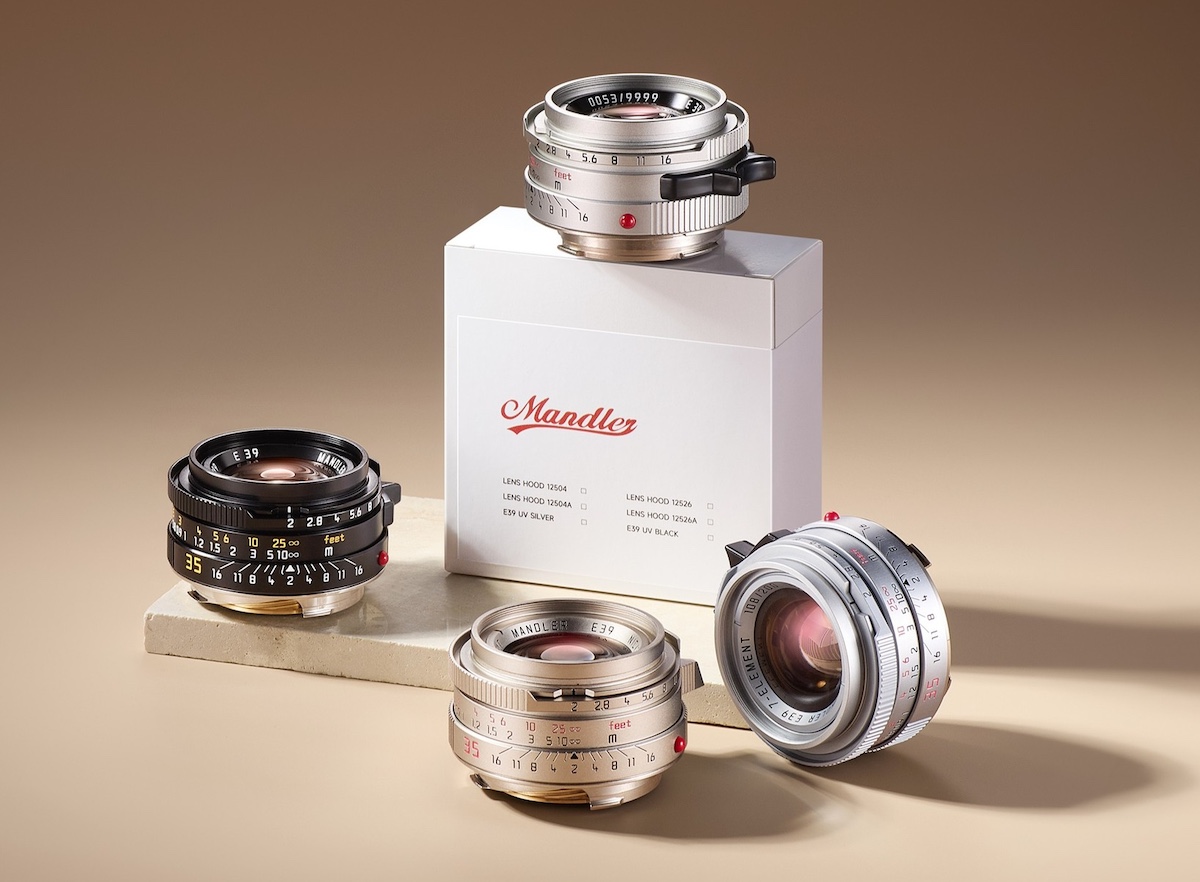
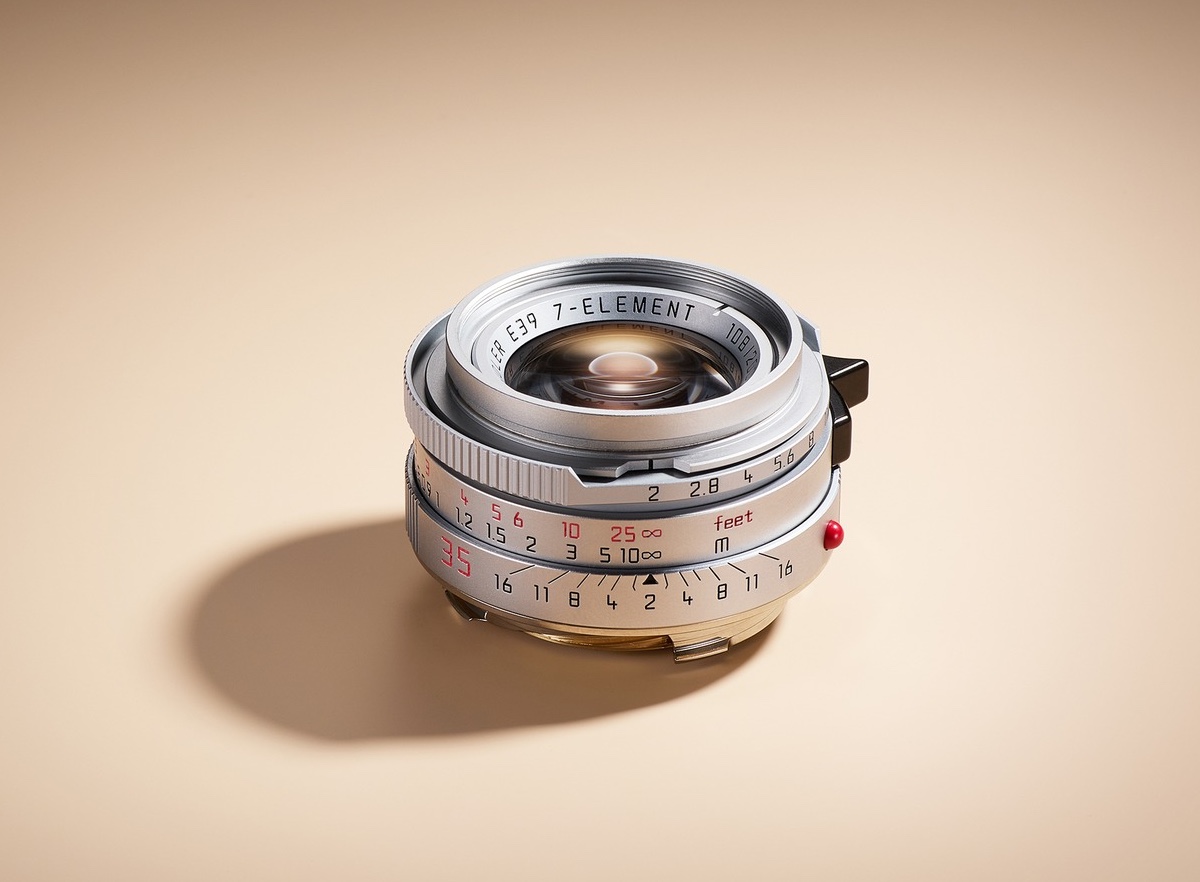
The Mandler 35mm f/2 is a complete reproduction of the original Leica Summicron 35mm f/2 seven-element optical lens formula. The name “Mandler” is a tribute to Walter Mandler, who designed many legendary Leica lenses.
There's a lot of rigging equipment in this GoPro video. Image: GoPro
GoPro has released an epic 7 minute long video to mark the launch of its next-gen Mission 1 and Mission 1 Pro action cameras, and to further tease the interchangeable lens model that's due out later this year. As you'd probably expect, it contains a lot of footage shot on the cameras, but it also has some behind the scenes shots that reveal exactly who its interchangeable lens camera is aimed at.
A quick refresher: the Mission 1 series cameras are built around a 50MP Type-1 (128mm²) sensor, and can shoot at 4K/120 open gate, and up to 960fps in FullHD. The Pro models can also shoot 8K open gate, while the standard Mission 1 is limited to 16:9 8K. While the Mission 1 and Mission 1 Pro have the integrated wide-angle lens we'd expect from an action camera, the Mission 1 Pro ILS instead has a Micro Four Thirds mount.
Back to the video. A lot of it is what you'd expect from GoPro: lots of slow-motion, people doing things that most of us would break our necks attempting, etc. And while the standard action cams are shown being used in a variety of ways, most of the Mission 1 Pro ILS' screen time is in a rig. Someone's either using it with a top handle an external monitor, flying it on a crane or wire, or holding it with a follow-focus.
There are a few fleeting shots of people using it as just a handheld camera with no accessories, but the message is pretty clear: the ILS is a camera mainly for professionals, and is designed to work on productions with a crew. It's not an action or vlogging camera, it's an inexpensive cinema tool that you can put anywhere to get decent-looking slow-mo, without being tied to the typical ultra-wide look that's been a staple of the company's previous products.
This is one of the few shots in the video where we see the Mission 1 Pro ILS being used without a ton of accessories, but it's still in the hands of a professional who seems to be shooting a commercial. Image: GoPro
Of course, it's not like companies never use pro-looking setups to market cameras to consumers. Apple famously shoots its events using iPhones (and thousands of dollars of accessories, grip and lighting equipment), and uses the fact that some directors shoot movies and TV with them in its marketing. But I don't think that's what's happening here, at least for the ILS.
For one, we've seen no indication that it'll include any sort of autofocus capability – the cameras in the video clearly don't have any pins for lens communication – which would exclude most of the audience looking to use it as a pocket cam. If that's the case, anyone seriously using it will also probably need to rig it out with at least an external monitor; try pulling focus using the built-in 2.59" display.
It was also launched at the NAB Show, an event put on by the National Association of Broadcasters that mainly focuses on pro video gear. GoPro's website also specifically calls out that the ILS is designed to provide "versatility for professionals."
It's exciting to see GoPro taking the cinema market really seriously
As a photography enthusiast, it's a bit of a disappointing message to receive. My last bits of hope about this being a workable tiny ILC for photography are pretty much dashed, though I'm sure there will still be people who will try using it for that purpose.
But as something of a videographer myself, it's exciting to see GoPro taking the cinema market really seriously. Sure, shots from its action cams have shown up in lots of movies already, but it seems like the Mission 1 Pro ILS will be much more capable for a wider variety of shots, rather than being relegated to the crash cam that captures a crucial half second of footage before being written off on the insurance.
The Mission 1 Pro ILS is due out in Q3 this year, so there's still a while to wait and see whether GoPro's bid to court professional videographers will be successful. If it is, the company may have just found a way to stay competitive in a market with an increasing number of very good options.
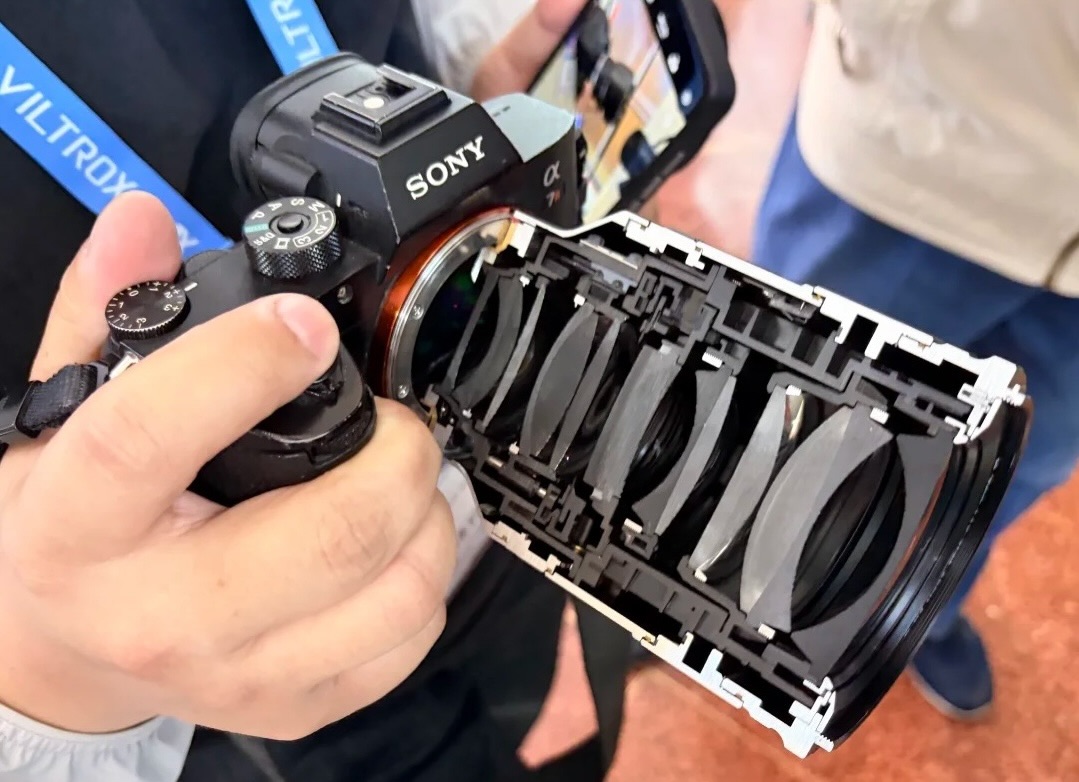
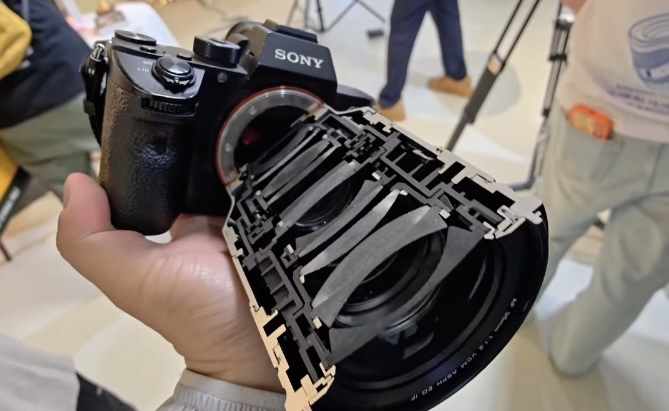
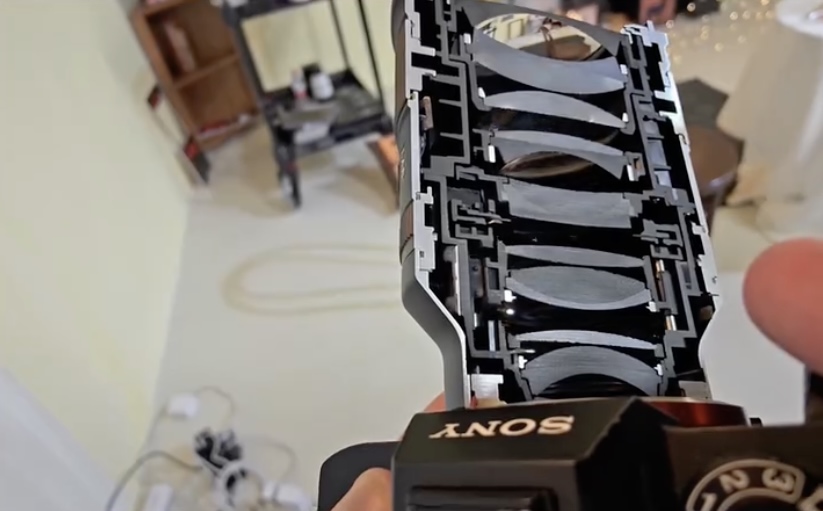
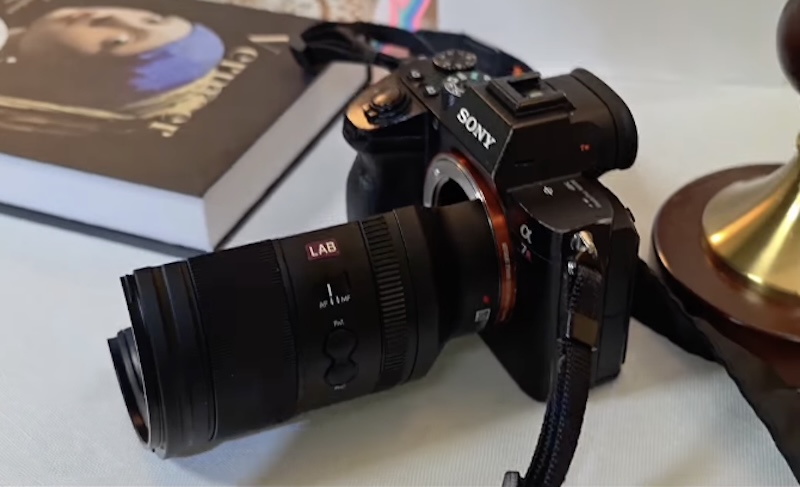
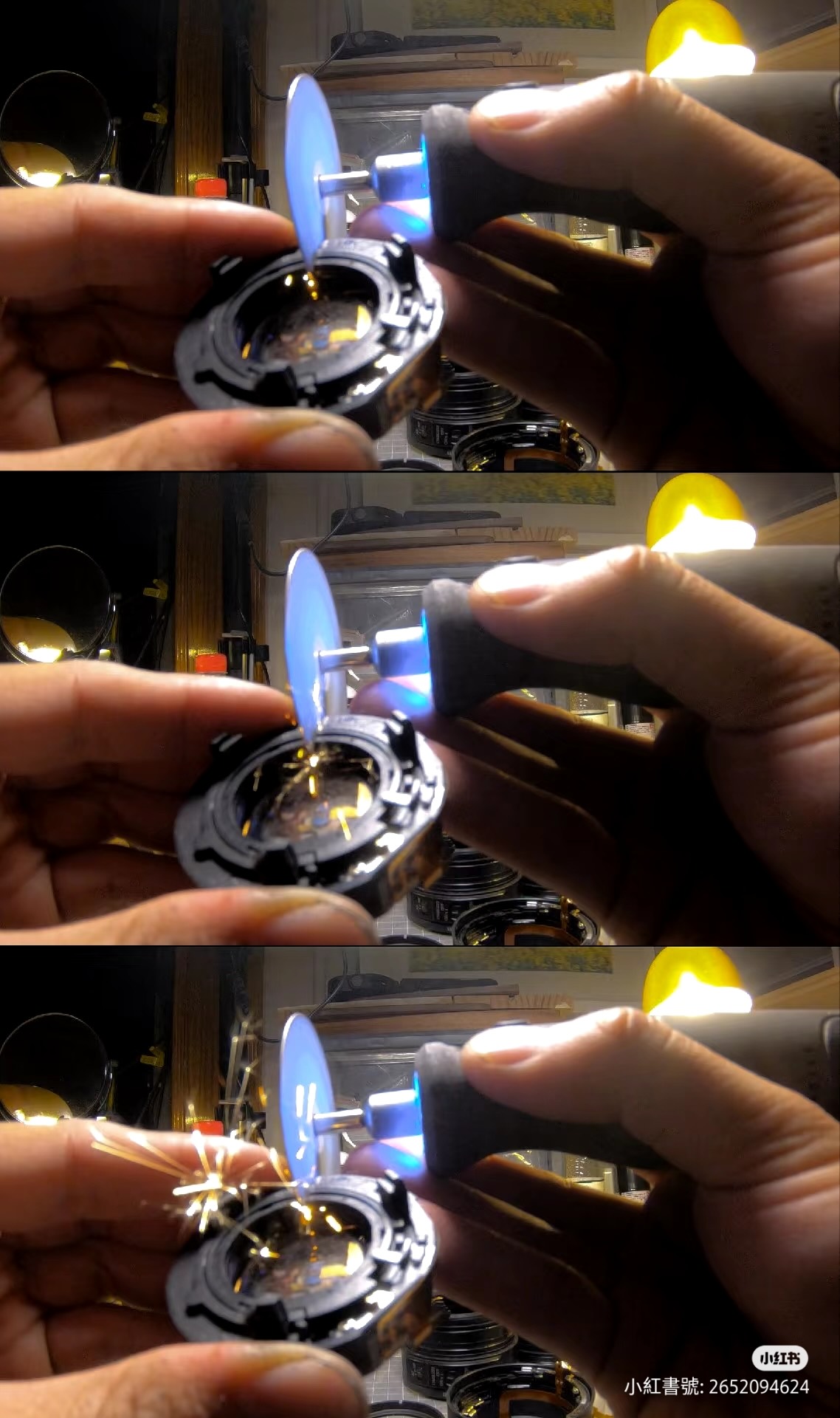
At the P&E show in China, Viltrox cut an AF 35mm F1.2 LAB FE N lens in half and took pictures with it. Unlike other cut lenses we have seen in the past from various brands, the Viltrox lens was actually functional, and the company published the pictures:
TJ Walton, Xiaomi's Senior Product Marketing Manager and Global Spokesperson (center) and Pablo Acevedo Noda, Head of Development and Engineering for Leica's mobile division (right), answer questions from the press.
Photo: Abby Ferguson
The best camera, as the saying goes, is the one that's always with you. For most of us, that's a smartphone, and it's been that way for years now. Smartphones haven't just made photography more accessible, but have fundamentally changed the way we communicate.
And, of course, we all want our smartphone cameras to get better – many of us fantasize about the day our phone will rival our dedicated camera – and the smartphone manufacturers know it. That's why every one of them dedicates an outsized portion of each product launch to camera upgrades.
Smartphone cameras have been getting better, but as any camera enthusiast knows, what you can eke out of these cameras is, to some degree, gated by physics. In recent years, the conventional wisdom has been that most improvements to smartphone cameras will come from software, including improved computational techniques, machine learning and AI.
In recent years, smartphone manufacturers have largely depended on computational photography and AI technologies to improve image quality. The diagram above illustrates how Google Pixel's Night Sight feature combines data from multiple images to create a single, higher-quality image.
Image: Google
This week, a senior Leica engineer offered a counterpoint to that conventional wisdom: that lenses in smartphone cameras still have room to meaningfully improve.
At a joint Xiaomi/Leica launch event for the new Xiaomi 17T and 17T Pro smartphones, Pablo Acevedo Noda, Head of Development and Engineering for Leica's mobile division, told DPReview:
"There's still a lot of room for improvement in smartphone optics. Of course, the miniaturization is always a challenge, not only in optics, but also in the rest of the components, like the sensor, the focusing motor, stuff like that. Leica will do its best to keep improving where we have the expertise, which is the design of lens elements, to produce the best image possible."
"There's still a lot of room for improvement in smartphone optics."
That's notable because one thing we don't often hear smartphone manufacturers talk about is optics or lenses. They love to talk about computational techniques like multi-frame stacking, scene detection and night modes, and they love to talk about sensors, including the fact that they're making them bigger, faster, and, most importantly (at least from a marketing perspective), at ridiculously high resolutions.
In fact, in most cases, the only thing we hear about lenses has to do with increasing zoom ranges, and those headline zoom numbers are often digitally derived rather than optical. (Smartphone manufacturers might also reliably predict that consumers' eyes will glaze over the moment someone starts talking about optical formulas in the middle of a keynote.)
Hearing Leica's head of engineering for mobile say optics is still a bottleneck cuts against that grain.
We spoke with Pablo Acevedo Noda (right), Head of Development and Engineering for Leica's mobile division, at a joint Xiaomi/Leica event in Vienna, Austria.
Photo: Abby Ferguson
What makes the comment noteworthy is its source. Acevedo Noda isn't a marketer – he's the lead engineer for Leica's mobile business, the optical side of the Xiaomi/Leica partnership. And he's stating that there's "still a lot of room for improvement in smartphone optics" at a co-branded launch event focused on camera features.
Leica and Xiaomi began co-engineering smartphone cameras in 2022, with Xiaomi's flagship phones featuring Leica-branded cameras. So when Acevedo Noda suggests there's still room for improvement, he's talking about hardware his own team has been working on for four years.
To be clear, Acevedo Noda isn't claiming optics are the biggest limitation on smartphone image quality – he even highlighted the importance of computational photography in smartphones – but he's calling out that the optics still have meaningful room to improve. Of course, Leica is an optics company, so you might expect it to say that, but if any company has earned the right to say it cares about optical quality over the years, it's Leica.
"If any company has earned the right to say it cares about optical quality over the years, it's Leica."
But it's also true that smartphone lenses have to cope with some pretty brutal design constraints. Lenses can only be as deep as a phone's design allows, and we all know manufacturers love making thin devices (I'm looking at you, Apple). That's a real engineering problem: working within a few millimeters of space, engineers turn to things like aspheric elements and exotic coatings to squeeze more out of a lens formula.
One thing we took away from the Xiaomi/Leica event is that Leica definitely has an opinion on what photos should look like, and Acevedo Noda wasn't the only Leica executive to weigh in on the company's image quality philosophy. Marius Eschweiler, Vice President of Leica's mobile business unit, explained that the company had to have "a very tough conversation" with Xiaomi about the look of photos from its co-branded phones.
Although that comment was made in the context of the aggressive processing and tone curves typically applied to smartphone photos, it suggests that Leica isn't just stamping its logo on a phone as a marketing exercise, but has a real interest in making sure images hold up to its own vision of what a camera should produce, optically and aesthetically.
If Leica can leverage its century-plus of optical design experience to develop lenses or lens technologies that advance smartphone image quality, that's a win, not just for its own customers, but for customers of other brands that are trying to keep up with the Joneses. Or, in this case, the Leitzes.
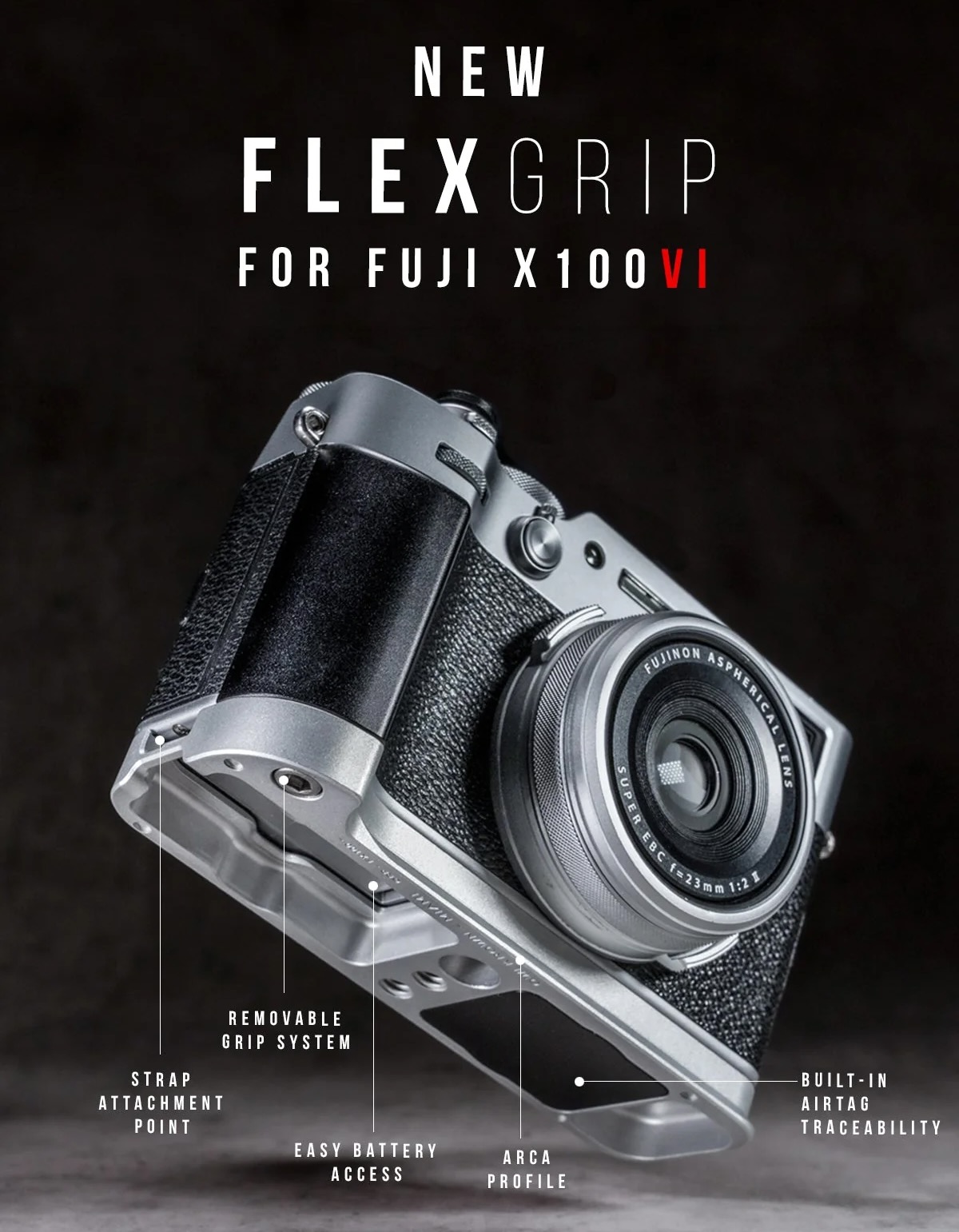
The Owlkrown FlexGrip for the Fujifilm X100VI was designed to integrate naturally with the camera body, extending the original form of the X100VI into a grip that feels unified, balanced, and complete in the hand. The design follows the geometry of the camera closely, preserving the compact nature of the system while significantly improving handling and stability during everyday shooting.
Machined from solid aircraft grade aluminum, the FlexGrip maintains an extremely lightweight construction while delivering the rigidity and precision expected from a professionally machined component. Every surface, radius, and transition was engineered to feel seamless against the body of the camera.
An integrated AirTag compartment adds discreet traceability without altering the external profile of the grip. Hidden within the structure, it allows photographers to keep track of their camera system without relying on external accessories or cases.
The built in Arca-Swiss compatible profile allows direct tripod mounting without requiring additional plates or adapters. Two integrated 1/4”-20 threaded mounts provide additional flexibility for tripod positioning and accessory mounting depending on shooting style or setup.
Inside the grip, a silicone padded interface protects the camera body while creating a secure, vibration resistant fit. The side integrated lug allows attachment of wrist straps or alternative carrying configurations including portrait carry setups.
Another clickbait story is circulating the Internet:
“Sony is working on a new display technology for its Alpha cameras after 2026/Q3”
“New rumor suggests upcoming Sony cameras could have noticeably better battery life”
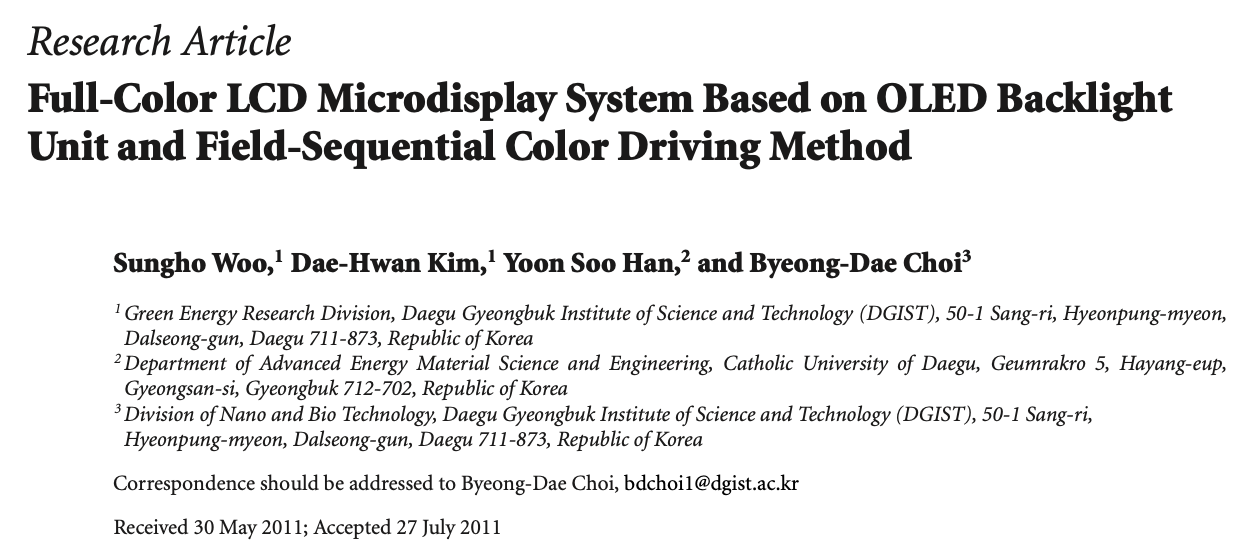
Editors are publishing made-up stories without even doing a simple Google search. The article in question is a 2011 research paper by Korean academics and has nothing to do with Sony or any upcoming Sony cameras. Here are the details:
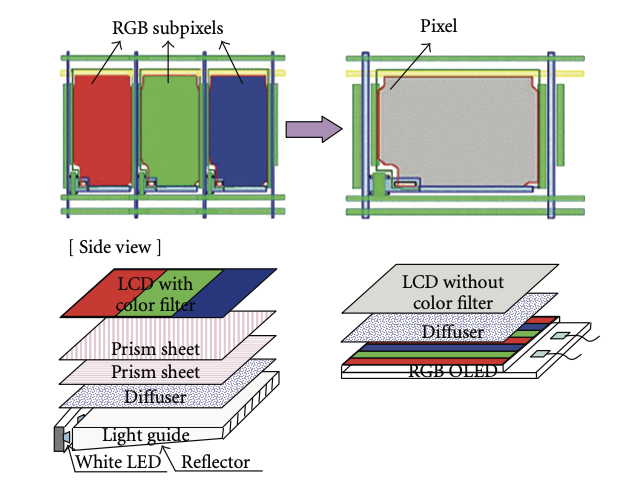
The 2011 paper (“Full-Color LCD Microdisplay System Based on OLED Backlight Unit and Field-Sequential Color Driving Method”) was written by researchers from Daegu Gyeongbuk Institute of Science and Technology (DGIST) and Catholic University of Daegu in South Korea. It describes a prototype 0.7″ FSC (field-sequential color) LCD microdisplay using a custom 0.76″ patterned RGB OLED as the backlight unit (BLU), combined with a high-temperature polysilicon (HTPS) LCD panel supplied by ILJIN Display Co., Ltd. (a Korean company).
There is no mention of Sony anywhere in the paper (including the authors, acknowledgments, references, or experimental details). The work is independent academic/industrial research from Korean institutions focused on low-cost, high-efficiency microdisplays for potential use in viewfinders, projectors, HMDs, etc.
Sony does not appear to be implementing (or planning to implement) this specific technology. Sony’s actual microdisplay approach: Sony Semiconductor Solutions develops and uses direct-emissive OLED microdisplays (OLED-on-silicon/OLEDoS) for electronic viewfinders (EVFs) in its cameras. These are self-emissive panels with high resolution, contrast, and fast response – no separate backlight or color filters in the same way as the paper’s LCD + OLED BLU design. Sony has released multiple generations of these for Alpha cameras and AR/VR applications.
In short, the paper is unrelated to Sony, and while Sony is exploring FSC-based LCD improvements for efficiency in future cameras, there is no indication that it involves the specific OLED-backlit microdisplay approach described in the 2011 paper.
You can download the original PDF research paper from 2011 here.
DPReview's Community Manager, Mathew Anderson, shamelessly presenting an ice cream cone as if it were part of Ikea's product lineup. Ice cream cone courtesy of Ikea's cafeteria. A symbol of his light-hearted but still serious attitude toward community development.
Photo: Mathew Anderson
Greetings, DPReview community!
A lot happens across the community every month: lively discussions, feature articles spotlighting community members and their gear, photo events and more, and much of it naturally won't be seen by everyone. As DPReview's Community Manager, I want to change that as much as possible. In this "What you missed" roundup, I'll highlight some of the best community activity from the past month, including some of the things that didn't make it into articles.
Here's just a sampling of what happened in May.
What's in your bag? A community member spotlight
Every week, we spotlight a community member's unique photographs and gear in our 'What's in your bag?' series. The series tells the story of your trials and tribulations getting that perfect shot, and highlights their favorite camera gear and how they use it. You'll also get tips and tricks on capturing your own photography.
As with many of our other community initiatives, we often don't get a chance to cover every detail of a community member's story, so we're selecting an additional photo from each of the previous month's posts that you haven't seen yet. Check them out below.
Feeling artsy
Photo: Roberto De Micheli (roby17269)
Roberto De Micheli, who goes by the username roby17269 in the forums, switched from wildlife photography to focus on his passion for fashion. He also dabbles in travel and kids' photography (mainly family outings). Roberto submitted a wide range of photography on these subjects to us for this article, but we focused on the fashion segment as it's his most recent work.
"Fashion shoots happen in studios or on location. In my heart, though, I still remember my two safaris in Africa (Kenya and South Africa) most fondly, which can be a magical place. The safaris were during my wildlife 'phase'. I was absolutely floored by how rich, colorful and amazing nature was in those places."
The photographer who never stopped chasing the unique shot
Photo: Josh S. Rose
Josh S. Rose has been capturing visceral reactions since the 1970s, when he wandered around a racetrack park as a kid to explore the event. He found himself hanging out at the photo booth and loved to watch a team develop film after each race, calling up the winners to the announcer upstairs, then hearing the crowd wildly react. His career kept him intrigued by those early moments of capturing scenes on film.
"In the beginning, I tried to minimize mistakes. Because I shoot dance and movement a lot, this is exacting work, especially when you're inside – low light and fast movement is a nightmare for a camera. So, I kind of treated dance as one would sports, reaching first and foremost for clarity, focus and split-second timing. It isn't all that hard, honestly. It just takes a certain number of reps."
This photographer uses an 800mm lens to lock onto nature's special moments
Photo: Alan Randle (AJRimages)
Alan Randle, known as AJR Images in the forums, has been capturing striking images for decades, with a particular passion for fast-paced subjects. Originally from the UK and now based in Southern California, he has built a body of work that spans airshows, surfing, wildlife and more. Over the years, his photography has evolved from early film experiments to high-precision digital work with top-tier equipment, allowing him to get in close and capture subjects with remarkable clarity and detail.
"I've been taking photographs since the early 1960's, but more seriously for the last 15 years. I moved to California from the UK in 2000, and am now lucky to have great subject matter and good light. I've been fortunate enough to acquire some of the best equipment and now like to get in close to my subjects with the use of long telephotos."
"I also enjoy shooting zoo animals. I like to take portraits rather than the whole of the animal, making good use of my telephoto lenses. Carrying big equipment around a zoo can be tiring. I’ve been asked by docents if I want to check my ‘luggage’ to make life easier!"
How this photographer sets up to capture life at the speed of the streets
Photo: Kevin Zhang (fatplanediaries)
Kevin Zhang, known as fatplanediaries in the wider community, began photographing at a young age under his father's influence, a dedicated Leica street photographer. What started as a focus on street photography evolved over time, especially after a chance moment in Shanghai, when he experimented with panoramas using only a prime lens. Since then, his work has developed into a distinctive blend of candid street scenes and highly detailed panoramic images, each discipline informing the other.
"I like to shoot candid street subjects, but I'm often pretty shy about approaching people to get the right shot. The best alternative is to get hired for events instead; everyone's vying to have you shoot them in those kinds of situations. I've had a lot of good practice at my friends' parties before getting to events as a photographer."
This reader mastered a Nikon Z5 to capture diverse European architecture
Photo: Brian Ormerod (ikon44)
Brian Ormerod, who goes by the username ikon44, has a love of architecture of all types and periods across northern Europe. Over the decades, he has traveled extensively, meticulously planning trips to capture selected projects in Vienna, Barcelona, Prague, Paris, Istanbul and beyond. His work has evolved from casual holiday snapshots to carefully composed architectural studies at the School of Architecture in Nottingham, UK.
"I went with an architect friend to Barcelona, which I found to be an architectural wonderland. We photographed works by Antoni Gaudi, but by pre-planning we were also able to visit a number of other projects, including the IMO Eye Hospital by Josep Llinas, The University of Pompeu Fabra Library, which is a spectacular arcaded masonry structure, the Santa Caterina Market, a neo-classical building refurbished by Enrique Miralles and the Fira de Belacaire flea market with a spectacular, fragmented mirrored canopy."
Every other week, we ask the community a question about their photography, usually on a specific topic, with the results spotlighted on DPReview's front page and in the forums the following week. There are often many great photos submitted that we don't get a chance to spotlight them all in a single article.
Here is a newly revealed reader's photo from each of the previous two weeks' questions.
Featured quote: "Different accouterments. A chamois, a laptop, a notebook and a pen (sometimes two; private and business), tissues, paracetamol (just in case ;-)), and some small things I can't remember. A Wuchuan canvas messenger bag with a Billingham insert and lots of useful pockets. It serves me well, carrying a D850 with one prime (24, 35, 58 or 85, depending on mood and plan, if any)." - Michiel953
Featured quote: "The foundation came before I even owned a camera: Total Picture Control by Andreas Feininger. His main message is that the photographer transforms a moving, three-dimensional world of color into a frozen, 2D (and in the late 1950s) monochrome picture. To communicate what you saw, you need to translate the lost dimensions (depth, movement and color) into your photograph."- Klaus dk
Photo threads of the month: new types of challenges
"May we never forget."
Photo: BluesJake
Also every week, new photo thread discussions and mini-photo challenges pop up across the forums, generated by community members. Usually, these start as a discussion about a particular camera brand or type of photography. Our community has hundreds of topics to choose from, so there's no shortage of photography show-and-tell opportunities!
For the month of May, we wanted to highlight BluesJake's Post your Memorial Day photos thread, where community members have been contributing to pay their respects to veterans who lost their lives in conflicts and other events around the world.
Visit our Community photo threads index for all the latest opportunities to share an interesting photo from your collection. To contribute to most of these community initiatives, simply read the OP's (Original Poster) posting guidelines (if there are any) and then reply to the thread with your contribution.
On May 13, 2026, Sony announced the a7R VI full-frame mirrorless camera. The community was so excited about the news that they beat us to the punch and immediately started discussing the camera in the forums. Here is a peek at what they had to say:
PWPhotography: Nice! $4499, $500 'cheaper' than initially rumored, and it's slightly lighter than a7R V.
CanadianLongbowman: So the TL;DR is that it's a high-res version of the a7R V, in essence, with a similar readout speed and a few extra perks.
In response, PWPHotography said, "I hope so. However, the a7R V uses a partially stacked sensor, while the a7R VI uses a fully stacked sensor. Fully-stacked sensors, as in the A9 and A1 series, used to have a little DR penalty. Sony appears to have overcome this issue by combining the readouts of its low and high gain steps as in a7R V."
kbrkr: Sony announced the a7R VI today, and my mind automatically went to Nikon challenging it with a Z7 III. Some of the features of the Sony are quite impressive, such as 68MP, 30 fps Raw, pre-capture, and speed boost. I hate these leapfrog games, but I really wish Nikon had a high-megapixel camera to replace the Z7 II.
I'd like to consider writing an article like this one on a monthly basis. Future editions could include camera use and photo-taking tips and tricks, additional quotes from community members in various discussions and more. If you are interested in seeing community content presented this way, please let me know.
For even more content posted directly by our readers, join the discussion forums and share your camera gear and photography curiosities!
When trying to capture this scene, most phones would probably try to brighten the shadows. The Xiaomi 17T Pro, shooting in the Leica Authentic color mode, didn't.
Photo: Abby Ferguson
One of the big conversations around mobile photography relates to how images are processed, with many bemoaning the unnatural look that some phones produce by dramatically brightening shadows. Apparently, Leica isn't necessarily a huge fan of the look, either. According to Marius Eschweiler, Vice President of the company's mobile business unit, it had "a very tough conversation" with Xiaomi about how photos from its co-branded phones should look.
The comment was part of an interview at the launch event for Xiaomi's latest phones, the 17T and 17T Pro, which feature Leica's "Vibrant" and "Authentic" profiles. Eschweiler, responding to a question about what the company's goal was with the latter color mode, says it was meant to show the real colors and shadows of a scene.
Leica executives participated in a group interview with Xiaomi for the launch of the 17T.
Photo: Abby Ferguson
The last part was apparently what prompted the discussions with Xiaomi. "That was a very tough discussion we had with the Xiaomi engineering team at the very beginning, because coming from the smartphone world, colorful, shiny images were seen as a benchmark," he says. "Then we came into play and said, 'yeah, but if you see it from the serious photographer's point of view, it's okay that some shadows are maybe not perfectly lightened up to let you see every detail.'"
"That computational imaging was getting too much in the picture for our taste"
Pablo Acevedo Noda, Head of Development and Engineering for Leica's mobile division, adds: "Leica Authentic was made more for photographers coming from the photography world," explaining that phones need to do a lot of computational photography to make up for their smaller sensors and lenses. "That computational imaging was getting too much in the picture for our taste."
The solution, he says, was processing the images in a completely different way than the vibrant ones. "In the end, we had to do two different pipelines. The image signal processor (ISP) has two different processing pipelines. One is the authentic, one is the vibrant. They share some common blocks, but the base is different."
A photo taken in the Leica Vibrant mode on the Xiaomi 17T Pro.
Photo: Abby Ferguson
He also says Leica had a hand in tuning the imaging pipeline for the phone's Live Moment feature, which captures a video before and after the shutter is pressed. The feature existed on Xiaomi products before, but now it includes the Leica color profile throughout. According to Noda, the company helped improve the resolution and HDR processing for the feature, as well as the exposure and white balancing for human subjects.
Eschweiler says Leica wants to give photographers a choice: they can go with the Leica Authentic for a more traditional photographic look, or the Vibrant for a more saturated aesthetic that mobile photographers will be familiar with. "It's a different philosophy, and I believe it's good that customers have the choice."
He echoes this sentiment about users having options when discussing the role of AI in mobile photography, after Xiaomi and Google touted the 17T's ability to use generative AI to transform images taken with the phone into videos, or to reimagine them. "Whether you take a serious image or whether you would like to create something with generative AI, I think that's a different use case," he says.
"It's a different philosophy, and I believe it's good that customers have the choice"
"You likely won't see that on a Leica M, but I think on the 17T series it makes sense," he says. Noda also adds that part of the point of features like Content Credentials, which Leica attaches to photos taken with its cameras, is to make it obvious when someone has tampered with a photo, using generative AI tools or otherwise.
The answers offer a look at some of the considerations traditional camera companies face when deciding to co-brand a phone. There are some fundamental differences in how those devices will produce images compared to a traditional camera, as well as different expectations from consumers, but the Leica name and branding come with their own set of expectations. Of course, not everything will come down to decisions around processing and software, but we'll cover the choices around hardware in a separate article.
Leica has announced a new finish option available for the M11-P, Q3 and D-Lux 8: "Metal Gray." (Calling it a new color would be a touch generous; it's no Safari green or burgundy.) The company says the new paint was "specially developed at the Leica factory," and will be available as an option alongside the existing finishes for each of the products.
The Metal Gray M11-P will be the first camera available with the finish, but the changes aren't limited to just a coat of paint. Rather than the leatherette-style wrap, it has what Leica calls "diamond-patterned leather," which has a pattern similar to the one found on the Q3.
Image Comparison Slider
This widget is not optimized for RSS feed readers. Please open this article's permalink in a browser to view this content.
Given that it's an interchangeable lens camera, it makes sense that Leica is also launching a color-matched lens: the APO-Summicron-M 50 F2 ASPH. Like the silver version of that lens, its focal length and the feet distance markings will be red. It will also have a gray front lens cap.
Image: Leica
The Q3, meanwhile, basically looks like an inverted image of the original, which had a black body with a gray wrap. The Metal Gray version, meanwhile, has a gray body with a black wrap. The control dials and lens remain black, but the yellow accents on the lens are now a deep red, instead. The D-Lux 8's design is very similar to the Q3's: gray body, black grip and lens, though the company also says its function buttons will be gray as well.
Of course, Leica doesn't expect people to buy a gray camera and then use accessories that don't match. A gray battery will be available for the M11-P (since it has a plate that's visible from the bottom of the camera), and there are dark brown protective cases for the M11 and Q3, and a "cognac" one for the D-Lux 8. There will also be a variety of black and brown straps available.
The Metal Gray M11-P, and its corresponding lens and accessories, will be available starting today, while the Q3, D-Lux 8 and their accessories are coming on July 16th. In the US, the cameras cost the same as their black counterparts – silver typically comes with a bit of an up-charge – while the lens will cost $45 more than the black version. Given that both lenses are around $10,000, though, that only represents a 0.45% increase.
A modern metal gray paint finish is being added to the traditional black-and-silver Leica design palette
Teaneck, May 28th, 2026 – Leica cameras are renowned for their iconic design, which combines function and aesthetics in a clear, distinctive form. The classic camera colors of black and silver are a hallmark of a design that is consistently geared towards photographic practice. Leica Camera AG is now expanding this existing design language to include a new metallic gray tone. The elegant and exclusive appearance of Leica products is emphasized by this metal gray paint finish, which was specially developed at the Leica factory. The new metal gray paint finish will make its debut in the Leica M11-P, Leica Q3, and Leica D-Lux 8 cameras as well as the Leica APO-Summicron-M 50 f/2 ASPH. M-Lens. The company is also introducing a new range of elegant, functional accessories for these three camera lines.
Leica M11-P, Metal Gray Paint Finish
The Leica M11-P is the first M-Camera to introduce the new tone to the M-System. The subtle metal gray paint finish of the full-metal body, combined with the black control elements, emphasizes the camera’s deliberately understated style. Similarly, the characteristic diamond-patterned leather, which represents Leica’s DNA in terms of both aesthetics and feel, enhances the metallic gray camera’s modern look. Like all M-Cameras, this new color option for the full-frame camera is “Made in Germany” and precision-engineered in Wetzlar.
Optional new accessories are available to complement the metallic gray camera. These include a color-coordinated battery, protector, and carrying strap with a comfortable shoulder pad, crafted from a new dark-brown leather. There is also a multifunctional protector made of smooth black leather. The latter combines a protector with a handgrip to offer protection, an ergonomic grip, and functionality. The handgrip’s base plate is compatible with the ARCA-SWISS coupling system. This enables the handgrip to be quickly attached to tripods featuring this system without the need for additional tools.
Leica APO-Summicron-M 50 f/2 ASPH., Metal Gray Paint Finish
The high-performance Leica APO-Summicron-M 50 f/2 ASPH. lens is available in metallic gray to match the M11-P. The lens elements and front lens cap boast the new finish, while the engraving on the feet and f-stop scales stand out in red. Based on the respective standard models, the camera and lens form a unique combination with this new color option, where aesthetic design and optical excellence harmonize perfectly.
Leica Q3, Metal Gray Paint Finish
Starting July 16th, the Leica Q3 compact full-frame camera will also be available in the metallic gray color option, with black control elements providing subtle accents. The new Leica Q3 in metallic gray also differs from the standard black model in that the feet and f-stop scales on the lens feature red engraving. Based on the same technology as the Leica Q3, the metallic gray version also impresses with maximum image quality, minimal complexity, and seamless connectivity to enhance your creative day-to-day anytime, anywhere. The optional protector and carrying strap crafted from a new dark-brown leather provide an additional opportunity to express your personal style.
Leica D-Lux 8, Metal Gray Paint Finish
The D-Lux 8 in metallic gray will also be available starting July 16th. This brings the number of cameras bearing Leica’s newest design up to three. Both the camera body and the FN buttons are finished in metallic gray. All the other control elements and dials subtly stand out against the black background. With its fast DC Vario-Summilux 10.9–34 f/1.7–2.8 ASPH. zoom lens, this compact camera delivers astonishing image quality in a pocket-sized format. New optional accessories allow you to add a personal touch. To complement the existing black leather camera case, a cognac-colored version has been added to the range. The accessories for the compact D-Lux 8 are rounded off stylishly with a coordinated collection of carrying straps and a wrist strap in braided black leather.
Leica products in the new color option, as well as the new equipment, will be available worldwide from Leica Stores, the Leica Online Store, and authorized dealers.
Available from May 28th, 2026:
Leica M11-P, Metal Gray Paint Finish, retail price: $10,400.00
BP-SCL7 battery, Metal Gray Paint Finish, retail price: $200.00
Protector for M11 cameras, leather, dark brown, retail price: $340.00
Carrying strap with a shoulder pad for M- and Q-Cameras, leather, dark brown, retail price: $150.00
Multifunctional protector for M11 cameras, leather, black, retail price: $370.00
When you use DPReview links to buy products, the site may earn a commission.
"This may look like we were directly on the beach, but actually quite a distance away."
Phase One IQ180 | 50mm | F11 | 1/500 sec | ISO 35 Photo: Roberto De Micheli
Roberto De Micheli, who goes by the username roby17269 in the forums, switched from wildlife photography to more recently focusing on his passion for fashion. He also dabbles in travel and kids' photography (mainly family outings). Roberto submitted a wide range of photography on these subjects to us for this article, but we focused on the fashion segment as it's his most recent work.
This story is part of our What's in your bag? community spotlight series. The series showcases the diverse gear and photography of our community, and shares their stories of how that gear helped them to capture the perfect shot.
"I love the mood and color of this one, which was shot in the attic of an old building."
Canon EOS-1D X | Canon TS-E 24mm f/3.5L II | F3.5 | 1/50 sec | ISO 1600 Photo: Roberto De Micheli
Meet Roberto De Micheli (roby17269)
Home base: Jersey City, USA
Favorite camera and lens: Roberto’s current favorite setup is the Hasselblad X2D II 100C paired with the XCD 90mm f/2.5. For fashion work, he also regularly uses the XCD 35–100mm, appreciating the look and rendering that medium format delivers.
I am a sucker for big sensors, so currently the X2D II is my favorite tool. Plus, it is undoubtedly the most gourgeous camera on sale right now.
For travel, family and event photography, he relies on a Canon EOS R5, often paired with Canon’s RF 50mm f/1.2, RF 85mm f/1.2 and RF 100–500mm lenses. Roberto describes himself as “more of a tele guy than a wide guy”.
Support gear: Roberto’s fashion setup includes a heavy Manfrotto tripod with a geared head for catalog and studio work. For lighting, he uses Broncolor Siros L 800 strobes and a Profoto B1 500, paired with a variety of modifiers for both studio and location shoots. When traveling, he’ll often pack a drone, typically either a DJI Mavic 4 Pro or Mini 5 Pro, to complement his still photography.
Camera bags: Roberto currently uses an older backpack that has stayed with him through years of shoots and travel. While he appreciates beautifully designed, high-end gear, he values intentional shooting and adaptability far more than carrying excessive equipment.
"I am a sucker for big sensors, so currently the X2D II is my favorite tool. Plus, it is undoubtedly the most gorgeous camera on sale right now."
"A lot of work went into setting up the table and the style of all four models. Group shots are tricky to make all the models look good at the same time."
Photo: Roberto De Micheli
What types of scenes do you like to focus on (pun intended)?
"My father was a film photography hobbyist, but somehow his passion never rubbed off on me. With the advent of digital photography, something clicked in my engineer brain and I bought a Sony DSC-F717 around 2003. I started with opportunistic travel photography and the compliments I received went straight to my head. From there, things started snowballing onwards with more professional opportunities every year."
"Fashion shoots happen in studios or on location. In my heart, though, I still remember my two safaris in Africa (Kenya and South Africa) most fondly, which can be a magical place. The safaris were during my wildlife 'phase'. I was absolutely floored by how rich, colorful and amazing nature was in those places."
"Experimental"
Phase One IQ180 | 300mm | F9.5 | 1/350 sec | ISO 35 Photo: Roberto De Micheli
When capturing that perfect shot, what techniques come to mind?
"For fashion, I do not have a preferred recipe. The best 'technique' I know is to work with great talent and to create a good atmosphere on set. I will also be bold and try different angles, poses and light setups. For travel, I like taking panoramas with a long lens (RF 100-500). For kids, I like to 'disappear' and take photos while they play for the best expressions. For drones, practice those flying maneuvers!"
Should photographers spend what they can to get the best shot?
"I'd say two things: don't spend too much until you find your niche and decide to be serious about it, and learn to take control of your photography!"
Roberto really enjoyed writing the content for this spotlight article and would be grateful for you to join him in discussion in the forums. You can also visit his work at rdmfashionphoto.com. Thanks, Roberto, for being featured!
If you'd like to share your photography, tell us about your main camera, lens choices, key settings and strategies. Your photos and story could be featured in the next article!
Editor's note: This article continues a series, 'What's in your bag?', highlighting DPReview community members, their photography and the gear they depend on. Would you like to be featured in a future installment? Tell us a bit about yourself and your photography by filling out this form. If you're selected for a feature, we'll be in touch with next steps.

 Connexion