Vue normale

Laowa’s pair of new macro lenses goes ten times beyond life-size

Laowa has unveiled a new lens series dedicated to extreme close-ups.

Two Laowa camera lenses with black bodies and blue accents stand side by side on a reflective surface. Both are labeled: FF 25mm F2.8 Ultra Macro 5x-10x and FF 25mm F2.8 Ultra Macro 1-5x.Laowa

Laowa has announced the Aksen, a new series of full-frame “ultra macro” lenses that together cover a 1–10x magnification range. The lineup consists of two offerings: the Aksen 45mm F2.8 1-5x Ultra Macro APO and the Aksen 17.5mm F1.7 5-10x Ultra Macro APO, each offered in both photo and cine versions.

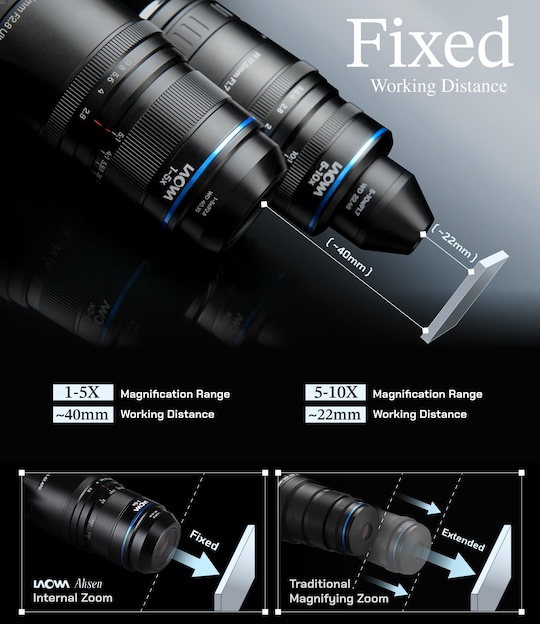
One of the key features of both lenses is the parfocal magnification zoom design. The lenses behave like primes in terms of focal length (the 45mm and 17.5mm focal lengths don’t change), but they incorporate an internal mechanism that changes the magnification. This parfocal magnification system allows photographers to move through the 1-5x or 5-10x range without refocusing or changing the working distance. Additionally, because the zoom is internal, the barrel doesn’t extend and won’t interfere with flash diffusion or subjects.

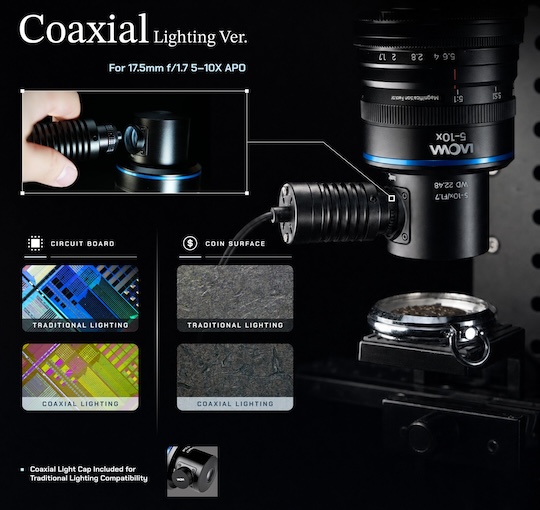
Another distinguishing feature of the Aksen 5-10x is the option for a version with a coaxial lighting block built into the lens. It delivers high-contrast shadowless illumination, a technique borrowed from machine vision that Laowa says it is now making more accessible. It’s also similar to some of Laowa’s probe lenses, which feature built-in lights. The 5-10x lens is also available without coaxial lighting for $100 less.

Both lenses use an apochromatic (APO) design to reduce chromatic aberrations, which can be exaggerated at such high levels of magnification. Laowa says the Aksen series eliminates fringing for greater clarity. The 45mm 1-5x lens features 13 elements in 9 groups, while the 17.5mm 5-10x lens comprises 17 elements in 12 groups. Both feature an 11-blade aperture diaphragm. The 45mm 1-5x accepts 65mm filters, while the 17.5mm 5-10x uses 42mm filters.

The photo versions of the lenses come in Sony E, Nikon Z, Canon RF and EF, L mount, Fujifilm X and MFT mounts and cost $749, or you can buy both in a bundle to save $100. Laowa is also making video-focused versions with focus and zoom rings geared to work with cine equipment, though those versions are substantially more expensive.

Press release:

Laowa’s Aksen Series: Pushing the Boundary of High Magnification Macro with a Parfocal Zoom Design.

Anhui, China – July 31, 2026 – Laowa introduces Aksen — a new Full-frame Parfocal Zoom Ultra Macro lens series comprising the Aksen 45mm f/2.8 1–5x Ultra Macro APO and the Aksen 17.5mm f/1.7 5–10x Ultra Macro APO, each available in both photo and cine variants. The series will be available for purchase through Laowa’s official site and authorised resellers starting July 31, 2026.

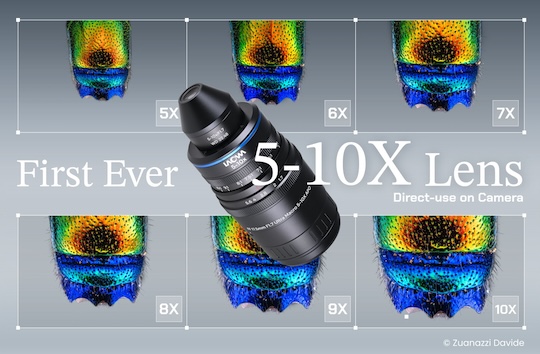
First Ever Commercial 5-10x in the Market

The Aksen series fills a long-standing gap in the 1–10x Ultra Macro category, offering a compelling option for serious macro photographers, professional scientific users, and hobbyists who have long depended on high-cost, complicated DIY solutions.

Award-Winning Innovation: Named “Best Ultra Macro Lenses” by TIPA

Validating its groundbreaking optical engineering, the Aksen series has already received industry-wide acclaim, winning the prestigious Best Ultra Macro Lens category at the TIPA (Technical Image Press Association) World Awards. (Previously named “Axon”).

Re-explore the 1-10x Magnification Range:

Beyond the headline 1–5x & 5–10x ultra-high magnification, the lens set distinguishes itself with its parfocal zoom design. Unlike traditional macro lenses, the Aksen maintains focus as the magnification ratio changes — no refocusing needed when zooming in or out. No more
readjusting the entire setup, including camera position, working distance, and lighting placement. This avoids interrupting the workflow and reduces setup time. The Aksen series maintains a fixed working distance of 40.35mm (1–5x) and 22.48mm (5–10x), while its internal zoom mechanism keeps the lens barrel completely stationary throughout the entire magnification range. No more extended barrel interrupting the flash diffusion setup — or potentially damaging the subject.

Optical Excellence With APO Design:

The sophisticated APO design delivers exceptional optical performance. Since chromatic issues typically escalate at extreme magnification levels, the Aksen effectively eliminates fringing. Providing the unmatched clarity and sharpness that the creative community demands from their optical solutions.

Coaxial Light Ready:

The Aksen 5–10x features a coaxial block built directly into the lens — a technology traditionally reserved for machine vision, now made accessible to all photographers by Laowa.
This optical configuration heightens contrast at the target’s edges and provides shadowless
illumination, opening up a new dimension of creative lighting possibilities. It can be used on its
own or combined with other techniques to create a truly unique piece of art.

Accessories:

The Aksen features a specially designed tripod collar* that attaches directly to any Arca-Swiss
compatible tripod. Via the 15mm rods, users can mount a variety of accessories — including a
follow focus. All 5–10x lenses also include a Ø8mm Coaxial Light Adapter for secure and
convenient coaxial light attachment.

*Cine version included. Photo version sold separately.

Pricing & Availability:

The Aksen Ultra Macro Series will be available for purchase starting July 31, 2026, through
the Laowa official website (https://www.venuslens.net/) and authorised resellers.

About the Author: Abby Ferguson holds an MFA in photography and blends a fine-art background with extensive editorial and commercial experience. She built and led an in-house imaging program for a large vacation rental company and has served as an associate editor at Popular Photography. She also teaches at a local community college and serves on its Photographic Technology Program Advisory Board, sharing her knowledge and enthusiasm for the medium.

Want to stay up to date on the latest product news and releases? Add DPReview as a preferred source to ensure our independent journalism makes it to the top of your Google search results.

add as a preferred source on google

Nikon may be losing its fight against third-party Z mount lenses

Reports suggest one of Nikon’s Z-mount patents has been nullified in China

Nikon z6iii with sensor exposedRichard Butler

Reports are emerging that Nikon has had one of its Z-mount patents invalidated in China, opening the door a little further to third-party access.

Nikon Rumors reports that one of Nikon’s fundamental patents relating to the Z-mount has been invalidated in China, having been challenged by Viltrox’s parent company.

The report, based on AI translations of court documents, suggests that the patent in question is one that sets out the basic physical description and behavior of the mount, constructed in a way that tries to make well-established features, such as the design to prevent incorrect mounting of the lens and a method for preventing damage to the electrical contacts sound original and novel. Patents are only supposed to protect original inventions that would not be obvious to someone working in that field.

Nikon took Viltrox to court in China earlier this year in a separate case, ostensibly to recover license fees but also, we suspect, in the hope that a Chinese court would establish a precedent of its patents being enforceable. As Professor Robert Newman explained in Amateur Photographer magazine at the time, there are at least 13 patents covering various aspects of the Z-mount’s design and operation, including one he described as relating to “a detail of the physical design of the mount, and I would be surprised if that would withstand court scrutiny.”

This description corresponds well with the details being reported by Nikon Rumors, right down to Prof. Newman’s assessment of its likely fate.

There are at least 13 patents covering various aspects of the Z-mount.

The invalidation of this patent doesn’t, in itself, clear the way to third parties being able to produce Z-mount lenses, as there are multiple other patents that describe the communication methods used by the Z-mount. Those would not be affected by this specific patent being invalidated.

It’s notable, though, that Viltrox has added to its range of autofocus Z-mount lenses since the original court case was meant to be heard. Other third-party makers, such as Meike, which briefly removed reference to Z-mount lenses from its website, also have a range of Z-mount options available again.

If, as seems to be the case, non-licensed third-party makers are feeling emboldened to produce AF Z-mount lenses, it puts Nikon in an awkward position with the companies that have been formally licensed to make lenses for the system. Those companies are presumably paying license fees and have to seek approval on a lens-by-lens basis, while their competitors undercut them without any such restrictions.

We have approached Nikon for a statement on this story.

About the Author: Richard graduated as a scientist but had a lot more fun writing and shooting for his university magazine. A number of years spent variously as a reporter, writer and editor on science and engineering titles combined his knowledge of science with his interest in images and words. But it was spotting the connections between emission spectra, white balance and all the nonsense he’d taught himself playing around in Photoshop that helped kindle an interest in digital photography. Searching for a camera led to him discovering DPReview and Richard was recruited by Phil Askey in 2007. He’s been combining his love of photography, communication and attention to detail (pedantry?) ever since. He has unusually strong opinions about lenses for the APS-C format.

Want to stay up to date on the latest product news and releases? Add DPReview as a preferred source to ensure our independent journalism makes it to the top of your Google search results.

add as a preferred source on google

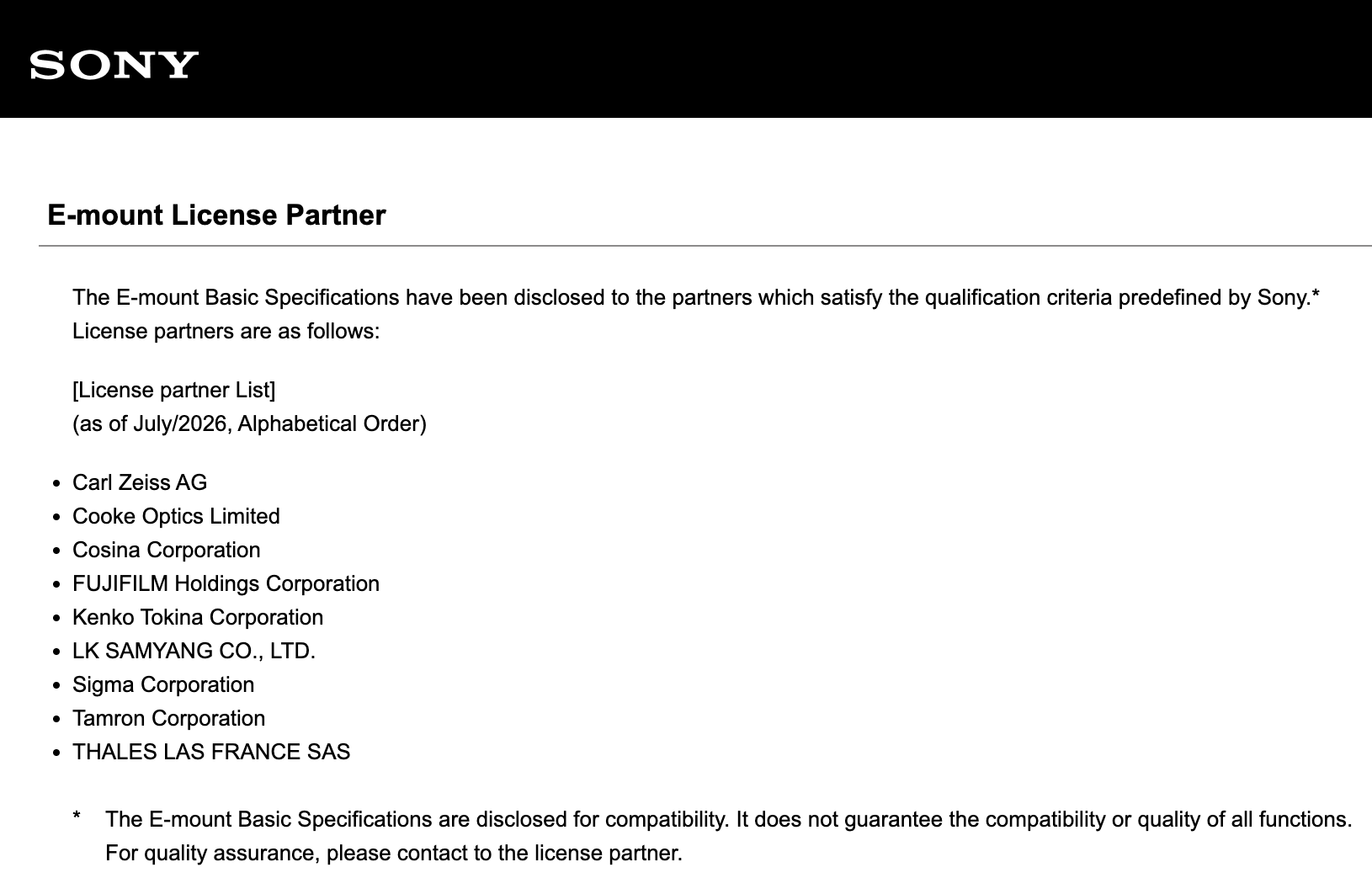
Sony published an official list of E-mount license partners: not a single Chinese lens manufacturer is on the list

Par : PR admin
3 août 2026 à 15:23


Sony published an official list of E-mount license partners, and not a single Chinese lens manufacturer is on the list:

“The E-mount Basic Specifications have been disclosed to the partners that satisfy the qualification criteria predefined by Sony. License partners are as follows (as of July/2026). The E-mount Basic Specifications are disclosed for compatibility. It does not guarantee the compatibility or quality of all functions. For quality assurance, please contact the license partner.”


The post Sony published an official list of E-mount license partners: not a single Chinese lens manufacturer is on the list appeared first on Photo Rumors.

DJI’s Osmo Pocket 4P is here. These videos explain it.

If you want to learn about the finally-available gimbal-powered vlogging camera, these creators have shared everything you need to know.

The DJI Osmo Pocket 4P gimbal camera, standing up on a sidewalk.Mykim Dang

Last week, DJI finally launched its dual-camera DJI Osmo Pocket 4P outside of China. If you’re living in the parts of the world where it’s now on sale (a list that unfortunately doesn’t include the US) and are curious about it, here are a few great videos you can watch to get up to speed on it.

DPReview’s overview

Our very own Mykim Dang had the chance to spend 48 hours with the Osmo Pocket 4P, putting it to the test on a trip to Toronto, Canada that DJI put on. Her video breaks down what it is, and how it compares to the pocket camera that many creators already carry around with them: a phone.

The reigning champ versus the upstart

The DJI Osmo Pocket series has been around a while, and has become the de-facto pick for people who want a vlogging camera that produces a high-quality image and steady footage, thanks to the built-in gimbal. But like it did with action cameras, Insta360 is now making a play for the market with its very comparable Luna Ultra camera. Shahbaz Sheikh does a great job of breaking down the differences that don’t show up on the spec sheets, but that really matter.

Stay for the cinematography and story

To test the Osmo Pocket 4P, Brandon Li decided to shoot a beautiful short documentary about a very interesting subject as a preface to his thorough explanation of what the camera is. While the video is sponsored by DJI (a fact that Li is up-front about), he also doesn’t shy away from covering some of the camera’s downsides and some of the things it doesn’t do as well.

Why is this a big deal?

If you’re not sure why people are so interested in a small gimbal vlogging camera, this video by YouTuber Chollette will explain it. It was actually made using a previous version, the Osmo Pocket 3, but it shows what kind of content people are using this tool to create… or, at the least, the kind of videos people imagine they’ll be able to make when they buy one.

Want to go more in-depth?

If you have any more questions about the Osmo Pocket 4P and the market it’s launching in to, our coverage of its launch in China and, later, globally should answer them.

About the Author: Mitchell started taking pictures at 10 and hasn’t stopped since. It’s been a wide-ranging adventure, spanning a wide variety of genres and locales, and occasionally dipping into fascinations with video and filmmaking. They honed their technical knowledge doing documentation, programing and QA, writing for The Verge, and just generally messing around on the computer to see what breaks.

Want to stay up to date on the latest product news and releases? Add DPReview as a preferred source to ensure our independent journalism makes it to the top of your Google search results.

add as a preferred source on google

The 10 best cameras for travel in 2026

What’s the best camera for travel? Good travel cameras should be small, versatile, and offer good image quality. In this buying guide we’ve rounded-up several great cameras for travel and recommended the best.

DPR-26-004 - DPR LEAD IMAGE - Buying Guide 14a - Best Cameras for Travel

Updated August 2, 2026

Travel can expose you to once-in-a-lifetime sights and experiences, and a good camera can be the perfect way to preserve those memories. We’ve looked at a range of models that offer great image quality, good autofocus and excellent video, so you’ll be prepared to capture whatever you run into.

We’ve also tried to select relatively small cameras so they don’t interfere with your trip, though it’s worth touching briefly on lens size. If you choose a system with a Four Thirds or APS-C sensor, you’ll be able to use lenses that are lighter and more compact than their full-frame counterparts. Full-frame sensors, however, offer the potential for even better image quality, so it’s worth considering whether portability or image quality matters more to you and doing some research on what types of lenses you’d like to use and how big the full-frame versions are.

Our recommendations


Portable full-frame: Sony a7CR

61MP BSI CMOS sensor 4K/60p video with 10-bit color Dedicated ‘AI’ processor for AF system
sony a7crRichard Butler

Pros

  • Big camera features in a small body
  • Outstanding AF performance
  • Auto Framing video mode

Cons

  • Small, low-res viewfinder
  • No joystick control
  • No fully mechanical shutter

The Sony a7CR is a relatively compact full-frame camera with an image-stabilized 61MP CMOS sensor. You sacrifice the convenience of an AF joystick and get a pretty small and basic viewfinder to keep the camera’s size down, but there’s little else that delivers this much image quality in such a compact package.

You’ll need to pick your lenses carefully to keep the camera portable but the a7CR’s autofocus means it can respond rapidly to just about anything you encounter on your travels.

The a7CR is impressively small for a full-frame camera. The addition of a front control dial improves handling significantly. Notably, there’s no joystick for positioning the AF point, and the viewfinder is small and very low resolution for a camera costing this much.
Autofocus performance on the a7CR is very good and is helped by a dedicated processor for crunching complex machine learning-trained algorithms. Subject recognition is quick, and the AF system tracks subjects tenaciously around the frame in either stills or video. 8 fps burst shooting with continuous AF results in a dependably high hit rate.
“If you’re looking for maximum resolution in a travel-sized body, the a7RC is tough to beat.”
The a7CR captures 4K video at up to 60 fps. The most detailed, oversampled footage results from a 1.2x crop of the sensor, which makes it challenging to maintain wider focal lengths. Auto Framing mode uses AI algorithms to mimic the way a camera operator might punch in on subjects, keeping them framed and in focus.
The a7CR’s 61MP sensor can capture a lot of detail, putting it ahead of most full-frame rivals; though it is a little noisier in low light. JPEG colors are pleasing, and excellent sharpening makes the most out of the 61MP sensor. Raw files provide plenty of latitude to pull up shadows at base ISO.
The a7CR delivers impressive results for its size. It essentially provides the same level of image quality, and most of the same features, as Sony’s a7R V, but in a smaller package. In exchange for the small size, you make a few compromises, like no AF joystick, but if you’re looking for maximum resolution in a travel-sized body, the a7CR is tough to beat.

Read our full Sony a7CR Review


See the Sony a7CR studio scene


Loading gallery…


All-round compact capability: Sony a6700

26MP BSI CMOS sensor 4K/60p video capture Fully articulating screen
sony a6700Richard Butler

Pros

  • Front and rear command dials
  • Excellent AF in stills and video
  • 4K/120p capture (with crop)

Cons

  • No AF joystick
  • JPEG sharpening can be aggressive

The Sony a6700 is built around a 26MP APS-C-sized sensor. Its excellent autofocus performance means it excels at both stills and video capture. There’s a good choice of relatively compact lenses available, too. We’d suggest avoiding the really small 16-50mm F3.5-5.6 though: it’s not the lens to get the most out of this camera.

The a6700 has a thumb-and-forefinger dial interface missing from Sony’s less expensive models. It’s just slightly larger than previous models in the line, but in exchange, you also get a fully articulating display. However, it lacks the AF joystick found on many cameras in its class.

Fast, dependable autofocus with a selection of subject recognition modes means the a6700 will help maximize your chances of capturing the unexpected moments on a trip.

“Excellent photo and video quality with best-in-class AF in stills and video make it an excellent choice for enthusiasts.”
The camera produces very detailed 4K video up to 60p with 10-bit color, with good rolling shutter performance. There’s also a 4K/120p mode, albeit with a 1.58x crop. Autofocus performance is top-notch, with a well-designed touch interface. It’s a strong option both for videographers and vloggers.
Excellent photo and video quality, best-in-class AF in stills and video, and a deep set of features to support both make it an excellent choice for enthusiasts. Sony’s E-mount also includes a good range of available lenses.

The great travel kit: Fujifilm X-T50 w/ 16-50mm F2.8-4.8

40MP APS-C BSI CMOS sensor In-body image stabilization rated to 7EV 6.2K 10-bit video recording
Fujifilm-x-t50-with-kit-lensRichard Butler

Pros

  • Great JPEG colors with a profile control dial
  • Full-featured auto mode
  • Compact and light

Cons

  • Autofocus tracking can struggle to keep up
  • Tiny viewfinder
  • Small battery
The Fujifilm X-T50 is a 40MP, APS-C image-stabilized mirrorless camera aimed at beginners.

The X-T50 can be purchased with Fujifilm’s excellent 16-50mm F2.8-4.8 kit lens, which provides a versatile focal length for travel and should be able to keep up in darker environments. Fujifilm also sells a wide variety of relatively fast, compact primes.

The X-T50 has dials for important exposure settings, and a small but useful grip. Its rear screen can tilt up or down. Its joystick and some buttons can be awkward to use, but the film simulation dial encourages the use of one of the camera’s key features.
Its autofocus can recognize and accurately track several subject types, but its general tracking isn’t the most reliable. Its 8fps mode isn’t particularly fast.
The X-T50’s controls and auto mode make it great for beginners, who can expect it to keep up with them as they grow. More experienced shooters will appreciate Fujifilm’s robust lens selection.

Read our full Fujifilm X-T50 review


See the Fujifilm X-T50 studio scene


Loading gallery…


The other APS-C options

If you’re looking for an APS-C camera that’s even smaller than the X-T50, the Fujifilm X-M5 may be worth considering. It’s substantially cheaper, though it’s easy to see where the company has saved money: it uses a lower-resolution 26MP sensor, which isn’t stabilized, and there’s no EVF. It does have the same film simulation dial and autofocus subject recognition modes, though, so those tradeoffs may be worth it if size or price are your top priority.

The Nikon Z50II is also a strong all-around contender, but its lens selection isn’t as strong as Sony or Fujifilm’s, nor does it have a stabilized sensor. However, it does have solid autofocus performance, a viewfinder, and a sub-$1000 price point.

The ready-for-anything mirrorless: OM System OM-3

20MP Four Thirds Stacked CMOS sensor 2.36M dot EVF 0.69x magnification IP53-rated weather sealing
IOM-3-against-blue-backgroundMitchell Clark

Pros

  • Very fast shooting with low rolling shutter
  • Controls put best features front-and-center
  • Excellent battery life

Cons

  • Small, low-res EVF
  • Subject detection separate from tracking AF
  • 8-bit 4K footage softer than Log option
The OM System OM-3 is a 20MP Micro Four Thirds camera with a Stacked sensor capable of shooting up to 50fps with continuous autofocus.

The OM-3 is well-suited to traveling, as the Micro Four Thirds system lets you use especially compact lenses, and its Stacked sensor gives it fast autofocus, incredible burst rates for shooting even the fastest subjects, and the ability to use computational modes to adapt to a wide variety of situations. It also sports an IP53 rating for dust and water resistance, so you won’t have to worry if it starts raining.

It has plenty of customizable buttons, though no AF joystick or grip. Its color dial and computational photography button put key features front-and-center.
The subject recognition and tracking autofocus modes work well, though it can struggle to predict a subject’s movement. It supports pre-capture, has very little rolling shutter, and can shoot up to 50fps with continuous autofocus when paired with specific lenses.
The OM-3 is a great little camera that packs a lot of technology and features into a classic-looking body.
It can shoot full-width 4K footage at 60fps, though its 8-bit modes have less detail than the 10-bit Log or HLG modes. It has very little rolling shutter, and microphone and headphone jacks.
The OM-3 is a stylish camera that can go anywhere, and is fast enough to shoot almost any subject. Its autofocus is reliable, though not class-leading, and its viewfinder is on the small side, but its compact design and lenses make it appealing for travel.

Read our OM System OM-3 review


See the OM System OM-3 studio scene


Loading gallery…


The other Micro Four Thirds options

OM System’s OM-5 is substantially cheaper than the OM-3, though you give up the speed, USB-C port and advanced subject recognition autofocus, as well as a few of the computational modes. It is, however, slightly more compact if space is at a premium in your pack.

The Panasonic Lumix G9 II has similar capabilities as the OM-3, but in a significantly larger body. That bulk does come with dual card slots and more video features, but the weather sealing likely won’t be as good as OM System’s.

The stylish travel companion: Nikon Zf

24MP full-frame BSI CMOS sensor Full-width 4K/30 video, cropped 4K/60 Stabilization rated to 8EV
nikon zfRichard Butler

Pros

  • Distinctive design with direct controls
  • Effective subject recognition
  • Strong stills and video features

Cons

  • Weight and minimal grip can become uncomfortable
  • Slow MicroSD second slot
  • Few custom buttons

The Nikon Zf is a classically styled full-frame camera built around a 24MP full-frame sensor that’s used by many of its peers. The angular 80s-style body isn’t the most comfortable to hold in your hand for extended periods, but the lack of stick-out grip makes it smaller than many of its rivals, making it a tempting travel companion. However, like with the a7CR, many of the full-frame lenses available for it will greatly increase its size and weight.

At least in its all-black form, there’s a chance of it being mistaken for a film camera, which may help avoid the wrong kind of attention when you’re out and about in an unfamiliar setting.

The Zf gives the choice of using the dedicated control dials or customizable command dials. In most respects it copies its well-polished control system from other recent Nikons. Not everyone will enjoy the angular early 80’s handling but it handles just as well as the cameras it resembles.
The Zf’s autofocus is impressive, with both subject recognition and AF tracking both working well. It’s perhaps not quite as confidence-inspiring as the latest Sony cameras, but it’s not far off. It’d be nice to have an AF joystick but the rear control pad does a decent job.
“The Zf’s looks may date from 1981, but its performance is completely contemporary”
The Zf has a very solid video feature set. Oversampled 4K/30 and cropped 4K/60 is standard for this sensor, but the Zf also adds a waveform display that’s especially useful for exposing its 10-bit Log footage.
The Zf uses a very familiar 24MP BSI sensor that has underpinned numerous cameras in recent years, and the results are predictably good. There’s plenty of dynamic range and enough detail capture for all but the most demanding applications.
The Nikon Zf’s performance lives up to its looks. It’s not as comfortable to hold for long periods as more modern designs, but it’s also distinctive and engaging in a way they’re arguably not. We’re still completing our testing, but it hasn’t disappointed yet.

Read our review of the Nikon Zf


See the Nikon Zf studio scene


Loading gallery…


Best pocketable travel camera: Ricoh GR IV

26MP APS-C sensor 28mm equiv F2.8 lens 5-axis image stabilization
ricoh gr iv three quarters view
The Ricoh is a pocketable compact with a large APS-C sensor.
Richard Butler

Pros

  • Great image quality
  • Well-considered controls
  • 53GB of built-in storage is extremely convenient

Cons

  • Dated autofocus performance
  • Pricey (even more with flash)
  • Battery life is just okay

The Ricoh GR IV is the latest entry in the company’s series of classic compact cameras with large APS-C sensors and a 28mm equivalent lens. It’s not the most flexible camera, but it has engaging controls and is one of the most pocketable models with a large sensor, which is probably why the GR series has built up a dedicated following of photographers who find it a joy to shoot with.

The GR IV has well-considered controls, letting you easily change the most important settings with one hand. It’s also very customizable.
It’s at its best in its single-focus modes, which are generally responsive in most situations, and its Snap Focus modes for zone focusing. Continuous and tracking autofocus aren’t up to par with most modern cameras, which isn’t helped by the relatively slow unit focus.
The user interface, both hardware and software, is pitch-perfect for the type of shooting you’re likely to do with the GR IV.
The GR IV packs a lot into a camera that you can fit in a pocket and carry around with you. It’s not perfect, but it nails the basics and is the only camera left that offers this level of image quality and portability.

Our one concern with using the GR IV for travel is that some users of the previous generation model reported dust getting into the lens. Ricoh has said it’s made a few changes that should help prevent that, but still doesn’t make any claims of weather sealing, so it may be worth keeping it in protective bag and putting it away in particularly unpleasant weather.

There’s also the GR IIIx , which has the previous generation sensor and processor, but with a longer, 40mm equivalent lens. This may be a little tight for documenting your travels, but it’s historically a popular focal length. Ricoh also sells a GR IV Monochrome, though a camera that only shoots black and white probably wouldn’t be our first pick for travel photograph.

Read our Ricoh GR IV review


See the Ricoh GR IV studio scene


Loading gallery…


Other compacts

Canon has recently announced that it plans to increase its production of compact cameras, citing an increasing number of orders for the PowerShot G7 X III , which has a 24 – 100mm (equiv.) zoom lens, providing a solid range for travel photography. Its autofocus isn’t

The Leica D-Lux 8 features a larger sensor than the G7 X III – it uses up to up to 83% of the area of a Four Thirds (17.3 x 13 mm) sensor, while the G7 X III has a Type-1 (13.2 x 8.8 mm) sensor – and has a photo-focued interface that we particularly like. However, its slow zoom, only decent image quality and substantial price tag make it hard to recommend to all but the most Leica-faithful.


The classic choice: Fujifilm X100VI

40MP BSI CMOS APS-C X-Trans sensor 35mm equiv F2 lens Hybrid viewfinder
The Fujifilm X100VI is a refinement of everything that made the X100V great, but it’s still difficult to buy.
Richard Butler

Like the Fujifilm X100V before it, the Fujifilm X100VI is a classically styled fixed lens camera with a 35mm equivalent F2 lens. Updated with in-body image stabilization rated at up to 6EV of correction and a 40MP BSI CMOS APS-C X-Trans sensor, the X100VI is a significant upgrade over its predecessor despite looking virtually identical. And those improvements in part explain the X100VI’s $200 increase in list price to $1,600.

It’s not smallest or most inconspicuous camera, but its fixed focal length means you develop an ‘eye’ for the photos it’ll take, essentially making it a better quality, more engaging alternative to snapping away with your phone.

The addition of subject-detection autofocus has given the X100VI the ability to recognize animals, birds, automobiles, motorcycles and bikes, airplanes, and trains though human (face/eye) detection is a separate mode. However, the lens the X100VI shares with the X100V is not the fastest to autofocus, prioritizing sharpness over speed.

The X100VI brings a level of polish you would expect from a sixth iteration of a camera. Fujifilm has done a great job keeping the X100-series up to date without messing with the formula that’s made it so popular. No surprise, this is the best X100 yet.

Unfortunately, despite ramped-up production, demand for the X100VI seems to have outstripped supply with the camera already on backorder at virtually all dealers.

Read our Fujifilm X100VI review


Loading gallery…


The fun-to-use compact with a zoom: Panasonic L10

>20.3MP images from 26.5MP Four Thirds sensor 24-75mm equiv. F1.7-2.8 OIS lens 2.36M dot OLED EVF
A three quarter shot of the Panasonic L10 with its lens extended on a gray background.Mitchell Clark

Pros

  • Very good image quality and DR
  • Autofocus mostly accurate and easy to use
  • Ambitious zoom lens is versatile
  • Extensive battery life

Cons

  • Controls won’t match everyone’s tastes
  • Not particularly pocketable
  • Lens can be sluggish to zoom
The Panasonic L10 is an enthusiast compact with a 24-75mm equiv., F1.7-2.8 lens, and produces up to 20.3MP images from a 26.5MP BSI CMOS Four Thirds sensor.

The L10 takes a lot of what the Ricoh GR IV and Fujifilm X100 VI get right – it’s relatively small, engaging to use, and has great image quality – and pairs it with a zoom lens instead of a prime one. While primes definitely have their place, it can be hard to tell what you’ll run into while traveling. If you want the experience of a compact but the flexibility of a 24-75mm equiv., the L10 is the camera to pack.

It’s well-built and offers plenty of tactile, customizable controls, though the number of options (and some peculiar defaults) make it feel like a setup that came from a more complicated camera. Its EVF very usable, and a welcome addition.
The L10 is the first truly new enthusiast zoom compact in nearly a decade, and mostly delivers on the promise of its new sensor and processor.
The L10 is responsive and delivers mostly dependable autofocus with several subject tracking modes. It also offers modern connectivity, and is compatible with the rather good Lumix Lab app. The larger battery that makes the L10 less pocketable than its predecessors is a worthy inclusion, for us.
It offers solid image quality given its size and zoom lens, though APS-C compacts with prime lenses can provide better IQ at the cost of flexibility.
The L10 is a solid compact for enthusiast photographers. The experience of using it isn’t perfect, but it’s mostly successful in bringing a time-tested formula into the modern age.

Read our Panasonic L10 review


See the Panasonic L10 studio scene


Loading gallery…


The portable option with a ton of reach: Sony RX10 V

20MP Type-1 (116mm²) stacked CMOS sensor 24-600mm equiv. F2.4-4.0 lens Up to 30fps shooting
Three-quarter view of the Sony RX10 V
Richard Butler
Richard Butler

The Sony RX10 V is built around a Type 1 (116mm2) 20MP Stacked CMOS sensor, and features a far-reaching 24-600mm equiv. F2.4-4 lens.

For many of us, traveling somewhere and looking at faraway things is a big part of vacationing. And with its 24-600mm equiv. zoom, blistering fast burst rates and best-in-the-business autofocus, the Sony RX10 V is the perfect tool for photographing things in the distance (while still being engaging for capturing nearer subjects). It’s not the smallest compact ever, but almost anything else with this kind of reach would be much bigger, heavier and more expensive.

While we haven’t completed our full review of the camera yet, we’ve used it enough to know that it belongs on this list. It provides good image quality, is engaging to use, and features Sony’s latest autofocus tech, which is still among the best in the business.

Read our Sony RX10 V review


See the Sony RX10 V studio scene


Loading gallery…


The best video camera for travel: DJI Osmo Pocket

Osmo-Pocket-3-screen-rotatedRichard Butler

DJI’s Osmo Pocket series of cameras feature a stabilized handheld vlogging camera, designed for on-the-move vlogging. The main cameras on them are built around a type 1 (13.2 x 8.8mm) sensor mounted on a tiny gimbal, meaning it can deliver stabilized footage with smoother motion than any conventional camera or phone.

When you’re traveling in an unfamiliar place, there are a million things to focus on; the Pockets let you capture it all, without requiring much effort on your part. It can also natively film in horizontal or vertical, which can be useful if you’re looking to share footage from your travels on social media.

The reason we’re referring to multiple cameras is that the Pocket’s availability will vary depending on what region you’re in. If you’re in the US, the latest version you have access to is the Pocket 3. In the rest of the world, though, the Pocket 4 is now available, adding integrated storage, high framerates and better controls, along with a few other improvements. There’s also the Pocket 4P, which adds a second 60mm equiv. camera with a Type 1/1.28 (75mm²) sensor and features better dynamic range on its main camera.

The Pockets’ small sensors mean they works better in well-lit situations, though a reasonably bright F2.0 lens on the main camera mean they’re usable indoors, too.

It can shoot 4K 16:9 video or, by rotating the screen into the upright position, 3K vertical 9:16 footage. A small joystick lets you control the camera’s movement, and tapping the joystick button flips between the camera pointing toward you or away from you.

The older Pocket 3’s reliance on contrast-detection autofocus means its focus can be prone to hunting, though the cameras’ face-detection mode works well enough that this is rarely a problem when talking to the camera.

The video quality isn’t always the highest, and the autofocus can occasionally lead to frustration, but overall the quality and convenience of the Pocket as a package is really hard to beat.

Read our hands-on impressions of the Osmo Pocket 3


Why you should trust us

This buying guide is based on cameras used and tested by DPReview’s editorial team. We don’t select a camera until we’ve used it enough to be confident in recommending it, usually after our extensive review process. The selections are purely a reflection of which cameras we believe to be best: there are no financial incentives for us to select one model or brand over another.

About the Author: Mitchell started taking pictures at 10 and hasn’t stopped since. It’s been a wide-ranging adventure, spanning a wide variety of genres and locales, and occasionally dipping into fascinations with video and filmmaking. They honed their technical knowledge doing documentation, programing and QA, writing for The Verge, and just generally messing around on the computer to see what breaks.

Want to stay up to date on the latest product news and releases? Add DPReview as a preferred source to ensure our independent journalism makes it to the top of your Google search results.

add as a preferred source on google

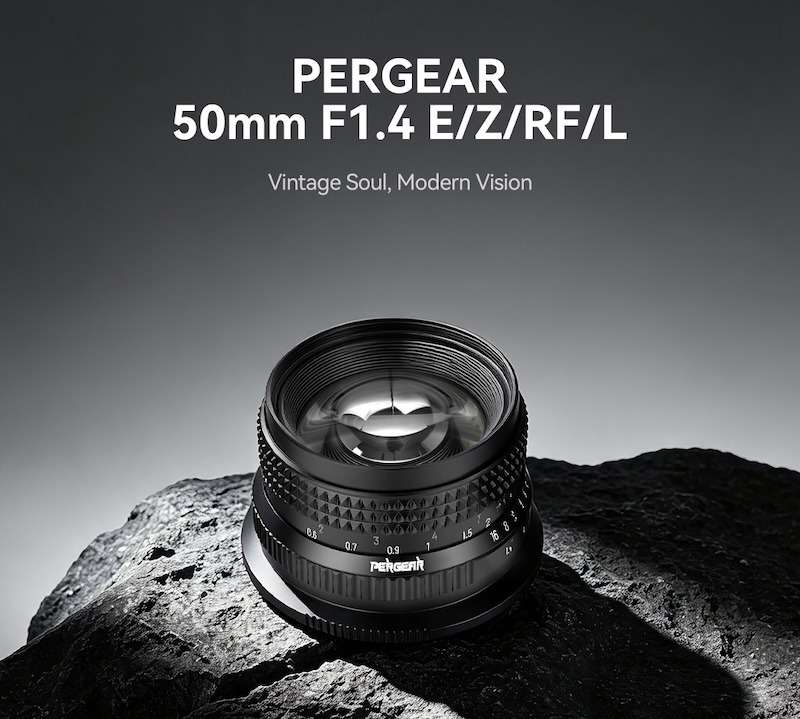
Pergear announced a new 50mm f/1.4 compact full-frame manual focus lens for E/L/Z/RF mount

Par : PR admin
3 août 2026 à 01:23


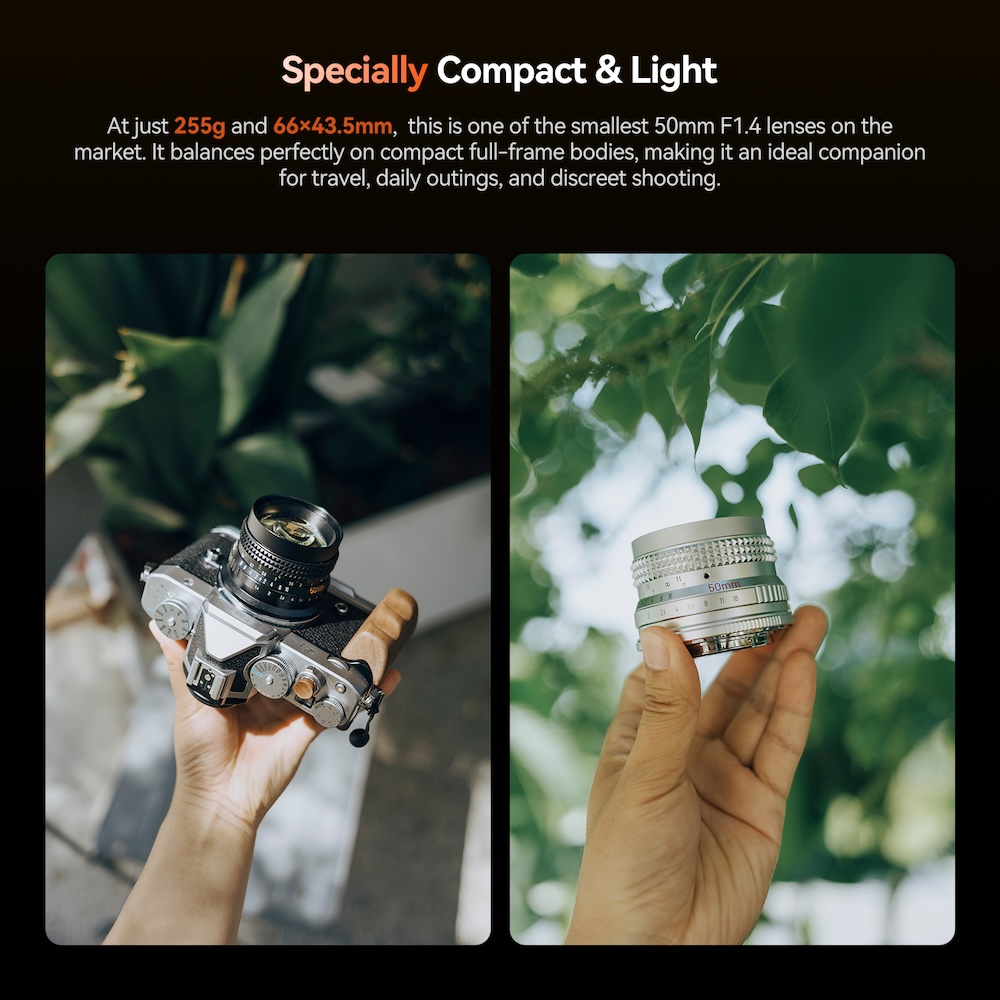
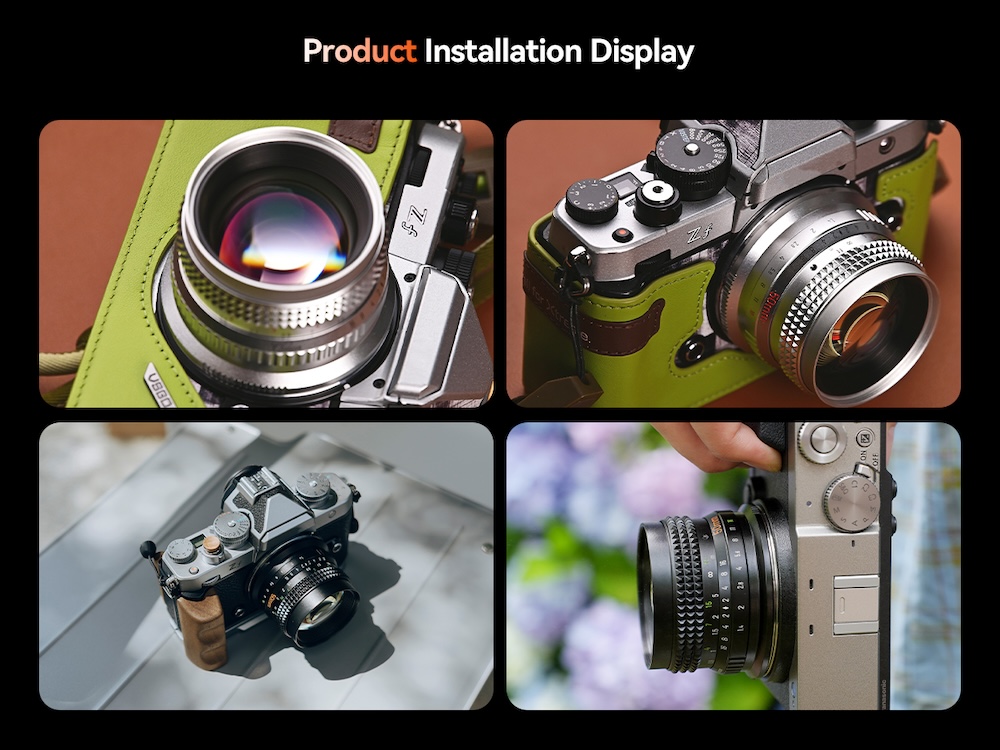
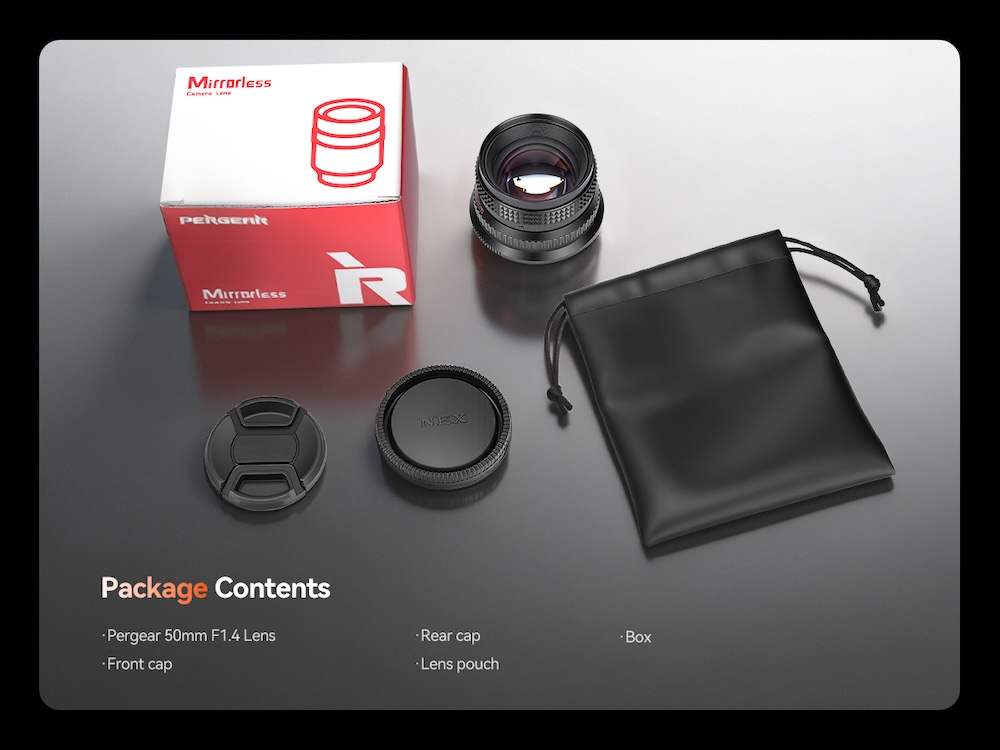
Pergear announced a new 50mm f/1.4 compact full-frame manual focus lens for E/L/Z/RF mount for $129:

Additional information:

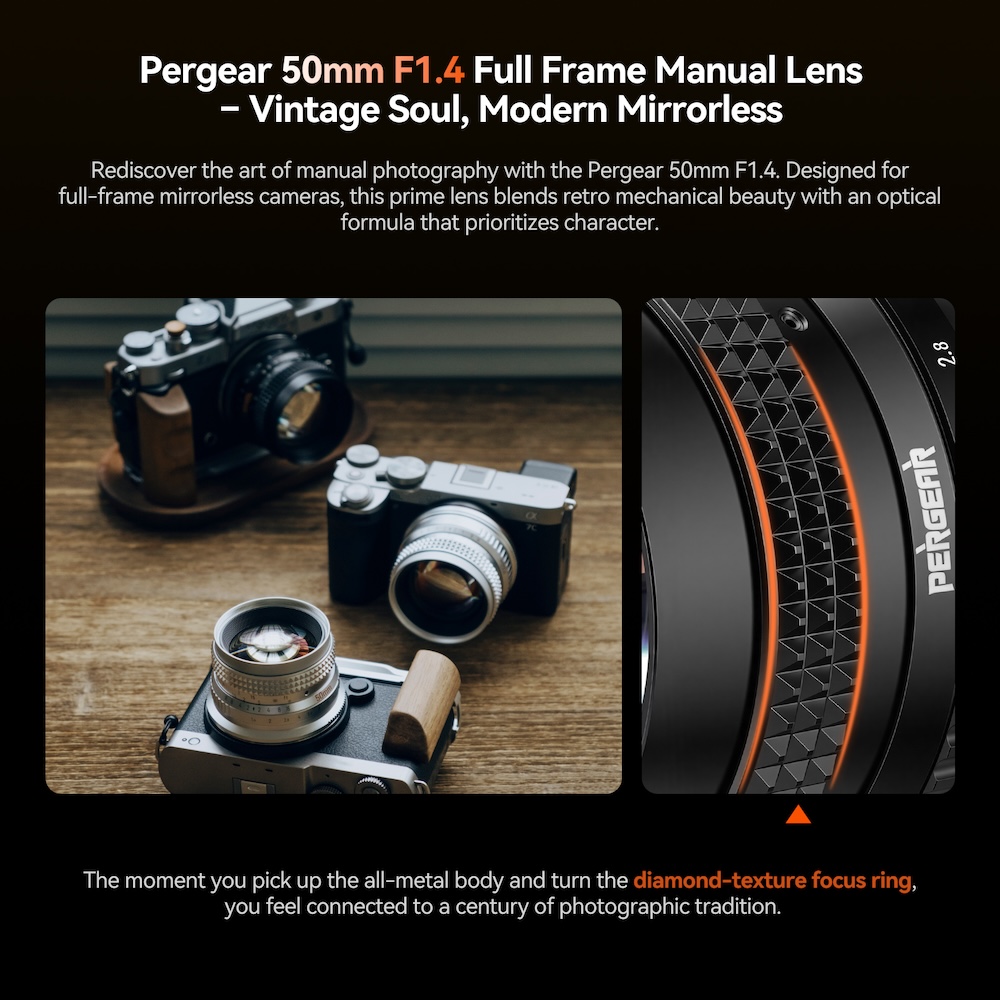
Vintage-Inspired Premium Design
Featuring a classic film-era style with a full-metal body, the lens delivers both a refined appearance and a comfortable shooting experience.

Smooth Manual Focusing Experience
The diamond-pattern focus ring provides smooth rotation and excellent grip, making manual focusing more enjoyable and precise.

Classic 50mm F1.4 Perspective
The versatile 50mm focal length is perfect for portraits, street photography, travel, and daily shooting.

Beautiful Film-Like Rendering
Designed to create soft tones, natural colors, and a unique vintage atmosphere straight out of camera.

Dreamy Bokeh & Low-Light Performance
The bright F1.4 aperture delivers smooth background blur and beautiful night-light rendering, creating a more artistic visual style.

The post Pergear announced a new 50mm f/1.4 compact full-frame manual focus lens for E/L/Z/RF mount appeared first on Photo Rumors.

Sony also confirms the Tamron acquisition offer in their latest Q1 FY2026 financial results

Par : PR admin
3 août 2026 à 00:48


Sony also confirms the Tamron acquisition offer in their latest Q1 FY2026 financial results:

Earlier today, Sony released its Q1 FY2026 financial results (for the three months ended June 30, 2026). While the big headline numbers were incredibly strong—consolidated sales up 8.2% to JPY 2,837.8 billion and operating income surging 40% to JPY 476.5 billion—the biggest takeaway for the Alpha community was the formal confirmation we’ve all been waiting for: Sony has formally submitted a proposal to acquire Tamron.

Sony Q1 FY2026 Financial Results: Sony Confirms Tamron Acquisition Offer

Tamron confirms non-binding acquisition proposal from Sony

Sony to acquire Tamron?

Via SonyAddict

The post Sony also confirms the Tamron acquisition offer in their latest Q1 FY2026 financial results appeared first on Photo Rumors.

Deal of the day: get an extra 5% off Canon gear at B&H Photo with PayBoo

Par : PR admin
2 août 2026 à 01:43


In August, you can get an extra 5% off Canon gear at B&H Photo with the PayBoo card (the PayBoo card instantly credits the sales tax). For example, the Canon EOS R1 camera is $6799 everywhere. If you live in an area with a 7% sales tax, you will pay $7274.93 no matter where you buy it, in a store or online. If you buy it at B&H with the PayBoo card, you pay only $6799. From August 1st – 31st, not only will there be Canon rebates, but if you pay with the PayBoo card, you’ll save the tax AND get an extra 5% off. On the EOS R1, that’s an additional $339.95 off. Here is the list of products that will be part of this promotion:

CAER1 EOS R1
CAER3 EOS R3
CAER52 EOS R5 Mark II
CAER52241054 EOS R5 Mark II w/RF24-105L IS USM
CAER5 EOS R5 Body
CAER524105 EOS R5 w/RF24-105L USM
CAER62 EOS R6 Mark II Body
CAER62SMA EOS R6 Mark II Stop Animation
CAER62FW EOS R6 Mark II Cropping Guide Frame
CAER6224105U EOS R6 Mark II w/RF24-105L USM
CAER6224105S EOS R6 Mark II w/RF24-105L IS STM
CAER63 EOS R6 III Body
CAER63SM EOS R6 III with Stop Motion Firmware
CAER6324105L EOS R6 III 24-105USM Kit
CAER6324105 EOS R6 III 24-105STM Kit
CAER8 EOS R8 Body
CAER8FW EOS R8 Cropping Guide Frame
CAER82450 EOS R8 w/RF24-50
CAER8CCK EOS R8 CCK
CAERPB EOS RP
CAERP2410547 EOS RP w/RF24-105 IS STM
CAER7 EOS R7 Body
CAER7FW EOS R7 Cropping Guide Frame
CAER718150 EOS R7 w/RF-S18-150 STM
CAER7CCK EOS R7 CCK
CAER10 EOS R10 Body
CAER10FW EOS R10 Cropping Guide Frame
CAER101845 EOS R10 w/RF-S18-45 STM
CAER10CCK EOS R10 CCK
CAER1018150 EOS R10 w/EF-S18-150 IS STM
CAER50V EOS R50V Body
CAER50V1430 EOS R50V w/RF-S 14-30 IS STM PZ
CAER50 EOS R50 Body (BK)
CAER50W EOS R50 Body (WH)
CAER50FW EOS R50 Cropping Guide Frame
CAER501845 EOS R50 w/RF-S18-45 IS STM (BK)
CAER501845W EOS R50 w/RF-S18-45 IS STM (WH)
CAER502LK EOS R50 Two Lens Kit
CAER50CCK EOS R50 CCK
CAER50VCK EOS R50 VCK
CAER100 EOS R100 Body
CAER1001845 EOS R100 w/RF-S18-45 Kit
CAER1002LK EOS R100 w/RF-S18-45 & 55-210 Lenses
CAER1002DZLK EOS R100 w/RF-S18-45 & RF75-300 Lenses
CAE5D4 5DMKIV(WG)BODY(USLAG)
CAE5D424105 5DMKIV(WG)24105(USLAG)
CAE5D4CL 5DMKIV(WG)BODY with C-LOG
CAEDRT71855 EOS Rebel T7 w/EF-S 18-55 IS II
CAEDRT7L1 EOS Rebel T7 w/EF-S 18-55 & 75-300 Lenses
CA101845IS RF-S10-18mm F4.5-6.3 IS STM
CA3514LRF RF 35MM F/1.4 L VCM LENS
CA2014LRF RF 20MM F/1.4 L VCM Lens
CA2414LRF RF 24MM F/1.4L VCM Lens
CA5014LRF RF 50MM F/1.4L VCM Lens
CA2418RF RF 24mm f/1.8 MACRO IS STM LENS
CA2828RF RF 28MM F2.8 STM
CA3518MRF RF 35MM F/1.8 M IS STM(N)
CA1628RF RF 16MM F/2.8 STM(N)
CA5018RF RF 50MM F/1.8 STM(N)
CA5012LRF RF 50MM f/1.2 L USM
7198C002 RF 45MM f/1.2 STM
CA8512DSRF RF 85MM F/1.2L USM DS
CA8512LRF RF 85MM F/1.2L USM
CA852RF RF 85MM F/2 Macro STM
CA10028RF RF 100mm f/2.8L Macro IS USM

The post Deal of the day: get an extra 5% off Canon gear at B&H Photo with PayBoo appeared first on Photo Rumors.

The latest Canon rumors

Par : PR admin
1 août 2026 à 19:47


Here is a recap of the latest Canon camera and lens rumors:

Cameras

  • Canon EOS R8 Mark II expected in Fall 2026; could be retro-inspired, with a 32.5MP full-frame CMOS sensor, IBIS, a 40fps electronic shutter (no mechanical shutter), dual SD card slots, and 4K video.
  • Canon EOS R10 Mark II positioned as the next APS-C camera in the lineup overhaul, ahead of a higher-end R7 successor.
  • Canon EOS R7 Mark II now most likely expected in 2027
  • Canon New PowerShot (G7 X-style successor) expected announcement in September 2026.

Lenses

  • Canon RF 300-600mm f/5.6L IS USM (or VCM)
  • Canon RF 400mm f/2.8L IS USM and RF 600mm f/4L IS USM replacements
  • Canon RF 500mm prime (possibly f/5.6 L IS)
  • Canon RF 105mm f/1.4L VCM

Canon Q2 2026 financial results: profit up, 90% tariffs refunded, compact camera production increases

Fuji and Canon registered new cameras

The post The latest Canon rumors appeared first on Photo Rumors.

The Best compact zoom cameras in 2026

If you want a compact camera that produces great quality photos without the hassle of changing lenses, there are plenty of choices available for every budget. Read on to find out which portable enthusiast compacts are our favorites.

DPR-26-004 - DPR LEAD IMAGE - Buying Guide 8a - Best Compact Zoom

Updated August 1, 2026

Not long ago, it seemed like the market for new compact cameras with zoom lenses had mostly dried up, despite the demand from enthusiast photographers who like the form factor and people looking for a nostalgic photographic experience. This year, though, the market has picked up, and not just with subtle refreshes that remove as many features as they add.

You may still have to hunt to find certain models in stock, and if you haven’t bought a compact in a decade or two you’re almost certainly in for some sticker shock. But each category has at least one or two very capable options, and the cameras of today can still offer an experience, image quality or both that can’t be matched even by top-end phones.

Our recommendations:


Enthusiast compacts

The final niche in which it’s difficult for a smartphone to compete is for enthusiast photography. No matter how good smartphone image quality gets, it’s difficult for a phone to provide the feeling of connection to the process of taking photos that an enthusiast compact with lots of direct controls can offer.

We’ve picked cameras with large sensors that deliver good image quality, zoom lenses and direct controls. Some have built-in electronic viewfinders for shooting when it’s bright outside, again giving a more pleasant experience than a smartphone.


Best enthusiast compact: Panasonic L10

>20.3MP images from 26.5MP Four Thirds sensor 24-75mm equiv. F1.7-2.8 OIS lens 2.36M dot OLED EVF
A three quarter shot of the Panasonic L10 with its lens extended on a gray background.Mitchell Clark

Pros

  • Very good image quality and DR
  • Autofocus mostly accurate and easy to use
  • Ambitious zoom lens is versatile
  • Extensive battery life

Cons

  • Controls won’t match everyone’s tastes
  • Not particularly pocketable
  • Lens can be sluggish to zoom
The Panasonic L10 is an enthusiast compact with a 24-75mm equiv., F1.7-2.8 lens, and produces up to 20.3MP images from a 26.5MP BSI CMOS Four Thirds sensor.

The L10 combines an engaging control setup with modern connectivity and features and an ambitious lens with a focal range that’s standard for a reason. It’s not particularly pocketable, but is still small enough that you won’t have any reason not to take it with you on a trip, to an event or even just out on the town.

It’s well-built and offers plenty of tactile, customizable controls, though the number of options (and some peculiar defaults) make it feel like a setup that came from a more complicated camera. Its EVF very usable, and a welcome addition.
The L10 is the first truly new enthusiast zoom compact in nearly a decade, and mostly delivers on the promise of its new sensor and processor.
The L10 is responsive and delivers mostly dependable autofocus with several subject tracking modes. It also offers modern connectivity, and is compatible with the rather good Lumix Lab app. The larger battery that makes the L10 less pocketable than its predecessors is a worthy inclusion, for us.
It offers solid image quality given its size and zoom lens, though APS-C compacts with prime lenses can provide better IQ at the cost of flexibility.
The L10 is a solid compact for enthusiast photographers. The experience of using it isn’t perfect, but it’s mostly successful in bringing a time-tested formula into the modern age.

Read our Panasonic L10 review


See the Panasonic L10 studio scene


Loading gallery…


Honorable Mentions

If you need something that’s more pocketable, the Canon G7 X III offers a similar focal range to the L10 in a much smaller package. It also has engaging controls, but its smaller sensor means there’s a bit of an image quality trade-off, and enthusiast photographers may not prefer its EVF-less design. Its biggest downside, though, is availability. Despite multiple assurances from Canon that it’s working on increasing production, it’s still quite hard to find. If you can get your hands on one, though, it offers a good experience at a great price.

The Sony RX100 VII is similarly pocketable, but features a pop-up EVF and a lens that reaches further, going out to 200mm equiv. Even at its widest, it’s not as bright as the one on the L10 and G7 X III, putting it at an image quality disadvantage, especially as light levels fall, and the camera is seriously expensive thanks in part to the stacked sensor that lets it achieve blistering burst rates. But if you need a little extra reach in something that’s pocketable, it’s still a very capable pick.

Best Long Zoom Compact: Sony RX10 V

20MP Type-1 (116mm²) stacked CMOS sensor 24-600mm equiv. F2.4-4.0 lens Up to 30fps shooting
Three-quarter view of the Sony RX10 V
Richard Butler
Richard Butler

The Sony RX10 V is built around a Type 1 (116mm2) 20MP Stacked CMOS sensor, and features a far-reaching 24-600mm equiv. F2.4-4 lens.

It may be pretty much the only camera left in this category that doesn’t use a minuscule sensor, but it’s not just on this list by default. Sony has equipped it with its latest autofocusing system, menus and battery, and has reworked the ergonomics and controls.

While we haven’t completed our full review of the camera yet, we’ve used it enough to know that it belongs on this list above other cameras that offer similar reach. It provides good image quality and, while not small, is much easier to carry around that most other setups with this kind of reach.

Read our Sony RX10 V review


See the Sony RX10 V studio scene


Loading gallery…


Waterproof cameras

Waterproof cameras are another specialty that smartphones can’t necessarily displace. Many flagship phones are waterproof to a decent degree but you shouldn’t try to submerge them to any appreciable depth or use them in salt water. Waterproof cameras also tend to be pretty rugged, designed to withstand a lot more mistreatment than a phone will withstand, meaning you can carry them with you at all times, without ever having to worry about it. Great for bikers, climbers and custodians of small, inquisitive but not necessarily careful children.

Best waterproof camera: OM System Tough TG-7

25-100mm equiv. F2.0-4.9 lens 12MP Type 1/2.3 sensor Waterproof to 15m (50ft)
omsystem tg7

Pros

  • Bright, wideangle lens
  • Built-in GPS, compass and manometer
  • Raw image capture allowing creating edits
  • Range of accessories

Cons

  • 12MP is fairly low
  • Lens isn't very bright at long end
  • Limited battery life
  • Relatively expensive

The OM System Tough TG-7 is a rugged, waterproof compact with a 25-100mm equivalent zoom lens. It is fully waterproof down to a depth of 15m (50 ft).

The OM System isn’t the only rugged waterproof still on the market, nor the cheapest, but it has several major factors in its favor. The first is that it lets you shoot Raw images, which gives you the ability to correct the white balance, which even the best cameras tend to get wrong when shooting underwater. Another factor is that there is a range of accessories for the TG-7, including a light guide that directs light from the built-in flash into a circle around the lens, letting you illuminate close-up objects.

“The TG-7 is relatively expensive but packs in a host of useful features that help it stand out”

Beyond this there are a few details that different users may find handy: it has an unusually wide-angle lens with a bright maximum aperture, helping the performance underwater and in low light. It also has a built-in GPS, compass and pressure sensor that lets you log your adventures. These all add up to a camera that’s worth the added expense, we feel.

Read our hands-on with the OM System TG-7 article


Loading gallery…


Vlogging cameras

Smartphones are great for vlogging, but a dedicated vlogging camera can shoot better quality video, have more sophisticated microphones (and provide options for connecting better mics), and can autofocus very reliably, dependably delivering YouTube-ready footage.

Best vlogging compact: Canon PowerShot V1

16-50mm F2.8-4.5 zoom 22MP 18x12mm Dual Pixel CMOS sensor 4K/60 with crop
Canon PowerShot V1 beauty shot

Pros

  • Attractive output in stills and video
  • Versatile wide-angle zoom
  • Fan for extended video recording

Cons

  • Relatively large body
  • Full width video has appreciable rolling shutter
  • Optimized for vlogging vs stills
The Canon PowerShot V1 is a mid-sized vlogging compact with a relatively large sensor and wide zoom lens.

It offers a competitive suite of vlogging features, a built-in ND filter and good stabilization options. It’s also comfortable to hold pointing towards you, and lets you access key settings from the touchscreen. It includes microphone and headphone jacks and a fan for extended recording sessions.

AF performance is good, with reliable tracking AF and effective subject recognition. The camera is generally pretty responsive, with the zoom reacting quickly to input.
The V1’s wide lens means you can crop-in for its 4K/60p mode and still maintain a wide-angle view. The full-sensor footage exhibits quite high levels of rolling shutter, so you may have to use the cropped 50/60p mode for capturing shots with lots of movement.

The V1 is a capable option with a useful zoom range, and while its slower sensor may not be the greatest for capturing fast action, it has all the features you’d need to start capturing the world around you.


Read our full PowerShot V1 review


Why you should trust us

This buying guide is based on cameras used and tested by DPReview’s editorial team. We don’t select a camera until we’ve used it enough to be confident in recommending it, usually after our extensive review process. The selections are purely a reflection of which cameras we believe to be best: there are no financial incentives for us to select one model or brand over another.

About the Author: Mitchell started taking pictures at 10 and hasn’t stopped since. It’s been a wide-ranging adventure, spanning a wide variety of genres and locales, and occasionally dipping into fascinations with video and filmmaking. They honed their technical knowledge doing documentation, programing and QA, writing for The Verge, and just generally messing around on the computer to see what breaks.

Want to stay up to date on the latest product news and releases? Add DPReview as a preferred source to ensure our independent journalism makes it to the top of your Google search results.

add as a preferred source on google

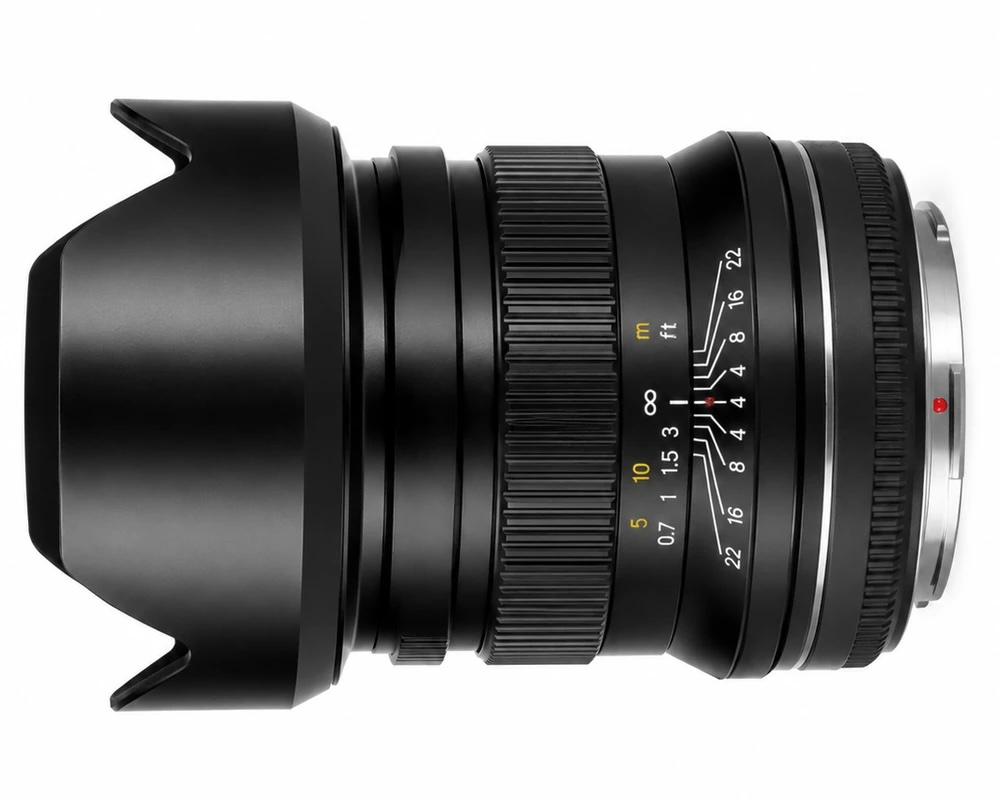
New Mitakon Zhongyi Optics Pittura 30mm f/2.4 lens for GFX & XCD mount released

Par : PR admin
31 juillet 2026 à 17:44

The previously reported Mitakon Zhongyi Optics Pittura 30mm f/2.4 lens for GFX & XCD mount is now officially released in China:

  • Focal Length: 30mm
  • Format: Medium Format
  • Angle of View: 84.5° (equivalent to 24mm on full-frame)
  • Aperture: F2.4–F22; 11 aperture blades; clicked aperture
  • Maximum Magnification: 0.31x
  • Minimum Focusing Distance: 0.2m
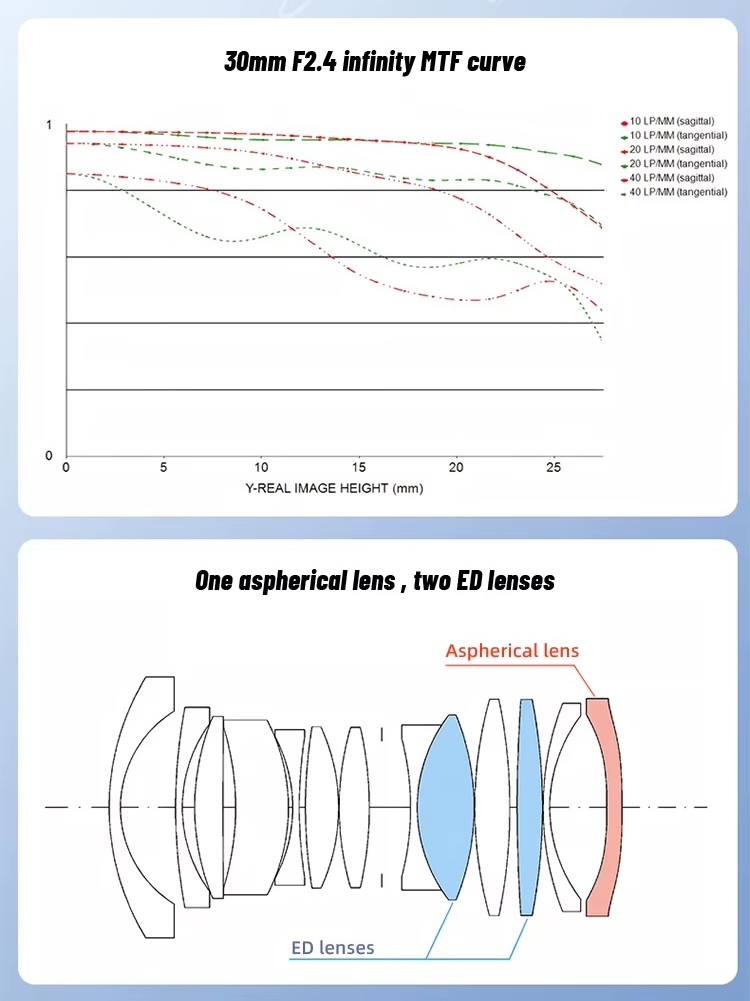
  • Lens Construction: 13 elements in 12 groups (including 2 ED and 1 ASPH elements); dual-group floating design
  • Mount: Fujifilm GFX, Hasselblad XCD
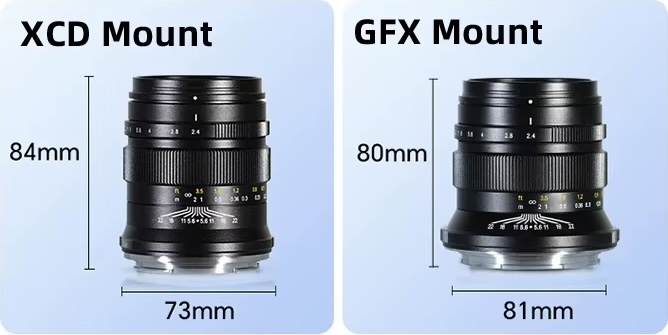
  • Lens Dimensions: φ81mm × 80mm (GFX mount) / φ73mm × 84mm (XCD mount)
  • Filter Size: φ58mm
  • Weight: 550g
  • Price: $500 (now available on AliExpress; also check Amazon, B&H Photo, and the official ZYoptics website)
  • Additional information:


ZY Optics (Zhongyi) to release two new lenses: 30mm f/2.4 and 45mm f/1.4 at the Beijing P&E Imaging Show

The post New Mitakon Zhongyi Optics Pittura 30mm f/2.4 lens for GFX & XCD mount released appeared first on Photo Rumors.

Fujifilm X-T5 camera officially discontinued in Japan

Par : PR admin
31 juillet 2026 à 16:52


The Fujifilm X-T5 camera is now officially listed as discontinued in Japan

  • Camera Kitamura: Now on sale
  • Map Camera: Discontinued product, but still in stock.
  • Bic Camera: Now on sale
  • Yodobashi Camera: Sales ended
  • Official Japanese Fujifilm store: Discontinued

In the US, the Fujifilm X-T5 is still in stock at B&H Photo.

The Fujifilm X-T5 was announced in November 2022. Previous coverage can be found here.

More discontinued cameras are listed here.

Via Asobinet

The post Fujifilm X-T5 camera officially discontinued in Japan appeared first on Photo Rumors.

What you missed in the DPReview community: July 2026

Get the latest community updates in this once-a-month review of news from our DPReview readers. See what happened in July 2026.

Volta bicycle racer in Albueferia, Portugal
Zeee

A ton of great content is created by the DPReview community in our forums: lively discussions, posts about gear and photography that we highlight in front page articles, collaborative photo sharing events and more. In this “What you missed” roundup for July, we highlight community activity from the past month, including some of the photography that didn’t make it into articles.

What’s in this article:

Article of the month: Making DPReview notifications work for you

notifications word in text form placed inside white pill shape on blue background.DPReview

Want to be alerted when someone replies to your article comments? Or are you perhaps receiving too many notifications and just want them turned off? There are several options you can use to customize how often you receive these notifications, but it can take a moment to figure out where to go to adjust them and which changes are right for a particular use case.

We wrote up a notifications how-to guide that walks you through all of the options. If you have any questions after reading through them, please let me know. We’re very passionate about getting notifications right for everyone (they help us, too, so we want them to work as expected).

What’s in your bag? A community member spotlight

Every week, we dive into the history of a community member’s unique photographs and gear in our ‘What’s in your bag?’ series. The series walks through a reader’s favorite camera gear and how they use it, what photographs they’ve taken and plenty of helpful tips and tricks for your photography journey.

Montana mountains
Montana mountains
Max Lowe

Max Lowe shared his portrait photography, featuring a wide variety of shots from the Arctic to his hometown in Montana. Max is an award-winning photographer who’s worked with organizations like National Geographic. He provided us with a ton of extra photos to consider for his article. The one above particularly moved me with its simple beauty, so I chose it for this update. Max had a ton of advice for budding photographers, so if you want those tips and tricks, be sure to check out his complete article linked above.

“Understanding the context of the scene is a major necessity for an artist. Ask yourself: why are you taking that photo? Is it for the benefit of those people? If you’re a photojournalist capturing the story of refugees fleeing the war in Ukraine so that the world can understand that pain, does your work have the power to change things for the better?”

Check out this month’s other reader spotlights:

Question of the week: we ask, you tell

Every other week, we ask the community a question about their photography, usually on a specific topic they’ve discussed elsewhere in the forums, with the results spotlighted on DPReview’s front page and in the forums the following week. There are often many spectacular photos submitted that we don’t get a chance to spotlight in a single article, so you’ll want to regularly check back on what was added to the discussions.

What image made you realize your new gear was worth it?

Tiger alongside a lake
Leopardfoto

Have you ever met a tiger before? Here is a newly revealed reader’s photo and an excerpt from their story in the latest question.

Featured quote: “Late last year, with an upcoming trip to India to photograph tigers and leopards, I hesitantly decided to purchase a 400 TC to bring along. The trip was costing me a king’s ransom, and adding another $14k for the lens seemed completely financially irresponsible. I didn’t think I could justify it since I might not use it that much.”

“During that trip, it became my favorite lens. I still can’t believe how much I enjoy using it, and it has surpassed my expected ROI by a huge margin. Of all the lenses and cameras I’ve ever owned, for whatever reason, this one stands out as the best purchase I’ve made.” – Leopardfoto

Participate in community-led photo initiatives

Butterfly on a flower
19andrew47

The community has a lot of fun with their weekly photo activities and challenges. I was perusing the camera brand forums a few days ago while putting together the latest challenge list, and up popped this rather creatively titled challenge:

Micro Fortnight Thirds General Image Thread

From opsreymike: “Welcome to the Micro Four Thirds general image thread for July 26 – August 8, 2026! Please post your photos that you’ve made recently – or even old faves revisited – with any MFT gear. Besides posting photos, image-related commentary is welcome and encouraged!”

Submissions are open until August 8, so if you’re a M43 fan and have a compatible camera, dust it off and let’s see those photos!

If you intend to participate in any of these photo initiatives, please adhere to their spirit (i.e., don’t post Canon photos in a Nikon-only forum discussion).

Discussion of the month: What is your desktop wallpaper?

Teahouse inside a bamboo forest in Kamakura, Japan
ronphoto

Community member, BernardoSC , asked a fun question in the forums that has gained quite a bit of traction. He asked everyone, “What is your present desktop wallpaper?” I was pleasantly surprised by the wide array of images, from racecar action scenes to the more expected calm, tranquil hillside with a single lonely tree on top (my personal favorite).

Here is a peek at what some had to say about their wallpapers:

FrancoD: “At the moment, I have a male Flame Robin. We get them here for 2-3 months, then they disappear again. Right now, we only have one male (not this one) and one female, but they are not a pair. A pair last year did have three chicks, so we had the family of 5 flying about. We get about 170 species of birds here. I have fun walking about, taking some snapshots of them.”

ajscullard: “I use two monitors, so I have a pano I took of the Forth Rail Bridge just after it was fully painted, split into two images so they display side-by-side across both monitors.”

skysurfer5: “My desktop wallpaper is actually a random slideshow of ~300 photos, of which ~75% are mine, and ~25% are Apollo and Artemis mission images. My photos are a mix of landscapes, macros (mostly flowers), astro (mostly star trails), abstracts, birds and animals, architecture, and family. I also like quirky, such as this cloud bull chasing a cloud cowboy on his cloud horse passing through The Gunsight in Yosemite National Park.”

What community content did you enjoy reading, and what more would you like to see in these updates? Let us know in the comments below.

For even more content directly from our readers, join the discussion forums and share your camera gear and photography curiosities!


Editor’s note: Future editions of this article may include camera use and photo-taking tips and tricks, additional quotes from community members in various discussions and more. If you are interested in seeing community content presented this way, please let me know.

About the Author: Mathew Anderson is a proud Community Manager for the technology industry and a past visitor to DPReview.com for all his camera needs. He is currently the lead of DPReview’s community and primary communication link between the community and DPReview’s team.

Want to stay up to date on the latest product news and releases? Add DPReview as a preferred source to ensure our independent journalism makes it to the top of your Google search results.

add as a preferred source on google

Check out this absurdly in-depth look at Polaroid film

This one’s for the real nerds.

A Polaroid SX 70, clad in brown leather, producing an instant photo.Alex Hall / Alex the ok

There’s little I love more than when I creator I like steps outside of their wheelhouse to cover something I’m passionate about in a new way. Still, I never expected to see a video about photography from Alex Hall, who goes by Alexander the ok on YouTube, as the ex-engineer turned data scientist usually covers things like complex mechanical computers, obscure and interesting air and spacecraft, and the designs of various missiles.

You can imagine my delight, then when I saw a video from him pop up about Polaroid film. And in his typical fashion, he dives deep into the topic, covering the fundamentals on how traditional film photography works, and then going into the clever chemistry that allows instant film to develop in a self-contained packet without a darkroom. It also covers various tangents; nearly 20 minutes is dedicated to his journey of making peel-apart instant film at home, and there’s a section on the interesting modifications and improvements he’s made to his personal Polaroid SX-70.

In other words, it’s a video for real photography nerds, which is why I thought it’d make sense to share it here. I’m sure not every DPReview reader will be interested in watching something over an hour long about film (our bread and butter is digital photography, after all), but I’m also convinced that those who are interested will get a lot out of it. I certainly did, and while I don’t think I’ll be making any instant film anytime soon, I know I’ll have a greater appreciation for the science and art of instant photography the next time I pick up my Instax or Polaroid Time Zero OneStep.

About the Author: Mitchell started taking pictures at 10 and hasn’t stopped since. It’s been a wide-ranging adventure, spanning a wide variety of genres and locales, and occasionally dipping into fascinations with video and filmmaking. They honed their technical knowledge doing documentation, programing and QA, writing for The Verge, and just generally messing around on the computer to see what breaks.

Want to stay up to date on the latest product news and releases? Add DPReview as a preferred source to ensure our independent journalism makes it to the top of your Google search results.

add as a preferred source on google

Sony wants to buy Tamron. Nikon and Canon shooters should pay attention

What would a Sony-owned Tamron mean for photographers?

The Sony and Tamron logos, with a blurred camera body and lens in the background.Sony / Tamron

Photography and consumer electronics giant Sony has offered to buy Tamron, a company well-known for its lenses and optics. This would be, to put it mildly, a massive shake-up in the photography market, that could end up having profound impacts on the lenses available to photographers using other systems in the coming years.

What’s happening?

According to a statement Tamron made to investors, Sony has made “a non-binding proposal” that would result in Tamron being “a wholly-owned subsidiary of Sony Group Corporation.” Tamron says it’s set up a special committee to review the proposal, but that it currently has nothing else to disclose.

One of the most important things to glean from that statement is that, according to Tamron, it would end up as a subsidiary of Sony. That implies that, at least at the beginning, it would still exist as a separate entity. Keep that in mind, as it’ll be important later on in the discussion.

Why does Sony want to buy Tamron?

tamron 12-20mm f2p8 front element
In a 2026 report to investors, Tamron said its photographic business was its “cash cow.”
Mitchell Clark

There are several potential reasons for Sony to want to acquire Tamron, not all of which have to do with photography. While the majority – 74.2%, in 2023 – of Tamron’s sales come from its “photographic products,” the company’s surveillance, automation, mobility and healthcare divisions also make millions of dollars each year. Sony’s a big player in those spaces, too. While most of us are familiar with Tamron because of its camera lenses, we shouldn’t discount the possibility that those other businesses play a part too.

With that said, Sony told Reuters that its reasoning for the offer is because it thinks the acquisition would be good for Tamron’s shareholders, and that it could help Sony’s imaging business too. That seems to mean that the company’s photography business is one of the main draws for Sony.

Tamron’s place in photography

Tamron, like Sigma and Viltrox, is a third-party lens manufacturer, meaning it produces lenses for a variety of camera systems (unlike, for example, Sony, Nikon and Canon, which make lenses pretty much exclusively for their own cameras). The company is known both for making very good lenses that are much cheaper than the own-brand equivalents, and for making zoom lenses that are a bit out of the ordinary; think the 35-150mm F2-2.8, or the 17-50mm F4. Lenses that some people will find useful, but that might be a bit too niche for other companies to make.

A graphic showing several of the lenses Tamron makes for E-mount.
Out of all the camera mounts Tamron makes lenses for, Sony’s E-mount is the best-served.
Tamron

It’s worth explicitly saying that every single mirrorless lens Tamron makes is available for Sony’s E-mount; for many, it’s the only mount they’re currently available on. Tamron makes lenses for all the major mounts – Canon, Nikon etc – but, probably as a result of the stricter licensing policies of the other two big brands, it’s only Sony’s E-mount for which is can offer all its lenses. There are also occasionally differences between the Sony versions and the others. The company’s latest release, the 12-20mm F2.8, will be available for both Nikon and Sony, but the E-mount version is coming out first, and for less, with a spokesperson citing volume, manufacturing differences and a different competitive landscape for the price difference.

While Tamron is known for the lenses that bear its name, it’s also a major original equipment manufacturer, or OEM. That work, which includes making lens modules and interchangeable lenses for clients including Nikon, made up 29% of the company’s revenue in 2025, and accounted for 41% of the sales in its photography division in 2023.

So what happens if Sony buys Tamron?

Neither company has commented yet on what will happen if the deal actually goes through, but there are a few possible scenarios that are worth exploring should that happen.

Scenario 1: Tamron continues on with business as usual

Sony could essentially keep Tamron as a relatively separate company under its umbrella in perpituity, leaving it to continue making lenses for other mounts, and doing OEM work for other companies. And in some ways, this seems like the sensible move; why buy a company, and then nix 30% of its revenue?

Sony acting as a steward would potentially benefit it in a few ways. For one, it wouldn’t have to worry about outside forces messing around with a valuable partner; according to PetaPixel Sony was, until recently, the largest individual shareholder in Tamron before an investment firm took that spot, giving it less sway over the company’s decisions. It would also have greater insight into the company’s developments, and could plan its own releases around those, and could apply some of its optics expertise to lenses bound for other company’s cameras, letting it benefit in a way that it wouldn’t have been able to before.

it’s hard to imagine Tamron’s relationship with the other camera companies would be completely unchanged

However, there are some potential downsides, too. Sony wouldn’t be capitalizing on the ability to make access to Tamron lenses an exclusive benefit of buying an E-mount camera, and it’s hard to imagine that the company’s relationship with the other camera companies would be completely unchanged if it’s suddenly owned by a competitor. Nikon might think twice about choosing Tamron as an OEM (assuming, of course, that it has other options). Then again, it doesn’t seem in any rush to stop using sensors from Sony’s Semiconductor division, or sourcing its OLED EVF panels.

There isn’t a ton of precedent for this scenario in Sony’s history of acquisitions, though there are parallels. It famously purchased Konica Minolta in 2006, which has completely disappeared into its camera division. The same is true of Toshiba’s image sensor business, which it bought in 2015, though Sony’s sensor group does a lot of business with other camera companies.

To us, this path feels like the best outcome for photographers, if a buyout has to happen. Non-Sony owners would still get to benefit from Tamron’s lenses, and it could act as a competitive force in the market, driving other lens makers to improve their own offerings.

Scenario 2: Tamron stills exists, but only makes lenses for Sony

A Sony camera wit the Tamron 25-200mm F2.8-5.6 attached.Tamron

Of course, Sony could keep Tamron around as a lens brand, but make it so the company only produces E-mount options. It’s hard to argue that Sony would need to do this to bolster its cameras – as stated, all of Tamron’s lenses work with them anyways, as do hundreds of options from Sony and others – but it would be a blow to its competitors. Canon and Nikon’s more restrictive licensing policies already limit the choices for their users: losing the few options Tamron provides would only make that situation worse.

In our view, this wouldn’t be good for the camera industry. We’d like photographers to have more options, not fewer.

However, this path is not unfamiliar to Sony, if you look outside of its imaging division. The company has acquired several studios that make video games exclusively for its PlayStation consoles. And while some of those games eventually make their way to other systems years after their original release, it seems like the company may be in the process of walking even that tepid support back.

Scenario 3: Tamron disappears into the behemoth

Tamron could also wind up broken up into pieces, with its medical and automotive divisions becoming parts of Sony’s corresponding groups, and its lens businesses folding into Sony’s. This would simplify things on Sony’s end, where it gets the benefit of the company’s designs and intellectual property without the headache of having two separate, somewhat competing brands. To us, though, it would seem like an odd decision; it’s not like Sony needs help designing lenses (though perhaps this is a play to increase its production capacity), and it would be forfeiting the cahcet of a brand that dates back to the 1950s.

What does this mean for photographers?

If the deal ends up going through, the impact on photographers will depend heavily on which path Sony chooses to take. But even if it went with the first option and mostly let Tamron be, that path wouldn’t be set in stone. Sony could, at any time, decide to cut of other company’s access to Tamron’s lenses and manufacturing, an outcome that wasn’t previously on the table.

While there are exceptions, consolidation in an industry with an already limited number of players isn’t typically in the best interest of the consumer. While it may be, as others have argued, a great option for Sony, that doesn’t mean it would be good for the camera market overall.

There are potential upsides

That’s not to say that there aren’t potential upsides. Tamron is a publicly-traded company, subject to the desires of its investors. While its latest fiscal reports don’t paint a picture of a company in dire straits (absolutely not financial advice, to be clear), we’ve all seen companies whose products have taken a turn for the worse because the money people decided that they weren’t happy with the current profits. It feels less likely that Tamron would meet that fate were it owned by a company that’s deeply invested in photography than if it were bought out by a private equity firm.

It’s also possible the company’s products could improve if it had access to Sony’s technology, expertise, manufacturing capacity and vast financial resources (Sony’s imaging division alone brought in $11.2 billion in 2025, compared to Tamron’s $533 million).

For now, though, this is all hypothetical. Tamron could choose to reject Sony’s offer, deciding to continue going it alone. But while neither company has commented on the terms of the deal, Diamond Online, the outlet that originally broke this story, has reported that the offer is somewhere in the neighborhood of $1.2 billion, which is around Tamron’s current market cap (or, at least, what its market cap was before the news of a potential acquisition broke).

About the Author: Mitchell started taking pictures at 10 and hasn’t stopped since. It’s been a wide-ranging adventure, spanning a wide variety of genres and locales, and occasionally dipping into fascinations with video and filmmaking. They honed their technical knowledge doing documentation, programing and QA, writing for The Verge, and just generally messing around on the computer to see what breaks.

Want to stay up to date on the latest product news and releases? Add DPReview as a preferred source to ensure our independent journalism makes it to the top of your Google search results.

add as a preferred source on google

❌