❌

Vue normale

Sony FE 400mm F4.5 GM sample gallery: animals from Oregon to Montana

From close-up zoo subjects to distant Montana wildlife, here’s how Sony’s lightweight 400mm F4.5 GM performs in the field.

Elephant’s head in close-up, with a single visible tusk and trunk extended to grasp leafy branches; background is blurred.Dale Baskin

When you use DPReview links to buy products, the site may earn a commission.

The Sony FE 400mm F4.5 GM OSS is a 994g (2.2 lb) super-telephoto prime aimed at wildlife and sports shooters who want a lens they can carry comfortably for hours. Sony says it’s the lightest lens of its kind, and at $2,700 it costs a fraction of the company’s FE 400mm F2.8 GM OSS, which is faster by about 1.3 stops, runs around $12,000 and weighs nearly 3kg (6.4 lbs).

Shooting experience

The 400mm F4.5 is nearly identical to its sibling, the FE 600mm F6.3 GM OSS, differing by just one gram and 21mm in length, so the shooting experience is effectively the same. Both balance well when used handheld, with the weight sitting close to the camera to reduce fatigue, and both offer full-time direct manual focus. Two XD linear motors drive the autofocus, which Sony says can keep up with 120 fps burst shooting on the a9 III.

For a more thorough description of how these lenses handle in the field, see my 600mm sample gallery article.

Sample gallery

Most of the images in this gallery were captured at the Oregon Zoo near Portland, Oregon, with a handful at Ninepipe National Wildlife Refuge and the CSKT Bison Range in Montana, the same locations featured in the 600mm gallery. The zoo subjects offered proximity and varied light conditions; the Montana locations challenged the lens in open terrain and at longer working distances.

Please do not reproduce any of these images on a website or any newsletter/magazine without prior permission (see our copyright page). We make the originals available for private users to download to their own machines for personal examination or printing; we do so in good faith, so please don’t abuse it. 

Loading gallery…

About the Author: Dale Baskin is a professional photographer, writer, and filmmaker based in the Pacific Northwest. He is the Managing Editor of DPReview.com.

Want to stay up to date on the latest product news and releases? Add DPReview as a preferred source to ensure our independent journalism makes it to the top of your Google search results.

Discussing the EOS R8 II’s new design, your reactions, and more

This week, DPReview’s editors go together to talk about Canon’s new camera and the just-released lenses from Sony and Panasonic

Canon EOS camera held in a hand with the lens facing forward, set against a plain dark background.Mitchell Clark

It’s been another big week for camera news, so the DPReview editors have once again gathered to discuss the latest releases from Canon, Sony and Panasonic. As usual, we’ve also worked to incorporate some of the comments from our forum users, commenters and others into the conversation, talking about some of the reactions we’ve seen.

If you prefer to read, no worries; we’ve covered all the products we discussed in-depth in articles, which are linked below. And, as always, you can often find us in the comments below, carrying on the discussion.

About the Author: Mitchell started taking pictures at 10 and hasn’t stopped since. It’s been a wide-ranging adventure, spanning a wide variety of genres and locales, and occasionally dipping into fascinations with video and filmmaking. They honed their technical knowledge doing documentation, programing and QA, writing for The Verge, and just generally messing around on the computer to see what breaks.

Want to stay up to date on the latest product news and releases? Add DPReview as a preferred source to ensure our independent journalism makes it to the top of your Google search results.

Steady progress: shooting with the Canon EOS R8 Mark II

We shot Canon’s latest low-cost full-frame body with everything from kit zooms to ‘L’ series lenses

A gravel bike with top-tube bag leans against a stout wooden post at a public rest area, taken with the Canon EOS R8 Mark IIMitchell Clark

The EOS R8 Mark II is a refreshed and up-specced entry-level full-frame mirrorless camera, adding in-body image stabilization and an AF joystick as part of a complete re-styling.

These changes and a 2026 price tag position it essentially head-to-head with Nikon’s Z5II, our current pick in this part of the market.

We’ve had a chance to shoot the EOS R8 II for an extended period and with an array of lenses, so we’ve used it for the everyday photo taking its designed for. We’ve also got some friends to stand around in a flowerbed, to make sure we got to see how it performed for portraits and people pictures.

Overall we found it to be a very likeable camera: relatively small, usefully light and with a pretty straightforward interface. It’s not overflowing with clever features, but it has a lot of what a lot of photographers might need at a price that’s a fair step below that of the more sophisticated EOS R6 III.

We go into more detail about what we liked and disliked in our review, but this gallery should give a sense for what the R8 II can do. All the shots are unprocessed, out-of-camera images, but all of them taken in the camera’s conventional Picture Style color modes because you can’t capture Raws if you switch across to the more effect-like Color filter modes.

As always, you can download the Raws or JPEGs to inspect or run through your preferred processing workflow, to see how they look.

Sample gallery

Please do not reproduce any of these images on a website or any newsletter/magazine without prior permission (see our copyright page ). We make the originals available for private users to download to their own machines for personal examination or printing (in conjunction with this review); we do so in good faith, so please don’t abuse it.

Loading gallery…

About the Author: Richard graduated as a scientist but had a lot more fun writing and shooting for his university magazine. A number of years spent variously as a reporter, writer and editor on science and engineering titles combined his knowledge of science with his interest in images and words. But it was spotting the connections between emission spectra, white balance and all the nonsense he’d taught himself playing around in Photoshop that helped kindle an interest in digital photography. Searching for a camera led to him discovering DPReview and Richard was recruited by Phil Askey in 2007. He’s been combining his love of photography, communication and attention to detail (pedantry?) ever since. He has unusually strong opinions about lenses for the APS-C format.

Want to stay up to date on the latest product news and releases? Add DPReview as a preferred source to ensure our independent journalism makes it to the top of your Google search results.

Brevite’s Kickstarter hoodie has a built-in mic pocket and microfiber storage for creators

The camera bag brand is moving into apparel with a crowdfunded line that aims to solve common creator frustrations.

Beige fabric being tied on a desk with a t-shirt, black cap, binder clips, stationery items, folded hoodie, thread spools, and fabric swatches arranged on a cutting mat atop a wooden surface.Brevitē

Brevitē, the company behind camera bags meant to blend in, recently launched a Kickstarter campaign for clothing designed for creators. The lineup, called Creator Apparel, includes a hoodie, T-shirt and hat, each designed around the needs of people who shoot and record on the go.

The main feature across the lineup is a dedicated place to put a small microphone so that it stays out of sight. On the T-shirt and hoodie, that takes the form of a hidden pocket inside the neckline, while the hat uses a magnetic mic mount built into the brim. It isn’t clear how the location of the mic on the hoodie and T-shirt will impact sound, as it will be fully encased in fabric in those pockets.

While companies like DJI and Insta360 have worked to make their wireless microphones blend in a bit more or look more aesthetically pleasing, not everyone will want an obvious mic in their shot. That’s especially true since mic packs almost universally have their brand name boldly emblazoned on them, and what creator wants to be giving out that kind of free promo? That said, all three items in the apparel line feature the Brevitē name, so you’ll be swapping one logo for another.

A hoodie in a solid color is shown from multiple angles, highlighting key features: extra neck padding, a concealed pocket for a microphone, a hidden pocket sized for a small camera, and an attached microfiber lens cloth that can be detached for cleaning camera lenses.Brevitē

Both the hoodie and T-shirt also include a snap that holds a removable microfiber cloth for cleaning lenses. The T-shirt stops there, but the hoodie adds padding around the neck for greater comfort when wearing a camera strap all day. It also has a zippered hidden stash pocket inside the main kangaroo pocket that’s large enough to fit something like the DJI Osmo Pocket.

The hat lacks the microfiber cloth but includes a concealed interior pocket designed for memory cards. It uses an adjustable snapback closure, eliminating the need to choose a specific size.

A black hat with a magnetic patch for attaching a microphone is held in a hand. The inside of the hat features a dedicated slot containing an SD card. Text on the image points out the hat’s magnetic brim and integrated SD card holder.Brevitē

The hoodie comes in six colors (black, cream, green, tan, pink and navy) while the T-shirt is available in black or white and the hat is offered only in black. Brevitē positions the three pieces as everyday apparel that can double as a functional kit for run-and-gun shooting.

It’s important to note that this is a crowdfunding campaign rather than a conventional retail launch. Backers pledge toward a reward, and the project will only be funded if it reaches its goal by October 14. As with any Kickstarter project, pledging does not guarantee delivery, and backers should weigh the usual risks associated with crowdfunding.

One bit of good news for anyone interested: Creator Apparel is not Brevitē’s first Kickstarter project. The company previously crowdfunded its original camera backpack and, more recently, the Jumper Max camera bag, which drew 293 backers and reached 355% of its funding goal, according to the new campaign page.

Pledges start at $35 for the hat, $42 for the T-shirt and $62 for the hoodie. Backers can also pledge for all three pieces for $139. All of those prices are only for the first 100 backers, though. Prices will go up 30% across the board by the end of the campaign. Brevitē says that production will be complete and units will begin shipping in October.

About the Author: Abby Ferguson holds an MFA in photography and blends a fine-art background with extensive editorial and commercial experience. She built and led an in-house imaging program for a large vacation rental company and has served as an associate editor at Popular Photography. She also teaches at a local community college and serves on its Photographic Technology Program Advisory Board, sharing her knowledge and enthusiasm for the medium.

Want to stay up to date on the latest product news and releases? Add DPReview as a preferred source to ensure our independent journalism makes it to the top of your Google search results.

You don’t have to be a paying member to get discounts from those brands

Par : PR admin
19 septembre 2026 à 08:05


You don’t have to be a paying member of a website in order to get discounts from certain brands – here is an updated list of photo gear promo codes you can use. Most of the coupon codes require the purchase to be made from the provided links:

Lenses

Software

Accessories

Camera bags

Other

The post You don’t have to be a paying member to get discounts from those brands appeared first on Photo Rumors.

This 2.5-hour Leica restoration video is basically camera ASMR for film photographers

The footage follows every disassembly step, cleaning pass and reassembly sequence of a classic Leica body, in real time, with no flashy cuts, no commentary and no music.

Vintage film camera with a metallic and black body resting on a brown surface, accompanied by a leather case, several cylindrical film canisters, round lens cap, instruction booklet, and assorted small photographic accessories organized nearby.Leica

If you’re anything like me, sometimes you like to put on a calming video for casually watching in the background while you work on something. The video below from Leica is the perfect option for just that.

The video is 2.5 hours long, and it documents the full restoration of a 100-year-old Leica I from the Leitz family. The video description explains that the camera was dealing with porous shutter curtains, resulting in light leaks and compromised shutter operation.

It showcases every step of the process, from start to finish. What I like best is that there are no dramatic cuts and no flashy music. There’s not even any commentary. It’s just pure camera repair ASMR, making it perfect to keep on in the background. Of course, it’s also neat seeing all of the inner workings of such a camera and all of the tools required for such work.

About the Author: Abby Ferguson holds an MFA in photography and blends a fine-art background with extensive editorial and commercial experience. She built and led an in-house imaging program for a large vacation rental company and has served as an associate editor at Popular Photography. She also teaches at a local community college and serves on its Photographic Technology Program Advisory Board, sharing her knowledge and enthusiasm for the medium.

Want to stay up to date on the latest product news and releases? Add DPReview as a preferred source to ensure our independent journalism makes it to the top of your Google search results.

Godox C100 review: A novelty camera that works better as a light meter

The C100 will not be everyone’s cup of tea as an actual camera, but its light meter mode is actually useful.

A Godox device held in a hand with its screen showing camera settings and a focus frame, set against a blue sky with scattered clouds.Abby Ferguson

When you use DPReview links to buy products, the site may earn a commission.

I’m a big fan of cameras that are focused on fun, and I’m always interested when companies take a distinct approach to that idea. After all, there are countless highly capable cameras on the market today that are more serious, and you’re sure to find one that fits your needs, no matter what type of photography you enjoy. There are even options for small travel cameras after a bit of a lull in that segment.

What is the Godox C100

White Godox device with a screen held in a hand, set against a blue sky and tree background.
The photo and video modes let you switch between 16:9, 4:3, 3:2 and 1:1 aspect ratios and display framing guides on the transparent screen.
Abby Ferguson

When I saw that Godox had released the C100, its first camera, I was intrigued. The palm-sized camera uses a vastly different design from most. It features a transparent viewfinder (though calling it that is a bit generous) that doubles as a minimalist display. You can’t review your photos there, as it’s more like a heads-up display, but it shows which mode you have selected and frame lines. When in light meter mode, it displays ISO, aperture and shutter speed settings.

The white body is a slim rectangle with a central button to trigger the shutter or light meter, arrows to cycle through aspect ratio or exposure settings, and a side switch to select photo, video, light meter, or turn the camera off. It’s remarkably easy to operate from a settings standpoint, as there really aren’t any. It takes just a few seconds of pushing buttons to figure out how to use it.

Using the Godox C100

Black cat stretched out on a wooden floor, looking upward toward the camera.
I thought I had my cat more in the frame, but I significantly missed.
Abby Ferguson

While the buttons are easy to navigate, using the camera as, well, a camera, is not so pleasant. The large, transparent viewfinder is certainly novel and a playful idea. But using it as a viewfinder is far from ideal. For starters, judging what’s in the frame depends entirely on how close you hold the viewfinder to your face and at what angle. It isn’t a consistent or reliable way to compose images, though I did better than I thought when I actually reviewed them, aside from a few major misses.

The bigger issue I had was that my eyes struggled to decide what to focus on when using it. My eyes would jump back and forth between focusing on whatever was beyond the viewfinder and on the camera itself, which was rather headache-inducing for me. So you see: not so pleasant.

Of course, I’d be remiss if I didn’t touch on image quality. Godox hasn’t published any details about the camera in terms of sensor size, aperture, shutter speed, and so on, and none of those details are captured in metadata. So I can only comment on what I’m seeing in the roughly 2MP images.

Curving paved road in a tree-lined neighborhood at sunset, with sunlight streaming through branches and green foliage on both sides.
High contrast scenes are a challenge for this camera.
Abby Ferguson

It should come as no surprise that the image quality is what you’d expect from a toy camera. It admittedly isn’t as bad as I expected (I had very low expectations), and this isn’t a camera meant for pristine image quality anyway. But there are some notable issues.

The dynamic range is very small, and it tends to massively overexpose highlights in favor of exposing for the shadows. In fact, it’s so intense that my colleague Mitchell described it as a “highlight brick wall” as opposed to a highlight roll-off. The fixed focus also isn’t very close, so subjects need to be relatively far away to be sharp (or at least as sharp as this setup can produce).

Green tree branches extend toward a bright, partly cloudy sky; fluffy white clouds and patches of blue sky are visible in the background.
I was surprised the exposure on this one turned out alright.
Abby Ferguson

In bright light, it handles moving subjects reasonably well; my dog wasn’t just a blur, suggesting a reasonable shutter speed. Low-light images are, naturally, quite rough-looking, though that isn’t a surprise given how small the sensor likely is.

Overall, the camera produces images that very much fit into the low-fi aesthetic that seems to be popular right now. The experience of using it isn’t all that pleasant for me, but I could see that being less of an issue for others.

Light meter use

A black Sekonic light meter with buttons and a display and a white Godox device with a screen and single button, both resting on a white surface and casting faint shadows.Abby Ferguson

Given the image quality and framing annoyances, I think the Godox C100 actually makes the most sense as a light meter, since it offers a specific mode for that. As a film photographer, I can see the advantage there, as it is significantly smaller than my Sekonic light meter, meaning I can easily keep it in my pocket when I’m out shooting.

There are plenty of excellent smartphone light meter apps (even free ones), but that means I need to have my phone on hand. It also requires I unlock my phone every time I want to take a meter reading, and potentially navigate to the app if I’ve done something else in the meantime, which I’ve found a bit annoying when on a photo walk or something similar.

In my testing, I found the meter mode to be very accurate. I compared it to the measurements from various mirrorless cameras, and it was exactly the same every single time. I would feel confident using it for film.

White Godox electronic device with a screen and buttons, held in a hand outdoors against a blurred grassy background.
You can select two parameters to control, with the meter measuring for the third.
Abby Ferguson

It’s also nice because you can select which two parameters you want control of versus which the camera should give you a reading for. With what I photograph, I’m most often interested in adjusting my own aperture, and I have a set ISO since I’m shooting film. So I set my ISO and aperture, push the center button, and it gives me a reading for what my shutter speed should be.

The one small issue with light meter mode is the range of each setting. Aperture ranges from F1.0 to F64, and shutter speed from 1 sec to 1/8000 sec, which are both plenty broad (much more than any of my film cameras can use, in fact). ISO, however, only covers from 100-800.

Most of the film I shoot falls in that range, but there are popular film stocks well above 800, or below 100. I’m currently working on a roll of CineStill 800T that I’m shooting at 1600. So that narrow ISO range is potentially a bit limiting. But, for those who know how to calculate equivalent exposures, it could at least help dial in an appropriate setting.

Final thoughts

When looking at a camera like this, it’s important to keep in mind what it actually is and who it’s meant for. This is supposed to be a novel, fun camera, and in most ways it is. For those who aren’t precious about framing or image quality, I could see it being a fun toy to take out and about.

The visually challenging process of trying to actually use the viewfinder will keep me from using it as a camera. But, I think it will make a home next to my film cameras that don’t have built-in meters on photo walks, as it is easier to carry around than my dedicated light meter and more convenient than using a smartphone app.

About the Author: Abby Ferguson holds an MFA in photography and blends a fine-art background with extensive editorial and commercial experience. She built and led an in-house imaging program for a large vacation rental company and has served as an associate editor at Popular Photography. She also teaches at a local community college and serves on its Photographic Technology Program Advisory Board, sharing her knowledge and enthusiasm for the medium.

Want to stay up to date on the latest product news and releases? Add DPReview as a preferred source to ensure our independent journalism makes it to the top of your Google search results.

The rewind: all the cameras and lenses launched this week

It’s been another busy week in the photography world, so here’s your recap to make sure you didn’t miss anything.

A large camera lens with a white barrel and black accents, featuring a bold G logo on the side, held in a hand wearing a white shirt.Dale Baskin

When you use DPReview links to buy products, the site may earn a commission.

It seems like the camera industry wasn’t content with just one busy week. We’ve seen another rush of announcements in the past few days, and we wouldn’t blame you if you missed a few things among all the articles we’ve put out. So let’s recap everything that happened this week.

The Instax Pal gets an unexpected follow-up

Silver Instax camera held in a hand above a DJ mixer, with colorful lights and displays in the background.Fujifilm

The Instax Pal was always a bit of an odd duck: a gumdrop-shaped camera that only shot digital, despite bearing the name of Fujifilm’s instant film brand. This week, though, the company released a successor with a completely different design, recalling the tiny 110 film cameras of old. (Strangely, not the only one of its kind released this week: Camp Snap announced something similar.) Alongside it, Fujifilm launched an updated version of its Instax Link Wide printer.

The Canon EOS R8 II

The EOS R8 II in hand, seen from the front.Mitchell Clark

Canon has updated its entry-level full-frame camera, fixing two of our major complaints about the original in the process with the inclusion of IBIS and an autofocus joystick. While we still have our complaints – the tiny LP-E17 battery has been untouched, and the RF mount remains strictly under Canon’s control – we were left with a very positive first impression. Check out our full initial review for all the details.

Sony’s twin telephoto lenses that won’t break the bank (or your back)

Two large camera lenses labeled 400mm and 600mm, one stacked above the other in a hand, against a neutral background.Dale Baskin

The super telephoto game has never been cheap to get into and, make no mistake, it still isn’t. But Sony’s new 400mm F4.5 and 600mm F6.3 GM are steps towards making it a bit more accessible, coming in at $2700 and $3700, respectively (both just under $10,000 less than their faster counterparts). The lenses are shockingly similar, coming within a gram of each other, and their optical formulas have a lot of shared glass.

Panasonic’s full-frame 20mm F2.5 cupcake lens

The Panasonic S1RII with a Lumix 20mm F2.5 pancake/muffin lens attached to the front.Mitchell Clark

Not one to miss out on the action, Panasonic also announced a new lens: a 20mm F2.5 option for L-mount that’s not quite as small as a pancake lens, but is around the same size as the 40mm F2 option it released earlier this year. Panasonic once described this style of lens as a “muffin” (read: a baked good thicker than a pancake), but reader nologo suggested that calling it a cupcake would be a more fun descriptor (and, potentially, a less internationally confusing one), which I wholeheartedly agree with.

Keep an eye out for a sample gallery from this lens, coming soon.

Software news

Capture One, Adobe Photoshop Elements and Affinity Photo all received updates this week, with the former improving tethering and AI-assisted culling and the latter promising its biggest update for photography ever. Canon also launched a piece of software that lets you use pictures from some of its cameras to create 3D models of the real-life object you photographed.


Those were all the major launches this week, but I’ll leave you with a pro tip: if you want to make absolutely sure you won’t miss our best stories, and want to see exclusive content from us, be sure to subscribe to our Today in Photography newsletter.

About the Author: Mitchell started taking pictures at 10 and hasn’t stopped since. It’s been a wide-ranging adventure, spanning a wide variety of genres and locales, and occasionally dipping into fascinations with video and filmmaking. They honed their technical knowledge doing documentation, programing and QA, writing for The Verge, and just generally messing around on the computer to see what breaks.

Want to stay up to date on the latest product news and releases? Add DPReview as a preferred source to ensure our independent journalism makes it to the top of your Google search results.

Micro Four Thirds just gained an unexpected member: GoPro is now officially on board

GoPro’s formal adoption of the MFT System standard, announced alongside the Mission 1 Pro ILS, could expand lens compatibility options for action and cinema shooters already invested in the ecosystem.

GoPro camera body without a lens, positioned beside a separate Laowa camera lens on a flat gray surface with a plain gray background.Mitchell Clark

Earlier this year, GoPro announced a bit of a departure from its usual products with the Mission 1 Pro ILS. The camera kept the company’s rugged, compact body design, but featured a Micro Four Thirds lens mount. Now, that relationship is formalized, with OM Digital Solutions and Panasonic announcing that GoPro is a member of the Micro Four Thirds standards group.

The announcement could be seen as a vote of confidence in Micro Four Thirds. GoPro brings a new kind of small, rugged video body into the mount’s ecosystem, and its support could help encourage more specialty lenses and accessories built around it.

Still, the Mission 1 Pro ILS isn’t a gateway to the full breadth of Micro Four Thirds glass. Its mount lacks electronic contacts, so it works only with compatible manual-focus lenses and manual or fixed-aperture designs, not the autofocus lenses that make up much of the existing OM System and Panasonic lineup. But it marks an interesting move in the industry, and we’ll be eager to see what, if anything, comes of it.

It’s also worth noting that action camera rival, Insta360, has said it’s working on its own mirrorless cameras, rumored to be built around a Micro Four Thirds mount as well.

About the Author: Abby Ferguson holds an MFA in photography and blends a fine-art background with extensive editorial and commercial experience. She built and led an in-house imaging program for a large vacation rental company and has served as an associate editor at Popular Photography. She also teaches at a local community college and serves on its Photographic Technology Program Advisory Board, sharing her knowledge and enthusiasm for the medium.

Want to stay up to date on the latest product news and releases? Add DPReview as a preferred source to ensure our independent journalism makes it to the top of your Google search results.

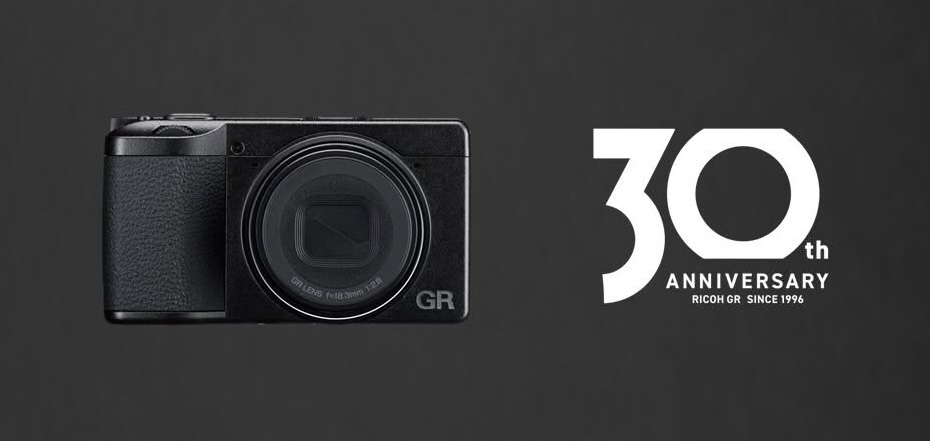
The new Ricoh GR IV 30th anniversary edition camera kit is now available for pre-order

Par : PR admin
17 septembre 2026 à 15:37


The new Ricoh GR IV 30th anniversary edition camera kit is now available for pre-order:

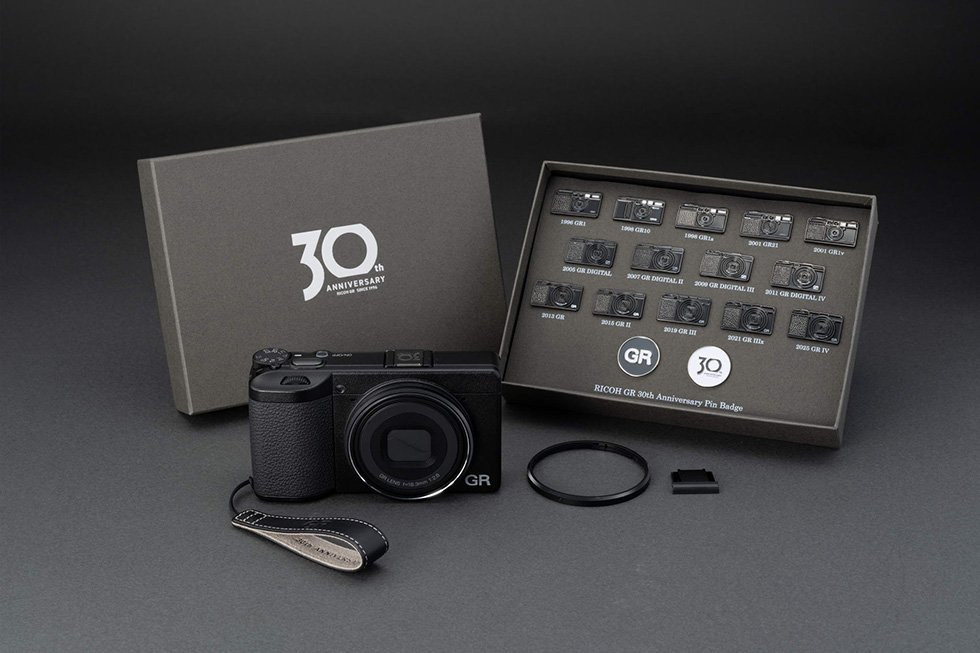
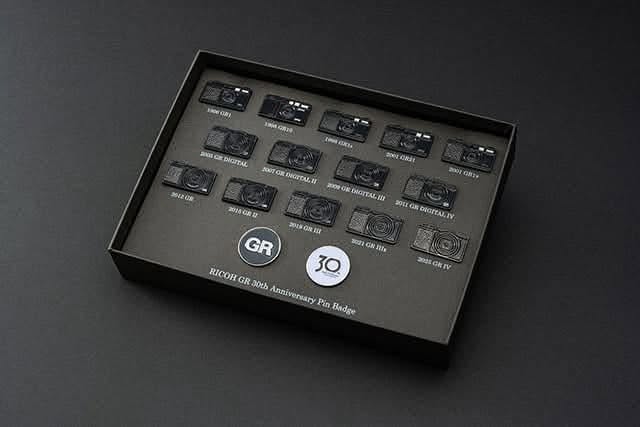
Here is what’s included in the kit:

  • Limited-edition GR IV celebrating 30 years of the Ricoh GR series
  • Worldwide production limited to 6,000 units
  • GR1-inspired dark silver shutter release and rear buttons
  • Diamond-cut GN-3 (30th) ring cap inspired by the original GR1
  • Exclusive 30th Anniversary Edition power-off screen
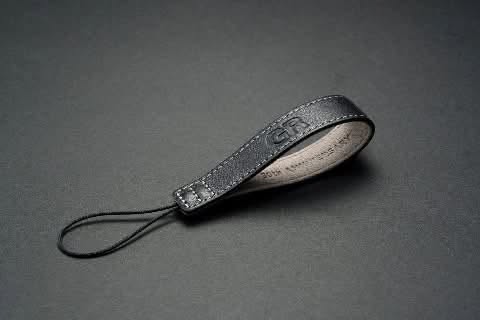
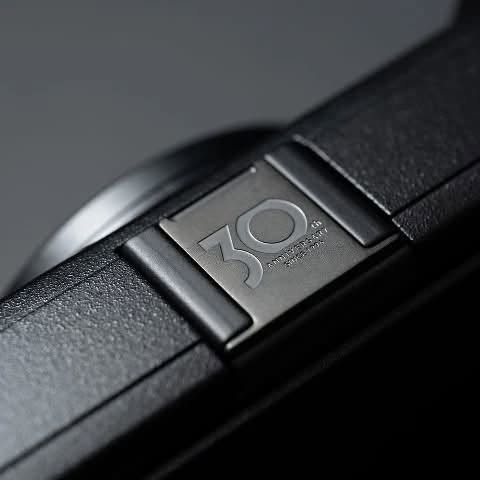
  • Includes commemorative hot shoe cover and genuine leather finger strap

Ricoh released additional information on the upcoming GR IV 30th anniversary edition camera kit

Via PentaxRumors


The post The new Ricoh GR IV 30th anniversary edition camera kit is now available for pre-order appeared first on Photo Rumors.

Camp Snap’s screen-free 110D brings a 1970s film camera shape to digital for $75

The 110D revives a beloved vintage form factor with zero screen, zero fuss and a budget-friendly price tag.

Long blonde hair visible behind a vintage-style camera labeled Camp Snap 110D, held up in front of the face with both hands. Light sweater sleeves and rings are visible on the fingers.

When you use DPReview links to buy products, the site may earn a commission.

Camp Snap, the company known for its simple, screen-free digital cameras, has announced a new offering in its lineup with a substantially different look. The 110D is a narrow, rectangular camera reminiscent of the classic 110 analog cameras popular in the 1970s.

As the name hints, the Camp Snap got its start as a camera meant for kids to take to camp, without the risk of sending more expensive cameras with your child or the distractions found on other digital cameras. The 110D keeps that legacy alive, and like the company’s other cameras, it lacks a display for viewing photos, prompting users to stay in the moment and look at their photos later.

The only display on it is a monochrome reflective segmented LCD for checking settings. There’s a small optical viewfinder on the side for composing images.

Vintage compact camera in black and silver with buttons and a partially open sliding compartment, labeled “Comp Snap 110 D,” on a light beige background.Camp Snap

The camera keeps other kid-focused design features, too. That includes a screw-secured door where the memory card slot and a small selection of buttons to adjust settings live. However, those screws can be removed for those who don’t necessarily need to lock things down.

Also consistent with previous models are the built-in digital filter looks. The 110D offers five filters – Standard, Vintage 1, Vintage 2, Analog and Black & White – that can be changed on the camera itself with a slider. It also features a 30.5mm filter thread for those who want to use physical screw-on photo filters.

Camp Snap says the camera offers a near-instant shutter response, minimizing the delay between pressing the shutter button and capturing the image. It is also designed to maximize battery life by automatically entering sleep mode when it’s inactive. When you’re ready to take a photo, the company says you simply have to press the shutter button and don’t need to wait for the camera to fully boot up. Camp Snap says it can manage around 500 photos per charge.

M-PI-camp-snap-110d-03Camp Snap

One thing even many adults will appreciate is that the camera can be used without an app. In fact, it doesn’t offer any sort of connectivity beyond a USB-C port. That means no fussing with connecting the camera to a phone or dealing with all the other things that come with it when a child is using it. Images can simply be transferred to a phone, tablet or computer using that USB-C port.

In terms of the nitty-gritty details, the 110D features an 8MP Type 1/3.2 (15.7mm2) CMOS sensor. It uses a 4.2mm F2.0 (26mm F11.5 full-frame equivalent) lens and offers a dual-tone LED flash, with options for 6500K and 3000K. Unsurprisingly, it only captures JPEG files, and it has fully automatic exposure and white balance. It features a pre-installed 4GB microSD card that stores roughly 2000 photos, though it can be upgraded as well.

M-PI-camp-snap-110d-02Camp Snap

The Camp Snap 110D is available for pre-order now for $75. It comes in two colors: black and gray (called Back in Black), and white and orange (dubbed Dreamsicle).

About the Author: Abby Ferguson holds an MFA in photography and blends a fine-art background with extensive editorial and commercial experience. She built and led an in-house imaging program for a large vacation rental company and has served as an associate editor at Popular Photography. She also teaches at a local community college and serves on its Photographic Technology Program Advisory Board, sharing her knowledge and enthusiasm for the medium.

Want to stay up to date on the latest product news and releases? Add DPReview as a preferred source to ensure our independent journalism makes it to the top of your Google search results.

iPhone 18 Pro vs. Pixel 11 Pro vs. Galaxy S26 Ultra: The key differences

Here’s how the three flagship smartphones stack up against each other.

Four smartphones—Samsung, Google, Apple, and an unbranded model—are shown side by side on a gradient background; the Samsung device has a stylus positioned next to it.Samsung, Google, Apple

Over the last seven months, Samsung, Google and Apple have all released their latest flagship smartphones. Samsung’s Galaxy S26 Ultra arrived first, followed by Google’s Pixel 11 Pro and Apple’s iPhone 18 Pro. With its 6.9-inch display, the Galaxy S26 Ultra is more akin in size to the XL and Max variants of the Pixel and iPhone, but, unlike Google and Apple, Samsung doesn’t make a smaller version with otherwise identical specs.

Here’s how their cameras, displays, battery life and other core specifications compare.

Cameras

iPhone 18 ProPixel 11 ProGalaxy S26 Ultra
Main (wide)24mm F5.1-F13.7 equiv.
48MP
Type 1/1.3 (72mm²)
Stabilized sensor
24mm F6 equiv.
50MP
Type 1/1.3 (72mm²)
Stabilized lens
24mm F6 equiv.
200MP
Type 1/1.3 (72mm²)
Stabilized lens
Ultrawide13mm F13.5 equiv.
48MP
Type 1/2.55 (23.5mm²)
13mm F10.3 equiv.
48MP
Type 1/2.51 (23.5mm²)
12mm F11.5 equiv.
50MP
Type 1/2.5 (25mm²)
Telephoto100mm F17.7 equiv.
48MP
Type 1/2.55 (23.5mm²)
Stabilized sensor
106mm F14.8 equiv.
48MP
Type 1/1.95 (32mm²)
Stabilized lens
67mm F22.7 equiv.
10MP
Type 1/3.94 (10mm²)
Stabilized lens
Periscope telephoto––111mm F17.6
50MP
Type 1/2.5 (24.5mm²)
Highest video mode4K/120p Dolby Vision
ProRes RAW
8K/30p (with cloud processing)
4K/60p
8K/30p
4K/60p

There’s a lot of overlap when comparing the camera systems of these three flagships. Each has an advantage over the others in some way; some are rather substantial, while most are only small differences.

The three phones use main-camera sensors that are effectively the same size, all coming in at Type 1/1.3 (72mm²). The notable difference is resolution: the Galaxy S26 Ultra uses a 200MP main camera, compared with 50MP on the Pixel 11 Pro and 48MP on the iPhone 18 Pro. Despite the variety in resolutions, all three models will, by default output at lower resolutions; the iPhone and Galaxy at 24MP, the Pixel at 12.5. They all, however, offer modes that let you use the sensor’s full resolution, but due to the nature of Quad Bayer sensors, they’re typically best used in good lighting where you don’t need maximum dynamic range.

Image showing a phone camera with aperture bladesApple

Apple’s main camera has its own edge, though, as it’s the only one here with a variable-aperture lens (though Samsung briefly experimented with something similar around a decade ago). It can be set to F1.48, F1.8, F2.8 or F4, promising a bit more creative control and exposure flexibility, especially when shooting video.

Samsung has the broadest rear-camera system, adding a dedicated 3x camera between its main and 5x cameras. Its long telephoto reaches 111mm equiv., narrowly exceeding the Pixel’s 106mm and iPhone’s 100mm equiv. lenses, and the 67mm equiv. provides a nice bit of flexibility that the others don’t. However, the Pixel’s telephoto sensor remains the largest in that class of the group.

All three phones support close-focus shooting with their ultrawide cameras, though, naturally, each brand handles it slightly differently and uses distinct names. Apple lists macro photography, Google specifies Macro Focus on the Pixel 11 Pro ultrawide, and Samsung’s Focus Enhancer can automatically switch to the Galaxy S26’s ultrawide camera for nearby subjects.

Video

A person wearing a purple sweatshirt and helmet performs a skateboard trick on the sidewalk, with two others in casual clothes standing nearby. The background features a metal shutter and brick wall.
Google says it has improved video stabilization on the new Pixel phones, partly with the help of a new Video Boost mode on the Pixel 11 Pro.
Google

On the video side of things, Apple lists the most extensive video feature set. The iPhone 18 Pro records 4K Dolby Vision video at up to 120 fps and supports ProRes, ProRes Raw with external recording, Apple Log 2 and ACES color workflows. It is also compatible with Genlock, which lets the iPhone 18 Pro synchronize its frame timing with other cameras and video devices.

Lastly, the iPhone has finally caught up with the Pixel and Galaxy phones with the addition of manual camera controls for aperture, shutter speed, white balance and histogram monitoring (which also work in photo mode).

The Pixel 11 Pro records up to 4K/60p on the phone itself, while its 8K/30p option uses cloud-based processing. It also offers separate modes for low-light video, extra handheld stabilization and enhanced zoomed video, plus a post-capture tool for reducing distracting background sounds.

The Galaxy S26 Ultra records up to 8K/30p and 4K/120p. It also supports Samsung’s Advanced Professional Video codec, an open, professional-oriented format intended to preserve more image information while using storage more efficiently than conventional uncompressed video. Samsung also includes an enhanced stabilization mode designed to keep handheld footage level during movement (a feature Apple replicates with the iPhone’s “Action” mode).

Displays and battery

iPhone 18 ProPixel 11 ProGalaxy S26 Ultra
Display size6.3 inches6.3 inches6.9 inches
Panel typeOLEDLTPO OLEDQHD+ Dynamic AMOLED 2X
Resolution2622 × 12061280 × 28563120 × 1440
Pixel density460 ppi495 ppi498 ppi
Maximum refresh rateAdaptive, up to 120HzAdaptive, up to 120HzAdaptive, up to 120Hz
Peak/outdoor brightness3,000 nits outdoorsUp to 3,600 nitsUp to 2,600 nits

While all three sit in the flagship-phone class, Samsung takes a different physical approach with the Galaxy S26 Ultra’s substantially larger display. The iPhone 18 Pro and Pixel 11 Pro share the smaller 6.3-inch format, while the Samsung is closer in scale to Apple’s Pro Max-class phones and Google’s Pixel Pro XL models.

The three offer the same 120Hz maximum refresh rate, and their pixel densities are broadly similar despite their different screen sizes and resolutions. The Pixel has the highest stated brightness rating, while the iPhone’s specification is specifically an outdoor-brightness figure.

In terms of battery specs, Apple rates the iPhone 18 Pro for up to 36 hours of video playback and it says the phone can reach 50% charge in around 15 minutes with a compatible 60W-or-higher USB-C adapter. The Pixel 11 Pro has a stated 30-plus-hour mixed-use runtime and charges to 55% in around 30 minutes with a 30W USB-C PPS charger. Samsung’s Galaxy S26 Ultra supports up to 60W wired charging, and the company promises up to 31 hours of video playback.

Size and weight

iPhone 18 ProPixel 11 ProGalaxy S26
Height150.0mm (5.91″)152.7mm (6.01″)163.6mm (6.44″)
Width71.9mm (2.83″)71.9mm (2.83″)78.1mm (3.07″)
Depth8.75mm (0.34″)8.4mm (0.33″)7.9mm (0.31″)
Weight211g (7.44 oz)204g (7.20 oz.)214g (7.55 oz.)

The Galaxy S26 Ultra is much taller and wider than the iPhone 18 Pro and Pixel 11 Pro, reflecting its 6.9-inch display and four-camera system. At 214g, it is also the heaviest, though only by a small margin. It’s just 3g heavier than the iPhone and 10g heavier than the Pixel, but it is thinner than both.

Key differences

Outside the camera system, the three phones still share a premium baseline: all start with 256GB of storage, use USB-C, support Wi-Fi 7 and are rated IP68 for dust and water resistance. The main hardware differences are scale and camera configuration rather than basic connectivity or durability.

Apple supports MagSafe and Qi2 wireless charging, including up to 25W MagSafe charging, while Google’s Pixel 11 Pro supports the Qi2.2-based Pixelsnap accessory system. Samsung supports wired, wireless and reverse wireless charging, and its Ultra model adds S Pen support and a built-in Privacy Display feature.

Software remains a fundamental distinction. The iPhone 18 Pro runs iOS 27 and integrates with Apple’s hardware and services. The Pixel 11 Pro runs Android with Google’s Pixel interface and a stated seven years of operating system, security and feature updates. The Galaxy S26 Ultra runs Android with Samsung’s One UI, Galaxy AI tools and S Pen software features.

The three phones are also close in price. In the U.S., the Galaxy S26 Ultra starts at $1300, the Pixel 11 Pro at $1099 and the iPhone 18 Pro at $1199. The Samsung Galaxy S26 Ultra’s larger display, S Pen support and fourth rear camera position it differently from the two 6.3-inch Pro models, but it also places all three phones within a $200 launch-price range.

About the Author: Abby Ferguson holds an MFA in photography and blends a fine-art background with extensive editorial and commercial experience. She built and led an in-house imaging program for a large vacation rental company and has served as an associate editor at Popular Photography. She also teaches at a local community college and serves on its Photographic Technology Program Advisory Board, sharing her knowledge and enthusiasm for the medium.

Want to stay up to date on the latest product news and releases? Add DPReview as a preferred source to ensure our independent journalism makes it to the top of your Google search results.

This DPReview member uses a Sony a7CR to capture life’s moments

Sometimes the moment you’re in is the only reason you need to take a photo of what stands before you. See Stefan Pfeffer’s moments as captured with his Sony a7CR.

A boy looks through the window of his home in Tacloban.Stefan Pfeffer

Meet Stefan Pfeffer

Home base: Manila, the Philippines

I’m always drawn to photographers who treat their camera as a way to explore a scene from a humanistic perspective.

Known in the wider community as stipphoto, Stefan Pfeffer photographs the energy and small human interactions of everyday life, particularly across the Philippines and elsewhere in Asia. Working with a preference for wide-angle lenses and direct, unplanned encounters, Stefan embraces the reactions his presence can bring. In this edition of What’s in your bag?, he discusses his compact Sony a7CR kit while exploring his favorite stops in Europe, Hong Kong and the Philippines.

“I have always been curious about my surroundings and have photographed almost everything I encounter. During the days of film photography, I was somewhat restrained by the limited number of exposures; with digital photography, that restraint has largely disappeared.

My photographs are neither carefully planned nor intended to have particular artistic value. They are simply snapshots of moments in time.”

Our ‘What’s in your bag?’ community spotlight series features readers sharing their favorite gear and photography, including from past DPReview collaborators. See below for what Stefan has to share.

How do you get a good angle from others?

A man is busking with a guitar cut out of cardboard in Cebu.
“A man is busking with a guitar cut out of cardboard in Cebu.”
Stefan Pfeffer

“I’m drawn to documentary-style photography, with a particular focus on people and everyday life. Asia, with its crowded markets, densely developed residential areas, and vibrant street life, offers an endlessly rewarding environment for photography.

Whenever possible, I try to insert the camera into a scene rather than simply record what is in front of me. This is why I prefer wide-angle lenses: the wider the lens, the more immersed I feel in the environment.

Whenever possible, I try to insert the camera into a scene rather than simply record what is in front of me.

My choice of focal length also depends on how approachable people are in different places. In Europe, they tend to use a 50mm lens; in Hong Kong, a 35mm lens; and in the Philippines, a 24mm lens. This approach makes it difficult to photograph people discreetly or unnoticed, but I see that as a positive thing. It often provokes a reaction and creates a kind of dialogue between the people I photograph and me. They may reject the photograph, which is perfectly fine, or, as is sometimes the case, give me the dreaded V-sign and pose for the camera.

I never stage my photographs or instruct people on how to pose. I prefer to capture people and situations as they naturally unfold, allowing the interaction between the photographer, the subject, and the environment to shape the image.”

What’s in Stefan’s bag

Stefan's camera bag.
Stefan’s camera bag.
Stefan Pfeffer

“Gear does matter. A sharp lens and a snappy camera, such as the fantastic but ultimately disposable Sony a7CR, make the difference between capturing a moment and missing it.

Fast autofocus was the liberation from Leica rangefinder focusing, as digital imaging was the liberation from film. However, as objects, a Nikon F3 is infinitely more desirable than a Nikon ZF. Instagram and YouTube reviews of equipment confuse the correlation between gear and achieving a photograph.”

Favorite cameras(s): Hasselblad X1D II and Sony A7CR

“I’ve been through a lot of camera gear over the years. The perfect camera does exist, for me at least. It’s the Contax G2, paired with its wonderful lenses. Today, however, my preferred camera is the Sony a7CR.”

Favorite lens(s):

“My three-lens kit consists of the 24mm GM, Sony 50mm F2.5 G, and Sigma 90mm F2.8, a compact combination that gives me the flexibility to photograph at different distances while keeping the kit relatively light. My choice of lens depends largely on where I’m photographing and how close I can get to my subjects.”

Do accessories matter, or do you just bring the camera?

A boy is riding his bicycle at a beach at low tide on Panay Island.
“A boy is riding his bicycle at a beach at low tide on Panay Island.”
Stefan Pfeffer

“Accessories absolutely matter. For starters, I like the Crumpler 6 Million Dollar bag. It’s simple and functional. However, for a photo walk, I much prefer inconspicuous shoulder bags that I sourced from flea markets. My latest find is a Converse bag. Equipped with a cheap camera bag insert, these are perfect for a three-lens setup.

Otherwise, a plastic bag for my camera is always part of my kit. My main criticism of Sony cameras is their sensitivity to humidity and rain. The Multi-Interface Shoe is my main source of frustration. The design may make sense on a computer, but on a camera that is used outdoors, it’s infuriating. Sooner or later, all my Sony cameras have displayed the dreaded message: “This accessory is not supported by the device and cannot be used.” Infuriating.

An air blower and a spare battery are also essential. Fortunately, Sony’s battery life is fantastic, so I rarely have to worry about running out of power. If I need anything else, the beauty of roaming any Asian city is that there is always a convenience store or Sari Sari for a refreshment.”

How has your photography changed over the years?

A blind man is busking during the Ati Atihan festival in Kalibo.
Stefan Pfeffer

“Although I have always loved black-and-white photography, my digital photographs are almost exclusively in color. For me, this is simply because reality is in color. Since my photographs are essentially snapshots of the world as I encounter it, I prefer to preserve that sense of reality rather than reinterpret it.

Digital photography has also greatly improved both the number and quality of images I’m able to capture. Modern autofocus is remarkably capable, allowing me to shoot wide open at short shutter speeds.

What has perhaps changed – or, more accurately, developed over time – is my ability to overcome the hesitation to approach people and ask to photograph them. After doing this for a number of years, I’ve learned that the worst that can happen is being rejected.”

Why is Asia so special for your photography?

"The Philippines used to to have network of train. Today, some remaining racks are served by hand-pushed bamboo contraptions."
“The Philippines used to have a network of trains. Today, some remaining racks are served by hand-pushed bamboo contraptions.”
Stefan Pfeffer

“I like to wander and discover whatever happens to be around me. In many parts of Asia, the boundaries between public and private space are less clearly defined, making places that might otherwise feel inaccessible surprisingly open. People are generally quick to let me know when I trespass – somewhere, sooner or later.

Twenty-five years ago, what was meant to be a one-month trip turned into a year-and-a-half journey through Asia, with China in particular. It was a very different time to travel. The lack of internet and smartphones created a sense of freedom and spontaneity that is difficult to experience today.

In China in particular, the relative lack of surveillance at the time made it possible to travel extensively with a sense of anonymity. Walking around with a camera was generally met with curiosity rather than suspicion. People would ask where I was from or what I was photographing, but there was usually an openness toward a foreigner simply wandering around with a camera.

That freedom and unpredictability became an important part of how I experienced and photographed Asia.”

How do you plan out capturing a great photo?

The chaos at the market in Cebu city.
Stefan Pfeffer

“My photographs are rarely planned. They are more often a matter of seeing what happens and responding to it.

The Sony a7CR’s excellent autofocus, combined with its high megapixel count, allows me to shoot short bursts of three or four frames at a moderate drive speed. The quality of lenses such as the Sony 24mm GM and Sigma I-Series 35mm also gives me enough resolution to crop heavily and refine the composition later in Capture One.

In a way, going out to photograph has become about collecting the raw material for an image. The final framing and interpretation happen later on the computer. It’s close to the analog process: going out and exposing the negative, then returning home to make the photograph.”

Stefan really enjoyed participating in this spotlight article and would love to hear what you think of his photography and to answer any of your questions in the comments below.

You can check out Stefan’s other work at stefanpfeffer.com.


Editor’s note: This article continues a series, ‘What’s in your bag?’, highlighting DPReview community members, their photography and the gear they depend on. Would you like your photography to be featured in a future installment? Tell us a bit about yourself by filling out this form.

About the Author: Mathew Anderson is a proud Community Manager for the technology industry and a past visitor to DPReview.com for all his camera needs. He is currently the lead of DPReview’s community and primary communication link between the community and DPReview’s team.

Want to stay up to date on the latest product news and releases? Add DPReview as a preferred source to ensure our independent journalism makes it to the top of your Google search results.

Sony FE 600mm F6.3 GM sample gallery: a Montana field test of Sony’s lightest 600mm prime

We put the lens through its paces on real wildlife in the field. Check out our full sample gallery, including downloadable Raw files.

Close-up side view of an elk with large antlers walking on green grass; background shows blurred trees.Dale Baskin

When you use DPReview links to buy products, the site may earn a commission.

Earlier this week, Sony announced the FE 600mm F6.3 GM OSS, a super-telephoto prime that, along with its FE 400mm F4.5 GM sibling, aims to put G Master optics into a lens you can comfortably handhold for hours. At 995g (2.2 lb) without its tripod foot, Sony claims it’s the lightest lens in its class, and at $3,700, it costs a fraction of what the company’s 600mm F4 GM does.

Shooting experience

I’ve spent the past couple of weeks with both lenses ahead of launch, taking the 600mm F6.3 to photograph wildlife in Montana at Ninepipe National Wildlife Refuge and the CSKT Bison Range, where, frustratingly, I didn’t see a single bison.

The first thing I noticed is how little the lens feels like a super-telephoto. Sony’s 995g figure doesn’t include the hood, which you’ll almost certainly have attached and which adds roughly 130g, but you’re unlikely to notice much difference. More importantly, the lens’s weight is concentrated close to the camera, so it doesn’t feel front-heavy the way many telephotos do.

Two ducks flying side by side over an open landscape with distant hills and mountains beneath a blue sky.
This lens is built for walking, not sitting on a tripod. I tramped through marshes with it to get closer to birds and shot entirely handheld.

SONY ILCE-7M5 w/ FE 600mm F6.3 GM OSS @ 600mm equiv. | F6.3 | 1/2000 sec | ISO 400
Dale Baskin

I shot entirely handheld on a Sony a7 V, which is really the point of this lens: it’s built for walking, not for sitting on a tripod. I wandered the refuge’s primitive dirt roads and marshy areas with nothing but the camera slung over my shoulder and a small pack. My tripod stayed in the car the entire trip.

That’s why I can (mostly) forgive the one design choice I’d change: the tripod foot isn’t Arca-Swiss compatible. It’s not the end of the world for a lens meant to be handheld, but when you do need a tripod – for video, for example – a built-in Arca-Swiss foot would be very useful.

Bird in sharp focus flying through the sky, with blurred green tree branches and leaves in the foreground and a soft blue background suggesting distant mountains or sky.
The Sony a7 V’s subject tracking was very effective, even keeping track of birds as they passed behind trees. Paired with the 600mm F6.3, it’s an effective combination for wildlife shooting.

SONY ILCE-7M5 w/ FE 600mm F6.3 GM OSS @ 600mm equiv. | F6.3 | 1/2500 sec | ISO 1000
Dale Baskin

The hood has a locking button and a rubber bumper on the front, which is a welcome touch, since a lens this long inevitably bumps into things as you carry it. It also reverses for storage. Reversed, it partially blocks the focus hold buttons, but the function and focus rings remain easy to reach, so if an opportunity appears suddenly, you can still raise the camera and shoot.

The focus ring is nice and deep, and full-time DMF lets you take over focusing without flipping a switch. When subject detection couldn’t pick out an animal partially hidden by grass or plants, a quick twist of the ring to bring it into focus was often the fastest way to get the camera to recognize the animal and begin tracking.

Deer partially hidden behind green foliage, looking through leaves in a sunlit outdoor setting.
Full-time DMF (direct manual focus) can be helpful when an animal is obscured just enough that the camera’s subject tracking fails to recognize it right away.

SONY ILCE-7M5 w/ FE 600mm F6.3 GM OSS @ 600mm equiv. | F6.3 | 1/1250 sec | ISO 500
Dale Baskin

The trade-off for its compact size is the F6.3 maximum aperture. For sample galleries, we keep ISO as low as practical so noise doesn’t affect perceived sharpness; I generally aim for ISO 1600 or below, though it’s not a hard rule. With this lens, that target had to move. In early-morning light at Ninepipe, or in overcast or misty conditions, I often shot at ISO 2000–3200 to get shutter speeds fast enough to freeze wildlife in action.

When not shooting sample galleries, I might push to ISO 6400 or higher, and with modern full-frame sensors and AI Raw noise-reduction tools, that makes F6.3 less of a compromise than it once was. Still, if you regularly shoot in low light, you might be the target audience for Sony’s 600mm F4, which is 1.3 stops faster.

Deer with white spots leaping through tall, dry grasses and wildflowers under bright sunlight
SONY ILCE-7M5 w/ FE 600mm F6.3 GM OSS @ 600mm equiv. | F6.3 | 1/2000 sec | ISO 400
Dale Baskin

Even at F6.3, I generally had plenty of subject separation and found out-of-focus areas pleasing both in front of and behind the plane of focus. The one exception was when something busy, like tall grass, sat in an awkward middle zone – not sharp, but not blurred enough to disappear – where the bokeh could look slightly distracting, though that kind of transitional distance is a tough test for any lens.

For a closer look at the design and controls, and how both lenses fit into the market, check out our hands-on with the 400mm F4.5 and 600mm F6.3 GM.

Sample gallery

Loading gallery…

About the Author: Dale Baskin is a professional photographer, writer, and filmmaker based in the Pacific Northwest. He is the Managing Editor of DPReview.com.

Want to stay up to date on the latest product news and releases? Add DPReview as a preferred source to ensure our independent journalism makes it to the top of your Google search results.

Canon’s entry-level full-frame camera is more capable than ever: here’s our first look video

We went hands on with the EOS R8 II and tested out its photo and video capabilities.

The Canon EOS R8 II, bathed in red light from behind.Mitchell Clark

Earlier this week, Canon launched the EOS R8 II, a new, entry-level full-frame camera that takes the original EOS R8, gives it a redesign and adds IBIS and an autofocus joystick. And, like the original, it’s quite capable for video too, so we filmed part of our first-look video using it.

Keeping focus on a (relatively) still subject isn’t a particularly difficult task for modern cameras, but even Canon cameras as recent as the EOS R6 II would occasionally have some distracting focus pulsing in video. We’re happy to say it’s not something we noticed in the footage from the EOS R8 II, though we’ll have to spend more time shooting with it before we come to any full conclusions.

You’ll also see a variety of sample shots in the video, though if you want to see more – and check out the Raws for yourself – you can browse through our sample gallery.

Oh, and a fun behind-the-scenes fact for our readers: the plane picture at the 3:36 mark in the video was taken with Canon’s RF 400mm F2.8 lens, a massive piece of glass that costs as much as seven EOS R8 IIs.

It’s obviously not a sensible pairing with this camera, but I ended up having access to it for a few hours after attending a Formula Drift with Canon to test out the EOS R1, so I took the opportunity to make a silly video with it because who else would have that kind of opportunity?

About the Author: Mitchell started taking pictures at 10 and hasn’t stopped since. It’s been a wide-ranging adventure, spanning a wide variety of genres and locales, and occasionally dipping into fascinations with video and filmmaking. They honed their technical knowledge doing documentation, programing and QA, writing for The Verge, and just generally messing around on the computer to see what breaks.

Want to stay up to date on the latest product news and releases? Add DPReview as a preferred source to ensure our independent journalism makes it to the top of your Google search results.

Canon’s free Dual Pixel 3D software turns supported EOS R photos into 3D models

The Windows-only Dual Pixel 3D Converter uses depth data in compatible Canon EOS R images to create 3D models, stereoscopic photos and MP4 clips, no dedicated 3D camera required.

Bagel with mashed avocado, sliced cherry tomatoes, extra avocado slices, a poached egg, herbs, and chili flakes on a white plate with a yellow napkin on a wooden table.Canon

Alongside the new EOS R8 II, Canon has announced Dual Pixel 3D, a new Windows-based software tool, free at launch, that turns a single compatible camera image into an immersive 3D photo, a 3D model or a short 3D video clip. It does so using sensor data rather than requiring a dual-lens or dedicated 3D camera setup, meaning photographers can create 3D content without purchasing separate, specialized equipment.

How it works

The Dual Pixel 3D Converter uses depth and phase-detection data from a single compatible image, either a Dual Pixel Raw file shot with a supported camera, or a JPEG containing distance information captured by the EOS R8 Mark II. Users will need to ensure that the setting to record distance data to JPEGs is turned on, however.

The tool can export the resulting 3D content as OBJ or GLB model files, or as an MP4 video that creates a shifting, three-dimensional perspective. Canon says the tool is best suited to close-up, stationary subjects with clear depth and defined edges, such as products, plants and food.

Canon’s documentation of the feature highlights the need for a sharp source image. As a result, it recommends using an aperture between F5.6 and F8, specifying that anything beyond F8 will result in “a 3D conversion error.” The company also suggests an ISO of 1600 or lower to minimize noise. Finally, it cautions that subjects with fine details, transparency, reflections, repeating patterns or heavy blur may not produce ideal results.

The app then provides some controls for customization over the degree of depth. Users can increase depth for a stronger 3D effect or reduce it for a more subtle look. It also allows users to remove or replace the background before exporting the final file.

Compatible cameras

Compatible camerasRequired compatible lenses
EOS R5 Mark IIRF24-70mm F2.8 L IS USM
EOS R5RF24-50mm F4.5-6.3 IS STM
EOS R6 Mark IIIRF24-105mm F4 L IS USM
EOS R6 Mark IIRF24-105mm F4-7.1 IS STM
EOS R7RF35mm F1.8 Macro IS STM
EOS R8 Mark IIRF50mm F1.8 STM
EOS R8RF70-200mm F2.8 L IS USM
EOS R10RF70-200mm F4 L IS USM
RF85mm F2 Macro IS STM
RF100mm F2.8 L Macro IS USM
RF-S18-45mm F4.5-6.3 IS STM
RF-S18-150mm F3.5-6.3 IS STM

Canon says the new tool is compatible with eight EOS R-series cameras, listed above. While users don’t need a dual-lens setup, the feature only works with select Canon lenses, also listed above. The company notes that feature availability and viable output will depend on the camera, source file type, lens and shooting conditions.

Dual Pixel 3D could be particularly useful for photographers and small businesses that want to create rotating product visuals or shareable 3D-looking clips without investing in dedicated scanning hardware. It is not a firmware update that adds a new shooting mode to every Canon body. Instead, Canon’s new software converts depth information in compatible images captured with supported camera-and-lens combinations into 3D content.

About the Author: Abby Ferguson holds an MFA in photography and blends a fine-art background with extensive editorial and commercial experience. She built and led an in-house imaging program for a large vacation rental company and has served as an associate editor at Popular Photography. She also teaches at a local community college and serves on its Photographic Technology Program Advisory Board, sharing her knowledge and enthusiasm for the medium.

Want to stay up to date on the latest product news and releases? Add DPReview as a preferred source to ensure our independent journalism makes it to the top of your Google search results.

Here’s how a community of photographers keeps their inspiration

Even the most passionate of us have times when we struggle to find a reason to take out a camera. Here’s how the DPReview community manages. What do you do?

Beautiful rose, rain soaked.AshleyMC

We all have that moment where we pick up a camera, go out to shoot something, and… nothing. You look around, recognize all the places you’ve already taken great photos of and don’t have the energy to drive across town to find something fresh. Instead, you decide to walk back into the house to work on some other non-photography project.

During these times, you miss that spark of creativity and inspiration that keeps you energized to take great photos. You know what it feels like when it’s around. Those are the times when it’s clear as day what to do with your camera. You end up shooting countless fantastic scenes with little effort.

So, how do you rekindle that spark of inspiration? Read on to discover how the DPReview community finds fresh inspiration and gets their creative instincts flowing again.

Dave in Wales: What you don’t do is sell all your gear.

Spid: This is what the nifty fifty was designed for. Strip back to basics. Shoot less, one focal length. Get the mojo back.

TOTodd: Nothing sparks inspiration more than a client beating on your door asking if it’s done yet.

zak99: Stop chasing technical perfection, dig out some old cameras, digital or film, limit my options and carry only one lens. I’m currently using an Olympus 7070 from my digital childhood. It’s challenging, it’s satisfying and it’s cool.

Creativity can start in dark places.
Simple-joy

Maoby: By taking self-portraits (in response to Mathew’s self-portrait lead photo :)).

Jaberg: As a practical solution, take part in the currently running month-long challenge. It’s not important that each (or any) entry be a gem. The important thing is to make a picture – any picture – for each topic. To pick up the camera and engage the photography muscles. You never know when creative inspiration will strike.

AshleyMC: I always have a camera on me and create photographs daily. My “default” subject is flowers, which are not hard to find: in my garden, in the neighborhood church’s garden, or in the city’s botanical gardens and greenhouses. Other than flowers, I usually see “something” in any scene.

Gato Amarillo: If I waited for inspiration, I’d hardly get anything done – in photography or in any other part of life. It’s been said many ways by many people: “Amateurs wait for inspiration; real artists just get to work.”

Blurred candlelight.
AshleyMC

Zeee: I do what works best. I let GAS get the better of me.

milo006: I have been doing this since I was 12 years old, now I am 81. I think every day can be inspirational, as far as life is concerned. When I was a young man, my inspiration came from my work, military service and other experiences. After I married and had children, they became the inspiration.

I do admit that I have had long periods when I was not active as a photographer, due to other hobbies that took up a lot of my time. However, now that I am older, retired and have the time, I find it easy to be inspired on a daily basis.

KPM2: Photography is often a matter of being in the right place at the right time. When you’ve been doing it for a long time, you’ve naturally found yourself in that sweet spot often enough – and you might just lose a bit of your enthusiasm as a result, and more so, when the weather is not optimal.

What always works for me in those moments is experimenting with flash, outside or inside at home, because it breaks the rule of being in the right place at the right time. Because the time doesn’t matter.


There are many other stories from our community. They all deserve praise and to be shared, so be sure to visit the forum discussion and share your own if you like. Thanks to everyone who took the time to share unique ways you get out of an inspiration rut.

About the Author: Mathew Anderson is a proud Community Manager for the technology industry and a past visitor to DPReview.com for all his camera needs. He is currently the lead of DPReview’s community and primary communication link between the community and DPReview’s team.

Want to stay up to date on the latest product news and releases? Add DPReview as a preferred source to ensure our independent journalism makes it to the top of your Google search results.

❌