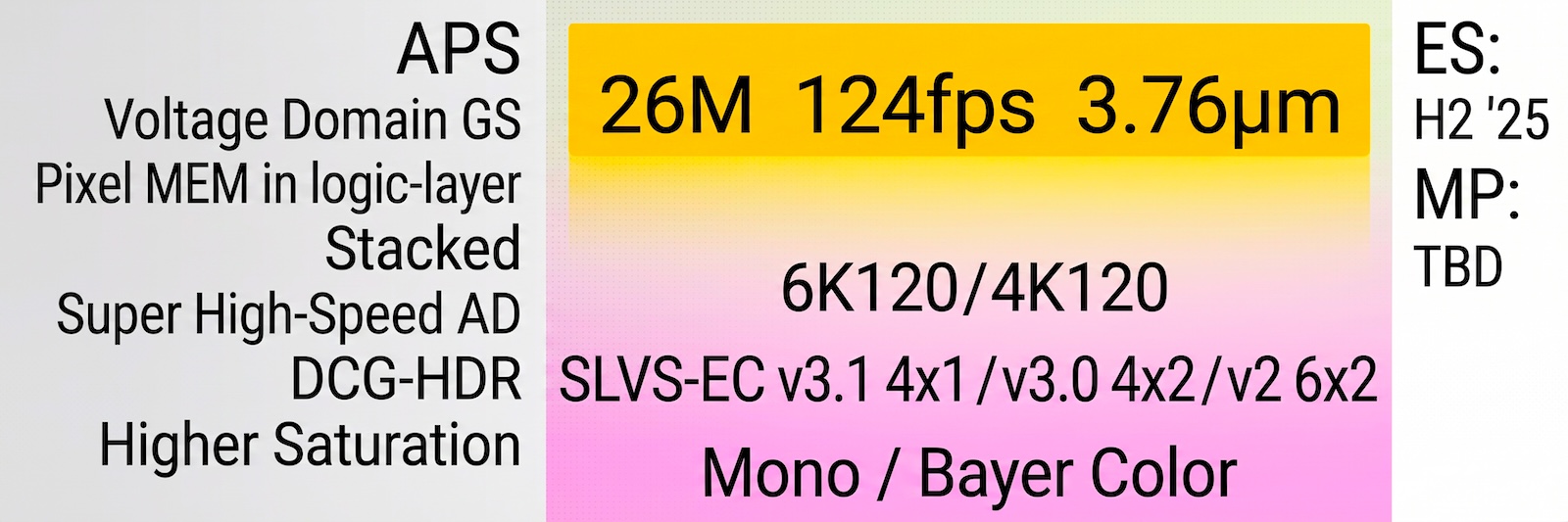
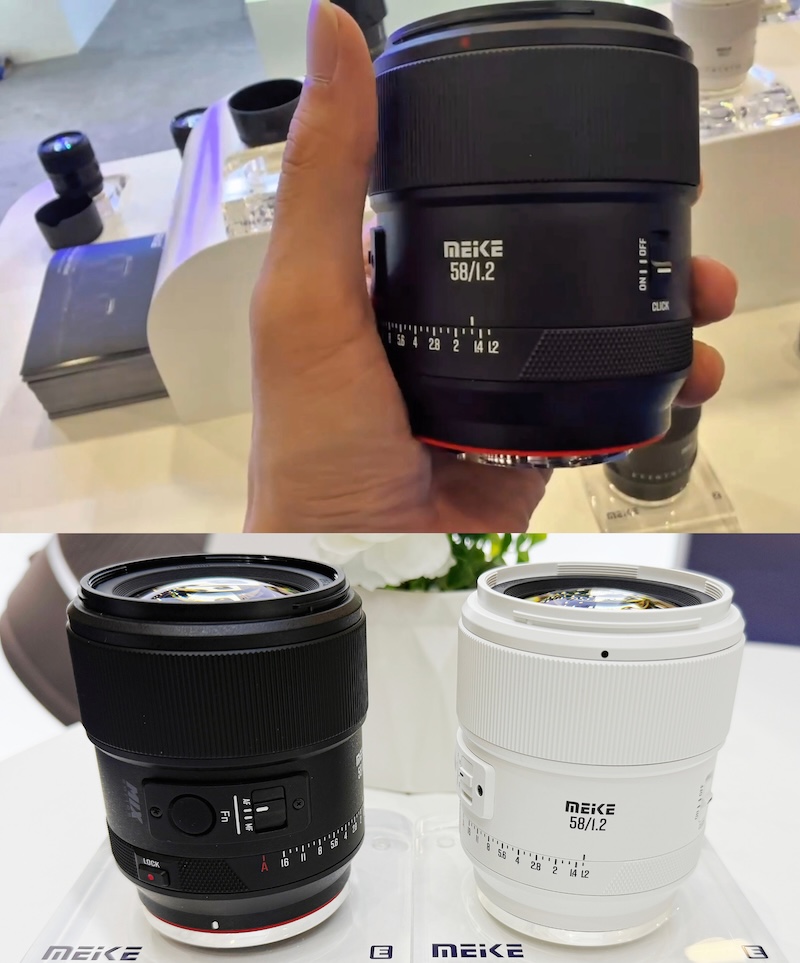
Sigma announced new 21mm T1.3 LF, 100mm T1.3 LF, and 125mm T1.3 LF Aizu prime cine lenses. The large-format cinema lens line achieves a T1.3 aperture across all focal lengths and will be available for PL and Sony E-mount. Shipping will start in Fall 2026. Here are the four “P”s:
It still promises to “fully support its existing consumer products and its subscription and cloud platform.”
GoPro
GoPro has announced that it’s entered into a “definitive merger agreement” with Starman Optical, a little-known entity described in the press release as a “privately held optical-photonics company.” According to current GoPro CEO Nick Woodman, the company hopes the move will help it “grow across consumer, commercial and defense markets,” and address “important areas of national security related to cameras, optics and AI infrastructure.”
This is, to put it mildly, a bit of a pivot from its current role as an action camera company. A few hints suggest that the action camera business may not be going away, though. For one, GoPro promises it will “continue to fully support its existing consumer products and its subscription and cloud platform.” While that’s good news for anyone who just bought the Mission 1 Pro ILS, released just a week before this news broke, the word “existing” casts a bit of doubt on whether we’ll see new consumer cameras from the company in the future.
The company will focus on “important areas of national security related to cameras, optics and AI infrastructure.”
There are a few references to the company’s “growth potential” in consumer markets, but there’s much heavier emphasis on US national security and manufacturing. GoPro founder and CEO Nick Woodman says the company plans to address “important areas of national security related to cameras, optics and AI infrastructure.” And Charles Tebele, CEO of Starman Holding, says “The combination of GoPro’s world-class optical expertise and intellectual property with Starman’s advanced transceiver capabilities and U.S. manufacturing platform creates a unique opportunity. Together, we intend to bring production of these critical components back to the United States.”
In the US, national security has long been big business, with lucrative military contracts sustaining many companies, even ones better known for their consumer products. But it’s become an increasingly hot-button topic in recent years, with the US government promising billions to companies making semiconductors within its borders, and placing import restrictions on companies like DJI based on perceived threats to national security. The company also promises to expand into the hot and controversial “AI Data Center” space, though to me that reads more as it filling out its bingo card of phrases you’re required to use in a press release in 2026.
As a camera company, GoPro has some share in the military industrial complex – when we interviewed NASA astronaut and US Air Force Col. Terry Virts in 2019, he said Russia beat the US to the punch by flying GoPros into space (though NASA has since included the cameras on multiple flights, including its recent Artemis II mission) – but it’s not exactly a major player. It’s clear its leadership sees the merger as an opportunity to change that, with intents to “leverage its IP, optics and imaging capabilities across defense, government, robotics and aerospace markets, building on demand for U.S.-made solutions.” Woodman reiterates that point, saying: “We’re excited to combine with the Starman team to capitalize on this opportunity and play an important role in America’s future.”
The brand-new GoPro Mission 1 ILS shakes up GoPro’s formula with an interchangable lens mount and features aimed more towards cinematographers than action camera users. Mitchell Clark
GoPro has been in dire financial straits for a while, following years of Chinese competitors like DJI and Insta360 introducing action cameras that tempted would-be buyers away with innovative features, new form factors and larger sensors, while the Hero line largely stagnated. This year, the company announced the Mission 1 series that largely caught back up with, and in some respects surpassed, those competitors, but it may have been too late. Earlier this summer, it warned investors that there was “substantial doubt” about its ability to continue in business. At the time, it said it was investigating “opportunities within the defense and aerospace sector.” Those investigations were apparently fruitful.
According to the press release, the merger – which will see $285 million paid to GoPro shareholders – will see the company’s $92 million in debt paid off, “resulting in a clean, substantially debt-free balance sheet.” The company will remain publicly listed, though its unclear whether that listing will be for GoPro alone or the newly combined entity; GoPro’s press release promises “additional information regarding the transaction upon closing.”
Finally, there’s the question of who Starman Optical is, and how it has the money to buy GoPro. As best I can tell, it’s a subsidiary of Starman Holding, a company that owns several sub-brands, including popular phone case and accessory companies like Incase and Incipio. While Starman Holding’s website doesn’t list Starman Optical as one of its companies, it does list Starman New Photonics, and its About Us page names Charlie Tebele as its CEO. The websites for both Starman Holding and Starman New Photonics don’t have a ton of information on them, though that’s not that odd for this kind of company.
GoPro expects the deal to close by the end of the year, assuming it’s approved by regulators and GoPro shareholders.
About the Author: Mitchell started taking pictures at 10 and hasn’t stopped since. It’s been a wide-ranging adventure, spanning a wide variety of genres and locales, and occasionally dipping into fascinations with video and filmmaking. They honed their technical knowledge doing documentation, programing and QA, writing for The Verge, and just generally messing around on the computer to see what breaks.
Want to stay up to date on the latest product news and releases? Add DPReview as a preferred source to ensure our independent journalism makes it to the top of your Google search results.
The company says the feature will support a few types of edits: “relighting” footage (making a video shot at noon look like it was taken at golden hour, for instance), reframing it, emulating a camera motion like a tilt or pan and “set extension,” which the company says lets you “extend the world by 10 seconds beyond what was filmed on location.” The options are presented as templates that you can pick from, though there is a chatbot that you can use to give additional input; for example, you can use it to tell the AI that the “orbit” camera move should be centered around a specific person in the shot.
Camera Intelligence
The Caira shoots at up to 4K, though the clips produced by the generative AI are limited to 720 or 1080. The tool can use Google’s Gemini Omni 1.1 Flash model, or Runway’s Aleph 2.0, and gives you the option to select which one you’d like before setting it to work. The company says it takes one to three minutes to produce a finished video.
Camera Intelligence stresses that the tool can only be used to edit existing footage that you took with the camera, not create something entirely new. It’ll keep your original footage, and the generated file will have a Google SynthID watermark. The company says it started work on the feature after surveying 111 Kickstarter backers* and hearing from 77% of them that they’d like the feature.
In a press release, it says the feature is designed for “solo creators and marketers who may not have the budget to commission this work and who are often overwhelmed by pro editing tools – but who are excited by these technologies and what they make possible.”
Generating video, like generating images, isn’t particularly cheap. The company says the feature will be available “alongside Generative Image Editing and a yet-to-be-announced feature” as part of Caira Studio, which is launching later this year. Pricing hasn’t been announced yet, but the company has made it clear from the start that generative editing features would require a subscription. The Kickstarter page promised that the “Caira Pro” plan would be $7 a month, but that only included stills editing.
Camera Intelligence says the generative video editing feature will only be available in the US and UK.
I understand why the company is pitching this as a prototyping tool
Watching the samples that Camera Intelligence included in its announcement video, I understand why the company is pitching this as a prototyping tool – something you can use to see if a shot will work before actually trying to capture it – rather than something you’d use to produce final footage. While the company says the Omni model is “physics-aware and remembers the scene across an entire clip,” if you look close you can definitely still see some AI artifacting.
Even if the model produced perfect footage, this still isn’t the kind of tool I’d like to use. But it doesn’t surprise me that the people who initially backed the camera based on the pitch of its AI capabilities are interested in it, and it seems like a natural extension of the work Camera Intelligence was already doing. I’m just not sure this feature will entice anyone else to buy the Caira if they weren’t already sold, or demand that the traditional camera makers start building something similar.
* Speaking of those backers, the company says it’s “delivered the majority of Kickstarter units” of the Caira and is delivering the outstanding ones on a monthly basis.
About the Author: Mitchell started taking pictures at 10 and hasn’t stopped since. It’s been a wide-ranging adventure, spanning a wide variety of genres and locales, and occasionally dipping into fascinations with video and filmmaking. They honed their technical knowledge doing documentation, programing and QA, writing for The Verge, and just generally messing around on the computer to see what breaks.
Want to stay up to date on the latest product news and releases? Add DPReview as a preferred source to ensure our independent journalism makes it to the top of your Google search results.
Jacqueline Burke’s Roseate Spoonbill won the Grand Prize in this year’s Audubon Photography Awards, part of a full slate of category winners from across the Americas.
Gail Bisson
The National Audubon Society has announced the winners of the 2026 Audubon Photography Awards, with Jacqueline Burke of the US winning the US and Canada Grand Prize for a photo of a Roseate Spoonbill and Francisco Castro Escobar of Chile winning the Chile and Colombia Grand Prize for a photo of a Lesser Horned Owl.
The specific geographic designations reflect the Audubon Society’s hemispheric conservation model. Birds aren’t bound by international borders, and hundreds of species migrate thousands of kilometers each year along flyways that stretch between North, Central and South America. Colombia hosts nearly 20 percent of the world’s avian species, and Chile’s 6,435km (3,999mi) of coastline and wetlands are vital stopovers and wintering grounds for many shorebirds coming from as far away as the Arctic.
The National Audubon Society, founded in 1905, sponsors the contest each year to celebrate bird and bird habitat photography and to further its conservation mission. This is the second year the competition has included prizes to Chile and Colombia residents. Winners and honorable mentions will be published online in Audubon magazine, and winners will be featured in the Fall 2026 print issue. The top 100 photos will be announced on September 23. If you’re interested in entering next year’s competition, which opens for entries on January 13, 2027, you can find the full contest rules and category details on the Audubon website.
If you really enjoy bird photography, you can also check out our coverage of Audubon’s previous award winners from 2025, 2023 and 2022.
U.S. and Canada winners
Jacqueline Burke
Photographer: Jacqueline Burke (USA) Award: Grand Prize Species: Roseate Spoonbill Photo location: St. Augustine Alligator Farm Zoological Park, St. Augustine, Florida, USA
Liron Gertsman
Photographer: Liron Gertsman (Canada) Award: Birds in Landscapes – Winner Species: White-tailed Tropicbird Photo location: Hawai’i Volcanoes National Park, Volcano, Hawai’i, USA
Nick Parayko
Photographer: Nick Parayko (Canada) Award: Birds Without Borders – Winner Species: Tennessee Warbler Photo location: St. Albert, Alberta, Canada (in his backyard)
Josh Galicki
Photographer: Josh Galicki (USA) Award: Conservation – winner Species: Northern Gannets Photo location: Isle of Noss, Shetland Islands, United Kingdom
Mike Henry
Photographer: Mike Henry (USA) Award: Plants for Birds – winner Species: Gila Woodpecker and saguaro cactus Photo location: Tucson, Arizona, USA
Ian Shultz
Photographer: Ian Shultz (USA) Award: Youth – Winner Species: Rock Pigeon Photo location: Golden Gardens Park, Seattle, Washington, USA
Gail Bisson
Photographer: Gail Bisson (Canada) Award: Female Bird – Winner Species: Common Merganser Photo location: East Bay Sandbar, Nova Scotia, Canada
Photographer: Piper VanOrd (USA) Award: Video – Winner Species: Great Blue Heron Photo location: Allegheny Islands Wilderness, National Wild & Scenic Allegheny River, Warren, Pennsylvania
Chile and Colombia winners
Francisco Castro Escobar
Photographer: Francisco Castro Escobar (Chile) Award: Grand Species: Lesser Horned Owl Photo location: Antofagasta, Chile
Photographer: Nicolás Muñoz García (Chile) Award: Video – Winner Species: Black-browed Albatross Photo location: Isla Chañaral Marine Reserve, Huasco Province, Chile. The nearest town is Caleta Chañaral de Aceituno
Santiago Giraldo
Photographer: Santiago Giraldo (Colombia) Award: Plants for Birds Colombia – Winner Species: Yellow-eared Parrot and Quindio wax palm Photo location: Anaime, Cajamarca, Tolima
Juan David Camacho Márquez
Photographer: Juan David Camacho Márquez (Colombia) Award: Youth – Winner Species: Canada Warbler Photo location: Doña Dora Birding, El Queremal, Valle del Cauca, Colombia
Santiago Pérez Rincón
Photographer: Santiago Pérez Rincón (Colombia) Award: Conservation – Winner Species: Yellow-eared Parrot Photo location: Anaime River Canyon, Rural District of the Municipality of Cajamarca, Department of Tolima, Colombia.
Faber Mosquera Alvarez
Photographer: Faber Mosquera Alvarez (Colombia) Award: Birds in Landscapes, Colombia – Winner Species: Oilbird Photo location: Pijao, Quindío, Colombia. In the Cañón de los Guácharos
Gonzalo Bertolotto Quintana
Photographer: Gonzalo Bertolotto Quintana (Chile) Award: Coastal Birds of Chile – Winner Species: Gentoo Penguin Photo location: Fildes Bay, Antarctica, in the vicinity of the Chilean bases
Timothy Dhalleine
Photographer: Timothy Dhalleine (Chile) Award: Birds in Landscapes, Chile – Winner Species: Crested Caracara Photo location: Torres del Paine National Park, Magallanes and Chilean Antarctic region, Chile
About the Author: Dale Baskin is a professional photographer, writer, and filmmaker based in the Pacific Northwest. He is the Managing Editor of DPReview.com.
Want to stay up to date on the latest product news and releases? Add DPReview as a preferred source to ensure our independent journalism makes it to the top of your Google search results.
Nature is incredible. Check out these wildlife encounters from the DPReview community that bring you up close to nature’s raw beauty.
FuhTeng
Close-up wildlife encounters are one of those things you tend not to forget, especially if you’re a photographer and always have your camera at the ready. From massive bison to tiny birds, our community certainly impressed us this week with the encounters they shared for our Question of the Week series.
See below for some of those photos and stories. Even our own team got in on the fun! Click a member’s photo to see more.
Vladimir Nogin
David Lal
“I live in a rural English village which is in a national park. We get a lot of animal visitors to the garden. I care for them: feeding in the winter or offering water in our current drought. One winter morning, I was putting out the rubbish bin for collection. On turning round to walk back up the drive to the house, I noticed a young vixen on the drive staring at me. She was cold and wet – and hungry. I spoke gently to her and told her to follow me to the kitchen door. Blimey me, she did!
I keep a camera always ready. I threw her some dog biscuits, then offered her one with my left hand while my right held a Nikon D300 with an 18-35mm lens.”
Krusty79
Krusty79
“My friend and I were driving around some hills on the rural roads around Hollister, CA. We had spotted a golden eagle and had photographed it from a distance. Another golden eagle started following the first one. It must not have noticed us, because it came over a small hill right towards us! It got so close that my camera couldn’t focus on it. If I didn’t have my camera, I might have been close enough to touch a wingtip.”
dgbinpc
dgbinpc
“My first trip to Yellowstone National Park in winter was amazing. Snow everywhere. Bison covered in snow. Pillows of white piled along the rivers. It was a trip that exceeded all my expectations. We were told we might see wolves, and we did – miles away, through a spotting scope. It was exciting, but hardly intimate.
A few years later, I returned to Yellowstone in winter. As our snowcoach took us into the park from West Yellowstone, our driver pointed out wolf tracks that left the roadway and climbed the hillside beside us. He suggested we drive a little farther down the road. Maybe, if we were lucky, we would see them.
And see them we did. The wolves emerged from the trees several hundred yards behind us and dropped onto the groomed road. Apparently, the road was a pretty good travel route for them, too.”
RichDitch
RichDitch
“I had been in Arizona a bit over one year when there was a surprising report of an Eared Trogon seen about 2 hours north of Phoenix along Christopher Creek. Elegant Trogons are sparse nesters in southern AZ; Eared Trogons are very rare vagrants near the border with Mexico.
I had to go to Christopher Creek, hoping to see the reported bird. I waited around with a few other birders for over an hour after they had given up when I heard an unfamiliar call. I looked up in the tree I was standing under, and there it was! This is my best shot of the bird, on Fuji slide film with an N90 (probably) and my manual focus Nikkor 400 F5.6.
The species is now known as the Eared Quetzal. This shot was used as the Cover of the Western Birds Journal.”
CaseyD
FujiRon
“When my girlfriend and I moved from a small town in California to an even smaller town in rural Oregon, we were amazed by the amount of wildlife that came out of the forest and wetlands behind our home. We’ve had Black Bear, Bobcat, Black-tailed Deer, Coyote, Raccoons, too many species of birds to account for, frogs, snakes, newts, and who knows what else goes through at night.
As a cat owner, I particularly enjoyed my backyard encounter with a young Bobcat that stopped to pose for pictures, eventually got bored, and walked back into the forest.”
elliottnewcomb
elliottnewcomb
“I stepped out of my front door, exactly when the cicadas came out of the ground, emerged from their shells, and were drying their wings, so I could get within inches of them. I used a Sony Cyber-shot DSC-RX100 M1 – close focus and no macro setting or macro lens.”
fuji_phile_e
fuji_phile_e
“Being an inner-city dweller, we don’t see much other than gulls, sparrows, blackbirds and jackdaws on a regular basis, though I sometimes see various tits, occasional dunnock and robins, and once a dinky Eurasian wren.
I’m sharing some juvenile jackdaw images here. It was waiting for its mam, by the looks of it. I kept out of sight to avoid stressing it, using a window angled obliquely to obscure me, my XF100-400mm on my X-T3 poking under the window.
This first pic is what I call the Marilyn Monroe shot.”
Nigelpitt13
Nigelpitt13
“While on an early morning walking safari in Southern Africa, I came across four young cheetahs in my path approximately thirty yards from me. I was standing in long grass because there had been heavy rain the previous week. I stopped, raised my camera lens and focused on the Cheetah closest to me. The Cheetah stopped in the open and stood and looked straight at me while I took a few shots. I then focused on the others as they made their way down to the open riverbed and crossed into Botswana.
A beautiful moment in close contact. Luckily, there were no lions, leopards, or hyenas nearby (The cheetah would’ve known). In a matter of minutes, all four cheetahs had moved off. Two things one never does when encountering wild animals: never show fear (they can sense it); two, never ever run (they’ll see you as prey).”
FuhTeng
FuhTeng
“My family and I (wife and two pre-teen boys) had a wonderful road trip to Grand Teton National Park (and then Yellowstone and then Badlands) this summer. We kept hearing from everyone about how they’d seen bears, but we hadn’t seen one yet. We were in the Colter Bay visitor center area and went for a hike, knowing there was a grizzly who’d been around the area. We hoped to see him from a nice, safe distance.
I was grumpy from not seeing a bear, and tired and warm from the hike, so I just wanted to get back to the car. At that moment, I came to a land bridge between the near-island we’d hiked around and the mainland. It’s only a few yards wide, maybe 8 or 9, when THIS appears. I didn’t believe it at first. I remember pausing and going, “That’s not real.” Then instincts took over, and I dropped to my knee and got my long lens up for a couple of shots.
Then I realized – THERE’S NO WHERE TO GO. He’s coming right at us…”
BenGauthier
Sony Cyber-shot DSC-RX100 | Built-in lens @ 28mm (35mm equiv.) | F2.5 | 1/250 sec | ISO 125BenGauthier
“I spent the summer in a coastal small town of Britanny, Trébeurden. I like to fish nearly every day. For a couple of years, I have been admiring seals that live on rocks around the location, 1 mile from the coast. It seems that they became used to my small boat. On the first encounter, they were difficult to see from less than 150 feet away. This year, they stay on their rocks even though I can see them from 50 feet away.
Here is a picture taken with a 100 mm equivalent (Sony RX100). One of the seals came close to the boat. These animals are beautiful and sometimes noisy, and their song sounds like a wolf’s.”
There are many other photos that we unfortunately couldn’t fit into this article. They all deserve praise and to be seen, so be sure to visit the forum discussion. Thanks to everyone who took the time to step outside and capture the unique wildlife encounters of your region.
About the Author: Mathew Anderson is a proud Community Manager for the technology industry and a past visitor to DPReview.com for all his camera needs. He is currently the lead of DPReview’s community and primary communication link between the community and DPReview’s team.
Want to stay up to date on the latest product news and releases? Add DPReview as a preferred source to ensure our independent journalism makes it to the top of your Google search results.
Every Zeiss photography lens, from current Batis and Otus ML glass to decades-old vintage optics, now has a single factory-authorized repair address, effective September 1.
Zeiss / KEH
Zeiss has named KEH Camera its exclusive authorized repair and service center for photography lenses and equipment in the US and Canada, the two companies announced today. The Atlanta-based used-gear specialist will handle work on everything from postwar Zeiss Jena glass to current Otus ML optics.
KEH will handle both in-warranty and out-of-warranty work for those in the US and Canada. The KEH technicians are trained directly by Zeiss and will use genuine manufacturer parts along with Zeiss-approved calibration tools and procedures, according to the announcement. The companies specify that all repairs will meet Zeiss engineering standards.
US and Canadian customers now have an official service and repair options for Zeiss Jena lenses. KEH
The most important detail of the announcement is the scope. Coverage extends to “decades-old legacy lenses,” with the companies specifically citing postwar Zeiss Jena optics, the 1960s Contarex system and large-format Zeiss lenses built for Linhof and Graflex, alongside current Batis and Otus ML lines. “Be they new or legacy ZEISS cameras and lenses, we are confident that KEH Camera has the skills necessary to provide value to our loyal optics owners,” said Tony Wisniewski, senior manager for Zeiss Photography Americas.
The coverage of older lenses represents a reversal of Zeiss’s long-stated position: its photography service pages state that legacy Hasselblad, Contax/Yashica, Rollei, Carl Zeiss Jena and Zeiss Ikon gear “can unfortunately no longer be repaired by Zeiss,” directing owners to independent workshops. Now, though, the companies have confirmed that even Yashica and Rollei optics can be serviced by KEH.
For gear that previously fell under Zeiss’s service policy, the new partnership replaces a rather roundabout arrangement. Until now, Zeiss instructed US photo lens owners needing warranty service to contact their dealer or the distributor in the country of purchase, rather than sending equipment to a dedicated Zeiss service center. Under the new agreement, users can initiate repairs through Zeiss’s online service portal, with KEH coordinating shipment. Customers can also drop off equipment at KEH’s retail location in Atlanta.
KEH already serves as an authorized repair partner for Sony and Sigma, and says it is the only reseller in the camera industry with manufacturer-approved repair facilities. Its track record shows that repair is central to its business. KEH chairman and CEO Glenn Kaufman connected the Zeiss agreement to that mission, explaining that it’s “a natural extension of what KEH has always stood for: keeping great gear in circulation and out of landfills.”
Zeiss released two prime lenses last year: the Otus ML 50mm F1.4 and Otus ML 85mm F1.4. However, while they feature Zeiss branding, the lenses are manufactured by Cosina in Japan.Zeiss
Zeiss “decided to kind of hit pause on photo, to wait and see what happens” during the pandemic, Wisniewski told us last year, while continuing to sell the lenses it already made. That pause ran nearly six years, ending with two Otus ML lenses in 2025. This partnership to expand repair options for customers in North America suggests the company’s renewed investment extends past new products.
Disclosure: MPB, a competitor to KEH in the used-gear market, is a DPReview sponsor. This article was produced independently.
About the Author: Abby Ferguson holds an MFA in photography and blends a fine-art background with extensive editorial and commercial experience. She built and led an in-house imaging program for a large vacation rental company and has served as an associate editor at Popular Photography. She also teaches at a local community college and serves on its Photographic Technology Program Advisory Board, sharing her knowledge and enthusiasm for the medium.
Want to stay up to date on the latest product news and releases? Add DPReview as a preferred source to ensure our independent journalism makes it to the top of your Google search results.
Diffusion, bloom and halation arrive in the Effects panel, applied globally or through masks – but not in Lightroom.
Adobe
Adobe recently released the newest version of its Raw processing software, Adobe Camera Raw 18.6. Its headline feature is a native Glow effect tool that gives users three analog-inspired looks – diffusion, bloom and halation – directly within ACR. Other features include a new Metadata Info Panel that shows image data directly in the editing workspace, and photographers and designers who work with composites gain a new Trim tool that makes everything outside a crop transparent, rather than leaving it as hidden pixels. The update also adds support for additional camera and lens profiles.
What Glow does
The new Glow tool lives in Camera Raw’s Effects panel alongside the existing Vignette and Grain sliders. Adobe’s documentation describes three selectable styles. Diffusion applies a hazy, film-like softening effect that spreads across the frame, similar to what a Black Mist or Pro Mist filter attached to your lens would achieve. Bloom produces a softer, more even glow confined to the highlights, which could be useful for misty scenes and waterfalls. Halation adds a colored halo effect around bright edges and light sources, similar to the warm, or red-orange fringing that appears on film when light reflects off the film base back through the emulsion.
Glow works inside Camera Raw’s masking system, so the effect can be dialed up or down on a subject, a luminance range or a selected area, though the Style, Range, Spread and Warmth sub-settings are shared globally – masks control how much something glows, not the kind of glow.
Greg Benz, a digital photo educator (and a member of the DPReview community), posted a helpful video on his YouTube channel illustrating the capabilities of ACR’s new Glow tool, including examples of using masks to achieve localized results. If you’re interested in learning more about it, we highly recommend giving it a watch.
One thing worth calling out: Glow is currently an ACR-only feature and isn’t available in Lightroom. Though given the close relationship between the two applications, we wouldn’t be surprised to see it show up in Lightroom at some point.
Other new features
ACR’s new Metadata Info Panel provides an easy way to see read-only metadata for any photo you’re viewing in Camera Raw. Clicking the small “i” on the right-hand pane of ACR will display the camera model, lens, image dimensions, file size, capture date, copyright information, file name and caption (if present). It will also display any content credentials information embedded in the photo.
The new Metadata Info Panel displays the camera model, lens, image dimensions, file size, capture date, copyright information, file name and caption.Mitchell Clark
The new Trim tool is located in the Crop & Expand panel. It can be used to trim an image to the exact area you’ve selected, making everything outside the crop transparent rather than retaining it as hidden pixels. This is different than a normal crop in ACR, which is non-destructive, keeping the pixels outside the cropped area but not displaying them. This removes a step for photographers or designers creating composites or those who need transparent backgrounds.
Trim can also be used in conjunction with Generative Expand: trim to the area you want, then expand the canvas using generative content from Adobe Firefly.
According to Adobe, ACR 18.6 also supports additional cameras and lenses, including the Tamron 12-20mm F2.8 and Reeflex anamorphic and fisheye lenses for iPhone. As of this writing, Adobe hasn’t updated its list of supported camera models since earlier in August; you can check the company’s camera support page for the latest information.
ACR 18.6 is available now through the Creative Cloud desktop app. You can find the full release notes on Adobe’s website with additional details in a post to the Adobe Community site.
About the Author: Dale Baskin is a professional photographer, writer, and filmmaker based in the Pacific Northwest. He is the Managing Editor of DPReview.com.
Want to stay up to date on the latest product news and releases? Add DPReview as a preferred source to ensure our independent journalism makes it to the top of your Google search results.

 Connexion