Sony Q3 FY2025 fincnial results recap for their camerra/sensor divisio:
Sony’s sensor business is thriving — rising volume + pricing/mix improvements, plus raised full-year guidance.
Camera demand appears resilient, but the results are harder to isolate because cameras sit inside a broader segment that had enough headwinds to pull ET&S down overall.
Panasonic Q3 financial results recap for their camera business, which falls under the “Lifestyle” segment, specifically within the Living Appliances and Solutions Company (LAS) division (source):
Consumer Camera Performance (Under Lifestyle/LAS): LAS reported Q3 sales of 224.4 billion yen (94% YoY) and adjusted OP of 12.6 billion yen (down 5.3 billion yen YoY). Within this, consumer electronics (including AVC/cameras) saw decreased sales due to weaker demand in overseas markets, despite steady sales in Japan. No specific sales or profit figures were provided solely for cameras, but the overall decline in consumer electronics suggests softness in the camera category. This aligns with broader market challenges for consumer AV products.
Professional Camera Performance (Under Connect): The Connect segment includes Professional AV, but details focus on Avionics and Process Automation growth. No explicit mentions of professional camera sales or profits were provided, though the segment’s overall 109% YoY sales growth indicates potential positive contributions from AV solutions amid strong ICT demand. Broadcast and professional imaging products are highlighted as key offerings, but performance data is aggregated.
When you use DPReview links to buy products, the site may earn a commission.
Updated February 12, 2026
$1000 might sound like a lot of money for a camera, but it's probably the least we'd recommend spending if you want to go beyond phone photography, especially as photography equipment is steadily getting more expensive. The picks on this list will give you more control than a phone and offer a more satisfying photographic experience.
At this price point, your options will be entry-level interchangeable lens cameras or larger-sensor compact cameras with built-in lenses. Compacts offer more control than a phone and a greater zoom range, but likely won't offer a huge jump in image quality compared to the latest flagship phones (despite their typically larger sensors).
Meanwhile, an interchangeable lens camera won't be as easy to carry around and comes with the added expense of lenses. However, they can make you feel even more involved in the photographic process, and the flexibility of swappable lenses will let you learn and grow into different types of photography as you develop your passion. They also feature much larger sensors than phones and the majority of compacts.
It's worth noting that camera makers sometimes assume that beginners will stick with the basic 'kit' zoom that comes with the camera, so it's worth checking whether a good selection of lenses is available (at a price you're willing to spend) before deciding which brand's system to buy into.
The Canon EOS R10 is a 24MP mid-level APS-C mirrorless camera for stills and video shooting.
There are a few things that earn it the top spot on this list. The first is its stand-out usability, with dual top-plate dials for controlling exposure settings and a joystick to control its very capable autofocus system. It also has a decent selection of lenses; third parties like Sigma and Tamron have stepped in to round out the selection of primes and higher-end zoom lenses available for it, so you have several good options for moving beyond the kit lens that came with it, something that isn't necessarily true with Nikon's system.
The R10 has a powerful AF tracking system with subject recognition that makes it especially good at focusing on people, animals and vehicles. We found it both easy to use and effective. 15fps shooting with the mechanical shutter is good, though the buffer is limited.
"The EOS R10 is an approachable, capable option for stills and video"
The R10 has a relatively small body but finds room for two command dials. Most key settings can be accessed through the Q menu, making it easy to access the camera's core functions.
The R10 can shoot 4K video at up to 60p with a crop, or 30p using its full sensor width. The footage isn't the most detailed but, as in stills mode, there's the option to shoot footage for HDR TVs. Autofocus isn't as dependable as it is in stills mode.
Overall, the EOS R10 is a very capable camera for its price point, and offers a lot of room to grow for those starting out in photography, especially now that there's a reasonable selection of APS-C lenses for it.
This widget is not optimized for RSS feed readers. Please open this article's permalink in a browser to view this content.
The other options
While we much prefer the higher level of control that the EOS R10 provides, the less expensive Canon EOS R50 may also be worth a look if you're extremely budget-conscious but still want to stay in the Canon ecosystem. It has fewer control points – most notably, it misses out on the EOS R10's joystick – and it loses out on features such as 4K/60p video capture and faster burst rates, but it's still pretty capable.
We don't recommend the cheaper still EOS R100. It's based on a previous generation of technology, so it's slower and has less sophisticated autofocus.
We also like the Fujifilm X-T30 III in this price bracket. While its autofocus isn't quite as easy to use as Canon's, it has a flexible Auto mode that still gives you a fair level of control to let you grow into the camera, and a kit lens whose wide-angle focal range will be familiar to phone photographers. Fujifilm's "Film Simulation" JPEG color mode help it deliver really attractive out-of-camera images, and the retro design language has proven popular, too.
The better performer: Nikon Z50II
20.9MP APS-C sensor | Subject recognition AF | Full-width 4K video up to 30p
The Nikon Z50II is an entry-level APS-C mirrorless camera, built around a 21MP CMOS sensor. It features Nikon's '3D tracking' autofocus system, and can recognize nine subject types.
The Z50II makes a case for being the best pick for beginners, thanks to a simple and mostly reliable AF system with automatic subject detection. Nikon has introduced a bright standard zoom lens for APS-C, providing a solid upgrade path from the kit lens, but hasn't allowed third parties to make similar lenses available on its mount, so you have fewer options than with other brands, overall.
It has a solid grip, twin top-plate control dials, and a wide variety of customizable buttons, including one that, by default, controls color mode. Focusing is handled using the touchscreen or four-way controller.
The Z50II delivers on the basics without breaking the bank.
Autofocus is very good with subject detection being especially good. However, human detection doesn't seem as sticky and 3D Tracking isn't as dependable as on Nikon's higher-end models. Otherwise, the camera is snappy and can even do 30fps pre-capture, though it's JPEG only.
The Z50II can shoot Log or HLG video and has a waveform monitor to help set correct exposure. A headphone socket helps maintain audio quality but the lack of in-body stabilization counts against its use for video.
The Z50II is a solid hybrid camera, with several features from Nikon's higher-end cameras. The lack of a stabilized sensor is the one mark against what are otherwise very good video specs, and you may find the lens selection limited if you want a camera to grow with you.
This widget is not optimized for RSS feed readers. Please open this article's permalink in a browser to view this content.
What about the Z fc?
Nikon's Z fc is a stylish camera based on the original Z50, which means it has the same sensor as the Z50II. We like it a lot, but the autofocus on the Z50II is such a marked improvement that it's hard to recommend picking up a Z fc at this point – you can read our full comparison between the two cameras here. If you have a strong attachment to the Z fc's aesthetics, your best option is probably holding off for a bit to see if Nikon updates the Z fc. If that's not an option, see if you can get it on sale or used.
The affordable kit: Sony a6100
24MP APS-C sensor | Hybrid AF with Real-time Tracking | 4K video capture
The Sony a6100 offers a lot of power in a compact, well-priced body. The 16-50mm power zoom isn't the best, though.
Rolling shutter 'jello effect' present in 4K video
Crop when recording 4K/30p video
The Sony a6100 is an entry-level APS-C mirrorless camera. It has a compact body and a 24MP sensor.
It was a very capable and affordable camera when it was launched several years ago, offering some of the best autofocus around and a wide selection of lenses. The latter part is still an advantage, but many competitors' autofocus systems are now on par with the a6100's. However, it's still worth considering if you want to get both a camera body and a decent prime lens for under $1,000.
The a6100 is the most basic model in the a6000-series and doesn't feel quite as robust as its step-up siblings. It offers a lower-resolution electronic viewfinder, and control dials that are both thumb-operated. Its touchscreen flips upward 180-degrees for easy selfie framing and vlogging. It also uses Sony's old menu system, which can be a chore to work with.
"The a6100's autofocus can effortlessly track whatever you point it at"
Sony's autofocus system has been trained to recognize people and pets as subjects, and will follow them flawlessly throughout the frame. Coupled with the ability to touch the screen to place a focus point, it's a system that will serve beginner users very well, whatever they're shooting.
The a6100 makes it easy to record 4K footage or slow-motion 1080 video. There's a socket to connect an external mic but no way to connect headphones for monitoring. It can be set up for tap-to-track autofocus in video, too. There's significant 'jello-effect' distortion in the 4K footage though, especially in 24p mode.
The a6100 is a good entry-level camera with a very powerful, easy-to-use autofocus system. We're not huge fans of the kit zoom and the interface isn't especially welcoming, but with a few settings changes, it can help you get excellent shots, easily.
The Canon PowerShot G7X III is the last in what used to be a popular style: the pocketable enthusiast photographers' compact, with a relatively large Type 1 20MP sensor and bright zoom lens. Canon has added features to make it more vlogging-friendly, but the clicking control wheel gives a satisfying, hands-on shooting experience.
A note on availability: the PowerShot G7X III has been difficult to get for a while, but Canon has recently reiterated that it's working on ramping up production. Still, getting your hands on one for anything near its original MSRP may require some patience.
The G7 X III can't focus continuously as fast as the best models in its class, and it can't track subjects around the frame while shooting bursts. If you follow your subject yourself, you get a not-too-shabby 8.3 fps with a single autofocus area. There's a 30 fps Raw burst mode, though focus is locked. In general use, the G7 X III is very responsive, though battery life is on the short side.
"If you're after a pocketable high-quality compact, the Canon G7 X Mark III is well worth a look"
It has two top-plate control dials and a focus control joystick, but no four-way controller. It also features the company's film simulation dial for controlling the color profile.
Overall, we're impressed by the upgrades on this model. The Mark III brings improved video and continuous shooting performance while maintaining excellent controls and a competitive price point. If you do a lot of wide-angle shooting, there are options with better lenses, but if you're after a pocketable high-quality compact, the Canon G7 X Mark III is well worth a look.
This widget is not optimized for RSS feed readers. Please open this article's permalink in a browser to view this content.
Best camera for content creation: Fujifilm X-M5
26MP APS-C BSI CMOS sensor | Fully articulated 3" LCD | 6.2K 3:2 video up to 30p
What we like:
Great JPEG colors with dedicated dial
Solid selection of vlogging features and UI
Good level of direct control
What we don't:
No viewfinder
AF tracking performance isn't the strongest
Unstabilized sensor
The Fujifilm X-M5 is based around an APS-C 26MP X-Trans sensor, and equipped with AI-powered subject detection autofocus.
It's aimed at creators taking pictures and video for the web, with a suite of vlogging features that let you shoot video that's ready to upload as soon as you transfer it to your phone. It also has a dial for easily switching between 'Film Simulations,' Fujifilm's much-loved color modes, and the full suite of stills features from larger, more expensive models – minus a viewfinder. Its support for X-mount lenses also gives you access to the most complete range of APS-C lenses, no matter what journey you're on.
Fujifilm's autofocus can recognize and accurately track several subject types, but overall its autofocus isn't as swift or reliable as its rivals and its general subject tracking isn't as dependable.
The X-M5's stills mode is among the most competent in vlogging-focused cameras
It has two top-plate control dials and a focus control joystick, but no four-way controller. It also features the company's film simulation dial for controlling the color profile.
The X-M5 can shoot up to 6.2K open-gate footage, which can be cropped for sharing on multiple platforms. Many of its video modes, such as 4K 60p, lighter-weight 4K LP mode, and electronic stabilization modes, come with a substantial crop.
If you're looking for a camera to take pictures and videos for social media, the X-M5 is worth your consideration. It has an attractive design, great image quality in stills and video, and engaging controls, though its autofocus doesn't match the best of its peers.
This widget is not optimized for RSS feed readers. Please open this article's permalink in a browser to view this content.
What if I only vlog?
If you plan to shoot more videos than photos, it's worth considering the Canon PowerShot V1. It's a compact camera built for vlogging with its integrated 16-50mm equiv. F2.8-4.5 lens, large (for a compact) Type 1.4 (18.4 x 12.3mm) sensor, complete with optical image stabilization and an ND filter. While we don't think it offers an especially enjoyable photography experience, features like a built-in fan for cooling, headphone and microphone ports, very usable stabilization and the ability to shoot 4K60p with a 1.4x crop make it a quite powerful video camera for its size.
If you only care about vlogging, and want an even more pocketable option, the DJI Osmo Pocket 3 comes in under $1000 and can't be beat when it comes to stabilization thanks to its built-in gimbal. That, and the ability to sync with DJI's wireless microphones, earn it the top spot in our dedicated vlogging buying guide.
This buying guide is based on cameras used and tested by DPReview's editorial team. We don't select a camera until we've used it enough to be confident in recommending it, usually after our extensive review process. The selections are purely a reflection of which cameras we believe to be best: there are no financial incentives for us to select one model or brand over another.
Continuing our new series on photography and gear, DPReview community member Morris Altman (AKA Morris0) shares how a childhood curiosity sparked by his parents’ camera grew into a lifelong passion for wildlife and avian photography – one that’s evolved into a finely tuned, travel‑ready Fujifilm setup built for lightness and precision.
After more than fifty years behind the lens, his bag today reflects both experience and intentional simplicity: every piece has its place.
Based in New York City, Morris0 spends much of his time photographing wildlife along the Eastern Flyway, a prime route for migratory birds. Avian subjects dominate his portfolio, though his award-winning work also spans mammals, flowers, landscapes, and even aviation.
"I worked hard to refine my knowledge of lighting and composition, both of which I had learned from my father. I’ve won awards for the following types of photography: avian, mammals, insects, flowers, landscape and aviation," he tells us.
"I worked hard to refine my knowledge of lighting and composition, both of which I had learned from my father."
"As if I weren’t busy enough raising a family and working as an IT director, I also served as a school board president. I studied both computers and technical theater in college and even worked on Broadway as a lighting and sound designer. Today, I’m retired and loving it. I spend much of my time taking pictures and sharing what I’ve learned about photography."
When did you get started in photography?
"I’ve been taking photos since I was seven years old, using my first camera, a Kodak Instamatic 127 with those crazy flash cubes. My dad was an illustrator and comic strip artist, and I learned composition and the use of light from him. I was doing my own darkroom work by the age of ten and got my first SLR, a Canon AE‑1, at eighteen."
"While I’ve been taking photos for most of my life, it was around the year 2000 that I became truly passionate about photography. That was also when I went digital, started sharing my work online, and began entering various contests."
Wood duck in flight with long exposure to blur the wings.
How have you upgraded your camera setup over the years?
"When digital came along, I first got a Canon G1, which was fantastic. Even with a teleconverter adapter, though, the focal length was too short for wildlife photography. My solution was to get a Fujifilm FinePix S602, since I couldn’t justify the cost of a DSLR at the time.
"When photographing birds, he leans on Fujifilm’s XF 500mm for tight shots, paired with a 1.4x teleconverter for added reach."
As my family’s finances improved, my wife told me to get the DSLR setup of my dreams, so I purchased a Nikon D70s along with an assortment of lenses."
What's in your bag, Morris0?
Morris0’s current kit is built around two Fujifilm X‑H2 bodies, each carried on cross‑body straps so he’s always ready to shoot. The bag is for transport only. Once he’s in the field, both cameras are out and active.
When photographing birds, he leans on Fujifilm’s XF 500mm for tight shots, paired with a 1.4x teleconverter for added reach. If he expects large flocks or wider compositions, his second body carries the XF 70–300mm F5.6.
Morris0's Think Tank Photo Airport Advantage Roller backpack with camera, lens and other accessories.
Photo: Morris0
Why are these accessories in your bag?
"The heated gloves I use are Ororo heated glove liners, which are very thin and allow me to feel all the controls on my camera. Being able to feel the controls means I don’t have to take my eye off the viewfinder, which is a huge advantage when photographing action. There are several brands of heated gloves, but I’ve only tried these, and they’ve kept my hands warm even at -8°C (17°F). The batteries last a few hours, so carrying spares for long outings is a must."
"My hat is a Tilley LTM6 Airflo Sun Hat. The vent on top helps keep my head cool by letting the breeze flow through, making hot days in the sun much more comfortable. The wide brim provides excellent shade, and I also use the hat in the rain – it’s made of canvas and keeps water off my shoulders and face. It even works well in the snow when I wear it over my hood."
The top level of Morris0's packed camera bag. Photo: Morris0
How did you end up becoming a Fujifilm photographer?
"I developed several pinched nerves in my neck and wrist that made my Nikon gear far too heavy to use. I couldn’t shoot for about six months, and when I finally could, I decided to lighten my load, likely the source of my problems."
"Switching to the Fujifilm X‑T3 paired with the XF 100-400mm lens was my solution. At that time, very few people were photographing birds in flight with that setup, which led me to explore the custom AF‑C settings. After a lot of experimenting, I shared my findings and settings with the community."
"When I first switched to Fujifilm, I worried that the XF 100-400mm wouldn’t hold up to my demanding shooting style – and I was right. When I sent it in for repair, I tried a Sigma 150–600mm with the then‑new Fringer Adapter and discovered how well they worked together. While I loved the performance of the 150-600mm, the long rotation required for zooming began to strain my arm. Eventually, I transitioned to the Nikon 500mm PF with the Fringer Adapter, and that legendary lens performed beautifully on the X‑T3."
The sun burns through the fog at Bosque del Apache National Wildlife Refuge.
Fujifilm X-H2S w/ Fujinon XF500mmF5.6 R LM OIS WR | F5.6 | 1/900 sec | ISO 1600 Photo: Morris0
You're known for your love of birds. How did this come about?
"Living in New York City, I’m fortunate to be along the Eastern Flyway, which brings a variety of seasonal birds to photograph. I also love to travel and have visited many national parks and cities. While I often shoot alone, I enjoy working in small groups and mentoring other photographers."
"I’ve had many wonderful photography trips, but the most recent, visiting Bosque del Apache National Wildlife Refuge and White Sands National Park, was truly special. It included the best single day of photography I’ve ever experienced. The day began before sunrise at a crisp, cool -8°C (17°F), with fog and frost covering everything. The pre‑dawn light was incredible, and the entire landscape glowed orange.”
Snow Owl Photographed on the South Shore of Long Island on a foggy morning.
Nikon D200 w/ AF-S Nikkor 80-400 mm f/4.5-5.6 @ 260mm | F8 | 1/800 sec | ISO 400 Photo: Morris0
Morris0's advice for other photographers
"Some digital photography advice for you all: simplify your setup, both to keep weight down and so that you can be intimate with your equipment. Invest in clothing and accessories that keep you comfortable, as it's much harder to be creative and to operate your gear if you're miserable."
Some responses have been edited for clarity and flow.
Editor's note: This article continues a new series, 'What's in your bag?', highlighting DPReview community members, their photography and the gear they depend on. Would you like to be featured in a future installment? Tell us a bit about yourself and your photography by filling out this form. If you're selected for a feature, we'll be in touch with next steps.
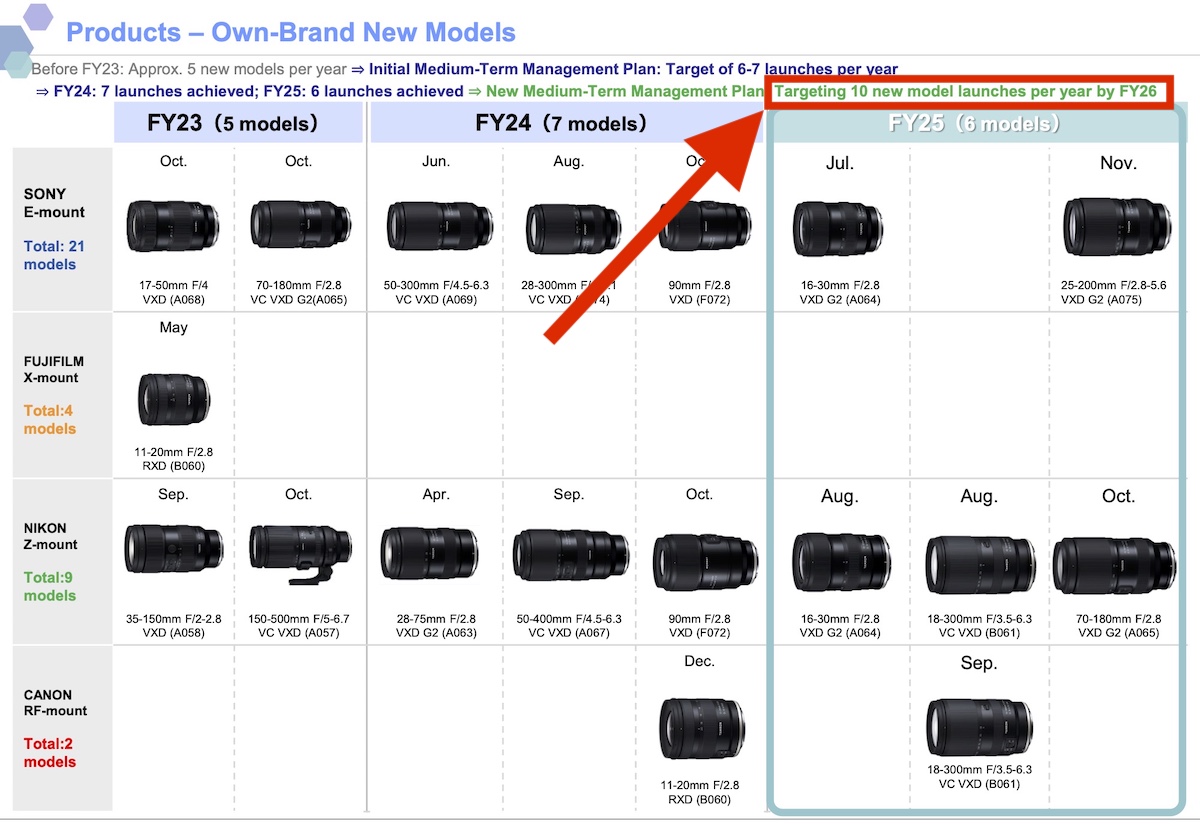
Next week, on February 19th, Tamron will announce a new 35-100mm f/2.8 lens (see mockup above). This will be a small, lightweight zoom lens (around 560g) that will pair well with the existing Tamron 16-30mm f/2.8.
Tamron plans to announce a total of ten new lenses this FY26, according to their latest financial disclosures:
Schneider Kreuznach × LK Samyang is rumored to announce a new 20-50mm f/2 lens at the 2026 CP+ show, which takes place at the end of February in Japan.
Schneider Kreuznach × LK Samyang still has few lenses on their roadmap that are not yet officially announced:
Schneider Kreuznach × LK Samyang AF 60-180mm f/2.8 lens for E-mount
Schneider Kreuznach × LK Samyang AF 28-135mm f/2.8 lens for E-mount
Here are the first pictures of the previously rumored Meike 85mm f/1.4 II MIX full-frame autofocus lens, which will replace the current version and will be part of the Meike MIX series. The new lens will be on display at the 20206 CP+ in Japan at the end of February, and will be available for Sony E, Nikon Z, and Panasonic L-mount cameras:
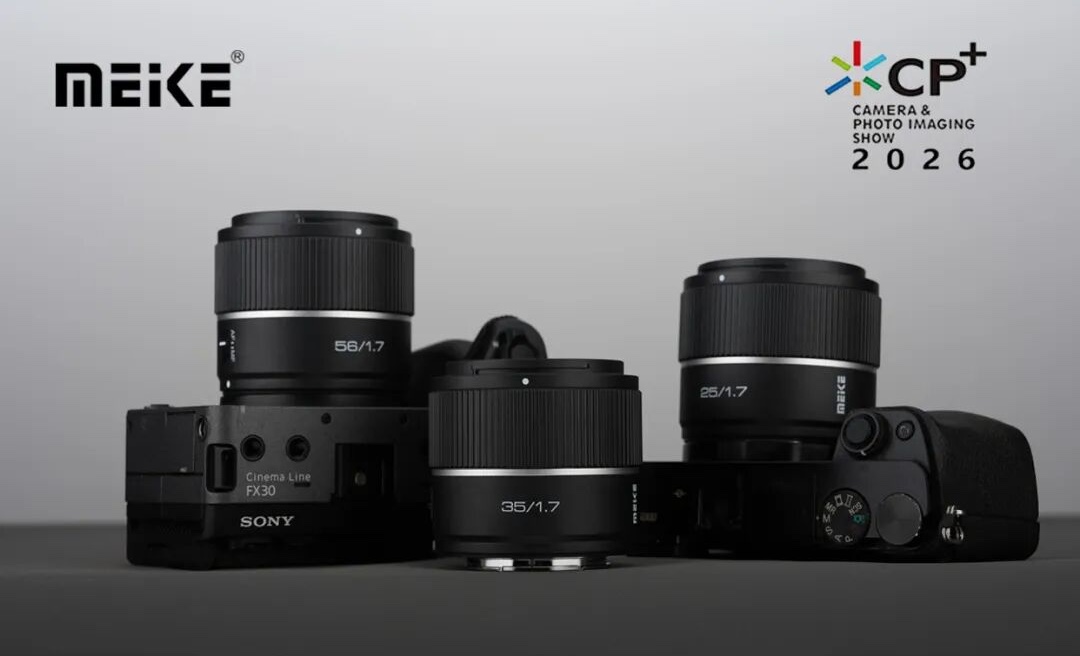
In addition, Meike will also announce three new Air compact APS-C lenses:
Welcome back to our Question of the Week series! This reader-focused series aims to get our photographic community to share thoughts on all sorts of photography-related topics in our forums. We pose questions about gear, favorite camera stores, advice, problem-solving and more, and you share your thoughts and opinions.
This week, we’re leaning into the holiday spirit! The season of giving (and occasionally re-gifting) is upon us, and that means it’s time to unwrap some memories – both heartwarming and hilarious.
What are the best (and worst) photography-related gifts you've received?
What’s the best photography-related gift you’ve ever received? Maybe it was a dream lens that caused you to take on an adventure deep in the mountains, or a handmade camera strap that’s now an essential part of your kit. And what about the worst? Perhaps someone thought you needed yet another "World’s Best Photographer" mug, or that odd lens filter set that turned every photo a shade of green.
In this edition of our Question of the Week series, we want to hear your gift stories: the memorable, the useful and the truly baffling. Share your favorites (and flops) in the forum link below. Photos of the gifts (or what you created with them) are also more than welcome! We'll highlight some of your most entertaining and heartfelt responses in next week's roundup.
Each year in February, the camera industry gathers in Yokohama, Japan, for CP+ Expo, the industry's official trade show sponsored by the Camera & Imaging Products Association (CIPA). DPReview is proud to be one of four Founding Global Media Partners for the inaugural CP+ partnership program, bringing you exclusive news, insights, and hands-on access to the event.
CP+ runs from February 26th to March 1st. Visit this hub for pre-show announcements, hands-on impressions from the expo floor, interviews with industry executives, behind-the-scenes looks at what it takes to cover this critical event for the camera industry.
The Fujifilm X-T30 III is the company's latest entry-level, SLR-shaped mirrorless camera, with its latest color mode recipes and autofocus.
Key specifications
26MP X-Trans APS-C BSI CMOS sensor
Film simulation dial with recipe positions
Tilt up/down rear screen
2.36M dot EVF
4K/60 video with 1.18x crop, 6.2K/30 full-sensor capture
315 shot-per-charge battery life, 425 in power saving mode
The X-T30 III is available at a recommended price of $999. There is also the option to buy the camera with a new, unusually wide, 13-33mm F3.5-6.3 OIS zoom lens, which will cost around $1150.
The Film Simulation dial on the camera's shoulder has three custom positions that can be assigned to film simulations or the simulation-and-parameter-tweak combinations known as 'recipes.'
The X-T30 III, as the name implies, is an iterative update of the existing X-T30 II. It gains the latest Fujifilm processor, which brings subject recognition autofocus. This brings it into line with the X-M5 and X-T50.
It also gains a Film Simulation dial, instead of the drive mode dial on the previous X-T30 models. Like the more expensive X-E5, the three custom positions on the dial can be set up to store 'recipes': sets of JPEG processing settings that modify the behavior of an underlying film simulation.
The more powerful processor also brings a boost in the video features, with 60fps 4K video options (with a 1.18x crop) and the option to shoot using the whole sensor in 6.2K resolution at up to 30fps.
Finally, the X-T30 III becomes the first model to be offered with a new 13-33mm F3.5-5.6 stabilized kit zoom. This offers an unusually wide 20-50mm equivalent range, which is likely to be a welcome capability for photographers whose previous experience has mainly been with the wide-angle cameras on smartphones.
What is it?
The X-T30 III maintains the classic-SLR looks of the X-T series.
The X-T30 III plays the same role in the lineup as its predecessor did: the least expensive SLR-shaped camera in the Fujifilm range. Like the Mark II and the X-M5, it's built around an unstabilized 26MP BSI CMOS sensor. It's an APS-C-sized chip with Fujifilm's proprietary X-Trans filter pattern in front of it. This was originally designed to reduce visible errors in images, but increasingly just seems to make the files a little trickier to process.
The X-T30 III offers a decent set of features: it'll shoot moderately quickly, captures good quality video and offers a range of subject-recognition AF modes, making it quick and easy to focus on common subject types. It also has a switch to jump quickly to its Auto mode that tries to select the appropriate scene mode and settings for whatever you point it at. It's also somewhat unusual in still offering a small pop-up flash.
The standout feature of the X-T30 III, in common with the rest of the Fujifilm range, is the provision of its film simulation color modes, giving you a selection of (mostly) well-judged, attractive color responses for your images. The Mk III puts these at your fingertips by providing a dedicated dial, making it easy to experiment with the different looks it offers.
How it compares
The X-T30 III is one of Fujifilm's entry-level models. The viewfinder means it's a little more expensive than the rangefinder-style X-M5, but it has a list price lower than that of the image-stabilized X-S20. We'll include the X-S20 as the most affordable stabilized APS-C camera.
In terms of rivals, the Nikon Z50II is probably the most like-for-like competitor, with Canon's EOS R10 also offering similar specs for similar money. We're omitting the distinctly elderly Sony a6400 as it only shoots 8-bit video and doesn't have such extensive subject recognition AF. The OM System lineup either offers the OM-D E-M10 IV for less money or the OM-5 II for more, both are built around smaller but stabilized sensors. The OM-5 II is the least expensive mirrorless camera to offer an 'IP' rating for its weather sealing.
Fujifilm X-T30 III
Nikon Z50II
Canon EOS R10
Fujifilm X-S20
MSRP
$1000, $1150 w/ 13-33mm
$1010, $1150 w/ 16-50mm
$1100, $1250 w/ 18-45mm
$1500, $1600 w/ 15-45mm
Resolution
26MP
21MP
24MP
26MP
Stabilization
Lens only
Lens only
Lens only
In-body (up to 7EV)
Flash, ISO 100
GN 5
GN 7
GN 6
GN 5
Cont. burst rate
8fps Mech 20fps Elec
11fps Mech 15fps Elec
15fps Mech 23fps Elec
8fps Mech 20fps Elec
EVF
2.36M dots 0.62x mag
2.36M dots 0.67x mag
2.36M dots 0.59x mag
2.36M dot 0.62x mag
Rear screen
1.62 dots 3.0" Tilt up/down
1.04M dots 3.2" Fully-artic.
1.04M dots 3.0" Fully-artic.
1.84 dots 3.0" Fully-artic.
Video options
6.2K/30 open gate 4K/60 1.18x crop 4K/30 full-width
4K/60 1.44x crop 4K/30 full-width
4K/60 1.6x crops 4K/30 full-width
6.2K/30 open gate 4K/60 1.18x crop 4K/30 full-width
Mic / 'phones?
2.5mm / Via USB adapter
Yes / Yes
Yes / No
Yes / Yes
Battery life rating
315
220 EVF / 230 LCD
210 EVF / 350 LCD
750
Dimensions
118 x 83 x 47mm
127 x 97 x 67mm
123 x 88 x 83mm
128 x 85 x 65mm
Weight
378g
550g
429g
491g
In spec terms, there's not much to choose between these models. What the chart can't show is that the Nikon probably has the best autofocus tracking performance here, with the Canon a very close second (it's a little less dependable in video mode). This is still something of a weakness for the Fujifilm, though its subject-recognition modes do well.
Both the Canon and Nikon handle better than the Fujifilm, having fewer, but in our experience, better laid-out controls that are harder to operate accidentally. The Fujifilm's Auto switch will be handy for some users and anyone looking for a camera to grow into is more likely to find the lenses they want in the X mount, but the offerings for Canon and Nikon are (finally) improving, so it's worth investigating whether the lenses you think you might want are available for each system, before picking a camera body.
The X-T30 III is also the smallest camera here and offers a wider array of attractive color modes than its rivals. There's also the option of that unusually wide kit zoom.
Body and handling
The X-T30 II offers plenty of hands-on control, including two clickable command dials, an exposure comp dial and an AF joystick, but these have all been fitted into a small space.
The body of the X-T30 III is essentially the same as the one from previous X-T30 models, meaning it's slightly smaller than the X-T50 and lighter. A ridge down the front of the camera and a protruding bump on the back means it fits firmly in the hand, and feels secure thanks to the tactile rubber coating, front and rear.
The X-T30 III has a fair degree of external control, including six buttons that can be customized and four swipeable directions on the rear touch screen. It also has two well-positioned clickable command dials, a dedicated exposure comp dial and dedicated shutter speed dial, as well as that film simulation dial.
There's also a joystick for positioning the AF point or navigating the menus and flick switches under two of the dials to activate the flash and to engage full Auto mode.
While we're pretty impressed, overall with this level of direct and customizable control, we find it's perhaps a little overwhelming on a body this small. If you have larger fingers, or don't know what all the controls do, the X-T30 III risks being a bit of a handful. The clicking button under the front command dial can also be easy to inadvertently press when holding the camera or trying to change your settings, which, by default, will cycle it to control a different parameter than the one you were attempting to change. Of course, you can customize it to perform only a single function to avoid that problem.
The X-T30 III only has three ports on its right-hand side, but they offer a lot of functions.
In terms of ports, the X-T30 III has a 2.5mm socket that serves double-duty as a remote control connector or a mic input. Most mics use a 3.5mm plug, so you'll need an adapter to attach one. Below this there's a USB socket that can be used for charging the camera, transferring data or connecting a pair of headphones, with the supplied adapter.
Finally, there's the micro HDMI socket for outputting video or a Raw video data stream that can then be encoded by either a BlackMagic or Atomos external recorder to BRaw or ProRes Raw, respectively. This isn't the obvious model to do that from, especially not given how delicate micro HDMI sockets can be, but it's nice that Fujifilm hasn't omitted a feature this hardware can support.
Battery
The X-T30 III uses the same 8.7 Wh NP-W126S battery as most of Fujifilm's smaller cameras. It powers the camera to a rated value of 315 shots per charge, or 425 in 'Economy' mode. These numbers don't reflect the number of shots you'll get from the camera (getting twice the rated figure isn't unusual, depending on your use of image review, flash or burst shooting), but they're broadly comparable between cameras.
A figure of over 300 shots per charge is good for this class of camera and is likely to mean you can use it for a weekend of casual shooting without having to think about the battery. The battery can be recharged over USB.
Image Quality
The X-T30 III has proven image quality.
Fujifilm X-T30 III | Fujifilm XF 35mm F2 R WR | F5 | 1/680 sec | ISO 320 Photo: Mitchell Clark
Fujifilm is using a very familiar sensor in the X-T30 III, as it's the same one that appeared in the previous two iterations of the X-T30 (and older versions of the more expensive X-T series). It's also the same sensor/processor combination that we saw in the Fujifilm X-M5.
None of this should be read as a complaint; the images from these cameras capture a good level of detail in Raw, with ever so slightly less than other 26MP models, potentially because of Fujifilm's 'X-Trans' color filter design not playing particularly well with Adobe Camera Raw. We've also found that the JPEGs don't always make fine details pop, a situation that gets slightly worse at higher ISOs when noise reduction is being applied, though you may not even notice either unless you're zooming or cropping pretty far into your images.
If you're a beginner photographer, though, don't take those quibbles as a reason to avoid the X-T30 III. Its image quality and dynamic range are very good, and those factors won't hold you back as you build your skills. Plus, you'll benefit from Fujifilm's well-considered JPEG colors, which have proven to be crowd-pleasing.
Shutter shock
One caveat to its otherwise good image quality is that, when paired with the 13-33mm kit lens, there can often be noticeable shutter shock in images taken with the lens zoomed in. This manifests as them looking not particularly sharp when you zoom in on them (though typically they'd still be acceptable to post on social media or to send to friends).
The easiest way to avoid this is to set the camera to use the electronic first curtain shutter (using the "E-Front + mechanical" mode so that it switches back to mech shutter at fast shutter speeds), especially if you plan to shoot at our around 1/100 sec shutter speed, or if you're letting the camera automatically set your shutter speed. Fujifilm programs its more entry-level cameras to use a faster shutter speed in auto, which means that, when paired with lenses up to 35mm, the X-T30 III's minimum shutter speed in several of its modes will be 1/100 sec; directly in the problematic range.
The issue also isn't as prevalent with all lenses; we didn't see much shutter shock when we tested it with the 35mm XF F2 lens, despite its focal length being very similar to the long end of the kit lens, where the issue is most noticeable.
Autofocus
Fujifilm X-T30 III | Fujifilm XC 13-33mm F3.5-6.3 OIS | 30mm | F6.1 | 1/180 sec | ISO 320 Photo: Mitchell Clark
The X-T30 III uses essentially the same autofocusing system as the rest of the company's modern cameras. It lets you select what you want to focus on with a variety of AF area sizes, ranging from a single point if you're trying to be precise, to the "Wide" mode that hands control of what to focus on over to the camera. If your camera is set to continuous focus mode, Wide mode is replaced by a tracking box, which will attempt to stick to whatever you put it over as it or the camera moves.
You can select the focus point using the joystick on the back of the camera or by tapping directly on your desired subject using the touchscreen. There's also the option to use a customizable portion of the touchscreen as a joystick when your eye is up to the EVF.
The tracking option gives you a single-size box, but other modes offer more precision.
The X-T30 III has AI-trained subject detection modes for humans, animals, birds, cars, motorcycles/bikes, airplanes and trains. The settings for human detection are separate from the other subject detection modes, which, in most cases, makes it a small hassle to switch between them. You'll either have to set up two custom buttons or delve into the Q menu if you want to go from taking pictures of people to a non-human subject, or vice versa.
The subject recognition works no matter what your focus point selection method is, and it does a good job of only trying to focus on a recognized subject that's directly under or quite close to your chosen AF point. That means you can leave subject detection on without worrying that the camera will try to jump to a recognized subject if it's somewhere else in the scene.
This means you can use the AF area to specify which subject you want to focus on, if there's more than one in the scene. This works less well in Wide mode, where the camera is choosing where to focus. It'll only indicate a single recognized subject, and though you can use the joystick to pick another, you won't really be sure of what it'll select. Similarly, if the current subject turns away, the camera will leap to any other subject it can find. Generally, we find you can get more out of the subject recognition modes when you select an AF area to tell the camera what to focus on.
Autofocus performance
When it comes to photographing relatively static scenes or subjects the camera can recognize, it does a decent job of getting things in focus, even if they're moving at moderate speeds. For everyday photography, its single and continuous autofocus modes will likely get the job done.
If you're trying to shoot sports, action or even particularly squirmy pets or children, though, the story may be a bit different. As with many of Fujifilm's cameras, tracking non-recognized or fast-moving recognized subjects isn't the X-T30 III's strong suit. Even in decent lighting, there were several times when the tracking box would wander off the static subject we wanted it to stick to, and even if it does stick to something, it may slightly misjudge the focus or just not be able to keep up with a subject moving quickly towards it (though it's hard to say how much of that is on the camera, versus on the lens).
While there were just as many times that it let us successfully use the track and recompose method, it'd be hard to trust it as much as a similar camera from Nikon, Canon or Sony in a situation where you only had a limited amount of time to get the shot. This isn't to say that you can't get the shots you want with the X-T30 III; you can, with a little bit of practice. It's just that other cameras may make it a bit easier.
Video
The X-T30 III's video specs are competitive, but there are other models better suited to video within the range.
The X-T30 III gains all the video modes we've seen appear in this generation of 26MP Fujifilm models. In many respects, it's a sensor better suited to video than the 40MP chip in their more expensive models, because it doesn't have to read out so much data to produce its 4K footage.
The X-T30 II can capture full-sensor, 'open gate' footage at up to 30p in 6.2K resolution, or it can deliver 4K derived from this 6.2K resolution in more common aspect ratios. It can shoot 4K at up to 60p with a slight crop, and also has a "9:16 short movie mode" like the X-M5, allowing you to record vertical videos from a center crop of the sensor, without having to actually turn the camera on its side.
Shooting mode
Crop
Rolling shutter rate
6K open-gate
Full-width (3:2)
24ms
4K/24p
Full-width (16:9)
21ms
4K/60p
1.18x
16ms
1080p/24p
Full-width (16:9)
13ms
Like the X-M5, it produces relatively detailed video in its 6K and 4K/24 modes, though you'll lose a bit of quality if you shoot 4K above 30fps (with the trade-off being that you can change the playback framerate when you're editing, producing slow-motion footage.) The camera lets you use its Film Simulations in video as well, including the subtle, attractive 'Eterna' Sim designed for video, and supports recording HDR video using the HLG tone curve. It also offers FLog and FLog2 tone curves. These trade convenience – you'll have you edit your footage before it's ready for viewing – for flexibility, giving you the ability to adjust lightness and tones when you're editing, either manually, or with a pre-made LUT (Look Up Table) that lets you easily apply a specific look to your footage.
However, while the video specs are more than solid for this class of camera, the X-T30 III's lack of image stabilization makes the X-T30 II a harder camera to shoot good footage with (a flaw shared by the rest of the cameras in this class that can be rectified with a tripod or gimbal). The kit zoom is stabilized, and you can add digital stabilization in the camera, but the X-S20 is probably the better choice if video is a significant interest to you. As well as stabilization, the X-S20 has standard 3.5mm mic and headphone sockets and is compatible with the accessory fan unit to extend recording times.
In Use
Forgive the awkward grip on the camera; it's mounted to a tripod whose stability was questionable. Photo: Antoni Carlson
The X-T30 III's big new trick over its predecessor is its 'Film Simulation' dial, which comes with an improved experience by supporting the 'Film Recipes' that are popular with many in the Fujifilm community. The dial gives you easy access to several of the company's mostly well-judged color modes, encouraging you to change up the aesthetic of your photos while you're shooting, rather than in editing.
The 'Recipes' system lets you customize it further, letting you modify those Simulations further with a selection of settings, and letting you save recipes to the three "FS" positions on the dial. This feature is taken directly from the higher-end X-E5, and its inclusion is just as welcome here.
While more experienced users may enjoy how many physical controls the X-T30 III has, we fear that it risks being overwhelming to beginner photographers. Not only is it covered with buttons and dials, but some are multi-function, and too easily activated. While more experienced shooters may notice that their easily pressed dial is suddenly doing something other than what they wanted, a beginner might be tricked into thinking they're doing something wrong. And while we're happy to have the joystick, its placement in the camera's already tight grouping of controls means it's not the easiest to reach, especially if you're trying to use the camera one-handed.
It's not a camera you have to think long and hard about bringing with you
One last small annoyance: rather than being near the center of the camera, the tripod socket has been put as close to the battery / SD card slot compartment as it could be. That means that, no matter how small your tripod plate is, you'll have to remove it if you want to get to your storage or battery. The camera's use of a 10Gbps USB-C port means it's less likely that you'll need to do that, as you can quickly offload images from it or charge it, but it still would've been nice to have the option to open the flap without taking off your tripod plate.
It is worth noting, though, that this decision could be mostly due to the camera's compact size. It's just a touch smaller than the higher-end X-T50, which means it's just as easy to carry around, or to throw in your bag on a whim. That's especially true if you're using the collapsing kit lens, which makes its footprint even smaller. While it'd be a stretch to call it pocketable, it's not a camera you have to think long and hard about bringing with you.
The Auto Experience
Flipping the Auto switch puts the camera in charge of most of the settings, but doesn't take away your creative control.
The X-T30 III's Auto mode, easily accessible by a switch on the top plate, is a useful provision for beginners who won't have the experience to know which settings are best to use in every situation. We found that it typically used reasonable settings and didn't feel too limiting: it still allows shooting in Raw + JPEG, and gives you control over settings like the focus point, Film Simulation, exposure compensation, and whether to use the flash or not. This means the X-T30 III offers some of the ease of shooting with a phone, while still retaining the engagement of using a dedicated camera.
The camera attempts to recognize what you're trying to take a picture of, and in what conditions
Part of what makes it work is that the camera attempts to recognize what you're trying to take a picture of, and in what conditions (e.g., backlit portrait, fast-moving animal, etc), and set its exposure parameters and dynamic range settings accordingly. You can also manually specify what you're shooting to have the camera tune its settings to be more appropriate, with dedicated modes for shooting portraits, landscapes, sports and more.
The autofocus also works a bit differently in Auto mode. Rather than making you manually select between human recognition or other kinds of subject recognition, it uses an automatic subject detection mode that you don't have access to in the traditional shooting modes, which tries to detect any of its recognized subject types in the scene, including humans. While it does a good job of showing which subject it's selecting, it still doesn't make it obvious if it's recognizing multiple subjects that you can switch between.
Another complaint around Auto mode is that, if you set an ISO setting in the standard mode, and then switch to Auto, it retains that setting, which could leave the camera fighting to get a proper exposure. While it's nice that you have control over ISO in Auto, it'd probably be best for it to initially switch to auto ISO mode.
Conclusion
By Mitchell Clark
Pros
Cons
Excellent image quality (in most cases)
Extensive lens selection
Good battery life
Useful Auto mode
Wide kit lens provides familiar shooting experience to phone photographers
Lightweight, attractive design
Built-in flash for low-light shooting
Film Simulations and Recipes are fun to play with and deliver attractive results
Visible shutter shock with kit lens at a shutter speed, Auto ISO tends to use
General AF tracking less dependable than rivals
Potentially overwhelming number of easily-knocked controls
Hardware and support tools don't live up to the strong video specs
Wi-Fi limited to slower 2.4Ghz
Overall, the X-T30 III is a solid option for beginners looking to start with photography, or for those who feel like the lack of interchangeable lenses on their phone is holding them back. Paired with its kit lens, it offers a range of focal lengths that people will likely already be familiar with, but with enough image quality to stand out from most smartphone snaps (though you can get even more out of its sensor by switching to a nicer lens).
While the shooting experience might be overwhelming at first – there are a lot of buttons, dials and switches – the camera offers the escape hatch of a well-considered Auto mode that lets you focus on composition, without taking away all your creative freedom. And when you're ready for it, you can customize the buttons and dials to act in a way that works for you, though it would be nice if they were set up a little more sensibly out of the box.
Speaking of creative freedom, the Film Simulation dial and its support for quickly switching between the "Recipes" often shared by the Fujifilm community is a useful tool for getting the look you want straight out of camera. While you could achieve everything it's doing with a Raw file and editing software, the latter requires the knowledge of how to use it and, often, a subscription or up-front payment that you may not be ready to commit to.
It's a solid option for beginners, and should grow with you
The X-T30 III isn't a perfect camera, though. It's unfortunate that you have to manually work around the shutter shock issue to get maximum image quality with the kit lens, and its autofocus system isn't the easiest or the most confidence-inspiring. You'll have to practice a fair bit with it to get results that other cameras let you achieve out of the box.
Ultimately, it's a combination of these factors that keeps this camera from getting a Gold award. But it's still a solid option for beginners, and should be able to grow with you wherever your photography journey takes you, in part thanks to the near-endless selection of lenses that you can pair with it. For that, it earns our Silver award.
Scoring
Scoring is relative only to the other cameras in the same category. Click here to learn about what these numbers mean.
Fujifilm X-T30 III
Category: Mid Range Interchangeable Lens Camera / DSLR
Build quality
Ergonomics & handling
Features
Metering & focus accuracy
Image quality (raw)
Image quality (jpeg)
Low light / high ISO performance
Viewfinder / screen rating
Optics
Performance
Movie / video mode
Connectivity
Value
PoorExcellent
Conclusion
The X-T30 III isn't the overall most capable camera in the category, but its style, mostly well-judged kit lens and capable Auto mode make it a good pick for beginners.
Good for
Phone photographers looking for an upgrade
Beginners who want a stylish camera
Not so good for
Sports / action photography
Intensive video work
86%
Overall score
Compared to its peers
Nikon's Z50II has better autofocus than the Fujifilm X-T30 III, which could be important if you think your photography journey will lead you to shooting sports and action. It's also likely a better pick for video, thanks to its standard ports for headphones and microphones. However, while Nikon has slowly been improving its APS-C lens lineup, there still aren't nearly as many options as there are for X mount, and the company exerts stricter control over what lenses are allowed to exist for Z mount.
The story is very similar for the Canon EOS R10, though its video capabilities are closer to the X-T30 III's. As with Nikon, Canon exerts more control than Fujifilm over what lenses can be made for its lens mount and produces far fewer first-party options. However, its autofocus will perform better than Fujifilm's, and its ergonomics (though probably not its looks) will be preferable to some.
By virtue of its stabilized sensor and price, the Fujifilm X-S20 represents a step up from the rest of the cameras we're comparing. Its image quality and autofocus will be virtually identical to the X-T30 III's, and while it offers the same Film Simulations, it doesn't make it quite as easy to get to them, nor does it make adopting recipes so simple. The IBIS system, fully articulating screen and full headphone / microphone jacks make it a much more capable video tool, despite it having otherwise very similar specs.
Please do not reproduce any of these images on a website or any newsletter/magazine without prior permission (see our copyright page). We make the originals available for private users to download to their own machines for personal examination or printing (in conjunction with this review); we do so in good faith, so please don't abuse it.
Production samples
Sample gallery
This widget is not optimized for RSS feed readers. Click here to open it in a new browser window / tab.
Pre-production samples
Sample gallery
This widget is not optimized for RSS feed readers. Click here to open it in a new browser window / tab.
OM System has unveiled the OM‑3 Astro, an astrophotography‑focused variant of its OM‑3 mirrorless camera. The new model keeps the core specs and handling of the original OM‑3, but it adds astro‑oriented enhancements, including a modified IR‑cut filter and dedicated custom modes designed to make capturing the night sky easier and more effective.
The primary upgrade for astrophotographers is an integrated infrared (IR) cut filter in front of the sensor. OM Systems says the dedicated filter is tuned for 100% transmission of Hydrogen α wavelengths, making it more sensitive to the dim red light emitted by many nebulae. This allows photographers to capture the colors of Hα‑emitting nebulae more effectively than with standard cameras.
The OM-3 Astro features a dedicated IR cut filter that enables better capture of red nebulae. Image: OM System
Beyond the filter, OM System added additional features to streamline night‑sky photography. The camera includes new color profiles specifically designed for astrophotography, including one for photographing red nebulae and one for night-time landscapes. Additionally, new preconfigured custom modes dedicated to astrophotography allow faster setup when using stacking modes or during handheld shooting.
Like the base OM-3 model and previous OM bodies, the OM-3 Astro offers several tools that are ideal for astrophotographers. This includes Starry Sky AF, which lets users lock onto stars with autofocus instead of relying solely on manual focus. It also offers stacking options, a Night Vision mode that adds a red overlay to the interface and more.
Image: OM System
In addition to the camera, OM System also introduced two new body-mount filters for astrophotography. The Light Pollution Suppression Filter, as the name suggests, reduces the impact of artificial light to preserve nebula and constellation colors. The Soft Filter enhances point light sources, making small, bright stars stand out more with a subtle glow.
Introducing the OM SYSTEM OM-3 ASTRO - A dedicated astrophotography camera designed to vividly capture red nebulae.
BETHLEHEM, PA, February 10, 2026 - OM Digital Solutions is pleased to announce the OM SYSTEM OM-3 ASTRO, an interchangeable lens camera that is compliant with the Micro Four Thirds System standard and features perfect optical characteristics for astrophotography.
Based on the OM SYSTEM OM-3 mirrorless interchangeable-lens camera, this is a dedicated astrophotography camera1 has been optimized for astrophotography by adjusting the optical characteristics of the infrared cut filter positioned in front of the image sensor, enabling vivid capture of red nebulae that are highly popular among astrophotography enthusiasts. By combining OM SYSTEM’s computational photography features with optional body mount filters and a wide lineup of M.ZUIKO DIGITAL lenses, the OM SYSTEM OM-3 ASTRO enables a broad range of astrophotographic expression—from starry landscape photography to detailed imaging of constellations and nebulae. This model will be available on a made-to-order basis.
Key Features of the OM SYSTEM OM-3 ASTRO:
Capture Hα rays2 with TruePic X. The most powerful image processing engine in OM SYSTEM, captures beautiful red nebula in stunning, high-resolution detail.
Designed to handle a range of shooting scenarios from starscapes to astrophotography.
Stacking processing in High Res Shot Mode produces higher-quality images with enhanced detail.
OM SYSTEM OM-3 ASTRO Features & Technology Detail
Capture Hα rays2 with TruePic X. The most powerful image processing engine in OM SYSTEM, captures beautiful red nebula in stunning, high-resolution detail.
The OM SYSTEM OM-3 ASTRO features an IR-cut filter positioned in front of the image sensor, with optical characteristics optimally tuned to achieve approximately 100% transmission of Hα wavelengths, which are vital to astrophotography. This allows the camera to vividly capture the beautiful shapes and colors of nebulae emitting Hα light, which are difficult to photograph with standard digital cameras.
In addition, the combination of a high-sensitivity back-illuminated stacked Live MOS sensor, OM SYSTEM’s highest-performance image processing engine TruePic X, and the color profile control functions of the OM SYSTEM OM-3, enables clearer reproduction of star colors and faint nebulae, delivering high-resolution image quality even in high-sensitivity shooting.
The color profile control functions of the OM SYSTEM OM-3 ASTRO allow users to create more impressive expressions in both astrophotography and starry landscape photography. In the custom modes C1 to C3, color profiles are preset, with COLOR1 optimized for astrophotography such as imaging red nebulae, and COLOR2 optimized for starry landscape photography. By combining the custom modes with these color profiles, users can easily capture impressive images of the night sky.
Designed to handle a range of shooting scenarios from starscapes to astrophotography.
Beautifully capture a broad range of celestial objects using a selection of high-quality M.ZUIKO DIGITAL lenses from wide-angle to telephoto, you can choose the perfect lens for your subject. Whether you are shooting spectacular starry skies, homing in on specific constellations, or capturing distant nebulae, this camera is up to the task. And if you are looking to take your astrophotography to the next level, you can even mount the OM SYSTEM OM-3 ASTRO body to an astronomical telescope using a commercially available Micro Four Thirds compatible adapter.
Stacking processing in High Res Shot Mode produces higher-quality images with enhanced detail.
High Res Shot is a computational photography function unique to OM SYSTEM that leverages ultra-high-density pixel information acquired from multiple shots for high-resolution shooting. By utilising Handheld High Res Shot—normally used for handheld shooting—with the camera mounted on a tripod or an equatorial mount, you can use a single shot with the body to achieve the Stacking Processing frequently used in astronomical photography3. In addition to this method's high detail, shooting this way reduces image noise.
In the Handheld High Res Shot function equipped with the OM-3 ASTRO, the positional shift during shooting generates a single approximately 50 million pixel high-resolution shot from 12 captured images. Since the position of each image is matched when compositing, shooting with Handheld High Res Shot when the camera is mounted on a tripod will produce composite images in which the diurnal motion of the stars is corrected3. Additionally, using an equatorial mount will result in composite images in which star misalignment caused by tracking errors is corrected3.
Additional Features
Camera settings optimized for starry sky photography are preset in custom modes C1, C2, and C3 on the mode dial.
C1: Stacking for astrophotography
C2: Stacking for starry landscape
C3: Handheld shooting for starry landscape
Like the OM-3, it is equipped with a wide range of in-camera functions optimized for starry sky photography.
Starry Sky AF, which enables precise auto-focusing on stars
Live Composite, ideal for capturing star trails in camera with live preview
Digital level, which makes it easy to level the camera even in dark environments
USB power supply from USB Power Delivery (PD)–compatible devices, convenient for long-duration photography
Night View, which brightens the scene in dark conditions to support starry sky composition
Related Products
There are two types of useful filters available for astrophotography4. A filter can be attached inside the camera body (between the mount and the image sensor), allowing the filter effect to be obtained even after changing the lens5. This also allows them to be used with lenses such as fisheye and wide-angle lenses, on which it is usually challenging to mount a filter to the front.
BMF-LPC01 Body Mount Light Pollution Suppression Filter (sold separately)
The light pollution suppression filter cuts light from artificial sources, such as street and city lights. This prevents light bleed into the night sky, allowing you to capture the true beauty of nebulae and constellations more vividly. Additionally, since the area near the horizon is most easily affected by light pollution, this filter is very effective when shooting constellations rising in the eastern sky or setting in the western sky.
Compatible models6: E-M1 Mark III, OM-1, OM-1 Mark II, OM-3, and OM-3 ASTRO
For other compatible models, please refer to our website.
BMF-SE01 Body Mount Soft Filter (sold separately)
With their high resolving power, M.ZUIKO DIGITAL lenses deliver beautiful point images of stars, the perfect light source. However, since many stars are captured as point images, typical stars may appear less impressive. Using the BMF-SE01 Soft Filter blurs and highlights point light sources; the brighter the stars, the more blurred and significant they appear, emphasising their colours and making these stellar objects stand out.
Compatible models6: E-M1 Mark III, OM-1, OM-1 Mark II, OM-3, and OM-3 ASTRO
For other compatible models, please refer to our website.
Pricing & availability:
OM SYSTEM OM-3 ASTRO will be available in March 2026 at a suggested retail price of $2499.99 USD / $2999.99 CAD
MF-LPC01 Body Mount Light Pollution Suppression Filter (sold separately) will be available in March 2026 at a suggested retail price of $339.99 USD / $399.99 CAD
BMF-SE01 Body Mount Soft Filter (sold separately) will be available in March 2026, at a suggested retail price of $229.99 USD / $279.99 CAD
1. The OM-3 ASTRO offers dramatically improved transmittance of Hα rays, giving images a strong red tint. We do not recommend using it for non-astrophotography applications.
2. One of the wavelengths of light emitted by nebulae, etc.
3. When shooting from a fixed position on a tripod, set a shutter speed for an exposure time per frame that shows stars as dots. The desired composite image may not be achieved in some scenarios. When shooting starscapes, the intended results may not be achieved depending on the shot composition and the amount of ground shown.
4. It is not possible to use two body mount filters at the same time.
5. For lenses with short focal lengths, this may result in images with a washed-out periphery.
6. Confirmed to be compatible with M.ZUIKO DIGITAL lenses (As of February 2026).
Today, OM System announced the release of the TG-7 INDUSTRY compact digital camera based on the existing TG-7 model. The TG-7 INDUSTRY is equipped with a standard microscope eyepiece adapter (NY-TGV Super Adapter Kit) and specialized features for examination, research, and testing applications.
Sony registered a new WW847606 camera overseas – maybe it is the rumored Sony a7R VI or the Sony FX8? The new model supports a 160MHz bandwidth, it uses the WiFi 6 BIONZ XR2 processor, and it will be made in Japan:

 Connexion