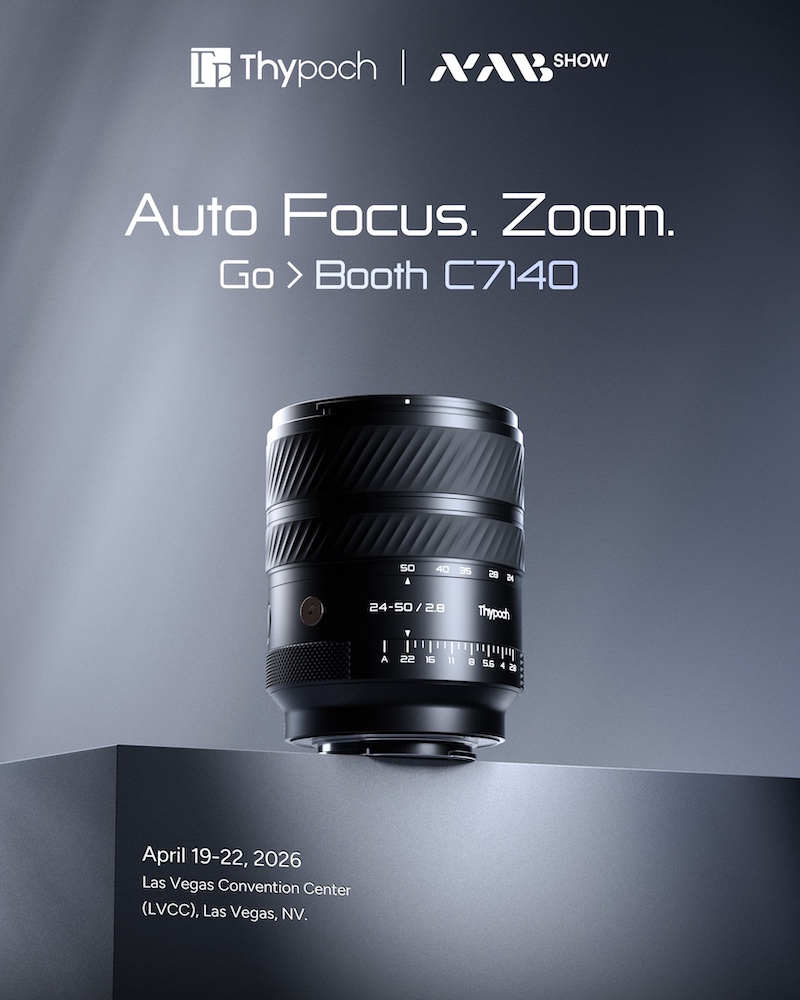
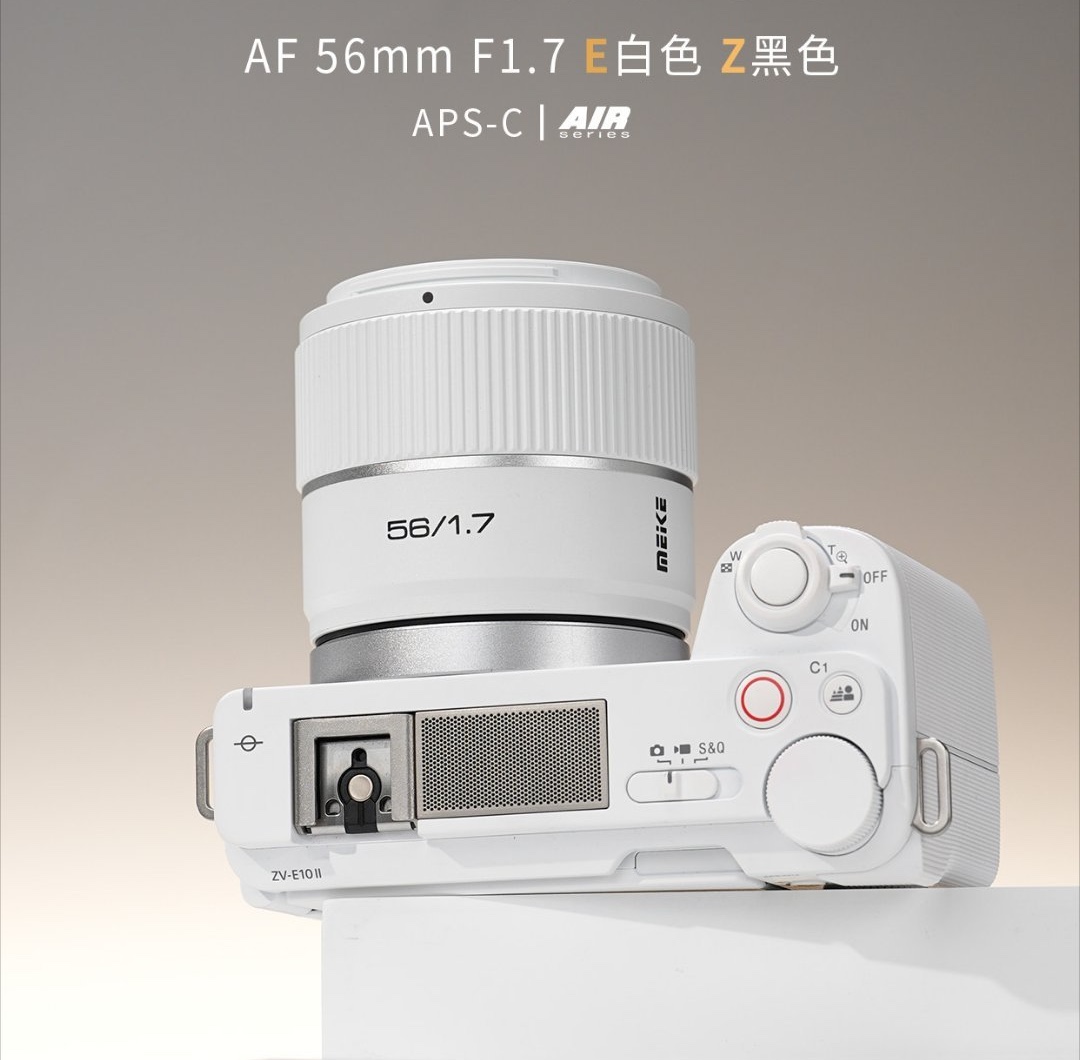
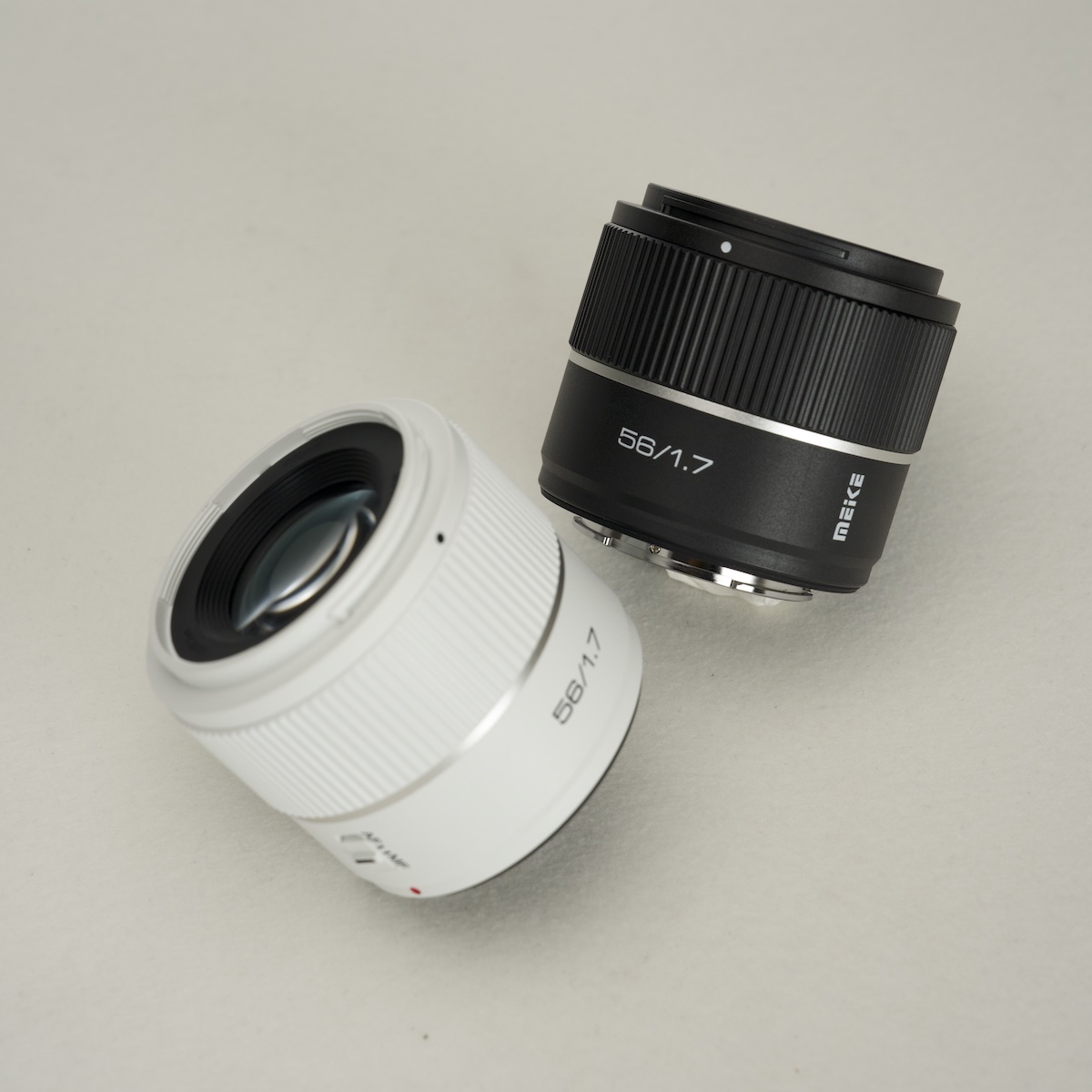
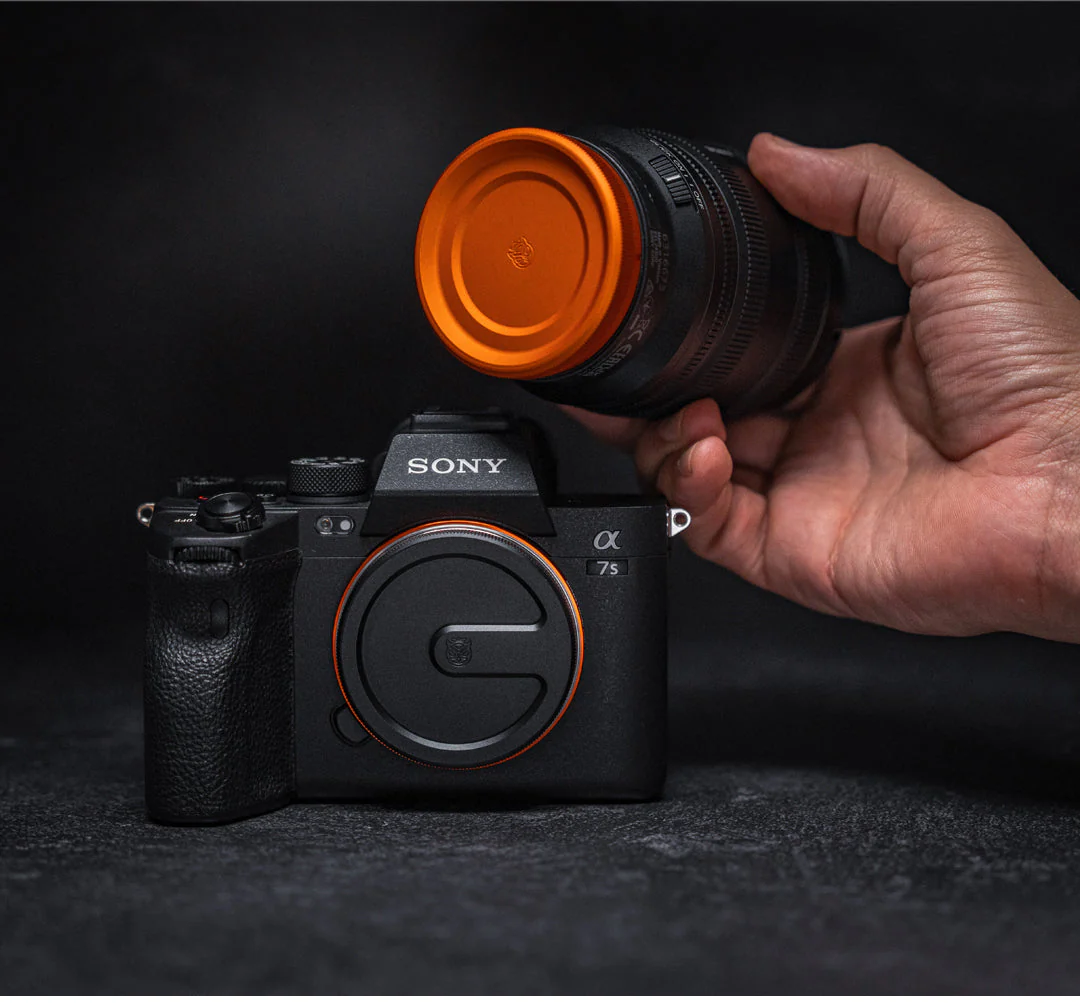
Here are some of the new lenses that will be announced at the 2026 NAB show:
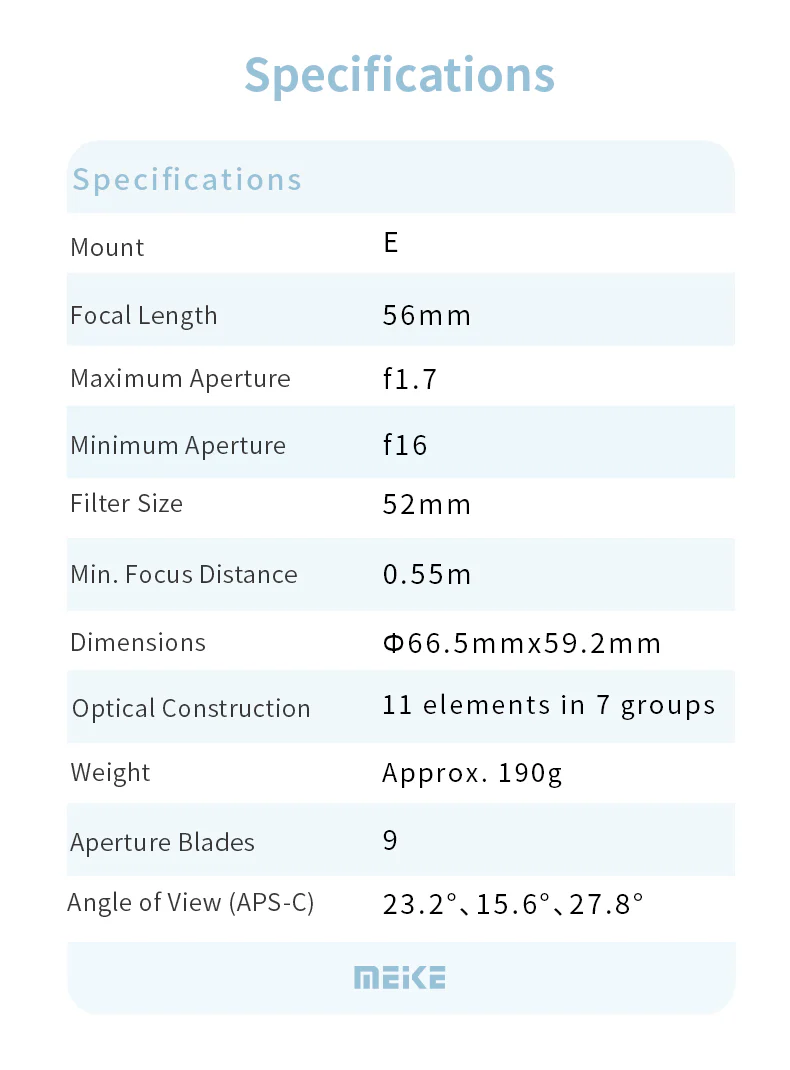
Viltrox is teasing the release of its first large-aperture APO AF lens at the 2026 NAB show (9 pm, April 20). Two new lenses are expected to be announced at the same price as the 85mm f/2 EVO lens ($275). See this post for additional information. Check the official website for updates. Previous coverage of Viltrox lenses can be found here.
Update – a new Viltrox LAB lens will be announced on April 17th (most likely a new 35mm f/1.2 without a LCD screen).
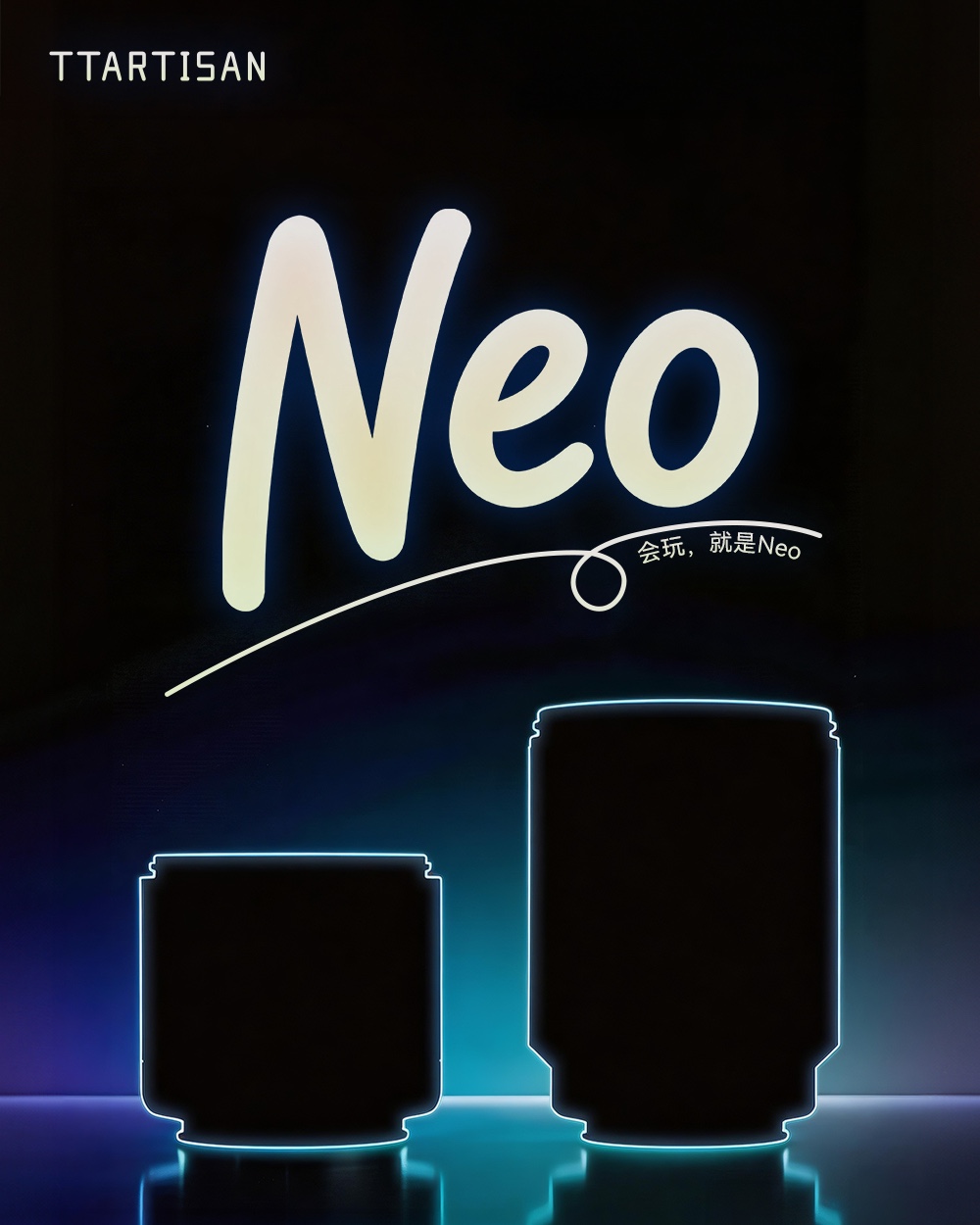
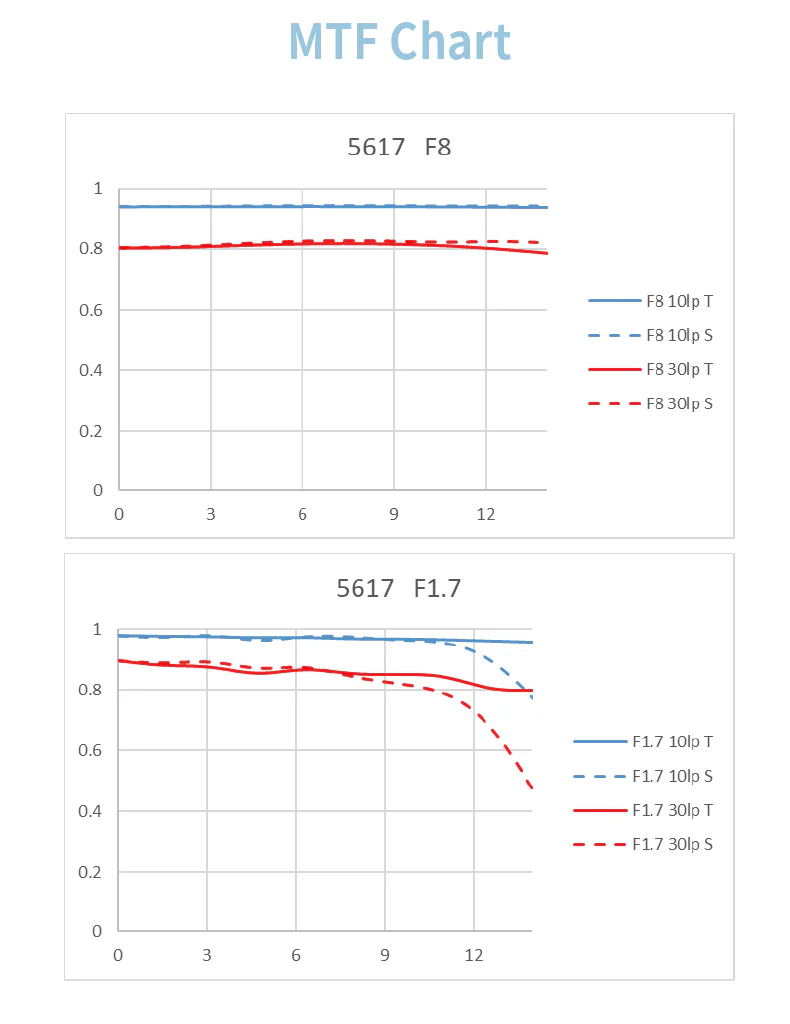
TTartisan is teasing the launch of two new full-frame AF lenses: “Delivering exceptional image quality, premium optical glass construction, crafted with the spirit of a master artisan.” TTArtisan has just launched a new line called Air, and it seems they’re also planning a new lens line called Neo. Check the official website for updates. Previous coverage of TTartisan lenses can be found here.
Adobe Lightroom is getting a new competitor from a surprising place. BlackMagic has added what looks to be a shockingly complete set of photo editing tools to the latest version of its Davinci Resolve software, which has traditionally been designed primarily for video editing, color work, and sound design.
Resolve 21 gains a new "Photo" mode, which lets you organize a collection of stills into albums, apply ratings and labels and even search through all your images with an AI-powered tool that you can use to find photos of certain kinds of subjects. The company says it "worked closely" with camera manufacturers to support Raw stills from Canon, Sony, Nikon, Fujifilm and Apple, but you can also use it to edit JPEGs and HEIC files. There's even a tethering mode for certain Sony and Canon cameras.
Node-based editing will take some getting used to, but can be a powerful tool, depending on how you edit.
The company's main pitch for Resolve as a photo editor centers around its color tools. They're extremely robust, as they're designed for editing movies, but offer a lot of flexibility for stills too. The editor uses what's known as a node-based approach, which lets you add adjustments as independent effects that can either chain together or not affect each other. For example, if you select part of your image using Resolve's "Magic Mask" feature, you can have your base color adjustments apply to the entire image, but have certain edits only applied to the masked area.
While nodes can take a little bit of practice to wrap your head around, they can be a powerful and flexible way to edit. Using them isn't absolutely required, though; the software also has built-in "Film Looks" presets that you can customize, and supports applying Look Up Tables, or LUTs, to your photos. And if you just want to edit basics like lightness, color temperature, saturation, etc., you can use more traditional sliders. Resolve also includes basic crop and rotation tools, too.
Resolve's Raw editing tools will be more familiar than its color editing ones.
BlackMagic also says that edits and adjustments can be accelerated by your computer's GPU, which it claims allows Resolve to process photos "dramatically faster than conventional photo applications."
During a livestream announcing the update, BlackMagic's CEO said that the Photos mode will probably receive a lot of tweaks and improvements over time. But if it provides anything like the capabilities that BlackMagic has promised, it could be a viable competitor to more established programs like Adobe Lightroom and Capture One Studio right off the bat.
That's especially true given the price. Davinici Resolve is available for free, though to get all of its features, you'll have to pay $300 for the "Studio" version*. However, Blackmagic tells us that, currently, there's no differences between the free and Studio versions when it comes to the photos page, though some features of the color editor, and many of the program's AI tools, require a paid license.
Davinici Resolve 21 is being released in beta today, though it's worth taking that label seriously. We weren't able to successfully export a photo while testing to see if there were any obvious limitations, with the software just giving us an error message about not being able to decode it, so it seems like there's still definitely some work to be done.
The company also announced plenty of features for video editors, too, which largely center around AI. The software now has a suite of built-in AI-powered effects, such as voice generation, "CineFocus," which lets you add customizable blur to your video, actor aging/deaging tools, blemish removal and more. Many of those, and the software's other video-focused tools, such as AI-upscaling and noise reduction, can also be used when editing stills.
* - Currently, that's a one-time fee, with Studio owners getting free upgrades to each subsequent version. However, during the livestream, BlackMagic's CEO mentioned that the company may need to start charging for upgrades someday.
Concept: Digital conversion system for analog cameras
Sensor: Sony APS-C (16–21 megapixels)
Storage: 256GB internal SSD
Image Formats: RAW and JPEG
Design Philosophy: All-Inside Design, No external screen, No external cables
Connectivity: Bluetooth synchronization + Wi-Fi image transfer
How it works:
Insert the system into the camera’s film compartment
The sensor sits in the film gate
The roll module occupies the film chamber
Shoot normally using the camera’s mechanical shutter
Images are stored internally and transferred later
How it works:
I’m Back Roll APS-C sits exactly where the film normally goes.
Inside the roll, there is a 26MP APS-C Sony IMX571 sensor.
To capture an image, you first need to advance the camera, moving the film lever and arming the shutter mechanism.
Then, using our remote control, you click, synchronize and trigger the photo, just like in the old days.
This way it preserves the rhythm and experience of shooting film – including missing a shot now and then – while recording everything digitally.
This version works with all 35mm film cameras.
For the first time, it will also be possible to use the system with underwater cameras such as Nikonos and other similar models.
The reason is simple: everything is contained inside the body of the device. There are no external parts required.
In our previous models, I’m Back 35 and I’m Back Film, an external module was necessary. With this new version, the entire system is integrated internally, which makes compatibility much broader.
Another important improvement is the new, larger sensor. This version uses an APS-C sensor, providing better image quality and a larger capture area.
Other photography-related projects currently available on Kickstarter:
Satoshi Maetaki (left) and Yutaka Nakamura (right) holding the Canon RF 14mm F1.4 L VCM and RF 7-14mm F2.8-3.5 L Fisheye STM, respectively. Photo: Mitchell Clark
Last year, we had the opportunity to tour Canon's lens factory in Utsunomiya, to get a look at how the company produces its optics. This year at CP+, we had the chance to talk to some of the people who play a part in designing the lenses made there: Satoshi Maetaki, general manager of the Optics Technology R&D Center and Yutaka Nakamura, assistant manager at the IMG Products Planning Center.
Our conversation largely centered around two of the company's latest releases, the RF 14mm F1.4 L VCM and the RF 7-14mm F2.8-3.5 L Fisheye STM, but we also got to talk about some of the things the engineers consider when designing a lens, some of the tools and tech that helps them with that process and how they decide which lenses to work on.
Considering what lenses to make next
Nakamura says the process for deciding what lens to make next is a holistic one, based on several factors. "We always consider: 'what is the ideal lens lineup?' That’s always in our mind," he says. "It’s not just the market environment or the user’s feedback. We also have to consider the possible future advancement of our core technologies, and how consumers’ shooting styles will change."
"We always consider: 'what is the ideal lens lineup?'"
While many of Canon's recent lenses have been full-frame designs, in our interview with Canon's top executives, Go Tokura, Executive Vice President and Head of Canon's Imaging Group, said the company is still interested in crop systems. "We won't stop exploring the field of APS-C lenses," he says. "Our principle is both full-frame and APS-C. We will continue to explore."
Advanced materials, corrections and simulations
Once they determine what lens to make, the engineers and planners have to figure out how to actually build it. According to Maetaki, the decision on whether to use digital distortion correction is made at the very beginning of the process, as was the case for the 14mm F1.4 L VCM. "We developed this lens under the precondition that distortion correction is to be done on the camera side," he says. "Because some of the correction can be done by the body, the lens can be smaller."
"We developed this lens under the precondition that distortion correction is to be done on the camera side"
As with many other lens makers we've talked to, Maetaki said special elements like Canon's BR and fluorite lenses are especially important when it comes to making a high-performance lens that's still relatively compact.
He also says that Canon is taking advantage of recent advancements in simulation tech for lens designs. "At the time of development, we have a better idea of how it’s going to be post-correction. Thanks to the development of the simulation technology, we can select the optimal design." As the company designs the lens, it can run simulations in tandem with the physical design work it's doing.
AF motors
For modern mirrorless lenses, choosing which kind of actuator to use for the autofocus is also an essential part of the process. According to Maetaki, the decision is made on a case-by-case basis; sometimes the company will choose an autofocus technology based on the optical design, other times the type of autofocus actuator may influence the lens' construction.
"Simply put, we select the motor depending on the concept of each lens," says Nakamura. "Is it for professionals, for high-end amateurs, entry-level? Or is it specialized for still images, or a hybrid between stills and video? Also, price range is important for us to consider. And focal length, the maximum aperture… Based on all these elements, we’ll decide which motor or actuator is most suitable."
In the case of the 14mm F1.4 L VCM, the company went with the namesake voice coil motors because of their ability to move the lens's relatively large and heavy elements. And even though the RF 7-14mm F2.8-3.5 L Fisheye STM is a modern version of the DSLR-era EF 8-15mm F4L Fisheye USM, Canon decided not to go with the ring-type USM motor again. According to Nakamura, this was a lesson it applied from a previous lens, the RF 10-20mm F4 L IS STM, from 2023.
"That was an ultra-wide lens that had the STM as well," he says. "That let it be compact with quiet, speedy, smooth autofocus. We took that lesson and applied it to this model."
Making a line of lenses the same size
The lenses in Canon's VCM lineup have very similar dimensions to make it easier to swap between them if you're using a gimbal or other video setup. Image: Canon
One notable aspect of Canon's F1.4 VCM lineup is how all the lenses are all very similarly-sized, from 14mm to 85mm. Nakamura says this is so video shooters can use all the same accessories, such as ND filters, follow focus units and rigs, even when switching between lenses. "That’s why we stick with the same barrel size or diameter, so those accessory changes don’t become a burden. So this is one of the determining factors when we’re deciding to add a lens to the lineup. We have to consider all this, including the shooting styles of our users."
According to Maetaki, achieving this isn't actually as difficult an engineering challenge as it might seem. "With current focal lengths, it’s not much of a problem," he says. "If the focal length becomes even longer, the difficulty level goes way up. Because when that happens, the diameter of the glass becomes larger, so it’s harder to fit." He says that from 14mm to 85mm it's fine, but perhaps that means we shouldn't hold our breath for something like a 100mm entry in the F1.4 VCM lineup.
This article is based on an interview by Mitchell Clark at CP+ 2026. It has been edited for clarity and flow. You can read our interview covering Canon's camera business by clicking the link below.
GoPro will unveil a new generation of cameras at the 2026 NAB Show this month (April 18–22). Here is the first leaked picture of one of the upcoming models – you can clearly see the larger lens, indicating a bigger sensor:
Here is what to expect from the new GoPro camera:
GP3 Processor (core upgrade): GoPro’s first new chip in 5 years – a custom 5nm SoC with >2× the pixel processing power of the old GP2, plus a dedicated AI Neural Processing Unit (NPU) for real-time scene recognition, subject detection, and smarter image processing.
Larger sensors: Expected across the lineup (teasers show cinematic macro, natural bokeh, and shallow depth-of-field shots that go far beyond typical action-cam footage).
Massive low-light & image quality jump: improved low-light performance, better dynamic range, reduced noise, and more cinematic rendering.
Higher resolution & frame rates: Strong speculation of 8K video (or at least much higher than Hero 13), plus improved high-frame-rate options (e.g., 4K at 240 fps) thanks to the extra processing headroom.
Better battery life & thermals: Significantly longer runtimes and “bulletproof” reliability in high-heat conditions – no more early overheating shutdowns.
AI & pro features: Enhanced stabilization, smarter auto-settings, improved audio, and overall professional-level image quality in a compact, rugged body.
Here are some speculations on what Panasonic could announce for the 25th anniversary of LUMIX in 2026:
LUMIX S1H II: a long-overdue true successor to the S1H with 6K/8K internal recording, ProRes RAW, advanced cooling, pro connectivity (IP control, etc.), and cinema-grade tools in a compact mirrorless body. This would directly address community requests and position LUMIX strongly in the pro video market.
LUMIX S9 II: A compact full-frame camera with hot shoe/EVF improvements.
LUMIX S5 III or S5R: a new flagship model equipped with a new generation of AI AF system.
LUMIX LX100 III: a successor to the popular premium compact. Expected updates to sensor/processor, EVF, touchscreen, and modern video features. Ties directly to LUMIX’s compact-camera origins and the current “compact renaissance.”
Micro Four Thirds revival (e.g., GM5 successor or GX9 III): Panasonic has not announced a MFT camera since 2024 (Panasonic LUMIX GH7 and Panasonic LUMIX G97).
Special anniversary edition camera: a limited-edition camera with special badging – Panasonic has done similar things for past milestones.
Perhaps the "Eject" button on the Nikon D5 was aptly named... Image: NASA (via r/ArtemisProgram)
It's an experience most photographers will be familiar with: you go to insert or eject your camera's card, fumble slightly, and the spring or ejection mechanism sends the card shooting out. If you're lucky, you catch it in time; otherwise, it tumbles to the ground.
It turns out that even astronauts aren't immune from this kind of gaff... but when it happens to them, the lack of gravity makes it all the more exciting. This week, a clip taken from NASA's livestream of the Artemis II mission around the moon has gone viral, showing what appears to be astronaut Christina Koch chasing after a card that shot out of her camera.
The moment is at 3 hours and 25 minutes.
Unfortunately, you can only scroll so far back in NASA's official livestream (as it's still being broadcast), but the moment has been captured in several GIFs. You can also see it with the surrounding context on CBS News' archive, though it's only in a small part of the frame. Unfortunately, none of the clips currently available have audio of the moment.
Anyone who's been following the mission and looking at the photos taken during it will know that the crew is mostly using Nikon D5s, so the card is likely a CFexpress, XQD or CompactFlash model. (I'd guess the former, based on clips I found of another astronaut handling theirs relatively close up.) While I typically wouldn't expect this kind of slot to eject a card with much force at all, how things work on Earth isn't always a great indication of how they'll work in space without any gravity.
Thankfully, the Orion capsule is relatively small, so she was able to keep track of it and grab it within a few seconds and continue taking pictures. But it's a funny reminder of how things that are easy, or, at worst, little inconveniences on earth, can be much more difficult in a zero-gravity environment. Thankfully, Koch and her crewmates have been willing to put up with the camera-related difficulties they've encountered, because the photos produced by the mission have been incredible.
Fans crowd around a rookie baseball player who, an hour earlier, had broken the tie in overtime, winning the game. Kids offer him hats and baseballs to sign.
This month, we're returning to the analog roots of photography. The challenge is simple: show us your best photos shot on film. Any era, any format, any subject. Color or black and white. It's all fair game as long as it's an authentic film capture. If you can remember, please let us know which film stock you used! Our favorites will be featured on the DPReview homepage later this month!
This challenge is about the look of film, so please keep post-processing to a minimum. Technical corrections for scanning or color balancing aged film are welcome. We reserve the right to disqualify entries that appear over-processed.
Photos can be submitted between Sunday, April 12, and Saturday, April 18 (GMT). The challenge is open to photos captured at any time.
Important: Images MUST include a title and a caption of at least 25 words to be eligible. We need to be able to share the story behind your photo. We will consider both photos and captions when selecting our winners, so make sure to tell us that story!
Visit the challenge page to read the full rules and to submit your photos for consideration as soon as the challenge opens.
Fujifilm registered a new F260001 camera in Asia that will use X-Processor 6. Fujiaddict reports that this will most likely be the Fujifilm X-T6:
“This camera will likely be the Fujifilm X-T6, but there is also a small chance that it could be the Fujifilm X-Pro4 or Fujifilm X-H3. We generally find these listings pretty close to launch events, and Fujifilm announced Fujikina in Warsaw this June, so it is likely a camera will be announced at or before the event.”
After nine days of journeying around the moon, the Artemis II mission has come to a successful conclusion with the crew landing safely in the Pacific Ocean on the evening of April 10. The lunar flyby portion of the trip lasted roughly seven hours, and the crew said they took over 10,000 images during that time alone, so there are an untold number of images from the entire mission.
While NASA hasn't uploaded anywhere near that many, the organization has been sharing plenty across various platforms, including its own website. We've been keeping our eyes on those photographs and have compiled a selection of our favorites from pre-launch through splashdown, which you can see at the bottom of this article.
The photographs are absolutely stunning simply for what they are, but the crew wasn't only taking them to create pretty images. They were also intended for scientific purposes, and there's a lot you can learn from them as a result. I'm no scientist, though, so I've really been enjoying listening to those who know more explain some of what's going on.
One such example is a video by Hank Green, a popular YouTuber and science communicator. In the video, Green walks through some of the photographs taken by the Artemis II crew, explaining in depth what we are looking at and providing additional context behind the photographs. For example, in one of the images of the Earth, Green points out the sodium line that goes all the way around the planet, explaining what it is and what its importance is.
Green also covers some things we photographers already know, such as why Earth looks so big in some shots (telephoto focal lengths), and some things caused by factors inherent to space, such as the surreal lighting in some shots. In his words: "Pictures are often worth a thousand words, but sometimes they are worth considerably more than that." It's a fantastic video, well worth watching all the way through.
CSA (Canadian Space Agency) astronaut and Artemis II Mission Specialist Jeremy Hansen is seen taking images through the Orion spacecraft window during the Artemis II lunar flyby.
Photo: NASA
Artemis II pilot Victor Glover summed it up nicely when witnessing the eclipse from the spacecraft: "It is truly hard to describe." We can't wait to see even more from NASA once they are able to go through the enormous number of images and videos from these inspiring astronauts.
Sample gallery
This widget is not optimized for RSS feed readers. Click here to open it in a new browser window / tab.
Peak Design, the company behind many popular camera bags and accessories, is making an L-bracket and is looking for people's input via a survey.
Given that the product is still in the works, details are relatively scarce, but that's where your answers come in. The survey collects basic information about you as a photographer – what types of photos you take, where you shoot, and which cameras you use – before getting into the specific questions about the upcoming bracket.
It asks whether you'd be interested if it has a quick-attach mechanism that lets it transform from a baseplate to an L-bracket, if you'd like a stowable accessory "similar to an AirTag," whether you care if there are add-ons like a cheeseplate or handstrap, and whether you own a Capture Clip and currently use it with an L-bracket. It also, of course, asks how much you'd expect to pay for such an accessory.
It's not particularly rare for Peak Design to send out these kinds of surveys. I recently got one asking about potential upgrades and additions to its lineup of photographer-focused bags, though those have yet to materialize. (Which is not a complaint, as I got that survey mere days after buying a new bag from them and would be sad to see it obsoleted so quickly.) But given how relatively popular the company's tripods and clips are with photographers, we figured it was worth sharing the survey so you could weigh in, in case this is the kind of product you're interested in.
Expanded L-mount roadmap, including the AF 16mm F1.8 L and several unreleased L-mount lenses
LAB and Pro flagship lenses showcased through hands-on experiences and expert-led sessions
EPIC cinema lineup expanded with new focal length options
Raze DL-mount lenses for DJI Ronin 4D and the NexusFocus adapter on display
Additional information:
Viltrox to Showcase Expanding Imaging System at NAB Show 2026
Discover new Lenses Empowering Modern Image Makers Through Photography to Cinema
Las Vegas, NV, April 7th, 2026 – Viltrox today announced its participation in NAB Show 2026, taking place April 18–22, 2026, in Las Vegas. At this year’s show, Viltrox will present the latest expansion of its imaging ecosystem under the theme “Expanding the Viltrox Imaging System — From Photo to Cinema.”
Across all product categories, Viltrox’s NAB 2026 presence underscores a unified vision: supporting creators at every stage of visual storytelling, from photography to cinema. The showcase will highlight Viltrox’s ongoing evolution into a comprehensive imaging system provider, with developments spanning autofocus lenses, L-mount expansion, flagship optics, cinema tools, and creator-focused production accessories.
New EVO Series APO Lenses
A key highlight of Viltrox’s NAB 2026 presence is the continued expansion of its EVO series, which includes previews of upcoming models, and the official launch of new lenses during the show. The EVO series with APO lenses emphasize professional performance, usability, and versatility for everyday shooting scenarios, ready for modern creators working across both photography and video.
Expanding the L-Mount Ecosystem
Viltrox will also spotlight its growing L-mount portfolio, marking one of its first major international trade show appearances since joining the L-Mount Alliance. In addition to the AF 16mm F1.8 L, the company will present several new and unreleased L-mount lenses, reinforcing its commitment to supporting photographers and filmmakers using Leica, Panasonic, and Sigma systems.
Flagship Optics: LAB and Pro Series
The company’s LAB and Pro series lenses will be on display, representing Viltrox’s most advanced optical engineering. Attendees can experience hands-on demonstrations and attend on-site sessions led by industry professionals, focusing on real-world applications and creative workflows.
Cinema Production-ready Solutions
Further extending its support of cinema-grade videography, Viltrox will showcase an expanded lineup of filmmaking tools and cinema-ready products. Highlights include the EPIC series cinema lenses with expanded focal-length options, Raze cinema lenses (DL mount) designed for the DJI Ronin 4D system, and the NexusFocus adapter, which enables autofocus functionality in professional cinema workflows. The booth will also feature simulated production environments, including portrait, automotive, and wedding setups, demonstrating real-world scenarios.
The Creative Ecosystem Beyond Lenses
Beyond lenses, Viltrox will present additional tools such as lighting and monitoring products, further strengthening its ecosystem for modern visual creators. These additions reflect the company’s direction toward building a more connected workflow from capture to production.
Executive Quote
“NAB Show 2026 marks an important step forward for Viltrox as we continue expanding our imaging system across both photography and cinema,” said Frank Fang, US Marketing Director, Viltrox. “This year, we’re excited to share a broader view of where we’re heading with new EVO developments, a stronger L-mount commitment, expanded EPIC focal lengths, and more tools for today’s image makers.”
Sony’s A7R VI is set to be released before November 2026, right before the Alpha 7S series
The Alpha 7R VI is currently undergoing testing on a small scale
BIONZ XR2 processor with 8.5 stops of image stabilization
30fps 14-bit RAW continuous shooting
RAW pre-capture
60fps AE/AF
16-frame high-resolution composite shooting
Up to 32-frame noise-reduced composite shooting
The grip has been redesigned to adopt the deeper handle found on the A1 II.
The screen’s maximum brightness is 50% higher than the A1 II.
The A7R VI uses a full-stacked sensor with 80M effective pixels
It’s seen as a big step up from the A7 V, and it’s in a similar position to the A7R III and A7 III at the time
No open gate, no RAW video, no 6K HEVC, it supports full-frame 10.9K oversampled 8K30p, APS-C 7.1K oversampled 4K60p, and full-frame 5.5K (pixel-binning) oversampled 4K120p video
For stills, it can take 30 fps, but there’s a hard limit on the number of frames.
The dynamic range is still better than the A7R V in mechanical shutter mode when using the electronic shutter, and it reaches 16+ stops when mechanical shutter is enabled.
The number of pixels on the screen is higher than the A7 V, but the electronic shutter speed is slightly faster. However, the electronic shutter speed is still only a third of the A1 II.
The compact film camera was widely seen as an outdated category relegated to the past. For years, the consensus was that film itself was fading away, smartphone cameras gutted the point‑and‑shoot market and repair expertise was thinning out. Yet as Stephen Dowling recently explored in a detailed feature for Kosmo Foto, the humble 35mm compact has quietly shuffled back into the spotlight in recent years.
Dowling’s piece takes an in‑depth look at the path of this revival. In it, he traces how compact film cameras went from niche products to the focus of new premium releases with renewed interest among younger shooters. A big part of the film compact revival story is the reality that most of the classic models people now lust after were never designed for a second life. They rely on aging electronics, brittle plastics and parts that no major manufacturer is producing – or servicing – anymore.
Takeo "TKO" Suzuki poses with a Pentax 17.
Photo courtesy of Takeo Suzuki
That fragile ecosystem is exactly what pushed Takeo "TKO" Suzuki, the industrial designer behind the Pentax 17 project, to start thinking about a new film camera designed for today's beginners. "I wanted to create a camera especially for new and young users," TKO told Kosmo Foto via email. "When I heard about a young person who had saved up money to buy a used film camera – only to find it broken – I was moved to tears. My first idea was to create a camera they could use with peace of mind," he said.
Dowling's piece also makes clear how radical that ambition sounds inside a modern camera company. As TKO recalled, "what struck everyone was simply how unrealistic it seemed to build a film camera in the modern era. When I first presented the concept to the executive team, including the company's top leaders, everyone froze."
That comment underlines the tension at the heart of the compact revival: there is obvious cultural momentum, but bringing new hardware to market means convincing risk‑averse executives to invest in a format that had been left behind. Complicating things further, even if those executives were fully on board, the process would require recovering long-dormant or even lost institutional knowledge and figuring out how to make or obtain parts that haven't been mass-produced for a decade.
Image: MiNT
The Pentax 17 hasn't been the only compact film camera released in the past few years, either. The MiNT Rollei 35AF came out around the same time. Dowling spoke with MiNT's founder, Gary Ho, who highlighted the difficulties of manufacturing such cameras at this point. "Finding the right components is challenging. The supply chain for film cameras is long gone. But technology has advanced a lot and there are ways to do things that were otherwise impossible before,” Ho said.
Dowling also delves into the recently released Lomography MC-A and the currently in-progress Analogue af-1 to find out more about the processes and challenges of designing new film cameras these days. The article includes insightful comments from key players at both companies, providing a peek behind the curtain for devices that seem so simple on the surface.
Our article only scratches the surface of the history and personalities behind the compact film camera comeback. Dowling's original feature goes much deeper into what new cameras (and the people behind them) are keeping the market churning, and what it might take for new film cameras to become more than limited curiosities. If you want the full story, including more from TKO and others trying to give compact film cameras a true second act, it's well worth reading in full over on Kosmo Foto.

 Connexion