Vue normale

Sony wants to buy Tamron. Nikon and Canon shooters should pay attention

What would a Sony-owned Tamron mean for photographers?

The Sony and Tamron logos, with a blurred camera body and lens in the background.Sony / Tamron

Photography and consumer electronics giant Sony has offered to buy Tamron, a company well-known for its lenses and optics. This would be, to put it mildly, a massive shake-up in the photography market, that could end up having profound impacts on the lenses available to photographers using other systems in the coming years.

What’s happening?

According to a statement Tamron made to investors, Sony has made “a non-binding proposal” that would result in Tamron being “a wholly-owned subsidiary of Sony Group Corporation.” Tamron says it’s set up a special committee to review the proposal, but that it currently has nothing else to disclose.

One of the most important things to glean from that statement is that, according to Tamron, it would end up as a subsidiary of Sony. That implies that, at least at the beginning, it would still exist as a separate entity. Keep that in mind, as it’ll be important later on in the discussion.

Why does Sony want to buy Tamron?

tamron 12-20mm f2p8 front element
In a 2026 report to investors, Tamron said its photographic business was its “cash cow.”
Mitchell Clark

There are several potential reasons for Sony to want to acquire Tamron, not all of which have to do with photography. While the majority – 74.2%, in 2023 – of Tamron’s sales come from its “photographic products,” the company’s surveillance, automation, mobility and healthcare divisions also make millions of dollars each year. Sony’s a big player in those spaces, too. While most of us are familiar with Tamron because of its camera lenses, we shouldn’t discount the possibility that those other businesses play a part too.

With that said, Sony told Reuters that its reasoning for the offer is because it thinks the acquisition would be good for Tamron’s shareholders, and that it could help Sony’s imaging business too. That seems to mean that the company’s photography business is one of the main draws for Sony.

Tamron’s place in photography

Tamron, like Sigma and Viltrox, is a third-party lens manufacturer, meaning it produces lenses for a variety of camera systems (unlike, for example, Sony, Nikon and Canon, which make lenses pretty much exclusively for their own cameras). The company is known both for making very good lenses that are much cheaper than the own-brand equivalents, and for making zoom lenses that are a bit out of the ordinary; think the 35-150mm F2-2.8, or the 17-50mm F4. Lenses that some people will find useful, but that might be a bit too niche for other companies to make.

A graphic showing several of the lenses Tamron makes for E-mount.
Out of all the camera mounts Tamron makes lenses for, Sony’s E-mount is the best-served.
Tamron

It’s worth explicitly saying that every single mirrorless lens Tamron makes is available for Sony’s E-mount; for many, it’s the only mount they’re currently available on. Tamron makes lenses for all the major mounts – Canon, Nikon etc – but, probably as a result of the stricter licensing policies of the other two big brands, it’s only Sony’s E-mount for which is can offer all its lenses. There are also occasionally differences between the Sony versions and the others. The company’s latest release, the 12-20mm F2.8, will be available for both Nikon and Sony, but the E-mount version is coming out first, and for less, with a spokesperson citing volume, manufacturing differences and a different competitive landscape for the price difference.

While Tamron is known for the lenses that bear its name, it’s also a major original equipment manufacturer, or OEM. That work, which includes making lens modules and interchangeable lenses for clients including Nikon, made up 29% of the company’s revenue in 2025, and accounted for 41% of the sales in its photography division in 2023.

So what happens if Sony buys Tamron?

Neither company has commented yet on what will happen if the deal actually goes through, but there are a few possible scenarios that are worth exploring should that happen.

Scenario 1: Tamron continues on with business as usual

Sony could essentially keep Tamron as a relatively separate company under its umbrella in perpituity, leaving it to continue making lenses for other mounts, and doing OEM work for other companies. And in some ways, this seems like the sensible move; why buy a company, and then nix 30% of its revenue?

Sony acting as a steward would potentially benefit it in a few ways. For one, it wouldn’t have to worry about outside forces messing around with a valuable partner; according to PetaPixel Sony was, until recently, the largest individual shareholder in Tamron before an investment firm took that spot, giving it less sway over the company’s decisions. It would also have greater insight into the company’s developments, and could plan its own releases around those, and could apply some of its optics expertise to lenses bound for other company’s cameras, letting it benefit in a way that it wouldn’t have been able to before.

it’s hard to imagine Tamron’s relationship with the other camera companies would be completely unchanged

However, there are some potential downsides, too. Sony wouldn’t be capitalizing on the ability to make access to Tamron lenses an exclusive benefit of buying an E-mount camera, and it’s hard to imagine that the company’s relationship with the other camera companies would be completely unchanged if it’s suddenly owned by a competitor. Nikon might think twice about choosing Tamron as an OEM (assuming, of course, that it has other options). Then again, it doesn’t seem in any rush to stop using sensors from Sony’s Semiconductor division, or sourcing its OLED EVF panels.

There isn’t a ton of precedent for this scenario in Sony’s history of acquisitions, though there are parallels. It famously purchased Konica Minolta in 2006, which has completely disappeared into its camera division. The same is true of Toshiba’s image sensor business, which it bought in 2015, though Sony’s sensor group does a lot of business with other camera companies.

To us, this path feels like the best outcome for photographers, if a buyout has to happen. Non-Sony owners would still get to benefit from Tamron’s lenses, and it could act as a competitive force in the market, driving other lens makers to improve their own offerings.

Scenario 2: Tamron stills exists, but only makes lenses for Sony

A Sony camera wit the Tamron 25-200mm F2.8-5.6 attached.Tamron

Of course, Sony could keep Tamron around as a lens brand, but make it so the company only produces E-mount options. It’s hard to argue that Sony would need to do this to bolster its cameras – as stated, all of Tamron’s lenses work with them anyways, as do hundreds of options from Sony and others – but it would be a blow to its competitors. Canon and Nikon’s more restrictive licensing policies already limit the choices for their users: losing the few options Tamron provides would only make that situation worse.

In our view, this wouldn’t be good for the camera industry. We’d like photographers to have more options, not fewer.

However, this path is not unfamiliar to Sony, if you look outside of its imaging division. The company has acquired several studios that make video games exclusively for its PlayStation consoles. And while some of those games eventually make their way to other systems years after their original release, it seems like the company may be in the process of walking even that tepid support back.

Scenario 3: Tamron disappears into the behemoth

Tamron could also wind up broken up into pieces, with its medical and automotive divisions becoming parts of Sony’s corresponding groups, and its lens businesses folding into Sony’s. This would simplify things on Sony’s end, where it gets the benefit of the company’s designs and intellectual property without the headache of having two separate, somewhat competing brands. To us, though, it would seem like an odd decision; it’s not like Sony needs help designing lenses (though perhaps this is a play to increase its production capacity), and it would be forfeiting the cahcet of a brand that dates back to the 1950s.

What does this mean for photographers?

If the deal ends up going through, the impact on photographers will depend heavily on which path Sony chooses to take. But even if it went with the first option and mostly let Tamron be, that path wouldn’t be set in stone. Sony could, at any time, decide to cut of other company’s access to Tamron’s lenses and manufacturing, an outcome that wasn’t previously on the table.

While there are exceptions, consolidation in an industry with an already limited number of players isn’t typically in the best interest of the consumer. While it may be, as others have argued, a great option for Sony, that doesn’t mean it would be good for the camera market overall.

There are potential upsides

That’s not to say that there aren’t potential upsides. Tamron is a publicly-traded company, subject to the desires of its investors. While its latest fiscal reports don’t paint a picture of a company in dire straits (absolutely not financial advice, to be clear), we’ve all seen companies whose products have taken a turn for the worse because the money people decided that they weren’t happy with the current profits. It feels less likely that Tamron would meet that fate were it owned by a company that’s deeply invested in photography than if it were bought out by a private equity firm.

It’s also possible the company’s products could improve if it had access to Sony’s technology, expertise, manufacturing capacity and vast financial resources (Sony’s imaging division alone brought in $11.2 billion in 2025, compared to Tamron’s $533 million).

For now, though, this is all hypothetical. Tamron could choose to reject Sony’s offer, deciding to continue going it alone. But while neither company has commented on the terms of the deal, Diamond Online, the outlet that originally broke this story, has reported that the offer is somewhere in the neighborhood of $1.2 billion, which is around Tamron’s current market cap (or, at least, what its market cap was before the news of a potential acquisition broke).

About the Author: Mitchell started taking pictures at 10 and hasn’t stopped since. It’s been a wide-ranging adventure, spanning a wide variety of genres and locales, and occasionally dipping into fascinations with video and filmmaking. They honed their technical knowledge doing documentation, programing and QA, writing for The Verge, and just generally messing around on the computer to see what breaks.

Want to stay up to date on the latest product news and releases? Add DPReview as a preferred source to ensure our independent journalism makes it to the top of your Google search results.

add as a preferred source on google

He dangles off cliffs for National Geographic – here’s what’s in his camera bag

Community member Andrew Kornylak loves to cling to sheer rock faces with others and stare down at the world below. See what photos he’s taken from such dramatic heights.

Lisa Rands climbing "Vapor Lock" in Dayton, TennesseeAndrew Kornylak

Community member Andrew Kornylak loves to cling to sheer rock faces with others and stare down at the world below. See what photos he’s taken from such dramatic heights as he shares his story that includes working for Lowpro and writing for National Geographic.

Our ‘What’s in your bag?’ community spotlight series features readers sharing their favorite gear and photography, including from past DPReview collaborators. See below for what Andrew has to share.

Johnathan Brandt climbing "The Prodigal" at the Little River Canyon National Preserve, Alabama
“Jonathan Brandt on Prodigal 13d at Toomsuba, Little River Canyon, AL.”

Nikon D800 | AF-S Nikkor 35mm F/1.4G | F7.1 | 1/320 sec | ISO 800
Andrew Kornylak

Meet Andrew Kornylak

Home base: Chapel Hill, NC USA

Andrew’s interest in photography began in high school after his older brother gave him a hand-me-down Minolta camera. The hobby grew through years of rock climbing and travel before he left a career in software development to become a full-time photographer in 2006.

“My older brother gave me his old Minolta camera when I was in high school. Taking pictures quickly became a hobby. I eventually got into rock climbing in the early 90s while in college, which was a great subject for photography and really got me motivated to get more serious. When I graduated, I worked as a software developer, traveled around the US and climbed, taking pictures whenever I could.”

Keeping one foot in analog has been good for me, as it helps me keep my skills sharp and challenges me to think more deeply and be more deliberate in my approach to projects.

Although he embraced digital photography early, Andrew has continued to work with both film and digital throughout his career. He believes shooting film keeps his technical skills sharp and encourages a more deliberate, thoughtful approach to his work.

“I still shoot a mix of film and digital. Shooting film with a strobe is especially challenging, but worth it. I spent years shooting climbing with off-camera strobes, using medium-format film. Keeping one foot in analog has been good, as it helps keep my skills sharp and challenges me to think more deliberately in my approach to projects.”

What’s in Andrew’s bag

Andrew's camera bag
Andrew’s camera bag.
Andrew Kornylak

Favorite camera: Canon EOS R5 Mark II

The Canon EOS R5 Mark II sure is a popular camera, as last week’s spotlight also stated it was their favorite. Here’s what Andrew thinks about its 45MP stacked sensor compared to his Nikon gear.

“I’ve shot with and owned almost every major camera system, but I have been primarily a Nikon shooter for my bread and butter. Just this year, I switched to Canon, mainly because all my cinema video cameras are Canon, so I wanted to consolidate lenses. I am currently shooting with the Canon R5 Mark II and about a half dozen lenses.”

Support gear

Charles Little on "Suzanne Sommers" at the Dry Canyon in Southern Arizona
“CP Little projecting at the Celebrity Cave, Dry Canyon, Whetstone Mountains, Sierra Vista AZ.”

Nikon D800 | AF-S Nikkor 35mm F1.4G | F7.1 | 1/320 sec | ISO 800
Andrew Kornylak

Any experienced photographer is going to have a set of gear that works well together and is ready to go at a moment’s notice. Apart from the cameras and lenses above, here’s Andrew’s other interesting gear he takes with him on trips into the mountains.

“I shoot a lot with lighting, both in the studio and on location. For photography, this was mostly Profoto and Broncolor strobes. I’ve been transitioning more to continuous lighting. LED technology has really come a long way, with significant advantages over other lighting options, especially since I also shoot video.”

“Aperture is my go-to brand here. I am FAA drone certified, so there’s that. Though I have a mini warehouse full of grips and accessories, I try to keep things as simple as possible. My Really Right Stuff Apex TVC-34L carbon tripod (which allows me to quickly change out photo and video heads) and RRS BH-55 ball head go with me 90% of the time.”

These days, I mix and match. I have to think about video gear as well. Mountainsmith (for a time), Think Tank and Peak Design all make great bags.

Favorite bag: “Definitely the Pelican 1510 with Trekpak Dividers and 1519 Photographers Lid Organizer. Hands down, my most useful camera case.”

“For years, I was an ambassador and design consultant with Lowepro, so I’ve been loyal to that brand. The bag I use the most is the Lowepro Whistler BP 450 AW. These days, I mix and match. I have to think about video gear as well. Mountainsmith (for a time), Think Tank and Peak Design all make great bags.”

What’s it like ‘hanging out’?

Chris Sierzant climbing "Hooligans" at the Little River Canyon National Preserve, Alabama
“Chris Sierzant, Hooligans (5.13) The Concave, Little River Canyon, AL. This frame was captured on Fuji negative film on a Mamiya 7II 6×7 camera and 43mm lens. I used two 300 w/s JTL monolights powered by Quantum Turbo 2×2 batteries and triggered by Pocketwizard radio slaves. One strobe was gelled blue (ctb) one gelled orange (cto). Both strobes were triggered by PocketWizard radio slaves.”

NIKON D850 | 60mm | F29 | 1/250 sec | ISO 64
Andrew Kornylak

Whether suspended hundreds of feet above the ground or in a quiet neighborhood park, Andrew is drawn to photographs that reveal something extraordinary. He believes the most compelling stories are often found in everyday places, where ordinary moments can become unexpectedly transcendent.

“Hanging from a rope hundreds of feet above the ground is a pretty unique perspective. I love shooting in all conditions, high up, underwater, in the rain, and so on. It can sometimes be risky or dangerous. I do enjoy the adversity, but it’s not where you find people most of the time. People occupy mundane spaces – cities, back yards, parks and their automobiles. It’s even more exciting to find something sublime or transcendent in an everyday environment.”

I shot a story on the (Mississippi) river. It’s an unheralded landscape, right in the middle of the country. A seemingly mundane place even, but unexpectedly wild, full of mystery and power.

One place that continues to inspire him is the Mississippi River Delta. First photographing the region for National Geographic Adventure in 2007, he has returned several times, captivated by its quiet beauty.

“One memorable place I’ve been to close to home is the Mississippi river. Specifically, in the Delta region. I shot a story on the river for National Geographic Adventure Magazine in 2007 and have gone back several times since. It’s an unheralded landscape, right in the middle of the country. A seemingly mundane place even, but unexpectedly wild, full of mystery and power.”

How do you keep fear at bay?

Anthony Meeks takes flight over Nickajack Lake, Tennessee
“Chattanooga, TN – August 20: Anthony Meeks spots his landing before falling from around 30 feet up while freesoloing a limestone cliff over Nickajack Lake.”

Nikon D2X | Tokina AT-X 10.5mm F2.8 Fisheye | F7.1 | 1/400 sec | ISO 100
Andrew Kornylak

“Willpower. For a typical magazine story, I used to just overshoot to make sure I covered all the bases. That is a reasonable approach, and in the moment, you might pick up a few bangers. In reality, that approach is based on fear. You might have some ideas or intentions, but you quickly realize they don’t go as planned, so you embrace serendipity.”

What’s the perfect shot, though? I sometimes don’t even realize it until years later.

“I do love that about photography, but I think as you gain more experience, you can become bolder with your intentions, really make them come to life instead of assuming they won’t. That’s where the perfect shot happens, not by chance but by intentional visualization and a strong will.”

“What’s the perfect shot, though? I sometimes don’t even realize it until years later.”

Turning photography into published books

24-hour mountain bike racer in Conyers, Georgia
“Conyers, GA – May 21: The streaks of a rider’s headlamp make a winding trail through the woods during the Granny Gear 24 Hours of Conyers 24-hour mountain bike race in Conyers, Georgia.”

Nikon D200 | Tokina AT-X 124 AF PRO DX II 12-24mm F4 @ 12mm | F6.3 | 30 sec | ISO 400
Andrew Kornylak

“This year, I am busy working on a couple of multi-year documentary films. I am really used to the constant hustle. That changed during the pandemic, when I was forced to sit still for a while and meditate on what I really wanted from my work. I scanned all my old film (about 30,000 images) and began thinking bigger. I began writing.”

“As a direct result of that, I published my first book last year about climbing in the South – Spare These Stones (Mountaineers Books). Such a small thing, a book, but it feels like the culmination of decades of work. It really has propelled me into the next stage of my career, I think. I have also started teaching. This fall, I will teach two classes at the UNC Chapel Hill Hussman School of Journalism.”

A piece of advice from a rock climber

“My advice is to work hard, but don’t be afraid to take a break and survey where you are headed. Your approach and strategy will change dramatically over time. Embrace every stage of it, and have fun!”

Andrew really enjoyed participating in this spotlight article and would love to hear what you think of his photography and to answer any of your questions in the comments below.

You can check out Andrew’s other work at andrewkornylak.com.


Editor’s note: This article continues a series, ‘What’s in your bag?’, highlighting DPReview community members, their photography and the gear they depend on. Would you like your photography to be featured in a future installment? Tell us a bit about yourself by filling out this form.

About the Author: Mathew Anderson is a proud Community Manager for the technology industry and a past visitor to DPReview.com for all his camera needs. He is currently the lead of DPReview’s community and primary communication link between the community and DPReview’s team.

Want to stay up to date on the latest product news and releases? Add DPReview as a preferred source to ensure our independent journalism makes it to the top of your Google search results.

add as a preferred source on google

DJI Osmo Pocket 4P launches outside China – but not in the US

The dual-lens vlogging camera is now available in Europe, the UK, Canada and Australia.

A hand holding the DJI Osmo Pocket 4P vlogging camera.Mykim Dang

After what has felt like an odyssey of a product rollout, DJI’s latest vlogging camera, the Osmo Pocket 4P, is finally here. It’s launching in Europe, the UK, Canada and Australia, after its initial rollout in China a month ago.

Our coverage of that launch has the complete specs, but here are the most important parts, in case you missed them or have since forgotten them. The 4P is an upgraded version of the company’s Osmo Pocket 4 vlogging camera with an integrated three-axis gimbal. Like the standard model, it has around 100GB of built-in storage, and a Type 1 (116mm2) sensor with a 20mm equiv. lens, capable of shooting at 4K/240p in landscape. It can also take 33MP 16:9 stills or 37.7MP 1:1 stills, and a ~3K (1728×3072) vertical crop from the middle of the sensor for portrait-orientation video at up to 60p.

While those specs are similar to the original Osmo Pocket 4, the 4P uses a new sensor that utilizes a LOFIC (lateral overflow integrating capacitance) design to retain more information in the highlights, and a new version of the company’s Log curve, D-Log2, to capture the extra dynamic range. D-Log2’s base ISO is two stops lower than the original’s, meaning it can tolerate up to 2EV additional light.

It’s also not the only camera. The 4P adds a Type 1/1.28 (75mm²) sensor with a 60mm equiv. lens for extra reach, though that one doesn’t have the same dynamic range capabilities – it uses the original D-Log – and caps out at 4K/200p.

Taking a break from specs: what’s the camera like to use? DJI brought our social director Mykim Dang to Toronto for two days to test it, and you can see her impressions, along with sample footage from the 4P, below.

The power of the Osmo Pocket series has always been in its ability to be an all-in-one solution. The cameras provide image quality that’s more than good enough for social media or YouTube, work natively with DJI’s popular wireless lavaliere microphones and produce steadier footage than you can get from a phone alone

As a bit of inside baseball, we recently went through the process of putting together a standard kit for shooting social video here at DPReview and our sister company, Gear Patrol. It includes an iPhone, several accessories like a cage and ND filters, a microphone, tripod, etc. When we were discussing the Osmo Pocket 4P, Mykim said she wished it had existed when she was putting the kit together, because she would’ve just gone with it.

The power of the Osmo Pocket series has always been in its ability to be an all-in-one solution

What really sold her was the accessory remote, which provides a wireless live preview, the ability to start and stop recording, and a joystick to control where the camera is pointed at. It doesn’t come with the camera, but is available as part of the Vlog Combo, which also includes a fill light, Mic Mini 2 transmitter and receiver, a mini tripod and more, as well as a pouch to put it all in.

A photo of the DJI Osmo Pocket 4P on a table, with a hand in front of it holding the FrameTap remote, a small module with a screen and controls.
The Frametap remote is included in the Osmo Pocket 4P Vlog Combo, though it doesn’t easily integrate onto the camera like it does with the Osmo Mobile 8P gimbal it launched alongside… or like the screen on the Insta360 Luna Ultra does.
DJI

This does, however, bring us to one of the elephants in the room: Insta360’s Luna Ultra, which is about as similar a competitor as you could ask for. It also puts a Type 1 sensor with 20mm equiv. lens and a Type 1/1.3 sensor for its 60mm equiv. lens on an integrated gimbal, works with the company’s wireless microphones and includes some (but not as much) internal storage. However, it shoots 8K (as well as 4K), and its remote is built-in; you can detach the front with the controls and rotating screen, and use it to remotely operate the camera.

The Luna Ultra launched just as DJI had gathered everyone for its Osmo Pocket 4P event, and apparently struck a nerve at the company. DJI sued Insta360 in US court, accusing it of patent infringement, and Insta360 is countersuing. The second elephant is that, despite DJI’s choice of jurisdiction, the US isn’t among the list of places the Osmo Pocket 4P is launching today. The company tells us “the application for authorization is still pending.”

That’s no surprise given the country’s government’s ongoing actions against the company, and the fact that none of its recent products have been available there (at least, not bearing DJI’s name). Insta360’s offering, however, is, despite the fact that it’s also based in China and sells drones. For those in the regions that the camera is launching in, though, that may all be unnecessary drama, or at most food for thought when it comes to picking between the Osmo Pocket 4P and a competitor.

DJI Osmo Pocket 4PInsta360 Luna Ultra
Base camera kit£529 / €599£649 / €729
Vlog kit*£605 / €689£756 / €858

The black version of the Osmo Pocket 4P is launching today for £529 in the UK and around €599 in Europe, though the exact pricing for the latter will depend on which country you’re in. The Vlog Combo kit is available for around £/€80 more, which feels like quite an aggressive price given everything it includes.

* The two cameras’ vlogging combos are similar, though not exactly the same

Press release:

Osmo Pocket 4P Delivers Pro Filmmaking Capabilities, Advancing the Gimbal Camera Category DJI Pioneered

DJI’s First Dual-Lens Gimbal Camera Unlocks Cinematic Potential with 17 Stops of Dynamic Range and All-New 10-bit D-Log 2.

July 30, 2026 – DJI, the global leader in civilian drones and creative camera technology, today officially launched the highly anticipated Osmo Pocket 4P, elevating the category it pioneered with the original Osmo gimbal camera in 2015. Through dedicated innovation, this product line evolved into the first Osmo Pocket in 2018, ushering the era of the pocket camera. DJI has advanced this evolution with the Osmo Pocket 4P’s groundbreaking dual-lens pocket gimbal camera. It features a brand new 1-inch CMOS sensor boasting 17 stops of dynamic range1, plus a 60mm lens featuring an f/1.8 aperture for stunning, natural portraits. DJI is also debuting the new 10-bit D-Log 21 color profile, capable of capturing over one billion colors to render scenes with breathtaking light and shadow fidelity. Complementing its cutting-edge technology, Osmo Pocket 4P arrives in two exquisitely crafted color options, classic black that exudes understated power and pearl white with a fresh, eye-catching aesthetic.

Two Lenses for Cinematic Versatility Near and Far

The Osmo Pocket 4P features dual-lens that effortlessly achieve cinematic visual effects – from wide-angle cityscapes to delicate portraits. The primary wide-angle lens is equipped with an all-new 1-inch CMOS (20mm format equivalent and f/2.0 aperture). Powered by cutting-edge LOFIC technology, it delivers an unprecedented 17 stops of dynamic range1 and supports up to 4K/240 fps1. video. More typically found in high-end cinema cameras, these professional filmmaking capabilities can effortlessly handle high-contrast scenes like city nightscapes, sunsets, and backlit portraits. Meanwhile, a new high-resolution and large-aperture 60mm med-tele lens delivers the classic focal length for standout portraits. It supports 3× optical zoom and up to 12× zoom1. The f/1.8 large aperture (f/6.3 equivalent depth of field) strongly compresses the background, pulling it closer to the subject for a blurred effect. Combined with camera movements, this creates highly impactful, cinematic visuals.

Elevating Heights in Imaging, New Sparks of Inspiration

For high-speed action, the Osmo Pocket 4P can capture up to 8x ultra-HD slow motion1 footage at 4K/240 fps, giving the effect that time has slowed down for dynamic moments like spinning subjects, flowing hair, or falling snow in mesmerizing detail. Alternatively, the Slow Shutter Video can be used to trace flowing light, creating a motion blur or capturing movement trails and the passage of time for a truly unique visual narrative. The integration of the new 10-bit D-Log 21 color profile, paired with 17 stops of dynamic range1, preserves unparalleled highlight and shadow details – on par with premium cinema cameras. With a 10-bit color depth capturing over one billion colors, tonal transitions stay exceptionally smooth, maximizing flexibility for post-production color grading.

Intelligent Shooting, Unshakable Stability

The Osmo Pocket 4P is built upon DJI’s illustrious legacy in professional cinematography, including the groundbreaking Ronin stabilization system – recognized by both the Academy of Motion Picture Arts and Sciences and the Television Academy. Housed within a remarkably compact 230 g body, its advanced 3-axis mechanical gimbal ensures footage remains impeccably smooth and steady. The upgraded ActiveTrack 8.01 keeps subjects – whether people, vehicles, pets or dynamically shaped objects – firmly centered in the frame, even at 12x Zoom. It intuitively prioritizes a registered subject or centers multiple subjects at any focal length using auto framing.

Capture at Will, Share on the Go

Building on the enhanced user experience introduced with the standard version, the Osmo Pocket 4P features several intuitive features designed to streamline the creative process, including:

  • Instant Recording: Rotate the touchscreen to power on and start recording quickly.
  • Gesture Control: Flash an open pam to trigger ActiveTrack or flash a “V” sign to start recording
  • 4K Live Photo1: Capture memories in motion by automatically recording 1.5-second clips for every photo in 4K detail
  • 37MP High-Res Photo: Snap up to 37MP photos with crystal-clear details that can be reframed during post production.
  • 800 MB/s High-speed Transfer1: USB 3.1 support enables wired transfer speeds up to 800 MB/s1 for near-instant export and a more efficient workflow.
  • Extended Runtime & Fast Charging: Recharge from 0 to 80% in just 18 minutes1 for up to three hours of shooting. When fully charged, it offers an impressive runtime of up to 210 minutes1.

Compatible with Osmo Ecosystem

The Osmo Pocket 4P is compatible with a versatile lineup of Osmo ecosystem accessories, expanding the creative possibilities. These include the Osmo Pocket 4 Fill Light, Osmo Pocket 4P Black Mist Filter, Osmo Pocket 4P ND Filters Set, Osmo FrameTap, Osmo Pocket 4 Battery Handle, Osmo Pocket 4P Wide-Angle Lens, Osmo Mini Tripod, and various OsmoAudio microphones (each sold separately or included in select combos).

For more information, please refer to: https://www.dji.com/osmo-pocket-4p

1 Only supported by certain camera modes. All data were measured using a production model of the Osmo Pocket 4P under controlled conditions. For more information, please refer to the official DJI website.

About the Author: Mitchell started taking pictures at 10 and hasn’t stopped since. It’s been a wide-ranging adventure, spanning a wide variety of genres and locales, and occasionally dipping into fascinations with video and filmmaking. They honed their technical knowledge doing documentation, programing and QA, writing for The Verge, and just generally messing around on the computer to see what breaks.

Want to stay up to date on the latest product news and releases? Add DPReview as a preferred source to ensure our independent journalism makes it to the top of your Google search results.

add as a preferred source on google

Tamron confirms non-binding acquisition proposal from Sony

Par : PR admin
30 juillet 2026 à 04:51


Tamron issued an official statement regarding the previously reported/rumored acquisition bid by Sony:

Regarding Partial Media Reports about Our Company

Yesterday, Diamond Online published a partial report stating that there had been an acquisition proposal regarding our company. However, this was not announced by our company.

It is true that we have received a non-binding proposal from Sony Corporation concerning a series of transactions to make our company a wholly-owned subsidiary of the Sony Group. In response, we have established a special committee and are examining various options aimed at enhancing corporate value. At present, however, there are no matters that require public disclosure.

Should any matters requiring disclosure arise in the future, we will promptly announce them.

Here is the original document:

Sony to acquire Tamron?

The post Tamron confirms non-binding acquisition proposal from Sony appeared first on Photo Rumors.

Canon Q2 2026 financial results: profit up, 90% tariffs refunded, compact camera production increases

Par : PR admin
29 juillet 2026 à 23:49


Canon released its Q2 2026 financial results. Here is the recap:

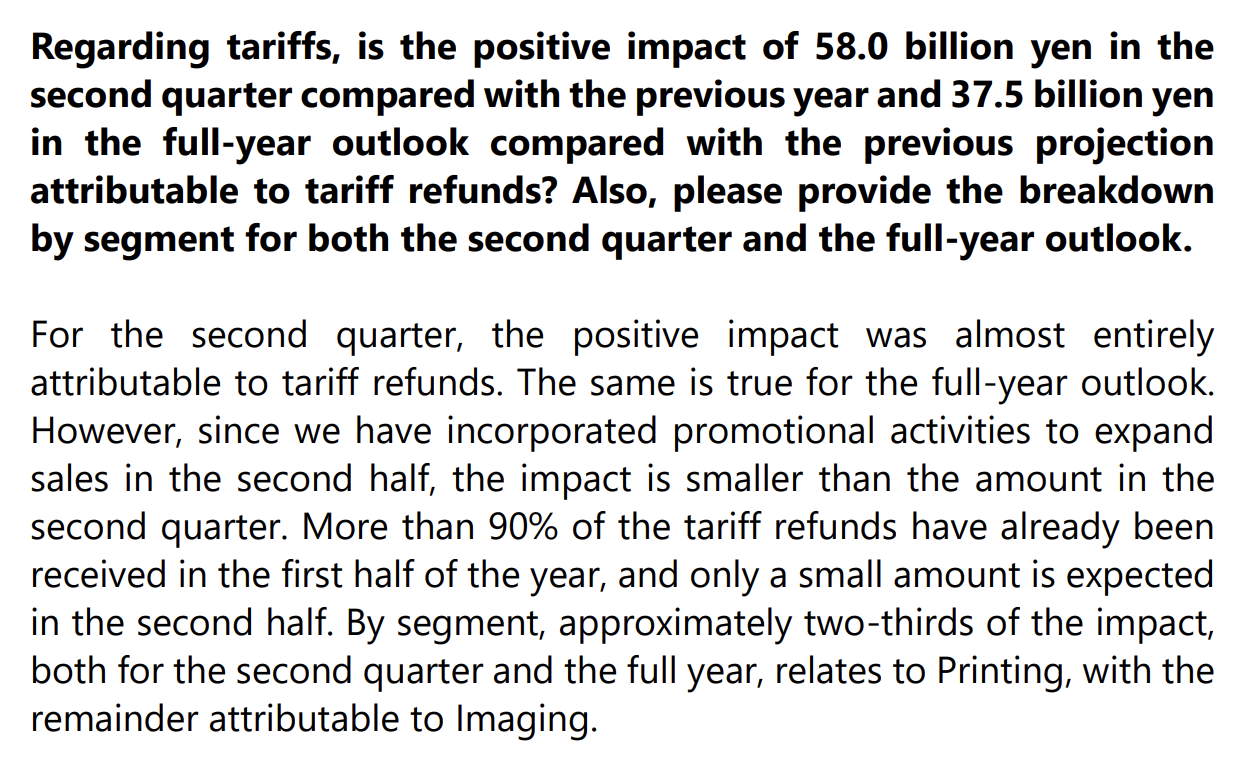
  • Market conditions remained weak in Europe, affected by the Middle East situation, and in the U.S., where the tariff impact persists.
  • Net sales rose 3.6%, reaching a record high for a second quarter, driven by continued sales growth in compact camera and network camera businesses, and revenue growth in semiconductor lithography equipment driven by memory-related demand
  • Higher costs resulting from a rise in memory prices and the Middle East situation, absorbed by refunds on additional U.S. tariffs and yen depreciation
  • Increased operating profit by 35.2% to 159.2 billion yen

Details on the Canon Imaging Business:

  • Camera sales increased significantly, driven by strong demand for compact cameras, which continued from the first quarter.
  • For compact cameras as well, we will further increase production volumes in the second half of the year and aim to achieve full-year sales growth of more than 50%.
  • For interchangeable-lens cameras, revenue increased as sales of full-frame models, led by the EOS R6 Mark III launched last November, grew compared with the first quarter, resulting in a higher average selling price.

Canon got back 90% of the Trump tariffs that we, the consumers, paid through price increases:

Breaking: Canon to increase prices in the US as a result of the new Trump tariffs

Detailed Canon camera report:

The compact camera market continues to expand, driven by the growing number of new camera users, particularly among younger consumers. As for the interchangeable-lens camera market, while we lowered our outlook to reflect the impact of the Middle East situation, we still expect the market to reach 6.45 million units.

In the second quarter, compact camera sales increased significantly as we were able to meet strong demand through the production expansion implemented in the second half of last year.

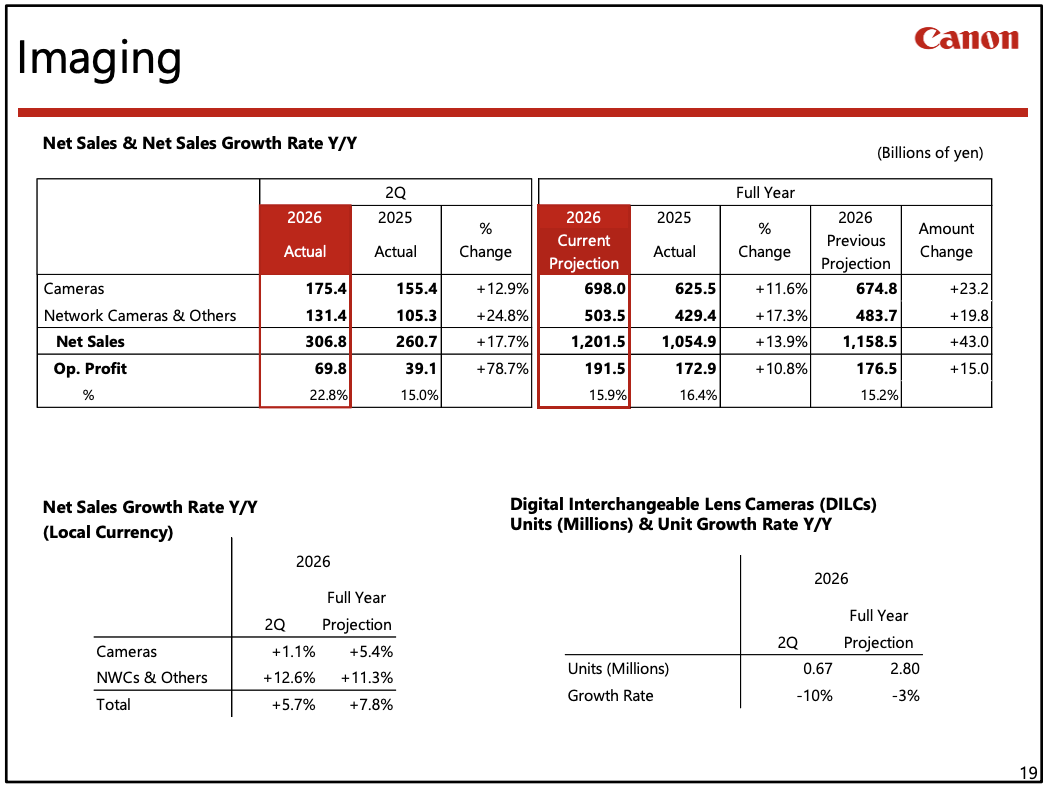
For interchangeable-lens cameras, sales of full-frame models increased significantly compared with the first quarter, led by the EOS R6 Mark III, which was launched in November last year. Combined with an increase in the average selling price, this resulted in revenue growth of 12.9% year on year.

In the second half of the year, for compact cameras, which continue to perform strongly, we will further expand production capacity to eliminate supply shortages as quickly as possible and drive additional sales growth. For interchangeable-lens cameras, in addition to the EOS R6 Mark III, which contributed to sales growth in the first half of the year, we will strengthen sales of full-frame models, led by the EOS R6 V, a full-frame mirrorless camera for video creators launched in June. As a result, we aim to achieve full-year revenue growth of 11.6% for the camera business.


Recap of the latest Canon Q2 financial results (cameras):

  • Cameras net sales: ¥175.4 billion, +12.9% YoY.
  • Full-year 2026 Cameras sales projection: ¥698.0 billion, +11.6% YoY (revised upward).
  • Strong demand for compact cameras continued from Q1 and was the main sales driver. Canon plans to further increase production in the second half and is targeting more than 50% full-year sales growth in the compact category.
  • Interchangeable-lens cameras (ILCs): Revenue grew thanks to higher sales of full-frame models (especially the EOS R6 Mark III), which raised the average selling price.
  • DILC unit shipments: 0.67 million units (down 10% YoY).
  • Full-year DILC projection: 2.80 million units (up 15.9% YoY).
  • Canon described the Imaging business as “highly profitable,” aided by the mix of higher-priced photography camera models. Full-year Imaging operating profit was raised to ¥191.5 billion (+10.8%).

Source: Canon

The post Canon Q2 2026 financial results: profit up, 90% tariffs refunded, compact camera production increases appeared first on Photo Rumors.

Nikon lost the patent lawsuit against Viltrox in China

Par : PR admin
29 juillet 2026 à 19:26


Nikon has lost the patent lawsuit against Viltrox in China. Nikon’s Chinese Z-mount patent (202010127062.4) was declared fully invalid by CNIPA (see previous coverage of the Nikon vs. Viltrox lawsuit). The full court ruling can be found here. The documents are in Chinese – here is the AI recap:

Case Overview

  • Patent in Question: Chinese Invention Patent No. 202010127062.4, titled “Accessory” (配件).
  • Patentee: Nikon Corporation (株式会社尼康).
  • Patent Type: This is a divisional application with a parent application (201811247662.3), both filed on October 25, 2018, with a priority date of October 26, 2017.
  • Invalidation Petitioner: Shenzhen Jueying Technology Co., Ltd. (深圳市爵影科技有限公司).
  • Outcome: The CNIPA declared the patent entirely invalid in its decision (Decision No. 661357) dated July 13, 2026.

Chronological Summary of Events

  1. Initial Challenge (December 2025): The petitioner filed a request for invalidation on December 16, 2025, arguing that claims 1-11 were unclear and not supported by the description (Article 26.4 of the Patent Law).
  2. Supplemental Arguments (December 2025 & January 2026): The petitioner supplemented their arguments, adding reasons related to lack of novelty and inventive step, lack of priority entitlement, and added subject matter. They submitted several pieces of prior art (US2016/0041453A1, CN103620496A, JP2000047308A) as evidence.
  3. Patentee’s Amendment (February 2026): Nikon modified the claims. They merged features from original dependent claims 4 and 7 into independent claims 1 and 2. The final claim set was reduced from 11 to 10 claims.
  4. Oral Hearing (May 15, 2026): An oral hearing was held. Key clarifications were made:
    • The petitioner withdrew their arguments regarding the right of priority.
    • The panel confirmed the amended claims (1-10) as the basis for the decision.
    • Both parties agreed on the authenticity of the prior art documents submitted.
  5. Final Decision (July 13, 2026): The panel issued its decision to declare the patent invalid based on a lack of inventive step (Article 22.3 of the Patent Law).

Key Arguments and Reasoning

The main independent claims (1 and 2) define a lens accessory with four protrusions (第1-第4配件侧突出部) that engage with corresponding protrusions on a camera body’s mount. Key features added by the amendment include:

  • Specifying that the length of the 2nd protrusion is shorter than the distance between the two closest protrusions on the camera body.
  • Specifying that the center angle of the 2nd protrusion is smaller than the center angles of the 1st, 3rd, and 4th protrusions.

The Petitioner’s Argument (Lack of Inventive Step)

The petitioner argued that the claims were obvious in light of the prior art. The primary evidence used was:

  • Evidence 2 (CN103620496A): A camera body, lens barrel, and interchangeable lens system.
    • The panel found this document disclosed nearly all features of the “accessory,” including the lens mount, terminal groups, a cylindrical portion, and multiple protrusions.
    • The key differences were that the patent used four protrusions in a specific arrangement, while Evidence 2’s main embodiment used three.

The Panel’s Decision & Reasoning

The panel ruled that the claimed invention was obvious for the following reasons:

  • Number of Protrusions: Although Evidence 2 shows 3 protrusions, its description explicitly states that the number of protrusions can be “any number” (including four), providing a direct motivation to increase them.
  • Arrangement: Evidence 1 (US2016/0041453A1) and Evidence 3 (JP2000047308A) disclose interchangeable lenses with four or more protrusions arranged around the mount, providing a clear technical teaching for the claimed layout.
  • Preventing Mis-Insertion: The panel reasoned that even in Evidence 2, the different sizes of the protrusions inherently prevent incorrect insertion, making the patent’s solution a conventional design choice.
  • “Second Center Angle” Feature: The panel found the relationship between the center angles of the protrusions to be a routine design choice (a “limited experiment”) for a person skilled in the art, and the resulting effects (shock resistance, load-bearing) were predictable.
  • Terminal Protection: The arrangement of the protrusions relative to the terminal group was also deemed a predictable and conventional design to prevent damage.

The panel concluded that the modifications from three to four protrusions and their specific angular relationships were “obvious” (显而易见) and did not involve an inventive step. Therefore, all 10 amended claims were invalidated.

Final Verdict

The CNIPA invalidated all claims of Nikon’s patent (202010127062.4). The decision states that Nikon can appeal to the Beijing Intellectual Property Court within three months.


Via NikonRumors

The post Nikon lost the patent lawsuit against Viltrox in China appeared first on Photo Rumors.

Tamron just made its 25-200mm focus closer – no new glass required

The 25-200mm F2.8-5.6 is now much more usable when shooting close-up.

A Sony camera wit the Tamron 25-200mm F2.8-5.6 attached.Tamron

Tamron has released a firmware update for its 25-200mm F2.8-5.6 Di III VXD G2 lens that actually makes a noticeable change to its performance. The company says that now, when you’re shooting at focal lengths between 25-70mm, the lens’ maximum magnification ratio is greatly improved, letting you get much closer to your subject.

When the lens launch, Tamron said it could achieve approximately half-macro, or 1:2, reproduction at its widest end. However, as lens reviewer Dustin Abbot points out, shooting so close at 25mm has practical challenges, and can make it very difficult to get a well-lit photo. By the time you were shooting at 50mm, where you had a more reasonable working distance, the maximum reproduction ratio dropped to 1:3.1, or around 0.32x magnification.

Two images of a row of colored pencils, arranged vertically. The bottom one is zoomed in substantially closer, only showing the tips of eight pencils, where the top one shows 15.
Top: the lens’ previous maximum reproduction ratio of 1:3.1 at 50mm. Bottom: the lens’ new max. reproduction ratio of 1:1.7 at 50mm.
Tamron

This is where the firmware update comes in. At 35-50mm, the lens can now manage a ratio of 1:1.7, or 0.58x, which is a substantial improvement. Tamron also says that it will achieve at least 1:2 reproduction throughout the 25-70mm range. For those that like to get close to their subject, this makes and already versatile lens a lot more flexible.

It’s rather unusual to see a lens firmware update that noticeably changes how you can use the lens. It’s not entirely unique – we’ve seen Laowa launch a macro lens that couldn’t autofocus in its macro range, only to enable that functionality later via software – but it still remains among the more interesting bits of lens firmware news. Tamron’s press release doesn’t include any technical details on how the company was able to achieve this, but we’ve reached out to see if it can share any. We’ll update this story if we hear back.

The V3 firmware is available to download for free via Tamron’s Lens Utility software.

Press release:

TAMRON Firmware Update Enhances Close-Focusing Performance of the 25-200mm F/2.8-5.6 Di III VXD G2 (Model A075)

July 29, 2026, Commack, NY – TAMRON announces a new firmware update for the 25-200mm F/2.8-5.6 Di III VXD G2 (Model A075) for Sony E-mount.

With this new firmware update, the maximum magnification ratio at focal lengths of 25-70mm is improved to “1:2 half-macro or greater.” This enables users to capture subjects larger than before, allowing for more impactful close-up photography.

Users can update to the latest firmware by visiting the TAMRON Lens Utility Download Page on TAMRON’s global website.

Product25-200mm F/2.8-5.6 Di III VXD G2 (Model A075)
MountSony E-mount
Latest VersionVer. 3
Release DateJuly 29, 2026
Update DescriptionMaximum magnification ratio at focal lengths of 25-70mm improved to 1:2 half-macro or greater.
*At 35-50mm, the lens achieves a maximum magnification ratio of 1:1.7, surpassing the half-macro performance.
How to UpdatePlease update the firmware via TAMRON Lens Utility at the TAMRON Lens Utility Download Page
Product Pagehttps://tamron-americas.com/product/25-200mm-f-2-8-5-6-di-iii-vxd-g2/
About the Author: Mitchell started taking pictures at 10 and hasn’t stopped since. It’s been a wide-ranging adventure, spanning a wide variety of genres and locales, and occasionally dipping into fascinations with video and filmmaking. They honed their technical knowledge doing documentation, programing and QA, writing for The Verge, and just generally messing around on the computer to see what breaks.

Want to stay up to date on the latest product news and releases? Add DPReview as a preferred source to ensure our independent journalism makes it to the top of your Google search results.

add as a preferred source on google

Sony to acquire Tamron?

Par : PR admin
29 juillet 2026 à 16:06


Today, Diamond Online (ダイヤモンド・オンライン) published an investigative scoop stating that Sony Group has proposed acquiring Tamron, aiming to acquire all of Tamron’s shares. The deal size is projected at roughly 200 billion yen (約2,000億円). No official confirmation or denial has been issued by Sony or Tamron as of the latest available information. Diamond is a long-established, respected Japanese business magazine. The article is paywalled, but here is an AI-generated recap:

Update #1: there is also a similar report from Nikkei today.

Update #2 – Tamron confirms non-binding acquisition proposal from Sony.

  • Sony has been Tamron’s largest (or near-largest) traditional shareholder for years, holding around 15% in recent periods. This stake has long functioned as a stabilizing “white knight” relationship.
  • Activist fund Effissimo Capital Management aggressively increased its holding (reports put it at ~17.4% earlier in 2026), potentially overtaking Sony as the top shareholder. Japanese coverage frames this as a possible defensive catalyst for Sony to move for full control.
  • Tamron is already a critical partner for Sony (popular third-party lenses + historical OEM relationships). Full ownership would lock that in.
  • Tamron shares (7740.T) reacted immediately in after-hours PTS trading with a sharp jump (reports of double-digit percentage gains).

Japanese coverage highlights a shift in Sony’s electronics division:

  • After years of defensive restructuring (including the TV/BRAVIA separation), the division is now pursuing growth-oriented M&A.
  • Strategic goal of tighter vertical integration: Sony’s industry-leading image sensors + camera bodies + Tamron’s optical design and high-volume precision manufacturing know-how.
  • Protecting the E-mount ecosystem and Tamron partnership from activist pressure or any shift in Tamron’s multi-mount priorities.

The post Sony to acquire Tamron? appeared first on Photo Rumors.

The Sony RX10 V modernizes everything but its sensor performance. Does it matter?

How do you improve on a 20MP stacked Type 1 sensor?

Front-on view of the Sony RX10 VRichard Butler

It’s undeniable that, in terms of the tech and experience around its sensor, the Sony RX10 V is an excellent example of how far the camera industry has come in the last 10-ish years when compared to the Sony RX10 IV from 2017. But during that time, we’ve also seen a lot of discussion around how image quality has stagnated, and there’s no obvious difference between the V’s 20MP Type 1 (116mm2) stacked CMOS sensor and the IV’s.

There’s some truth to the idea that gains in image quality are coming slower these days, as much of the past decade’s progress has been more focused on performance in aspects like autofocus and readout speeds. That’s not to say there have been no advancements in image quality, but Sony hasn’t bragged about including them in the RX10 V. The only real way to find out, though, is to put it in front of our test scene.

Studio test scene

Our test scene is designed to simulate a variety of textures, colors, and detail types you’ll encounter in the real world. It also has two illumination modes, full even light and low directional light, to see the effect of different lighting conditions.

Unsurprisingly, the RX10 V performs very similarly to the RX10 IV when looking at its Raw images at base ISO, which is a good thing. It captures a good amount of detail, and at 88mm equiv., its lens actually holds up quite well compared to other cameras with Type 1 sensors and lenses with much less ambitious focal lengths. It also provides more detail with less noise than the Nikon P1000, which offers much more reach but uses a lower-res and much smaller 16MP 1/2.3″ (28mm2) sensor.

The RX10 V’s JPEGs are where the decade of progress becomes apparent. The colors are much more pleasing than those of the IV, with more natural skin tones, and the vibrancy of colors turned up where they were lacking, and turned down where they were overbearing. We also found this to be the case in the sample photos we shot with the V. Sony’s progress on this front has been slow and steady, but with so much time between the two models, it’s much more noticeable.

This class of cameras has never been the best pick for low light photography, the RX10 V’s Raws again look as we’d expect. Switch over to JPEG and it’s clear that Sony has upgraded the camera’s noise reduction to some extent, but in higher-contrast, more detailed areas, we’d be hard-pressed to tell its performance apart from its predecessor’s. However, it does outperform Panasonic’s similarly-specced (and now discontinued) FZ-1000 II from 2020 in this regard, and is significantly better at low light than the P1000.

Summary

The RX10 V doesn’t represent a massive shift in terms of image quality from its predecessor, nor, indeed, the RX10 III and RX10 II before it, which both used similarly-specced sensors. When those cameras were released, we called their image quality excellent*, and even these days it’s hard to argue that the pictures the RX10 V produces aren’t very good.

However, it’s hard to ignore that images from smartphones, armed with increasingly sophisticated computational photography tricks, have been getting better and better. Some models even include Type 1 sensors, too, edging in on even the highest-end enthusiast compacts, if only in terms of image quality and not shooting experience. Arguably, the RX10 V, with its massive focal range, is one of the compacts most insulated from this, as phones’ telephotos are often paired with much smaller sensors, and don’t offer anywhere near the level of reach. But it does raise questions about how the next versions of cameras like the RX100 will differentiate themselves.

Going back to the camera at hand, though, regardless of how much the RX10 V has or hasn’t improved when it comes to imaging, it’s still the best in its class… even if it is the only pupil remaining.

* – as long as you set aside their JPEG colors, which the RX10 V has thankfully greatly improved on.

About the Author: Mitchell started taking pictures at 10 and hasn’t stopped since. It’s been a wide-ranging adventure, spanning a wide variety of genres and locales, and occasionally dipping into fascinations with video and filmmaking. They honed their technical knowledge doing documentation, programing and QA, writing for The Verge, and just generally messing around on the computer to see what breaks.

Want to stay up to date on the latest product news and releases? Add DPReview as a preferred source to ensure our independent journalism makes it to the top of your Google search results.

add as a preferred source on google

Of course Sony FX5 orders far exceed expectations

Par : PR admin
29 juillet 2026 à 01:50


It did not take long for Sony Japan to issue an official notice about FX5 pre-orders far exceeding expectations (B&H PhotoWEX Photo | Foto Erhardt):

Announcement Regarding the Supply of the Professional Camcorder ‘FX5′

Thank you for your continued patronage of Sony products.

We began accepting orders for the professional camcorder “FX5” on Tuesday, July 28, 2026, and have received significantly more orders than we anticipated. As a result, there may be a delay in delivery.

We are currently working diligently to meet our customers’ requests as much as possible, so please bear with us for a little while longer.

Comparing the Sony FX5 and the FX3A

Sony FX5 cinema camera announced

FieldMade released custom indicator labels for OM System cameras and lenses and the new Sony FX5 camera

The post Of course Sony FX5 orders far exceed expectations appeared first on Photo Rumors.

Meike 24mm f/1.4 MIX lens review: a fast wide-angle prime that delivers outstanding value

Par : PR admin
28 juillet 2026 à 19:05


This Meike 24mm f/1.4 MIX lens review is by Daniel Kuhn (Website | Instagram | YouTube | LinkedIn):

Meike 24mm f/1.4 MIX Review: A Fast Wide-Angle Prime That Delivers Outstanding Value

A fast 24mm prime is one of the most versatile lenses a photographer can own, covering everything from landscapes and street photography to environmental portraits and astrophotography. With the 24mm f/1.4 MIX, Meike combines a bright aperture, modern autofocus and premium construction in a package that costs considerably less than many established competitors.

After extensive real-world testing, the lens proves that impressive performance no longer has to come with a premium price tag.

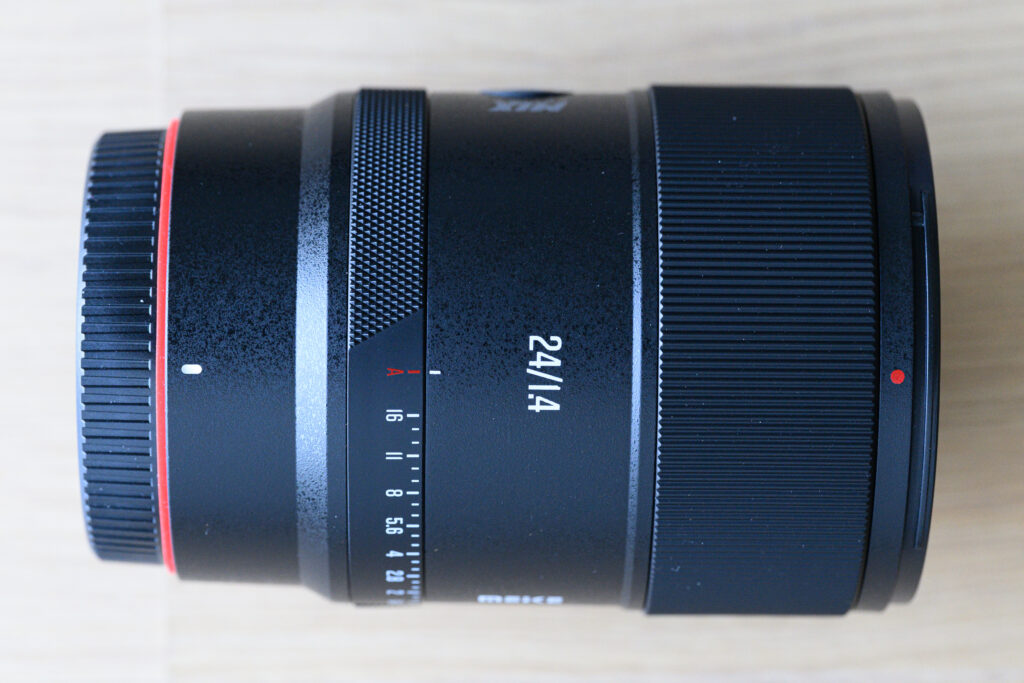
The first impression is excellent. An all-metal body, weather sealing and a dedicated aperture ring give the lens a refined, professional feel, while its balance on modern full-frame mirrorless cameras makes it comfortable to use for extended shooting sessions. Autofocus is fast, quiet and reliable, making the lens well suited for both photography and video.

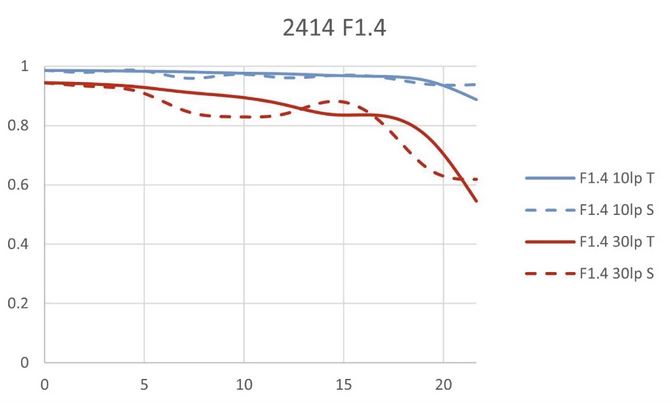
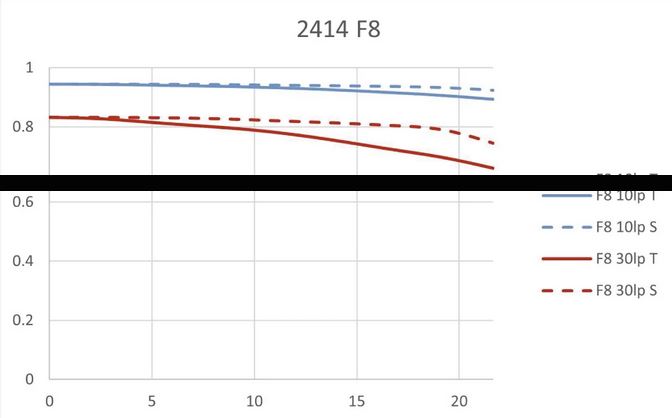
Optically, the Meike performs beyond expectations. Even at f/1.4, it delivers crisp detail, strong contrast and natural color reproduction. Stopping down slightly improves edge-to-edge sharpness even further, making the lens equally capable for landscapes, architecture and travel photography. Thanks to its eleven-blade diaphragm, background blur is smooth and pleasing, allowing photographers to create environmental portraits with attractive subject separation while maintaining the wider perspective that makes a 24mm lens so versatile.

The bright maximum aperture also makes the lens an excellent companion for low-light photography. Whether capturing city scenes after sunset or photographing the night sky, the 24mm f/1.4 MIX offers impressive image quality and creative flexibility for its class.

Like any fast wide-angle lens, it shows a few minor optical characteristics at its widest aperture, including light vignetting and slightly softer extreme corners in demanding situations. In practice, however, these are well controlled, improve noticeably when stopping down, and rarely detract from real-world images. The overall balance of sharpness, rendering and usability is exceptionally strong for a lens in this price category.

What ultimately sets the Meike apart is its value. Rather than trying to outperform flagship lenses costing two or three times as much, it delivers the level of image quality and handling that most photographers need for everyday work. From travel and documentary photography to portraits, fashion and landscapes, it consistently produces results that inspire confidence.

Verdict: The Meike 24mm f/1.4 MIX is a remarkably well-rounded wide-angle prime that combines excellent optical performance, solid build quality and dependable autofocus at an attractive price. It stands as one of the strongest value propositions in its class and is an easy recommendation for photographers looking to expand their creative options without stretching their budget.

For those who want to see how the lens performs beyond technical specifications, the full review includes extensive real-world sample galleries covering portraits, fashion, landscapes, street photography, and astrophotography, along with detailed image comparisons and in-depth analysis.

Read the complete review here.

Additional information on the Meike 24mm f/1.4 MIX lens can be found here (buy at B&H Photo | Meike online store):

Meike 24mm f/1.4 full-frame autofocus lens announced (Z/E/L)

Previous coverage of Meike lenses can be found here.

The post Meike 24mm f/1.4 MIX lens review: a fast wide-angle prime that delivers outstanding value appeared first on Photo Rumors.

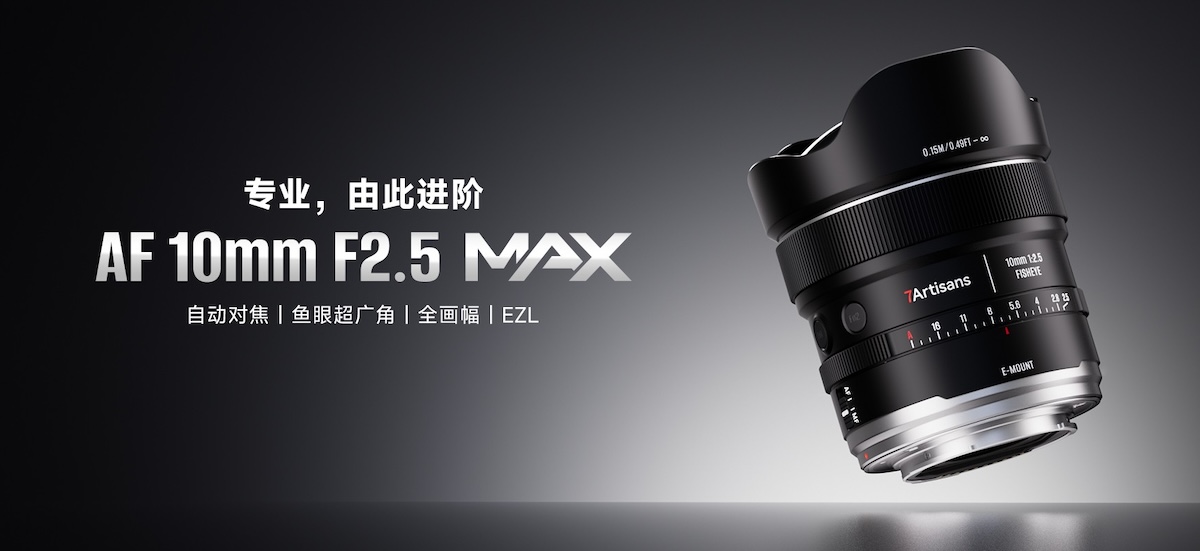
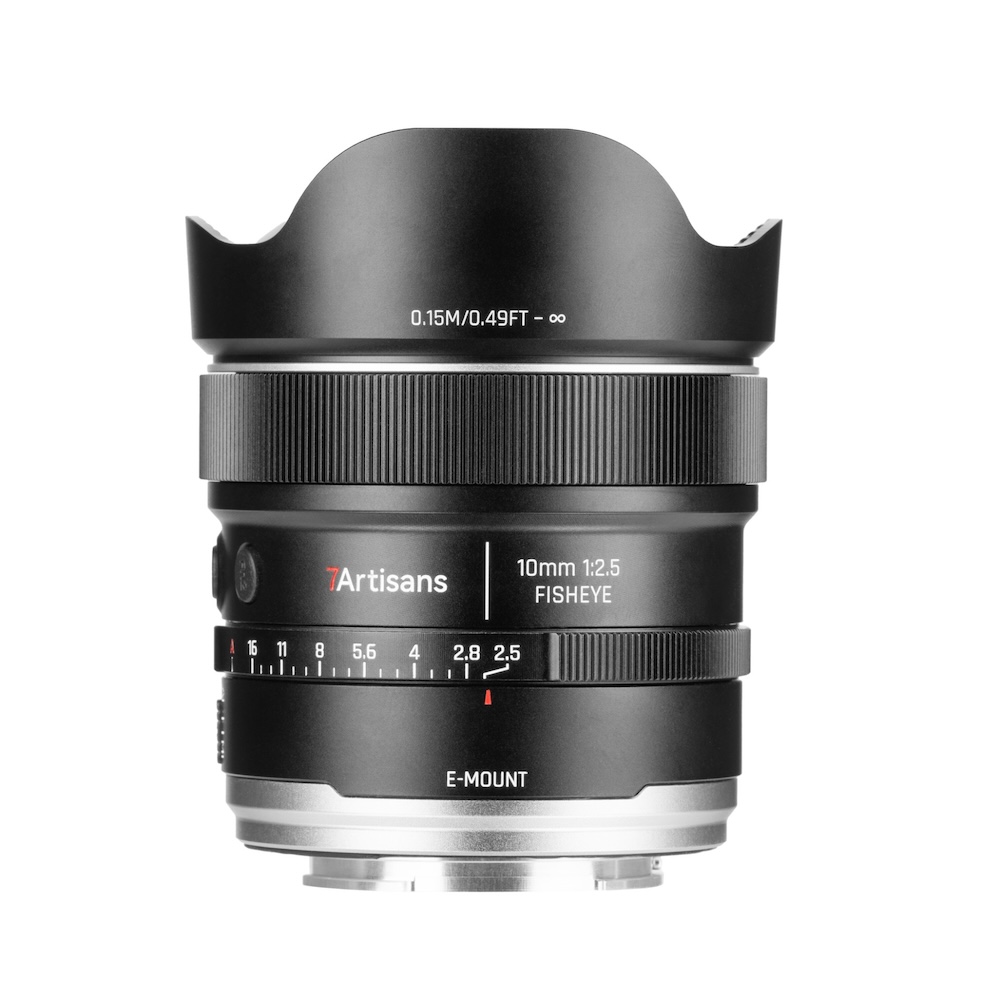
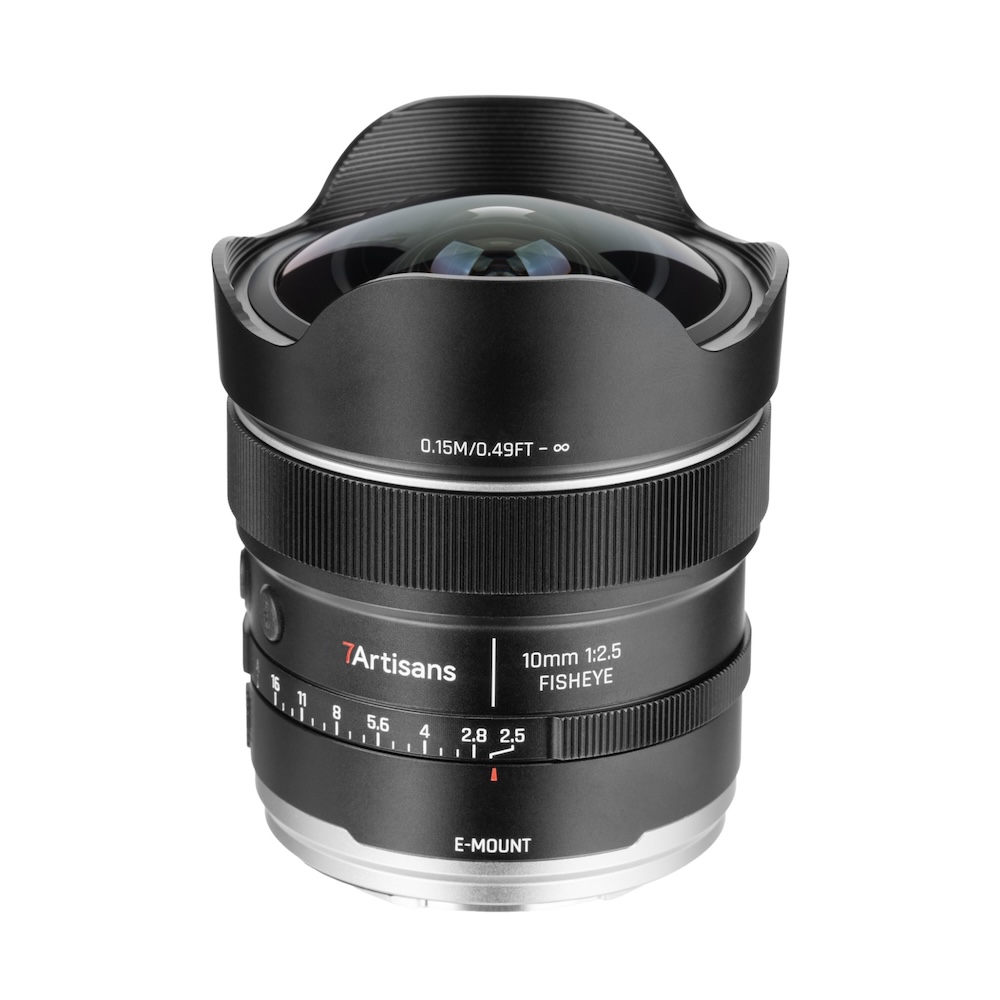
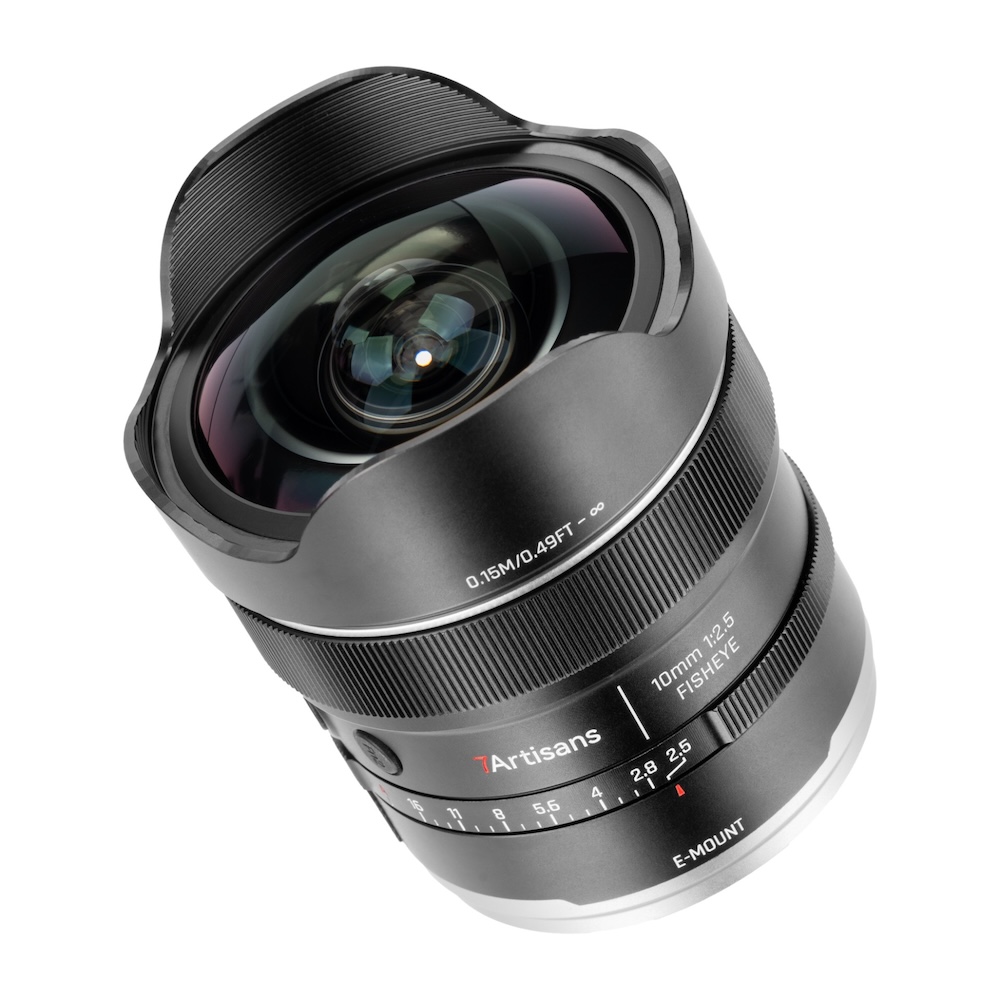
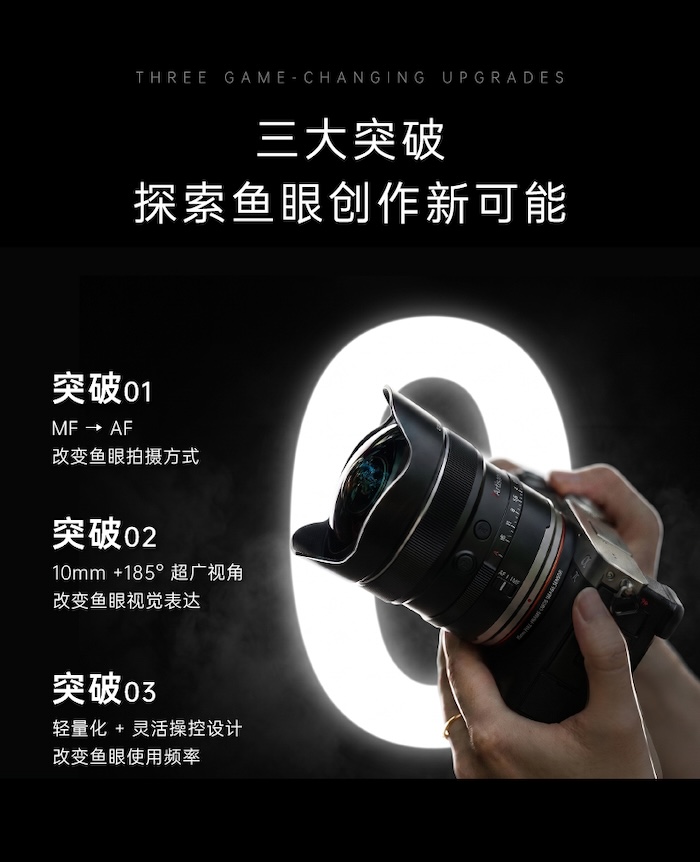
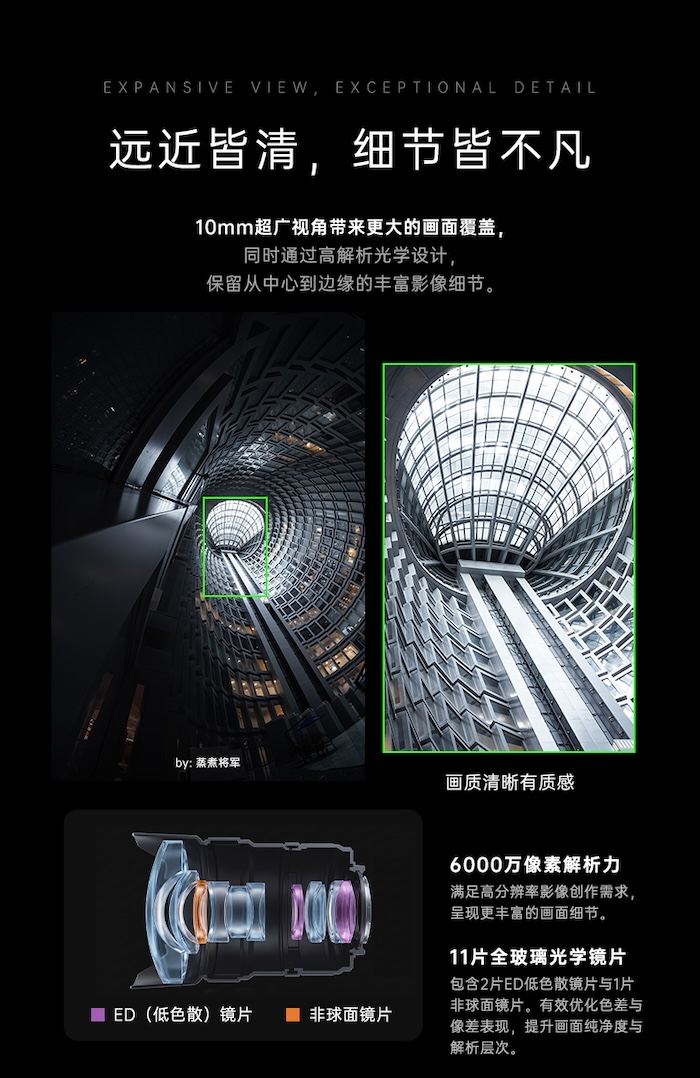
Additional information on the new 7Artisans AF 10mm f/2.5 MAX full-frame fisheye lens

Par : PR admin
28 juillet 2026 à 18:25


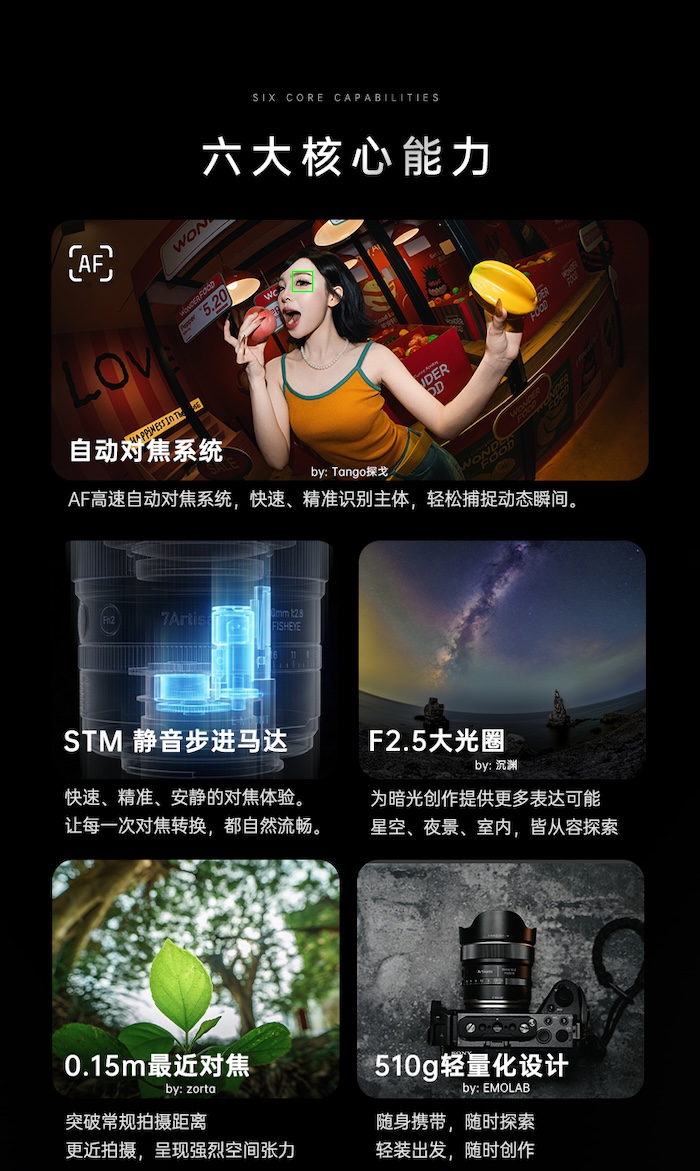
Here are the details on the previously reported 7Artisans AF 10mm f/2.5 MAX full-frame fisheye lens (check B&H Photo and the official website for additional information and pre-order options):

  • Focal length: 10mm
  • Maximum aperture: f/2.5
  • Lens type/format: Full-frame autofocus fisheye
  • Angle of view: 185°
  • Optical construction: 11 elements in 8 groups (includes 2 ED/extra-low dispersion elements + 1 aspherical element)
  • Aperture blades: 9 (produces 18-point starbursts)
  • Minimum focus distance: 0.15 m
  • Autofocus motor: STM silent stepper motor (fast, quiet, suitable for stills and video)
  • Weight: 510 g
  • Body construction: Full metal
  • Available mounts: Sony E, Nikon Z, Leica L
  • Other notes: AF/MF switch; aperture ring; firmware upgrade support; compact design for a full-frame fisheye

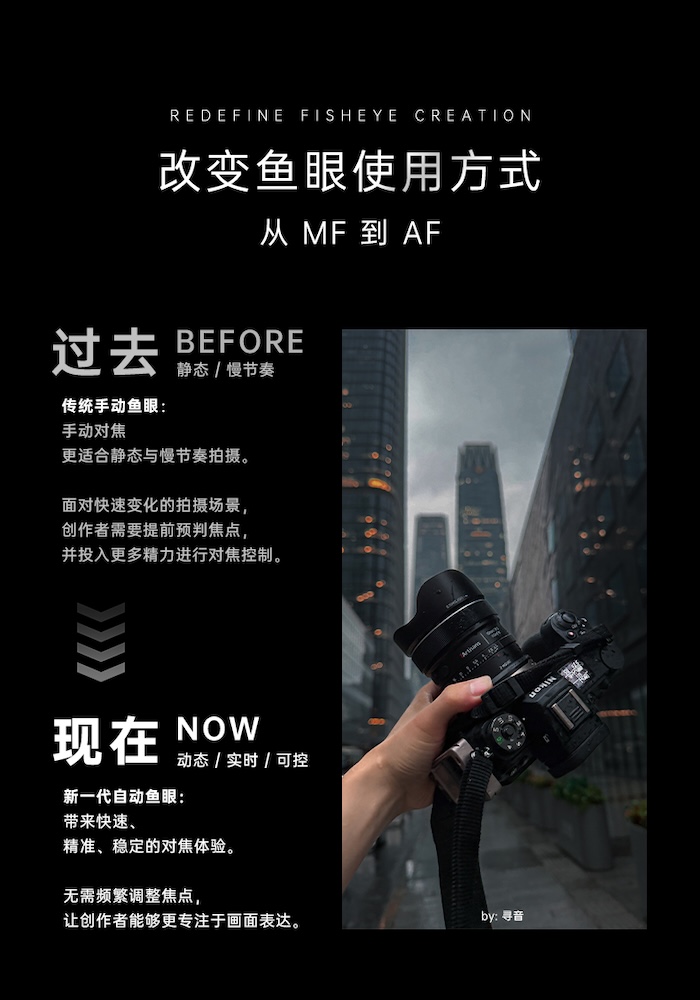
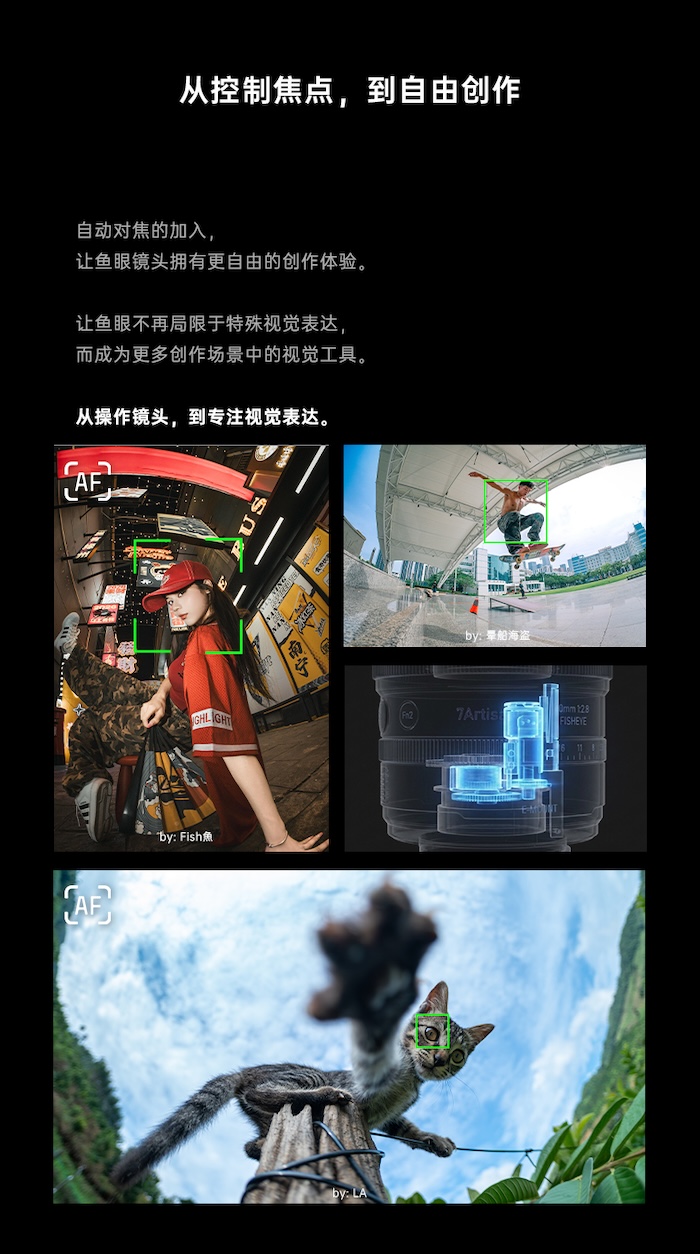
Breaking conventions with its ultra-wide 185° field of view, this lens opens up a visual world you’ve never seen before. Equipped with a high-performance autofocus motor, it focuses quickly and smoothly, operating quietly and without noise. It accurately captures dynamic moments and meets the smooth focusing needs of video shooting, significantly improving shooting efficiency and experience. The large F2.5 aperture, combined with a minimum focusing distance of 0.15m, creates a strong “near is large, far is small” perspective effect, making the foreground subject stand out and the background story vividly presented. Nine aperture blades produce 18-pointed starbursts, enhancing the overall visual depth of the image. Its compact and lightweight design of 510g makes it a reliable creative partner in your backpack. Designed to inspire creativity, it is the ideal choice for landscapes, architecture, environmental portraits, and creative perspective works.

The post Additional information on the new 7Artisans AF 10mm f/2.5 MAX full-frame fisheye lens appeared first on Photo Rumors.

The DJI Osmo Pocket 4P’s dual cameras at work: our first sample footage

Plus, plenty of footage using DJI’s new D-Log2.

Photo of the DJI Pocket 4P in front of multi-colored graffiti on a brick wall.Mykim Dang

By now, you’re probably familiar with the DJI Osmo Pocket 4P, despite the fact that it hasn’t officially launched outside of China. It’s the company’s vlogging camera with an integrated gimbal, featuring a Type 1 (116mm²) sensor with a 20mm equiv. lens and, new to the series, a secondary Type 1/1.28 (75mm²) sensor with a 60mm equiv. lens.

Earlier this summer, DJI invited our Director of Video and Social, Mykim Dang, to an event in Toronto to let her get some time with it, but made the choice to let influencers and creators share their footage before traditional media outlets were allowed to do so. However, ahead of the official regional launch, we’re now able to share some of the footage we shot on that trip, including shots with both cameras, and ones that use D-Log2, the profile making its debut on the series (if only on the main camera).

DJI boasts that the new Log profile, combined with the main sensor’s use of LOFIC technology to capture additional information in the highlights, allows the camera to provide up to 17 stops of dynamic range when shooting with its 20mm equiv. camera. While this number, like most manufacturer-provided DR figures, should be taken with a massive grain of salt, it helps show the ambitions the company has for the Pocket 4P. It was initially teased at the famous Cannes Film Festival as a “a bold evolution of the Pocket series from a creator tool into a cinematic imaging device capable of professional-grade storytelling.”

We’ll be sharing more on the camera soon, so stay tuned.

About the Author: Mitchell started taking pictures at 10 and hasn’t stopped since. It’s been a wide-ranging adventure, spanning a wide variety of genres and locales, and occasionally dipping into fascinations with video and filmmaking. They honed their technical knowledge doing documentation, programing and QA, writing for The Verge, and just generally messing around on the computer to see what breaks.

Want to stay up to date on the latest product news and releases? Add DPReview as a preferred source to ensure our independent journalism makes it to the top of your Google search results.

add as a preferred source on google

Leica SL3-P in our testing studio

No alarms and no surprises from Leica’s fast, high-res full-framer

leica sl3 p top plate screen on composite

As we push on with our Leica SL3-P review, we’ve run it through our standard studio tests. To a large extent, we already have a pretty good idea what to expect, given we’ve seen this sensor / processor combination before. But it’s always worth testing these things, just to be certain.

Studio test scene

Our test scene is designed to simulate a variety of textures, colors, and detail types you’ll encounter in the real world. It also has two illumination modes, full even light and low directional light, to see the effect of different lighting conditions.

As you might expect, there’s no meaningful difference between the Leica and the Panasonic in terms of detail capture (the very slight difference shows how good the comparison tool is at highlighting the smallest of differences in focus), or for that matter, the Nikon Z8. However, the 66MP Sony a7R VI clearly captures finer detail than its rivals.

A quick check in JPEG mode shows that the default color rendering of the SL3-P is distinct from that of the Panasonic, though, with differences appearing in the blues and caucasian skintone patch, in particular.

Beyond this, there aren’t any real surprises: noise performance is solid in Raw, very closely matching the performance of its peers. JPEG noise reduction looks similar to that of the Panasonic, with what appears to be more sharpening added, by default, to pull out detail. The Auto white balance also looks to be working harder to neutralize the tungsten light used for our low-light mode.

About the Author: Richard graduated as a scientist but had a lot more fun writing and shooting for his university magazine. A number of years spent variously as a reporter, writer and editor on science and engineering titles combined his knowledge of science with his interest in images and words. But it was spotting the connections between emission spectra, white balance and all the nonsense he’d taught himself playing around in Photoshop that helped kindle an interest in digital photography. Searching for a camera led to him discovering DPReview and Richard was recruited by Phil Askey in 2007. He’s been combining his love of photography, communication and attention to detail (pedantry?) ever since. He has unusually strong opinions about lenses for the APS-C format.

Want to stay up to date on the latest product news and releases? Add DPReview as a preferred source to ensure our independent journalism makes it to the top of your Google search results.

add as a preferred source on google

What the strange cameras of 2026 tell us about the industry

There haven’t yet been many releases this year, but the cameras we have seen (almost) all say something interesting about the market at large.

Side view of the Sony RX10 V with the zoom lens fully extendedRichard Butler

We’re just over halfway through 2026, and it’s already been a very strange year for cameras. It kicked off with a months-long drought that saw no major releases, which was finally broken by the surprise announcement of the Panasonic L10. Since then, a few new cameras have crossed our desks, but if this pace continues, 2026 is set to be a low-water mark for releases.

Which is not to say that it’s been boring. Unlike in 2025, which saw three full-frame enthusiast cameras released, all jockeying for the same position, each of this year’s crop has been almost entirely unlike the rest. Every release tells a story about a different facet of the camera industry as a whole, and, if we listen, we may just get a feel for which way the winds are blowing.

Ricoh GR IV Monochrome – Drill into the niche

The Ricoh GR IV Monochrome on a gray background with its lens extended, directly facing the camera.Richard Butler

The Ricoh GR IV, with its prime 28mm equiv. lens, pocketability-above-all-else design philosophy, laser-focus on a specific shooting experience, and relatively high price point is already a relatively niche proposition. And a version of it that literally can’t shoot color, and which costs hundreds of dollars more, appeals to an even more limited market.

And yet it’s a camera that really, really works. Yes, every decision limits the potential audience, but it also makes the camera more and more unlike the rest of the market, which, in general, is full of other cameras that overlap substantially. You could have an extensive collection of cameras, and still have nothing like the GR IV Monochrome.

From the outside, it’s hard to tell if this approach has been a financial success for Ricoh. But it’s clearly a continuation of the trend we saw in 2025, where several camera makers opted to produce something that breaks the mold, rather than trying to compete in an increasingly crowded market.

The Panasonic L10 – Is this what you wanted?

A three-quarter view of the Lumix L10 with its lens extended on a gray background.Mitchell Clark

Technically, the L10 is not the first compact Panasonic released in 2026. That honor belongs to the DC-ZS300. It’s a very minor refresh, updating an older model with USB-C and removing the EVF. Its story is simple, not warranting an entire section, as it likely exists solely thanks to EU regulations about charging ports, supply chain constraints and consumers that are willing to buy anything that looks like an old compact camera.

Conversely, the L10 is something we don’t see that often anymore: an enthusiast compact with a zoom lens. Prime-lens compacts have been having a moment, with the continued viral success of Fujifilm’s X100 series, and last year seeing the release of the Ricoh GR IV, Sony RX1R III, Fujifilm GFX100RF and more. While there’s obviously a market for those, there’s also always a contingent commenting, “Why can’t we get something like this with a zoom lens?” And Panasonic, apparently, saw fit to grant their wishes, producing a camera with a Four Thirds sensor, EVF and plenty of tactile controls.

Of course, there were some who found plenty to not like about it, from its lack of weather sealing to its size. But even if those things really bother you, surely we can agree that it’s a good sign that someone is releasing a large-sensor compact with an ambitious zoom and modern internals, features and connectivity, at a time when the competitors that have managed to stick around are both from 2019. Even if this particular one isn’t your cup of tea, it could be a sign that manufacturers are starting to take an interest in this category again.

Canon EOS R6 V – Power to the creators

There’s a reason every storyteller worth their salt is familiar with the rule of three. Once you’ve seen something thrice-over, it becomes obvious there’s a pattern. On that note, the EOS R6 V is the latest entry into a market that an increasing number of companies seem to be paying attention to: enthusiast-tier video cameras designed for creators and owner-operators, based around hardware from hybrid mirrorless cameras. Think the Nikon ZR, Panasonic S9 (or, further back, the S1H), or Sony ZV-E1.

These are cameras for the age where “creator” is a job, not just a hobby

It’s tempting to call these vlogging cameras, and some of them fit that moniker better than others, but with features like open gate recording, internal Raw, and a variety of assist tools and features that you’d have had to buy Hollywood-grade gear to get just a few years ago, they’re clearly designed for a bit more than that. They’re for the age where “creator” is a job, not just a hobby, and where people with that title might want to stretch to full-on production (or, at least, think they might and therefore want a camera that conceivably could).

Canon throwing its hat into the ring with this kind of camera confirms that it, too, sees room between an entry level video camera like the EOS R50 V, and a professional workhorse like the EOS C50. There’s no longer a question of whether there’s a market for this sort of thing, and it has instead become a search for what really matters to the people buying them. Will the ZR’s big screen, Red-inspired Raw codec and internal 32-bit float audio sway people, or will they flock to the EOS R6 V with its button-heavy UI, high-resolution open gate and well-judged (if pricy) kit lens? Only time will tell, and we’ll be interested to see which cameras get follow-ups*, and how that next generation will be different as camera companies take users’ feedback into consideration.

* – And whether Panasonic will release a more fully-featured entry into the market that it arguably helped invent.

Sony a7R VI – There’s room for a stills powerhouse

sony-a7rvRichard Butler

Beyond the fact that it’s exceptionally good, one of the most interesting things about the a7R VI is its bucking of a trend we’ve noticed in mirrorless cameras. We’ve seen video capabilities become an increasing driver of technological developments, both because gains there help camera manufacturers address a new (and, by all accounts, growing) market, and because the technology for photography is so mature and good that it’s frankly just plain harder to make noticeable improvements to the stills experience. But while Sony absolutely has improved the video capabilities of the a7R VI, I get the sense that the reasoning is flipped; it had to include a faster sensor to improve the photographic experience, and already built many of the features for other, more video-focused models, so the upgrades were a relatively low-lift.

My evidence that the improvements were done with photographers in mind? The a7R VI’s increased speed doesn’t turn it into a great video camera, but it does reap rewards when it comes to stills. The much faster sensor means it’s actually usable when shooting with e-shutter, unlocking features like pre-capture and 30fps bursts in stills, greatly expanding what you can do with the camera compared to its predecessor. Its autofocus is better, its photos are a little higher resolution, and its dynamic range is some of the best we’ve seen thanks to its ability to combine both its low and high gain steps in modes where the mechanical shutter ends the exposure.

While plenty of lower-end cameras have similar features, the a7R VI shows that there’s still room for improvement at the pinnacle of image quality, and that cutting-edge tech doesn’t just benefit videographers. Just wait until someone uses this tech in a medium format camera.

Leica SL3-P – It’s not just what’s on the inside that counts

leica sl3 p sensor
The Leica SL3-P shares a sensor, a lens mount and more with the Panasonic S1RII. And yet they’re very different cameras.

The Leica SL3-P has the same bones as a Panasonic S1RII. They share a sensor, a processor, a viewfinder, lens mount and many other core technologies and capabilities. With the hefty price difference between the two cameras, it’s easy to dismiss the Leica as little more than a frivolous remake with a different UI.

Unless you’ve actually used them both. The SL3-P is the latest in a series of Leicas that lay bare something other cameras hide a bit better: there’s a lot more to a camera than the hardware it’s made of. Realistically, there are only a few companies making sensors, viewfinders, rear display panels, and so on, so most companies are picking from the same parts bins and differentiating themselves based on their selection of lenses and software.

But it turns out that the differences in how you actually use the camera are some of the most significant ones, something the SL3-P highlights incredibly well. Its controls and operating system are utterly unlike Panasonic’s, and, consequently, it feels like an entirely different camera, despite all its shared DNA. That’s a lesson worth remembering.

Sony RX10 V – A return to form

Three-quarter view of the Sony RX10 V
We wouldn’t have expected to see a new camera that looks like this in 2026.
Richard Butler

Who would’ve guessed that we’d see a new high-end bridge camera? Clearly not me, if you read my lamentation of an introduction to our compact camera buying guide, where I say that the golden age is over and that manufacturers have seemingly given up on large swathes of the market. (Don’t worry, I’ll update it.) Some of them may have, but it seems like Sony was just biding its time.

The RX10 V focuses on the types of photography that a phone can’t replicate. At the wide angle, the latest flagships may be able to provide similar or better image quality via computational photography, despite having sensors much smaller than the Type-1 model found in the Sony, but their measly 5 or 10x telephoto lenses (which often use smaller still sensors) can’t hope to compete with a 24-600mm equivalent zoom lens. The camera also has much improved ergonomics and controls, alongside modern autofocus that’s some of the best in the business.

Both this and the L10 raise the question: what other camera models are stuck languishing, waiting to be revived with a decade’s improvement in technology? We wouldn’t have expected the RX10 series to get that treatment, yet here we are. The smaller RX100 series feels like a shoo-in for what’s next, but beyond that, it feels like Sony may have opened the door for even further experimentation and revival.

Sony FX5 – It’s what you do with it

A photo of the Sony FX5 with its sensor exposed
The sensor in the FX5 is different, yet familiar.
James Tirado

I’ll keep this section brief, but one of the stories quietly in the background last year was the one of manufacturers being able to pull more out of sensors; see the difference in dynamic range performance between what appear to be very similar models in the Nikon Z6 III and the Panasonic S1II, and the use of partial stacking tech to make the a7 V’s sensor more capable than the otherwise very similar one in its predecessor. With the FX5, Sony appears to have taken this a step further, seemingly adapting the photo-first 66.8MP sensor from the a7R VI into a more video-friendly 16.6MP model.

The ability to tweak existing tech to suit a specific need, rather than having to build something new from the ground up, has always been an important part of building specialized gear. (See also: astro-editions of cameras.) It’ll be exciting to see if we see more cameras in a similar vein.

What’s next?

As a camera reviewer, it’s been refreshing to see such a variety of releases this year. Don’t get me wrong, it’s great to be spoiled for choice; it’s just not the most exciting thing ever to write a conclusion that says “yep, this camera is really, really good, just like the two others just like it that came out this year.” But beyond the excitement of any single release, it’s the trend lines that make me look forward to what we’ll see in the back half of this year and beyond the most. I still think there’s more wide-open blue sky for manufacturers to explore, if they want to continue this trend of releasing different and exciting cameras.

Or maybe everyone’s had their fun and will go back to simply producing more exceptionally capable all-rounder cameras. That’s fine too.

About the Author: Mitchell started taking pictures at 10 and hasn’t stopped since. It’s been a wide-ranging adventure, spanning a wide variety of genres and locales, and occasionally dipping into fascinations with video and filmmaking. They honed their technical knowledge doing documentation, programing and QA, writing for The Verge, and just generally messing around on the computer to see what breaks.

Want to stay up to date on the latest product news and releases? Add DPReview as a preferred source to ensure our independent journalism makes it to the top of your Google search results.

add as a preferred source on google

Fujifilm X-T6 camera rumored specifications

Par : PR admin
27 juillet 2026 à 23:19


The Fujifilm X-T6 camera is rumored to be announced at the Fujikina event in Paris (September 4-6th). Here are the rumored Fujifilm X-T6 camera specifications:

Update – B&H Photo has already scheduled an event “Demo Experience: Touch and Try the Latest Fujifilm Gear” for September 8th:

Sensor & processor

  • 40MP partially-stacked X-Trans 6 APS-C sensor
  • X-Processor 6
  • Revised processing pipeline for improved signal-to-noise — more detail, cleaner high ISO
  • Faster readout from the stacked architecture

Speed & autofocus

  • Burst up to 60 fps
  • 500 phase-detect AF points (up from 425 on the X-T5)
  • AI-based subject prediction and tracking — people, animals, birds
  • Electronic shutter to 1/18000 sec
  • Mechanical shutter to 1/8000 sec, ~30ms release lag

Video

  • 8K/30p 10-bit 4:2:2
  • 4K/120p
  • 4K HQ oversampled from 8K with 2x digital zoom
  • 14 stops of dynamic range
  • F-Log2
  • 12-bit ProRes RAW / Blackmagic RAW output over HDMI

Stabilization

  • IBIS rated to 7 stops
  • Multishot pixel-shift mode: 20 frames combined into a single 200MP file

Color

  • 20 Film Simulation modes: Provia, Velvia, Astia, Classic Chrome, PRO Neg. Std, PRO Neg. Hi, Classic Neg., Nostalgic Neg., Eterna Cinema, Eterna Bleach Bypass, Acros (Ye/R/G), Black & White (Ye/R/G), Sepia, Reala Ace
  • Three auto white balance modes: auto, white priority, ambience priority

Body & display

  • Redesigned control dials and revised button layout
  • 3-inch fully articulating LCD, 1.84M dots (up from 1.62M)
  • 3.69M-dot OLED EVF, 0.8x magnification
  • 550g
  • 60+ weather sealing points

Power & connectivity

  • NP-W235 battery, up to 750 shots per charge, ~16% higher capacity than the X-T5 pack
  • Micro-HDMI, USB 3.2 Gen 2, 3.5mm mic, PC sync, 2.5mm remote
  • Wi-Fi 6, Bluetooth

Announcement

  • Fujikina Paris runs September 4–6; hands-on units expected there
  • Livestreamed announcement expected shortly before the show opens, so the actual reveal may land earlier
  • Camera has reportedly already cleared regulatory registration

Via FujiAddict

The post Fujifilm X-T6 camera rumored specifications appeared first on Photo Rumors.

What is ISO invariance, and should I care?

We helped to popularize the term, but it seems to cause some confusion.

An illustration of a camera sensor with a dynamic range graph overlaidRichard Butler / Photons-to-Photos

The term ISO invariance is being used increasingly widely in camera technology circles, but the comments we’ve seen suggest it’s often misused and misunderstood.

This is partly our fault: ISO invariance is the term we chose to describe a phenomenon that was already being discussed, and our usage and tests have helped popularize the term. So we thought it made sense to make clear what it is, what it isn’t, and why it matters.

Sensor performance, not camera behavior

ISO invariance is an assessment of how much or little improvement in noise you get by increasing gain.

It’s an assessment of a sensor‘s performance, not a description of how a camera delivers its ISO settings.

Why add gain?

The best way to understand it is probably to take a look at why gain / amplification is used in cameras in the first place. If you take a photo in low light, your sensor has less light to work with and will generate a smaller signal from your exposure. Amplifying this signal before it’s digitized has two potential benefits:

  • It helps match the signal voltage to voltage range that your analog to digital converter (ADC) is designed to digitize. (In other words, you make sure that the signal is captured using lots of your available Raw values)
  • It reduces the impact of any noise that might be introduced after amplification (if you double the scale of the signal, then any noise introduced later has half the impact).

It also has a major cost:

  • If you take the signal coming off the sensor and amplify it 2x (ie: add one stop of gain), then the brightest stop of highlights will be represented by a voltage that’s too great for your ADC, and those values will be recorded as its maximum value: they’ll be clipped.

In the early days of digital cameras, cameras would add more amplification every time you increased the ISO setting. This link between ISO and gain is no longer as rigid as it was, but in very broad terms, it’s still usually the case that most cameras typically apply more gain when you increase the ISO setting. How’s that for definitive?

Modern sensors are excellent

A dynamic range plot with the data for two ISO settings detailed
On a dynamic range plot, a sensor can be said to be ISO invariant when a one stop increase in ISO results in a one stop reduction in DR: because it means you’re gaining zero shadow improvement in return for the additional gain. Instead you’re just giving away a stop of highlight information.
Photons-to-photos

However, in recent years, sensor and electronics designs have improved to the point that there isn’t much post-amplification electronic noise to overcome. And, after a certain point, it’s worth questioning how much of a shadow improvement am I getting in return for the highlight information I’m throwing away?

And that’s what ISO invariance assesses: are there circumstances in which it would be better to keep the ISO down, and save the highlights, if there’s not much improvement in noise performance?

The Panasonic S1R II with 40mm F2.8 lens attached
In the past year, we’ve started to see cameras that read both their low and high in-pixel gain modes and combine the results. Some of these cameras are almost perfectly ISO invariant across their entire ISO range, meaning there’s almost no benefit, just highlight clipping, when they apply additional gain.
Mitchell Clark

We opted to call this ISO invariance because the existing term “ISO less” sounded like an binary: something sensors either were or weren’t. We hoped the term “invariance” would make it clearer that sensors would have a degree of variance or, as it turns out, ranges over which they are less or more ISO variant.

In hindsight, ISO invariance isn’t the best possible term for this phenomenon, not least because it’s an assessment of the impact of analog gain, and ISO doesn’t necessarily depend on analog gain. But also because it got interpreted by some people as a binary position anyway.

ISO invariance does not tell you how a camera delivers its ISO settings

Another common misunderstanding of the term is that it means the camera doesn’t change gain when you change ISO. This is not the case

Delivering multiple ISO from the same gain level would be a method of exploiting a sensor’s high degree of ISO invariance, but it’s extremely unusual for a camera to do this. There are lots of cameras that deliver some of their ISO settings without changing gain, or have modes that change ISO value without changing gain, but the majority of cameras do change gain when you change the ISO setting.

It doesn’t mean you don’t have to worry about what ISO setting you use

ISO invariance also doesn’t mean it no longer matters which ISO setting you use on your camera. If you’re in a mode with any degree of automation (Program, Shutter Priority or Aperture Priority), your ISO setting will change the exposure your camera tries to achieve. Setting ISO higher than you need will result in capturing less light than you might others, and this reduction in light leaves the image looking noisier.

But also, because most cameras increase gain as you increase ISO, some amount of highlight information is pushed to clipping unnecessarily and this can’t be recovered, later.

Why don’t cameras exploit this?

Interior of a German church with light flooding through the high windows
Taking this photo at high ISO meant that the windows and light on the pews clipped. Maintaining the same shutter speed and aperture but lowering the ISO meant that I could save those details without an appreciable noise cost.
Richard Butler

So far, we’ve not encountered a stills camera that exploits ISO invariance performance by separating exposure and image lightness from gain. There are modes that take some advantage of it, though: many cameras’ DR modes work by intentionally giving lower-than-normal exposure to a given gain level so that the camera captures and retains an extra stop or two of highlight information, then apply a different tone curve that accommodates these extra highlights.

But generally, though, exploiting an ISO invariant sensor is a bit messy: you have to set an appropriate exposure in a low light scene and then lower your ISO setting without changing this exposure, to prevent the highlights in that scene from being amplified into clipping. This usually results in preview that’s multiple stops darker than you want the final image to be. Or, if you turn off exposure preview, fewer cues for assessing exposure. It’s a pretty clumsy, Raw-only way of working.

There is hope, though

Nikon ZR with microphone attached
Video cameras, including the Nikon ZR in its R3D Raw mode and the recent FX5 in its Cinema EI exposure mode, show a way of working that delivers “ISO” without having to change gain
Mitchell Clark

Interestingly, it’s becoming more common on the video side of things. Sony’s FX series cameras (many of which share their core hardware with Alpha models), offer an ‘Exposure Index’ mode, where the camera always operates at the low or high conversion gain states of its sensor, then records ‘ISO’ as a metadata tag that’s interpreted when editing. Increasing the ISO setting doen’t increase gain, so you don’t lose highlight data.

Similarly, the biggest distinction between NRaw and R3D raw video modes on the Nikon ZR is the way ISO is handled. NRaw works like stills mode: adding gain each time you increase the ISO setting, but in R3D mode it sticks to the two native conversion gain states of its sensor. This means that you don’t push data to clipping when you increase ISO, you just change a metadata tag indicating how light or dark the footage should be rendered. This is what makes it possible to adjust the apparent “ISO” after the fact in editing software.

But, for now, we’ve seen no such mode in a stills camera. In part this is because it would require a fundamental rethinking of how exposure, gain and image lightness should be handled. And, for now at least, the industry seems happier to tinker with the increasingly strained-looking ‘it’s just like film speed’ metaphor that is ISO, than to think about how best to make use of modern sensor performance.


About the Author: Richard graduated as a scientist but had a lot more fun writing and shooting for his university magazine. A number of years spent variously as a reporter, writer and editor on science and engineering titles combined his knowledge of science with his interest in images and words. But it was spotting the connections between emission spectra, white balance and all the nonsense he’d taught himself playing around in Photoshop that helped kindle an interest in digital photography. Searching for a camera led to him discovering DPReview and Richard was recruited by Phil Askey in 2007. He’s been combining his love of photography, communication and attention to detail (pedantry?) ever since. He has unusually strong opinions about lenses for the APS-C format.

Want to stay up to date on the latest product news and releases? Add DPReview as a preferred source to ensure our independent journalism makes it to the top of your Google search results.
add as a preferred source on google

Another Fujifilm price increase is coming

Par : PR admin
26 juillet 2026 à 20:02


A German store published the new Fujifilm prices that will take effect on September 1, 2026. Some of the prices will already be increased on August 1st:

Model designation Color Old RRP New RRP
FUJIFILM X100VI Black €1,799.00 €1,999.00
FUJIFILM X100VI Silver €1,799.00 €1,999.00
FUJIFILM X-E5 Housing Black €1,549.00 €1,649.00
FUJIFILM X-E5 Housing Silver €1,549.00 €1,649.00
FUJIFILM X-E5 Kit XF23mmF2.8 R WR Black €1,799.00 €1,899.00
FUJIFILM X-E5 Kit XF23mmF2.8 R WR Silver €1,799.00 €1,899.00
FUJIFILM X-T50 Housing Black €1,499.00 €1,599.00
FUJIFILM X-T50 Housing Silver €1,499.00 €1,599.00
FUJIFILM X-T50 Housing anthracite €1,499.00 €1,599.00
FUJIFILM X-T50 Kit XF16-50mmF2.8-4.8 R LM WR Black €1,899.00 €1,999.00
FUJIFILM X-T50 Kit XF16-50mmF2.8-4.8 R LM WR Silver €1,899.00 €1,999.00
FUJIFILM X-T50 Kit XF16-50mmF2.8-4.8 R LM WR anthracite €1,899.00 €1,999.00
FUJIFILM X-T50 Kit XC15-45mmF3.5-5.6 OIS PZ Black €1,599.00 €1,699.00
FUJIFILM X-T50 Kit XC15-45mmF3.5-5.6 OIS PZ Silver €1,599.00 €1,699.00
FUJIFILM X-T50 Kit XC15-45mmF3.5-5.6 OIS PZ anthracite €1,599.00 €1,699.00
FUJIFILM X-S20 Housing Black €1,399.00 €1,499.00
FUJIFILM X-S20 Kit XC15-45mmF3.5-5.6 OIS PZ Black €1,499.00 €1,599.00
FUJIFILM X-S20 Kit XF16-50mmF2.8-4.8 R LM WR Black €1,799.00 €1,899.00
FUJIFILM GFX100 II Housing Black €7,999.00 €8,499.00

Fujifilm already had several price increases last year.

If you are planning to buy any new Fuji gear, now would be a good time to do so – check the current prices at B&H Photo, Foto Erhardt, and WEX Photo.

Foto Erhardt XXL weekend sale

Additional informtion:

Note regarding FUJIFILM price adjustment on 01.09.2026

FUJIFILM has announced a price increase for selected camera models effective September 1, 2026. The manufacturer cites rising costs in the semiconductor market and higher manufacturing costs as reasons for the increase.

The affected models are FUJIFILM X-S20, X-E5, X-T50, X100VI and GFX100 II, including their respective variants and kits.
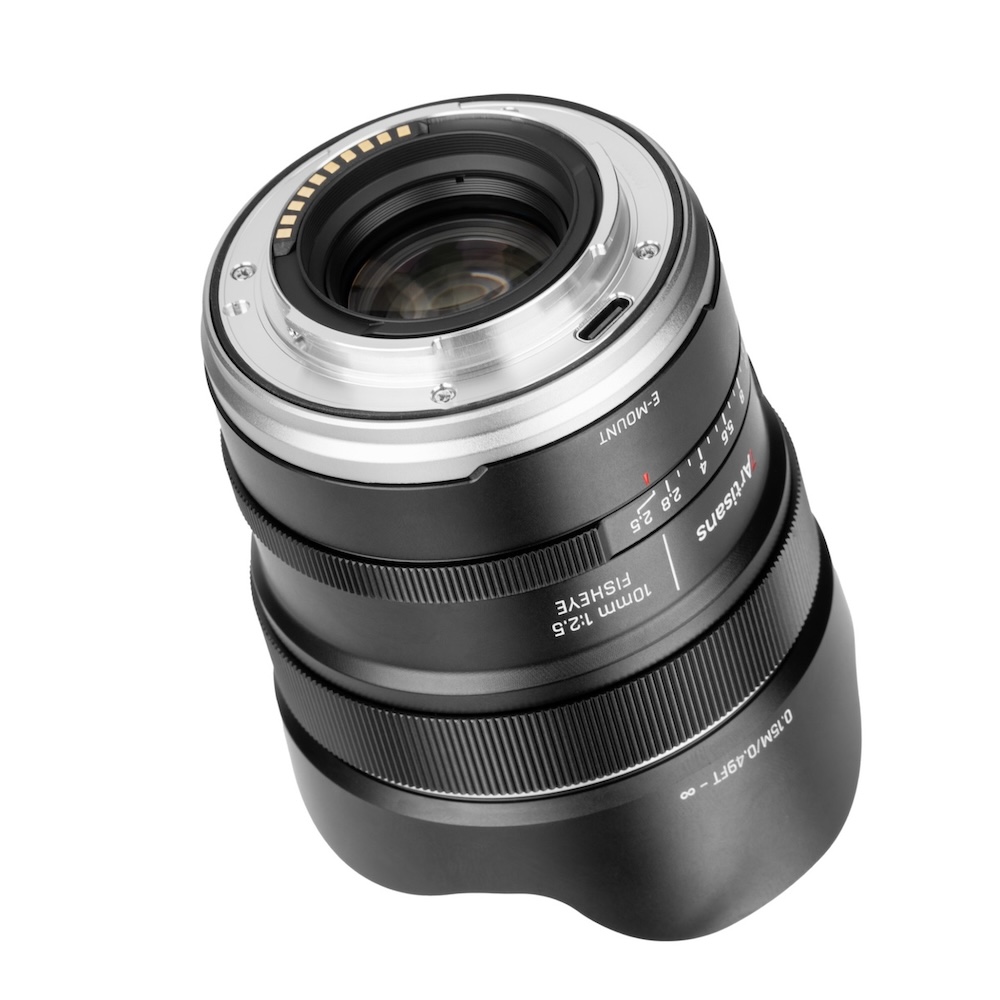
Both the manufacturer’s suggested retail prices and our purchase prices are being significantly increased. Therefore, we will also have to make corresponding price adjustments.
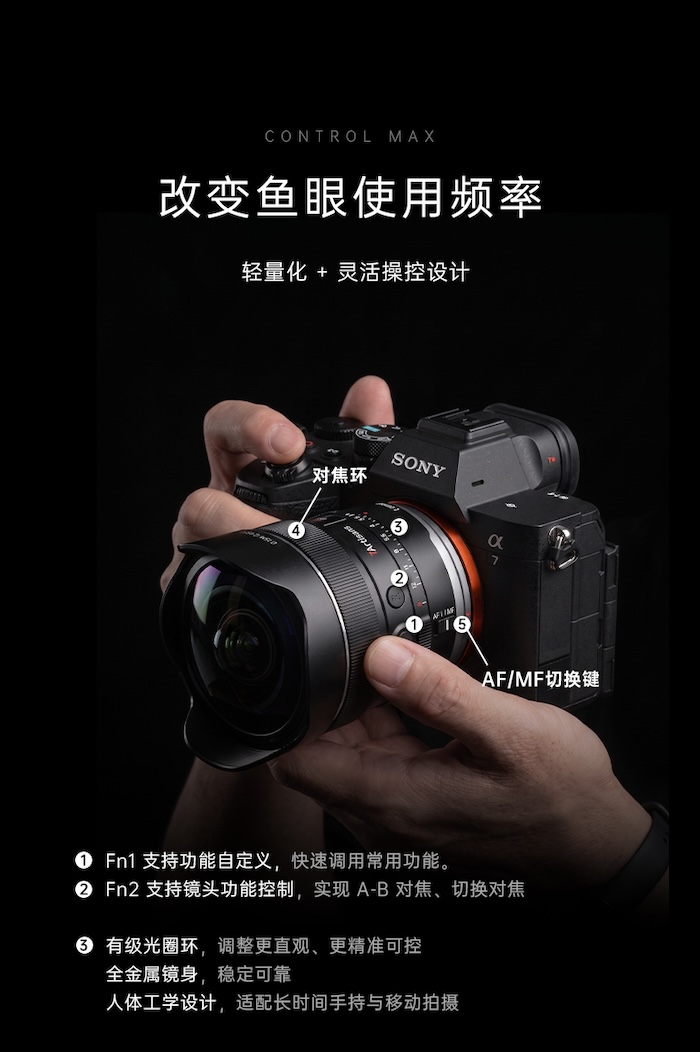
For pre-orders up to and including July 31, 2026, the prices shown in our online shop apply.
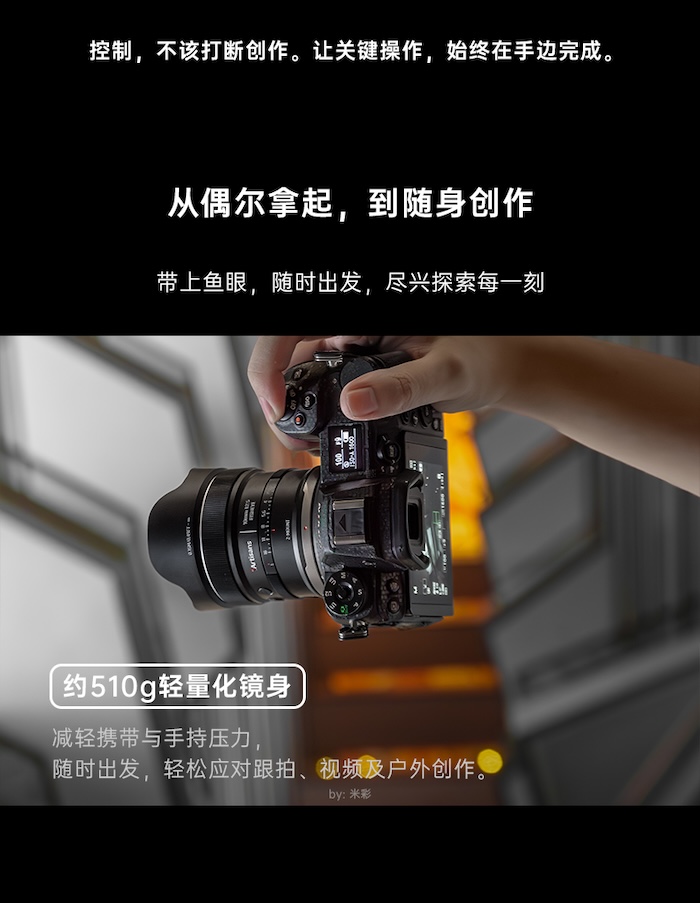
Starting August 1, 2026 , we will gradually adjust the prices of the affected products. The complete transition to the new price level will be finished by September 1, 2026 .

For particularly popular models and products with longer delivery times, the price adjustment may take place earlier.

Anyone currently planning to purchase one of the affected models can therefore still benefit from the currently advertised prices for a short time.

Should unexpected delivery failures or further price increases occur, we reserve the right to cancel purchase requests (orders) or, after prior notification, to offer a price adjustment; this will only be done with your consent, otherwise the order may be cancelled.

The post Another Fujifilm price increase is coming appeared first on Photo Rumors.

❌