Vue normale

This pocket-sized camera zooms to 2000mm and tracks wildlife on its own

The RocXZoom pairs a 50x hybrid zoom with an AI tracking system that recognizes more than 300 bird species. It’s boasts the kind of reach that used to demand a telephoto lens and a tripod, all in a body that fits in a jacket pocket.

man holding RocXZoom camera to take picturesFarseer

Long-range photography has always come with a bit of a packing problem. Getting close to a hawk in the distance or a bear traversing a faraway hillside traditionally means carrying a full-frame body, a telephoto lens the size of your forearm, a tripod to steady it all, and the patience to keep a subject in frame by hand. The Farseer RocXZoom reimagines that kit with a camera that only weighs about 400 grams.

The RocXZoom combines 20x optical zoom with 50x hybrid zoom for a 40 to 2000mm equivalent range, which is the kind of telephoto territory that’s normally reserved for dedicated lens setups. The difference is that this one delivers it without the large traditional lens-and-tripod rig, and in a package that’s light enough to carry on a trail all day.

Automatically follow the action

Farseer RocXZoom Farseer

At the equivalent of 2000mm, a subject can exit the frame with a flick of a wing, which is where the camera’s Physical AI system comes in. The intelligent vision system is designed to identify subjects, track their movement, and keep them framed while zooming, with a powered pan-and-tilt system that physically follows the action. It’s built for the subjects that punish slow hands like birds, wildlife, athletes, and other fast-moving targets.

For birders specifically, there’s a learning layer built in. The AI recognition system can identify more than 300 bird species in real time, so the camera helps users understand what they’ve captured, not just capture it.

Steady at the extremes

Farseer RocXZoom Farseer

Handheld shooting at extreme telephoto lengths usually produces shake. The RocXZoom helps remedy that with dual stabilization, pairing a gimbal with electronic image stabilization to help keep long-range photos and video steady without a tripod. A dedicated mobile app rounds out the control capabilities by letting users operate the camera remotely, adjust framing, and manage shooting from a connected device.

Ready for anything

Farseer RocXZoom Farseer
A camera geared toward capturing wildlife and sports action has to thrive where those subjects live. The RocXZoom’s aluminum body carries an IP54 rating and is designed for demanding outdoor environments, from dusty trails to unpredictable weather on the sidelines.
The RocXZoom has an MSRP of $799, but early backers can get it for $449 on Kickstarter. For anyone who has left the long lens at home one too many times, its lightweight design makes a compelling case for always bringing it along.

And, for those who’d like to pair the RocXZoom with another camera, there’s the RocXZoom pro package, a gimbal bundle that allows you to mount the RocXZoom onto your existing camera via a hot shoe mount. This improves tracking stability, enables object tracking, and supports APP control. The RocXZoom Pro has an MSRP of $2,099, but early backers can get it for $849 on Kickstarter.

The LK Samyang AF 60-180mm F2.8 shows just how far budget lenses have come

Take a look through our sample gallery to see how well this budget fast zoom lens for E- and, soon, L-mount performs.

A 3/4 view of the LK Samyang 60-180mm F2.8 against a gray background.Mitchell Clark

Earlier this summer, LK Samyang announced the AF 60-180mm F2.8, its latest lens that it says was developed in collaboration with German optics company Schneider-Kreuznach. We’ve had the chance to test it out the version for E-mount (though the company has recently announced it’ll be available for L-mount next week), shooting with it in a variety of conditions to produce a sample gallery, and forming some impressions along the way.

In use

The thing I immediately noticed about this lens was its weight, as it comes in at just 730g (1.6lbs). According to LK Samyang, it’s the lightest option in this class, and I found that difference noticeable. It was very easy to carry around, even for extended shooting sessions. While the lens extends as you zoom in, this doesn’t result in a substantial shift in its center of gravity, which is always nice when changing focal lengths.

Speaking of, though, the zoom ring might be the lens’s weakest point. It has a nice textured rubber coating, but can be a bit difficult to turn with any amount of precision, as it’s quite stiff, but inconsistently so; I sometimes had to work to turn it from 60mm, before finding myself in an easy patch sailing right through the focal length I wanted. It’s not end of the world, and I got used to it with practice, but it is a reminder that you’re using a budget lens. 

The LK Samyang AF 60-180mm F2.8 FE against a gray background, extended to its 180mm setting.
The lens doesn’t extend very far when going from 60mm to 180.
Mitchell Clark

The lens is also made out of a plastic that isn’t the most premium-feeling. Nor does the customizable control button, though it’s a nice inclusion. Finally, LK Samyang has added a lock switch to keep the lens at 60mm while you’re walking around with it, though I found the mechanism’s stiffness was enough to keep it from accidentally extending. However, it does hold it incredibly well; I once accidentally locked the lens, and was completely unable to turn the zoom ring until I discovered what had happened.

It focuses quite quickly, though it’s not the absolute fastest I’ve ever experienced. That’s not surprising given that it uses stepping motors rather than linear ones, but it should be more than acceptable for everything but the fastest of action. I also appreciated its close focusing abilities, as it has a minimum focusing distance of just 0.35m (1.2′) at the wide end, letting me get quite close to my subject, which suits my style of shooting. Unlike the zoom ring, the manual focus ring is perfectly pleasant to use.

A golden retriever wearing goggles stands over a smaller border collie on the back of a blue convertible. According to a sticker conveniently covered by its paw, the larger dog's name is Ashtray, and the smaller dog's name is Cherry.
Sony a7R V w/ LK Samyang AF 60-180mm F2.8 @ 80mm | F4.5 | 1/160 sec | ISO 100

While this lens is in some ways competing with the venerable 70-200mm F2.8 options available from Sony, Panasonic and Sigma, its closest competitor is the Tamron 70-180mm F2.8 Di III VC VXD G2, a lens I tested out earlier this year. In my mind, there’s no clear winner between the two; the Tamron weighs a bit more, but its body and controls feel a bit nicer (or, in the case of the zoom ring, a fair bit nicer). It also has optical image stabilization, snappy autofocus motors and access to the special features Tamron’s been adding to its lineup via its app. But then I also found myself appreciating the ability to go that bit wider with the Samyang. And both have image quality that would’ve been unthinkable at this price range just a few years ago, though the vignetting at F2.8 is perhaps a touch less noticeable on the Samyang.

It’s nice that there’s another budget option for a fast tele-zoom for E-mount, and one that’s quite capable for its price. It’s perhaps more exciting that it’s coming for L-mount, where there aren’t that many lightweight, budget tele options. It’s also nice to see that Samyang doesn’t seem to be waiting a long time between releasing lenses for the system after announcing them for E-mount.

Sample gallery

Please do not reproduce any of these images on a website or any newsletter/magazine without prior permission (see our copyright page). We make the originals available for private users to download to their own machines for personal examination or printing; we do so in good faith, so please don’t abuse it. 

Thanks to Sony for the loan of an a7R V to shoot this gallery. All images were processed using our standard lens workflow in Capture One, with the manufacturer’s distortion correction applied but no correction of vignetting. The profile corrects a fair amount of barrel distortion at the wide and some pincushion distortion at the long end. It’s enough that we’d recommend using the corrections if you can, though we don’t consider them an essential part of the lens’s design.

Loading gallery…

About the Author: Mitchell started taking pictures at 10 and hasn’t stopped since. It’s been a wide-ranging adventure, spanning a wide variety of genres and locales, and occasionally dipping into fascinations with video and filmmaking. They honed their technical knowledge doing documentation, programing and QA, writing for The Verge, and just generally messing around on the computer to see what breaks.

Want to stay up to date on the latest product news and releases? Add DPReview as a preferred source to ensure our independent journalism makes it to the top of your Google search results.

add as a preferred source on google

2025 digital camera shipment market share

Par : PR admin
20 août 2026 à 19:31


Here is the 2025 digital camera shipment market share from the latest Nikkei Industry Report:

2025 Camera Shipment Ranking

  1. Canon: 4.5 million units (45.7%, +2.5%)
  2. Sony: 2.42 million units (24.6%, -3.9%)
  3. Fujifilm: 1.16 million units (11.8%, +2.8%)
  4. Nikon: 880,000 units (8.9%, -2.8%)
  5. Panasonic: 430,000 units (4.4%, +1%)
  6. Ricoh Imaging: 210,000 units (2.1%, +1.3%)
  7. OM Digital: 150,000 units (1.5%, -0.4%)

2024 Camera Shipment Ranking

  1. Canon: 3,53 million units (43.2%)
  2. Sony: 2.33 million units (28.5%)
  3. Nikon: 960,000 units (11.7%)
  4. Fujifilm: 740,000 units (9.0%)
  5. Panasonic: 280,000 units (3.4%)
  6. OM Digital: 160,000 units (1.9%)
  7. Ricoh Imaging: 70,000 units (0.8%)

2023 Camera Shipment Ranking

  1. Canon: 3.34 million units (46.5%)
  2. Sony: 2 million units (27.9%)
  3. Nikon: 810,000 units (11.3%)
  4. Fujifilm: 430,000 units (6.0%)
  5. Panasonic: 260,000 units (3.6%)
  6. OM Digital: 180,000 units (2.5%)
  7. Ricoh Imaging: 60,000 units (0.8%)

Source: Nikkei Industry Report, via dclife

The post 2025 digital camera shipment market share appeared first on Photo Rumors.

TTArtisan’s $99 AF 85mm F1.8 gives Sony E and Nikon Z shooters a portrait lens with customizable colors

The Neo 85mm trades the expected control layout for a minimalist body and a price that undercuts the next-cheapest autofocus 85mm by a substantial amount.

Black camera held in both hands over a blue and white checkered tablecloth, with blurred flowers in the background.TTArtisan

TTArtisan has announced the AF 85mm F1.8 Neo, a budget-friendly, full-frame portrait lens for Sony E and Nikon Z mounts. The lens strips out any on-lens controls, including the aperture ring and focus ring, opting for simplicity to keep the price just below $100. 

The new lens is the second in TTArtisan’s minimalist Neo series. Until now, the lineup consisted solely of the AF 50mm F1.8 Neo, another design with no on-lens controls. Experienced shooters may find the lack of manual focus unusual, but it is one of the compromises that come with the low price. Aperture, which ranges from F1.8 to F16, is adjusted through the camera body.

Camera with a large, uniquely designed blue and white lens held in a hand, positioned for photography.
TTArtisan offers free downloadable 3D model files so users can design and print their own custom shells for the lens.
TTArtisan

One interesting feature of the Neo lineup is the ability to add 3D-printed shells to the lens. TTArtisan promoted this with the 50mm F1.8 Neo, highlighting the ability to customize the look of the lens to your liking. The shells aren’t included and TTArtisan doesn’t sell them directly, but it does provide downloadable 3D lens-model files for users to design and print their own. 

Person in a light blue shirt holding a camera up to their face, with blurry flowers and greenery in the background.
The lens body is made from reinforced fiberglass, which helps keep weight down without sacrificing durability.
TTArtisan

In terms of lens specifications, the 85mm F1.8 Neo is lightweight for its class. The shell is made from reinforced fiberglass, and it weighs just 332 g (11.7 oz). It measures 90.5 mm (3.6″) long and accepts 62mm front filters. Its optical formula consists of 12 elements in 8 groups and includes 2 extra-low-dispersion and 2 high-index elements, which TTArtisan says provide “optimal” sharpness. It also features an 11-blade aperture diaphragm.  

The TTArtisan AF 85mm F1.8 Neo is available for pre-order now for $99 with versions for Nikon Z and Sony E mounts. 

About the Author: Abby Ferguson holds an MFA in photography and blends a fine-art background with extensive editorial and commercial experience. She built and led an in-house imaging program for a large vacation rental company and has served as an associate editor at Popular Photography. She also teaches at a local community college and serves on its Photographic Technology Program Advisory Board, sharing her knowledge and enthusiasm for the medium.

Want to stay up to date on the latest product news and releases? Add DPReview as a preferred source to ensure our independent journalism makes it to the top of your Google search results.

add as a preferred source on google

Pixel 11 Pro camera samples: full-res 50MP Raw files, plus Magic Capture and Camera Looks

See how Google’s AI-driven Magic Capture performs, plus every Camera Look shot with Raw so you can check the processing against the source.

Three colorful kayaks on a rocky riverbank, with two individuals in helmets and life jackets standing near the water; trees and clouds in the background.Dale Baskin

Our Pixel 11 Pro XL sample gallery is now live and covers the newest camera modes on Google’s flagship smartphone, including Magic Capture and Camera Looks. We shot photos using all three rear cameras on the Pixel 11 Pro at their maximum 50MP resolution. 

If you’re considering a Pixel 11 Pro or Pro XL for its camera upgrades, this gallery offers real-world output files you can evaluate before you buy.

We’ve been shooting a Pixel 11 Pro XL production unit since launch day and have done our best to capture photos that reflect real-world scenarios across a range of lighting conditions and scenes. Since the Pixel 11 Pro XL and the smaller Pixel 11 Pro share the same triple-camera system, the results here are representative of what you would get from either model.

Two people in a blue tube float down a river beneath a bridge, with water splashing around and concrete supports and greenery in the background.
Magic Capture, a new feature in Google’s Pixel 11 series, lets you capture a video stream, then uses AI to identify the best frames and convert them into 12MP photos.
Dale Baskin

In addition to JPEG files, we have included downloadable Raw files for every mode that supports them. That means you can pull the files into Lightroom, Capture One or any other Raw-capable editor and draw your own conclusions rather than relying solely on the out-of-camera samples. However, it’s worth keeping in mind that on any modern smartphone, the manufacturer’s computational and AI technology is an important part of the image processing pipeline.

The gallery includes several examples captured using Google’s new Magic Capture mode and Camera Looks.  Magic Capture lets you capture video while AI analyzes the footage to select what it considers the best frames, converting them into 12MP stills. Since Magic Capture works from video frames, it doesn’t produce Raw files, so those samples appear in the gallery as JPEGs only.

Camera Looks lets you dial in a visual style before you shoot rather than applying a filter after the fact.  We photographed two distinct scenes, one rural and one urban, using every available Camera Look, so you can see how each style performs across different types of subject matter. For more information on how both features work, see our hands-on look at Magic Capture and Camera Looks.

Sample gallery

Please do not reproduce any of these images on a website or any newsletter/magazine without prior permission (see our copyright page). We make the originals available for private users to download to their own machines for personal examination or printing; we do so in good faith, so please don’t abuse it. 

Loading gallery…

About the Author: Dale Baskin is a professional photographer, writer, and filmmaker based in the Pacific Northwest. He is the Managing Editor of DPReview.com.

Want to stay up to date on the latest product news and releases? Add DPReview as a preferred source to ensure our independent journalism makes it to the top of your Google search results.

add as a preferred source on google

Meike lens roadmap: new autofocus zooms & fast f/1.2 primes

Par : PR admin
20 août 2026 à 17:54


I already reported on the rumored Meike AF 65mm f/1.4 & AF 110mm f/1.8 lenses for GFX mount. Here is the full list of upcoming Meike lenses (check the official website for updates):

  • Meike AF 24-70mm f/2.8 full frame
  • Meike AF 65mm f/1.4 medium format
  • Meike AF 110mm f/1.8 medium format
  • Meike AF 50mm f/1.2 VCM full-frame (see old version)
  • Meike AF 70-180mm f/2.8 full-frame
  • Meike AF 35mm f/1.4 MIX full-frame (see old version)
  • Meike AF 100mm f/2.8 macro full-frame
  • Meike AF 85mm f/1.2 VCM full-frame

The above lenses will most likely be available for Sony E, Nikon Z, and Leica L mount.

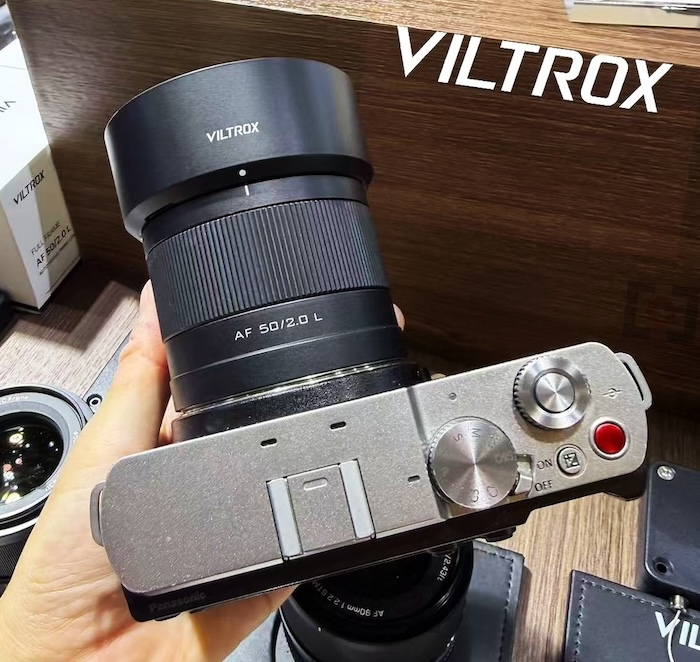
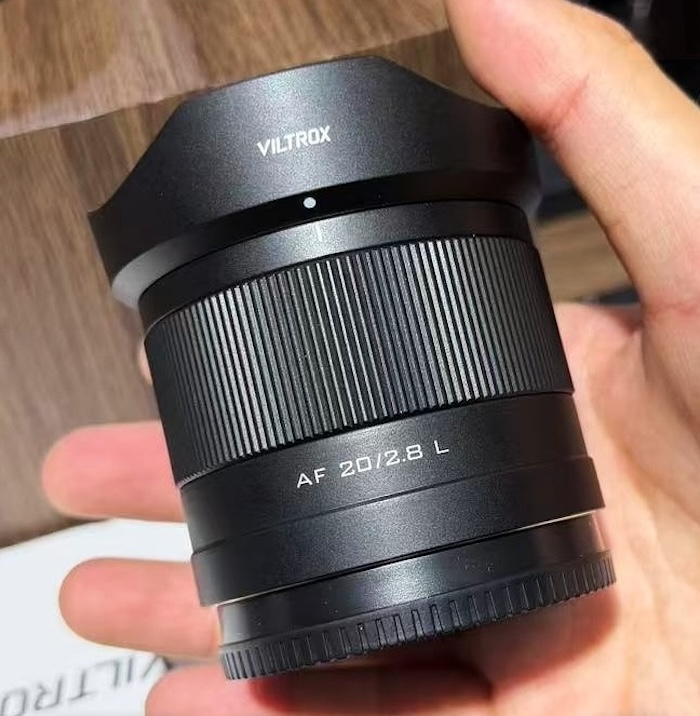
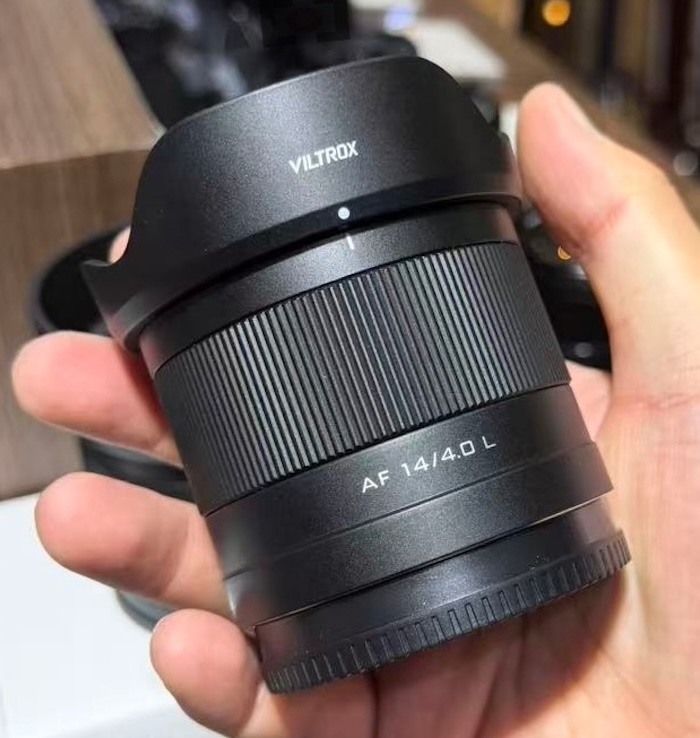
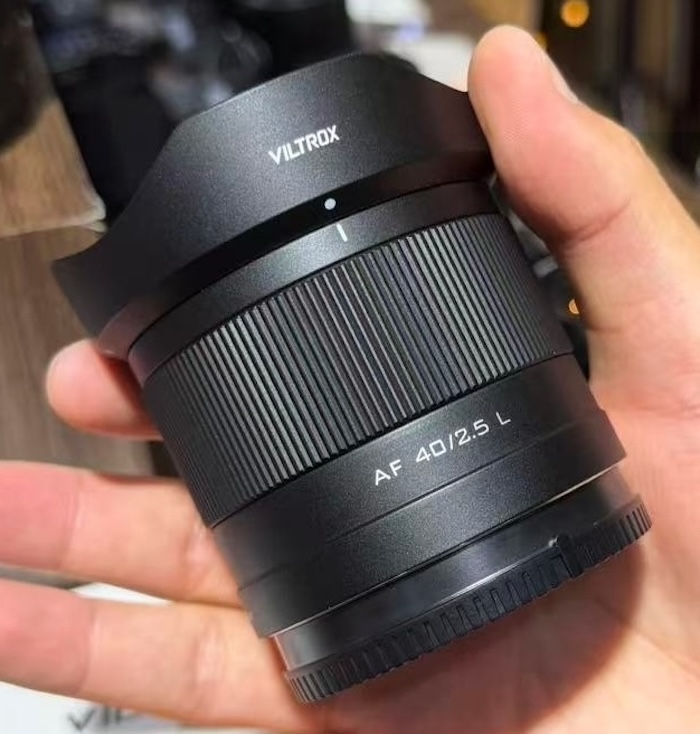
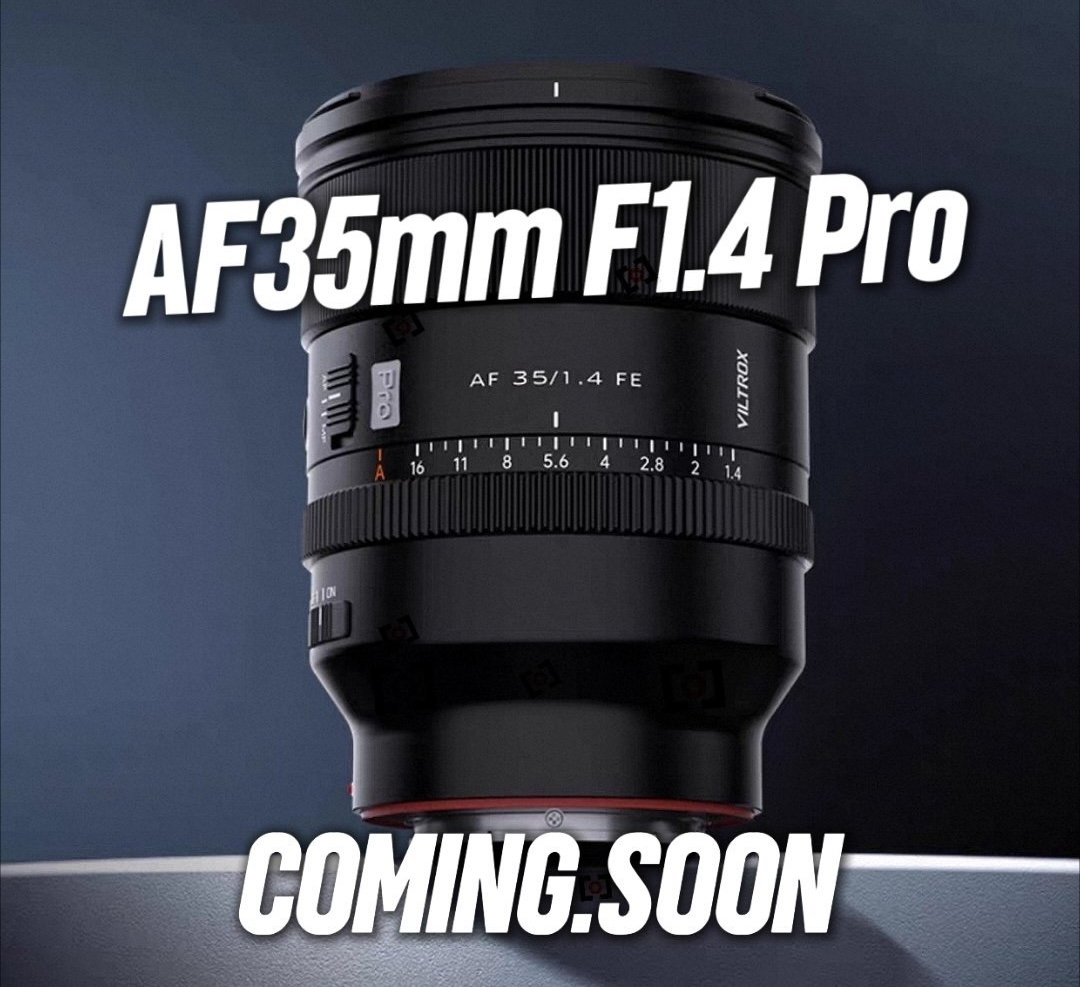
The latest new and upcoming lenses from Meike, Viltrox, 7Artisans, TTartisan, Laowa, Sirui, and SG-image

Meike is rumored to announce new AF 65mm f/1.8 & AF 110mm f/2 lenses for Fujifilm GFX mount

The post Meike lens roadmap: new autofocus zooms & fast f/1.2 primes appeared first on Photo Rumors.

DJI’s Osmo Pocket 4 and 4P firmware update adds D-Log slow motion, cloud uploads and improved tracking

DJI’s new firmware brings automatic cloud and NAS offloads to both pocket gimbals, while the Pocket 4 gains smarter tracking controls and the 4P adds 10-bit D-Log slow motion and diagonal joystick movement.

Black dual-lens camera gimbal with “1-INCH” label, shown in close-up against a blurred background with blue, red, and yellow colors.Mykim Dang

Barely four months after the Osmo Pocket 4’s debut, and less than two months after the Pocket 4P arrived, DJI is already rolling out a substantial firmware update for both pocket gimbal cameras. The updates promise to make both devices more useful as self-contained capture tools, adding background uploads to cloud storage to the pair, along with expanded tracking and control options for the Osmo Pocket 4 and 10-bit D-Log slow-motion recording on the Pocket 4P. 

Coming to both the Osmo Pocket 4 and 4P is DJI’s Camera Cloud Service. The feature allows users to automatically upload footage to supported cloud services or compatible network-attached storage (NAS) when the camera is idle. DJI says the service supports Google Drive, OneDrive and NAS, potentially making it easier and faster to offload clips after a shoot, provided you can connect the camera to a Wi-Fi network. 

A small gimbal camera with a built-in screen sits on a mini tripod atop a stone surface, positioned against a blurred cityscape backdrop under clear skies.
The Osmo Pocket 4 gains faster subject tracking, the ability to zoom while tracking, and retention of the last Smart Gimbal Mode after a power cycle.
DJI

On the Osmo Pocket 4, the update adds a new subject-tracking option that can identify and select a person or object more quickly, then use the gimbal to keep it in-frame as it moves. The camera also gains additional tracking controls, including the ability to zoom while tracking, and the ability to retain the last Smart Gimbal Mode used after the camera is powered off.

DJI has also expanded customization tools. The physical Custom Button’s hold action can now be assigned to either zoom out or open the custom-settings menu. In portrait orientation, the on-screen custom button can be mapped to single press, double press, triple press and press-and-hold actions.

The DJI Osmo Pocket 4P gimbal camera, standing up on a sidewalk.
10-bit D-Log slow motion is the headline addition for the Pocket 4P — though DJI notes it is D-Log, not the newer D-Log2 format.
Mykim Dang

The most notable change for the Pocket 4P is that its slow-motion mode can now record in 10-bit D-Log rather than relying on a baked-in color profile as before. It’s important to note, though, that DJI lists this specifically as D-Log, not the newer D-Log2. Still, it provides a more flexible starting point for users who want to grade footage or match it to other cameras. DJI has also updated its D-Log-to-Rec.709 and Rec.709 Vivid LUTs to version 2.0.

Finally, the Pocket 4P joystick now supports 45-degree inputs, allowing diagonal gimbal moves that combine pan and tilt in a single control motion.

Both updates are available now through the DJI Mimo app.

About the Author: Abby Ferguson holds an MFA in photography and blends a fine-art background with extensive editorial and commercial experience. She built and led an in-house imaging program for a large vacation rental company and has served as an associate editor at Popular Photography. She also teaches at a local community college and serves on its Photographic Technology Program Advisory Board, sharing her knowledge and enthusiasm for the medium.

Want to stay up to date on the latest product news and releases? Add DPReview as a preferred source to ensure our independent journalism makes it to the top of your Google search results.

add as a preferred source on google

This DPReview member’s minimalist black-and-white photos find intrigue in candid moments

Community member Johan O E, known as Ocoloy on the forums, prefers New Zealand as his base for minimalist black-and-white photography.

Street portraitJohan O E

Meet Johan O E

Home base: Sweden

Community member Johan O E, known as Ocoloy in the forums, has a passion for minimalist black-and-white photography. Many of his photos are portraits of ordinary people going about their daily lives, each with a unique angle that tells a particular part of their story.

“Since as long as I can remember, I´ve been in love with photography. From the album covers I saw as a child in the 80s to the surf and music magazines in the 90s. I´ve been photographing for nearly 30 years, but the last 15 years have been more intense. My dad is a photographer as well, but he has never influenced me in any form when it comes to photography. I was never allowed to use his cameras.”

Our ‘What’s in your bag?’ community spotlight series features readers sharing their favorite gear and photography, including from past DPReview collaborators. See below for what Johan has to share.

What draws you to a minimalist view?

Always ready with my camera for random moments
“Always ready with my camera for random moments.”

Fujifilm X-E1 | Fujifilm XF 18mm F2 R @ 18mm | F8 | 1/500 sec | ISO 320
Johan O E

“I shoot whatever inspires me. Preferably, there needs to be a person in the shot, but some of my best shots are free from people. I tend to go more for a minimalistic black-and-white vibe when I’m out and about. Been photographing all over the world. New Zealand has been my favorite by far. I also love portraits and candid moments.

I am in my third year with one camera, one lens, and a one-year project, OCOLOY. This time it is the Nikon ZF and the Voigtlander 40mm F1.2, and I only shoot in black and white. Accepts 36 images in color. I made a list of 36 things I love, which I will later print in color A4 and save.”

I like rough, wild and different environments. From stormy seas to deep jungles or the backstreets of towns in Europe.”

What’s in Johan’s bag

Johan's camera bag
Johan’s camera bag
Johan O E

Favorite cameras(s): Nikon Zf

Preferred camera bag: “I carry with me the simplest Caselogic bag available on the market. It has just enough space for the camera and barely anything more. I have two different camera bag setups, depending on my mood. My main bag is just my camera, an extra battery, a CPL and a mist filter. If I am out working, I also bring my tablet for editing and an Instax printer for special moments to give away prints.”

Must-have accessories: “I always bring music. I make playlists for different moods and photowalks. In fact, I am recording a song about photography at the moment in my recording studio. I got a crystal from a chandelier and sometimes put it in front of my lens to create different images. I try to carry as little as possible when I am out and about.”

Why is New Zealand on your visit list?

Backstreets of England
“In the backstreets of England, I came across a lone book reader.”

Fujifilm X-T2 | Fujifilm XF 23mm F2 R WR @ 23mm | F4 | 1/35 sec | ISO 200

Johan O E

“I have been on the road for the past 26 years, spending many years in New Zealand, Spain and Sweden. I’ve seen remote places in Asia, done a total of 12 months of van trips throughout Europe, spent 5 months in Sri Lanka, and taken surf trips to Hawaii and the Lofoten Islands. My most memorable photography trip was probably the COVID year, when I was 6 months into my time in New Zealand. I made a bucket list and got most of the shots, which later on boosted my photography career.”

Any strategies you’d pass along to your fellow photographers?

Street portrait
“This gentleman allowed me a quick photo as he stared across the street.”

Fujifilm X-S10 | Fujifilm XF 35mm F1.4 R @ 35mm | F2 | 1/125 sec | ISO 400

Johan O E

“It builds confidence to capture something unique and what I have not seen before. I use my eyes rather than predefined or scripted techniques. I almost always shoot in M mode, mostly with manual lenses, to create exactly what I want. I want a photograph to create emotions and make people look again.”

Photograph what you love and do not photograph purely for likes. Also, a good professional photography lesson will give you way more than any new camera or lens.”

Do you peer into Johan’s photos and see another person’s unique life looking back at you? He enjoyed participating in this spotlight article and would love to hear what you think of his photography in the comments below.

You can check out Johan’s other work at www.stayuntilforever.com,


Editor’s note: This article continues a series, ‘What’s in your bag?’, highlighting DPReview community members, their photography and the gear they depend on. Would you like your photography to be featured in a future installment? Tell us a bit about yourself by filling out this form.

About the Author: Mathew Anderson is a proud Community Manager for the technology industry and a past visitor to DPReview.com for all his camera needs. He is currently the lead of DPReview’s community and primary communication link between the community and DPReview’s team.

Want to stay up to date on the latest product news and releases? Add DPReview as a preferred source to ensure our independent journalism makes it to the top of your Google search results.

add as a preferred source on google

First leaked pictures of the DJI Osmo Nano 2 and DJI Osmo Action 7 cameras

Par : PR admin
19 août 2026 à 19:11


The first leaked pictures of the DJI Osmo Nano 2 and DJI Osmo Action 7 cameras appeared on Chinese social media:

  • Osmo Nano 2: Successor to the original Osmo Nano (launched September 23, 2025), the small modular/wearable camera with the 1/1.3-inch sensor, magnetic design, and Vision Dock.
  • Osmo Action 7: Successor to the Osmo Action 6 (launched mid-November 2025), DJI’s current rectangular flagship with the square-ish 1/1.1-inch sensor and variable aperture.

Both cameras are expected to be released by the end of 2026.


The post First leaked pictures of the DJI Osmo Nano 2 and DJI Osmo Action 7 cameras appeared first on Photo Rumors.

The Insta360 Luna Pro camera will be announced tomorrow

Par : PR admin
19 août 2026 à 18:55


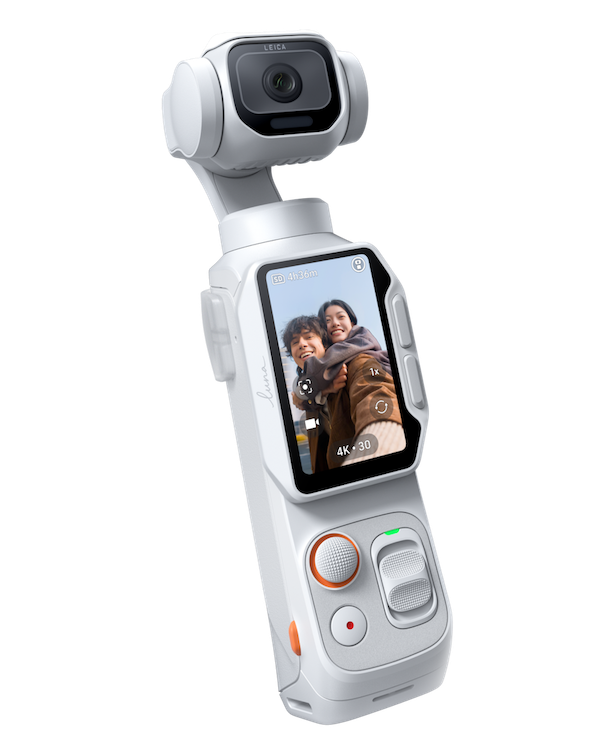
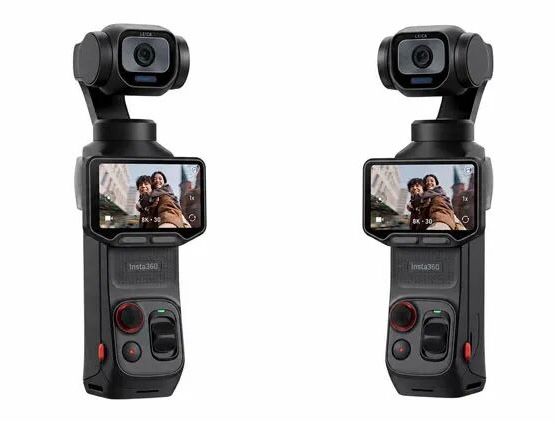
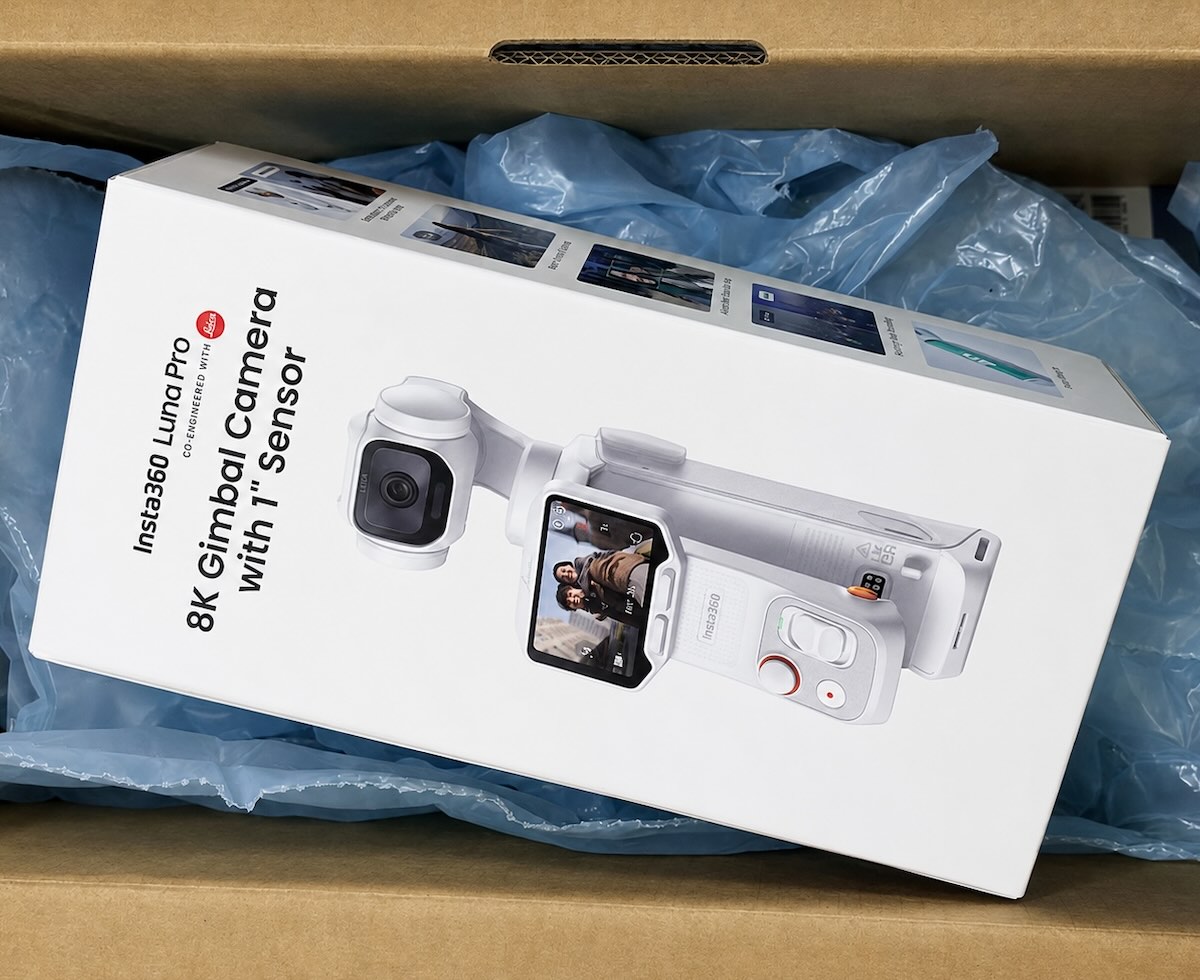
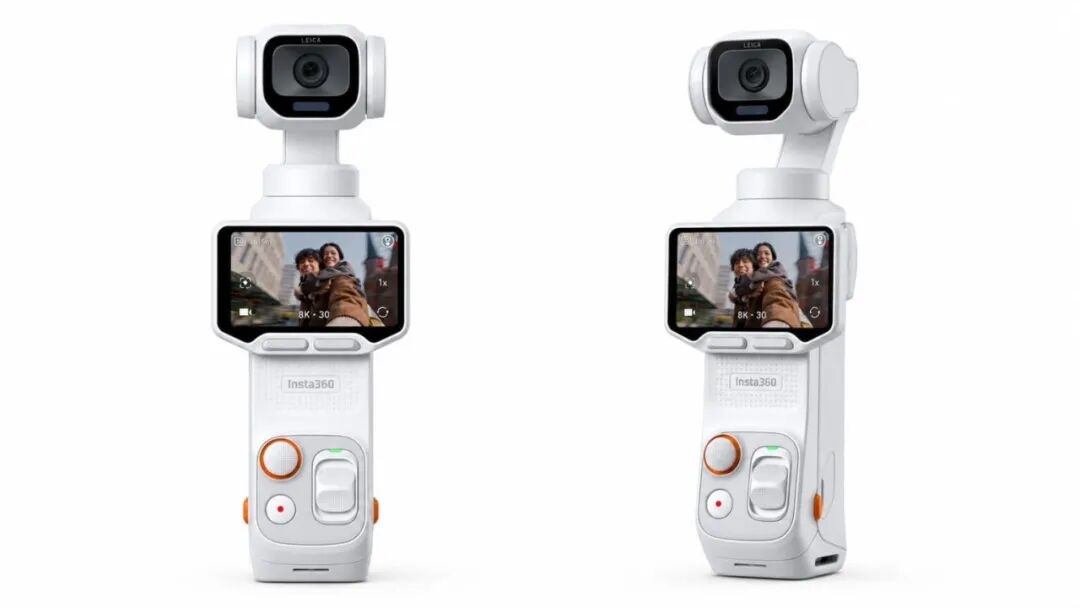
The Insta360 Luna Pro camera will be announced on August 20th. Here are the rumored specifications:

Update: the camera launched only in China.

  • Sensor: 1-inch CMOS
  • Lens: Single Leica Summicron, f/1.8, ≈20mm equivalent
  • Video:
    • 8K (confirmed on retail packaging as “8K Gimbal Camera With 1″ Sensor”)
    • Expected 4K up to 120fps (and high-frame-rate options similar to the Ultra)
    • 10-bit i-Log / I-Log
    • Dolby Vision HDR support (expected)
    • Strong vertical/portrait video (leaks claim better 4K30 vertical performance than the Ultra)
  • Dynamic Range: ≈14 stops
  • Color: Leica color science / Leica color profiles
  • Stabilization: 3-axis mechanical gimbal + FlowState electronic stabilization
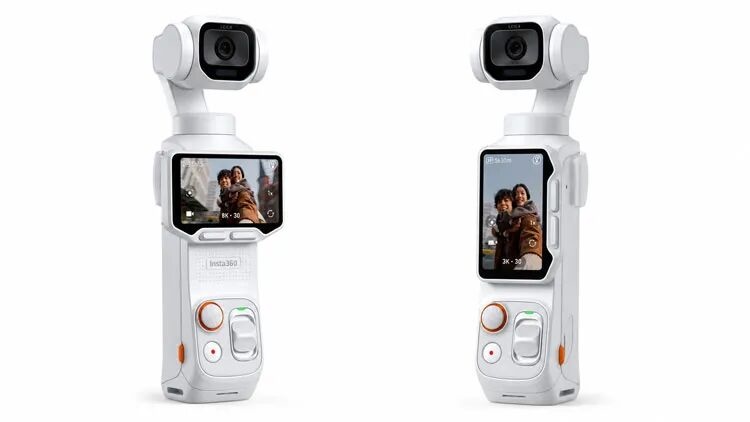
  • Screen: Detachable 2-inch OLED touchscreen (doubles as remote control)
  • AI Features: Triple AI chip, Deep Track subject tracking (and related AI tracking modes)
  • Zoom: Digital only (no optical telephoto lens)
  • Battery: ≈1,550 mAh (main body)
  • Audio: Supports Insta360 Mic Pro
  • Design: Pocket gimbal form factor, physical controls (including independent zoom rocker on some reports), available in white (confirmed) and black
  • Other: Professional color temperature sensor, microSD + internal storage expected
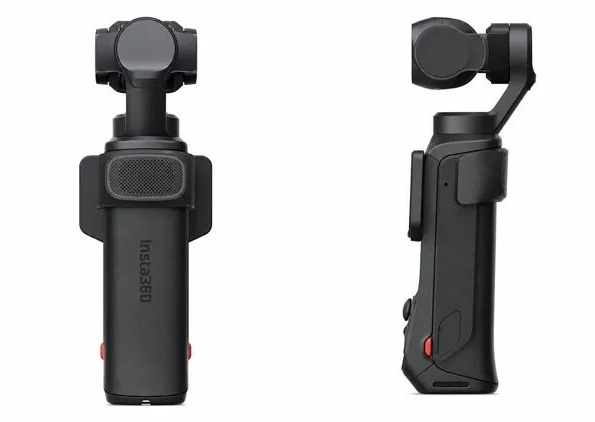
  • Additional pictures:


The post The Insta360 Luna Pro camera will be announced tomorrow appeared first on Photo Rumors.

We tested the Pixel 11’s Magic Capture and Camera Looks – here’s how each performs

Person in a wetsuit on a green surfboard, crouched low while surfing a wave in a fast-moving river with grassy banks in the background.Dale Baskin

Google’s Pixel 11 phones offer two very different angles on computational photography: let AI find the moment, or define your look before you shoot. Here’s how each performed in real-world testing.

Google’s new Pixel 11 smartphones include two headline camera features that represent different approaches to computational photography. Magic Capture aims to take the stress out of capturing the perfect moment by letting AI identify the decisive moment for you, while Camera Looks gives you greater control over your creative output by letting you define a visual style before you ever press the shutter button.

We’ve been testing both features on a Pixel 11 Pro XL to see how they work in practice, and whether the results hold up. The short answer is yes, but not without trade-offs.

What Magic Capture actually does and what the sample photos reveal

Magic Capture replaces the act of pressing a shutter button at the right moment. You roll video instead of shooting stills, and Google’s AI analyzes the footage to identify what it believes are the most compelling frames, then turns them into photos. The feature goes beyond simply extracting a frame from video and saving it as a still image: according to Google, the system analyzes roughly 400 frames in real time, combining on-device processing with Gemini AI technology.

Smartphone camera app interface displaying zoom options (1x, 2, 5, 10), a prominent white shutter button in the center, video and camera mode icons, a blue square icon on the left side, and a settings gear icon located below.
Magic Capture appears as a button to the left of the camera button in the Pixel’s camera app.

After stopping a recording, you can see the phone’s initial frame selections quickly, but they look flat and unfinished. Once the Gemini AI processing completes, which took around a minute or so in our testing for a 15-second clip, the selected frames become noticeably improved, popping with more detail, and with HDR scenes in particular looking significantly better. The final output is a 12MP still image.

The sample images below come from a 14-second Magic Capture clip of a surfer riding a standing wave in a river. Google’s AI did a pretty good job of selecting frames that captured the highlights.

A person in a black wetsuit stands on a bright green surfboard while surfing a river wave, with white water and greenery in the background.
Photo created by Magic Capture.
A person in a black wetsuit stands on a bright green surfboard while surfing a river wave, with white water and greenery in the background.
Photo created by Magic Capture.
A person in a black wetsuit stands on a bright green surfboard while surfing a river wave, with white water and greenery in the background.
Photo created by Magic Capture.

Image quality exceeds what you would typically expect from simply extracting a frame from a 4K video shot on a smartphone; it’s crisper, with better colors, and displays in HDR (when viewed on an HDR display).  It’s not quite up to the quality I’m used to seeing from a standard still photo shot on a modern 12MP smartphone, but it gets the job done, particularly if it’s mostly going to be viewed on other mobile devices.

For the best results, Google recommends enabling Video Boost before using Magic Capture, which ensures the underlying footage is captured in 10-bit 4K. That setting is worth locating before you go out to shoot, not after. Processing time is manageable for a single clip, but if you shoot several Magic Capture sequences back-to-back, the phone queues them for analysis, which can take a few minutes to complete.

Phone camera app interface displaying Magic Capture settings with Video Boost enabled. Zoom controls for 1x, 2, 5, and 10 are shown, along with menu, mute, and share icons on a dark background.
For the best results, Google recommends enabling Video Boost before using Magic Capture, which ensures the underlying footage is captured in 10-bit 4K.

One thing we haven’t fully assessed: how consistently Google’s AI selects the frame a photographer would have chosen. The feature’s premise, that the AI identifies the peak moment better than you can, is a pretty strong claim. Whether it matches a photographer’s instincts for capturing the decisive moment would require more testing to answer.

How Camera Looks works and what the photos look like

Camera Looks gives the Pixel 11 camera a selection of color and tone styles you can apply before you shoot. Google says the goal is to produce images that feel less processed and more like a deliberate photographic choice. The system is built around two layers that work together: base styles and creative presets.

In addition to Original (Google’s standard photo processing pipeline), there are three alternative base styles: Natural, Shadows and Vanilla, which sit at the top of the processing pipeline. They aren’t filters. They change how the camera collects and processes light before an image is generated, affecting how aggressively HDR merges multiple frames, how dark shadows are allowed to stay and how edge sharpening is handled. Think of them as choosing the core processing pipeline the camera runs on.

Smartphone camera app interface displaying editing options with the Default Look menu open and
The Pixel 11 series includes four base looks: Original, Natural, Shadows and Vanilla. They can be combined with creative styles to create a variety of looks.

On top of those base styles, you can apply one of six creative presets: Editorial, Velvet, Classic, Digi, Black Tie and Minimal. These apply LUTs meant to emulate film chemistry, specific eras of digital photography or stylized monochrome profiles. The combination you pick matters: applying Velvet on top of the Original base produces a different output than Velvet layered over Vanilla.

The three alternative base styles can be set as your default shooting mode and can be customized. The six creative presets live in a separate carousel, and the interface can take a moment to get used to. The distinction between the two layers isn’t obvious at first glance, and understanding which choices you can adjust versus those you can simply apply requires some exploration. Once you’re oriented, the workflow makes sense, though.

A yellow lift holds an artist painting a vibrant mural of trees and a mountain sunset on an outdoor wall, with a ladder, traffic cones, and bicycle positioned nearby.
Original base style.
A yellow lift holds an artist painting a vibrant mural of trees and a mountain sunset on an outdoor wall, with a ladder, traffic cones, and bicycle positioned nearby.
Shadows base style.
A yellow lift holds an artist painting a vibrant mural of trees and a mountain sunset on an outdoor wall, with a ladder, traffic cones, and bicycle positioned nearby.
Vanilla base style.
A yellow lift holds an artist painting a vibrant mural of trees and a mountain sunset on an outdoor wall, with a ladder, traffic cones, and bicycle positioned nearby.
Original base style with Editorial preset.
A yellow lift holds an artist painting a vibrant mural of trees and a mountain sunset on an outdoor wall, with a ladder, traffic cones, and bicycle positioned nearby.
Original base style with Velvet preset.
A yellow lift holds an artist painting a vibrant mural of trees and a mountain sunset on an outdoor wall, with a ladder, traffic cones, and bicycle positioned nearby.
Original base style with Classic preset.
A yellow lift holds an artist painting a vibrant mural of trees and a mountain sunset on an outdoor wall, with a ladder, traffic cones, and bicycle positioned nearby.
Original base style with Digi preset.
A yellow lift holds an artist painting a vibrant mural of trees and a mountain sunset on an outdoor wall, with a ladder, traffic cones, and bicycle positioned nearby.
Original base style with Black Tie preset.

Camera Looks fits a trend that’s already well established among both dedicated cameras and smartphones, where manufacturers offer in-camera film simulations, LUTs or custom picture profiles that let photographers customize their own looks. Google is applying the same logic to the Pixel 11 series, which means photographers who already think in terms of a preferred style will find the concept familiar.

Who are these features for?

Magic Capture and Camera Looks take different philosophical approaches to computational photography. Magic Capture removes a decision – when to fire the shutter – and replaces it with an AI judgment call. Camera Looks adds a decision, letting you define a visual style before you shoot rather than correcting for it afterward. One reduces your control while the other expands it.

Magic Capture removes a decision… Camera Looks adds a decision.

Magic Capture makes the most sense for scenarios where keeping up with fast, unpredictable action is genuinely hard: kids, sports, pets, or anything where the peak moment is difficult to catch manually. Or, as Google pitches, it lets you “live in the moment” by just rolling video and not stressing about capturing the decisive moment. If you really care about which exact frame gets selected, though, you’re trading that choice for convenience. Google’s AI selections in our sample photos were solid, but the feature works best when you’re willing to accept its judgment.

Camera Looks, by contrast, gives photographers something to bite into and exert creative control. Setting a default look before you shoot is a reasonable workflow for anyone who knows the aesthetic they want and doesn’t want to recreate it in editing every time.

Both features reflect where Google is taking the Pixel camera: toward a model where AI handles more of the technical and even creative work. Whether that’s a net gain depends on how much of that work you wanted to do yourself.

About the Author: Dale Baskin is a professional photographer, writer, and filmmaker based in the Pacific Northwest. He is the Managing Editor of DPReview.com.

Want to stay up to date on the latest product news and releases? Add DPReview as a preferred source to ensure our independent journalism makes it to the top of your Google search results.

add as a preferred source on google

Capture One Mobile 4.0 brings desktop-grade denoising and healing tools to iPhone and iPad

The August update adds Enhanced Denoise, Color Balance, Heal & Clone and Keywords to Capture One’s iOS app, features that previously forced mobile shooters back to a desktop to finish an edit.

Digital collage showing photo editing tools, a color wheel, a smartphone displaying patterned clothing, and a stylized lemon slice on a plate with a fork and gray object.Capture One

Capture One has released version 4.0 of its mobile app as part of its August 2026 update, bringing four tools previously limited to the desktop software to iPhone and iPad. The release narrows the feature gap between the company’s desktop and mobile apps, giving photographers more editing capabilities on the go.

Tin can and lemon slice on an oval black plate with a fork beside them; photo editing interface with tools and color wheels visible on the left.
The three-way Color Balance wheel lets mobile users adjust shadows, midtones and highlights independently.
Capture One

Enhanced Denoise is a standout addition to version 4.0. Like other noise reduction tools these days, it uses AI to reduce noise while, according to Capture One, preserving fine details. Capture One has also added Color Balance, its three-way color grading wheel that allows photographers to adjust the color balance of shadows, midtones and highlights. It gives mobile users more tonal control than what was previously available in the Capture One mobile app. 

Another highly requested feature is the Heal & Clone tool, which lets photographers remove distractions on mobile devices. That means retouching no longer needs to wait until you’re back at the desktop. Capture One has also added Keywords support. Photographers can now tag and organize images in the field, making it easier to find the images they need. Lastly, the crop tool has been updated to follow the camera orientation when shooting tethered or copying and applying adjustments.

Person with dark hair wearing a patterned top sits outdoors in sunlight; editing brush settings including size, hardness, opacity, and flow are shown on the left side of the screen.
The Heal and Clone tool lets photographers remove distractions directly on mobile, no desktop required.
Capture One

These tools are all welcome additions to the mobile version of Capture One, which has long lagged behind the desktop in features. Our 2023 iPhone app review found the app well-suited to professionals but noted the fairly substantial toolset gaps. Thankfully, version 4.0 closes several of the most significant ones. For subscribers also using Capture One Pro on the desktop, the mobile app should function as a more credible extension of that workflow rather than a stripped-down companion.

Version 16.8.5 of the desktop app also sees some small updates, including the ability to pan with the middle mouse button, support for the OM System OM-3 Astro and more.

The updated versions are available now for iPhone, iPad and desktop.

About the Author: Abby Ferguson holds an MFA in photography and blends a fine-art background with extensive editorial and commercial experience. She built and led an in-house imaging program for a large vacation rental company and has served as an associate editor at Popular Photography. She also teaches at a local community college and serves on its Photographic Technology Program Advisory Board, sharing her knowledge and enthusiasm for the medium.

Want to stay up to date on the latest product news and releases? Add DPReview as a preferred source to ensure our independent journalism makes it to the top of your Google search results.

add as a preferred source on google

Celebrating World Photography Day with captivating landscapes from the DPReview community

We celebrate World Photography Day today with a forum discussion featuring your photos showcasing diverse local landscapes.

A shot of Philadelphia from the Heritage Park Boardwalk in Pennsauken, NJ.CaseyD

We love to celebrate world events and special days as they approach. Last Friday, we asked the community what type of landscapes are near them and to share a photo with the rest of us. A key objective of the ask was to take a fresh photo only after our announcement. We wanted to see what people experience right outside their doors. It’s always fun to see the different places our community calls home.

“The journey of preserving images in time, which began with the invention of the daguerreotype, has evolved to the point where even the fleeting fury of lightning can be captured and immortalized. It bears witness to a powerful response from nature in an age when urban sprawl narrows the sky, and concrete stands in opposition to the natural world. The photograph makes visible the striking encounter between humanity’s desire to reshape nature and nature’s enduring power to remind us of its presence.” – Hicret

Here are some of the photos and comments they shared. Even our own team got in on the fun! Click each photo to see more within the forum conversation.

Vladimir Nogin

Taken Sunday morning 2026-08-16. This is local pond in Xuzhou city, China. It is full of lotus flowers and very beautiful a whole year. I love to came to that place, usually full of people. Nikon Z5 with Nikkor Z 50 F/1.4
This is a local pond in Xuzhou city, China. It is full of lotus flowers and very beautiful a whole year. I love coming to this place, which is usually full of people.

Nikon Z5 with Nikkor Z 50 F1.4
Vladimir Nogin

Ofer Agiv

The photo was taken with a Sony A7R4 in Greenland near the EQI glacier.
The photo was taken with a Sony a7R4 in Greenland near the EQI Glacier.
Ofer Agiv

DNZM

Bike path in coastal west of Netherlends
I grew up in the coastal west of the Netherlands, but I moved north decades ago. For the last decade and a half (give or take), I’ve been living in Leeuwarden. That’s the major city in this area, but there are tons of little, sometimes very little, villages dotting the landscape.

One of the things that always makes me feel at home and that I really associate with “Frisian landscape” is totally flat land (either with crops or with cows on it), never far from a body of water, wide skies with clouds, and wherever you look, you’ll almost always have two, three, sometimes more churches.
DNZM

Slass

More than a hundred cyclists waiting for bridge to be lowered after a boat has passed. Picture is taken at the canals on Amager, Copenhagen.
More than a hundred cyclists are waiting for the bridge to be lowered after a boat has passed. The picture was taken at the canals in Copenhagen, Amager.

Samsung Galaxy S25 | Built-in lens @ 23mm (35mm equiv.) | F1.8 | 1/6839 sec | ISO 80
Slass

gpwitteveen

Not exotic, but the city street lined with mature sycamore trees in the last hour of summer daylight was too good to miss taking a photo: Samsung a15 with the VWFNDR_MBL app for Android to bypass oversharpened, oversaturated, overprocessed photography. Low light, but leaning against a tree to steady the shutter release. ZIP code 49505 (latitude 43 degrees north).
Not exotic, but the city street lined with mature sycamore trees in the last hour of summer daylight was too good to miss taking a photo: Samsung a15 with the VWFNDR_MBL app for Android to bypass oversharpened, oversaturated, overprocessed photography. Low light, but leaning against a tree to steady the shutter release.
gpwitteveen

CaseyD

A shot of Philadelphia from the Heritage Park Boardwalk in Pennsauken, NJ.
CaseyD

keepreal

Near the entrance to Zion National Park, Utah. Taken at sunset in very weak light. Nikon D300 Sigma 12-24mm f4.5-5.6 DG HSM at 12mm.
Near the entrance to Zion National Park, Utah. Taken at sunset in very weak light.

Nikon D300 Sigma 12-24mm F4.5-5.6 DG HSM at 12mm.
keepreal

Joe Explore Photography

Sunset at low tide at Town Beach in Mackay in Central Qld, Australia
Here is a sunset at low tide at Town Beach in Mackay in Central Qld, Australia, that I took yesterday. I was out in the low-tide zone photographing Eastern Curlews and Masked Lapwings when this composition revealed itself.

Canon R6II with RF 24-105mm F4 lens.
Joe Explores Photography

Abby Ferguson

Dense Florida swamp in August
I’m barely squeezing this in since I admittedly forgot to get a photo during my very busy weekend. Because I didn’t have much time today, I just walked down to the creek that runs through our neighborhood and took a photo from the bridge that runs over it. It was midday, during a heat bubble in Florida in August, so while this may look refreshing and nice, I can assure you, it was not. Also, don’t venture down there unless you want to be engulfed in mosquitoes. The light is far from ideal, either, but sometimes you have to embrace bad conditions and just take the photo.

I used the Panasonic S1RII for this shot, with the Lumis S Pro 16-35mm F4, because that’s what I had charged and sitting on my desk when I needed to run out the door. Basically, today was all about convenience just so that I could participate in this challenge. Maybe next World Photography Day, I’ll remember a bit earlier and have time to make something more exciting.
Abby Ferguson

tranceliner

Addolorata Church on Tal-Morr alongside the Three Towers
My photo captures the Sacred and the Profane: the historic Addolorata Church on Tal-Ħorr alongside the Three Towers directly across the road. Taken just a 10-minute walk from my home, this view illustrates the profound transformation of the Maltese landscape over the last two decades. Shot on a Panasonic FZ1000 and processed using DxO and the Nik Collection, as monochrome suits the scene best.

Panasonic Lumix DMC-FZ1000 | Built-in lens @ 289mm (35mm equiv.) | F4 | 1/30 sec | ISO 1600
tranceliner

Gayle159626

Federation Square, Melbourne on a Saturday afternoon in winter. A popular place to meet friends, enjoy the unseasonally lovely weather and watch the passing parade.
Federation Square, Melbourne, on a Saturday afternoon in winter. A popular place to meet friends, enjoy the unseasonally lovely weather and watch the passing parade.
Gayle159626

leunam

Ortenberg castle through the grapes, the city of Offenburg in the distance. Captured 90 minutes before the deadline with a Sony A7 + Pergear 35mm 1.4 at f8
Ortenberg Castle through the grapes, the city of Offenburg in the distance. My favorite spot for sunset photos (30 minutes of pedaling). Captured 90 minutes before the deadline with a Sony A7 + Pergear 35mm 1.4 at f8
leunam

There are so many other photos we couldn’t fit in this article that are shared in the forums. While not all met the requirements for inclusion in this article, they all deserve praise. Thanks to everyone who took the time to step outside and capture the unique landscapes of your region.

Feel free to share your local landscapes to continue to celebrate the day with us. We can’t wait to see more!

About the Author: Mathew Anderson is a proud Community Manager for the technology industry and a past visitor to DPReview.com for all his camera needs. He is currently the lead of DPReview’s community and primary communication link between the community and DPReview’s team.

Want to stay up to date on the latest product news and releases? Add DPReview as a preferred source to ensure our independent journalism makes it to the top of your Google search results.

add as a preferred source on google

GXAce is making a panoramic camera “built specifically for photography” and sharing the journey

The GX-P1 will reportedly be a fixed-lens digital camera designed to shoot XPan-inspired 65:24 images.

A top-down image of a small camera against a dark background, with the title GX-Pan.GXAce

Photography YouTuber Casey Cavanaugh, also known as GXAce, is working on something new: a camera called the GX-P1. Cavanaugh has been teasing the camera for a few weeks, and there’s still a lot more we don’t know, but a newsletter he wrote, seen by PetaPixel, has shed a bit more light on what it’ll look like.

According to PetaPixel, the GX-P1 will be a fixed lens digital camera that shoots images in the 65:24 aspect ratio popularized by the Hasselblad XPan. The goal is to make a camera “built specifically for photography,” something Cavanaugh says “not a single camera company seems to want to do.” His goal is to crowdfund the camera later this year, though there’s apparently still quite a lot of work to be done.

The goal is to make a camera “built specifically for photography”

While the ultra-wide format has a number of dedicated fans, there aren’t that many options if you want to shoot it these days. Fujifilm built a setting for the aspect ratio into the GFX100RF, and Panasonic has built support for it into many of its full-frame cameras, but it’s far from common. But even if you have no interest in a camera dedicated to it, there could still be reasons to follow the GX-P1 project.

According to PetaPixel, Cavanaugh plans on publishing videos about the process of creating the camera, offering a rare inside look into what it takes to build a digital camera from the ground up. As he himself points out in his review of the Pixii Max, a small, independent team’s journey to bring a camera to market will look very different than that of a major company that has experience, existing relationships and economies of scale, but I’m still excited to see the process.

Cavanaugh is working with designer and creative director Ash Thorp, who has worked on movies like 2022’s The Batman and 2023’s Ant-Man and the Wasp: Quantumania, and the GXAce videos place a heavy emphasis on aesthetics, so I suspect we’ll get a lot of information about the work that went into the physical design the camera. So far, the team has only shown a few photos of the device, revealing what looks like an optical viewfinder, top plate informational display and a control dial.

We’ll have to wait until Cavanaugh releases more information, or the first video of the series, to find out more, but we’ll be eagerly waiting for the first episode.

About the Author: Mitchell started taking pictures at 10 and hasn’t stopped since. It’s been a wide-ranging adventure, spanning a wide variety of genres and locales, and occasionally dipping into fascinations with video and filmmaking. They honed their technical knowledge doing documentation, programing and QA, writing for The Verge, and just generally messing around on the computer to see what breaks.

Want to stay up to date on the latest product news and releases? Add DPReview as a preferred source to ensure our independent journalism makes it to the top of your Google search results.

add as a preferred source on google

New US drone tariffs coming in September, more drones could be completely banned

Par : PR admin
18 août 2026 à 22:19


New US tariffs on imported drones will take effect on September 3rd. President Trump signed a Section 232 proclamation imposing new tariffs on imported unmanned aircraft systems and components, citing national security and over-reliance on foreign supply chains. These new tariffs stack on top of existing duties and restrictions in place since late December 2025. Here are the details:

  • 25% ad valorem on drones with a maximum takeoff weight of 25 kg (≈55 lb) or less – this covers the majority of consumer and prosumer drones (DJI Mini, Air, Mavic, Avata series, etc).
  • 100% on drones over 25 kg, any drones that integrate thermal imagers, and docking stations.
  • A further 25% on additional components takes effect later (around February 2027) to allow supply-chain adjustment.
  • Lower rates for qualifying products from certain allies (15% for EU, Japan, South Korea, Taiwan, Switzerland, Liechtenstein, 10% for the UK)

Additional drone bans


The FCC has a live proposal (Public Notice DA 26-758) that would prohibit further importation and marketing of certain previously authorized foreign-made drones that fall into “military-grade” capability categories. One of those categories covers drones with integrated LiDAR sensing. Multiple reports explicitly name the Mini 5 Pro (along with the Air 3S, Avata 360, and Neo 2) because it uses a short-range forward-facing LiDAR for obstacle avoidance. If the FCC adopts the proposal, the sales/import restriction would typically take effect after a transition period (often around 180 days). Existing Mini 5 Pro units that owners already have remain fully legal to fly. The rules do not brick or ground drones already in private hands.

The post New US drone tariffs coming in September, more drones could be completely banned appeared first on Photo Rumors.

The 90-year history of the binoculars bolted to scenic overlooks

Tower Optical’s coin-operated binocular viewers have stood at American overlooks since the 1930s, built by a company almost nobody can name. For the first time, it’s selling some of them off.

Coin-operated binocular viewer facing toward a mountain landscape at sunset, with trees and the Half Dome rock formation in the background.Tower Optical

If you’ve ever stood on an observation platform at Niagara Falls, at the edge of the Grand Canyon, or overlooking the Golden Gate Bridge, chances are pretty good you’ve seen a Tower Optical binocular viewer, and maybe even dropped a quarter into one, even if you’ve never heard of the company that made it.

These heavy, chrome-plated viewers are bolted to observation decks and overlooks across the US and Canada. But somewhere along the way, the viewers themselves became icons. And, for the first time in its history, the company is selling a small number of them to private buyers.

Tower Optical began in a Norwalk, Connecticut, machine shop in 1933, and remained in the same family until 2025. Between the 1930s and 1980s, it manufactured roughly 2,000 of the machines, with every component hand-assembled in the company’s factory in Norwalk, where the original machinery from the 1930s and 40s still stands. Today, the company has about 1,800 machines spread across roughly 400 locations in North America.

Coin-operated binocular viewer with a metallic finish mounted on a wooden deck, facing a marsh with tall brown grass, water, and green trees beneath a cloudy sky.
Tower Optics binocular viewfinders have been deployed to all corners of North America, in all types of environments.
Tower Optical

In many places, these viewers have become part of the landscape as much as a means of viewing it. As someone with an interest in optics, what’s always fascinated me are the conditions these devices endure: freezing winters, blistering summers, rain, snow, ice, sand and every other environmental hazard you can throw at them. Yet the 10×42 binoculars inside keep delivering a sharp image, decade after decade.

Adam Rice, one of the company’s current owners, says the location and history of every viewer has been meticulously tracked by hand, decade after decade, as they moved around the continent.

Cluttered desk with scattered papers and photos beneath a large, pinned map of the United States in a molded frame with small pins representing the locations of Tower Optical binocular viewfinders; a sign above the map displays the phrase "It is what it is."
For decades, Tower Optical used a pair of push-pin maps at its headquarters — color-coded by site — to monitor where each viewer was deployed.
Tower Optical / Adam Rice

“There are two push-pin maps at headquarters that are pretty outdated now, but they were used to track all the different sites, color-coded by location. Beyond that, we have a physical card for every single machine detailing its maintenance and whereabouts. I scanned thousands of these cards with a high-speed scanner to digitize the company’s historical records.”

Looking at one of these cards can be like a walk through history, Rice tells us. “If someone’s interested in the history of a machine, we’ll look at the maintenance cards… For example, machine #507 was manufactured in the 1950s. Our records show it went to the Staten Island Ferry in 1961, Battery Park in New York City in the ’80s, the North Carolina Zoo in the ’90s, and, most recently, Coit Tower in San Francisco.”

Vintage cream-colored index card with green lines, featuring handwritten dates, locations, and numbers in blue and black ink for recording dates and locations where Tower Optical binocular viewers were deployed. Holes are punched along the left edge.
The company maintained physical index cards for every machine, detailing its maintenance history and locations over the decades. This viewer appears to have spent a portion of the ’90s at the Empire State Building in New York.
Tower Optical

One thing the company isn’t doing today is building new units, and the original manufacturing process may be lost to time.

“I’ve tried to understand the original manufacturing process, but no one is really left who knows how they were originally made. In our warehouse, there’s about 5,000 square feet of space filled with lathes and grinders from the ’30s and ’40s with overhead shafts to operate the pulleys. Our machinist estimated that if you had to make one of these domestically today, it would probably cost $15,000 to $20,000. The viewer heads are cast bronze and chrome-plated, and the rest of the components are iron.”

The glass inside has a pedigree of its own. “Interestingly, the metal plates on the viewers used to say ‘Bausch & Lomb Optical Viewer,'” he continues, “because the internal binoculars were manufactured by Bausch & Lomb. Many units still have the original Bausch & Lomb optics inside. At one point, they had a partnership where if binoculars needed to be serviced or replaced, we would send them directly to Bausch & Lomb, and they would fix them.”

Not much has changed over the years. The price crept up from a nickel, and the coin mechanisms were revised and hardened against people who tried sawing or drilling their way to the quarters inside.

Rows of shiny metal binocular optical viewers are arranged in a dimly lit, cluttered storage room with wooden shelves and assorted industrial equipment.
Tower Optical assembled every machine by hand at its Norwalk factory, which still houses the original manufacturing equipment from the 1930s and ’40s.
Tower Optical

The biggest challenge the company faces today is one the founders probably never saw coming: “No one carries quarters anymore, but people still love using these machines, so our goal from day one was to retrofit them with tap-to-pay,” says Rice.

“Another challenge was that every machine was built by hand, so the dimensions aren’t exact CAD measurements. The engineering firm we worked with did an outstanding job engineering retrofit brackets that fit regardless of slight variations in screw hole placement between a machine built in the ’30s versus one built in the ’50s.”

What the company was unwilling to change was the viewers’ nostalgic appearance.

“Our mandate to the engineering firm from day one was that we did not want the look of the machines to change beyond the payment terminal itself. The terminal is very minimal, just a small black box, and we’re even considering putting a chrome foil on it to blend in further. The only other physical modification was drilling a small hole in the top shell for a cellular antenna,” Rice explains.

While many have encountered Tower viewers in their travels, it’s never been possible to own one. Tower Optical’s viewers are placed through revenue-share arrangements with host venues, but for the first time, the company has decided to sell a small number of the historic units.

Multiple coin-operated binocular viewers with metallic finish are installed along a waterfront promenade, facing blue water and distant land beneath a partly cloudy sky.
Tower Optical currently has about 1,800 machines operating across roughly 400 locations in North America.
Tower Optical

“It allows us to finance the engineering work and expand our network, since retrofitting and deploying machines isn’t cheap. We receive a ton of inbound interest from people who want to own one. It makes sense to pull the lever on sales for units we can’t retrofit,” says Rice.

“In an ideal world, we probably don’t want to sell more than 50 to 100 of them.”

Owning a piece of history won’t be cheap. According to the company’s website, they start at around $9500. “That includes full refurbishment, the original historical maintenance card, and a new pair of optics,” Rice tells us. “We work with OM Digital to supply those binoculars. Prices may carry a premium for units originating from iconic locations like the Empire State Building, Rockefeller Center, or the Statue of Liberty.”

So next time you’re at a scenic overlook in the US or Canada, look out for a Tower viewer. Rice envisions a future in which they might even get more upgrades than its founders could have imagined.

“Moving forward, we’re exploring ways to layer in digital experiences, like augmented reality at high-traffic sites like Rockefeller Center, while keeping the core viewing experience intact.”

About the Author: Dale Baskin is a professional photographer, writer, and filmmaker based in the Pacific Northwest. He is the Managing Editor of DPReview.com.

Want to stay up to date on the latest product news and releases? Add DPReview as a preferred source to ensure our independent journalism makes it to the top of your Google search results.

add as a preferred source on google

Sony FX5 camera officially delayed, no official release date given

Par : PR admin
18 août 2026 à 19:25


I already reported that the Sony FX5 orders have far exceeded expectations, and now Sony has officially delayed the release date of the FX5 (pre-orders: B&H Photo | WEX Photo | Foto Erhardt):

“Regarding the professional camcorder FX5, which was announced as having a release date of August 21, 2026, in the press release on July 22, 2026, Wednesday, we regret to inform you that the release will be postponed due to production issues. In addition, the release of related accessories DVF-EL1, XLR-H2, and VMC-BNCU1 will also be postponed. We will inform you of the new release dates as soon as they are confirmed. We sincerely apologize for any inconvenience caused by this last-minute announcement.” (source)

B&H is listing the FX5 for September shipping:


Sony FX5 previous coverage:

Sony FX5 cinema camera announced

Of course Sony FX5 orders far exceed expectations

Comparing the Sony FX5 and the FX3A

FieldMade released custom indicator labels for OM System cameras and lenses and the new Sony FX5 camera

The post Sony FX5 camera officially delayed, no official release date given appeared first on Photo Rumors.

❌