Vue normale

Jay Maisel, whose ‘light, color, gesture’ philosophy shaped generations of photographers, dies at 95

From a single album cover to more than 640 workshop students, Maisel’s reach across American visual culture was wider than most photographers ever realize.

A person sitting in a chair in a large, empty room with wooden floors, holding and lighting a cigar.Mind Hive Films / Crooked Mile

Jay Maisel, the influential American photographer and devoted educator whose images reshaped the visual language of advertising, editorial and street photography, died on August 24, 2026, at age 95. Across a career spanning more than seven decades, Maisel made iconic pictures while teaching generations of photographers to recognize the expressive possibilities of light, color and human gesture.

Maisel began his professional photography career in 1954 and went on to make pictures for major magazines, advertisers and cultural institutions, bringing the same alert, keen eye to celebrity portraiture, magazine covers and street scenes. He received numerous honors over the course of his career, including induction into the Art Directors Club Hall of Fame; the American Society of Media Photographers’ Lifetime Achievement Award; the International Center of Photography’s Infinity Award; and a Lucie Lifetime Achievement Award. His most famous single image may be the cover photograph for Miles Davis’s landmark 1959 album Kind of Blue, a portrait now inseparable from the best-selling jazz album of all time.

For nearly 50 years, Maisel lived and worked in the six-story Germania Bank Building on the Bowery, a former 1898 bank he bought in 1966 and transformed into an extraordinary home, studio and repository for his work. Known simply as “the Bank,” the 72-room building became as legendary in photography circles as its owner. The 2019 documentary Jay Myself, directed by Stephen Wilkes, offers a look inside the remarkable space and chronicles Maisel’s departure from it after he sold the building in 2015.

I have long been drawn to Maisel’s interest in objects and their photographic potential. The Bank’s floors held different collections, and the way he surrounded himself with things seemed to embody the curiosity and sense of play evident in his photographs. As someone who also collects objects, I found his ability to show familiar things anew a direct influence on my own work. “Art is, to some effect, trying to make others see what you see,” he said; it’s an idea I have returned to often in my own work.

Art is, to some effect, trying to make others see what you see.

Jay Maisel

That way of seeing also informed Maisel’s teaching, for which he was equally admired. His core framework – light, gesture and color – was an invitation to pay closer attention to the world: to the way illumination can shape a scene, color can organize it and a fleeting gesture can give it life. He also urged photographers to take responsibility for every part of the frame, finding images through sustained observation. Through workshops, seminars and lectures, Maisel extended his influence far beyond his own pictures, leaving photographers with one clear instruction: look harder.

About the Author: Abby Ferguson holds an MFA in photography and blends a fine-art background with extensive editorial and commercial experience. She built and led an in-house imaging program for a large vacation rental company and has served as an associate editor at Popular Photography. She also teaches at a local community college and serves on its Photographic Technology Program Advisory Board, sharing her knowledge and enthusiasm for the medium.

Want to stay up to date on the latest product news and releases? Add DPReview as a preferred source to ensure our independent journalism makes it to the top of your Google search results.

add as a preferred source on google

Hasselblad’s latest financial results: sales up 20%, gross margins declined sharply, net profit fell 20%, operating profit reached a new high

Par : PR admin
24 août 2026 à 03:00


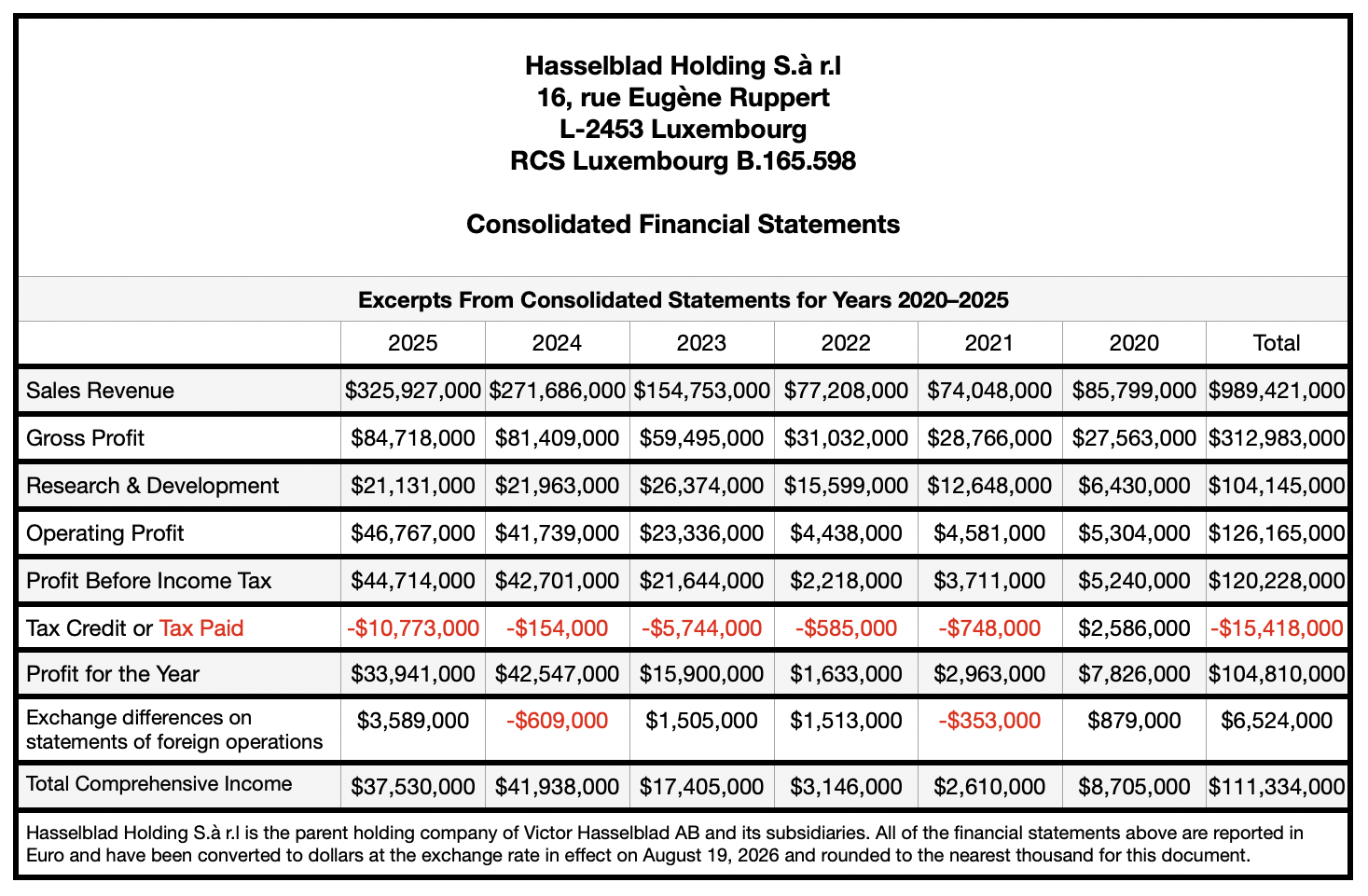
Hasselblad operates as a private company under its parent entity, DJI, so it does not publish detailed quarterly earnings calls or SEC-style public reports. However, official annual corporate filings submitted by its operating subsidiaries (Victor Hasselblad AB in Sweden and Hasselblad Holding S.à r.l. in Luxembourg) reveal the following recent financial figures:


Victor Hasselblad AB (Primary Operating Entity)

  • Sales Revenue: SEK 1.89 billion
  • Operating Income: SEK 438.2 million
  • Net Profit: SEK 344.8 million

Business Highlights & Drivers

  • Growth Trajectory: Hasselblad’s financial turnaround in recent years has been largely driven by the strong adoption of the X2D 100C mirrorless system, followed by the 907X & CFV 100C and compact XCD lens releases (e.g., XCD 28P, XCD 25V, XCD 20–35E, XCD 75P).
  • Parent Support: Since being acquired by Chinese technology firm DJI, Hasselblad has leveraged shared supply chain efficiencies and technological integration, moving the brand back into strong profitability compared to its losses in the early 2010s.

Hasselblad 2025 financial results

All figures below are the dollar-converted figures from the financial table you provided; the actual filing is in euros.

$ millions 2025 2024 Change
Sales revenue $325.9M $271.7M +20.0%
Gross profit $84.7M $81.4M +4.1%
R&D $21.1M $22.0M −3.8%
Operating profit $46.8M $41.7M +12.0%
Profit before tax $44.7M $42.7M +4.7%
Tax credit / (tax paid) −$10.8M −$0.2M
Profit for the year $33.9M $42.5M −20.2%
Total comprehensive income $37.5M $41.9M −10.5%

The big story: revenue continues to surge

Hasselblad’s revenue has grown dramatically over the past three years:

  • 2022: $77.2M
  • 2023: $154.8M +100%
  • 2024: $271.7M +75.6%
  • 2025: $325.9M +20.0%

So revenue has more than quadrupled since 2022 and increased almost 4× between 2020 and 2025. The implied 2020–2025 revenue CAGR is approximately 30.6%.

Gross margin deteriorated significantly

This is probably the most interesting part of the results. Hasselblad’s gross profit increased only from $81.4M to $84.7M, despite revenue increasing by $54.2M. That means the gross margin fell from approximately:

  • 2024: 30.0%
  • 2025: 26.0%

That’s a substantial deterioration. For comparison:

Year Revenue Gross margin
2020 $85.8M 32.1%
2021 $74.0M 38.8%
2022 $77.2M 40.2%
2023 $154.8M 38.4%
2024 $271.7M 30.0%
2025 $325.9M 26.0%

So despite the enormous increase in sales, Hasselblad is generating less gross profit per dollar of revenue than it did several years ago.

Matt Granger’s Hasselblad Expert Setup Guide now updated for the latest X2DII camera & 35-100mm lens

Operating profit still improved

Despite the weaker gross margin, operating profit increased from $41.7M to $46.8M, or approximately 12%. Operating margin was:

  • 2024: 15.4%
  • 2025: 14.3%

So operating profitability remained quite strong, but the margin slipped. One notable factor is R&D. Hasselblad spent approximately $21.1M on R&D in 2025, down from $22.0M in 2024 and $26.4M in 2023. R&D therefore represented about 6.5% of revenue in 2025.

Net profit declined substantially

This is where the headline looks less impressive. Hasselblad’s profit for the year fell from $42.5M in 2024 to $33.9M in 2025, a decline of approximately 20%. The difference is particularly notable because operating profit actually increased. The table shows a $10.8M tax expense in 2025, compared with only about $154,000 in 2024. That explains much of the gap between the improvement in operating profit and the decline in net income. Net margin consequently dropped from approximately 15.7% in 2024 to 10.4% in 2025.

Six-year picture

The overall trajectory is striking:

Year Revenue Operating profit Net profit
2020 $85.8M $5.3M $7.8M
2021 $74.0M $4.6M $3.0M
2022 $77.2M $4.4M $1.6M
2023 $154.8M $23.3M $15.9M
2024 $271.7M $41.7M $42.5M
2025 $325.9M $46.8M $33.9M

In other words, 2025 was Hasselblad’s biggest sales year by a very large margin, and operating profit was also a record in this six-year series. But 2024 was actually the better year for bottom-line profitability.

You can download the financial records from this page.

The latest financial results from Nikon, Fujifilm, Tamron, GoPro, Kodak, and Panasonic

The post Hasselblad’s latest financial results: sales up 20%, gross margins declined sharply, net profit fell 20%, operating profit reached a new high appeared first on Photo Rumors.

Stop photographing the landmark. Start photographing the trip

Years from now, you won’t care about your version of the shot everyone else has. You’ll care about the one only you could take.

Eiffel Tower lit at night with a bright spotlight, Seine River reflecting city lights, and decorative bridge statues in Paris.Dale Baskin

Every photographer knows the drill. You return from a trip, start copying photos from your memory cards, pour a coffee, and begin culling your images. Or some variation of that. And somewhere in that process, something strange begins to happen.

The photos you actually traveled to take – the ones that required you to arrive early to get a spot for your tripod – get a quick look, maybe even an edit, and then a shrug before you move on.

Meanwhile, a spontaneous shot of your friends pretending to do a fashion shoot in France gets exported and shared.

I’ve been doing this long enough to recognize the pattern, and I’m pretty sure I’m not alone.

Pigeons flying through an outdoor café with tables and chairs under large white umbrellas; people are dining and walking, with historic stone buildings in the background.
Dubrovnik is full of recognizable architecture and alleys, thanks to Game of Thrones, but this photo is one of my favorites because it captures the essence of the place.
Dale Baskin

The pull of iconic places

There’s a gravitational force to photograph famous places. You’re standing above Machu Picchu at sunrise, or below the Christ the Redeemer statue in Rio de Janeiro, and it feels almost negligent not to take a great photo of it. That’s the draw. It’s why you’re there. And it’s why there are often several hundred other people with cameras right next to you, trying to do the same thing.

I’m not suggesting you skip these photos, but before you spend half a day of your valuable travel time on one of them, it’s worth asking a simple question: Why am I doing this?

Llama in the foreground overlooking Machu Picchu ruins, with lush green mountains and a cloudy sky in the background.
Years ago, I captured this (rather mediocre) photo of Machu Picchu in Peru. It’s not terribly different than thousands of other shots taken that same day, from the same spot, probably with the same llama in them.
Dale Baskin
Three people pose together on a mountaintop overlooking Machu Picchu, with ancient stone ruins and mist-covered mountains in the background.
While it’s not exactly fine art, this is the photo of Machu Picchu I’m really glad I have, because it reminds me of an adventure with people who became friends.
Dale Baskin

Sometimes, the answer is genuinely good. Maybe you’ve been thinking about how to photograph the place for years and have a real vision for it – a unique angle or treatment that’s different from what everyone else has done. There are always new ways to photograph something that’s already been photographed a million times, and if you’re the person with that vision, that’s a gift. Go for it.

There’s a gravitational force to photograph famous places.

More often than not, however, the answer is that it’s an exercise. Photography is a craft and a skill, and one that requires repetition. Some of the most useful photos I’ve ever taken were mediocre pictures of famous things, because the mistakes I made taking them taught me something I later used.

And occasionally, you really do just get lucky. You’re standing somewhere right when the weather or the light does something extraordinary, and if you’re ready, you capture something rare. Luck, as the saying goes, is what happens when preparation meets opportunity. Taking a lot of unremarkable photos of iconic places is the kind of preparation that leaves you ready to act when that chance alignment of magic factors finally happens.

Person with arms outstretched mimicking the Christ the Redeemer statue in Rio de Janeiro, with other tourists nearby on a sunny day.
I got some pretty amazing photos of Christ the Redeemer in Rio de Janeiro, Brazil, but the one that I always go back to is my travel buddy spontaneously jumping into the frame.
Dale Baskin

But sometimes, the honest answer is just that “you’re there,” and you feel like you should photograph whatever the thing is. That’s the one worth examining, because if the result is going to be identical to several million photos already on the internet, you’ve spent something valuable – your time on a trip you might never repeat – to produce a duplicate.

Then, there’s a middle path, and one I find myself embracing more often: if you’re going to shoot the icon, do something to personalize it and make it yours. Put someone you’re traveling with in the frame, or find something in the foreground that creates a humorous juxtaposition. It won’t be fine art, and it probably won’t win any awards. But then again, was your technically perfect shot going to win any in the first place?

The photos that matter

There’s a truism about travel stories: Nobody ever goes to a dinner party and tells stories about what went right on a trip.

Person poses against a stone wall on a sunny cobblestone street while another individual takes a photo; both wear casual clothes and sunglasses, with old buildings visible in the background.
I have lots of photos of iconic landmarks and places in France, but one of my favorite photos is of a couple friends doing a photo shoot on a small side street.
Dale Baskin

The stories that land, and the ones people actually listen to rather than finding an excuse to return to the buffet for another piece of shrimp cocktail, are the ones where things went sideways. The trip where you went to one country, but your luggage went to another. The “hotel with a view” whose view turned out to be an alley full of dumpsters. Or the food poisoning that arrived courtesy of a Michelin-starred restaurant.

Nobody ever goes to a dinner party and tells stories about what went right on a trip.

Photography works the same way. The frames that survive for years and decades are almost never the postcard-perfect shots. They’re the small vignettes, like a spontaneous photo with friends in a French village or the street vendor in Buenos Aires where you had the best food of your entire adventure.

Three people sit on a blue bench, with another person standing beside them wearing a red cape and antenna hat, holding a colorful drawing. The background wall has green, beige, and red sections.
The neighborhood of La Boca in Buenos Aires, Argentina, is famous for its colorful buildings, but my favorite memories are of its colorful characters.
Dale Baskin

When I was younger, I came home from a lot of trips with a lot of photos of famous things. Some were pretty good. A lot more were pretty mediocre. But what I learned pretty quickly was that, regardless of how good they were, other people were rarely that interested in looking at those photos.

What they did respond to were the candid, unstructured, and often just plain weird photos that captured the essence of the trip. Years later, those were the ones I cared about too.

So, shoot the icon if you want to shoot the icon. Just don’t let it take over your trip. Keep your camera ready during the in-between moments, the ones that don’t feel important when they’re happening. Odds are good that one of them is the photograph you’ll still be looking at in twenty years.

About the Author: Dale Baskin is a professional photographer, writer, and filmmaker based in the Pacific Northwest. He is the Managing Editor of DPReview.com.

Want to stay up to date on the latest product news and releases? Add DPReview as a preferred source to ensure our independent journalism makes it to the top of your Google search results.

add as a preferred source on google

Significant Sony FX3A, FX30, FX6, FR7 cinema cameras price increase announced in Japan

Par : PR admin
23 août 2026 à 01:44


Sony Japan announced a significant price increase for several cameras:

Model Product Old Price New Price Increase % Increase
ILME-FX3A FX3A body ¥581,900 ¥693,000 ¥111,100 19.1%
ILME-FX6V FX6 body ¥935,000 ¥1,045,000 ¥110,000 11.8%
ILME-FX6VK FX6 + 24-105mm ¥1,089,000 ¥1,215,500 ¥126,500 11.6%
ILME-FR7 FR7 PTZ cinema ¥1,430,000 ¥1,622,500 ¥192,500 13.5%
ILME-FR7K FR7 + 28-135mm ¥1,727,000 ¥1,972,300 ¥245,300 14.2%
ILME-FX30 FX30 XLR handle ¥352,000 ¥374,000 ¥22,000 6.3%
ILME-FX30B FX30 body ¥297,000 ¥319,000 ¥22,000 7.4%

  • Total affected products: 18 (7 cameras above + 11 memory cards)
  • Average increase across the priced products is reported at 12-14.5%
  • Here is the original text from Sony Japan:

Notice Regarding Price Revision for Some Products

Thank you for your continued patronage of Sony products. Sony Marketing Inc. will revise the manufacturer’s shipping prices for some products sold in Japan, effective September 1, 2026.
Due to the impact of the current external environment, including rising raw material costs and manufacturing/logistics costs, we will revise the shipping prices as follows. We will also revise the manufacturer’s suggested retail prices.

  • Date of revision of shipping price and suggested retail price: September 1, 2026
  • Target Categories: Cinema Line camera and professional camcorder products
  • Average price revision rate: Approximately 12% increase

The post Significant Sony FX3A, FX30, FX6, FR7 cinema cameras price increase announced in Japan appeared first on Photo Rumors.

OM System registered a new IM042 digital camera in Asia (a new PEN is coming?)

Par : PR admin
23 août 2026 à 00:51


OM System has officially registered a new camera with the Singapore PMREQ agency under the internal code IM042 (digital camera certification ESER/26/3353). The “IM” is OM Digital Solutions’ standard prefix for IMDA registration codes. “042” is the sequential model number in that internal naming system, placing this camera in a distinct position from prior registered models. The ESER route confirms the camera has at minimum Wi-Fi and/or Bluetooth connectivity, which is standard for any current OM System interchangeable-lens camera. Here are the previous OM System camera registrations:

Internal code Camera
IM027 OM-1 / OM-1 Mark II
IM030 OM-5
IM036 OM-3
IM037 OM-5 Mark II
IM042 Unknown

Additional information on the new IM042 digital camera certification:

  • Agency: Infocomm Media Development Authority (IMDA) of Singapore
  • Scheme: Enhanced Simplified Equipment Registration (ESER)
  • Number: ESER/26/3353
  • Category: PMREQ – Private Mobile Radio
  • Equipment type: Wireless LAN / RLAN (Wi-Fi/Bluetooth module)
  • Brand: OM SYSTEM
  • Model: IM042
  • Product description: Digital Camera


The official announcement is expected in September. A new OM System PEN camera has been rumored for a while:

It seems that OM SYSTEM confirmed plans for a new PEN camera

OM System is still considering a Pen F camera successor

OM SYSTEM on a new PEN camera: “The PEN series is a core part of the OM SYSTEM lineup, and we are actively exploring the possibility of a successor“

The post OM System registered a new IM042 digital camera in Asia (a new PEN is coming?) appeared first on Photo Rumors.

Is the digital camera industry really recovering?

Par : PR admin
22 août 2026 à 20:31


A new report from the Japanese Ministry of Economy, Trade, and Industry suggests that digital camera production is showing signs of recovery. Here is a recap of the original report:

  • Digital camera production (and camera lenses) had been under long-term pressure from the rise of smartphones, which caused production to start declining around 2008 (video cameras peaked earlier, in 2005, and fell more sharply).
  • Production dropped sharply in Q2 2020 due to COVID-19 restrictions, then fluctuated afterward.
  • Clear signs of recovery have appeared since 2025, according to the Mineral and Industrial Production Index.
  • Domestic shipments of lens-integrated (compact) cameras have risen for two consecutive years starting in 2024 (CIPA data).
  • For lens-exchangeable cameras: the long decline in DSLRs has leveled off; mirrorless cameras fell in 2025 but are now showing an upward trend, pointing to a generational shift toward mirrorless.
  • The recent pickup is attributed mainly to stronger demand from younger users for sharing and video content.
  • Despite the multi-year structural decline caused by smartphones, digital cameras are finding new life in niches that smartphones do not fully replace (higher image quality, interchangeable lenses, still + video capability).

While overall numbers are improving, the latest CIPA numbers show a slowdown. A good example here is Nikon – they have released only two lenses this year, and it seems that most of their upcoming products are even further delayed.

Also, what the report does not cover is the recent significant increase in prices as a result of the Trump tariffs, memory shortages, and geopolitical instability (Fujifilm is rumored to have another price increase on September 1st; see all recent price increases here):

Update: Sony Japan just increased the prices of several cinema cameras.

Another Fujifilm price increase is coming

Report from Japan: the top 10 used cameras with the biggest price increases

Ricoh GR camera models are getting a 6-11% price increase in Japan on July 1st

LaCie just increased prices in the US by around 9-12%

The post Is the digital camera industry really recovering? appeared first on Photo Rumors.

The latest financial results from Nikon, Fujifilm, Tamron, GoPro, Kodak, and Panasonic

Par : PR admin
22 août 2026 à 19:52


Here is a recap of the latest financial results from Nikon, Fujifilm, Tamron, GoPro, Kodak, and Panasonic:


Nikon:

Nikon’s Q1 results (April-June 2026, fiscal year ending March 2027) showed overall revenue rising to ¥164.1 billion (+¥6.0 billion YoY), but the Imaging Products business declined sharply. Imaging revenue fell 8.8% to ¥72.9 billion from ¥80.0 billion, while operating profit dropped 27.5% to ¥8.1 billion from ¥11.1 billion, with the margin slipping from 14.0% to 11.1%. Unit sales of interchangeable-lens digital cameras fell to 210,000 (from 270,000) and lenses to 310,000 (from 370,000), driven primarily by a contraction in demand in China; higher memory prices further pressured profitability despite foreign-exchange gains and U.S. tariff refunds. Nikon responded by cutting its full-year Imaging forecasts (revenue down ¥13 billion and operating profit down ¥3 billion versus prior guidance).


Fujifilm:

The Imaging segment (cameras and Instant systems) performed well, with revenue rising 16.2% to ¥168.8 billion and operating income up 3.9% to ¥43.4 billion. Consumer Imaging led the growth on strong Instax demand, especially mid- to high-end models such as the instax mini Evo and instax WIDE 400, the successful April 2026 launch of the entry-level instax mini 13, and expanded film production capacity while Professional Imaging (X-series and GFX digital cameras) also posted higher revenue, driven by solid sales of the X-T30 III and X-E5 plus continued strong demand for the long-selling X100VI, particularly in Asia.


Tamron – four new lens releases expected this year:

Tamron’s 2nd Quarter/1st Half FY2026 results showed overall H1 net sales of ¥43.281 billion (+3.8% YoY) but operating income of ¥7.689 billion (-16.5% YoY), with Q2 sales up 11.4% and operating income down 14.5%; the Photographic Products (camera/lens) segment was the main drag, posting H1 sales of ¥27.534 billion (roughly -8-10% YoY) and operating income of ¥5.943 billion (-29.3% YoY), while Q2 segment sales dipped 1.1% and operating income fell 22.7%.


GoPro – camera sales down 38%, cash down to $27 million:

GoPro reported Q2 2026 results with revenue of $105 million, down 31% year-over-year, driven by weaker hardware sales as sell-through fell to about 291,000 camera units (down 38% YoY). Subscription and service revenue rose 11% to $29 million (28% of total revenue, up from 17%), including $2 million from an AI content licensing program, while the subscriber attach rate hit a record 69% (vs. 54%). Retail channel revenue was $58 million (56% of total, down 48% YoY), while GoPro.com revenue reached $47 million (44%, up 13% YoY). The $19 million tariff refund benefit was partially offset by a $15 million component-commitment charge; the company posted a net loss of $51 million ($0.30 per share) versus a $16 million loss a year earlier and adjusted EBITDA of -$29.5 million.


Kodak:

Eastman Kodak reported strong second-quarter 2026 results, with consolidated revenue rising 18% year-over-year to $311 million from $263 million, driven by Print segment revenue of $195 million (+10%) and Advanced Materials & Chemicals revenue of $105 million (+40%). Gross profit surged 61% to $82 million (margin expanding to 26% from 19%), Operational EBITDA climbed to $36 million from $9 million, and GAAP net income reached $17 million versus a $26 million loss in the prior-year period, marking the company’s fourth consecutive quarter of year-over-year improvement in revenue, gross profit, and Operational EBITDA. Cash ended the quarter at $290 million (down $47 million from year-end 2025, largely due to Term Loan repayments partially offset by pension asset redemptions), as CEO Jim Continenza highlighted “stability and growth” and Kodak’s shift into a growth-focused phase with improved operational and financial leverage.


Panasonic:

Panasonic Holdings’ Q1 FY2027 results delivered the company’s strongest first-quarter operating profit in 41 years, but the camera business played no meaningful role in the surge. Group sales rose 6.4% year-over-year to ¥2,018.9 billion, while operating profit more than doubled to ¥182.5 billion (adjusted operating profit ¥186.4 billion) and net profit attributable to shareholders reached ¥188.9 billion, driven almost entirely by AI-infrastructure demand, especially data-center energy storage systems (nearly doubled) and related electronic components such as conductive polymer capacitors. Full-year guidance was raised to ¥7,800 billion in sales and a record ¥590 billion in operating profit (the highest annual figure in 42 years). In contrast, the LUMIX camera business sits inside the Imaging Solution Business Division, which is buried within the AVC unit of the Smart Life segment (alongside TVs and communication networks). Smart Life was the only major segment to post lower sales (¥311.1 billion, down roughly 2–8% depending on currency adjustment), with AVC itself falling nearly 14% to ¥73.1 billion from ¥84.8 billion a year earlier due to weaker demand in Europe and China; segment profit improved modestly only because of rationalization and restructuring, not volume or product strength. Rising memory prices were explicitly cited as a headwind that further weighed on the AVC/camera-adjacent business, underscoring that Panasonic’s record quarter had essentially nothing to do with cameras.

The post The latest financial results from Nikon, Fujifilm, Tamron, GoPro, Kodak, and Panasonic appeared first on Photo Rumors.

This pocket-sized camera zooms to 2000mm and tracks wildlife on its own

The RocXZoom pairs a 50x hybrid zoom with an AI tracking system that recognizes more than 300 bird species. It’s boasts the kind of reach that used to demand a telephoto lens and a tripod, all in a body that fits in a jacket pocket.

man holding RocXZoom camera to take picturesFarseer

Long-range photography has always come with a bit of a packing problem. Getting close to a hawk in the distance or a bear traversing a faraway hillside traditionally means carrying a full-frame body, a telephoto lens the size of your forearm, a tripod to steady it all, and the patience to keep a subject in frame by hand. The Farseer RocXZoom reimagines that kit with a camera that only weighs about 400 grams.

The RocXZoom combines 20x optical zoom with 50x hybrid zoom for a 40 to 2000mm equivalent range, which is the kind of telephoto territory that’s normally reserved for dedicated lens setups. The difference is that this one delivers it without the large traditional lens-and-tripod rig, and in a package that’s light enough to carry on a trail all day.

Automatically follow the action

Farseer RocXZoom Farseer

At the equivalent of 2000mm, a subject can exit the frame with a flick of a wing, which is where the camera’s Physical AI system comes in. The intelligent vision system is designed to identify subjects, track their movement, and keep them framed while zooming, with a powered pan-and-tilt system that physically follows the action. It’s built for the subjects that punish slow hands like birds, wildlife, athletes, and other fast-moving targets.

For birders specifically, there’s a learning layer built in. The AI recognition system can identify more than 300 bird species in real time, so the camera helps users understand what they’ve captured, not just capture it.

Steady at the extremes

Farseer RocXZoom Farseer

Handheld shooting at extreme telephoto lengths usually produces shake. The RocXZoom helps remedy that with dual stabilization, pairing a gimbal with electronic image stabilization to help keep long-range photos and video steady without a tripod. A dedicated mobile app rounds out the control capabilities by letting users operate the camera remotely, adjust framing, and manage shooting from a connected device.

Ready for anything

Farseer RocXZoom Farseer

A camera geared toward capturing wildlife and sports action has to thrive where those subjects live. The RocXZoom’s aluminum body carries an IP54 rating and is designed for demanding outdoor environments, from dusty trails to unpredictable weather on the sidelines.

The RocXZoom has an MSRP of $799, but early backers can get it for $449 on Kickstarter. For anyone who has left the long lens at home one too many times, its lightweight design makes a compelling case for always bringing it along.

And, for those who’d like to pair the RocXZoom with another camera, there’s the RocXZoom pro package, a gimbal bundle that allows you to mount the RocXZoom onto your existing camera via a hot shoe mount. This improves tracking stability, enables object tracking, and supports APP control. The RocXZoom Pro has an MSRP of $2,099, but early backers can get it for $849 on Kickstarter.

The LK Samyang AF 60-180mm F2.8 shows just how far budget lenses have come

Take a look through our sample gallery to see how well this budget fast zoom lens for E- and, soon, L-mount performs.

A 3/4 view of the LK Samyang 60-180mm F2.8 against a gray background.Mitchell Clark

Earlier this summer, LK Samyang announced the AF 60-180mm F2.8, its latest lens that it says was developed in collaboration with German optics company Schneider-Kreuznach. We’ve had the chance to test it out the version for E-mount (though the company has recently announced it’ll be available for L-mount next week), shooting with it in a variety of conditions to produce a sample gallery, and forming some impressions along the way.

In use

The thing I immediately noticed about this lens was its weight, as it comes in at just 730g (1.6lbs). According to LK Samyang, it’s the lightest option in this class, and I found that difference noticeable. It was very easy to carry around, even for extended shooting sessions. While the lens extends as you zoom in, this doesn’t result in a substantial shift in its center of gravity, which is always nice when changing focal lengths.

Speaking of, though, the zoom ring might be the lens’s weakest point. It has a nice textured rubber coating, but can be a bit difficult to turn with any amount of precision, as it’s quite stiff, but inconsistently so; I sometimes had to work to turn it from 60mm, before finding myself in an easy patch sailing right through the focal length I wanted. It’s not end of the world, and I got used to it with practice, but it is a reminder that you’re using a budget lens. 

The LK Samyang AF 60-180mm F2.8 FE against a gray background, extended to its 180mm setting.
The lens doesn’t extend very far when going from 60mm to 180.
Mitchell Clark

The lens is also made out of a plastic that isn’t the most premium-feeling. Nor does the customizable control button, though it’s a nice inclusion. Finally, LK Samyang has added a lock switch to keep the lens at 60mm while you’re walking around with it, though I found the mechanism’s stiffness was enough to keep it from accidentally extending. However, it does hold it incredibly well; I once accidentally locked the lens, and was completely unable to turn the zoom ring until I discovered what had happened.

It focuses quite quickly, though it’s not the absolute fastest I’ve ever experienced. That’s not surprising given that it uses stepping motors rather than linear ones, but it should be more than acceptable for everything but the fastest of action. I also appreciated its close focusing abilities, as it has a minimum focusing distance of just 0.35m (1.2′) at the wide end, letting me get quite close to my subject, which suits my style of shooting. Unlike the zoom ring, the manual focus ring is perfectly pleasant to use.

A golden retriever wearing goggles stands over a smaller border collie on the back of a blue convertible. According to a sticker conveniently covered by its paw, the larger dog's name is Ashtray, and the smaller dog's name is Cherry.
Sony a7R V w/ LK Samyang AF 60-180mm F2.8 @ 80mm | F4.5 | 1/160 sec | ISO 100

While this lens is in some ways competing with the venerable 70-200mm F2.8 options available from Sony, Panasonic and Sigma, its closest competitor is the Tamron 70-180mm F2.8 Di III VC VXD G2, a lens I tested out earlier this year. In my mind, there’s no clear winner between the two; the Tamron weighs a bit more, but its body and controls feel a bit nicer (or, in the case of the zoom ring, a fair bit nicer). It also has optical image stabilization, snappy autofocus motors and access to the special features Tamron’s been adding to its lineup via its app. But then I also found myself appreciating the ability to go that bit wider with the Samyang. And both have image quality that would’ve been unthinkable at this price range just a few years ago, though the vignetting at F2.8 is perhaps a touch less noticeable on the Samyang.

It’s nice that there’s another budget option for a fast tele-zoom for E-mount, and one that’s quite capable for its price. It’s perhaps more exciting that it’s coming for L-mount, where there aren’t that many lightweight, budget tele options. It’s also nice to see that Samyang doesn’t seem to be waiting a long time between releasing lenses for the system after announcing them for E-mount.

Sample gallery

Please do not reproduce any of these images on a website or any newsletter/magazine without prior permission (see our copyright page). We make the originals available for private users to download to their own machines for personal examination or printing; we do so in good faith, so please don’t abuse it. 

Thanks to Sony for the loan of an a7R V to shoot this gallery. All images were processed using our standard lens workflow in Capture One, with the manufacturer’s distortion correction applied but no correction of vignetting. The profile corrects a fair amount of barrel distortion at the wide and some pincushion distortion at the long end. It’s enough that we’d recommend using the corrections if you can, though we don’t consider them an essential part of the lens’s design.

Loading gallery…

About the Author: Mitchell started taking pictures at 10 and hasn’t stopped since. It’s been a wide-ranging adventure, spanning a wide variety of genres and locales, and occasionally dipping into fascinations with video and filmmaking. They honed their technical knowledge doing documentation, programing and QA, writing for The Verge, and just generally messing around on the computer to see what breaks.

Want to stay up to date on the latest product news and releases? Add DPReview as a preferred source to ensure our independent journalism makes it to the top of your Google search results.
add as a preferred source on google

2025 digital camera shipment market share

Par : PR admin
20 août 2026 à 19:31


Here is the 2025 digital camera shipment market share from the latest Nikkei Industry Report:

2025 Camera Shipment Ranking

  1. Canon: 4.5 million units (45.7%, +2.5%)
  2. Sony: 2.42 million units (24.6%, -3.9%)
  3. Fujifilm: 1.16 million units (11.8%, +2.8%)
  4. Nikon: 880,000 units (8.9%, -2.8%)
  5. Panasonic: 430,000 units (4.4%, +1%)
  6. Ricoh Imaging: 210,000 units (2.1%, +1.3%)
  7. OM Digital: 150,000 units (1.5%, -0.4%)

2024 Camera Shipment Ranking

  1. Canon: 3,53 million units (43.2%)
  2. Sony: 2.33 million units (28.5%)
  3. Nikon: 960,000 units (11.7%)
  4. Fujifilm: 740,000 units (9.0%)
  5. Panasonic: 280,000 units (3.4%)
  6. OM Digital: 160,000 units (1.9%)
  7. Ricoh Imaging: 70,000 units (0.8%)

2023 Camera Shipment Ranking

  1. Canon: 3.34 million units (46.5%)
  2. Sony: 2 million units (27.9%)
  3. Nikon: 810,000 units (11.3%)
  4. Fujifilm: 430,000 units (6.0%)
  5. Panasonic: 260,000 units (3.6%)
  6. OM Digital: 180,000 units (2.5%)
  7. Ricoh Imaging: 60,000 units (0.8%)

Source: Nikkei Industry Report, via dclife

The post 2025 digital camera shipment market share appeared first on Photo Rumors.

TTArtisan’s $99 AF 85mm F1.8 gives Sony E and Nikon Z shooters a portrait lens with customizable colors

The Neo 85mm trades the expected control layout for a minimalist body and a price that undercuts the next-cheapest autofocus 85mm by a substantial amount.

Black camera held in both hands over a blue and white checkered tablecloth, with blurred flowers in the background.TTArtisan

TTArtisan has announced the AF 85mm F1.8 Neo, a budget-friendly, full-frame portrait lens for Sony E and Nikon Z mounts. The lens strips out any on-lens controls, including the aperture ring and focus ring, opting for simplicity to keep the price just below $100. 

The new lens is the second in TTArtisan’s minimalist Neo series. Until now, the lineup consisted solely of the AF 50mm F1.8 Neo, another design with no on-lens controls. Experienced shooters may find the lack of manual focus unusual, but it is one of the compromises that come with the low price. Aperture, which ranges from F1.8 to F16, is adjusted through the camera body.

Camera with a large, uniquely designed blue and white lens held in a hand, positioned for photography.
TTArtisan offers free downloadable 3D model files so users can design and print their own custom shells for the lens.
TTArtisan

One interesting feature of the Neo lineup is the ability to add 3D-printed shells to the lens. TTArtisan promoted this with the 50mm F1.8 Neo, highlighting the ability to customize the look of the lens to your liking. The shells aren’t included and TTArtisan doesn’t sell them directly, but it does provide downloadable 3D lens-model files for users to design and print their own. 

Person in a light blue shirt holding a camera up to their face, with blurry flowers and greenery in the background.
The lens body is made from reinforced fiberglass, which helps keep weight down without sacrificing durability.
TTArtisan

In terms of lens specifications, the 85mm F1.8 Neo is lightweight for its class. The shell is made from reinforced fiberglass, and it weighs just 332 g (11.7 oz). It measures 90.5 mm (3.6″) long and accepts 62mm front filters. Its optical formula consists of 12 elements in 8 groups and includes 2 extra-low-dispersion and 2 high-index elements, which TTArtisan says provide “optimal” sharpness. It also features an 11-blade aperture diaphragm.  

The TTArtisan AF 85mm F1.8 Neo is available for pre-order now for $99 with versions for Nikon Z and Sony E mounts. 

About the Author: Abby Ferguson holds an MFA in photography and blends a fine-art background with extensive editorial and commercial experience. She built and led an in-house imaging program for a large vacation rental company and has served as an associate editor at Popular Photography. She also teaches at a local community college and serves on its Photographic Technology Program Advisory Board, sharing her knowledge and enthusiasm for the medium.

Want to stay up to date on the latest product news and releases? Add DPReview as a preferred source to ensure our independent journalism makes it to the top of your Google search results.

add as a preferred source on google

Pixel 11 Pro camera samples: full-res 50MP Raw files, plus Magic Capture and Camera Looks

See how Google’s AI-driven Magic Capture performs, plus every Camera Look shot with Raw so you can check the processing against the source.

Three colorful kayaks on a rocky riverbank, with two individuals in helmets and life jackets standing near the water; trees and clouds in the background.Dale Baskin

Our Pixel 11 Pro XL sample gallery is now live and covers the newest camera modes on Google’s flagship smartphone, including Magic Capture and Camera Looks. We shot photos using all three rear cameras on the Pixel 11 Pro at their maximum 50MP resolution. 

If you’re considering a Pixel 11 Pro or Pro XL for its camera upgrades, this gallery offers real-world output files you can evaluate before you buy.

We’ve been shooting a Pixel 11 Pro XL production unit since launch day and have done our best to capture photos that reflect real-world scenarios across a range of lighting conditions and scenes. Since the Pixel 11 Pro XL and the smaller Pixel 11 Pro share the same triple-camera system, the results here are representative of what you would get from either model.

Two people in a blue tube float down a river beneath a bridge, with water splashing around and concrete supports and greenery in the background.
Magic Capture, a new feature in Google’s Pixel 11 series, lets you capture a video stream, then uses AI to identify the best frames and convert them into 12MP photos.
Dale Baskin

In addition to JPEG files, we have included downloadable Raw files for every mode that supports them. That means you can pull the files into Lightroom, Capture One or any other Raw-capable editor and draw your own conclusions rather than relying solely on the out-of-camera samples. However, it’s worth keeping in mind that on any modern smartphone, the manufacturer’s computational and AI technology is an important part of the image processing pipeline.

The gallery includes several examples captured using Google’s new Magic Capture mode and Camera Looks.  Magic Capture lets you capture video while AI analyzes the footage to select what it considers the best frames, converting them into 12MP stills. Since Magic Capture works from video frames, it doesn’t produce Raw files, so those samples appear in the gallery as JPEGs only.

Camera Looks lets you dial in a visual style before you shoot rather than applying a filter after the fact.  We photographed two distinct scenes, one rural and one urban, using every available Camera Look, so you can see how each style performs across different types of subject matter. For more information on how both features work, see our hands-on look at Magic Capture and Camera Looks.

Sample gallery

Please do not reproduce any of these images on a website or any newsletter/magazine without prior permission (see our copyright page). We make the originals available for private users to download to their own machines for personal examination or printing; we do so in good faith, so please don’t abuse it. 

Loading gallery…

About the Author: Dale Baskin is a professional photographer, writer, and filmmaker based in the Pacific Northwest. He is the Managing Editor of DPReview.com.

Want to stay up to date on the latest product news and releases? Add DPReview as a preferred source to ensure our independent journalism makes it to the top of your Google search results.

add as a preferred source on google

Meike lens roadmap: new autofocus zooms & fast f/1.2 primes

Par : PR admin
20 août 2026 à 17:54


I already reported on the rumored Meike AF 65mm f/1.4 & AF 110mm f/1.8 lenses for GFX mount. Here is the full list of upcoming Meike lenses (check the official website for updates):

  • Meike AF 24-70mm f/2.8 full frame
  • Meike AF 65mm f/1.4 medium format
  • Meike AF 110mm f/1.8 medium format
  • Meike AF 50mm f/1.2 VCM full-frame (see old version)
  • Meike AF 70-180mm f/2.8 full-frame
  • Meike AF 35mm f/1.4 MIX full-frame (see old version)
  • Meike AF 100mm f/2.8 macro full-frame
  • Meike AF 85mm f/1.2 VCM full-frame

The above lenses will most likely be available for Sony E, Nikon Z, and Leica L mount.

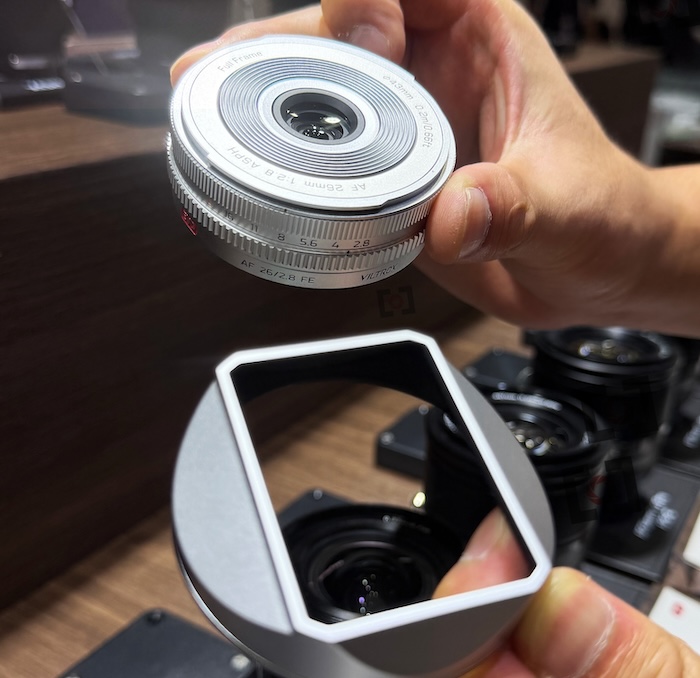
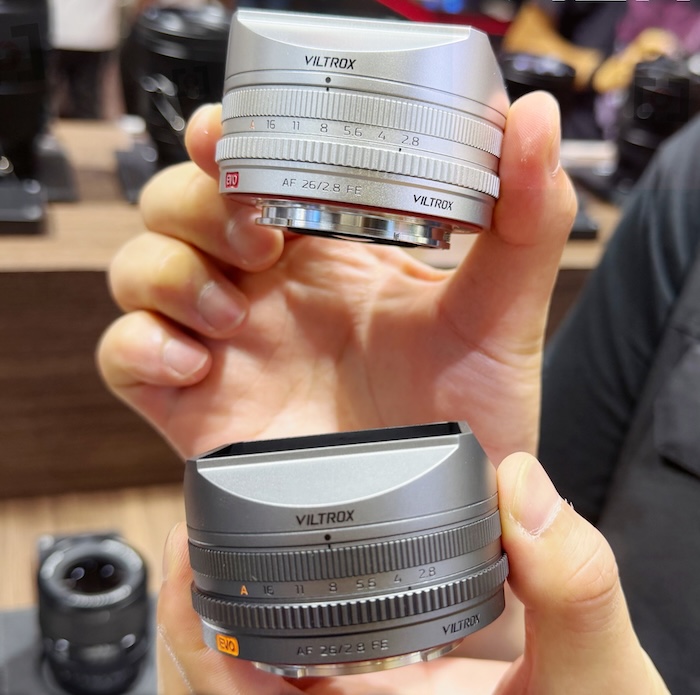
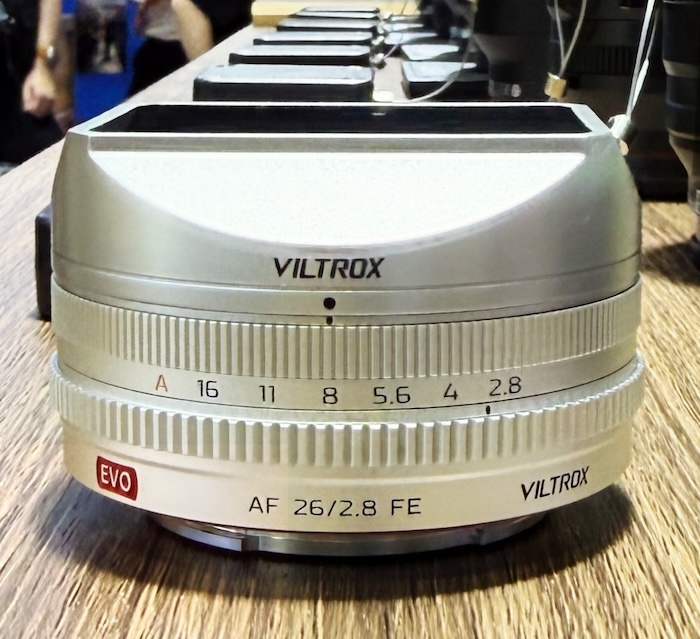
The latest new and upcoming lenses from Meike, Viltrox, 7Artisans, TTartisan, Laowa, Sirui, and SG-image

Meike is rumored to announce new AF 65mm f/1.8 & AF 110mm f/2 lenses for Fujifilm GFX mount

The post Meike lens roadmap: new autofocus zooms & fast f/1.2 primes appeared first on Photo Rumors.

DJI’s Osmo Pocket 4 and 4P firmware update adds D-Log slow motion, cloud uploads and improved tracking

DJI’s new firmware brings automatic cloud and NAS offloads to both pocket gimbals, while the Pocket 4 gains smarter tracking controls and the 4P adds 10-bit D-Log slow motion and diagonal joystick movement.

Black dual-lens camera gimbal with “1-INCH” label, shown in close-up against a blurred background with blue, red, and yellow colors.Mykim Dang

Barely four months after the Osmo Pocket 4’s debut, and less than two months after the Pocket 4P arrived, DJI is already rolling out a substantial firmware update for both pocket gimbal cameras. The updates promise to make both devices more useful as self-contained capture tools, adding background uploads to cloud storage to the pair, along with expanded tracking and control options for the Osmo Pocket 4 and 10-bit D-Log slow-motion recording on the Pocket 4P. 

Coming to both the Osmo Pocket 4 and 4P is DJI’s Camera Cloud Service. The feature allows users to automatically upload footage to supported cloud services or compatible network-attached storage (NAS) when the camera is idle. DJI says the service supports Google Drive, OneDrive and NAS, potentially making it easier and faster to offload clips after a shoot, provided you can connect the camera to a Wi-Fi network. 

A small gimbal camera with a built-in screen sits on a mini tripod atop a stone surface, positioned against a blurred cityscape backdrop under clear skies.
The Osmo Pocket 4 gains faster subject tracking, the ability to zoom while tracking, and retention of the last Smart Gimbal Mode after a power cycle.
DJI

On the Osmo Pocket 4, the update adds a new subject-tracking option that can identify and select a person or object more quickly, then use the gimbal to keep it in-frame as it moves. The camera also gains additional tracking controls, including the ability to zoom while tracking, and the ability to retain the last Smart Gimbal Mode used after the camera is powered off.

DJI has also expanded customization tools. The physical Custom Button’s hold action can now be assigned to either zoom out or open the custom-settings menu. In portrait orientation, the on-screen custom button can be mapped to single press, double press, triple press and press-and-hold actions.

The DJI Osmo Pocket 4P gimbal camera, standing up on a sidewalk.
10-bit D-Log slow motion is the headline addition for the Pocket 4P — though DJI notes it is D-Log, not the newer D-Log2 format.
Mykim Dang

The most notable change for the Pocket 4P is that its slow-motion mode can now record in 10-bit D-Log rather than relying on a baked-in color profile as before. It’s important to note, though, that DJI lists this specifically as D-Log, not the newer D-Log2. Still, it provides a more flexible starting point for users who want to grade footage or match it to other cameras. DJI has also updated its D-Log-to-Rec.709 and Rec.709 Vivid LUTs to version 2.0.

Finally, the Pocket 4P joystick now supports 45-degree inputs, allowing diagonal gimbal moves that combine pan and tilt in a single control motion.

Both updates are available now through the DJI Mimo app.

About the Author: Abby Ferguson holds an MFA in photography and blends a fine-art background with extensive editorial and commercial experience. She built and led an in-house imaging program for a large vacation rental company and has served as an associate editor at Popular Photography. She also teaches at a local community college and serves on its Photographic Technology Program Advisory Board, sharing her knowledge and enthusiasm for the medium.

Want to stay up to date on the latest product news and releases? Add DPReview as a preferred source to ensure our independent journalism makes it to the top of your Google search results.

add as a preferred source on google

This DPReview member’s minimalist black-and-white photos find intrigue in candid moments

Community member Johan O E, known as Ocoloy on the forums, prefers New Zealand as his base for minimalist black-and-white photography.

Street portraitJohan O E

Meet Johan O E

Home base: Sweden

Community member Johan O E, known as Ocoloy in the forums, has a passion for minimalist black-and-white photography. Many of his photos are portraits of ordinary people going about their daily lives, each with a unique angle that tells a particular part of their story.

“Since as long as I can remember, I´ve been in love with photography. From the album covers I saw as a child in the 80s to the surf and music magazines in the 90s. I´ve been photographing for nearly 30 years, but the last 15 years have been more intense. My dad is a photographer as well, but he has never influenced me in any form when it comes to photography. I was never allowed to use his cameras.”

Our ‘What’s in your bag?’ community spotlight series features readers sharing their favorite gear and photography, including from past DPReview collaborators. See below for what Johan has to share.

What draws you to a minimalist view?

Always ready with my camera for random moments
“Always ready with my camera for random moments.”

Fujifilm X-E1 | Fujifilm XF 18mm F2 R @ 18mm | F8 | 1/500 sec | ISO 320
Johan O E

“I shoot whatever inspires me. Preferably, there needs to be a person in the shot, but some of my best shots are free from people. I tend to go more for a minimalistic black-and-white vibe when I’m out and about. Been photographing all over the world. New Zealand has been my favorite by far. I also love portraits and candid moments.

I am in my third year with one camera, one lens, and a one-year project, OCOLOY. This time it is the Nikon ZF and the Voigtlander 40mm F1.2, and I only shoot in black and white. Accepts 36 images in color. I made a list of 36 things I love, which I will later print in color A4 and save.”

I like rough, wild and different environments. From stormy seas to deep jungles or the backstreets of towns in Europe.”

What’s in Johan’s bag

Johan's camera bag
Johan’s camera bag
Johan O E

Favorite cameras(s): Nikon Zf

Preferred camera bag: “I carry with me the simplest Caselogic bag available on the market. It has just enough space for the camera and barely anything more. I have two different camera bag setups, depending on my mood. My main bag is just my camera, an extra battery, a CPL and a mist filter. If I am out working, I also bring my tablet for editing and an Instax printer for special moments to give away prints.”

Must-have accessories: “I always bring music. I make playlists for different moods and photowalks. In fact, I am recording a song about photography at the moment in my recording studio. I got a crystal from a chandelier and sometimes put it in front of my lens to create different images. I try to carry as little as possible when I am out and about.”

Why is New Zealand on your visit list?

Backstreets of England
“In the backstreets of England, I came across a lone book reader.”

Fujifilm X-T2 | Fujifilm XF 23mm F2 R WR @ 23mm | F4 | 1/35 sec | ISO 200

Johan O E

“I have been on the road for the past 26 years, spending many years in New Zealand, Spain and Sweden. I’ve seen remote places in Asia, done a total of 12 months of van trips throughout Europe, spent 5 months in Sri Lanka, and taken surf trips to Hawaii and the Lofoten Islands. My most memorable photography trip was probably the COVID year, when I was 6 months into my time in New Zealand. I made a bucket list and got most of the shots, which later on boosted my photography career.”

Any strategies you’d pass along to your fellow photographers?

Street portrait
“This gentleman allowed me a quick photo as he stared across the street.”

Fujifilm X-S10 | Fujifilm XF 35mm F1.4 R @ 35mm | F2 | 1/125 sec | ISO 400

Johan O E

“It builds confidence to capture something unique and what I have not seen before. I use my eyes rather than predefined or scripted techniques. I almost always shoot in M mode, mostly with manual lenses, to create exactly what I want. I want a photograph to create emotions and make people look again.”

Photograph what you love and do not photograph purely for likes. Also, a good professional photography lesson will give you way more than any new camera or lens.”

Do you peer into Johan’s photos and see another person’s unique life looking back at you? He enjoyed participating in this spotlight article and would love to hear what you think of his photography in the comments below.

You can check out Johan’s other work at www.stayuntilforever.com,


Editor’s note: This article continues a series, ‘What’s in your bag?’, highlighting DPReview community members, their photography and the gear they depend on. Would you like your photography to be featured in a future installment? Tell us a bit about yourself by filling out this form.

About the Author: Mathew Anderson is a proud Community Manager for the technology industry and a past visitor to DPReview.com for all his camera needs. He is currently the lead of DPReview’s community and primary communication link between the community and DPReview’s team.

Want to stay up to date on the latest product news and releases? Add DPReview as a preferred source to ensure our independent journalism makes it to the top of your Google search results.

add as a preferred source on google

❌