Vue normale

CRYORIG H4 et H6, deux radiateurs excentrés en mode vintage

4 mai 2026 à 08:19

Trois nouveautés sont en approche chez CRYORIG, et elles rappelleront quelques souvenirs aux plus anciens puisque la forme en L des caloducs renvoient directement à la série NT-01 de SilverStone ou encore au système spécifique des Shuttle XPC. Un moyen comme un autre de déporter au maximum la tour d'ailettes vers l'arrière du boitier afin de l'approcher du ventilateur en extraction ? Oui, tout en gardant un radiateur compact, peut-être même trop puisque le ventilateur arrive tout juste au niveau du milieu de la base. CRYORIG H4 Pas de surprise avec la référence, on trouve quatre caloducs de 6 mm pour le H4, avec une base en Direct Touch. La hauteur est de 148 mm seulement, avec un ventilateur qui vient assez proche de la base. Petite surprise de son côté, CRYORIG prévoit une installation secondaire en plus des griffes avec un systèmes en plastique qui se visse au cadre. Avec des diodes ARGB, le ventilateur tourne de 800 rpm à 1800 rpm et délivre un débit d'air de 75.09 CFM avec une pression statique de 1.95 mmAq. […]

Lire la suite

DeepCool ajoute du RGB à son AG620 G2

4 mai 2026 à 06:26

Il y a quelques semaines, DeepCool dévoilait les versions G2 de deux ventirads très appréciés des consommateurs ne voulant pas se ruiner, avec un petit mais toutefois : l'éclairage RGB est absent. Un petit couac, selon le point de vue, corriger aujourd'hui sur un des deux produits avec la présentation du dual tower AG620 G2 ARGB. Le tronc commun Avec une hauteur de 159 mm, le radiateur reste relativement compact et il devrait trouver sa place dans de nombreux boitiers ; mais attention à la mémoire, le ventilateur avant venant se poser doucement sur les barrettes mémoire. Avec six caloducs qui partent d'une base en CTT 2.0, dernière innovation de la marque, cet AG620 G2 ARGB semble très intéressant, mais il faudra choisir avec son entre les deux versions puisque les performances ne sont pas identiques. […]

Lire la suite

ProGrade memory cards price increase coming on May 1st, others will follow

Par : PR admin
29 avril 2026 à 01:08


ProGrade announced a price increase on memory cards for May 1st. Memory prices are rising sharply because of a global shortage of NAND flash – the key material used in memory cards, SSDs, and similar storage. AI data centers are demanding huge amounts of special high-speed memory, so major chip makers like Samsung and SK Hynix have shifted production away from regular consumer flash. This has driven costs up dramatically across the industry and is the main reason companies like ProGrade Digital are increasing prices on memory cards starting May 1st. I am sure other brands will follow.

Buy your ProGrade memory cards today before the price increase.

ProGrade already had a price increase in December, 2025:

Significant ProGrade memory cards price increase coming in Japan (up to 123%)

Here is the official letter from ProGrade:

To our valued customers,

Three months ago, we wrote to you about the flash memory shortage driven by AI datacenter demand. Since then, the situation has intensified rather than stabilized, and we want to give you a clear update on what we’re seeing in the market.

Prices continue to rise, and we don’t expect memory prices to go down in 2026. While some industry analysts project this could extend into 2027, we’re focused on what we can see clearly: the pricing pressure and allocation constraints will persist through the remainder of this year.

We did not make any price increases in April. However, our costs are increasing significantly, and we will have to increase prices in May. We’re sharing this now not to drive urgency, but to give you the information you need to plan your own equipment decisions. Whatever timing works for your business, we wanted you to hear it directly from us.

These cost increases are industry-wide, not specific to ProGrade Digital. We’re grateful to our retail partners—including our own site, Amazon globally, and our authorized resellers around the world—who are working with us to navigate these challenges and keep product available to you wherever you prefer to shop.

Our approach hasn’t changed: we build the same quality into every product, and we communicate openly about market conditions rather than leaving you to guess what’s happening. That’s been our commitment from day one.

Our goal is to keep you shooting and delivering for your clients. We recognize these increases create real budget pressures, especially for independent creators and small production companies. We’re navigating the same constraints on our side, and we’re committed to being as predictable as we can be in an unpredictable market.

If you have questions or concerns, we want to hear from you. Our support team is in San Jose, CA, and we are available at support@progradedigital.com or by phone at +1.408.708.9290.

Thanks for your support.

Mark Lewis
Chief Marketing Officer & Co-Founder

The post ProGrade memory cards price increase coming on May 1st, others will follow appeared first on Photo Rumors.

Thermalright Assassin Classic-5 SE, encore une nouvelle référence !

28 avril 2026 à 09:04

Après avoir inondé son catalogue de radiateurs au format dual tower, Thermalright revient sur du plus simple et semble sur le point de revoir tout une partie de ses gammes. Aujourd'hui, place au modèle Assassin Classic-5 SE, qui se décline en BLACK et ARGB en fonction du ventilateur. Vers d'autres références ? Avec le suffixe SE, ce nouveau venu vise un segment tarif agressif bas, mais sans faire trop de concessions. Les caloducs sont nickelés, il y a un top qui cache les bouts des caloducs, mais on est en revanche sur une base en Direct Touch. De quoi laisser de la place à un modèle non SE un peu plus onéreux ? Avec Thermalright, tout est possible, et tant pis si le consommateur a du mal à choisir. Radiateur entièrement noir ou blanc, base non Direct Touch, les possibilités sont nombreuses et permettent à la marque de proposer un produit tous les deux ou trois euros ; en exagérant à peine. […]

Lire la suite

Comment jouer avec vos Mii de la Wii et de la 3DS sur Tomodachi Life : Une vie de rêve ?

24 avril 2026 à 07:56

Il existe une astuce pour transférer les Mii de votre Wii et de votre Nintendo 3DS vers la Nintendo Switch ou Switch 2. Tout ce dont vous avez besoin, c’est d’une figurine amiibo. Vous pourrez ainsi jouer avec vos anciens Mii sur Tomodachi Life.

Deux nouveaux ventirads compacts NT chez SilverStone ; mais pourquoi ?

23 avril 2026 à 07:15

Chez SilverStone, la gamme Nitrogon est dédiée au refroidissement relativement compact, même si le NT01 reste à part avec son petit côté Shuttle. Tout cela pour dire qu'on trouve plusieurs ventirads compacts NT, avec une orientation très marquée vers l'entrée de gamme depuis quelques temps : le but est de remplacer un radiateur stock manquant sans se ruiner. Aujourd'hui, deux nouveaux modèles s'ajoutent au catalogue, et ils ne sont pas là pour révolutionner le genre, loin de là, même si on trouve un peu de neuf pour des sockets AMD4 et AM5 délaissés sur ce format. NT07-AM5 Avec une hauteur de seulement 22 mm, le NT07-AM5 est dans un monde bien à part et sera réservé à des configurations très spécifiques avec un processeur de moins de 65 W de TDP. Pour autant, SilverStone voit les choses en grand avec un coeur en cuivre et un ventilateur de 80 x 10 mm qui va tourner de 1500 rpm à 3600 rpm pour un débit d'air de 28.14 CFM avec une pression statique de 2.6 mmAq. Les nuisances sonores risquent d'être un peu élevées à plein régime, SilverStone indiquant 34.7 dB(A). […]

Lire la suite

ZALMAN ZET5, un ventirad aussi beau et bruyant qu'un GE90 ?

22 avril 2026 à 11:10

Ventirad au design unique aujourd'hui en test à la Ferme avec le ZET5 de ZALMAN. Un style de réacteur d'avion assumé qui lui va à merveille, mais une fiche technique qui fait froncer un sourcil façon Teal'c avec une apostrophe. En effet, les deux ventilateurs retenus par ZALMAN, qui partagent de nombreux points communs avec les modèles de la marques à pales Shark, sont plutôt légers sur le débit d'air malgré une vitesse de rotation de 2000 rpm. Du bruit et des performances en retrait ? Pas tout à fait, même si on espère toujours mieux après quelques tests. Quel look ! Ne tournons pas autour du pot, le ZET5 est avant tout un petit achat craquage. Le style plait, on passe à la caisse et, au final, on n'a peu de mauvaises surprises sur les performances. Il fait le travail, avec des nuisances sonores peut-être un peu plus élevées que d'autres solutions, mais ! Hey, c'est un radiateur ! […]

Lire la suite

Stygian: Outer Gods reçoit une nouvelle mise à jour

Par : Loulou
18 avril 2026 à 14:15

À l’occasion du showcase Lovecraftian Days 2026 qui s’est déroulé il y a une semaine, certains espéraient voir enfin du gameplay du FPS Decadent, mais ils ont dû malheureusement se contenter d’un clip musical pour Stygian: Outer Gods qui est toujours en accès anticipé. En parallèle de l’événement, un billet de blog Steam a été publié pour le déploiement de la nouvelle mise à jour. Cette dernière ajoute un nouveau chapitre à la campagne principale, des quêtes, des lieux, des ennemis, des armes et des artefacts. Sur Steam, les derniers commentaires sont plutôt positifs, mais le point noir reste l’optimisation dégueulasse que certains joueurs continuent de souligner. Ce serait pas mal que les devs commencent à vraiment plancher dessus.

Si vous êtes intéressés par Stygian: Outer Gods, vous pouvez vous procurer l’accès anticipé plein pot sur Steam à 25 € ou profiter de la promotion à -20 % sur GoG jusqu’au 25 avril, soit un peu moins de 19 €.

Here are the 2026 TIPA photo and imaging awards

Par : PR admin
18 avril 2026 à 04:21


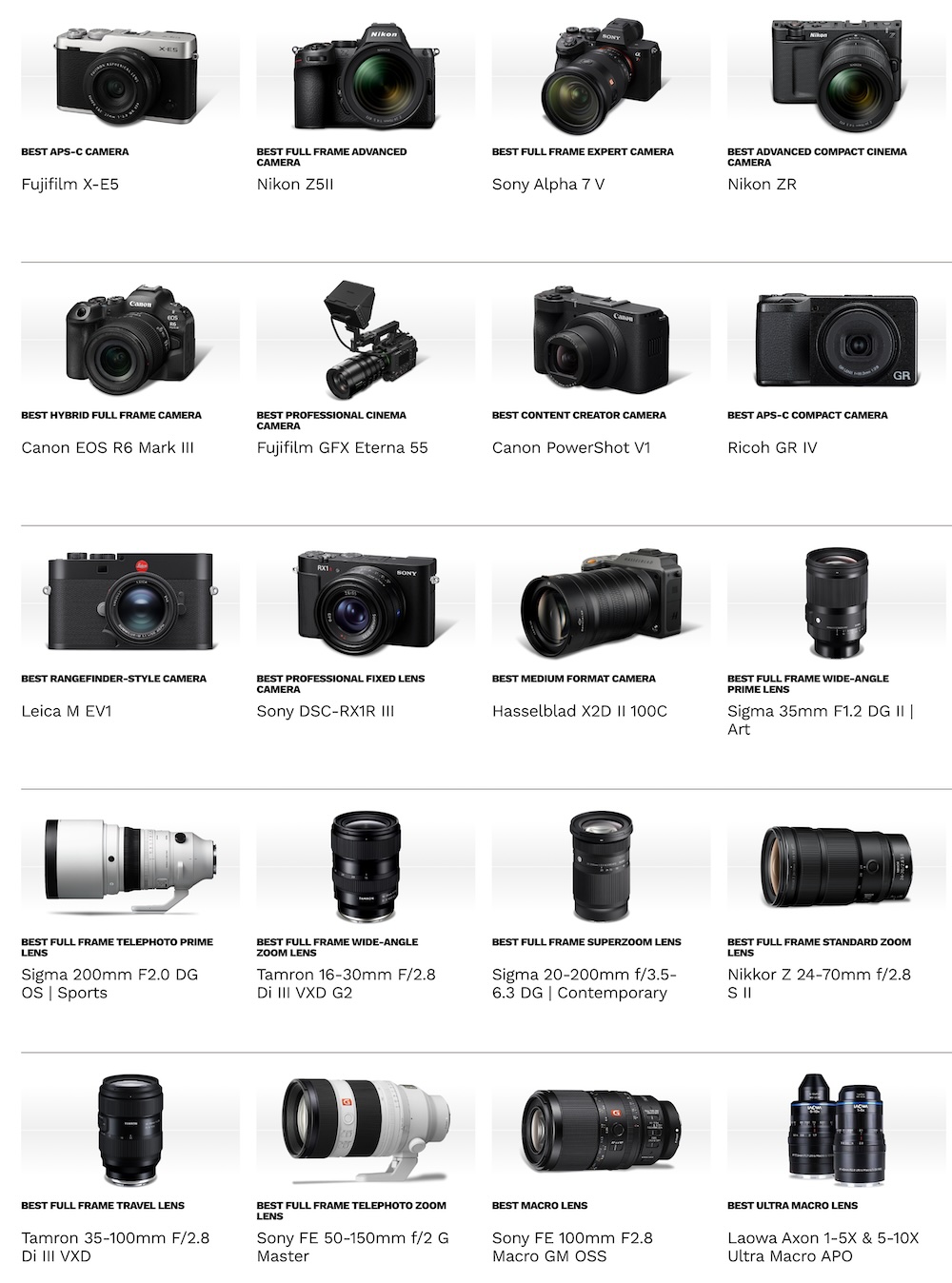
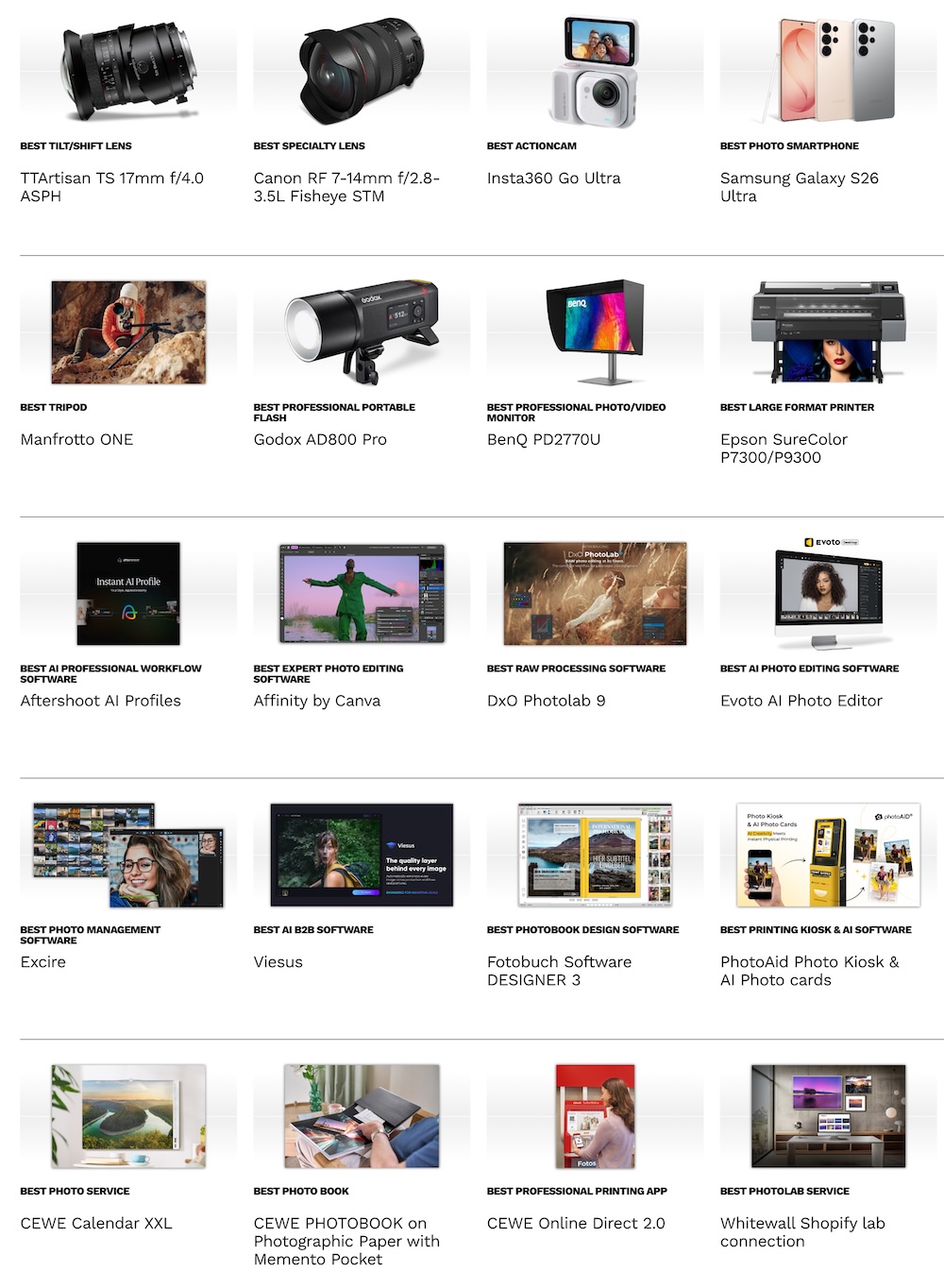
TIPA announced the 2026 photo and imaging gear awards – here are the winners:

Cameras

Lenses

Accessories

Additional information:

The Technical Image Press Association (TIPA) is pleased to announce the winners of the 2026 TIPA World Awards, recognizing the best photo and imaging products of the year. These internationally respected awards honor outstanding achievements in imaging technology, product design, and user experience across professional, enthusiast, and consumer markets.

The winners were selected during the annual General Assembly of TIPA members, which took place this year in Berlin (Germany). Editors and representatives from TIPA’s global network of print and online publications, spanning Europe, Asia, Australia, and North America, along with a delegate from the Japan Camera Journal Press Club, voted across 40 product categories. These categories cover a comprehensive range of imaging solutions, including cameras, lenses, software, accessories, monitors, and output systems.

The 2026 selections reflect an industry characterized by focused innovation and continuous refinement. Manufacturers are advancing their product lines through more powerful imaging pipelines, enhanced hybrid capabilities, and workflow-oriented solutions that address the evolving needs of today’s content creators. Significant progress has also been made in sensor technology, image processing, and autofocus performance. At the same time, there is a growing emphasis on design, portability, and overall user experience, appealing to a new generation of image-makers who value both functionality and lifestyle integration.

In addition to product excellence, the TIPA World Awards highlight key developments across the broader imaging ecosystem. These include advancements in media storage, optical engineering, and lighting technologies, underscoring the depth and diversity of the industry.

The Photographers’ Choice Awards will once again invite the public to participate in the selection process. Readers of TIPA member publications and online platforms will be able to vote for their preferred products in categories such as cameras, lenses, accessories, services, and technology and design. Starting May 1, voting will take place on www.tipa.com, and the results will be revealed during the official TIPA World Awards Ceremony at Imaging World, Nuernberg (Germany).

Thomas Gerwers, Chairman of TIPA, commented: “The TIPA World Awards reflect not only excellence in imaging tools, but also the dynamics and direction of an evolving market. The 2026 winners demonstrate how innovation, user-focused design, and technological performance continue to shape the future of imaging. We extend our sincere congratulations to all award recipients.”

The post Here are the 2026 TIPA photo and imaging awards appeared first on Photo Rumors.

Call of the Elder Gods, la suite de Call of the Sea, sortira le 12 mai

Par : Estyaah
9 avril 2026 à 22:04

On avait apprécié sa démo pendant le Steam Néo Fest de février, Call of the Elder Gods a désormais une date de sortie : ce sera le 12 mai prochain. Comme son prédécesseur Call of the Sea, c’est un walking-sim dans l’univers de Lovecraft, mâtiné d’énigmes et avec une direction artistique plutôt réussie, notamment grâce à son cel shading du plus bel effet. D’après les différentes vidéos de présentation et la démo – toujours disponible –, il est possible qu’il y ait un peu plus de challenge que dans le premier opus, ce qui ne serait pas un mal.

On n’a pas forcément grand-chose à vous dire de plus, alors, si comme nous, vous ressentez l’appel des profondeurs indicibles, vous pouvez ajouter Call of the Elder Gods à votre liste de souhaits Steam.

Le mod Black Mesa: Blue Shift fête ses 5 ans et montre les améliorations de son moteur

Par : Estyaah
25 mars 2026 à 00:33

Cela fait déjà cinq ans que HECU Collective a publié le premier chapitre du mod Black Mesa: Blue Shift. Pour l’occasion, l’équipe a fait une petite vidéo dans laquelle ils reviennent sur l’évolution du projet et les retours de la communauté, tout en rappelant au passage que les deux derniers chapitres (Power Struggle et A Leap of Faith) ainsi que l’épilogue (Deliverance) seront publiés dans une seule et même mise à jour. Pour rappel, ce mod pour Black Mesa (le remake d’Half-Life) entend nous faire revivre les aventures de Barney Calhoun, autrefois relatées dans l’extension plutôt moyenne Half-Life: Blue Shift, développée par Gearbox en 2001. Mais comme on a pu le constater avec les précédents chapitres, les moddeurs n’ont pas fait qu’un petit lifting des textures : ils ont modifié le gameplay, le game design et amélioré les niveaux. Et du coup, c’est vraiment très chouette.

La date de sortie n’a toujours pas été évoquée, mais avant cela, les développeurs ont l’intention de proposer une mise à jour technique du moteur, permettant d’améliorer nettement les lumières, tout en conservant de très bonnes performances. On nous parle également d’un nouveau système de difficulté, qui va jusqu’à la complexité des puzzles. De plus, ce ne sera pas limité au mod : Black Mesa pourra aussi bénéficier de tout ce travail afin d’avoir un meilleur rendu.

Cela devrait arriver « bientôt », sans plus de précisions. Si vous voulez plus d’informations, n’hésitez pas à parcourir la page du mod sur ModDB, et récupérer les précédents chapitres si ça vous tente.

À noter que pour jouer à Black Mesa: Blue Shift, vous devrez posséder Black Mesa, actuellement en promo à 2,92 € sur Steam.

Merci à alex_du597, notre correspondant local en direct de Xen pour l’info.

Western Digital Teases 128 TB Enterprise SSD: BiCS8 3D QLC for AI Workloads

7 août 2024 à 15:00

A week after Western Digital confirmed that it had begun sampling of its 64 TB SSDs for datacenters, the company has teased its next-generation product, a 128 TB solid-state drive at FMS 2024.

For now, all we know about Western Digital's 128 TB SSD is that it uses the company's BiCS8 QLC NAND memory and is designed primarily for 'fast AI data lakes and capacity-intensive performance applications,' as Western Digital does not seem to be disclosing too much information about its upcoming product. The sample on the show floor indicates the usage of a U.2/U.3 form-factor suitable for GPU servers.

BiCS8 NAND has 218 layers and uses a hybrid bonding scheme that is being tagged as CMOS directly bonded to Array (CBA). It must be noted that this technique is an evolutionary successor to Micron's CMOS-under-Array (CuA) and SK hynix's Periphery-under-Cell (4D PUC) technologies. BiCS8 NAND can interface to the controller at rates of up to 3600 MT/s, making it suitable for Gen 4+ drives.

The technology demonstration on the show floor had the drive's firmware optimized for AI checkpointing - a workload that involves sequential writes, but also requires the drive to support a minimum QoS for simultaneous read operations.

Western Digital is not the only company to talk about high-performance 128 TB SSDs. Samsung recently said that it has technology to build 120 TB-class drives, and Solidigm was also demonstrating a proof-of-concept 122 TB QLC SSD at FMS 2024. AI workloads have triggered an insatiable need for dense and power-efficient storage in the data center. This has served as an impetus for enterprise SSD vendors to continue pushing the envelop on the per-drive capacity front.


Micron Ships Denser & Faster 276 Layer TLC NAND, Arriving First In Micron 2650 Client SSDs

31 juillet 2024 à 15:15

Micron on Tuesday announced that the company has begun shipping its 9th Generation (G9) 276 layer TLC NAND. The next generation of NAND from the prolific memory maker, Micron's latest NAND is designed to further push the envelope on TLC NAND performance, offering significant density and performance improvements over its existing NAND technology.

Micron's G9 TLC NAND memory features 276 active layers, which is up from 232-layers in case of Micron's previous generation TLC NAND. At this point the company is being light on technical details in their official material. However in a brief interview with Blocks & Files, the company confirmed that their 276L NAND still uses a six plane architecture, which was first introduced with the 232L generation. At this point we're assuming Micron is also string-stacking two decks of NAND together, as they have been for the past couple of generations, which means we're looking at 138 layer decks.

Micron TLC NAND Flash Memory
  276L 232L
(B58R)
176L
(B47R)
Layers 276 232 176
Decks 2 (x138)? 2 (x116) 2 (x88)
Die Capacity 1 Tbit 1 Tbit 512 Gbit
Die Size (mm2) ~48.9mm2 ~70.1mm2 ~49.8mm2
Density (Gbit/mm2) ~21 14.6 10.3
I/O Speed 3.6 GT/s
(ONFi 5.1)
2.4 GT/s
(ONFi 5.0)
1.6 GT/s
(ONFI 4.2)
Planes 6 6 4
CuA / PuC Yes Yes Yes

On the density front, Micron told Blocks & Files that they have improved their NAND density by 44% over their 232L generation. Which, given what we know about that generation, would put the density at around 21 Gbit/mm2. Or for a 1Tbit die of TLC NAND, that works out to a die size of roughly 48.9mm2, comparable to the die size of a 512Gbit TLC die from Micron's older 176L NAND.

Besides improving density, the other big push with Micron's newest generation of NAND was further improving its throughput. While the company's 232L NAND was built against the ONFi 5.0 specification, which topped out at transfer rates of 2400 MT/sec, their new 276L NAND can hit 3600 MT/sec, which is consistent with the ONFi 5.1 spec.

Meanwhile, the eagle-eyed will likely also pick up on Micron's ninth-generation/G9 branding, which is new to the company. Micron's has not previously used this kind of generational branding for their NAND, which up until now has simply been identified by its layer count (and before the 3D era, its feature size). Internally, this is believed to be Micron's 7th generation 3D NAND architecture. However, taking a page from the logic fab industry, Micron seems to be branding it as ninth-generation in order to keep generational parity with its competitors, who are preparing their own 8th/9th generation NAND (and thus cliam that they are the first NAND maker to ship 9th gen NAND).

And while this NAND will eventually end up in all sorts of devices – including, no doubt, high-end PCIe Gen5 drives thanks to its high transfer rates – Micron's launch vehicle for the NAND is their own Micron 2650 client SSD. The 2650 is a relatively straightforward PCIe Gen4 x4 SSD, using an unnamed, DRAMless controller alongside Micron's new NAND. The company is offering it in 3 form factors – M.2 2280, 2242, and 2230 – with a modest set of capacities ranging from 256GB to 1TB.

Micron's 2650 NVMe SSDs offer sequential read performance of up to 7000 MB/s as well as sequential write performance of up to 6000 MB/s. As for random performance, we are talking about up to a million read and write IOPS, depending on the configuration.

Micron 2650 SSD Specifications
Capacity 1 TB 512 GB 256 GB
Controller PCIe Gen4 DRAMless
NAND Flash Micron G9 (276L) TLC NAND
Form-Factor, Interface Single-Sided M.2-2280/2242/2230
PCIe 4.0 x4, NVMe 1.4c
Sequential Read 7000 MB/s 7000 MB/s 5000 MB/s
Sequential Write 6000 MB/s 4800 MB/s 2500 MB/s
Random Read IOPS 1000K 740K 370K
Random Write IOPS 1000K 1000K 500K
SLC Caching Yes
TCG Opal Encryption 2.02
Write Endurance 600 TBW 300 TBW 200 TBW

The performance of the drives scales pretty significantly with capacity, underscoring how much parallelism is needed to keep up with the PCIe Gen4 controller. The rated capacity of the drives scales similarly, with the smallest drive rated for 200TBW (800 drive writes), while the largest drive is rated for 600 TBW (600 drive writes).

“The shipment of Micron G9 NAND is a testament to Micron’s prowess in process technology and design innovations,” said Scott DeBoer, executive vice president of Technology and Products at Micron. “Micron G9 NAND is up to 73% denser than competitive technologies in the market today, allowing for more compact and efficient storage solutions that benefit both consumers and businesses.”

Micron's G9 276-layer TLC NAND memory is also in qualification with customers in component form, so expect the company's partners to adopt it for their high-end SSDs in the coming quarters. In addition, Micron plans Crucial-branded SSDs based on its G9 NAND memory..

❌