Vue normale

Lawmakers Probe Growing Use of Chinese AI Models In US Companies

Par : BeauHD
9 juillet 2026 à 23:00
U.S. lawmakers are probing the growing use of Chinese AI models by American companies, citing concerns over censorship, security risks, and whether U.S. firms are turning to cheaper foreign models because domestic alternatives are too costly or restricted. The investigation is specifically looking at companies such as Cursor and Airbnb. "The growing use of Chinese AI models by U.S. companies raises serious concerns," a State Department spokesperson told CNBC. Those "AI models are designed to advance Beijing's narratives, censor dissent, and reflect CCP ideology and values." CNBC reports: The House Committee on Homeland Security and the House Select Committee on China said in April they will jointly investigate the growing adoption of Chinese-developed AI models. An initial step in the probe was for the chairmen of those committees to send letters to Cursor and Airbnb, over their "use of or exposure to these risks" through AI developed in China. "The Chinese Communist Party is no longer just nipping at our heels in artificial intelligence; it is racing to close the gap in some of the exact capabilities that will shape the future of cybersecurity," Andrew Garbarino, chairman of the U.S. House Committee on Homeland Security, told CNBC. "Recent reporting that a Chinese open-weight model can match leading U.S. models in certain vulnerability discovery and cybersecurity tasks is highly alarming," said Garbarino. While some government departments have banned the usage of Chinese AI models including DeepSeek, adoption of them by U.S. companies is not prohibited. Tech chiefs, including crypto company Coinbase's Brian Armstrong and AI startup Lindy's Flo Crivello, have been publicly touting the use of models from China to reduce costs. Cursor, which will be acquired by Elon Musk's SpaceX for $60 billion, built its Composer 2 model using Chinese AI model Kimi, which was developed by Moonshot AI. Alongside focusing on the rise of Chinese AI models, the ongoing joint House Committees' investigation is also looking into whether the U.S. is doing enough to tackle their rise. "The Committees are also examining whether the United States has a sufficient open-weight AI strategy to ensure American companies and cyber defenders are not forced to choose between expensive or restricted U.S. models and cheap, capable PRC-developed alternatives," a Committee aide, who asked not to be named as they were not authorized to discuss the ongoing probe, told CNBC. [...] The administration could consider the use of federal procurement bans, which would include restricting government agencies and private companies that serve the U.S. government from using Chinese AI models, Kyle Chan, fellow in the John L. Thornton China Center at think tank Brookings, told CNBC. "However, it's ultimately impossible to ban China's open-source AI models because their model weights are available freely on the internet," Chan added. "This could enter into first amendment speech issues." [...] Another [approach] could be disseminating findings about risks and vulnerabilities associated with Chinese AI models to U.S. companies. "Regardless, I do expect both the Executive Branch and Congress to communicate their interest not to see U.S. companies adopting these models," [said Daniel Remler, senior fellow, technology and national security program at think tank the Center for a New American Security (CNAS), told CNBC].

Read more of this story at Slashdot.

OpenAI Rolls Out GPT-5.6 After Government Greenlight, Announces 'ChatGPT Work'

Par : BeauHD
9 juillet 2026 à 20:00
OpenAI has received approval from the Trump administration to publicly roll out GPT-5.6 after an earlier limited preview restricted access to government-approved organizations. The company also launched ChatGPT Work, a new GPT-5.6-powered agent that combines ChatGPT and Codex-style capabilities. "It can gather context from the apps, files, and workflows you choose and create finished materials such as documents, spreadsheets, presentations, and web apps," OpenAI wrote in a blog post, adding that a "unified plugins directory" allows ChatGPT to connect to tools like Slack, Gmail, Google Drive, calendars, and CRMs. The Verge reports: Mac and Windows users worldwide, including free ChatGPT users, should have immediate access to ChatGPT Work and GPT-5.6 via the ChatGPT desktop app. On mobile and the web, Pro, Enterprise, and Edu users will first get access, while Plus and Business users will receive access "over the next few days," OpenAI wrote, adding that the "rollout is starting globally and will continue gradually toward full availability over the next 24 hours." [...] OpenAI is hoping that its new product, which is a direct competitor to Anthropic's Claude Cowork (combining its own Claude and Claude Code), will push it ahead in the race. OpenAI is especially banking on Sol, the most powerful of the GPT-5.6 model suite, to set "a new standard for intelligence and efficiency," particularly when it comes to coding, cybersecurity, and science, as well as computer use capabilities. The company is also marketing the model as a lower-cost alternative to competitors' most powerful models, amid complaints of an industry-wide money squeeze and AI lab costs being passed onto customers.

Read more of this story at Slashdot.

OpenAI Releases New Voice Models For More Natural Live Conversations

Par : BeauHD
9 juillet 2026 à 16:00
OpenAI has released GPT-Live-1 and GPT-Live-1 mini, "claiming that they sound more natural and can handle turn-taking better," reports TechCrunch. "These are full-duplex models, meaning they can speak and listen at the same time, allowing users to interrupt naturally and enabling features like live translation." TechCrunch reports: The company is also replacing its current Advanced Voice Mode in ChatGPT with GPT-Live-1 mini by default. Users of paid tiers will be able to access the larger GPT-Live-1 model. The previous model combined a speech-to-text model to transcribe speech, a large language model to generate responses, and a text-to-speech model to deliver the final answer. The company said in a press briefing that the new models solve issues like interrupting users while they're talking and not having enough intelligence to answer questions. OpenAI's new models will send the query to its latest text models like GPT-5.5 for search, reasoning, or agentic capabilities while continuing the conversation. OpenAI also showed that the model can stay silent for a long time and absorb the context of the conversation until it's called upon. Plus, as the new voice mode has access to newer GPT models, it can also present some information in a visual format. Other startups like Monogram, which raised $40 million in seed funding from DST and Lux Capital, are also leaning into visual responses to make assistants more interactive. The company said the new voice mode in ChatGPT is designed to have longer conversations. During the briefing, ChatGPT Voice's product lead, Atty Eleti, said he has had 30- to 40-minute-long conversations with the voice feature during walks.

Read more of this story at Slashdot.

Essai Subaru Uncharted de 221 ch

9 juillet 2026 à 06:01

Subaru existe toujours en France, même s’il n’y avait plus grand-chose au catalogue. Le constructeur revient dans la lumière avec une gamme de produits plus adaptée au marchés national et européen. Parmi les nouveaux modèles, l’Uncharted 100% électrique, que nous avons découvert sur les routes de Champagne. 

Craquez pour la version STE

Vous connaissez de Subaru son succès en rallye, et ses modèles iconiques, comme l’Impreza pour ne parler que d’elle, notamment dans sa version STi. Ce sont aussi des codes de style marqués, comme le bleu WR Blue et les jantes dorées. On n’oublie pas les Forester et autres XV. Mais on va s’arrêter là, avant de partir dans la nostalgie de cette marque aux plus de 70 ans d’histoire. Les normes de notre Vieux Continent l’ont poussée à se réinventer pour continuer à exister dans nos contrées. Il y a eu le Solterra, et voici maintenant l’Uncharted. 

Les observateurs les plus au fait des partenariats existants dans l’industrie automobile ont noté les liens en la matière entre Subaru et Toyota. Après le bZ4X, voilà que les deux constructeurs partagent aujourd’hui le C-HR+ et donc l’Uncharted. Le constructeur précise que son implication s’est notamment concentrée sur la plateforme et tout ce qui touche à la tenue de route. Mais côté design, Subaru a aussi réussi à bien se différencier de son partenaire. Bien sûr, le profil et l’arrière trahissent le secret, mais la face avant fait bien le lien avec la maison, à l’instar des boucliers plus sportifs et des signatures lumineuses bien spécifiques. Prenez-la en finition ST-E, et vous aurez droit à des kits et des jantes dorées pour un style très « Sub ». Notez que vous aurez deux jeux de roues, celles d’origine restant votre propriété quand vous prenez ce pack. 

Un écran et des boutons

À bord, on retrouve logiquement le même style dans les deux voitures. Il s’agit d’un savant mélange entre l’automobile moderne, et des points de référence qui nous rappellent une tendance un peu plus ancienne de l’industrie. On trouve bien entendu une présentation plutôt moderne, avec une très grande dalle tactile de 14 pouces avec toutes les connectivités et petites attentions technologiques (USB-C, chargeurs par induction, etc.) que l’on attend d’une voiture de ce genre aujourd’hui. Pas de compteurs non plus, mais un petit écran où l’on retrouve les informations principales nécessaires à la conduite. Peu de commandes physiques sur la console centrale, ici et là. En revanche, le volant, à lui seul, récupère une multitude de boutons, bien plus que la moyenne.

Concernant l’espace à bord, comme souvent, on se sent plutôt bien à 4, beaucoup moins à 3 sur la banquette. On préférera cocher l’option du toit vitré pour mieux respirer et laisser rentrer de la lumière dans cet environnement un peu austère. Étrangement, on aurait préféré pouvoir descendre les sièges plus bas à l’avant. Il s’agit peut-être d’une appréciation personnelle. Néanmoins, malgré la complexité apparente pour s’y retrouver dans cette ergonomie, dans la réalité, on prend vite des repères. Le coffre s’avère plutôt juste pour le gabarit de la voiture, avec à peine 400 litres de capacité. Toutefois, il se montre plutôt modulable, avec deux niveaux de plancher et une banquette rabattable 2/3–1/3. Heureusement, l’ouverture est électrique. 

100% électrique, consommation record

Subaru Uncharted Orange

Subaru n’a pas opté pour une motorisation surpuissante. Cette traction 100% électrique se contente de 221 chevaux et d’un couple suffisamment généreux de 268 Nm. On note un chrono du 0 à 100 km/h exécuté en à peine 7 secondes. En clair, il a suffisamment de punch pour couvrir la plupart des situations de conduite. La réactivité propre à ce type de propulsion lui permet de décoller au feu vert et de s’offrir des relances énergiques pour doubler le premier camion venu. Subaru ne pouvait pas se passer d’une version 4 roues motrices, histoire oblige. Un court passage dans des chemins de vignes nous a permis d’en tester un à transmission intégrale. Mais par temps sec, un deux-roues serait passé aussi sans difficultés. 

Notre version 2Xperience est homologuée pour 588 km d’autonomie selon le protocole WLTP. Dans notre réalité, on a été assez bluffé par sa consommation, qui a atteint tout juste les 15 kWh aux 100 kilomètres, soit largement plus de 400 km. Et même si l’on peut intervenir sur la force de la régénération, dont une roue libre, ce n’est pas le jour et la nuit non plus dans sa façon d’influencer l’efficacité globale de la gestion de l’énergie. Sans doute qu’en hiver, cela sera un peu différent, mais on loue les bons chiffres de notre essai. Rien d’exceptionnel au chapitre de la recharge, avec un passage de 10 à 80% en seulement 28 minutes quand les conditions sont optimales. Pas de mauvaises surprises, on peut chauffer la batterie l’hiver avant de charger et compter sur 22 kW de puissance en courant alternatif. 

Esprit Subaru au volant?

Pas de parti pris particulier côté châssis. Là aussi, il ne faut pas s’attendre à ressentir une patte Subaru par rapport à ce qui se fait globalement sur le marché. La base confortable assure ainsi un voyage plutôt serein pour les occupants, alors que les ADAS rendent la vie bien plus facile pour le conducteur, qui, notamment sur autoroute, peut laisser l’électronique prendre largement la main. La partition jouée est toutefois assez différente quand on le mène sur les routes secondaires. Si l’on hausse un peu le rythme, on note une tendance au pompage, dont on se serait bien passé. Rien de bien grave, mais les mouvements de caisse sont assez marqués. 

Pour le reste, on note une direction plutôt consistante, voire un poil collante. Là aussi, cela conviendra à la plupart de ses clients, qui ne chercheront pas à le repousser dans ses retranchements, au risque d’une usure prématurée des gommes, qui n’a que peu d’intérêt quand on paie ses pneumatiques. L’Uncharted mériterait bien qu’on le reprenne en 4 roues motrices à la mauvaise saison, histoire de réaliser à quel point cela apporte quelque chose, autre que plus de sérénité. On aurait toutefois aimé peut-être une voiture un peu plus dynamique. Mais on touche là le cœur des puristes de la marque, alors que le constructeur espère bien justement séduire une clientèle plus large avec un modèle comme l’Uncharted. 

Garantie 10 ans, financement sur 10 ans

Pour accompagner la commercialisation de ce modèle primordial pour assurer un avenir à Subaru chez nous, le constructeur avance des arguments de poids. À commencer par le prix, puisqu’, avec beaucoup d’équipements, il démarre à 36 990 €. Le haut de gamme 4X4 réclame tout de même 11 000 € supplémentaires. On peut aussi la financer sur 10 ans en LOA, avec un loyer de 399 € par mois. Sur autant d’années ou 200 000 km, la voiture est garantie, à partir du moment où l’entretien est fait chaque année dans le réseau.

L’article Essai Subaru Uncharted de 221 ch est apparu en premier sur Le Blog Auto.

A Silent Workspace In Claude Mirrors Key Features of Human Consciousness

Par : BeauHD
8 juillet 2026 à 23:00
oumuamua writes: Anthropic researchers have identified an internal activation subspace, J-space, that acts as a functional digital equivalent to the human brain's global workspace. The significance of this discovery lies in demonstrating that Claude's internal architecture satisfies five key cognitive properties of human conscious access -- verbal report, directed modulation, internal reasoning, flexible generalization, and selectivity -- meaning it processes complex, deliberate reasoning within this workspace while routing automatic tasks outside of it. Suppressing this J-space severely degrades Claude's capacity for inference, creative composition, and multi-step logic, while also altering its stream-of-consciousness self-narration. The tool to inspect J-space, Jacobian lens or J-lens, has profound implications for AI safety and alignment auditing, as it allows researchers to read the model's silent, strategic reasoning, detect situational awareness in "blackmail" scenarios, identify hidden malicious dispositions in reward-hacking models, and observe how post-training installs a self-monitoring "point of view." Another way to think of it is as an ocean, reports VentureBeat. "If the mind is an ocean, as the paper's authors write in their opening line, they have spent the last year charting its currents in a system that has no biology, no evolution, and no body -- and found, beneath the surface, a structure that looks unsettlingly like the one we use to think."

Read more of this story at Slashdot.

Plus intelligent, plus naturel, plus expressif : OpenAI dévoile deux nouveaux modèles vocaux pour ChatGPT

8 juillet 2026 à 17:00

OpenAI a présenté, le 8 juillet 2026, deux nouveaux modèles vocaux ChatGPT : GPT-Live-1 et GPT-Live-1 mini. Leur but : vous permettre d'avoir des conversations « plus intelligentes, plus naturelles et plus expressives » avec l'IA.

Small AI Models Gain Traction Around the World

Par : BeauHD
6 juillet 2026 à 23:00
locater16 shares a report from IEEE Spectrum: One morning in 2019, Adebayo Alonge was in a Cape Town hotel room, preparing to demonstrate his startup's AI answer to a serious problem in African health care: counterfeit medication, which kills thousands of people across the continent every year. The RxScanner is a handheld spectrometer that scans a pill with infrared light, then sends the item's molecular profile to an AI model equipped with a pharmaceutical database. In seconds, the AI identifies the medication from its molecular profile -- or reports that it's phony. Pharmacies were using the system in more than a dozen countries, including Ghana, Kenya, Myanmar, and Alonge's native Nigeria. But that morning in South Africa, it didn't work. "I was shocked," Alonge says... So Alonge immediately asked his engineers to shrink the AI model down to a smaller, low-power, unconnected version that could run entirely on his Android phone. They produced it 2 hours later, and that saved the demo. More importantly, the work birthed a new version of his device, which can authenticate a pill in places without broadband, computers, or even reliable electricity. It also turned Alonge into an advocate for this kind of "small AI." "The article goes on to detail other immediately useful 'small' AI applications without any subscription or billion dollar data centers needed," writes locator16. For example, Bala Murugan and colleagues at Vellore Institute of Technology in India developed a drone-based system that photographs cashew plants and identifies disease-indicating splotches on the plants. The key advantage is that all processing happens on the drone itself, so farmers do not need a computer, broadband connection, or cloud server access. In a Uruguayan vineyard, researchers developed small-AI systems to identify ant infestations. The article doesn't go deep into the deployment details, but it presents this as another example of a narrow, localized model trained to recognize a specific agricultural threat. Small AI has also been used to detect the presence of malaria-carrying mosquitoes in multiple countries. This is especially useful in regions where public-health teams may lack reliable network access or expensive lab infrastructure, but still need fast, local detection. In parts of Brazil without access to more complex medical equipment, researchers have used small AI to run electrocardiograms from an Arduino device. The article also describes Marcelo Jose Rovai's work on a TinyML model that generates electrocardiograms in a patient simulator lab. Rovai also describes a newer experiment using an Arduino UNO Q with a Qualcomm chipset. The device runs a language model locally, collects sensor data, and analyzes it to detect tiny pools of water where mosquitoes might breed -- while using only about 3 watts of power.

Read more of this story at Slashdot.

Is Big Tech Now Backpedaling on the AI Jobs Wipeout Scenario?

6 juillet 2026 à 07:34
"A year ago, the message from many business leaders was that AI was going to wipe out jobs," remembers the Wall Street Journal.But "For the past month or so, tech CEOs have been striking a more optimistic tone." In late May, OpenAI Chief Executive Sam Altman — who has long predicted that AI will lead to seismic shifts in the workforce — said during a conference, "We've been roughly right on technological predictions and pretty wrong on the social and economic implications." Soon after, he told CNBC, "Our industry underestimated how much we're going to be able to keep people at the center of everything." Anthropic CEO Dario Amodei, who warned in May 2025 that artificial intelligence could eliminate half of entry-level jobs, a year later highlighted more positive scenarios for AI-adopting businesses: "They can do the same thing with less resources, and that leads to things like layoffs, or they can do more with the same amount of resources. But that requires creativity...." Is the sunnier outlook a move to win back customers and the public who are souring on AI's world-upending promise? Or is the role of AI in the workplace now just better understood...? Collectively, the narrative has shifted from worker-light doomsday scenarios caused by AI to a future in which workers keep their jobs — and get a productivity boost. The sentiment change isn't limited to tech leaders: A survey by EY-Parthenon found that the percentage of CEOs who believe AI investments will result in significant reductions in head count fell from around 46% in January 2025 to just 20% this May. "They may have noticed that the labor market is genuinely not changing (i.e., imploding) as rapidly as they expected," said David Autor, a professor of economics at the Massachusetts Institute of Technology. "They may have realized it was simply bad business to say that your great new product will destroy the economy." The article notes Amazon founder Jeff Bezos "has a history of predicting that AI will create new jobs," and in June said AI could even lead to a labor shortage. "When asked on CNBC in May about people being afraid of AI taking jobs, he said the reason they're afraid is because 'all these smart people keep saying that.'" The article then adds that "Fewer people are saying it now."

Read more of this story at Slashdot.

Meta is Quietly Launching Pocket, an App for Vibe-coding and Scrolling Small 'Gizmos'

5 juillet 2026 à 23:08
"Mozilla shut down the well-loved read-it-later Pocket app last year, and now Meta is launching an app called Pocket with an entirely different, AI-focused pitch," writes The Verge. While it's not available for downloads in most locations, Meta's Pocket will allow people "to generate small, interactive apps and games using AI prompts," writes TechCrunch. They're called "gizmos", and Pocket "also offers a scrollable feed where you can play with gizmos others have made." Some context from The Verge: Meta CEO Mark Zuckerberg is all in on AI as the new social media, and he's previously described a vision of how users could use AI to make interactive experiences and share them with people. The launch of Pocket appears to be one manifestation of that idea... It follows Meta hiring engineers from a company called Atma Sciences Inc., which made an app called Gizmo, as Business Insider reported in March. On a help center page, Meta also describes a gizmo as a "playable AI-generated experience," and when you post one, Meta says you can choose to let other people remix them. "Based on the app's screenshots in Google Play, there are many similarities to Gizmo's original app, which is still listed," notes TechCrunch. "Pocket is another example of Meta's push to make AI creation tools more mainstream, extending its earlier efforts, which included AI-generated images created via its Meta AI app and AI videos created with its app called Vibes. It has also added AI features across its social platforms... " Given that Meta has not officially announced Pocket's debut, it's likely that Pocket is still in its initial experimentation phase. Its counterpart Gizmo, however, had generated 635,000 lifetime installs across both iOS and Google Play, according to Appfigures, which noted it had a 98% positive sentiment.

Read more of this story at Slashdot.

Big Companies That Invest Heavily in AI Also Hire More People, Report Suggests

5 juillet 2026 à 21:55
"Companies spending heavily on AI are growing headcount faster, even in the entry-level roles that many fear are doomed," writes TechCrunch. That's the conclusion of new report tracking AI spending from Ramp's corporate card/bill pay data as well as Revelio Labs' workforce records from 21,599 U.S. firms: According to the report, "high-intensity adopters" — firms that spend on average $30 per employee per month on AI in the first three months — saw headcount increase 10.2%. Headcount also rose across functions, including engineering, sales, administration, customer service, finance, marketing, and scientist roles. The strongest job growth among high-intensity adopters was in the information sector, which includes software, internet, media, and tech-adjacent firms. Despite these positive signals, the data isn't as rosy as it seems. It skews heavily toward tech-forward, knowledge-work firms — ones that might have VC-backing and are growing fast anyway, making it difficult to say whether AI is contributing to the hiring or just showing up at companies that are expanding anyway. "This paper does not show that AI universally creates jobs," the paper's authors admit, "but it does counter claims that AI will lead to broad job losses." It also counters claims that AI is killing all junior jobs. Recent research from Goldman Sachs found that AI has already erased about 16,000 net jobs per month over the past year, with Gen Z and entry-level workers taking the brunt of the burden. But in tech-forward firms, the report finds that entry-level headcount actually rose by 12%... "For software and technology firms, AI can make core output cheaper or faster to produce: writing code, debugging, building internal tools, producing technical documentation, and supporting product development," the report reads. "Lower production costs in these workflows can raise the return to expanding the whole firm, not just the engineering team." But companies that buy subscriptions and run pilots, yet did not go on to make sustained investments, don't tend to see any gains in headcount, per the report. That sets up the potential for a widening gap between firms that have the resources — like capital, technical staff, founder networks, and management bandwidth — to turn AI adoption into actual business gains and those that are stuck experimenting with subscriptions. In other words, this report suggests that firms that already have the resources are the ones that will see the largest gains. CNBC argues another AI "narrative" was challenged this week: that open source can't make money. "The assumption was that giving your model away for free meant no business. That's breaking too, as open-model companies start posting real revenue and enterprises move from renting AI to running their own."

Read more of this story at Slashdot.

Microsoft and Amazon Commit Billions to New AI Implementation Units for Businesses

5 juillet 2026 à 20:54
Microsoft is investing $2.5 billion in a new group "assisting clients with AI implementations," reports CNBC: [Microsoft] said Thursday that 6,000 employees will be embedded with clients, in a practice that's become known as forward deployed engineering [or FDE]... The announcement comes two days after cloud rival Amazon said it was putting $1 billion behind an FDE initiative to support fast-paced AI engagements. Leading AI labs Anthropic and OpenAI both established FDE groups in May, partnering with private equity firms, banks and consulting firms. Alongside its technology peers, Microsoft has sunk tens of billions of dollars into building data centers that run generative AI models. Microsoft has also released a variety of AI services, with mixed results. The Microsoft 365 Copilot AI assistant has yet to gain anything approaching ubiquity in the business world, and the GitHub Copilot coding agent has ceded market share to newer players. Microsoft's stock has slumped 21% this year, by far the worst performance among the mega-cap tech companies. One concern on Wall Street is that AI models that quickly compose code might threaten mature software companies... Microsoft has for years provided support and implementation services to customers. The company generated about $2.1 billion in revenue from enterprise and partner services in the March quarter, up 2.5% from a year earlier.

Read more of this story at Slashdot.

Mondial de l’Auto 2026 : les voitures électriques attendues sur les stands, marque par marque

3 septembre 2026 à 13:21

Quelles seront les voitures électriques à découvrir au Mondial de l'Auto de Paris 2026 ? Cette édition devrait être l'endroit choisi par de nombreuses marques pour exposer leurs nouveautés. Voici les modèles attendus.

Evoto AI: The AI Retouching Powerhouse

Par : PR admin
27 juin 2026 à 14:56


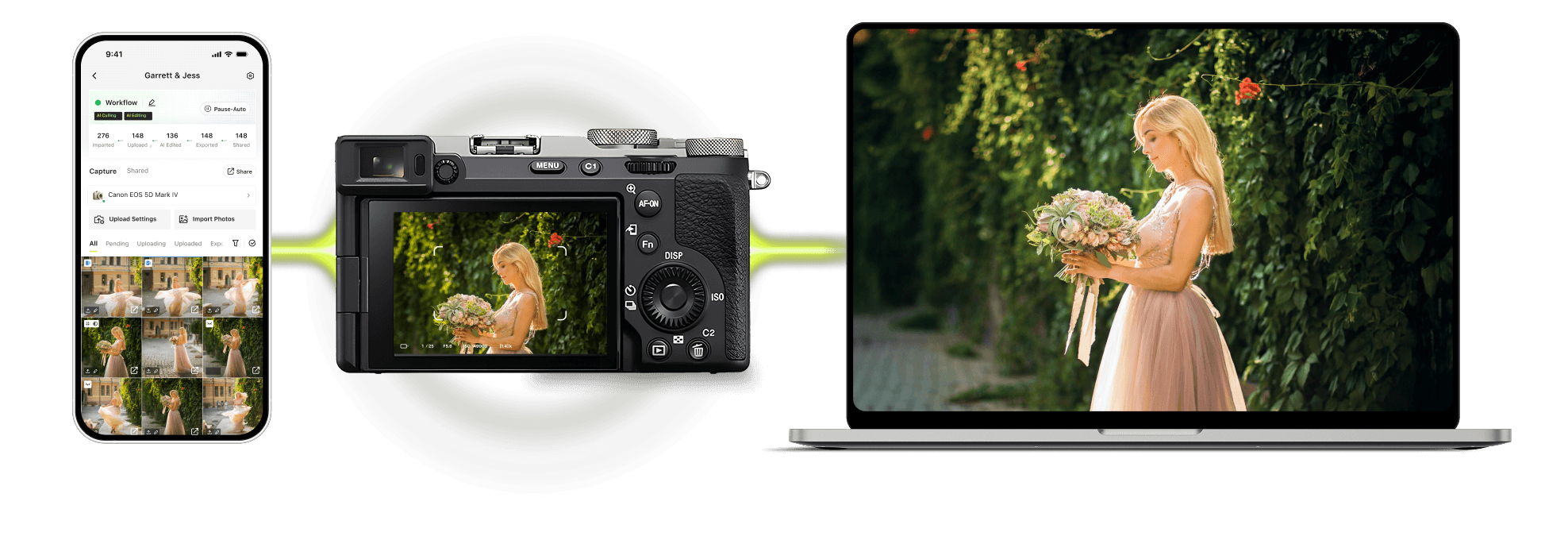
Evoto AI is a powerful, AI-driven photo editing platform built specifically for professional photographers who want to dramatically speed up their post-production workflow without sacrificing natural-looking results. It combines advanced per-face retouching, intelligent batch processing, color grading tools, and creative features like the AI Lab into one seamless system that supports the entire process – from tethered shooting and culling to final delivery. Available on desktop, mobile, iPad, and in the browser, Evoto helps photographers handle high-volume work efficiently while maintaining creative control.

Evoto AI: The AI Retouching Powerhouse

Professional photography has always been a race against time – especially after the shutter clicks. Between culling thousands of frames, meticulous skin retouching, stray hair removal, color consistency, and client delivery, post-production can eat up days that could otherwise be spent shooting or with clients.

Evoto AI (evoto.ai) positions itself as the solution: a specialized, AI-first photo editing and retouching platform built specifically for working photographers who need speed, consistency, and natural-looking results without sacrificing control.

Product Information & Key Features

Evoto is an all-in-one AI photo editing suite that covers the full workflow from tethered capture through culling, retouching, color work, and delivery. It runs as a native desktop app (macOS & Windows), with companion iPad/mobile apps and a browser-based version for lighter or on-the-go use. There’s also Evoto Video for portrait retouching and color correction on moving footage, plus an Instant Photo Gallery tool for client proofing and delivery. The software handles both RAW and JPEG files and is fast – users and benchmarks routinely report processing hundreds of images in minutes once presets are dialed in.

Standout AI capabilities include:

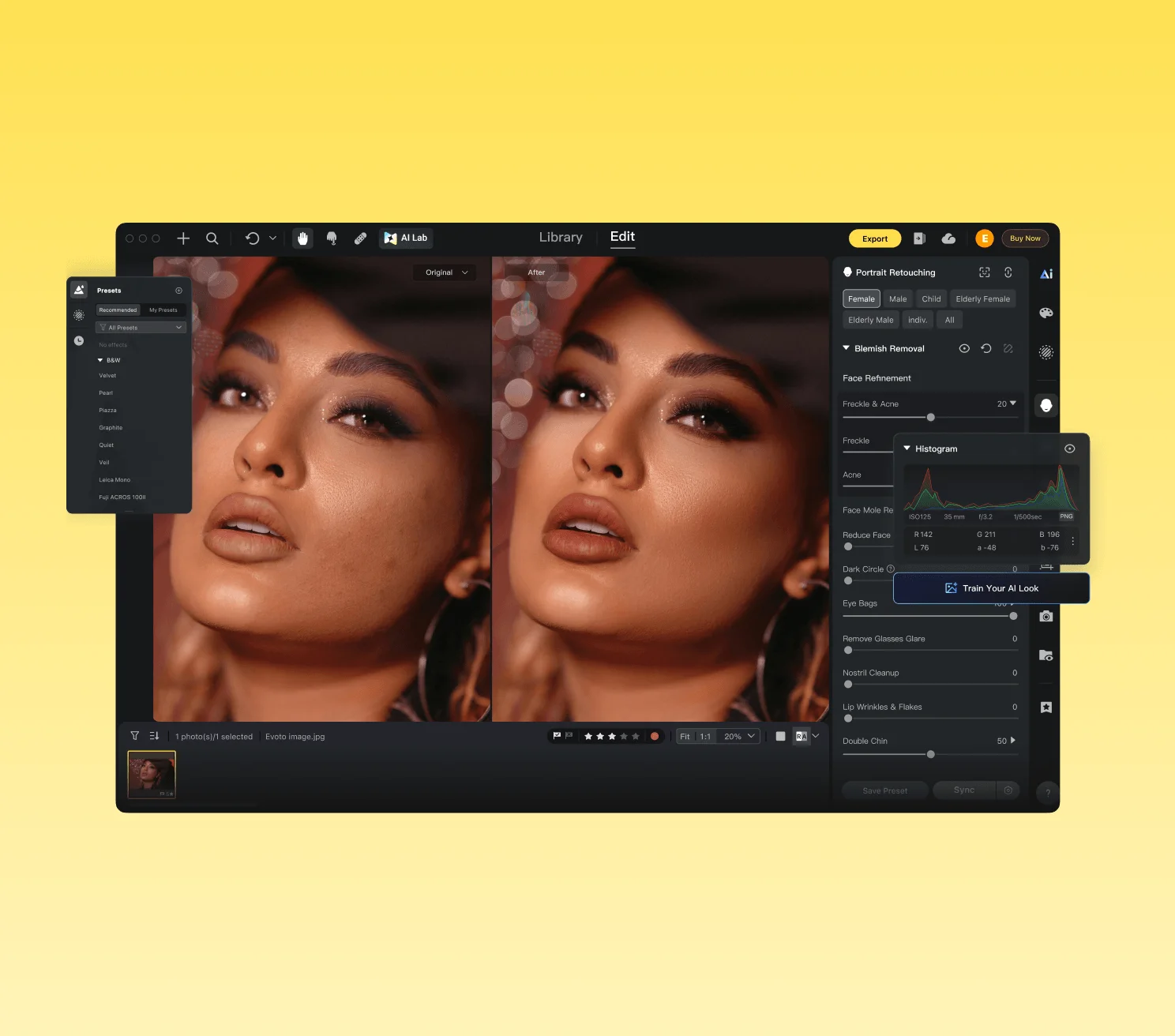
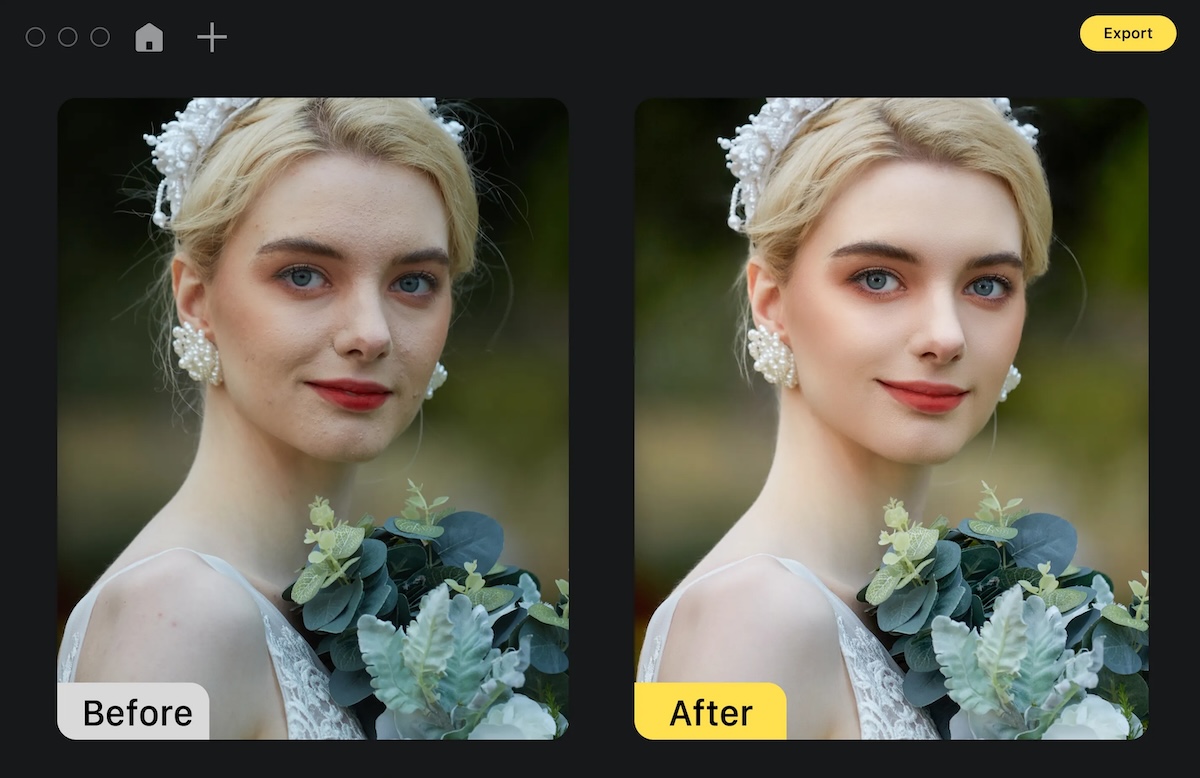
  • Per-face / subject-aware retouching: Skin smoothing that preserves natural texture (freckles, pores), blemish/acne/wrinkle reduction, skin tone balancing, glasses glare removal, stray hair cleanup (inside and outside the frame), red-eye fix, teeth whitening/straightening, and even “open eyes” fixes.
  • Body & clothing tools: Subtle slimming, wrinkle/de-blemish removal on clothes, and color-changing options.
  • Background & environment tools: One-click or masked background removal/clean-up, distraction removal, sky replacement, and backdrop enhancement.
  • Smart culling: AI quickly flags and removes closed eyes, blurry shots, and duplicates.
  • Batch intelligence: Apply edits or presets across a set; the AI adapts per image rather than applying blunt global filters.
  • Additional tools: AI-based old-photo restoration, color matching/grading, tethered shooting support, and a preset system with sync across devices.

AI Color Adjustments

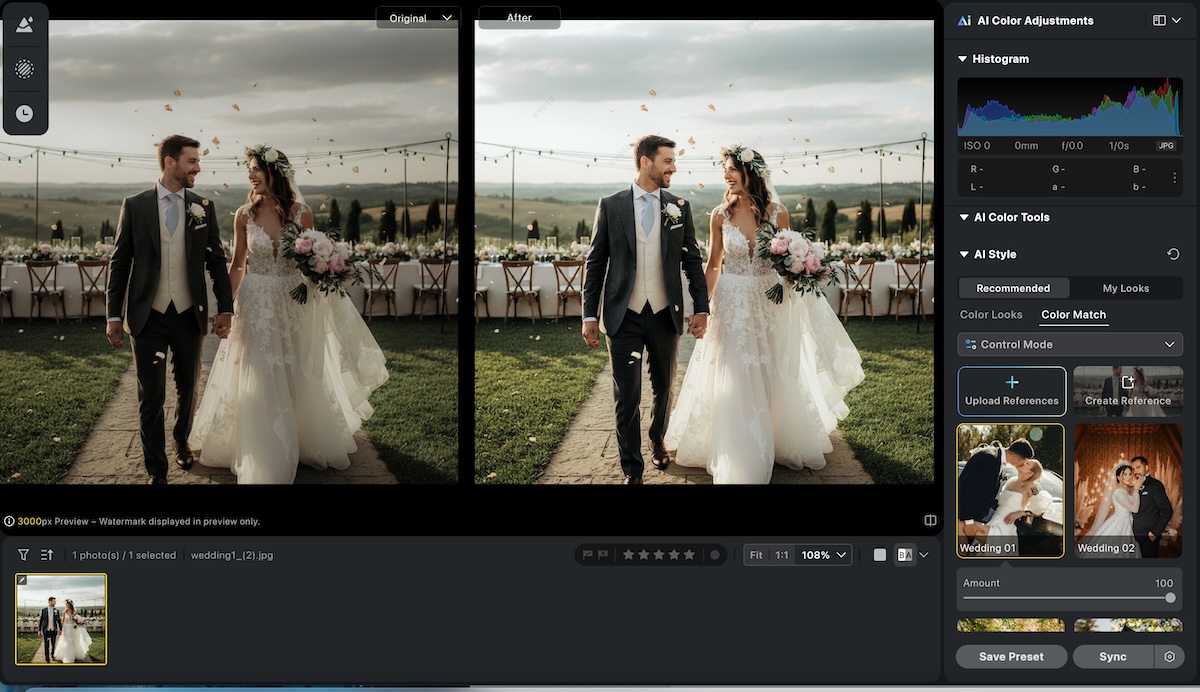
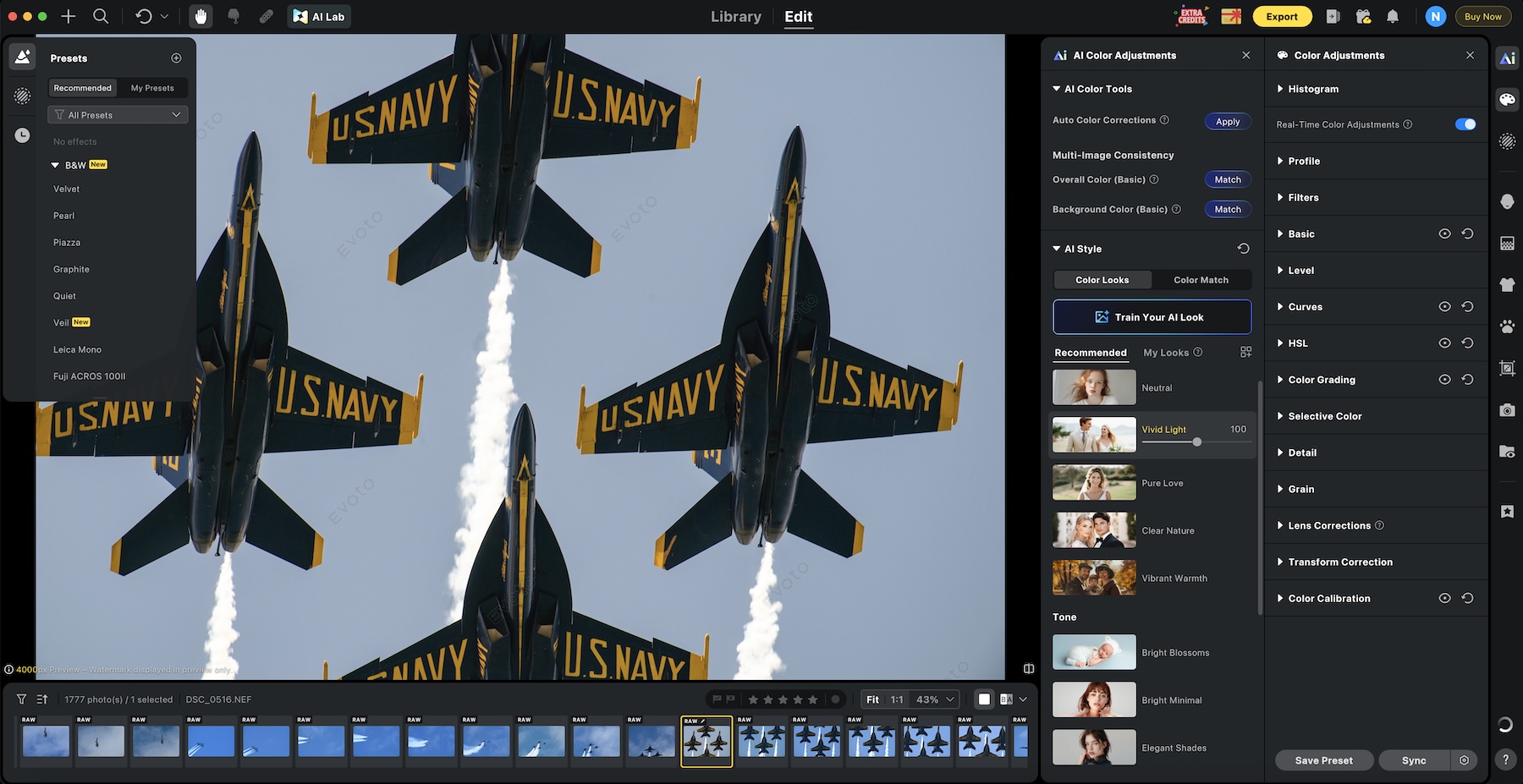
AI Color Adjustments in Evoto AI combine intuitive manual controls with intelligent AI assistance to deliver fast, consistent, and professional color grading across single images or large batches. Photographers can fine-tune exposure, white balance, brightness, tone balance, HSL, curves, and color masking in a Lightroom-style interface, while AI-powered tools like AI Color Match intelligently transfer the tone, mood, and color profile from a reference image to an entire set – ensuring unified results even when lighting varies across a wedding, event, or portrait session. This hybrid approach allows for both precise creative control and automated corrections that adapt naturally to skin tones, backgrounds, and subject matter, dramatically reducing the time spent chasing color consistency while preserving a realistic, non-plastic look that clients expect from professional work.

AI Color Adjustments

AI Color Adjustments in Evoto AI is a comprehensive, intelligent color grading system that blends precise manual controls with powerful AI-driven tools to deliver fast, consistent, and natural-looking results for individual images or large batches.

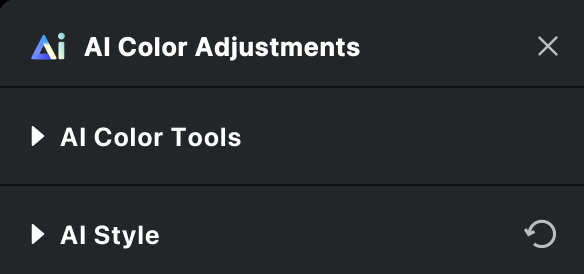
The AI Color Tools provide an intuitive Lightroom-style panel for fine-tuning exposure, white balance, brightness, tone balance, HSL, curves, color masking, and filters, while AI-powered features like AI Color Match allow photographers to instantly transfer the tone, mood, and color profile from a reference image to an entire set -ensuring unified results even when lighting conditions vary across a wedding, event, or portrait session. Complementing these are the

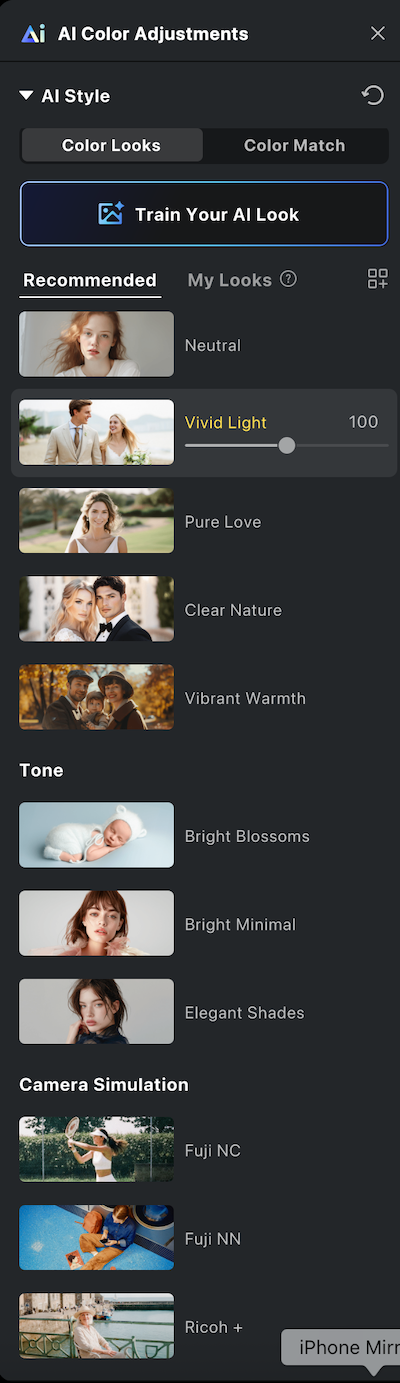
AI Style (also referred to as AI Color Looks) provides one-click, AI-driven stylistic transformations that intelligently analyze each photo and apply a predetermined aesthetic or “vibe” with natural, adaptive results. With over 20 pro-grade options ranging from warm and cinematic to vintage film, bright modern, or clean natural looks, the algorithms automatically correct color, contrast, and tone to match the chosen style while respecting the original image’s lighting and subject characteristics. This makes it exceptionally powerful for high-volume workflows – such as applying a cohesive “film-inspired” or “high-end portrait” look across an entire wedding gallery in seconds – while still allowing photographers to tweak intensity or combine multiple styles for a custom signature aesthetic that elevates their brand without hours of manual grading.

Presets

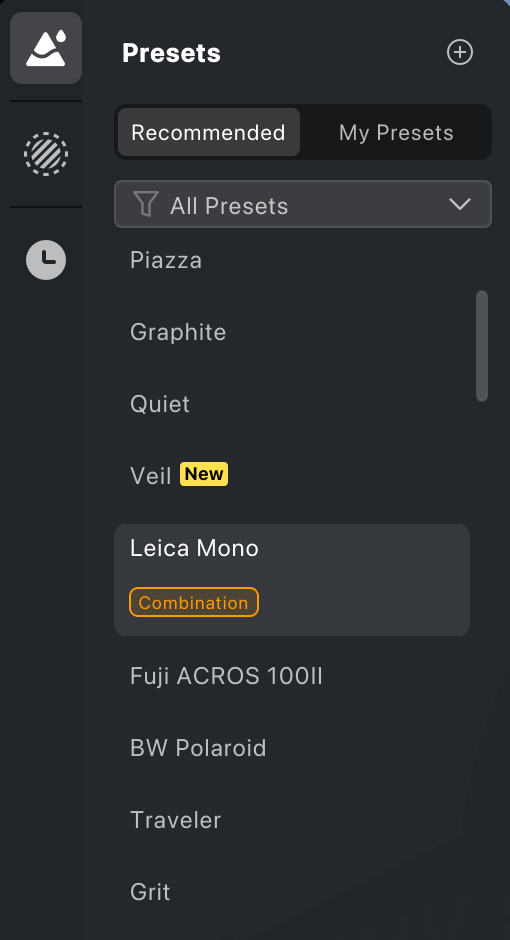
Presets functionality in Evoto AI is a cornerstone of efficient, repeatable workflows, letting photographers save any combination of retouching settings, AI Color Adjustments, AI Styles, and manual tweaks as reusable, one-click presets that can be applied to individual images or synced intelligently across entire batches. Official recommended presets (Natural, High-End Portrait, Event, Cinematic, Family, etc.) provide excellent starting points, while users can easily create and organize their own custom presets, capturing a specific color grade plus skin and hair retouching, for example, and apply them consistently across future shoots or different devices via cloud sync. This system not only slashes editing time on high-volume jobs but also helps maintain a recognizable, professional style that strengthens a photographer’s brand identity and enables faster client deliveries.

AI Lab

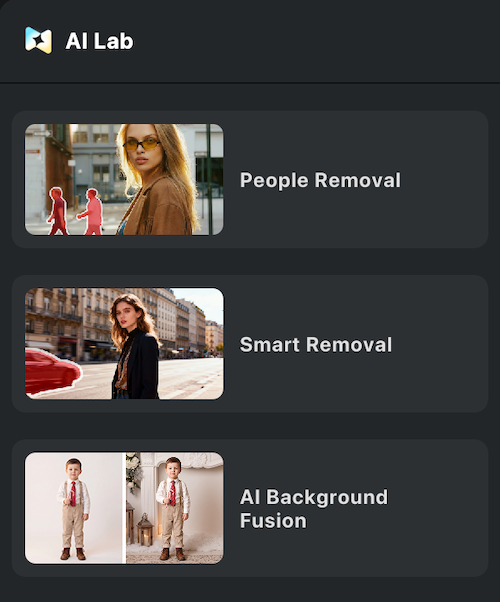
AI Lab in Evoto AI is a dedicated creative hub (accessed via an icon in the top-left of the Edit interface) that houses advanced, high-resolution AI tools designed for complex editing tasks beyond standard retouching. It specializes in intelligent removal and compositing features, such as People Removal (with auto-detection and passerby selection to cleanly eliminate unwanted individuals from backgrounds), Smart Removal / AI Object Remover for distractions, and AI Background Fusion, which enables sophisticated cutouts and scene compositing, perfect for placing subjects into new environments like school gymnasiums, stages, or custom backdrops. These generative tools deliver professional-grade, full-resolution results while preserving natural lighting and edges, making them invaluable for wedding, event, school, and portrait photographers who frequently need to clean up busy scenes or create polished composites without hours of manual masking in Photoshop. By consolidating these powerful capabilities into one streamlined workspace with its own credit model for generative actions, AI Lab significantly expands Evoto’s utility from fast retouching into true creative production, helping photographers deliver cleaner, more polished final images efficiently.

Evoto Mobile and Evoto Online

Evoto Mobile and Evoto Online extend the power of Evoto AI beyond the desktop, giving photographers true flexibility across devices and locations.

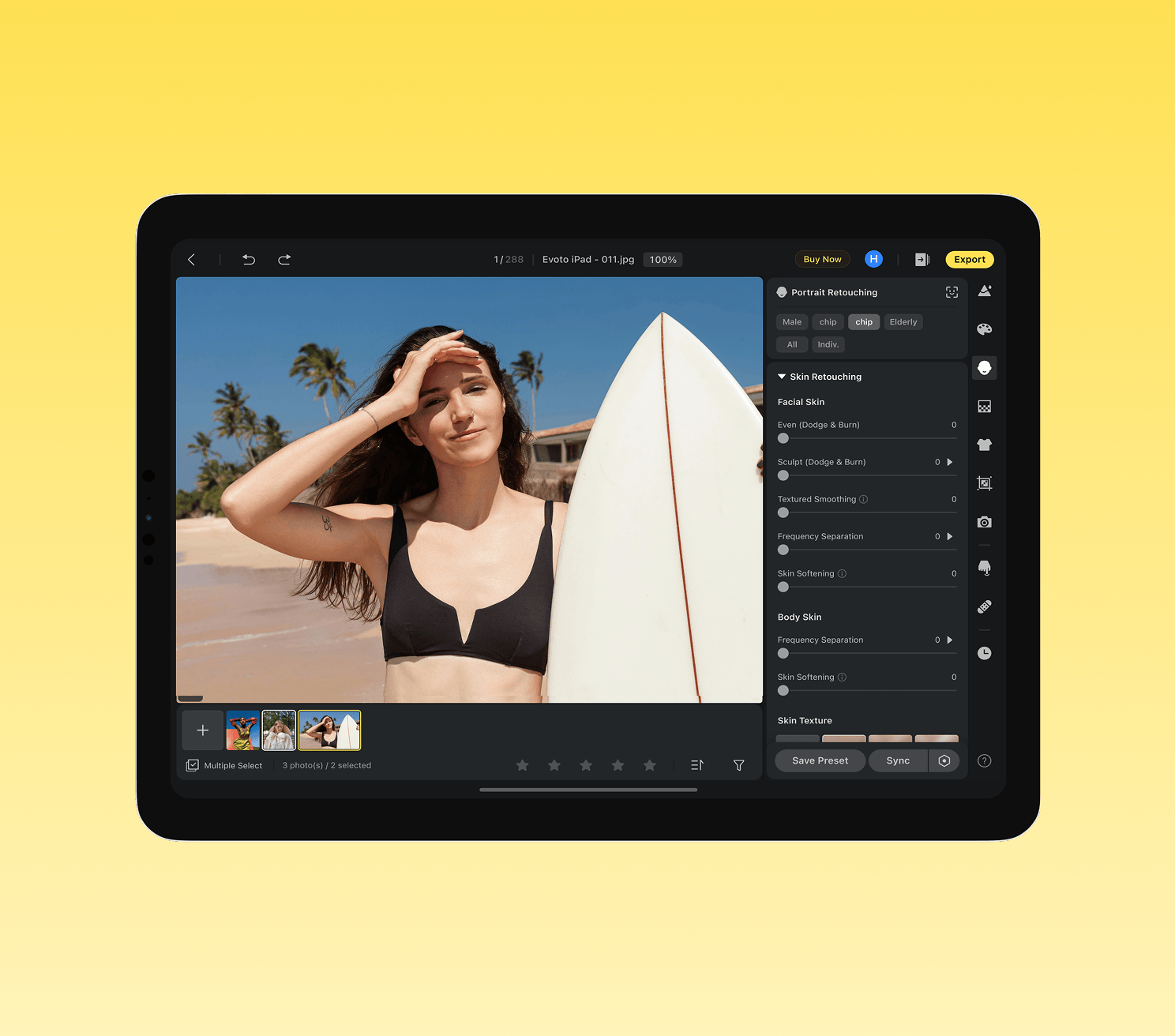
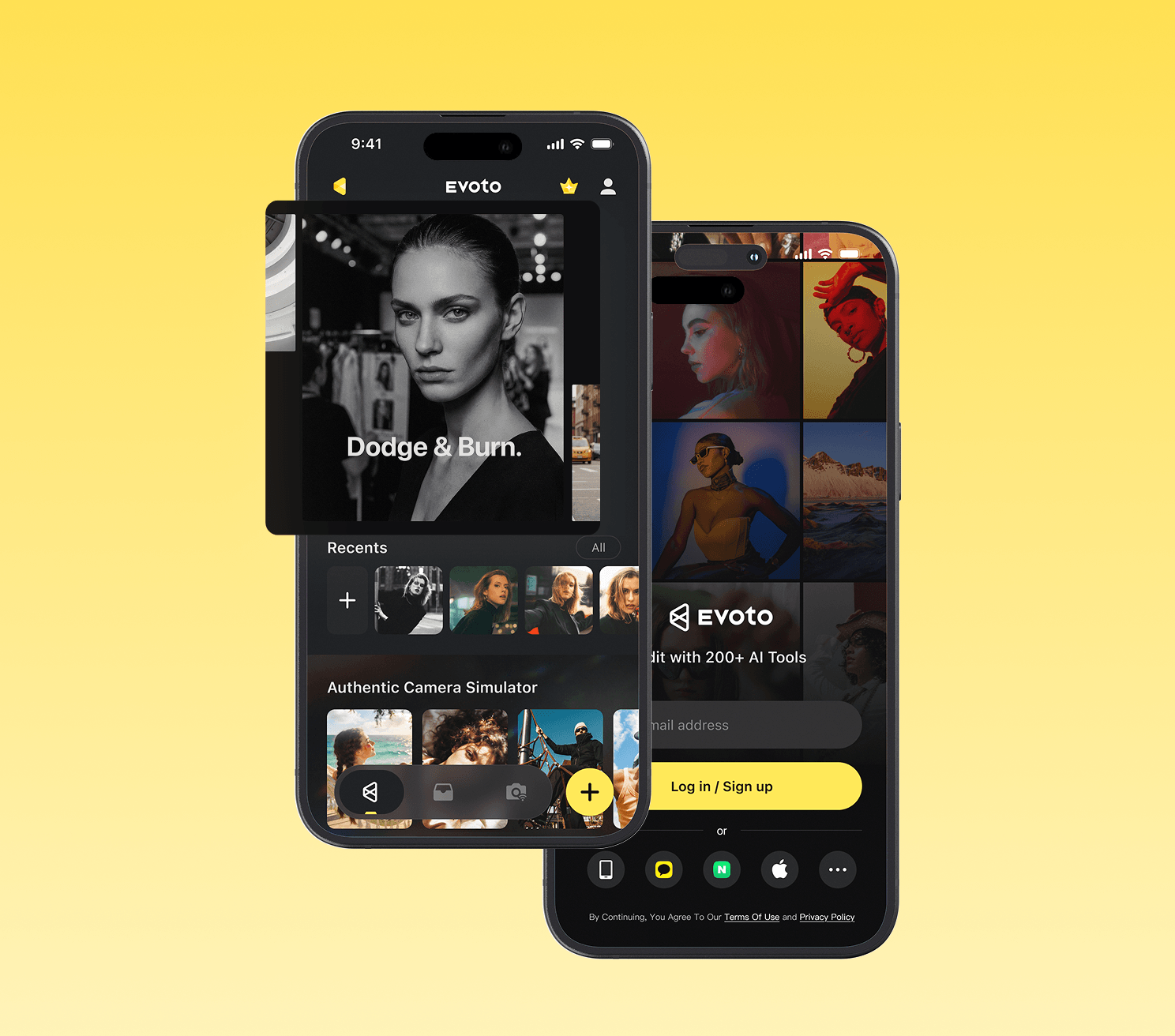
The Mobile version (available on iPad and smartphones) delivers a full-featured AI editing experience optimized for on-the-go use, supporting portrait retouching, color correction, batch processing, preset application, and even tethered shooting directly from compatible cameras. This makes it ideal for location photographers who want to cull, retouch, and show clients polished previews in real time, often closing sales on-site before leaving the session.

Evoto Online is a browser-based editor that provides instant access to core AI tools without installing software, making it especially useful for quick edits, e-commerce product work, background removal, and color adjustments on any computer. Both versions sync seamlessly with the desktop app via the cloud, allowing photographers to start a project on their main workstation, continue refining on an iPad while traveling or at a client meeting, and even perform light edits or client proofing in a browser when needed. Together, they transform Evoto from a powerful studio tool into a complete, location-independent workflow solution that keeps high-quality AI retouching and color work accessible wherever the photographer works.

Evoto Beta and Stable Versions

When downloading Evoto AI, users can choose between the Beta and Stable versions, giving photographers flexibility depending on their priorities.

The Stable version is the recommended choice for most professional users, as it offers a thoroughly tested and reliable experience with fewer bugs, making it ideal for high-volume workflows where consistent performance is critical.

In contrast, the Beta version provides early access to the newest features, AI tools, and improvements – often updated weekly, allowing photographers to test cutting-edge capabilities before they reach the stable release. While the Beta channel is excellent for those who enjoy experimenting with the latest innovations and don’t mind occasional glitches, most working photographers opt for the Stable version to maintain smooth, uninterrupted editing sessions. Evoto makes it easy to switch between the two on their download page, so users can start with Stable for reliability and move to Beta when they want to explore upcoming tools.

Brand Description

Streamlining the workflow for professional photographers worldwide, powered by AI.

Evoto was founded with a clear mission: let AI handle the repetitive “pixel work” so photographers can focus on creativity, storytelling, and client relationships. The company (led by founder/CEO Mitta) has grown rapidly by targeting high-volume professionals – wedding, portrait, newborn, event, school, and commercial shooters, as well as studios that need consistent results at scale.

It claims a large global user base (1M+ photographers across 200+ countries/regions and tens of thousands of collaborating studios). The brand emphasizes ethical AI practices: images are not used to train models without consent, and the platform is GDPR/CCPA compliant with secure cloud options for collaboration and cross-device sync.

Recent expansions (desktop 6.x updates, mobile/Instant apps, and video tools) show Evoto evolving from a specialized retoucher into a broader workflow platform that competes with traditional tools while carving out its AI-retouching niche.

Workflow Examples & Real-World Use Cases

Typical high-volume wedding or event workflow:

  1. Shoot tethered (wired or wireless) directly into Evoto for instant previews and early polishing.
  2. Run AI Smart Culling to quickly eliminate blinks, blur, and duplicates.
  3. Apply or create a portrait preset (skin, hair, glare, teeth) and sync across the gallery, the AI handles per-face variations intelligently.
  4. Quick global or selective color grading.
  5. Export and deliver same-day or push to the Instant Photo Gallery for client viewing/proofing.

Many users report turning what used to be multi-day editing marathons into same-day or next-day deliveries, which improves cash flow and client satisfaction.

Portrait/headshot/fashion studio use case: Photographers often export selects from Capture One or Lightroom into Evoto for targeted cleanup (skin, stray hairs, clothes, background), then do final polish back in their main editor if needed. The per-face controls and masking tools make it excellent for preserving natural skin texture while quickly removing distractions.

On-location/mobile use case: With the iPad or mobile apps, photographers can retouch on-site, show clients polished previews in real time, and even close sales before leaving the location, a game-changer for tourist, event, or mini-session shooters.

Hybrid workflow tip (from working photographers): Do primary color correction in your usual raw processor, export selects to Evoto for AI retouching and cleanup, then finish any ultra-fine texture work in Photoshop only where necessary. This minimizes credit usage while maximizing speed.

Other niches: Newborn and maternity photographers appreciate the gentle, texture-preserving skin tools. E-commerce and content creators use the browser version for quick background removal and product cleanup. Video users are exploring newer video retouching tools to achieve consistent skin and color across talking-head or event footage.

Pricing & Value Proposition

Evoto uses a credit-based model that’s different from traditional subscriptions:

  • Editing, previewing, and most tools are free.
  • Exporting an image typically costs 1 credit per photo (some advanced generative features may cost more – you’ll see the exact cost before exporting).
  • Credits are purchased via annual subscription plans (best value, with rollover and cheaper add-on packs) or pay-as-you-go (more expensive per credit, 2-year expiration).

Approximate annual subscription tiers (as of mid-2026; check site for current):

  • Starter: ~800 credits (~$89/yr)
  • Basic: ~1,600 credits (~$149/yr)
  • Higher tiers scale up to 24,000 credits with better per-credit pricing and add-on discounts.

Pay-as-you-go options start around 200 credits for ~$49. New users usually get starter credits (often 15+), and referrals can add bonus credits.

Value verdict: For high-volume pros who deliver hundreds or thousands of images per month, the time savings (often cited as 5+ hours/day or cutting multi-day jobs to an hour) can easily justify the cost and even increase profitability by enabling faster turnarounds or bringing retouching in-house. Hobbyists or very low-volume shooters may find the credit model less attractive. Some users have noted past price adjustments, so it’s worth modeling your typical monthly exports before committing.

Pros & Cons

Pros:

  • Exceptionally fast and natural-looking portrait and subject retouching.
  • Intelligent batch/sync tools that adapt per image.
  • Strong tethered + culling + retouch + delivery workflow in one app.
  • Cross-platform sync (desktop ↔ iPad ↔ mobile).
  • Ethical/privacy stance and regular feature updates.
  • Free to experiment until you export.

Cons:

  • The credit system requires planning (especially for very high volumes or if you re-export after external edits).
  • Not a full layer-based compositor like Photoshop – best used for targeted cleanup rather than heavy compositing.
  • AI tools (especially culling or complex backgrounds) sometimes need manual refinement.
  • Extreme close-ups or ultra-high-end skin texture work may still benefit from finishing in Photoshop.

Overall verdict: Evoto AI is one of the strongest specialized AI retouching tools available to professional photographers in 2026, particularly for portrait, wedding, and event work, as well as any high-volume work where speed and consistency matter. It won’t completely replace a skilled retoucher or your full creative suite for every job, but it dramatically accelerates the most time-consuming parts of the job while delivering results that clients and photographers describe as natural rather than “AI-plastic.”

Conclusion

Evoto AI stands out as one of the most capable and photographer-focused AI editing platforms available in 2026, combining powerful per-face retouching, intelligent batch processing, advanced color tools (including AI Color Match and AI Style), creative features like the AI Lab for object removal and background fusion, and seamless cross-platform support across desktop, mobile/iPad, and browser versions. By automating the most time-consuming aspects of post-production while still giving photographers precise control and natural-looking results, it enables faster turnarounds, consistent quality across high-volume shoots, and even on-site client presentations that can directly boost sales. While its credit-based pricing model requires some planning, especially for high-volume users, the significant time savings and workflow efficiency often make it a worthwhile investment for professional wedding, portrait, event, and studio photographers. For anyone looking to reduce editing burnout, bring more work in-house, or simply deliver polished galleries faster without sacrificing quality, Evoto AI is well worth testing. Photographers can download the desktop app or try the mobile and online versions for free to experience how it fits into their own workflow.

Related videos

The post Evoto AI: The AI Retouching Powerhouse appeared first on Photo Rumors.

BMW i4 eDrive 35 : la meilleure alternative à la Tesla Model 3 ?

Par : Victor
14 octobre 2025 à 07:00

Avec sa plus petite batterie, la BMW i4 s'attaque techniquement à la star Tesla Model 3, en ajoutant une dose de premium propre à BMW…

BMW i4 eDrive 35 : la meilleure alternative à la Tesla Model 3 ? est un article de Blog-Moteur, le blog des passionnés d'automobile !

❌